数字产业

Search documents
国家能源局:“十四五”非化石能源消费占比提高到20%的目标将超额完成
Hua Xia Shi Bao· 2025-08-26 06:38
Core Insights - The "14th Five-Year Plan" marks the fastest period for China's green and low-carbon transition, with the country establishing the world's largest and fastest-growing renewable energy system [2] - The share of renewable energy generation capacity has increased from 40% to approximately 60%, with annual new installations of wind and solar power exceeding 100 million and 200 million kilowatts respectively, achieving unprecedented growth [2] - In terms of energy consumption, one-third of the total electricity consumed is green electricity, with non-fossil energy's share increasing by 1 percentage point annually, expected to exceed the 20% target set for the "14th Five-Year Plan" [2] Energy Consumption and Demand - The rapid growth in electricity demand is driven by advanced manufacturing industries represented by electric vehicles and digital industries such as artificial intelligence and big data [2] - In 2024, electricity consumption for new energy vehicle manufacturing is projected to increase by 34.3% year-on-year, while internet and related services are expected to grow by 20.5% [2] - From January to July this year, electricity consumption for electric vehicle charging and swapping services has surged by over 40%, indicating a significant shift in energy consumption structure towards greener sources [2]


国家能源局:从五个方面做好新能源消纳工作
Di Yi Cai Jing· 2025-08-26 06:02
Core Insights - During the "14th Five-Year Plan" period, China's energy consumption has seen a significant increase, with renewable energy accounting for one-third of total electricity consumption [1][3] - The country has achieved a remarkable growth in renewable energy capacity, with the share of renewable energy generation capacity rising from 40% to approximately 60% [1][3] - The investment in the energy sector has shown strong momentum, with annual investments surpassing 6 trillion yuan, accounting for nearly 10% of total fixed asset investments [6][5] Energy Transition Acceleration - The increase in energy consumption during the first four years of the "14th Five-Year Plan" has reached 1.5 times the total increase during the "13th Five-Year Plan" [3] - The rapid growth of electric vehicle manufacturing and digital industries has significantly boosted electricity demand, with electric vehicle manufacturing electricity consumption expected to grow by 34.3% in 2024 [3][4] - The proportion of non-fossil energy in total energy consumption is increasing by 1 percentage point annually, exceeding the planned target of 20% [3][4] Strong Investment Trends - Energy investment has been characterized by rapid growth, improved structure, and strong vitality, with annual investment growth rates exceeding 16% [6][5] - Renewable energy investments have become the dominant force in power investments, with over 80% of power investment in renewable energy projects expected in 2024 [6][7] - Private enterprises have played a crucial role in the energy sector, with over 85% of electricity facility construction involving private companies [7] Enhancing Renewable Energy Utilization - The rapid expansion of renewable energy capacity has created challenges in energy consumption, necessitating a systematic approach to enhance renewable energy utilization [8] - The development of a new power system is essential to improve the adaptability of the electricity system to renewable energy [8][9] - Efforts will be made to promote the development of green hydrogen and other non-electric utilization pathways to expand renewable energy consumption scenarios [9]
滨江“共享”临时用地 让企业省心又省钱
Hang Zhou Ri Bao· 2025-08-26 02:35
Core Viewpoint - The innovative "shared" temporary land solution in Binjiang District addresses the challenges of land resource scarcity and high project land utilization, benefiting both enterprises and workers while optimizing land use efficiency [1][2] Group 1: Shared Temporary Land Solution - The Binjiang District has introduced a "shared" temporary land solution to consolidate 11 undeveloped land parcels into a centralized area, allowing multiple projects to share facilities and services [1] - The model includes three aspects of sharing: shared space, shared facilities, and shared services, which collectively enhance resource allocation [1] Group 2: Cost Savings and Efficiency - The shared model allows for the accommodation of 7 enterprises in a 50-acre area, which previously could only support 5, thus providing additional development space [1] - One project engineer calculated that the shared model saves approximately 100,000 yuan annually in project management and maintenance costs alone [1] Group 3: Approval and Management Improvements - The district has implemented a dual mechanism of "specialist service + pre-approval service," reducing the average processing time for temporary land approvals to 3 working days [1] - A "warning + support" system has been established to remind enterprises 30 days in advance to prepare for land return, ensuring timely land restoration and transfer [1] Group 4: Land Efficiency Gains - The implementation of the shared model has replaced 46 scattered land parcels, saving 261.86 acres of land, with facility sharing alone saving 22 acres [2] - This innovative practice alleviates the temporary land supply-demand conflict while achieving cost reduction for enterprises, benefits for workers, and enhanced land efficiency [2]
雪域高原驶入发展快车道
Ren Min Ri Bao· 2025-08-24 22:01
Core Insights - The transformation of the yak industry in Tibet reflects the region's commitment to high-quality economic development, leveraging its unique highland resources and implementing new development concepts [1][3] Economic Performance - In the first half of the year, Tibet achieved a GDP of 138.27 billion yuan, with a year-on-year growth of 7.2% - Industrial added value above designated size grew by 14.8%, and fixed asset investment increased by 24.8% - Per capita disposable income for residents rose by 7.6% [1][4] Clean Energy Development - Tibet's clean energy generation accounts for over 99% of its total power output, with cumulative clean energy exports exceeding 16.1 billion kWh, equivalent to a reduction of approximately 13.86 million tons of CO2 emissions [3] - The region is focusing on developing water, wind, solar, and thermal energy projects to establish itself as a national clean energy base [3] Infrastructure and Transportation - By the end of 2024, the road accessibility rate for towns and villages in Tibet is expected to reach 100%, with a total road mileage exceeding 124,900 kilometers [5] - The transportation network, including railways and air routes, is increasingly facilitating the movement of goods and people, with significant growth in freight and passenger transport [5][6] Agricultural and Industrial Growth - The highland agriculture sector is steadily developing, with the clean energy and green industries showing strong growth [4] - The introduction of modern logistics and technology in agriculture is enhancing productivity and income for local communities [7] Social Impact and Poverty Alleviation - All registered impoverished populations in Tibet were lifted out of poverty by the end of 2019, with per capita income for the formerly impoverished expected to grow by over 12.5% in 2024 [7] - The focus on inclusive development aims to improve the well-being and happiness of all ethnic groups in the region [7]
上合组织天津峰会|谋共同发展 赢繁荣未来——上海合作组织推动区域可持续发展走深走实
Xin Hua She· 2025-08-23 12:23
Core Viewpoint - The Shanghai Cooperation Organization (SCO) is actively promoting regional sustainable development through enhanced cooperation in various sectors, including connectivity, agriculture, industry, green industries, and digital economy, especially in the context of geopolitical conflicts and trade barriers [1][2]. Group 1: Connectivity Enhancement - The SCO serves as a significant platform for the Belt and Road Initiative, facilitating infrastructure cooperation and trade facilitation among member states [2]. - In the first seven months of 2025, China's total import and export volume with SCO member countries via land transport reached 677.4 billion yuan, an increase of 7.4%, while air transport reached 251.01 billion yuan, with a growth of 44.6% [2]. Group 2: Economic Transformation and Upgrading - The SCO provides a platform for sharing experiences in agricultural technology and industrial collaboration, enhancing the sustainability and autonomy of member countries' economic development [3]. - Uzbekistan has adopted Chinese drip irrigation technology, significantly improving cotton yield and water resource management [3]. - The establishment of the China-Belarus "Great Stone" Industrial Park has attracted over 150 enterprises from 15 countries, fostering industrial clusters in various sectors [3][4]. Group 3: New Cooperation Opportunities - The SCO countries are diversifying cooperation in green technology and digital infrastructure, which supports sustainable development [6]. - The 100 MW photovoltaic power station in Kazakhstan exemplifies successful green energy collaboration, aiding the region's transition to a low-carbon economy [6]. - The establishment of the "Silk Road E-commerce" comprehensive service base aims to enhance cross-border e-commerce and logistics [6]. Group 4: Digital Economy and Technological Innovation - The development of 5G networks in Kyrgyzstan has increased internet penetration from 43% to over 70%, showcasing the impact of digital infrastructure [6]. - The digital healthcare platform in Tajikistan provides remote medical consultations, benefiting remote populations [6]. - The SCO's focus on digital cooperation and multilateral coordination is expected to enhance member states' autonomous development capabilities [7].
日本要力争与非洲各国签署自贸协定
日经中文网· 2025-08-22 02:56
Core Viewpoint - Japan aims to strengthen economic cooperation with Africa by establishing a preparatory committee for Free Trade Agreements (FTAs) with African countries, focusing on enhancing the business environment for Japanese enterprises in Africa [2][4]. Group 1: Economic Cooperation Initiatives - The Japanese government plans to form a preparatory committee for economic cooperation with Africa, which will include private enterprises and experts to assess the effectiveness and challenges of such cooperation [4]. - Japan has not yet signed any FTAs or Economic Partnership Agreements (EPAs) with African countries, but aims to start with key nations like Kenya and eventually expand to the entire continent [4]. Group 2: Strategic Goals - Prime Minister Kishida expressed Japan's desire to be a solid bridge connecting Africa with regions outside of Africa, emphasizing the importance of digital industries and the nurturing of startups as foundational elements for accelerating economic growth [4]. - The initiative also includes the "Indian Ocean-Africa Economic Circle Initiative," which aims to build a logistics network with India and Middle Eastern countries [5].

华侨城A:积极发展数字经济 打造智慧景区酒店物管
Sou Hu Cai Jing· 2025-08-18 04:07
金融界8月18日消息,有投资者在互动平台向华侨城A提问:公司是否参与发展数字经济相关产业。 公司回答表示:投资者您好,公司积极发展数字经济相关产业,推进数字产业化和产业数字化,推动数 字经济与实体经济融合发展。在数字产业化方面,依托公司文旅商服产业能力,拓展打造电商交易、技 术服务等数字产业,如公司旗下花橙科技运营"花橙旅游"消费互联网平台,为行业提供数字化运营整体 解决方案,并探索通过产业互联网赋能产业链上下游共同发展。在产业数字化方面,公司积极推动数字 技术与企业生产经营深度融合,建设"智慧景区""智慧酒店""智慧工地""智慧物管",以数字化手段提升 产品吸引力、运营效率及用户体验,赋能传统产业焕新发展。 来源:金融界 ...

我国数字经济核心产业规模稳步扩大,数字经济ETF(560800)连续5日上涨
Xin Lang Cai Jing· 2025-08-15 06:16
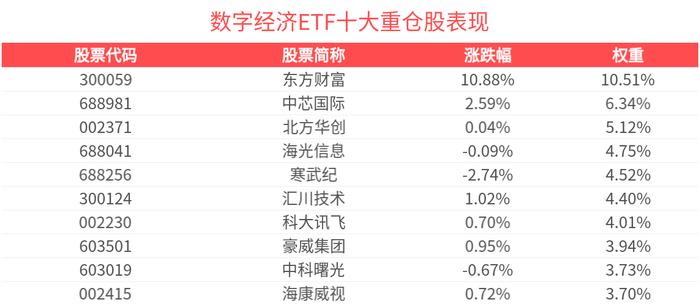
Core Viewpoint - The digital economy is experiencing significant growth, with the digital economy theme index and related ETFs showing strong performance, indicating a robust market for digital economy-related companies [1][2]. Group 1: Market Performance - The CSI Digital Economy Theme Index (931582) rose by 2.84%, with key stocks like Dongfang Wealth (300059) hitting a 20% limit up and others like Tonghuashun (300033) and Wealth Trend (688318) increasing by 17.17% and 15.04% respectively [1]. - The Digital Economy ETF (560800) increased by 2.77%, marking its fifth consecutive rise, with a trading volume of 24.64 million yuan and a turnover rate of 3.33% [1]. - Over the past year, the Digital Economy ETF has maintained an average daily trading volume of 24.36 million yuan, ranking first among comparable funds [1]. Group 2: Industry Growth - According to the National Data Development Research Institute, the number of data enterprises in China is expected to exceed 400,000 by 2024, with the data industry scale reaching 5.86 trillion yuan, a 117% increase compared to the end of the 13th Five-Year Plan [1]. - The digital economy's core industry scale is steadily expanding, maintaining China's position as the second-largest digital economy globally [1]. - In the first half of this year, the digital industry achieved a business revenue growth of 9.3%, an increase of 3.4 percentage points compared to the same period last year [1]. Group 3: AI and Security Integration - Huaxi Securities highlights the rapid iteration of AI technology and large models, which pose challenges to traditional security paradigms, emphasizing the need for a "trustworthy, controllable, and secure" digital foundation [2]. - The integration of data and AI is seen as a critical task, with significant market potential in various sectors such as industry, education, healthcare, finance, and law [2]. - The CSI Digital Economy Theme Index includes companies with high digitalization levels and infrastructure, reflecting the overall performance of digital economy-related stocks [2].

西藏“十四五”主要经济指标增速“跑”在前列
Zhong Guo Chan Ye Jing Ji Xin Xi Wang· 2025-08-14 23:06
Economic Growth and Development - The GDP of Tibet is projected to reach 276.5 billion yuan in 2024, which is 155 times that of 1965, with an average annual growth rate of 8.9% [2] - Local fiscal revenue is expected to hit 27.7 billion yuan, marking a 1258-fold increase since 1965, with an average annual growth of 12.9% [2] - The GDP is anticipated to exceed 300 billion yuan this year, achieving the third milestone of a trillion yuan [2] Infrastructure and Living Standards - Comprehensive transportation networks, including roads, railways, and airways, have been established, significantly improving infrastructure [2] - The urbanization rate of the permanent population is nearing 40%, with over 800 modern characteristic towns built [3] - The per capita disposable income for urban residents is projected to reach 55,444 yuan in 2024, a 121-fold increase since 1965, with an annual growth of 8.5% [2] - The per capita disposable income for farmers and herdsmen is expected to be 21,578 yuan, a 199-fold increase since 1965, with an annual growth of 9.4% [2] Ecological and Green Development - Over 50% of Tibet's land is included in ecological protection red lines, with a forest coverage rate increasing to 12.31% [2][4] - The region has cultivated 404 types of green food and organic agricultural products, establishing a strong brand for "Tibetan" agricultural products [4] - The establishment of 17 national-level green factories and one national-level green industrial park from 2021 to 2024 reflects the acceleration of green industrial transformation [4] Clean Energy and Low-Carbon Initiatives - Tibet is focusing on developing clean energy bases, leveraging its world-class water, wind, and solar energy resources to contribute to carbon neutrality goals [5] - The ecological compensation system is being optimized, allowing communities to benefit from ecological protection efforts [5]
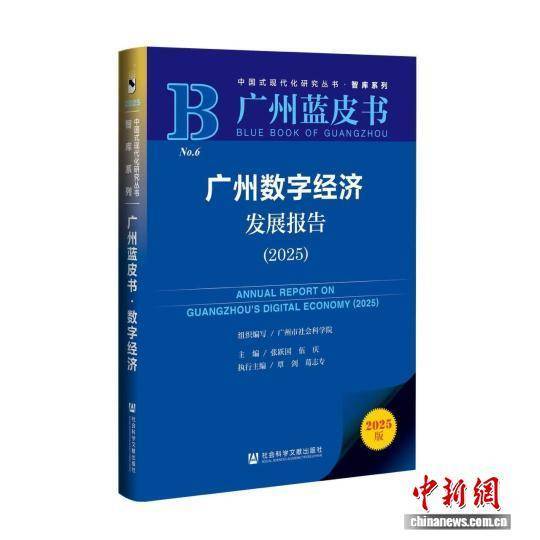
2024年广州数字经济核心产业增加值首次突破4000亿元
Sou Hu Cai Jing· 2025-08-13 13:47
Group 1 - The core viewpoint of the report indicates that Guangzhou's digital economy continues to rank among the top in the country, with the core industry value added expected to exceed 400 billion yuan in 2024, reaching 447.03 billion yuan, a year-on-year increase of 9.8% [1][3] - By 2024, the value added of Guangzhou's digital economy core industries will account for 14.41% of the city's GDP, with a contribution rate of 61.3% to the overall economic growth, highlighting its role in optimizing industrial structure and fostering new economic drivers [1][3] - The report predicts that by 2025, the core industry value added of Guangzhou's digital economy will surpass 500 billion yuan, with a year-on-year growth of approximately 10%, and the GDP proportion will exceed 15% [3] Group 2 - The report notes the rapid development of Guangzhou's low-altitude economy, with over 4,000 enterprises engaged in this sector by the end of 2024, ranking second nationally, and around 65 core enterprises [3] - The humanoid robot industry in Guangzhou is currently in a "catch-up" phase, with a solid industrial chain and advantages in electronic information and software services [3] - Recommendations include focusing on the "R&D + manufacturing + application" of humanoid robot terminal products, establishing a national-level technology innovation center, and developing a stable industrial chain ecosystem within 3 to 5 years [3][4]