
数字经济

Search documents
投资超15亿元 北京多维扶持高精尖产业
Bei Jing Shang Bao· 2026-01-22 15:48
Core Viewpoint - The Beijing Municipal Economic and Information Technology Bureau is set to launch a funding implementation guide aimed at supporting high-precision and cutting-edge industries, with a planned investment of over 1.5 billion yuan to cover more than 25 policy support directions by 2026 [1][3]. Group 1: Funding and Support Directions - The implementation guide focuses on addressing challenges in enterprise innovation and research and development, with nine key support areas designed to facilitate market validation for innovative products in fields such as robotics and integrated circuits [3]. - The guide includes support for the first demonstration applications of advanced materials and encourages commercial space enterprises to purchase insurance to mitigate innovation risks, providing up to 50% support of the enterprise's investment costs for qualifying projects [3][4]. Group 2: Growth and Development Initiatives - A "Win the Future" growth plan is introduced to support promising future industry projects with up to 10 million yuan in initial funding, alongside market institution co-investment and entrepreneurial guidance [4]. - The guide aims to enhance the growth of small and medium-sized enterprises (SMEs) by issuing service vouchers to reduce procurement costs for professional services and providing rewards for equity financing through the Beijing "Specialized, Refined, Characteristic, and Innovative" board [4]. Group 3: Strategic Implications - The implementation guide is designed to create a comprehensive policy framework that addresses core contradictions in industrial upgrading, thereby strengthening the ecosystem and sustainable development mechanisms for high-precision industries [5]. - The dual approach of policy content upgrading and efficiency enhancement is expected to solidify the technological foundation and ecological advantages of high-precision industries, supporting Beijing's goal of becoming a global benchmark city for the digital economy during the 14th Five-Year Plan period [5].

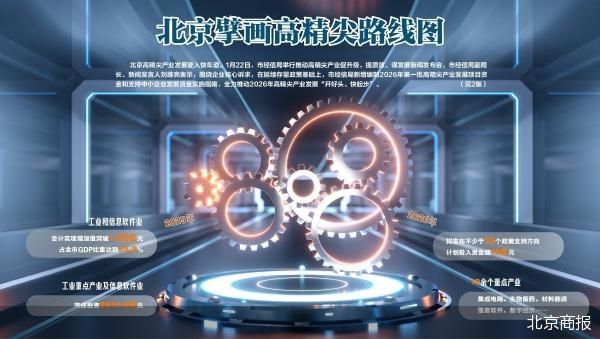
超25项政策、超15亿元投资 北京出台2026年首批高精尖产业发展实施指南
Bei Jing Shang Bao· 2026-01-22 13:28
Core Insights - By 2025, the combined added value of the industrial and information software sectors in Beijing is expected to exceed 1.8 trillion yuan, accounting for 35.2% of the city's GDP, contributing approximately 60% to the city's economic growth [1] Group 1: Implementation Guidelines - The implementation guidelines focus on four main areas: "Promote Innovation," "Accelerate Transformation," "Improve Quality and Efficiency," and "Nurture Growth," with plans to release no less than 25 policy support directions and invest over 1.5 billion yuan [1][3] - The guidelines aim to support over ten key industries, including integrated circuits, biomedicine, materials energy, information software, and the digital economy [1] Group 2: Promote Innovation - The "Promote Innovation" section addresses issues such as unclear R&D paths and difficulties in the commercialization of results, proposing nine key support directions [3] - It encourages market validation opportunities for innovative products in robotics, integrated circuits, and new materials, and supports the first trial applications of these innovations in various sectors [3] Group 3: Accelerate Transformation - The "Accelerate Transformation" section identifies five key support directions to address challenges like insufficient pilot production capacity and lack of promotional scenarios for new products [4] - It includes support for building pilot platforms and trial production lines, with funding up to 30% of total project investment [4] Group 4: Improve Quality and Efficiency - The "Improve Quality and Efficiency" section outlines seven key support directions to tackle common challenges faced by enterprises during transformation, such as unclear standards and weak technical support [5] - It supports the development of standards for green transformation and provides solutions for digital transformation, enhancing competitiveness in the market [5] Group 5: Nurture Growth - The "Nurture Growth" section introduces four key support directions aimed at fostering growth at different stages of enterprise development [6] - It includes a "Win the Future" growth plan that offers up to 10 million yuan in startup funding for promising future industry projects and provides various support services [6] Group 6: Policy and Mechanism Innovation - The implementation guidelines and mechanism innovations create a dual drive of "policy content upgrade + landing efficiency enhancement," solidifying the technological foundation and ecological advantages of high-end industries [7]

北京今年拟首批投入超15亿元促高精尖产业发展
Zhong Guo Xin Wen Wang· 2026-01-22 12:29
Core Viewpoint - Beijing plans to invest over 1.5 billion yuan in the first batch of high-precision and cutting-edge industry development projects to support innovation and the growth of small and medium-sized enterprises [1][2] Group 1: Investment and Funding - The Beijing Municipal Bureau of Economy and Information Technology aims to release no less than 25 policy support directions and plans to invest over 1.5 billion yuan [1] - The funding will cover key industries such as integrated circuits, biomedicine, material energy, information software, and the digital economy [1] Group 2: Innovation Promotion - Beijing encourages market validation opportunities for innovative products in fields like robotics, integrated circuits, and new materials [1] - Support will be provided for the first trial applications of robotics in various domestic scenarios, including factories, supermarkets, logistics, and agriculture [1] - The initiative includes backing for the demonstration application of advanced strategic materials and commercial aerospace companies to mitigate innovation risks through insurance [1] Group 3: Transformation Support - Beijing will support the construction of pilot testing platforms and production lines, providing up to 30% of the total project investment for key technology implementation [2] - Manufacturing enterprises will receive support for introducing new products using existing production capacities, with a maximum funding of 50 million yuan [2] Group 4: Quality and Efficiency Enhancement - The initiative includes support for service providers and benchmark enterprises to offer transformation solutions for large-scale manufacturing enterprises [2] - Standards for green and low-carbon transformation of industrial production lines and data centers will be proposed [2] - Companies will be encouraged to enhance software development efficiency and intelligence through computing power construction, large model deployment, and data governance [2]
琼中争创海南自由贸易港建设中部标杆
Xin Lang Cai Jing· 2026-01-22 05:49
Core Viewpoint - The government of Qiongzhong Li and Miao Autonomous County emphasizes the importance of the "14th Five-Year Plan" period for high-quality development and the establishment of a benchmark for the Hainan Free Trade Port [1] Group 1: Economic Development Goals - Qiongzhong aims to implement Free Trade Port policies through parks, focusing on trade with external markets and targeting a park output value exceeding 2.5 billion by 2030 [2] - The county will concentrate on ecological agriculture, biomanufacturing, low-altitude economy, and digital economy for targeted investment attraction [2] - The total output value of agriculture, forestry, animal husbandry, and fishery is expected to exceed 8 billion by 2030 [2] Group 2: Infrastructure and Urban Development - Qiongzhong plans to enhance urbanization and implement new urban renewal actions, optimizing public services and reducing the gap in urbanization rates with the provincial average [5] - Key infrastructure projects include the Qiongzhong Bayling Airport and the Hainan Central Railway, aimed at improving external connectivity [5] Group 3: Education and Talent Development - A new round of "Skills Free Trade Port" five-year action plan will be initiated, focusing on building local talent cultivation systems and industry innovation research institutes [3] - The county aims to establish several provincial-level industry-education integration bases to foster talent in future industries [3] Group 4: Environmental and Ecological Initiatives - Qiongzhong is committed to ecological civilization construction, aiming for a leading national level in environmental quality and achieving carbon peak by 2030 [5] - The county will implement a "no-waste city" initiative and explore innovative green finance products [5] Group 5: Social Welfare and Public Services - The government will implement employment-first policies and support income growth to expand the middle-income group [7] - There will be enhancements in healthcare services, including the construction of a new traditional Chinese medicine hospital and improvements in emergency and chronic disease care [7]

一系列举措将出台 推动“十五五”实现良好开局
Jing Ji Wang· 2026-01-22 02:48
Group 1 - The core viewpoint emphasizes the importance of expanding domestic demand and optimizing supply to achieve a dynamic balance and virtuous cycle in the economy, with a focus on a new development model driven by domestic demand and consumption [2][3] - The National Development and Reform Commission (NDRC) plans to develop a strategic implementation plan for expanding domestic demand from 2026 to 2030, aligning with the trends of demand upgrading and the new technological revolution [2] - The NDRC aims to strengthen the real economy by fostering innovation, creating new supply, and generating new employment opportunities, while promoting a modern industrial system focused on intelligence, greenness, and integration [3] Group 2 - The construction of a unified national market is a significant strategic deployment by the central government, with positive progress already made and a commitment to deepen this initiative [4][5] - Key metrics indicate improvements in inter-provincial trade and reduced logistics costs, reflecting a favorable trend in resource allocation and market transaction costs [4] - Future efforts will focus on institutional development, high-quality growth, and addressing persistent issues that hinder market efficiency, such as low-price competition and local protectionism [5][6] Group 3 - The NDRC forecasts that by 2026, China's economic structure will continue to improve, with new growth drivers emerging from sectors like renewable energy, aerospace, and artificial intelligence [7][8] - The digital economy is expected to contribute significantly to GDP, with projections indicating it could reach 49 trillion yuan, accounting for approximately 35% of GDP by 2025 [8] - Regional innovation hubs, particularly in areas like the Greater Bay Area and the Yangtze River Delta, are set to enhance their roles in driving economic development and technological innovation [9]
投资促进局举办丽水经济技术开发区企业投资沙龙
Shang Wu Bu Wang Zhan· 2026-01-21 13:44
Core Viewpoint - The event held by the Ministry of Commerce's Investment Promotion Bureau and Lishui Economic and Technological Development Zone aims to promote investment opportunities in the region, focusing on sectors such as electronic information, digital economy, and intelligent manufacturing [1] Group 1: Event Overview - The investment salon featured over 10 enterprises and industry association leaders from relevant sectors [1] - Lishui Economic and Technological Development Zone presented its advantages in location, resource endowment, industrial clusters, and business environment [1] - A special promotion was conducted for the Southwest Zhejiang Science and Technology Innovation Industrial Park [1] Group 2: Participant Engagement - Attendees shared their business development status and discussed industrial cooperation and investment intentions [1] - Lishui Economic and Technological Development Zone responded to key concerns and policy suggestions raised by enterprises on-site [1] - The event aimed to facilitate precise matching and practical cooperation between the region and participating enterprises [1]
杭州“十四五”引进35周岁以下大学生超200万名
Xin Lang Cai Jing· 2026-01-21 13:23
中新网杭州1月21日电(记者 王逸飞)21日的杭州市十四届人大六次会议上,杭州市市长姚高员作政府工 作报告时介绍,"十四五"时期杭州累计引进35周岁以下大学生超200万名。 人才是城市发展的重要资源。刚刚过去的2025年,杭州实现全职引进诺贝尔奖获得者"零"的突破,新引 进35周岁以下大学生42.9万名,连续15年入选"外籍人才眼中最具吸引力的中国城市"。 一"青荷驿站"。富阳区融媒体中心供图 在营商环境方面,杭州"无事不扰、有求必应"营商环境品牌持续擦亮,经营主体数量突破200万户。在 人才服务环境方面,去年,该市"企业认定、政府认账"累计授权企业2752家、认定人才4.3万名;新 增"青荷驿站"房源964套(间),为外地年轻人来杭就业提供免费短期住宿。 聚焦"十五五",杭州市政府工作报告提出,将推进青年发展型城市建设,实施更加积极开放的人才政 策,让杭州成为中外人才眼中最具吸引力的城市。 作为新一线城市的杭州被誉为"创新活力之城"。数字经济的底蕴、活力,以及人工智能等未来产业的先 发优势,是该市能够持续汇聚年轻人才的重要原因。 去年,杭州GDP达到23011亿元,数字经济核心产业增加值增长9%以上。在人工 ...

发布“一揽子”创新举措,2026临港科创城大会启幕
Guo Ji Jin Rong Bao· 2026-01-21 12:57
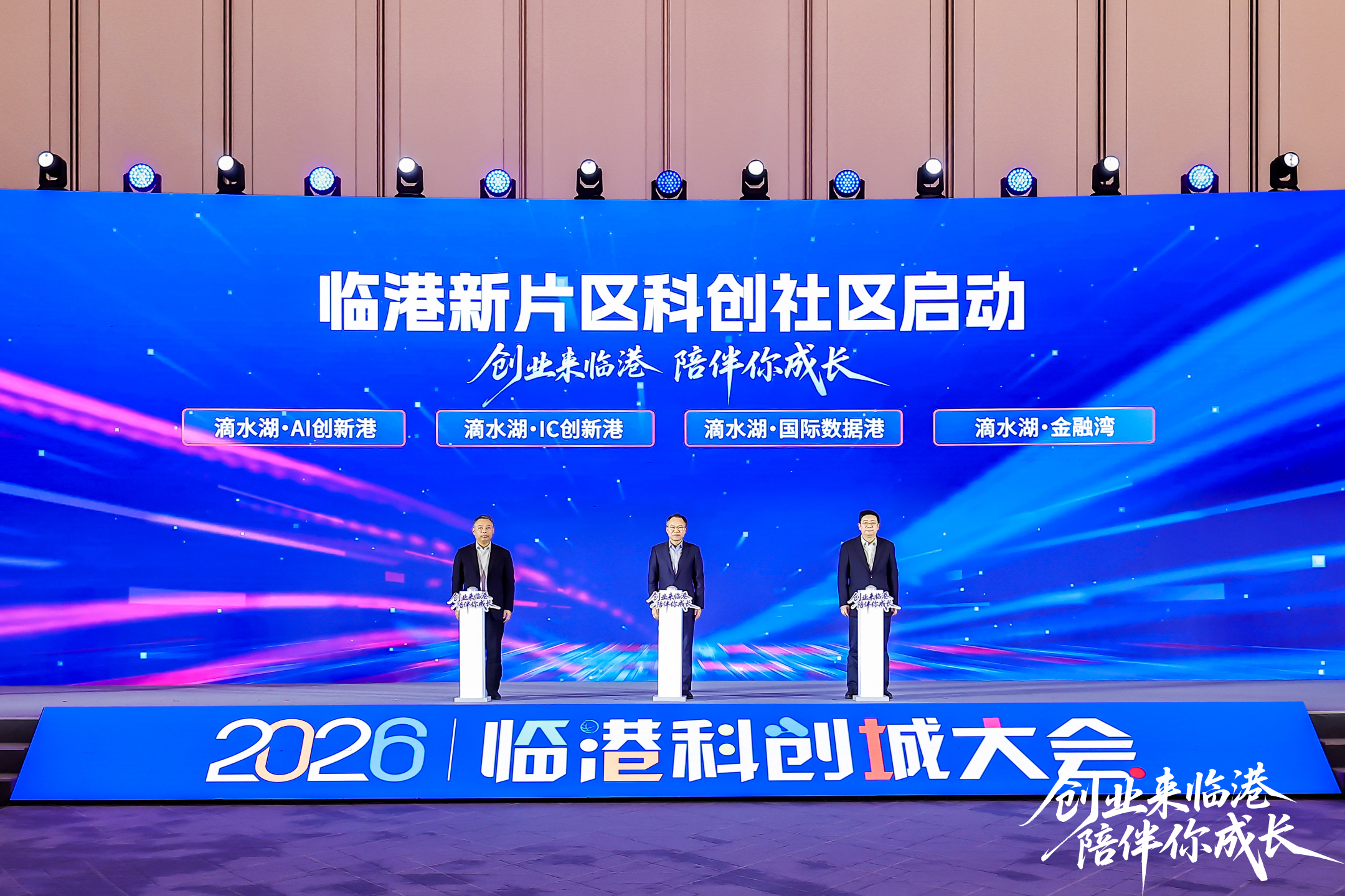
Group 1 - The "2026 Lingang Science and Technology Innovation City Conference" was held in Shanghai, focusing on creating an international first-class innovation city with lower costs, better ecology, and higher success rates for startups [1] - The conference introduced a comprehensive set of innovative measures, including the launch of the "Entrepreneurship Fund" and the establishment of a "Science and Technology Innovation Ecological Map" [1] Group 2 - The "Shanghai Lingang Science and Technology Innovation City Construction Plan" was officially released, aiming to strengthen the "1-10" link of technological innovation and become a key area for technology transfer and new industry development [2][3] - The plan outlines two goals to be achieved by the end of 2027, including the establishment of at least 7 international first-class research institutions and over 2,000 high-tech enterprises [4] Group 3 - The plan includes the establishment of four benchmark innovation communities, focusing on various industry sectors such as digital culture, integrated circuits, and cross-border finance [4] - Five major action plans were introduced to enhance technology transfer, cultivate future industry tracks, attract high-level talent, accelerate capital empowerment, and build an innovative ecosystem [5] Group 4 - Three major entrepreneurial funds were launched, including the Lingang Youth Innovation Fund, to support enterprises at different stages [8] - The conference also introduced new "Dew Lake Innovation Stations" to provide low-cost spaces and comprehensive services for entrepreneurs [9] Group 5 - The "Dew Lake Youth Innovation Community" was officially launched, offering a platform for entrepreneurs to connect and share resources through various activities [10] - A total of over 50 high-growth technology companies with valuations exceeding 1 billion yuan have emerged in Lingang, with more than 70% in later financing stages [10]


2025年杭州地区生产总值超2.3万亿元
Xin Lang Cai Jing· 2026-01-21 12:20
Core Viewpoint - Hangzhou aims for a GDP growth of 5.2% in 2025, reaching 2.3 trillion yuan, with significant increases in trade and retail sectors [1] Economic Growth Projections - The GDP of Hangzhou is projected to grow from 1.6 trillion yuan in 2020 to 2.3 trillion yuan by 2025, with per capita GDP increasing from approximately 21,000 USD to around 25,000 USD [1] - By 2030, the city targets a GDP of 3 trillion yuan and a per capita GDP exceeding 30,000 USD, aligning with developed economy standards [1] Sector-Specific Goals - In 2025, the export scale of goods is expected to surpass 600 billion yuan, reflecting an 8.7% growth, while the total retail sales of consumer goods are projected to reach 949.9 billion yuan, growing by 3.8% [1] - The city's industrial R&D expenditure is anticipated to exceed 90 billion yuan, with the core value added of the digital economy expected to grow by over 9% [1] Strategic Development Initiatives - During the 14th Five-Year Plan period, Hangzhou will focus on becoming a hub for artificial intelligence innovation, establishing a global advanced manufacturing base, and creating a national digital economy innovation center [1] - The city also aims to develop a modern service industry center in the eastern region [1]
去年北京数字经济增加值同比增长8.7%
Zhong Guo Xin Wen Wang· 2026-01-21 07:53
Group 1 - The digital economy in Beijing experienced a year-on-year growth of 8.7% in value added, with core industries growing by 10.4% [1] - From January to November last year, the revenue of strategic emerging services and high-tech services in Beijing increased by 8.9% and 12.5% respectively, with strong performance in information technology services, emerging software development, and new media services [1] - Investment in high-tech industries in Beijing grew by 40.1% last year, with orderly progress in new infrastructure investments related to information, integration, and innovation, supporting industrial innovation and urban development [1] Group 2 - The status of enterprises in Beijing as innovation leaders has strengthened, with R&D expenditures of key large and medium-sized enterprises increasing by 7.1% from January to November last year, and over 10% growth in industrial, scientific research, and technical service sectors [1] - The proportion of enterprises engaging in R&D activities increased by 0.9 percentage points year-on-year [1] - In 2025, the Zhongguancun Demonstration Zone will initiate a new round of spatial layout adjustments, establishing future industry characteristic parks covering 20 new tracks including quantum information and brain science [2]