
量子计算

Search documents
未来产业周报第5期:核聚变技术资本共振,脑机与量子进阶突破,氢能普及提速-20260111
Shenwan Hongyuan Securities· 2026-01-11 14:42
Quantum Technology - The report highlights the clear positioning of the NISQ (Noisy Intermediate-Scale Quantum) era, indicating that current quantum devices are operational but limited in capability, lacking fault tolerance and scalability. Experts estimate that small-scale fault-tolerant quantum computers will take about ten years to develop [8][9] - The collaboration between Argonne National Laboratory and Intel has successfully deployed a 12-qubit silicon-based quantum processor, demonstrating the value of mature silicon technology in scaling quantum computing [10] - D-Wave has showcased a scalable on-chip low-temperature control gate model quantum bit, significantly reducing wiring costs and addressing a major bottleneck in the industry [12][14] Biomanufacturing - Micro Yuan Synthesis has secured nearly 300 million yuan in financing to accelerate the development of methanol biomanufacturing, which addresses the reliance on food-based raw materials in traditional biomanufacturing [15][16] - The first gene-consistent human "lung chip" has been developed, providing a new tool for personalized treatment of respiratory diseases and potentially revolutionizing drug development by reducing reliance on animal models [18] Hydrogen Energy and Nuclear Fusion - Policies in Shanghai and other regions are reducing the operational costs of hydrogen vehicles through subsidies and free highway access, which is expected to significantly boost the adoption of hydrogen fuel cell vehicles [19][20] - The report notes that hydrogen energy is transitioning from being a major electricity consumer to a "regulator" of the grid, enhancing the consumption of renewable energy and long-term storage capabilities [25][28] - The Energy Singularity's "Honghuang 70" nuclear fusion device has achieved a 120-second steady-state operation, marking a significant milestone in commercial nuclear fusion technology [31] - Dongsheng Fusion has completed a multi-hundred million yuan angel round of financing to develop a "deuterium-helium-3" fusion route, which is considered safer and more cost-effective than traditional methods [32][33] Brain-Computer Interface - Strong Brain Technology has raised 2 billion yuan to scale brain-computer interface technology, aiming to help one million disabled individuals regain social functionality within five to ten years [38][39] - Sichuan Province has set maximum prices for brain-computer interface medical services, which will take effect in April 2026, facilitating the clinical application of this technology [40][41] - The first brain-computer interface deep brain stimulator surgery in Southwest China has been successfully performed, providing new treatment options for Parkinson's disease [42][43] Embodied Intelligence - NVIDIA has released several physical AI models and frameworks that support robots in understanding physical laws, enhancing the industrialization of robots across various scenarios [5][13] - Chinese companies represent nearly 25% of robot exhibitors at CES 2026, with humanoid robots making up over 50% of the exhibition area, showcasing the competitive edge of Chinese firms in this sector [5][13] Sixth Generation Mobile Communication (6G) - Nanjing has launched a special plan to build a 6G industrial ecosystem, aiming for full coverage of 6G non-cellular networks by 2027 and the establishment of over 50 vertical industry scenarios [5][14]
全球媒体聚焦 | 英媒:中国彰显了增长的真正意义
Xin Lang Cai Jing· 2026-01-10 13:16
Group 1 - The article highlights China's significant achievements in infrastructure, social development, and technological innovation over the past 20 years, attributing these successes to its political system and visionary leadership [1][3] - China has built approximately 50,000 kilometers of high-speed rail, connecting over 550 cities and covering more than 97% of cities with populations over 500,000, contrasting sharply with the UK's lack of new high-speed rail projects [2][3] - In the last 20 years, China has constructed around 130 new airports and approximately 150,000 kilometers of new highways, which is nearly double the size of the U.S. interstate highway system [2][3] Group 2 - The article emphasizes that China's political decision-making bodies are diverse, including engineers, economists, and social scientists, which has facilitated large-scale infrastructure projects and a shift towards a service-oriented economy [3] - China has established advantages in key sectors such as wind power and battery technology, while also increasing investment in fundamental research and maintaining a leading position in artificial intelligence, quantum computing, and medical technology [3] - The article notes that China has surpassed the U.S. in the production of high-quality research papers, as indicated by the Nature Index, reflecting its growing emphasis on scientific research [3] Group 3 - China accounts for approximately 30% of global manufacturing and is achieving leadership in an increasing number of high-tech fields, indicating that the 21st century is evolving in favor of China [4]

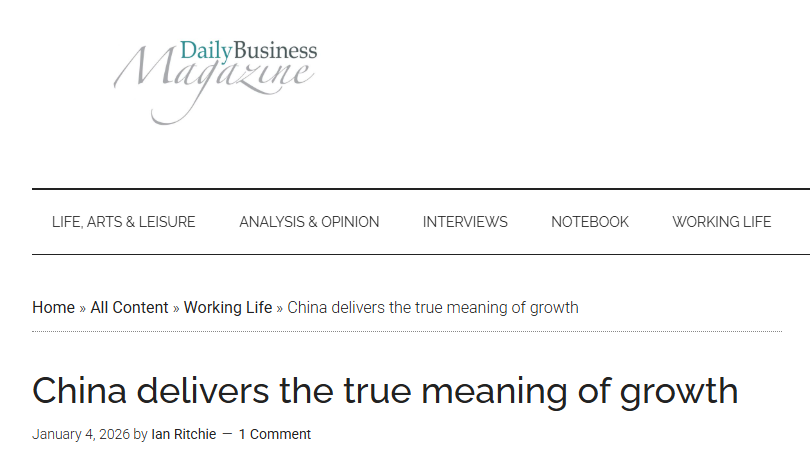
英媒:中国彰显了增长的真正意义
Xin Lang Cai Jing· 2026-01-10 12:16
Group 1 - The article highlights China's significant achievements in infrastructure, social development, and technological innovation over the past 20 years, attributing these successes to its political system and visionary leadership [1][3] - China has built approximately 50,000 kilometers of high-speed rail, connecting over 550 cities and covering more than 97% of cities with populations over 500,000, contrasting sharply with the UK's lack of new high-speed rail projects [2][3] - In the past 20 years, China has constructed around 130 new airports and approximately 150,000 kilometers of highways, which is nearly double the size of the U.S. interstate highway system [2][3] Group 2 - The article emphasizes the diverse composition of China's policy decision-making bodies, which includes engineers, economists, and social scientists, facilitating large-scale infrastructure projects and a shift towards a service-oriented economy [3] - China has established advantages in key sectors such as wind power and battery technology, while also increasing investment in fundamental research and maintaining leadership in artificial intelligence, quantum computing, and medical technology [3][4] - The active entrepreneurial environment and supportive policies in China are attracting overseas talent back to the country, contributing to its global manufacturing share of approximately 30% and leadership in high-tech fields [4]
2025量子计算行业深度:行业概况、发展趋势、产业链及相关公司深度梳理
Sou Hu Cai Jing· 2026-01-10 02:15
Industry Overview - Quantum computing is emerging as a revolutionary technology that could reshape various fields such as drug development, materials science, and financial modeling, driven by its potential for exponential computational power [1] - The industry is transitioning from experimental phases to early commercialization, becoming a strategic focal point in global technological competition [1] Development Trends - The core of quantum computing lies in utilizing quantum bits (qubits) for parallel processing capabilities that far exceed classical computers. Current global technological routes include superconducting, ion trap, photonic, neutral atom, and semiconductor pathways, with superconducting technology currently leading in engineering and industrialization [2] - The future of quantum computing is expected to feature a hybrid computing model, integrating quantum and classical computing to address practical challenges during the maturation of quantum hardware [5] Global Competition - The United States and China are leading the global race in quantum computing, with the U.S. establishing a comprehensive ecosystem supported by significant policy investments and innovation, while China is rapidly catching up through strategic national initiatives and domestic technological advancements [3][20] - Over 30 countries are now engaged in quantum computing initiatives, highlighting its importance in maintaining national technological sovereignty [20] Industry Chain Structure - The quantum computing industry chain is forming, with upstream focusing on providing essential infrastructure like dilution refrigerators and precision measurement systems, midstream involving quantum computer manufacturers and software suppliers, and downstream centered on quantum computing cloud platforms aimed at democratizing access to computational power [4] - The application exploration is primarily research-focused, but commercial prospects in finance, chemical engineering, and pharmaceuticals are gaining attention as key drivers for market expansion [4] Key Players and Innovations - Major companies like Google, IBM, and Microsoft are making significant strides in quantum computing. Google’s Willow chip, with 105 qubits, has achieved a breakthrough in error rate reduction, while IBM has introduced a modular quantum computer with enhanced performance and error rates [34][38] - In China, significant advancements include the development of the 105-qubit "Zuchongzhi 3" superconducting quantum computer and the establishment of a quantum artificial intelligence consortium to promote integration with AI technologies [39] Future Outlook - The quantum computing market is projected to experience rapid growth in the next five to ten years, with expectations for valuable commercial applications in specific fields [5] - The industry is witnessing a surge in domestic companies and patent applications, indicating a vibrant innovation landscape in China, with 153 quantum computing companies and over 10,000 patent applications filed in recent years [28][29]
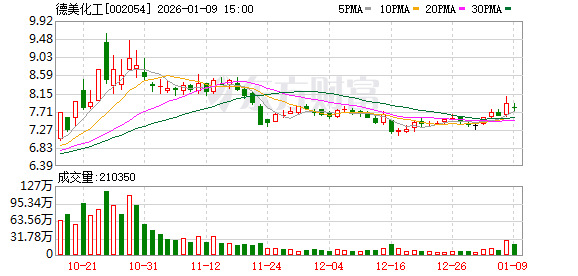
德美化工:公司参与投资的产业基金佛山德盛天林股权投资合伙企业投资了本源量子
Mei Ri Jing Ji Xin Wen· 2026-01-09 09:07
Group 1 - The company expressed gratitude for investor interest and confirmed its participation in an industrial fund that has invested in Benyuan Quantum, holding 0.97% of its shares [1] - An investor inquired about the company's role in the Quantum Computing Biochemical Industry Application Ecological Alliance initiated in collaboration with Benyuan Quantum [2]

图灵量子完成数亿元融资
Bei Jing Shang Bao· 2026-01-08 11:25
Core Viewpoint - Turing Quantum, a domestic quantum computing company, has successfully completed two rounds of strategic financing totaling several hundred million yuan within six months, indicating strong investor confidence and support for the quantum computing sector [1] Group 1: Financing Details - The recent financing was led by national-level capital along with market-oriented institutions such as Dinghui Baifu, Guoke Capital, and Haitong Kaiyuan, showcasing a diverse investment base [1] - Existing shareholders have also continued to increase their investments, reflecting ongoing confidence in the company's growth potential [1] Group 2: Use of Funds - The funds raised will be utilized to further research and development in optical quantum computing and to facilitate the industrialization of related technologies, contributing to the establishment of a robust optical quantum computing ecosystem [1]
AI助力突破瓶颈,开启商业转化模式,飞行汽车与量子计算有何共通点?
Huan Qiu Shi Bao· 2026-01-07 22:31
Group 1: Flying Cars - The dream of flying cars, once considered a fantasy, is becoming a reality with the emergence of eVTOL (electric Vertical Take-Off and Landing) aircraft, which are now the focus of the low-altitude economy [2] - Joby Aviation plans to launch an "air taxi" service in Dubai in early 2026 and aims to expand operations in the U.S. [2] - The total market capitalization of Joby Aviation and its major competitors has reached $20 billion, more than tripling since September 2024 [2] - A Chinese eVTOL manufacturer has seen its valuation soar from $6 billion to $12 billion, surpassing Renault and Lyft [2] Group 2: Quantum Computing - Quantum computing has made significant advancements, with researchers demonstrating that using more physical qubits can reduce error rates, addressing long-standing engineering challenges [3][4] - The total market capitalization of three publicly traded quantum computing companies—Rigetti Computing, IonQ, and D-Wave—has reached $33 billion, a twelvefold increase since the end of 2023 [4] - Quantinuum, a quantum computing startup valued at $11 billion, has begun selling a new commercial quantum computer and providing cloud access services [4] Group 3: Nuclear Fusion - Nuclear fusion technology is advancing rapidly, with improvements in tokamak devices that are expected to achieve a significant breakthrough by producing more energy than required for the reaction [5] - The development of high-temperature superconductors is crucial, as they operate at -200°C, requiring less cooling energy and generating stronger magnetic fields [5] Group 4: Role of Artificial Intelligence - Artificial intelligence is playing a pivotal role in the advancements of these technologies by aiding in battery material design, error correction in quantum computing, and controlling plasma in tokamak devices [6]
合肥量超融合计算中心上线运行
Xin Lang Cai Jing· 2026-01-07 17:12
Core Viewpoint - The Hefei Super Fusion Computing Center has officially launched, providing diverse quantum computing services globally, marking a significant advancement in China's quantum computing capabilities [1] Group 1: Infrastructure and Technology - The Hefei Super Fusion Computing Center is built on the Hefei Advanced Computing Center's supercomputer, featuring 2 superconducting quantum computers with over 180 qubits and 1 ion trap quantum computer with 12 qubits [1] - The center has developed a "super fusion system" that includes both underlying operating systems and upper software systems, making it the first localized deployment in China supporting multiple technological routes [1] Group 2: Applications and Future Prospects - The quantum center has already achieved scenario validation in multiple fields and aims to deepen application exploration and accelerate breakthroughs in practical scenarios [1] - The center's capabilities include high-speed interconnection with multiple quantum computers, indicating a new practical stage in China's super fusion computing field [1] Group 3: Development and Innovation - The superconducting quantum computer deployed at the center has a scale and performance that meet international advanced levels, with measurement and control systems and low-temperature devices developed independently by the company [1] - The superconducting quantum computer has a capacity of 200 qubits, showcasing significant technological advancements in the sector [1]

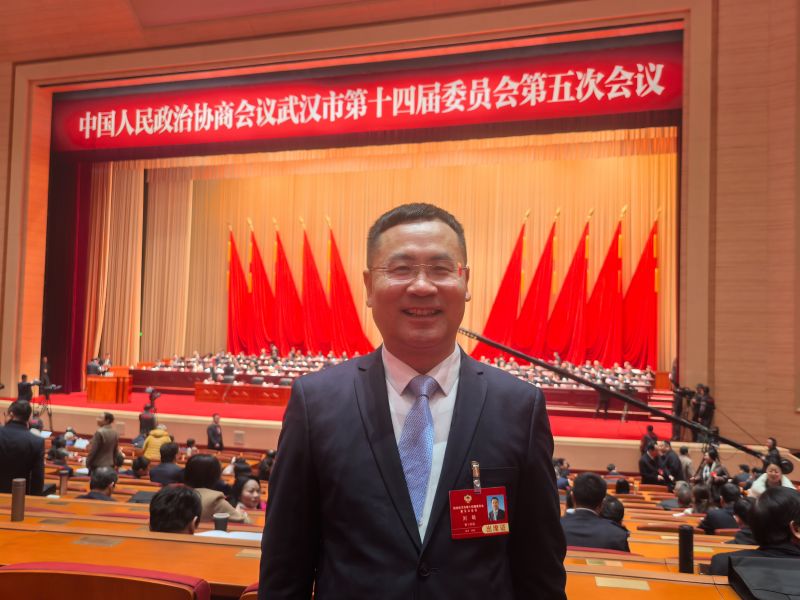
武汉市政协委员刘萌:四举措加快推动量子计算“汉产汉研汉用”
Zhong Guo Fa Zhan Wang· 2026-01-06 06:38
Core Viewpoint - Wuhan is actively promoting quantum computing as a future industry, with a focus on local research, development, and application, as highlighted by Liu Meng's four key suggestions during the 2026 Two Sessions [1][3]. Group 1: Suggestions for Quantum Computing Development - Increase R&D efforts in areas such as neutral atom quantum bits, quantum error correction technology, and quantum cloud platform applications to address challenges in development, adaptation, and usage [3]. - Accelerate the construction of a hybrid computing platform that integrates quantum and classical computing, providing efficient computing services [3]. - Initiate pilot applications of quantum computing in key industries in Wuhan, such as biomedicine, new materials, automotive manufacturing, and financial risk management, to validate technology feasibility and application effectiveness [3]. - Build a quantum computing ecosystem by collaborating with local universities and research institutions to establish training bases and promote the use of quantum cloud platforms [3]. Group 2: Current Status and Future Potential - Wuhan has established a solid foundation in quantum computing, particularly in neutral atom quantum computing, with significant progress in developing hundred-bit machines and cloud platforms [4]. - Quantum computing, as a core branch of quantum technology, offers parallel processing capabilities that surpass classical computing, promising disruptive breakthroughs in complex system simulations and optimization solutions [4]. - The national "14th Five-Year Plan" emphasizes the strategic importance of quantum technology, positioning it as a key area for future economic growth and innovation [5].
精雕“中国芯”,攀登科技高峰
Ren Min Wang· 2026-01-05 22:44
Core Insights - The "Benyuan Wukong" superconducting quantum computer has completed over 700,000 computing tasks globally, indicating that China's quantum computing capabilities have reached a usable stage [1] - The team has developed the first domestic specialized laser annealing equipment and non-destructive probe instruments for quantum chip production, emphasizing the importance of mastering core technologies independently [1] - The breakthroughs in medium-scale manufacturing capabilities and the completion of numerous quantum computing tasks lay a solid foundation for stronger "Chinese computing power" [1] Group 1 - The "Benyuan Wukong" quantum computer's chip research team has made significant advancements in quantum chip production, showcasing the progress in China's quantum computing sector [1] - The team is focused on enhancing the integration of control circuits and chips, aiming for further technological advancements in the coming year [1] - The commitment to independent research and development from design to manufacturing is crucial for achieving breakthroughs in quantum technology [1]