高端装备制造

Search documents
岱勒新材:公司与厦门博鑫通投资、广州经纬弘利共同投资设立捷泰(广州)智造科技有限公司,持股51%
Ge Long Hui· 2026-02-03 10:56
Group 1 - The core point of the article is that Dai Le New Materials has announced a joint investment with Xiamen Boxintong Investment and Guangzhou Jingwei Hongli to establish a new company, Jietai (Guangzhou) Intelligent Manufacturing Technology Co., Ltd. with a registered capital of 50 million yuan [1] - The company will contribute 25.5 million yuan, holding a 51% stake in the new venture [1] - The new company's business scope includes research, production, and sales of high-end and intelligent equipment, superhard materials and products, electronic new materials, software and electronic components, as well as technology and goods import and export [1]

国资央企提质增效扎实推进
Jing Ji Ri Bao· 2026-02-02 22:10
2025年,国资央企认真落实党中央、国务院决策部署,各项工作取得显著成效。数据显示,截至2025年 底,中央企业资产总额突破95万亿元,2025年实现利润总额2.5万亿元,完成固定资产投资5.1万亿元, 上缴税费2.5万亿元,有效带动产业链上下游企业融通发展,为我国顺利完成经济社会发展主要目标任 务提供了有力支撑。 强化科技创新 "今年,国资央企将大力强化自主创新、原始创新,为实现高水平科技自立自强、建设科技强国提供有 力支撑。"国务院国资委科技创新局局长张剑龙表示,将构建高水平创新生态,充分发挥中央企业对创 新链、产业链、资金链的集成作用,强化产学研协同,打造要素共投、收益共享、风险共担的联合创新 体系,助力增强国家创新体系优势。 焕新产业体系 国务院国资委近日公布的数据显示,"十四五"以来,中央企业在战略性新兴产业累计投资超过10万亿 元,占总投资比重从"十四五"初期的22%提升至40%以上。 发展新兴产业是中央企业优化布局结构的必选项。2025年,中央企业完成战略性新兴产业投资2.5万亿 元、占总投资的41.8%;中央企业战略性新兴产业发展专项基金正式发布,首期募资510亿元,有效撬 动社会资本共同"投 ...
以新质生产力推进转型发展 山西:2026年GDP增长目标为4.5%至5%
Shang Hai Zheng Quan Bao· 2026-02-02 18:44
Economic Growth Targets - Shanxi Province aims for a GDP growth target of 4.5% to 5% for 2026, with fixed asset investment and social retail sales also targeted to grow by 5% [1] - The province emphasizes the importance of high-quality development and comprehensive transformation during the 14th Five-Year Plan period [1] Key Development Strategies - Shanxi will focus on ten key tasks including expanding domestic demand, promoting energy transition, upgrading industries, and fostering moderate diversification [1] - The province plans to continue major project construction, targeting over 600 billion yuan in transportation infrastructure investment, over 220 billion yuan in water conservancy investment, and over 600 billion yuan in municipal infrastructure investment [1] Energy Transition Initiatives - Energy transition is highlighted as a critical focus, with plans to implement nine paths for energy technology innovation and build a new energy system [2] - Specific initiatives include constructing 60 intelligent coal mines, expanding wind and solar power installations, and developing smart grids and virtual power plants [2] Industrial Upgrading Efforts - Shanxi aims to strengthen emerging pillar industries through innovation and large-scale application of new technologies [3] - The province will focus on developing new materials, high-end equipment manufacturing, and electronic information industries, while also promoting sustainable development in non-coal mining [3]
长三角议事厅·周报|沪苏湖高铁跑出跨省成果转化加速度
Xin Lang Cai Jing· 2026-02-02 09:46
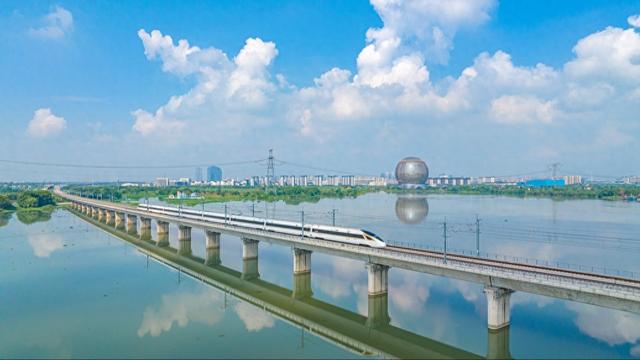
2026年伊始,长三角铁路建设交出亮眼"成绩单"。截至2025年底,区域铁路营业里程突破1.54万公里, 其中高铁里程攀升至8100余公里。作为长三角轨道交通网络的关键一环,沪苏湖高铁开通一周年以来, 累计安全运送旅客超3360万人次,日行列车从最初80对增至111.5对。这条将上海与湖州通行时间压缩 至半小时的"黄金走廊",不仅让"工作在上海,生活在湖州"的同城化图景照进现实,更打通了研发实验 室与工厂生产线的"极速对流"通道。 就在这个月,沪苏浙皖四地同步亮出产业转型"施工图":上海印发《支持先进制造业转型升级三年行动 方案(2026-2028年)》,苏、浙、皖则分别实施"人工智能+"行动、未来产业"星火计划"和智能机器人 专项。轨道交通的物理连接,正将四地政策规划焊接成一张紧密的产业协同网。 这种"时间折叠"效应,对于从实验室"0到1"走向生产线"1到10"的成果转化尤为关键。工艺参数的着 陆、试制的反复迭代、质量问题的现场闭环,绝非简单的图纸交接,而是充满了不确定性。视频会议或 许能高效传递信息,但永远无法替代研发专家与一线技工在产线的机器轰鸣声中的"即时碰撞",当场解 决问题的"在场感"。 当"必须 ...

广东的“县域短板”,博罗之后如何再造“千亿县”?
Jing Ji Guan Cha Wang· 2026-02-02 09:38
Core Insights - Huizhou's Boro County is set to become Guangdong's first "trillion county" by 2025, marking a significant milestone for the province and ending its absence from the "trillion county club" [1][2] - The emergence of "trillion counties" reflects a shift in economic focus towards county-level development, which is increasingly recognized as vital for regional economic dynamics [2] Economic Landscape - As of 2024, there are 62 "trillion counties" in China, with Jiangsu's Kunshan and Jiangyin exceeding 500 billion in GDP, showcasing their role as economic engines [1] - Guangdong has historically concentrated economic growth in cities like Shenzhen and Guangzhou, lacking strong county-level economies [1][3] Administrative and Geographical Factors - Guangdong's unique administrative evolution, particularly in the Pearl River Delta, has led to a scarcity of "trillion counties" as many economically strong counties have been restructured into districts [3][4] - The economic disparity between the Pearl River Delta and other regions in Guangdong is evident, with the former accounting for over 80% of the province's economic output [4] Development Initiatives - The "Hundred Counties, Thousand Towns, and Ten Thousand Villages High-Quality Development Project" was launched to address urban-rural imbalances and promote county-level economic growth [4] - From 2023 to 2025, 57 counties in Guangdong are expected to see GDP growth rates surpassing the provincial average, indicating a positive trend in county-level economic development [4] Boro County's Economic Growth - Boro County's GDP has seen significant growth, surpassing 700 million in 2021, 800 million in 2022, and projected to exceed 1 billion by 2025 [6] - The county has shifted from a fragmented industrial approach to a more systematic layout, focusing on developing a trillion-level smart equipment industry park [6][7] Industrial Strategy - Boro County has implemented an "eight ones" industrial chain mechanism to enhance the precision of its investment strategies and has established a "four ones" park development model to improve efficiency [7] - The county has successfully developed eight hundred billion-level industrial clusters, focusing on modern industries such as electronic information and new energy [7][8] Lessons for Other Counties - Boro's experience serves as a model for other counties in Guangdong, emphasizing the importance of concentrated industrial development and collaboration within the regional economic framework [8][9] - The county's integration into the Guangdong-Hong Kong-Macao Greater Bay Area has facilitated industrial transfer and collaboration, enhancing its economic capabilities [8] Comparative Insights - The development paths of Jiangsu and Zhejiang provinces, which have the highest number of "trillion counties," offer valuable lessons for Guangdong, particularly in terms of administrative efficiency and fostering local industries [10] - The emphasis on private and small enterprises in Jiangsu and Zhejiang highlights the potential for Guangdong to enhance its economic vitality through similar support mechanisms [10]
1月中观景气结构暂延续前期特征
GF SECURITIES· 2026-02-02 05:51
Group 1: Manufacturing PMI Analysis - In January, the manufacturing PMI decreased by 0.8 points to 49.3, primarily due to seasonal factors and a significant drop in consumer goods and high-energy industries, which fell by 2.1 and 1.0 points respectively[2] - High-tech manufacturing PMI stood at 52.0, down 0.5 points, while equipment manufacturing PMI decreased by 0.3 points to 50.1[2] - The consumer goods and high-energy industries recorded PMIs of 48.3 and 47.9, reflecting declines of 2.1 and 1.0 points respectively[2] Group 2: Industry Performance Insights - The automotive sector saw a significant decline, with retail sales of passenger cars dropping by 37% in January compared to the same period last year[2] - Brent crude oil prices rose from $61 per barrel at the end of 2025 to $71 per barrel by the end of January 2026, impacting the petrochemical and chemical industries negatively[2] - The non-ferrous and black metal sectors experienced increases of 4.0 and 2.0 points respectively, driven by global pricing expectations and pre-season stockpiling[2] Group 3: Emerging Industries and Construction Sector - Emerging industries such as biotechnology, new energy vehicles, and next-generation information technology continue to lead in performance, with biotechnology remaining above 60 in the high prosperity range[5] - The construction sector's PMI fell by 4.0 points to 48.8, exceeding seasonal declines observed in previous years[6] - New orders in the construction sector decreased by 7.3 points, indicating a slowdown in demand[8] Group 4: Service Sector Trends - The service sector PMI slightly decreased by 0.2 points to 49.5, remaining in the contraction zone for three consecutive months[10] - Financial services, including monetary finance and capital market services, maintained high activity levels, with indices above 65[10] - The transportation and information services sectors saw declines in their PMIs, while residential services experienced a slight increase of 1.6 points[10]
37页|央企A股上市公司战新产业布局和模式路径比较研究报告
Sou Hu Cai Jing· 2026-02-01 23:41
Core Insights - Strategic emerging industries are key for enterprises to explore new business growth points and cultivate new productive forces. Central enterprises have been actively transforming and upgrading their industries through initiatives like "Industry Renewal" and "Future Navigation," expanding into emerging fields and accelerating their layout in new tracks. By 2024, the revenue share of strategic emerging industries for central enterprises is approaching 30% [1][15]. Group 1: Overview of Central Enterprises' Strategic Emerging Industries - Central enterprises' A-share listed companies are becoming core drivers for the development of strategic emerging businesses, leveraging their capital platform advantages [1][15]. - A total of 402 central enterprises' A-share listed companies were analyzed, with 64% involved in strategic emerging industries, indicating a significant engagement in these sectors [30]. - The distribution of these enterprises is concentrated in new generation information technology, new materials, high-end equipment manufacturing, and renewable energy sectors [30][25]. Group 2: Industry Analysis and Performance - Nearly 80% of strategic emerging enterprises are found in new generation information technology, new materials, high-end equipment manufacturing, and renewable energy sectors, with significant profitability in these areas [25][28]. - The research indicates that central enterprises in strategic emerging industries contribute 26% of total revenue and 3% of total profit, with new generation information technology and renewable energy showing strong performance [38][39]. - The return on equity (ROE) for sectors like renewable energy (7.53%), marine equipment (5.76%), and new energy vehicles (5.04%) is above the average level of central enterprises (3.33%) [43][44]. Group 3: Strategic Insights and Recommendations - The report aims to provide practical references and thought support for state-owned enterprises in their layout within strategic emerging industries, focusing on the dynamic evolution, mechanisms, and path choices of different industry enterprises [1][15]. - The analysis includes a systematic extraction of strategic positioning, business layout models, and implementation paths, offering methodologies and practical tools for state-owned enterprises to identify opportunities and optimize strategies [18][23].

每经品牌100指数上周涨0.51% 成分股中国海油股价创历史新高
Mei Ri Jing Ji Xin Wen· 2026-02-01 13:06
有券商机构指出,1月制造业PMI(采购经理指数)再度回落到荣枯线以下,反映出有效需求仍不足。A 股流动性支撑延续,临近2026年春节长假,市场交投活跃度依然处于较高水平,短期市场或仍以结构性 震荡为主。 每经记者:刘明涛每经编辑:彭水萍 上周,随着热门板块出现高位震荡,A股主要股指迎来调整,均出现小幅回落,每经品牌100指数在蓝 筹股带动下,周涨幅为0.51%。 有市场人士认为,短期来看,A股市场在交投活跃支撑下,或将延续盘整过程。 "中字头"个股表现出色 上周,A股市场主要指数波动加剧,从周K线来看,截至1月30日收盘,上证指数下跌0.44%,以4117.95 点报收;深证成指下跌1.62%,以14205.89点报收;创业板指和科创50指数周跌幅分别达到0.09%和 2.85%,每经品牌100指数实现小幅反弹,周涨0.51%,以1154.56点报收。 市场热点方面,A股市场板块轮动速度加快,周内半导体、白酒、地产等板块阶段性走高,但行情持续 性仍显不足。经历近期持续上涨后,受国际贵金属价格高位回落影响,上周五有色金属板块大幅回调。 成分股方面,"中字头"个股上周表现出色,中国海油、中国石油以及中国重汽周涨幅 ...

果然追上来了,郑州未来如何发力才能保位?
Sou Hu Cai Jing· 2026-02-01 07:10
Core Insights - The article discusses the economic performance and competitive dynamics between Zhengzhou and Fuzhou, highlighting Zhengzhou's GDP of 15,282.6 billion yuan and Fuzhou's GDP of 15,112.32 billion yuan for 2025, with growth rates of 5.7% and 5.6% respectively [1][3]. Group 1: Economic Comparison - Zhengzhou's GDP for 2025 is reported at 15,295.8 billion yuan, slightly ahead of Fuzhou by 183.48 billion yuan, but Fuzhou shows a faster growth rate of 5.6% compared to Zhengzhou's 5.3% [5]. - In the fourth quarter, Fuzhou's GDP reached approximately 5,107.32 billion yuan, significantly outpacing Zhengzhou's 4,106 billion yuan, indicating a strong end-of-year performance for Fuzhou [5][6]. Group 2: Competitive Landscape - Zhengzhou's advantages include being a national central city, a comprehensive transportation hub, and a cluster for advanced manufacturing, while Fuzhou excels in marine economy, digital economy, and private sector activity [6][7]. - Fuzhou's service sector is more robust, with a tertiary industry proportion of 58.96%, compared to Zhengzhou's 52% [6][18]. Group 3: Strategic Directions for Zhengzhou - Zhengzhou aims to enhance its manufacturing sector by focusing on advanced manufacturing and addressing Fuzhou's strengths in marine and new energy industries [7][9]. - The city plans to develop a comprehensive transportation hub integrating air, rail, and logistics to enhance its economic reach and competitiveness [12][13]. Group 4: Service Sector and Innovation - To address its service sector shortfall, Zhengzhou will focus on high-end services and traditional service quality improvements, targeting a financial sector value of over 1,000 billion yuan by 2026 [16][18]. - The city intends to boost its innovation capabilities by increasing R&D intensity and fostering high-tech enterprises, aiming for a R&D investment intensity of 3.2% by 2026 [21][24]. Group 5: Regional Collaboration - Zhengzhou seeks to leverage its urban agglomeration by enhancing collaboration within the Central Plains urban cluster, aiming for a GDP of over 42,000 billion yuan by 2026 [26][28]. - The strategy includes attracting industries from the eastern regions and utilizing its population advantage to counterbalance Fuzhou's coastal economic strengths [25][29]. Group 6: Future Goals - By 2026, Zhengzhou aims to surpass Fuzhou by over 500 billion yuan in GDP, with a growth rate exceeding 6% and an advanced manufacturing value exceeding 7,000 billion yuan [30][31]. - Long-term goals include achieving a GDP of over 20,000 billion yuan by 2030, establishing a competitive edge through a combination of advanced manufacturing, hub economy, and innovative services [31][32].
000821,突然火了!48家机构调研!公司称对太空光伏进行技术储备
证券时报· 2026-02-01 04:20
Core Insights - The article highlights the recent institutional investor research activities involving 113 listed companies, with notable stock performance from companies like Kewen Technology and Hason Co., which saw increases exceeding 30% [3]. Group 1: Shanghai Bank - Shanghai Bank received the highest number of institutional investor visits last week, with 75 institutions participating, focusing on the bank's credit deployment plans for the new year [5]. - The bank's management indicated an improvement in the quantity and quality of its "New Year Red" credit projects, particularly in retail credit, emphasizing housing and automotive sectors [5]. - The bank anticipates a slight decline in net interest margin due to expected decreases in both loan and deposit pricing, influenced by market competition and the ongoing repricing of existing assets [5]. Group 2: Tainkang - Tainkang was visited by 57 institutional investors, with a focus on its upcoming product approvals and commercialization strategies [7]. - The company announced significant revenue targets for 2026-2028, aiming for 1 billion, 1.5 billion, and 2 billion respectively, with profit targets of 300 million, 500 million, and 800 million [7][8]. - Tainkang plans to leverage existing products and new approvals to achieve substantial revenue growth, particularly with its unique formulations expected to dominate the market [8]. Group 3: Bee Assistant - Bee Assistant also received 57 institutional visits, with a focus on its developments in AI applications and commercial aerospace [8]. - The company is positioning itself in the aviation internet sector, aiming to enhance communication services and follow advancements in low-orbit satellite technology [8]. Group 4: ST Jingji - ST Jingji engaged with 48 institutional investors, reporting significant breakthroughs in the North American market as a core equipment supplier for photovoltaic components [10]. - The company is preparing for advancements in space photovoltaic technology, having made technical reserves in response to emerging opportunities in this field [10][11]. - ST Jingji emphasizes the importance of lightweight and flexible solar technology for space applications, aligning its R&D efforts with these requirements [11].