
AI医疗

Search documents
特朗普突发!10分钟,直线涨停
Zhong Guo Ji Jin Bao· 2026-01-13 08:21
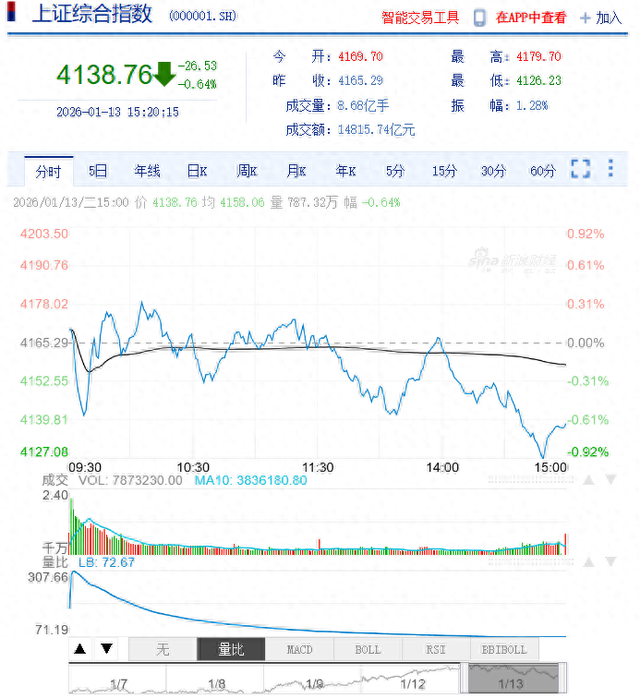
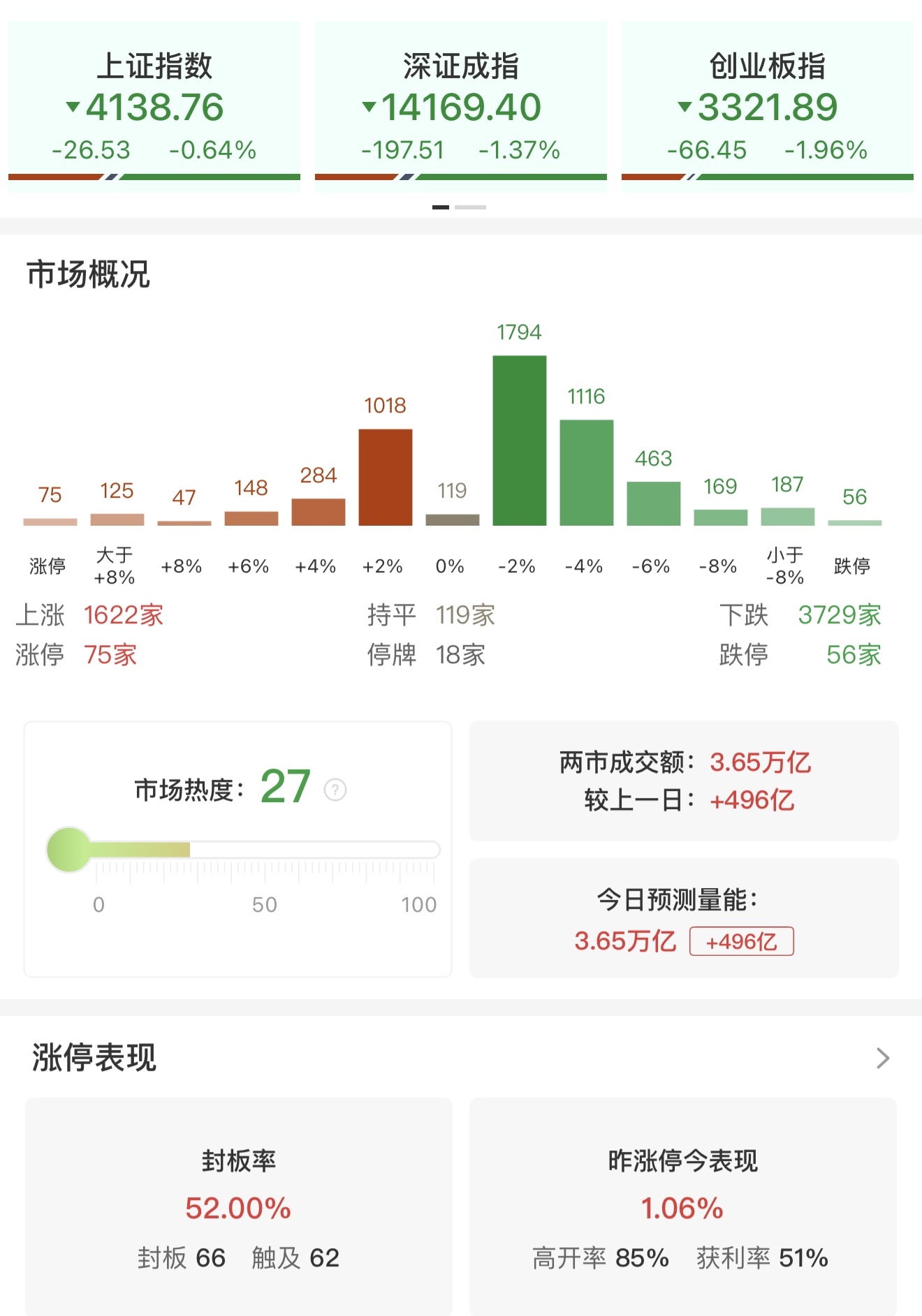
Market Overview - The market experienced a significant pullback, with the Shanghai Composite Index ending a 17-day rally, closing down 0.64% [2] - The total trading volume reached a historical high of approximately 3.7 trillion yuan [1] Stock Performance - A total of 1,622 stocks rose, while 3,729 stocks fell, with 75 stocks hitting the daily limit up and 56 stocks hitting the daily limit down [3][4] - The number of stocks that increased decreased by 1,113, representing a decline of 40.69% [4] Sector Movements - The commercial aerospace sector saw a collective decline, with several stocks, including China Satellite Communications and Aerospace Science and Technology, hitting the daily limit down [5] - AI healthcare and AI pharmaceutical stocks continued to show strength, with several stocks, such as Sichuang Medical and Nuo Si Ge, hitting the daily limit up [7][8] - AI marketing stocks remained active, with stocks like Ingrity Media and Leo Group achieving three consecutive limit ups [9] Notable Company News - TBEA Co., Ltd. experienced a rapid increase, hitting the daily limit up within 10 minutes, driven by news regarding U.S. tech companies and their commitments to manage electricity costs for data centers [11] - Oil and gas stocks also saw gains, with companies like Zhun Oil and Tongyuan Petroleum hitting the daily limit up and increasing by over 10% [11] International Market Influence - The Nikkei 225 index in Japan rose over 3%, while the Korean Composite Index closed up 1.47%, influenced by political developments in Japan regarding potential early elections [12]



三大指数集体收跌,沪指终结17连阳
Guan Cha Zhe Wang· 2026-01-13 08:19
Market Overview - The three major indices collectively adjusted, with the Shanghai Composite Index ending a 17-day winning streak, closing down 0.64% [1] - The Shenzhen Component Index fell by 1.37%, while the ChiNext Index experienced a decline of 1.96% [1] Trading Data - The Shenzhen Component Index opened at 14,397.69, reached a high of 14,458.89, and closed at 14,366.91, reflecting a decrease of 1.37% [3] - The trading volume for the day was 1.195 billion hands, with a total transaction value of 21,694.11 billion yuan [3] Sector Performance - The total transaction value across the Shanghai, Shenzhen, and Beijing markets reached 36,991 billion yuan, an increase of 541 billion yuan compared to the previous day [5] - Major capital inflows were observed in sectors such as medical devices, gaming, and energy metals, while there were net outflows in consumer electronics, aerospace, and telecommunications [5] Stock Movements - Over 3,700 stocks in the market experienced declines [7] - The AI application concept sector saw gains, with several stocks hitting the daily limit, including Inry Media, Lioo Co., and Shenguang Group [7] - The AI medical concept remained active, with Meian Health achieving three consecutive limit-ups, and stocks like Hongbo Pharmaceutical and Xin Ganjiang also hitting the limit [7] - The power grid equipment sector strengthened in the afternoon, with stocks like Tebian Electric Apparatus and Sanbian Technology reaching the daily limit [7] - Retail concepts showed active performance, with Sanjiang Shopping achieving two consecutive limit-ups [7] - Oil and gas stocks surged during the day, with Zhuan Oil Co. hitting the daily limit and Tongyuan Petroleum rising over 10% [7] - Conversely, sectors such as commercial aerospace and controllable nuclear fusion faced significant declines, with stocks like Shunhao Co. and China Satellite Communications hitting the daily limit [7] - The computing hardware industry chain also saw declines, particularly in the server and CPO segments [7]
特朗普突发!10分钟,直线涨停
中国基金报· 2026-01-13 08:18
Market Overview - The market experienced a significant pullback after a long rally, with the Shanghai Composite Index ending a 17-day winning streak, closing down 0.64% [2] - Total market turnover reached a record high of approximately 3.7 trillion CNY, with 1,622 stocks rising and 3,729 stocks falling [3][4] Sector Performance - The commercial aerospace sector saw a collective decline, with several stocks, including China Satellite Communications and Aerospace Science and Technology, hitting the daily limit down. Companies issued warnings about "detaching from fundamentals" and advised "cautious investment" [5] - AI healthcare and AI pharmaceutical stocks continued to perform strongly, with multiple stocks, such as Sichuang Medical and others, hitting the daily limit up [6] - Oil and gas stocks experienced a surge, with Zhun Oil and Tongyuan Petroleum reaching the daily limit up and increasing over 10% [8] Notable Stocks - TBEA Co., Ltd. saw a rapid increase, hitting the daily limit within 10 minutes, driven by overseas news regarding energy costs for data centers [10][13] - Other notable gainers included Tianlong Group, Worth Buying, and Yidian Tianxia, with increases of 19.97%, 11.61%, and 10.72% respectively [7] International Market Influence - The Nikkei 225 index rose over 3%, and the Korean Composite Index closed up 1.47%, influenced by political developments in Japan regarding potential early elections [14]

天量回调!商业航天今日熄火!这个板块午后却突然爆发,千亿龙头十分钟爆拉12%,直冲涨停!
雪球· 2026-01-13 08:14
Market Overview - The A-share market experienced a collective pullback, with the Shanghai Composite Index ending a 17-day winning streak, closing down 0.64% at 4138.76 points. The Shenzhen Component fell 1.37% to 14169.40 points, and the ChiNext Index dropped 1.96% to 3321.89 points. The total trading volume in Shanghai, Shenzhen, and Beijing reached 36.991 billion, an increase of 54.1 billion from the previous day, setting a new historical high [2]. Sector Performance - Most industry sectors saw declines, with precious metals, medical services, mining, and biopharmaceuticals leading in gains. In contrast, aerospace, communication equipment, computer devices, shipbuilding, semiconductors, and electronic chemicals faced significant losses [2]. - The AI application concept stocks rose against the trend, with over ten component stocks hitting the daily limit. The AI medical concept remained active, with stocks like Meinian Health and Hongbo Pharmaceutical achieving consecutive limit-ups [2][8]. Electric Power Sector - The electric power sector saw a sudden surge in the afternoon, with stocks like Tebian Electric Apparatus and Sanbian Technology hitting the daily limit. Other companies in the transformer industry also experienced significant gains [3][5]. AI and Energy Demand - The explosion of AI has led to a surge in electricity consumption in data centers, causing increased electricity costs for residents in some areas of the U.S. Former President Trump stated that tech giants must bear the costs of building AI data centers to avoid raising electricity bills for Americans. Elon Musk emphasized that energy (watts) will become the essence of currency in the AI and robotics era [6]. - TrendForce analysts noted that North America is experiencing strong demand for transformer markets due to aging grid updates and the massive energy needs of AI data centers. The supply gap for power transformers and distribution transformers in North America is estimated at 30% and 6%, respectively [6]. AI Medical Sector - The AI medical industry is entering a golden development period, with innovations in medical imaging AI-assisted diagnosis, intelligent surgical robots, and AI platforms for drug development accelerating. The ecosystem is forming from algorithm development to product application [12]. - Recent collaborations, such as the one between NVIDIA and Eli Lilly, aim to enhance drug development through advanced computational capabilities [11]. Commercial Aerospace Sector - The commercial aerospace sector, which had been a star performer, saw a significant pullback, with the theme index dropping 5.83%. Over 40 stocks in this sector hit the daily limit down, indicating a market correction after a strong rally [14][17]. - Despite being recognized as a new economic growth engine, the commercial aerospace sector faces risks due to its reliance on government and enterprise clients, and the sustainability of profit models in the consumer market remains uncertain [17].

A股收评:创业板指冲高回落跌近2% 商业航天概念多股跌停
2 1 Shi Ji Jing Ji Bao Dao· 2026-01-13 07:46
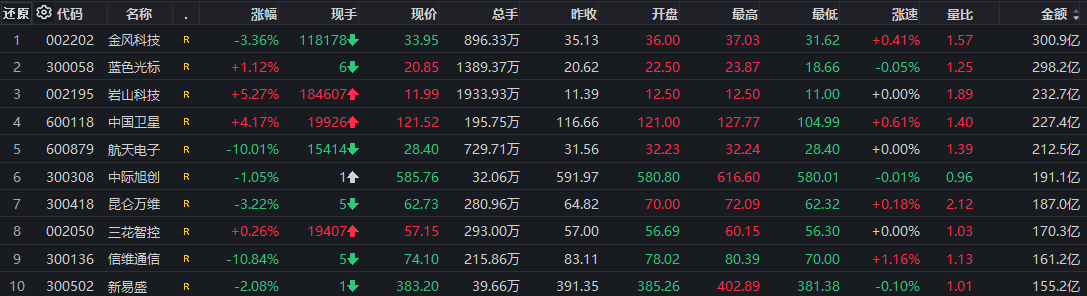
Market Overview - The three major indices collectively adjusted, with the Shenzhen Component Index falling over 1% and the ChiNext Index dropping nearly 2%. The Shanghai Composite Index closed down 0.64%, the Shenzhen Component Index down 1.37%, and the ChiNext Index down 1.96% [1] - Over 3,700 stocks in the market declined, indicating a broad market downturn [1] Sector Performance - The AI application concept sector rose against the trend, with over ten constituent stocks hitting the daily limit, including Ingrity Media, Lioo Co., and Shengguang Group [1] - The AI medical concept remained active, with Meian Health achieving three consecutive limit-ups, and stocks like Hongbo Pharmaceutical and Xin Ganjiang also hitting the limit [2] - The power grid equipment sector strengthened in the afternoon, with stocks like TBEA and Sanbian Technology reaching the daily limit [3] - The retail sector showed active performance, with Sanjiang Shopping achieving two consecutive limit-ups [4] - The commercial aerospace and controllable nuclear fusion sectors experienced significant declines, with stocks like Shunhao Co. and China Satellite Communications hitting the daily limit down [5] Trading Volume - The total trading volume in the Shanghai and Shenzhen markets reached 3.65 trillion yuan, an increase of 49.6 billion yuan compared to the previous trading day, marking the third consecutive day of surpassing 3 trillion yuan [5] Individual Stock Highlights - Jin Feng Technology had a trading volume exceeding 30 billion yuan, while BlueFocus, Yanshan Technology, China Satellite, and Aerospace Electronics each surpassed 20 billion yuan in trading volume [6]

收评:创业板指冲高回落跌近2%,商业航天概念股集体退潮
Feng Huang Wang Cai Jing· 2026-01-13 07:09
Market Overview - The three major indices collectively adjusted, with the Shenzhen Component Index falling over 1% and the ChiNext Index dropping nearly 2% [1] - The total trading volume in the Shanghai and Shenzhen markets reached 3.65 trillion yuan, an increase of 49.6 billion yuan compared to the previous trading day [1] - By the end of the trading session, the Shanghai Composite Index decreased by 0.64%, the Shenzhen Component Index by 1.37%, and the ChiNext Index by 1.96% [1] Sector Performance - The AI application concept sector rose against the trend, with over ten constituent stocks hitting the daily limit, including Ingrity Media, Liou Co., and Shenguang Group [1] - The AI medical concept remained active, with Meian Health achieving three consecutive limit-ups, and stocks like Hongbo Pharmaceutical and Xin Ganjiang also hitting the limit [1] - The power grid equipment sector strengthened in the afternoon, with TBEA and Sanbian Technology reaching the daily limit [1] - The retail sector showed active performance, with Sanjiang Shopping achieving two consecutive limit-ups [1] Declining Sectors - The commercial aerospace and controllable nuclear fusion sectors experienced significant declines, with stocks like Shunhao Co. and China Satellite Communications hitting the daily limit down [1]


和讯投顾余荣卓:商业航天总算分歧,Ai医疗为何强化?
Sou Hu Cai Jing· 2026-01-13 06:00
当前市场情绪仍在,资金持续挖掘新机会,但商业航天操作难度较大,AI医疗则易集体加速。自2025 年底以来的这波热潮中,许多朋友可能因主线节奏极强而未能充分把握,从脑机接口到AI医疗,AI应 用领域集体加速、一致预期强烈,往往在爆发后才研究、瓦解时已来不及,容易后知后觉为他人做嫁 衣。因此,2026年想要做好投资,需大量持续跟踪,提前摸索储备逻辑,在关键节点敢于挑战人性,如 此方能避免关键时刻掉链子。 1月13日,和讯投顾余荣卓表示,2026年,你定会对市场有全新认知与收获。商业航天历经整整50天的 分歧转胜,自12月底起,紧绷的神经虽可稍作舒缓,但市场应用热度不减,工作赚钱的节奏依旧紧凑。 回顾近期市场,昨天本是不错的窗口期,然而AI医疗却意外走强。其直接导火索是英伟达与礼来计划 未来5年投入10亿美元共建联合实验室,但更本质的原因是医疗领域逻辑的持续累积与集体爆发。上周 火热的脑机接口、近期备受关注的ASS技术,均属AI医疗相关逻辑范畴;国内蚂蚁阿福、国外OpenAI 推出ChatGPT的Health功能,更是让这一领域热闹非凡,形成了AI医疗逻辑的持续叠加结构。 ...
从数字基建到价值医疗:中国AI医疗如何跨越商业化“三重门”?
Sou Hu Cai Jing· 2026-01-13 06:00
Core Insights - The global AI healthcare market is projected to reach $56 billion by 2026, with over 230 million weekly inquiries about health on AI platforms, indicating a rapidly expanding market [1][2] - China is advancing its AI healthcare initiatives at an unprecedented pace, with the National Healthcare Security Administration launching a pilot program for "Personal Medical Insurance Cloud" to enhance healthcare management [1][2] Group 1: Market Growth and Trends - The AI healthcare market in China is expected to grow from 8.8 billion yuan in 2023 to 315.7 billion yuan by 2033, with a compound annual growth rate (CAGR) of 43.1% [2] - As of January 2026, there are approximately 108,000 AI healthcare-related companies in China, with a significant increase in registrations, reaching a record high of 24,800 in 2025, a 22.38% year-on-year growth [3] - The number of AI healthcare-related patents has also been on the rise, with 2,471 applications in 2025, marking a new high [3] Group 2: Policy and Regulatory Environment - The National Medical Products Administration has issued guidelines for the registration and review of AI medical devices, indicating a strong governmental focus on integrating AI into healthcare [4] - Recent policies emphasize the importance of AI in upgrading the medical device industry, moving beyond efficiency improvements to becoming a driving force for innovation [4] Group 3: Technological Advancements - AI applications in medical imaging have shown significant improvements, reducing reading time by 53% and increasing detection rates by 17.6% [5] - AI drug development is one of the fastest-growing areas, with the potential to shorten development cycles by nearly 40% and increase success rates to approximately 14% [5] - Generative AI is being utilized for various tasks, including writing registration documents and analyzing clinical data, indicating a shift towards integrating AI into the entire operational process of medical device companies [6] Group 4: Challenges and Considerations - The commercialization of AI in healthcare faces challenges, particularly regarding data quality and standardization, as a significant amount of medical data is unstructured and inconsistent [8][9] - There is a need for robust data governance mechanisms and collaboration frameworks to facilitate data sharing across institutions while ensuring compliance and privacy [9] - Ethical considerations are paramount, with a focus on maintaining human oversight in AI-assisted decision-making processes to ensure accountability and safety in clinical applications [10]
一则大消息!这个板块掀“涨停潮”
天天基金网· 2026-01-13 05:19
Market Overview - On January 13, the A-share market saw a collective decline in the three major indices, with the Shanghai Composite Index closing at 4163.84 points, down 0.03% [2] - The Shenzhen Component Index fell by 0.31%, and the ChiNext Index decreased by 0.83% [2][3] - A total of 2427 stocks rose while 2862 stocks fell, indicating a mixed market sentiment [3] Sector Performance - The healthcare services, lithium mining, precious metals, and insurance sectors showed strong performance, while sectors such as commercial aerospace, communication equipment, and shipbuilding faced declines [3][4] - Lithium mining stocks experienced a significant surge, with companies like Tibet Summit reaching a 10% limit up, and others like Salt Lake Co. and Ganfeng Lithium rising over 7% [6][7] Lithium Mining Sector - The lithium mining sector saw a notable rally, with the main contract for lithium carbonate futures on the Shanghai Futures Exchange surpassing 170,000 yuan per ton, marking a rise of over 9% [6] - Key stocks in this sector include: - Tibet Summit: 19.49 yuan, up 9.99%, market cap of 17.8 billion yuan - Ganfeng Lithium: 72.83 yuan, up 7.15%, market cap of 144.5 billion yuan - Salt Lake Co.: 34.24 yuan, up 7.13%, market cap of 181.2 billion yuan [7] Insurance Sector - The financial sector was active, with the insurance sector showing strength. China Life Insurance rose over 3%, reaching 50.94 yuan per share, with a market cap of 1.2794 trillion yuan [10] - China Ping An increased by over 2%, priced at 68.92 yuan per share, with a market cap of 1.2034 trillion yuan [12] - Analysts predict that by 2026, new premium income for listed insurance companies will achieve double-digit growth, driven primarily by the bancassurance channel [15] AI Healthcare Sector - AI healthcare stocks were notably active, with several companies hitting the daily limit up. Notable performers included: - Nossg: 76.48 yuan, up 20.01%, market cap of 7.4 billion yuan - Pruis: 72.24 yuan, up 20.00%, market cap of 5.7 billion yuan - Hongbo Medicine: 56.64 yuan, up 20.00%, market cap of 7.9 billion yuan [18] - Nvidia announced a joint investment of $1 billion with Eli Lilly to establish an AI drug laboratory, which is expected to accelerate medical discoveries [17] Precious Metals Sector - The precious metals sector saw a significant rise, with spot gold prices reaching a record high of $4630.28 per ounce [20] - Key stocks in this sector include: - Hunan Silver: 9.21 yuan, up 9.90%, market cap of 26 billion yuan - Xiaocheng Technology: 38.54 yuan, up 8.72%, market cap of 10.6 billion yuan [21]




AI医疗板块全线井喷,“阿福概念股”引爆涨停潮
Ge Long Hui· 2026-01-13 05:11
市场分析认为,本轮行情核心驱动力在于产业趋势的明确确认。一方面,蚂蚁集团旗下的AI健康助 手"蚂蚁阿福"自发布后短期内月活用户突破3000万,单日提问量超千万,验证了健康AI赛道的巨大需求 和市场想象力。 与此同时,继"蚂蚁阿福"后,OpenAI于1月8日正式推出健康功能"ChatGPT Health",标志着全球顶尖AI 公司一致看好并重仓健康AI赛道。市场观点指出,拥有成熟场景、与领先AI应用形成生态合作的医疗 健康公司,有望在此轮产业浪潮中持续受益。 今日,AI医疗与制药概念板块持续拉升,呈现井喷行情。板块内多只个股涨停,其中与"蚂蚁阿福"相关 的概念股成为绝对主线,表现最为强劲。华人健康、思创医惠收获"20厘米"涨停;美年健康、迪安诊断 双双录得连续第三个涨停板,卫宁健康等多只个股涨幅超过10%。 统计显示,自蚂蚁阿福2015年12月中旬面世以来,其生态辐射效应持续释放,相关概念股迎来重估。其 中,华人健康股价涨幅已接近翻倍,卫宁健康涨超80%,美年健康涨超50%。 ...


