天然气

Search documents
【环时深度】米莱上台两周年,阿根廷民众怎么看
Huan Qiu Shi Bao· 2025-12-04 22:51
Core Points - The recent midterm elections in Argentina resulted in a surprising victory for Javier Milei's right-wing coalition, the "La Libertad Avanza" party, which is seen as a public endorsement of his austerity measures and neoliberal policies [2][4] - Milei's government has implemented strict austerity measures, leading to a significant reduction in monthly inflation rates from 25% in December 2023 to around 2% recently, and a decrease in poverty rates from 52.9% to 31.6% [3][8] - Despite the economic improvements, there are concerns about the social costs of these reforms, with many citizens feeling the burden of austerity measures and expressing dissatisfaction with the growing inequality [3][5] Political Landscape - The "La Libertad Avanza" party secured over one-third of the seats in Congress, allowing Milei to block opposition attempts to overturn presidential decrees, thus strengthening his political foundation [2][4] - Public sentiment is mixed, with some citizens preferring the uncertainty of Milei's reforms over a return to previous governance, reflecting a broader disillusionment with traditional political parties [4][6] Economic Implications - Milei's victory has created new opportunities for debt issuance, potentially attracting much-needed foreign investment, particularly in sectors like oil and gas [2][3] - The government has made significant cuts to federal spending, reducing it by approximately 30% and cutting the number of public employees by about 15% [3][8] - Argentina's debt stands at approximately $56.944 billion, and the country is seeking to attract investment in infrastructure to support economic growth [3][7] Social Reactions - Many citizens express a sense of stability but also highlight the increasing financial strain, with reports of rising debt among working individuals [3][5] - There is a growing concern that the benefits of Milei's policies are disproportionately favoring the wealthy, leading to a perception of increased inequality [3][6] International Relations - The relationship between Argentina and the United States has become complex, with recent support from the U.S. government for Milei's administration, including a $20 billion currency swap agreement [7][8] - However, there are fears that U.S. support may come with strings attached, potentially undermining Argentina's economic sovereignty [7][8] Future Outlook - Analysts suggest that while Milei's reforms have shown some success, the sustainability of these policies remains in question, particularly regarding social equity and long-term economic stability [8][9] - The upcoming elections in 2027 could pose significant challenges for Milei if social discontent continues to grow due to ongoing austerity measures [9]
俄气进入终结倒计时!欧盟宣布:2027年停止进口,美国成最大赢家
Sou Hu Cai Jing· 2025-12-04 18:42
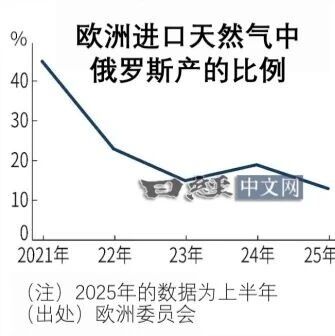
Core Points - The EU has finalized an agreement to end its energy dependence on Russia by the end of 2027, including a complete halt on natural gas and oil imports [1][4] - The agreement includes specific timelines for the cessation of Russian energy imports, with long-term gas contracts expiring by November 1, 2027, and liquefied natural gas bans starting as early as January 2027 [1][4] - Slovakia and Hungary, the last EU countries reliant on Russian oil, will receive special assistance to transition away from Russian energy by the deadline [4][6] Group 1 - The EU's energy dependency on Russia has significantly decreased since the onset of the Ukraine conflict, with Russian gas imports dropping from 45% in 2022 to an expected 13% by 2025 [4][6] - The EU will implement a permanent ban on new Russian gas contracts and restrict existing contracts from increasing import volumes [1][4] - The agreement includes an emergency provision allowing temporary imports of Russian gas under strict conditions if member states declare an energy emergency [4][6] Group 2 - The U.S. has become the largest supplier of liquefied natural gas to the EU, accounting for 55% of imports, with a commitment to purchase $750 billion worth of U.S. energy over the next three years [6] - Despite the shift to U.S. energy, prices remain high, with European natural gas prices still three times higher than pre-crisis levels [6] - The EU's internal sentiment is mixed, with industrial nations favoring a swift transition for security, while others express concerns over potential supply disruptions during winter [6]

港股公告掘金 | 中国石油股份附属拟收购新疆储气库、相国寺储气库及辽河储气库全部股权
Zhi Tong Cai Jing· 2025-12-04 15:14
Major Events - Meet Xiaomian (02408) has set its share price at HKD 7.04, with the Hong Kong public offering receiving a subscription rate of 425.97 times [1] - Naxin Micro (02676) has set its share price at HKD 116.00 per H-share, with an expected listing date of December 8 [1] - Tianyu Semiconductor (02658) received a subscription rate of 60.63 times for its Hong Kong public offering, with a listing date of December 5 [1] - China Petroleum & Chemical Corporation (00857) plans to acquire all equity interests in the Xiangguosi Gas Storage and Liaohe Gas Storage [1] - China Power (00931) intends to issue discounted shares to the International Finance Corporation to expand its capital base and is advancing a large LNG project acquisition [1] - TECHSTARACQ-Z (07855) has finalized financing of approximately HKD 371 million from Seyond Holdings Ltd., with NIO Inc. (09866) increasing its subscription by HKD 286.7 million [1] - Kelun-Biotech (06990) has established a strategic partnership with Crescent Biopharma to jointly develop and commercialize cancer treatment methods [1] - Yihe Holdings (01662) subsidiary Trio AI has formed a strategic partnership with ABBY Pay to explore and implement AI-driven payment processing solutions [1] - Quzhi Group (00917) has established a strategic partnership with Dubai to jointly promote the HOLOX project [1] - Sihuan Pharmaceutical (02005) has received approval from the National Medical Products Administration for Bilastine and Picotamide to be used as raw materials in listed formulations [1] - China Biopharmaceutical (01177) has received clinical trial application approvals for TQF3250, an oral GLP-1 receptor agonist, from NMPA and FDA [1] - Country Garden (02007) has received approval from relevant bondholders for its domestic bond restructuring plan [1] - Longguang Group (03380) has accumulated debt restructuring offers for bonds with a total face value of RMB 13.66 billion [1] - United Energy Group (00467) has completed a financing loan arrangement for reserves [1] Buybacks/Reductions - Tencent Holdings (00700) repurchased 1.044 million shares at a cost of approximately HKD 636 million on December 4 [2] - Midea Group (00300) repurchased 1.2177 million A-shares for a total of approximately RMB 99.9982 million on December 4 [2] - COSCO Shipping Holdings (01919) repurchased 3 million shares at a cost of approximately HKD 41.8218 million on December 4 [2] - Kuaishou-W (01024) repurchased 445,000 shares for approximately HKD 29.923 million on December 4 [2] - China Feihe (06186) repurchased 6.281 million shares at a cost of approximately HKD 25.7521 million on December 4 [2] - Kingsoft (03888) repurchased 355,600 shares for approximately HKD 9.99756 million on December 4 [2] - Weimob Group (02013) saw its chairman Sun Taoyong increase his holdings by a total of 1.534 million shares [2] - Green Tea Group (06831) plans to repurchase shares for a total price not exceeding RMB 130 million [2] Operating Performance - Greentown China (03900) reported total contract sales of approximately RMB 223.5 billion for the first 11 months, a year-on-year decrease of 9.44% [2] - China Overseas Macro Group (00081) reported cumulative contract sales of RMB 29.615 billion for the first 11 months, down 16.6% year-on-year [3] - China Overseas Development (00688) reported cumulative property sales of approximately RMB 211.399 billion for the first 11 months, a year-on-year decrease of 21.8% [3] - Sunac China (01918) achieved contract sales of approximately RMB 33.89 billion for the first 11 months, down 25.34% year-on-year [3] - Gemdale Corporation (00535) reported cumulative contract sales of approximately RMB 9.874 billion for the first 11 months, a year-on-year decrease of 43.5% [3] - Hongyang Real Estate (01996) reported cumulative contract sales of RMB 4.181 billion for the first 11 months, down 47.87% year-on-year [3] - Country Garden (02007) reported contract sales of approximately RMB 2.35 billion in November attributed to shareholders [3]

匈牙利外长表示:“若欧盟强制切断俄罗斯天然气供应,将向欧洲法院提起诉讼!”引发热议!
Sou Hu Cai Jing· 2025-12-04 15:01
Core Insights - The Hungarian government has announced a series of economic measures aimed at stabilizing the economy and addressing inflation concerns [2] Group 1: Economic Measures - The government plans to implement a price cap on basic food items to combat rising costs, which have increased by 15% year-on-year [2] - A new tax policy will be introduced, targeting large corporations with profits exceeding 1 billion forint, aiming to generate additional revenue for public services [2] - Investment in renewable energy sources is prioritized, with a budget allocation of 200 billion forint to enhance energy independence and sustainability [2] Group 2: Inflation and Economic Growth - Inflation rates are projected to decrease to 5% by the end of the next fiscal year, down from the current rate of 10% [2] - The GDP growth forecast for the upcoming year is set at 3%, reflecting a cautious optimism in the economic recovery [2] - The government emphasizes the importance of maintaining employment levels, with initiatives to support small and medium-sized enterprises [2]

欧洲天然气期货下跌 受温和天气及亚洲需求疲软影响
Xin Lang Cai Jing· 2025-12-04 13:57
Core Viewpoint - European natural gas prices continue to decline due to above-average temperatures and weak demand from Asia, which has bolstered market confidence in fuel supply [1][2] Group 1: Weather Impact - Weather forecasts indicate milder and windier conditions next week, which will reduce the demand for natural gas for electricity and heating [1] - Warm weather across the European continent is expected to persist until mid-December [1] Group 2: Supply Factors - Norwegian exports remain relatively stable, and liquefied natural gas (LNG) supply is abundant and expected to exceed last year's levels [1] - Global competition remains moderate, allowing more shipments to reach Europe [1] Group 3: Price Movement - As of 2 PM Amsterdam time (9 PM Beijing time), the European natural gas benchmark Dutch front-month futures fell by 3.2%, trading at €27.31 per megawatt-hour [1] - This week's prices have dropped to the lowest level since April 2024, entering an oversold territory [2]

中国石油股份附属拟收购新疆储气库 相国寺储气库及辽河储气库全部股权
Zhi Tong Cai Jing· 2025-12-04 11:46
Core Viewpoint - China National Petroleum Corporation (CNPC) has approved the acquisition of three gas storage companies, which will enhance its natural gas supply chain and operational efficiency [1][2]. Group 1: Acquisition Details - The acquisition involves the purchase of 100% equity in Xinjiang Gas Storage, Xiangguosi Gas Storage, and Liaohe Gas Storage [1]. - The total consideration for the acquisition is RMB 400.16 billion (excluding taxes), funded primarily through cash contributions from newly established joint ventures [1]. - The acquisition contracts were signed on December 4, 2025, and the acquired companies will become indirect non-wholly owned subsidiaries of CNPC [1][2]. Group 2: Ownership Structure - Post-acquisition, Xinjiang Gas Storage will be wholly owned by CNPC Xinjiang Gas Storage, with Taihu Investment holding 51% and Pipeline Storage holding 49% [2]. - Xiangguosi Gas Storage will also be wholly owned by CNPC Xiangguosi Gas Storage, with the same ownership structure as Xinjiang [2]. - Liaohe Gas Storage will be wholly owned by CNPC Liaohe Gas Storage, with Taihu Investment holding 50.49%, Pipeline Storage holding 48.51%, and Panjin State-owned Capital Investment and Operation Group holding 1% [2]. Group 3: Strategic Importance - The acquisition is expected to enhance the stability and quality of CNPC's natural gas supply chain [2]. - Gas storage facilities play a crucial role in the natural gas production and sales process, acting as a tool for peak shaving and production balancing [2]. - The transaction will add 10.97 billion cubic meters of working gas capacity, improving CNPC's gas storage and peak-shaving capabilities, thereby maximizing overall efficiency in the natural gas supply chain [2].
塔里木盆地最大储气库开启今冬供气
Xin Lang Cai Jing· 2025-12-04 10:33
从中国石油塔里木油田获悉,经过数日运行调整,塔里木盆地最大储气库——塔里木油田牙哈储气库3 日正式开启今冬供气,让储存在地下的天然气源源不断送往千家万户。 ...
欧盟拟全面禁止进口俄天然气 匈牙利称将起诉
Zhong Guo Xin Wen Wang· 2025-12-04 06:54
Core Viewpoint - The European Union (EU) is planning to implement a comprehensive ban on the import of Russian natural gas, which Hungary claims violates EU treaties and threatens its energy security. Hungary intends to file a lawsuit if the legislation is passed [1][2]. Group 1: EU Legislation - The EU member states and the European Parliament reached a preliminary agreement on a legislative proposal to gradually and permanently stop importing Russian natural gas [1]. - The agreement stipulates that the EU will phase out imports of Russian liquefied natural gas by the end of 2026 and stop importing Russian pipeline gas by the end of September 2027 [1]. - Additionally, the EU Commission proposed a ban on importing Russian crude oil starting from the end of 2027 [1]. Group 2: Hungary's Position - Hungary's Foreign Minister criticized the EU's decision as politically motivated and disguised as trade policy, arguing it undermines the member states' rights to determine their own energy policies [2]. - He emphasized that Hungary is heavily reliant on Russian oil and gas, and a ban would lead to monopolistic conditions for other suppliers, significantly increasing energy prices for Hungarian households, potentially tripling their energy expenses [2]. - Hungary has initiated legal preparations to challenge the ban and is coordinating with Slovakia for a unified legal response [2]. Group 3: Market Context - Prior to the Russia-Ukraine conflict, Russian natural gas accounted for 45% of the EU's total gas imports, and as of October this year, it still represented 12% [2]. - Countries such as Hungary, Slovakia, France, and Belgium continue to accept Russian gas supplies despite the ongoing geopolitical tensions [2]. - A spokesperson for the Russian president indicated that abandoning Russian gas would force Europe to rely on more expensive alternatives [2].
匈牙利:将起诉
中国能源报· 2025-12-04 05:12
Core Viewpoint - The European Union (EU) will fully ban the import of Russian natural gas starting in the autumn of 2027, with a phased approach to the ban [3][4]. Group 1: Ban Implementation - The agreement reached by the EU Council and European Parliament representatives will see a ban on liquefied natural gas (LNG) imports from Russia starting at the end of 2026, while the ban on pipeline natural gas imports will take effect in the autumn of 2027 [3]. - The Danish Minister for Climate, Energy and Utilities emphasized the necessity for the EU to end its dependency on Russian gas to enhance security and ensure energy supply [3]. Group 2: Impact on Energy Supply - The International Energy Agency reported a significant decline in Russian gas exports to Europe, with LNG exports down by 10% and pipeline gas exports down by 45% year-on-year in the first three quarters of 2025 [3]. - It is projected that Europe’s LNG imports will reach a record high this year, increasing by approximately 20% compared to 2024, driven by rising consumption and reduced pipeline gas imports [3]. Group 3: Opposition from Hungary - Hungary's Foreign Minister expressed that the EU's decision threatens Hungary's energy security, stating that without Russian energy supplies, Hungary's existing infrastructure cannot safely secure sufficient oil and gas [5]. - The Minister warned that the EU's decision could lead to a tripling of energy costs for Hungarian households and indicated that Hungary would immediately initiate legal proceedings against the EU if the ban is formally approved [5].
欧盟就永久停止进口俄罗斯天然气达成协议
日经中文网· 2025-12-04 02:37
Group 1 - The EU's reliance on Russian natural gas has decreased from 45% before the Ukraine conflict to 13% by the first half of 2025, although it still imported €10 billion worth of Russian gas in 2024 [2][6] - A rough agreement was reached on December 3 by major EU institutions to permanently stop importing Russian natural gas by November 2027, aiming to weaken Russia's military capabilities and pressure it into accepting peace proposals [2] - The European Commission's proposal, which will be implemented after formal approval, includes a gradual cessation of LNG imports by the end of December 2026 and a complete halt of pipeline gas supplies from Russia by the end of September 2027, with a grace period until the end of October 2027 for countries with low reserves [4] Group 2 - EU leaders reached a consensus in March 2022 to gradually stop importing Russian energy, but imports continued thereafter [6] - The EU has already imposed sanctions banning the import of Russian coal and plans to propose an oil embargo law in early 2026 [6]