新能源汽车

Search documents
小鹏汽车-W(09868)1月共交付新车20011辆
智通财经网· 2026-02-02 09:45
智通财经APP讯,小鹏汽车-W(09868)发布公告,2026年1月,小鹏汽车共交付新车20011辆。这些汽车 交付有望减少超过30万吨生命周期温室气体排放——相当于494万棵树苗10年的碳吸收量。 小鹏P7+同时在36个国家推出,并于2026年1月的布鲁塞尔车展上首次在欧洲亮相。 截至2025年12月31日,小鹏汽车已将其全球业务扩展至60个国家和地区。小鹏汽车海外销售网络现有 380家实体门店,较去年同期增长超过150%,全球销售和服务网络已扩大至包含超过1000个网点。 ...
广东的“县域短板”,博罗之后如何再造“千亿县”?
Jing Ji Guan Cha Wang· 2026-02-02 09:38
Core Insights - Huizhou's Boro County is set to become Guangdong's first "trillion county" by 2025, marking a significant milestone for the province and ending its absence from the "trillion county club" [1][2] - The emergence of "trillion counties" reflects a shift in economic focus towards county-level development, which is increasingly recognized as vital for regional economic dynamics [2] Economic Landscape - As of 2024, there are 62 "trillion counties" in China, with Jiangsu's Kunshan and Jiangyin exceeding 500 billion in GDP, showcasing their role as economic engines [1] - Guangdong has historically concentrated economic growth in cities like Shenzhen and Guangzhou, lacking strong county-level economies [1][3] Administrative and Geographical Factors - Guangdong's unique administrative evolution, particularly in the Pearl River Delta, has led to a scarcity of "trillion counties" as many economically strong counties have been restructured into districts [3][4] - The economic disparity between the Pearl River Delta and other regions in Guangdong is evident, with the former accounting for over 80% of the province's economic output [4] Development Initiatives - The "Hundred Counties, Thousand Towns, and Ten Thousand Villages High-Quality Development Project" was launched to address urban-rural imbalances and promote county-level economic growth [4] - From 2023 to 2025, 57 counties in Guangdong are expected to see GDP growth rates surpassing the provincial average, indicating a positive trend in county-level economic development [4] Boro County's Economic Growth - Boro County's GDP has seen significant growth, surpassing 700 million in 2021, 800 million in 2022, and projected to exceed 1 billion by 2025 [6] - The county has shifted from a fragmented industrial approach to a more systematic layout, focusing on developing a trillion-level smart equipment industry park [6][7] Industrial Strategy - Boro County has implemented an "eight ones" industrial chain mechanism to enhance the precision of its investment strategies and has established a "four ones" park development model to improve efficiency [7] - The county has successfully developed eight hundred billion-level industrial clusters, focusing on modern industries such as electronic information and new energy [7][8] Lessons for Other Counties - Boro's experience serves as a model for other counties in Guangdong, emphasizing the importance of concentrated industrial development and collaboration within the regional economic framework [8][9] - The county's integration into the Guangdong-Hong Kong-Macao Greater Bay Area has facilitated industrial transfer and collaboration, enhancing its economic capabilities [8] Comparative Insights - The development paths of Jiangsu and Zhejiang provinces, which have the highest number of "trillion counties," offer valuable lessons for Guangdong, particularly in terms of administrative efficiency and fostering local industries [10] - The emphasis on private and small enterprises in Jiangsu and Zhejiang highlights the potential for Guangdong to enhance its economic vitality through similar support mechanisms [10]
小鹏汽车-W(09868.HK):1月共交付新车20,011辆
Ge Long Hui· 2026-02-02 09:38
格隆汇2月2日丨小鹏汽车-W(09868.HK)公布2026年1月智能车交付数据,2026年1月,小鹏汽车共交付 新车20,011辆。这些汽车交付有望减少超过300,000吨生命周期温室气体排放——相当于494万棵树苗10 年的碳吸收量。小鹏P7+同时在36个国家推出,并于2026年1月的布鲁塞尔车展上首次在欧洲亮相。 截至2025年12月31日,小鹏汽车已将其全球业务扩展至60个国家和地区。小鹏汽车海外销售网络现有 380家实体门店,较去年同期增长超过150%,全球销售和服务网络已扩大至包含超过1,000个网点。 ...
杨德龙:2026年消费板块有望从“低配”转为“标配” 科技股依是投资主线之一
Xin Lang Cai Jing· 2026-02-02 09:25
Economic Outlook - In 2026, China's macro economy is expected to achieve a recovery growth, with policies focusing on boosting domestic demand as a key strategy [1][14] - The "three drivers" of economic growth—consumption, investment, and exports—are facing varying degrees of slowdown, prompting policy measures to stimulate consumption and stabilize investment [1][14] Consumption Sector - Consumer spending is anticipated to rebound, particularly in traditional consumption peaks like the Spring Festival, benefiting sectors such as liquor, food and beverage, and new consumption areas [2][15] - The retail sales growth rate fell to 0.9% in December, the lowest in two years, but is expected to recover as the market's wealth effect improves [4][17] - Many consumer stocks are at historical low valuations, suggesting potential for recovery as the sector transitions from "underweight" to "balanced allocation" [4][17] Investment Sector - Infrastructure construction, including traditional and new infrastructure projects, is set to drive fixed asset investment growth, which had previously contracted due to declining real estate investment [2][15] - The government is expected to increase subsidies and implement trade-in programs to stimulate consumer spending and investment [1][14] Technology Sector - The technology sector remains a primary investment focus, with significant potential in areas like humanoid robots, semiconductor chips, and AI-related fields [5][18] - The humanoid robot industry is transitioning from concept to production, with expectations for increased orders and market performance in 2026 [19] - The semiconductor industry is a critical area for policy support, particularly in high-end chips, with ongoing investments in R&D expected to yield breakthroughs [20] Renewable Energy Sector - The renewable energy sector, previously marked by overcapacity and price wars, is anticipated to recover as policies aim to reduce excess capacity and improve competitive dynamics [21] - Solid-state batteries are expected to gradually replace traditional lithium batteries, representing a significant technological advancement in the sector [21][22] Capital Market Dynamics - A substantial amount of fixed-term deposits, estimated at 50 trillion yuan, is set to mature, with a portion likely to flow into capital markets, supporting the ongoing bull market [3][16] - The stock market has shown strong performance, with significant trading volumes and a bullish sentiment among investors, particularly in sectors like new energy and precious metals [3][16] Precious Metals - Recent surges in international gold prices have heightened investor interest in precious metals, with a long-term bullish outlook despite potential short-term volatility [10][23]
车市卷向7年超长贷,是否暗藏风险?
Di Yi Cai Jing· 2026-02-02 09:23
Core Viewpoint - The automotive finance market is currently dominated by conventional car loans with terms of 1 to 5 years, while 7-year low-interest products are not mainstream and serve primarily as promotional tools to attract consumers [1][9]. Group 1: 7-Year Low-Interest Loan Products - Tesla has extended its low-interest loan period to 7 years, initiating a trend that other manufacturers like Xiaopeng, Li Auto, and Geely have followed with similar offerings [1][2]. - The 7-year low-interest loans typically feature lower down payments and monthly payments, with Tesla's Model 3 offering a minimum down payment of 79,900 yuan and a monthly payment of approximately 1,918 yuan [2]. - NIO offers a 7-year loan with a down payment as low as 20% and an annual interest rate of 0.49%, significantly lowering the entry barrier for consumers [2][3]. Group 2: Financial Institutions and Risk Management - Many of the 7-year low-interest products are provided by automotive financing leasing companies or third-party financial institutions rather than traditional banks, which typically do not offer loans longer than 5 years due to risk management policies [4][7]. - The current regulatory framework allows for personal auto loans to be extended to 7 years, a change that has enabled companies like Tesla and NIO to introduce these products [4]. - The financing leasing model often involves lower upfront costs but may include conditions such as penalties for early repayment, which vary by institution [8][9]. Group 3: Market Dynamics and Consumer Impact - The introduction of 7-year low-interest loans is primarily aimed at boosting vehicle sales amid intense market competition, with varying levels of interest subsidies across different manufacturers [5][10]. - Extending the repayment period from 5 to 7 years can significantly reduce monthly payments, making it easier for consumers to afford vehicles [5]. - Consumers are advised to carefully evaluate the total cost of ownership, including potential additional fees and the implications of different ownership structures (direct lease vs. return lease) when considering these financing options [9][10].


崔东树:电动车储能推动分时电价调整 重构新型电力系统机制
智通财经网· 2026-02-02 09:20
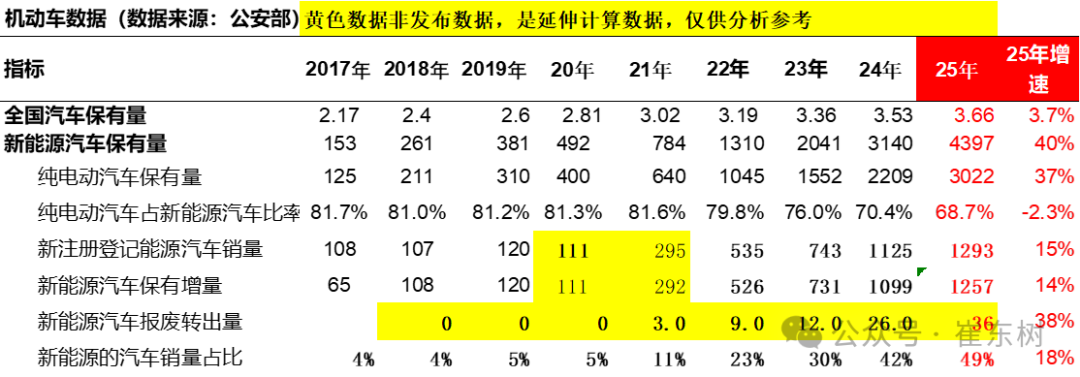
二、电动车保有量高速增长:形成海量分布式移动储能底座 2月2日,崔东树发文称,中国新能源车发展呈现能源生态链的巨大提升效果,目前4397万台电动车保有量,2000GWH的车载电池储能潜力,每天3亿度的 公共充电桩充电量,对中国电力能源起到超强的保驾护航作用。中国电动车保有量爆发式增长催生海量分布式移动储能资源,叠加充电桩规模化布局带来 的负荷调控能力提升,推动电动车储能价值逐步落地并持续释放,崔东树个人认为这是成为分时电价从政府固定核定向市场化动态调整转型的核心驱动力 之一。 今年的分时电价的机制革新,既适配电动车充放电的柔性调节需求,又通过精准价格信号激励电动车参与电网削峰填谷、新能源消纳,二者形成双向赋能 格局;未来随着电动车能源贡献度持续提升,分时电价市场化程度将进一步深化,最终助力新型电力系统构建与"双碳"目标落地,而充电桩的规模化部署 则为这一协同发展路径提供了关键硬件支撑与落地保障。中国为世界能源的绿色环保发展做出巨大的贡献。 一、分时电价政策调整:面向新型电力系统的机制重构 国家发改委、能源局明确,2026年 3月起,工商业充电桩等市场化用户取消固定分时,按电力现货市场供需实时浮动定价;居民家用 ...

港股复盘 | 港股遭遇“黑色星期一” 恒生科技指数跌超3% 贵金属板块遭遇重挫
Mei Ri Jing Ji Xin Wen· 2026-02-02 08:57
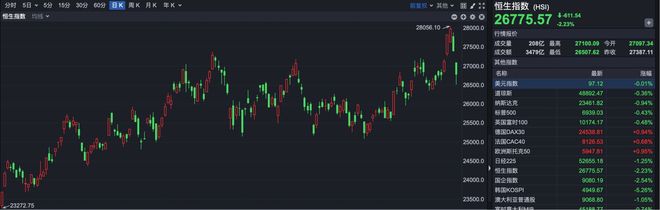
Market Overview - The Hong Kong stock market experienced a significant decline on February 2, with the Hang Seng Index closing at 26,775.57 points, down 611.54 points, representing a drop of 2.23% [1][2] - The Hang Seng Tech Index also fell, closing at 5,526.31 points, down 191.87 points, a decrease of 3.36% [2] Sector Performance - Precious metals stocks were heavily impacted, with Shandong Gold (HK01787) and Chifeng Jilong Gold (HK06693) both dropping over 12%. Other companies like Lingbao Gold and Jiangxi Copper fell more than 9%, while Zijing Mining dropped over 5% [4] - In the automotive sector, shares of Xpeng Motors (HK09868) fell by 6%, and NIO (HK09866) dropped over 4% [5] - Semiconductor stocks also faced declines, with Hua Hong Semiconductor falling over 11% [6] - Technology stocks generally declined, with Bilibili dropping over 4%, and major companies like Baidu, NetEase, Kuaishou, and Alibaba falling over 3% [7] Investment Insights - Citigroup's recent commodity report indicated that current gold prices have significantly priced in future uncertainties, suggesting that while there may be short-term price increases, valuations are at "extreme levels" [5] - Despite the downturn, southbound capital saw a small inflow, with net purchases of Hong Kong stocks exceeding 1.9 billion HKD by the end of the trading day [7] Future Outlook - Huatai Securities believes the current market correction is a technical pullback due to rapid previous gains and hawkish signals from the Federal Reserve. They suggest focusing on sectors with clearer benefits, such as AI and semiconductor manufacturing [10] - Morgan Stanley notes that the recent bull market has led to profit-taking ahead of the Lunar New Year, but geopolitical uncertainties may enhance the attractiveness of Chinese assets, predicting that the Hong Kong market could outperform the A-share market in the short term [10]
港股复盘 | 港股遭遇“黑色星期一” 恒生科技跌超3% 贵金属板块遭遇重挫
Mei Ri Jing Ji Xin Wen· 2026-02-02 08:49
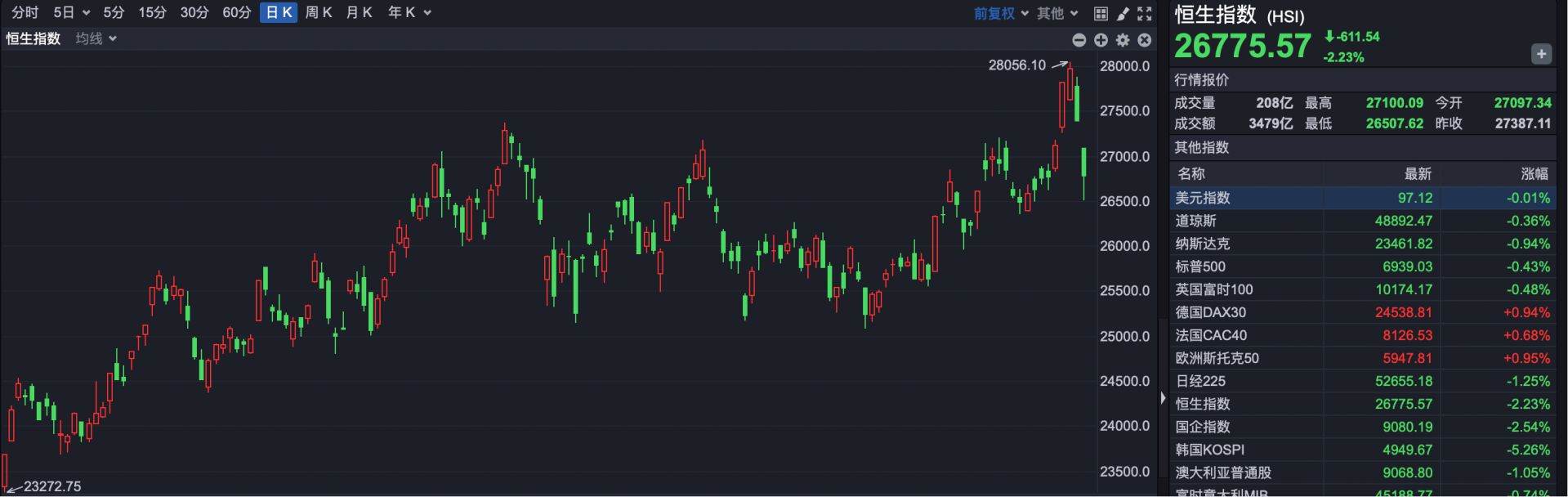
Market Overview - The Hong Kong stock market experienced a significant decline on February 2, with the Hang Seng Index closing at 26,775.57 points, down 611.54 points, representing a drop of 2.23% [1] - The Hang Seng Tech Index also fell, closing at 5,526.31 points, down 191.87 points, a decrease of 3.36% [2] Sector Performance - Precious metals stocks were notably affected, with Shandong Gold (HK01787) and Chifeng Jilong Gold Mining (HK06693) both dropping over 12%. Other companies like Lingbao Gold, Jiangxi Copper, and Zijing Mining also saw declines exceeding 9% [3] - In the automotive sector, Xpeng Motors (HK09868) fell by 6%, while NIO (HK09866) dropped over 4% [5] - Semiconductor stocks faced pressure, with Hua Hong Semiconductor declining by over 11% [7] Company Deliveries - In January 2026, major new energy vehicle manufacturers showed significant delivery disparities: Xpeng delivered 20,011 units, down 34.07% year-on-year and 46.65% month-on-month; Li Auto delivered 27,668 units, up 7.55% year-on-year but down 37.47% month-on-month; NIO delivered 27,200 units, a substantial increase of 96.1% year-on-year; and Seres saw a remarkable growth of 104.85% year-on-year with 45,900 units delivered [7] Investment Insights - Citigroup's latest commodity report indicated that current gold prices have significantly priced in future uncertainties, with expectations of short-term price increases but valuations reaching "extreme levels" [5] - Huatai Securities suggested that the current market pullback is a technical correction following rapid increases, with a focus on AI supply chains and semiconductor sectors for potential gains [11] - Morgan Stanley noted that the recent bull market has led to profit-taking ahead of the Lunar New Year, but geopolitical uncertainties may enhance the attractiveness of Chinese assets, predicting that the Hong Kong market could outperform A-shares in the short term [11]
港股黄金、科网股,集体大跌
第一财经· 2026-02-02 08:41
Market Overview - The Hang Seng Index closed at 26,775.57, down by 611.54 points or 2.23% [1] - The Hang Seng Technology Index fell to 5,526.31, a decrease of 191.87 points or 3.36% [1] - The Hang Seng Biotech Index dropped to 14,849.89, down by 570.18 points or 3.70% [1] Sector Performance - The precious metals sector experienced significant declines, with Shandong Gold and Chifeng Jilong Gold both falling over 12% [1] - Other notable declines included Lingbao Gold and Tongguan Gold, which dropped over 8% [1] - China Gold International and Zijin Mining International also saw declines exceeding 7% [1] Technology Sector - The tech sector faced collective downturns, with Huahong Semiconductor dropping over 11% [3] - BYD saw a decline of nearly 7%, while Xpeng Motors fell over 6% [3] - Other companies like SMIC, NIO, and Bilibili experienced declines exceeding 4% [3] Automotive Sector - The automotive sector also faced losses, with Agricultural Unlisted Entities down by 11.24% [4] - BYD shares decreased by 6.91%, and Xpeng Motors fell by 6.77% [4] - Other companies such as Leap Motor and NIO also reported declines, with NIO down by 4.51% [4]