
算力算法

Search documents
杨德龙:马年行情即将到来 有望延续这轮慢牛长牛
Xin Lang Cai Jing· 2026-02-12 08:13
Group 1: Investment Opportunities in 2026 - The upcoming Year of the Horse is expected to continue the positive momentum seen in the Year of the Snake, particularly in technology stocks such as semiconductors, humanoid robots, and solid-state batteries [1][6] - The 14th Five-Year Plan emphasizes technological innovation, which is likely to drive performance in tech sectors during the Year of the Horse [1][6] - The current valuation of the CSI 300 index is around 15 times earnings, below historical averages, indicating that the market is still in a bull phase with ample investment opportunities [1][6] Group 2: Market Trends and Investor Sentiment - The A-share market has recently rebounded from previous adjustments, with trading volumes maintaining above 2 trillion yuan, reflecting active trading sentiment [2][7] - The upcoming Spring Festival is expected to enhance the market's "money-making effect," potentially leading to increased investor participation post-holiday [2][7] - Investors are advised to hold quality stocks or funds during the holiday, as the market is likely to maintain an upward trend; conversely, those holding overvalued speculative stocks may consider taking profits [2][7] Group 3: Artificial Intelligence Development - The Chinese government is promoting the "Artificial Intelligence +" initiative to enhance productivity and drive high-quality development across various industries [3][8] - Emphasis is placed on advancing AI technology, including algorithm innovation and high-quality data supply, to unlock development potential and create new industries [3][9] - The humanoid robot sector is highlighted as a key application area for AI, with expectations for continued growth and significant contributions to the industry [4][9] Group 4: Economic Indicators and Market Outlook - The Hong Kong stock market has experienced recent adjustments, attributed to tighter liquidity compared to the A-share market, but is expected to perform well in the long term [5][10] - Economic recovery indicators, such as a 0.2% increase in CPI and a 0.4% rise in PPI, suggest a gradual improvement in consumer demand, which supports the market's fundamentals [5][11] - The overall sentiment in the market is expected to improve as economic conditions stabilize, providing a foundation for the ongoing market rally [5][11]
杨德龙:马年有望延续慢牛长牛趋势,板块轮动或呈现“先小登、再中登、后老登”顺序
Ge Long Hui· 2026-02-04 07:23
Group 1 - The core viewpoint is that the A-shares and Hong Kong stocks are expected to continue a slow bull market trend in the upcoming Year of the Horse, with a noticeable increase in market profitability and further sector rotation anticipated [1] - Different sectors are being referred to in a way that reflects structural differentiation: technology stocks are humorously called "small Deng stocks," while traditional sectors like liquor are referred to as "old Deng stocks." New energy, military industry, and non-ferrous metals (including precious metals) are seen as "medium Deng stocks" [1] - The expected order of sector rotation in a slow bull market is "first small Deng, then medium Deng, and finally old Deng" [1] Group 2 - In terms of industry allocation, it is essential to align with the "14th Five-Year Plan" and relevant policy directions, with a focus on technological innovation [1] - Key areas of focus in the technology sector include semiconductor chips, artificial intelligence, innovative pharmaceuticals, solid-state batteries, and computing power algorithms, as well as future technologies like controllable nuclear fusion and quantum technology [1] - The real estate sector is still in an adjustment period, but core areas in first-tier cities may see a rebound due to scarcity and demand support, with transaction volumes potentially increasing [1] Group 3 - In the precious metals sector, the price increase in the Year of the Horse is unlikely to replicate the gains of the past two years due to already high price levels, but the long-term trend remains unchanged [2] - Allocating about 20% of an investment portfolio to gold assets over a 5-10 year horizon is still considered an effective way to hedge against inflation and currency devaluation [2]
杨德龙:2026年消费板块有望从“低配”转为“标配” 科技股依是投资主线之一
Xin Lang Cai Jing· 2026-02-02 09:25
Economic Outlook - In 2026, China's macro economy is expected to achieve a recovery growth, with policies focusing on boosting domestic demand as a key strategy [1][14] - The "three drivers" of economic growth—consumption, investment, and exports—are facing varying degrees of slowdown, prompting policy measures to stimulate consumption and stabilize investment [1][14] Consumption Sector - Consumer spending is anticipated to rebound, particularly in traditional consumption peaks like the Spring Festival, benefiting sectors such as liquor, food and beverage, and new consumption areas [2][15] - The retail sales growth rate fell to 0.9% in December, the lowest in two years, but is expected to recover as the market's wealth effect improves [4][17] - Many consumer stocks are at historical low valuations, suggesting potential for recovery as the sector transitions from "underweight" to "balanced allocation" [4][17] Investment Sector - Infrastructure construction, including traditional and new infrastructure projects, is set to drive fixed asset investment growth, which had previously contracted due to declining real estate investment [2][15] - The government is expected to increase subsidies and implement trade-in programs to stimulate consumer spending and investment [1][14] Technology Sector - The technology sector remains a primary investment focus, with significant potential in areas like humanoid robots, semiconductor chips, and AI-related fields [5][18] - The humanoid robot industry is transitioning from concept to production, with expectations for increased orders and market performance in 2026 [19] - The semiconductor industry is a critical area for policy support, particularly in high-end chips, with ongoing investments in R&D expected to yield breakthroughs [20] Renewable Energy Sector - The renewable energy sector, previously marked by overcapacity and price wars, is anticipated to recover as policies aim to reduce excess capacity and improve competitive dynamics [21] - Solid-state batteries are expected to gradually replace traditional lithium batteries, representing a significant technological advancement in the sector [21][22] Capital Market Dynamics - A substantial amount of fixed-term deposits, estimated at 50 trillion yuan, is set to mature, with a portion likely to flow into capital markets, supporting the ongoing bull market [3][16] - The stock market has shown strong performance, with significant trading volumes and a bullish sentiment among investors, particularly in sectors like new energy and precious metals [3][16] Precious Metals - Recent surges in international gold prices have heightened investor interest in precious metals, with a long-term bullish outlook despite potential short-term volatility [10][23]
杨德龙:2026年我国资本市场投资机会明显增多|立方大家谈
Sou Hu Cai Jing· 2026-01-19 12:29
Economic Growth - The overall economy achieved stable growth, with GDP growth projected at 5% for the year, reflecting a recovery and improvement trend [1] - Quarterly GDP growth rates for 2025 are forecasted at 5.4%, 5.2%, 4.8%, and 4.5% respectively [1] - China's trade surplus reached a historic high of over $1.1 trillion, showcasing the competitiveness of Chinese export products [1] Domestic Demand - The main issue in domestic demand is the imbalance of strong supply versus weak demand, with stable prices indicating insufficient demand [1] - Policies to stabilize consumption include promoting trade-in programs and subsidies for certain products, which have positively impacted sales [1] - Retail sales growth remains relatively low, indicating the need for further policies to enhance residents' income and unlock greater consumption potential [1] Income Disparity - Rural residents experienced a real income growth rate of 6%, significantly higher than the 4.2% growth for urban residents, indicating structural improvement [2] - The decline in labor demand in some urban factories has led to a return of laborers to rural areas, contributing to faster income growth in rural regions [2] Investment Opportunities - The new energy sector is witnessing a differentiated market, with some areas showing profit improvements while others face significant losses, emphasizing the need for value investment [3] - The stock market is currently in a phase of adjustment, with expectations for stronger performance around the Spring Festival [4] - The technology sector is expected to remain a dominant feature, with emerging industries such as robotics, semiconductor chips, and biomedicine identified as beneficiaries of economic transformation [3][4]
杨德龙:市场短期调整有利于长期走势更加稳健
Xin Lang Cai Jing· 2026-01-16 09:12
Group 1 - The A-share market has continued the year-end rally that started in mid-December last year, achieving a 17-day consecutive rise and briefly surpassing the 4100-point mark, indicating a significant recovery in overall market risk appetite [1][7] - The strong upward momentum is primarily supported by two factors: the AI sector and other hot sectors attracting substantial capital, leading to strong profit-making effects, and January typically being the month with the highest credit issuance, with new credit generally reaching around 3 trillion to 4 trillion yuan [1][7] - After continuous upward movement, the market shows signs of short-term overheating, with daily trading volume nearing 4 trillion yuan, a historical high, and margin financing balance exceeding 2.6 trillion yuan, also a record [1][7] Group 2 - Following the 17-day rise, nearly 30 listed companies have issued profit warnings for 2025, contrasting with the usual trend of companies reporting positive forecasts first, indicating potential overheating and high valuations in certain sectors [2][8] - The current market rally is characterized as a structural bull market, with economic fundamentals reflecting the performance of traditional industries like real estate and retail remaining sluggish, while the market surge is concentrated in technology innovation sectors [2][8] - The disparity between market performance and economic fundamentals is largely due to differing perspectives, with traditional industries lagging while emerging sectors receive significant capital inflow, particularly in the context of the ongoing AI technology revolution [3][9] Group 3 - The economic growth rate for 2025 is projected to be around 5%, achieving the initial target, but with significant disparities between emerging and traditional industries [4][10] - As growth stabilization policies take effect, improvements in economic data are expected, potentially leading to opportunities for a rotation in the A-share market, especially in consumer sectors [4][10] - The current 17-day rally has ended and adjustments have begun, emphasizing the importance of value investing and selecting quality industries, companies, or funds based on fundamentals to better capture long-term opportunities in the slow bull market [4][11]
杨德龙:新年牛市氛围愈来愈浓 市场赚钱效应明显提高
Xin Lang Cai Jing· 2026-01-08 03:22
Core Viewpoint - The A-share and Hong Kong stock markets are experiencing a continuous upward trend, with the Shanghai Composite Index achieving a historic "14 consecutive days of gains," confirming the ongoing "policy bull" market since September 24, 2024 [1][7]. Policy and Economic Environment - Economic growth stabilization policies are gradually taking effect, expected to improve economic data in 2026 and boost demand through moderate price recovery [1][7]. - The new "National Nine Articles" has significantly changed the A-share market ecosystem, with companies increasing cash dividends and stock buybacks to reward investors [1][7]. - The central bank has introduced policy tools to support the capital market and attract incremental capital [1][7]. Market Dynamics - In 2025, the Shanghai Composite Index broke the 4000-point mark for the third time, with concerns that it might be a market peak; however, it is viewed as the starting point for a new market phase [1][7]. - The market is expected to transition from a structural bull to a comprehensive bull market in 2026, driven by the increasing participation of retail investors [2][8]. Investor Behavior - The public fund sales in 2025 exceeded 1 trillion units, with equity funds accounting for over half [2][8]. - In December 2025, 2.6 million new stock accounts were opened, marking a 30.54% year-on-year increase, indicating a strong trend of household savings moving into the capital market [2][8]. - By the end of 2025, the total number of A-share accounts approached 400 million, with individual investors making up over 99% of the market, highlighting its retail-driven nature [2][8]. Market Performance - The A-share market saw an overall increase in 2025, with the Shanghai Composite Index rising by 18.41% and the ChiNext Index increasing by over 50%, reflecting a broadening market profit effect [3][9]. - The current bull market is characterized by a slow and steady increase, potentially lasting 3-10 years, marking a significant shift in A-share market dynamics [3][9]. Future Outlook - The 2026 market is expected to continue the trends of 2025, with technology stocks remaining a key investment focus, alongside sectors like consumption, new energy, and military industry [4][10]. - The bull market is seen as a once-in-a-decade opportunity, with the potential to set historical records in duration [4][10]. Economic Impact - The bull market aims to boost consumption by enhancing household balance sheets and consumer confidence, thereby stimulating domestic demand [5][11]. - It is also expected to stabilize the real estate market as investors may redirect profits from the stock market into property purchases [5][11]. - The market's prosperity will support the development of innovative technology companies, fostering economic transformation and new growth drivers [6][11].
杨德龙:2026年我国资本市场是大有可为的一年
Xin Lang Cai Jing· 2025-12-19 01:55
Group 1 - The core viewpoint is that the current slow bull market in A-shares is expected to continue for two to five years, with an annual index increase of 10% to 20% being common [1][7] - The market has entered a new phase, transitioning from a structure bull to a comprehensive bull market, with various sectors expected to perform, not just technology stocks [2][8] - The recent political meetings have set a positive tone for macroeconomic policies, which will further support the capital market and economic growth [3][9] Group 2 - There is a significant shift of household savings towards the capital market, with over 165 trillion yuan in deposits and a notable increase in new stock accounts and fund sales [4][10] - The stock market is seen as a historical investment opportunity, especially as the real estate investment phase ends, emphasizing the need for investors to adopt rational investment strategies [5][11] - The technology innovation sectors, including humanoid robots and AI, remain key investment themes, while consumer stocks are also expected to recover in valuation [3][9]
杨德龙:中国居民家庭资产配置方向逐步从楼市转向股市
Xin Lang Cai Jing· 2025-12-02 07:38
Market Outlook - The current bull market is characterized as a slow and long-term trend that may last for two to three years, rather than a short-term rally that ends at 4000 points [1][8] - The presence of a divergence in market sentiment indicates that the bull market is still ongoing, as a consensus among investors typically signals a market peak [1][8] Recent Market Adjustments - Near the end of the year, increased divergence in market sentiment may lead to some adjustments, particularly in technology stocks that had previously seen significant gains [2][9] - The Shanghai Composite Index recently rebounded to the 3900-point mark, reaffirming the expectation of a slow bull market [2][9] Historical Context - The bull market was initiated following a policy shift on September 24 of the previous year, which resulted in a rapid increase of nearly 1000 points in the Shanghai Composite Index within a few trading days [2][9] - The market experienced a correction after a significant single-day trading volume of 3.45 trillion yuan, which was necessary for building momentum for the next phase of the bull market [2][9] Valuation Insights - At the 4000-point level, major indices are still near or below historical average valuations, indicating no significant bubble formation [2][9] - Even high-growth sectors like the ChiNext and STAR Market do not exhibit widespread bubble characteristics, although some localized overvaluation may exist [2][9] Technology Sector Analysis - Confidence in technology stocks should be maintained, with valuation assessments focusing on potential technological breakthroughs and future earnings rather than traditional metrics like P/E ratios [3][10] - The success of technology companies hinges on their ability to secure large orders and increase profitability through R&D investments [3][10] Structural Market Trends - The market is expected to evolve into a structural bull market by 2025, characterized by a "barbell" structure where low-valuation, high-dividend bank stocks perform well alongside high-growth technology stocks [4][11] - This shift is driven by funds moving from real estate and traditional savings into equities, reflecting a changing risk appetite among investors [5][12] Long-term Asset Allocation - A significant transition in asset allocation is underway, with household investment in real estate decreasing from 70% in 2021 to 50% currently, while stock and fund allocations have increased but remain below 5% [6][13] - The trend of reallocating household savings from real estate to capital markets is expected to continue for over a decade, presenting a long-term investment opportunity [5][12][13] Economic Implications - The ongoing bull market is viewed as a potential driver for consumer spending and investment confidence, which could contribute to economic recovery [6][13]
4000点震荡拉锯:牛市格局未变
和讯· 2025-11-10 10:14
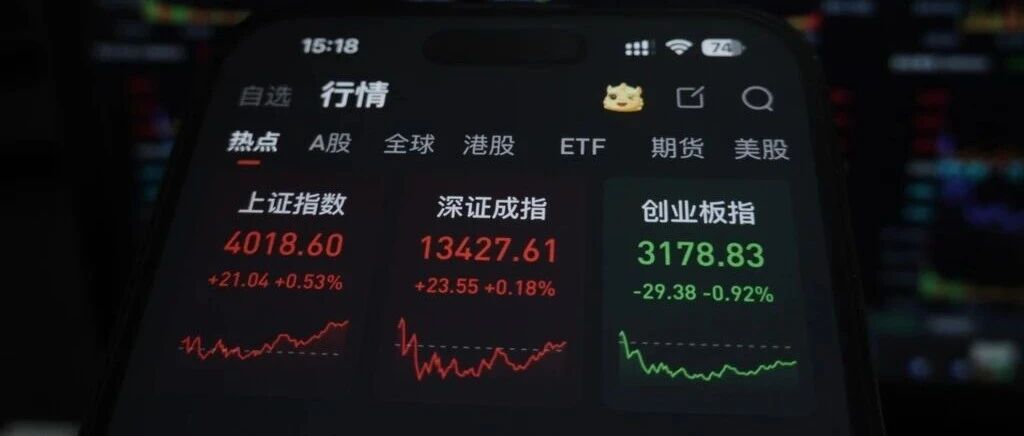
Market Overview - A-shares showed mixed performance with the Shanghai Composite Index rising by 0.53% and the Shenzhen Component Index increasing by 0.18%, while the ChiNext Index fell by 0.92% [2] - The trading volume in the Shanghai and Shenzhen markets reached 2.17 trillion, an increase of 175.4 billion compared to the previous trading day [2] Technology Sector Analysis - The technology sector has been performing well this year, with significant gains in humanoid robots, semiconductor chips, and algorithm computing [3] - Recent adjustments in technology stocks should not be interpreted as a trend reversal; rather, they reflect profit-taking behavior from investors [4] - The "15th Five-Year Plan" emphasizes technological innovation as a key policy direction, indicating strong future support for sectors like AI and semiconductor technology [4] Investment Outlook - The market is expected to experience structural opportunities in 2026, driven by potential policy benefits and improved capital conditions [2][8] - There is a belief that the bull market in A-shares and Hong Kong stocks will continue, with a shift of household savings into the capital market already underway [8] - Historical trends suggest that a complete bull market typically benefits a wide range of industries, not just a few sectors [8] Traditional Sector Opportunities - Traditional sectors may see phase-based rotation opportunities in the coming year, although their growth may not match that of technology stocks [8] - The current market environment shows lower overall valuations and leverage compared to previous peaks, suggesting that the recent rise above 4000 points may not indicate a bubble [7][8]

杨德龙:年底前市场出现震荡调整但牛市格局不变
Xin Lang Ji Jin· 2025-11-03 08:03
Group 1 - The market is experiencing fluctuations around the 4000-point mark, which may indicate a continuation of the bull market rather than its end [1][2] - The first half of the bull market was characterized by a rapid rise in technology stocks, while traditional sectors lagged behind [1][2] - The current economic transition in China is leading to slower growth in traditional industries, while emerging sectors like humanoid robots and semiconductors are thriving [2][3] Group 2 - The recent market adjustments are seen as normal profit-taking rather than a market downturn, with signs of sector rotation emerging [2][3] - The upcoming focus on new industries in the "14th Five-Year Plan" highlights sectors such as humanoid robots, semiconductors, and biopharmaceuticals as key growth areas [3][5] - The leverage in the market has increased, with margin financing exceeding 25 trillion yuan, indicating a concentration of funds in high-performing technology stocks [4][5] Group 3 - The influx of retail savings into the stock market, driven by a lack of opportunities in the real estate sector, is providing significant capital for market growth [5][6] - Despite potential risks in speculative technology stocks, there remains optimism for the long-term performance of the technology sector, drawing parallels with the U.S. market [5][6] - The market is expected to transition from a structural bull market this year to a more comprehensive bull market next year, with opportunities in both technology and consumer sectors [6]