
脑机接口

Search documents
常态化投融资路演在四川天府新区持续举行 促成13家企业融资12.8亿元
Sou Hu Cai Jing· 2025-12-03 10:03
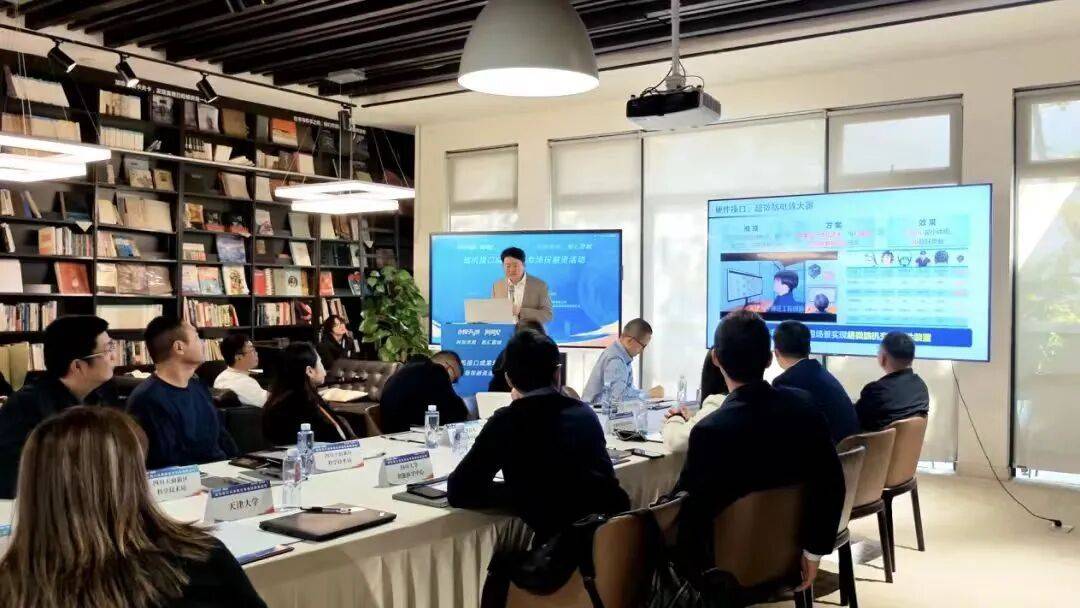
近日,"创投天府·周周见"暨"科创天府·智汇蓉城"脑机接口成果转化专场路演在天府国际基金小镇投资服务中心举行。现场,围绕"脑机接口"的科技路 演,脑电波信号、忆阻器神经形态器件、多模态心理筛查等一系列专业术语频繁交织,指向一个共同趋势:脑机接口技术正从实验室加速走向产业化落 地。活动汇聚了高校、医院与企业的多项前沿项目,直面资本与产业的检验。 路演现场,来自成都科技服务集团、成都技转智石股权投资基金、成都科创投集团、万创华汇股权投资基金、西航投成都科技集团、四川璞信产融投资、 成都银行等多家投资机构与银行代表积极参与,围绕技术壁垒、临床路径、商业模式等关键问题与路演方进行了深入交流。多家机构在现场表达了后续跟 进意向,显示出脑机接口作为硬科技赛道的高度吸引力。 活动现场 图片来源:四川天府新区提供 自2025年5月四川省"创投天府·周周见"常态化投融资路演启动,截至目前,四川天府新区科学技术局、财政国资局会同天府国际基金小镇已经组织开 展"创投天府·周周见"常态化路演23场,覆盖人工智能、智能制造、软件信息等核心领域,储备优质企业项目182个,储备金融机构200余家。通过"周周 见"路演平台,企业融资初显成效 ...

奋楫“十五五”,资本与国策共创
Sou Hu Cai Jing· 2025-12-03 01:52
Core Insights - The focus of national development is shifting from "quantitative recovery" post-pandemic to "qualitative leap" in the "15th Five-Year Plan" [1] - The "15th Five-Year Plan" emphasizes "high-level technological self-reliance" and aims for a dual goal of "effective qualitative improvement and reasonable quantitative growth" [5][11] Group 1: Economic and Industrial Strategy - The national strategy is entering a new cycle centered on innovation efficiency, industrial structure, and regional collaboration, marking a shift from "policy following" to "system co-creation" [4] - The plan aims to build a modern industrial system with advanced manufacturing as the backbone, focusing on future industries like quantum technology, biomanufacturing, and hydrogen energy [11] - The transition from "incremental manufacturing" to "efficiency manufacturing" indicates a shift in focus from merely increasing production to optimizing resource allocation [12] Group 2: Investment Opportunities - Hard technology investment, including semiconductors and advanced materials, is positioned as a foundational logic for "systematic breakthroughs" [10] - Investment institutions are encouraged to engage in pre-financing and result transformation for national technology tasks, fostering capital co-creation [10] - The emphasis on "entrepreneurial investment + risk-sharing mechanisms" presents opportunities for investment firms to participate in national innovation initiatives [10] Group 3: Green Development - The "15th Five-Year Plan" elevates green development from a secondary goal to a structural institution, influencing all industrial allocations [17] - The integration of green issues into financial and market mechanisms signifies a shift in perspective, making green development a capital issue [17] - Sustainable investment opportunities in green infrastructure and carbon asset management are expected to grow [20] Group 4: Consumer and Market Dynamics - The plan positions consumption upgrade as a core driver of economic structural transformation, moving from recovery to quality enhancement [22] - The "silver economy" is recognized as a significant industrial opportunity, transforming aging issues into growth engines [22][25] - Investment opportunities in healthcare, elder care, and technology-assisted living are anticipated to rise due to demographic shifts [25] Group 5: Regional Development - The focus of regional policy is shifting from "development gradient" to "structural coordination," promoting a unified market and efficient resource allocation [27] - Investment institutions are encouraged to collaborate with local guiding funds to strengthen project foundations and facilitate new industry development in less developed regions [30] Group 6: Financial Market Reforms - The "15th Five-Year Plan" emphasizes structural improvements in capital markets, transitioning from a focus on financing to a comprehensive investment-funding-exit cycle [32] - Direct investment institutions are identified as key players in building a strong financial nation, with multiple exit pathways being developed [35] - The plan aims to enhance the inclusivity and adaptability of capital market systems, promoting direct financing methods [31] Strategic Summary - The "15th Five-Year Plan" outlines new engines for China's economic growth, including technological innovation and green transformation, while establishing a more inclusive capital market system [36] - Investment institutions are encouraged to align their strategies with national planning, leveraging professional judgment to identify promising sectors and companies for investment [36]

政策技术双轮驱动 脑机接口商业化加速落地
Zhong Guo Zheng Quan Bao - Zhong Zheng Wang· 2025-12-03 01:29
Core Viewpoint - The brain-computer interface (BCI) sector is experiencing a significant upward trend, driven by strong policy support, continuous technological breakthroughs, and the establishment of medical insurance payment frameworks, indicating a critical phase towards large-scale application [1][4][8] Market Performance - As of December 2, the BCI concept index has seen a cumulative increase of 51.53% this year, with an annualized return of 59.69% and a maximum drawdown of 23.74% [2] - The index has been influenced by favorable developments such as the approval of medical services for BCI by insurance and positive domestic research progress [2][3] Valuation Insights - The BCI index's PS-TTM stands at 5.80 times, placing it in the 71.29th percentile since its inception, indicating a valuation that aligns with emerging technology sectors [3] - The index shows a premium of 277.15% over the CSI 300 index, reflecting the market's recognition of its strategic importance and high technological barriers [3] Commercialization Acceleration - The BCI industry is moving towards large-scale application, supported by a systematic policy framework, advancements in technology, and the establishment of payment systems [4] - The integration of BCI into national strategies highlights its potential to enhance public health and address challenges related to an aging population [4][7] Competitive Landscape - The domestic BCI industry features a mix of non-invasive and invasive technologies, with over 80% of companies opting for non-invasive methods due to their safety and lower development barriers [5] - A small percentage of companies focus on invasive technologies, which offer unique advantages in precision and intervention for specific diseases [5] Technological Advancements - Leading domestic companies are rapidly closing the gap with international standards in key technical indicators, achieving competitive performance in areas such as signal detection and device miniaturization [6] - Clinical applications in neuro-rehabilitation are progressing quickly, demonstrating significant clinical effects for patients with neurological disorders [6] Market Potential - The BCI sector is projected to reach a global medical application market size of $40 billion by 2030 and potentially exceed $145 billion by 2040, indicating substantial market potential [7] - The development of BCI technology is expected to drive advancements in related industries, fostering a high-tech industrial ecosystem centered on innovation [7]
机构:看好脑机接口产业投资机会
Zheng Quan Shi Bao Wang· 2025-12-03 01:03
江西省人民政府办公厅印发《江西省加快脑机接口技术和产业发展若干措施》,其中提出,开展有组织 的科研攻关。以打造高性能产品为导向,开展有组织的科研。鼓励省内科研单位牵头承担"脑科学与类 脑研究"国家科技重大专项、国家重点研发计划项目和课题,统筹省级科技计划资金,按有关要求给予 一定比例配套经费支持。部署实施省科技重大专项"2030先锋工程"脑机接口专项和"2030启航计划"脑科 学与类脑研究项目;在省重点研发计划中加强任务衔接,部署脑机接口系统集成、临床试验、应用示范 等攻关任务。创新任务组织模式,探索以目标导向、直达研发主体的任务管理机制。 财信证券认为,脑机接口行业作为融合多学科前沿技术的高成长赛道,在政策强力支持、医保支付落地 与技术持续突破的驱动下,正迈向规模化应用关键阶段。国内企业在部分领域已实现与国际领先水平并 跑,在设备小型化、信号传输速率、安全性能等方面表现突出,财信证券认为中长期相关产业链有较好 投资机会。 东吴证券认为,国内政策积极推进,国内外临床和商业化进展加速,看好脑机接口产业投资机会。脑机 接口技术的发展将为无数患者带来希望。全球有超过30亿人患有神经系统疾病,如中风、阿尔茨海默 病、 ...
四川10部门体系化推进科技助残 构建“需求—科研—产品”一体化链条
Si Chuan Ri Bao· 2025-12-03 00:42
Core Viewpoint - The event held on December 2 in Chengdu, themed "Technology with Love, Co-creating the Future," marks a new phase in the systematic promotion of technology-assisted support for people with disabilities in the province, as highlighted by the release of the "Implementation Opinions on Promoting Technology Assistance for the Disabled" by ten departments [1] Group 1: Implementation Opinions - The "Implementation Opinions" emphasize a "demand-driven, closed-loop linkage" mechanism, integrating resources from ten departments to form a collaborative effort in building a "demand-research-product" integrated chain [1] - The province will establish a list of "bottleneck" issues in assistive technology and a reserve of special projects for technology assistance, leveraging resources from top universities such as Sichuan University and University of Electronic Science and Technology of China to create high-level research platforms [1] Group 2: Research and Development Focus - The focus will be on tackling cutting-edge assistive technologies, particularly in areas where foreign monopolies exist and in basic research that has not yet been translated into applications, with an emphasis on major disabling diseases like autism and Alzheimer's [1] - The aim is to clarify the mechanisms of onset and control for these significant disabling conditions through foundational research [1] Group 3: Industry Development - The "Implementation Opinions" outline a strategic focus on developing five key frontier industries: smart assistive devices, exoskeleton rehabilitation robots, brain-computer interfaces and human-computer interaction, humanoid robots, and integrated smart home applications [1] - The goal is to accelerate the establishment of a nationally influential technology-assisted support industry cluster [1]
财信证券龙靖宁:政策技术双轮驱动 脑机接口商业化加速落地
Zhong Guo Zheng Quan Bao· 2025-12-03 00:22
Core Insights - The brain-computer interface (BCI) sector has been experiencing a continuous upward trend in valuation, aligning with the characteristics of emerging technology sectors during their explosive growth phase [1][2] - The domestic BCI industry is entering a critical stage of large-scale application driven by strong policy support, ongoing technological breakthroughs, and the establishment of medical insurance payment frameworks [4][8] Market Performance - As of December 2, the BCI concept index has seen a cumulative increase of 51.53% this year, with an annualized return of 59.69% and a maximum drawdown of 23.74% [2] - The index experienced a steady rise from January to March, followed by a significant correction in early April, after which it quickly recovered and reached a high of 1890.69 points on September 16, 2025, before entering a phase of horizontal adjustment [2] Valuation Metrics - The BCI index's price-to-sales (PS-TTM) ratio is 5.80, placing it in the 71.29th percentile since its inception, indicating a valuation in the upper-middle range [3] - The index shows a premium of 277.15% over the CSI 300 index, 100.36% over the pharmaceutical and biological index, and 0.83% over the medical device index, reflecting the market's perception of its strategic importance and high technological barriers [3] Industry Dynamics - The BCI industry in China has formed a competitive landscape characterized by both non-invasive and invasive technology routes, with over 80% of companies opting for non-invasive methods due to their higher safety and faster commercialization potential [5][6] - Leading domestic companies are rapidly closing the gap with international standards in key technical indicators, achieving parity or even leading in certain areas [6] Commercialization Acceleration - The BCI sector is moving towards large-scale application, supported by a systematic policy framework, advancements in technology, and the establishment of medical insurance payment systems [4][8] - The establishment of medical insurance payment frameworks has facilitated the commercialization of BCI services, reducing the financial burden on patients [6] Market Potential - The BCI sector is projected to have a market size of $40 billion by 2030 and is expected to exceed $145 billion by 2040, highlighting its significant social and commercial value [7] - The development of BCI technology is expected to drive advancements in high-end medical devices, AI algorithms, and new materials, fostering a high-tech industrial ecosystem centered on independent innovation [7]
2025卫星互联网产业生态大会将于12月4日至5日在上海举办;谷歌的TPU未来两年产量将出现爆炸式增长,2027年产量将上调至约500万块——《投资早参》
Mei Ri Jing Ji Xin Wen· 2025-12-03 00:20
3、 江西省人民政府办公厅印发《江西省加快脑机接口技术和产业发展若干措施》。其中提出,支持脑 机接口医疗器械纳入创新产品推荐目录,加快脑机接口整机产品迭代应用和规模化推广。遴选脑机接口 创新应用项目,定期发布创新应用典型案例,推动开放应用场景。积极推进"人工智能+"行动,推动人 工智能技术加速脑机接口研发。依托省科技成果转移转化中心,组织脑机接口科技成果对接活动,加快 创新成果落地。 脑机接口行业作为融合多学科前沿技术的高成长赛道,在政策强力支持、医保支付落 地与技术持续突破的驱动下,正迈向规模化应用关键阶段。 每经记者|杨建 每经编辑|彭水萍 (一)重要市场新闻 1、美股三大指数集体收涨,道指涨0.39%,纳指涨0.59%,标普500指数涨0.25%,热门科技股涨跌不 一,英特尔涨超8%,苹果涨超1%,英伟达涨近1%,博通跌超1%;加密储备概念涨幅居前,Strategy、 康特科技涨超5%,阿斯麦涨近2%,Coinbase涨超1%。波音涨超10%,创4月份以来最大单日涨幅。纳 斯达克中国金龙指数跌0.65%,中概股多数下跌,理想汽车涨近1%。 2、比特币大幅反弹,重回9万美元上方,报9.12万美元,涨超5% ...

浙江“十五五”规划建议:聚焦人形机器人、脑机接口等领域,布局建设一批未来产业先导区
Zheng Quan Shi Bao Wang· 2025-12-03 00:13
Core Viewpoint - The Zhejiang Provincial Committee emphasizes the integration of advanced manufacturing clusters to promote the upgrading of traditional industries, the growth of emerging industries, and the scientific layout of future industries [1] Group 1: Traditional Industry Upgrading - The initiative aims to implement "tenglong huan niao" (transformation) and "phoenix nirvana" actions to deepen the construction of national traditional manufacturing upgrade demonstration zones [1] - There will be a strong push for technological transformation, equipment updates, and ecological upgrades in traditional industries to enhance quality and technical capabilities [1] - Key industries such as green petrochemicals, textiles and apparel, electrical machinery, and home appliances will be prioritized for quality upgrades to strengthen their competitive positions [1] Group 2: Emerging Industry Development - The plan focuses on building new pillar industries, accelerating the development of clusters in artificial intelligence, new materials, new energy, aerospace, low-altitude economy, and biomedicine [1] - A future industry investment growth mechanism will be established to explore various technological routes, typical application scenarios, feasible business models, and market regulation rules [1] - Key areas for future industry development include humanoid robots, brain-machine interfaces, brain-like intelligence, quantum information, and biomanufacturing [1] Group 3: Service Industry Enhancement - The implementation of high-quality development projects in the service sector will be prioritized, aiming to improve the integration of modern services with advanced manufacturing and modern agriculture [1] - The initiative will promote the specialization and high-end extension of productive services and enhance the quality and diversity of life services [1]

重磅大会密集袭来!瞄准这个未来产业
Zheng Quan Shi Bao Wang· 2025-12-03 00:02
Group 1: Conferences and Events - The "2025 Brain-Computer Interface Conference" will be held in Shanghai from December 4 to 5, featuring the first large-scale domestic multi-track brain-computer interface competition and a developer conference [2] - The "2025 Intelligent Connection·Future" International Conference will take place in Hangzhou on December 11 to 12, focusing on the cutting-edge technology and application hotspots of brain-computer intelligence [2] - The "2025 Shenzhen Brain Expo" will occur in Shenzhen on December 28 to 29, promoting a new pattern of brain-computer interface development through three major interaction themes [2] Group 2: Policy Support - Brain-computer interfaces have been elevated to a national strategy and are included in the "14th Five-Year Plan" [3] - The Ministry of Industry and Information Technology and other departments issued implementation opinions aiming for breakthroughs in key technologies by 2027 and significant improvements in innovation capabilities by 2030 [3] - Local policies supporting brain-computer interfaces have emerged in various regions, including Shanghai and Beijing, with specific targets for clinical trials and application scenarios [3] Group 3: Investment and Financing - As of November, there have been 28 financing events in the brain-computer interface sector in China, with total financing exceeding 5 billion yuan, including a record 350 million yuan financing by Ladder Medical [4] - Capital is accelerating towards the brain-computer interface field due to policy encouragement [4] Group 4: Market Potential - The global market for brain-computer interfaces in medical applications is projected to reach 40 billion USD by 2030 and exceed 145 billion USD by 2040 according to McKinsey [5] Group 5: Company Developments - Sixteen brain-computer interface concept stocks have received institutional research, with companies like Xiangyu Medical and Lepu Medical actively engaging in the sector [7] - Companies are focusing on integrating brain-computer interface technology into their products, with significant R&D investments directed towards this area [7]
四大证券报头版头条内容精华摘要_2025年12月3日_财经新闻
Xin Lang Cai Jing· 2025-12-02 23:27
Group 1 - The National Development and Reform Commission and other departments aim to strengthen the construction of data element disciplines and digital talent teams to promote the integration of education, talent, industry, and innovation in the data field [1] - The China Interbank Market Dealers Association has optimized the merger note mechanism to enhance the efficiency of fund utilization and support corporate mergers and acquisitions [2] - Fujian Province has issued measures to promote the orderly development of computing power infrastructure, encouraging the planning of urban computing networks and upgrading submarine cables [3][21] Group 2 - The brain-computer interface sector is experiencing accelerated commercialization driven by policy and technology, with current valuations aligning with emerging growth characteristics [4][22] - Leading lithium iron phosphate companies are raising prices, with one company announcing a processing fee increase of 3000 yuan per ton starting January 1, 2026 [5][23] - New regulations on credit repair have been introduced to facilitate the revival of business entities, expanding the scope of credit repair and shortening processing times [6][24] Group 3 - Shanghai is moving towards regulating the development of offshore bond business in the free trade zone, with new draft regulations under review [7][26] - Fujian Province plans to build a collaborative computing network with a target of exceeding 12 EFLOPS in public computing power by the end of 2027, leading to significant market activity in related stocks [9][27] - Institutions are optimistic about the cross-year market, with 197 stocks included in the December "golden stock" list by brokerages [10][28] Group 4 - The brain-computer interface industry is set to accelerate with multiple conferences scheduled, including a large-scale competition and investment cooperation forum [11][29] - The charging infrastructure sector is witnessing rapid development, with a total of 18.645 million charging facilities in China as of October, marking a 54% year-on-year increase [12][30] - The new national standard for electric bicycles has been implemented, prohibiting the sale of vehicles that do not meet the updated requirements, creating new growth opportunities in the industry [13][31] Group 5 - Public fund institutions have increased their research activities, focusing on hard technology and advanced manufacturing sectors, with over 4200 company visits in November [14][32] - Offshore wind power is transitioning from demonstration to large-scale development, supported by increasing policy backing [15][33] - The scope of real estate investment trusts (REITs) has expanded to include urban renewal facilities, marking a significant milestone in the infrastructure sector [16][34][35] Group 6 - Eight real estate companies reported total sales exceeding 100 billion yuan in the first eleven months, with a notable increase in new housing supply and a positive market outlook [17][36][18]