芯片制造

Search documents
速递|英伟达正在构建AI帝国,从GPU霸主到初创企业收割机
Z Potentials· 2025-03-17 13:14
Core Insights - Nvidia has dramatically capitalized on the AI revolution, with significant increases in revenue, profitability, and cash reserves since the launch of ChatGPT two years ago [1] - The company has accelerated investments in AI startups, reinforcing its market position in GPUs and CUDA [2] Investment Activities - In 2024, Nvidia participated in 49 rounds of financing for AI companies, a substantial increase from 34 rounds in 2023 and only 38 rounds over the previous four years [3] - Nvidia's corporate investment aims to support startups that are considered "game changers and market creators" to expand the AI ecosystem [3] Notable Investments - Nvidia invested $100 million in OpenAI during a $6.6 billion funding round, raising OpenAI's valuation to $157 billion [5] - The company also participated in a $6 billion funding round for Elon Musk's xAI, despite prior commitments not to invest in direct competitors [5] - Nvidia was a major investor in Inflection's $1.3 billion funding round, which led to a significant technology licensing deal with Microsoft [6] - In May 2024, Nvidia co-invested $1 billion in Scale AI, which provides data labeling services for training AI models, raising the company's valuation to nearly $14 billion [6] Million-Dollar Club - Nvidia participated in a $686 million funding round for Crusoe, a startup building data centers for major tech companies [7] - In February 2024, Nvidia joined a $675 million funding round for Figure AI, raising the company's valuation to $2.6 billion [7] Over $100 Million Transactions - Nvidia participated in a $155 million funding round for Ayar Labs, which focuses on developing optical interconnect technology to enhance AI computing efficiency [12] - The company also invested in Weka's $140 million funding round, raising the company's valuation to $1.6 billion [13]



中国芯片,艰难一役
半导体行业观察· 2025-03-17 01:24
Core Viewpoint - The Chinese semiconductor industry is experiencing significant growth, with integrated circuit exports surpassing mobile phones as the highest single commodity export in 2024, amounting to 1,595 billion USD, while imports reached 3,856 billion USD [1][5]. Group 1: Industry Growth and Challenges - In 2024, China exported 2,981 billion integrated circuits, while imports totaled 5,492 billion units, indicating a robust demand for semiconductors [1]. - Despite the growth, the Chinese chip design industry remains at a mid-to-low end of the value chain, with only about 10% market share in the computer sector compared to 25% internationally [2][5]. - The industry faces challenges due to external restrictions and internal competition, necessitating a strategic breakthrough [2][3]. Group 2: Advanced Chip Demand - The demand for advanced chips is surging, driven by the rise of smart vehicles and artificial intelligence, with significant computational power requirements [4]. - Gartner predicts that the value of AI accelerators for servers will reach 21 billion USD in 2024, growing to 33 billion USD by 2028, highlighting the urgent need for stronger AI chips [4]. - TSMC anticipates that AI accelerator revenue will double by 2025, with a compound annual growth rate of nearly 45% from 2024 to 2029 [4]. Group 3: External Pressures and Technological Innovation - The Chinese semiconductor industry is facing increasing restrictions from the U.S. and allied nations, limiting access to advanced chips and necessary manufacturing equipment [5][10]. - The industry must focus on technological innovation, particularly in architecture and microsystem integration, to develop a self-sufficient technology ecosystem [6]. - The need for innovation is emphasized as the industry transitions from relying on advanced manufacturing processes to developing independent design technologies [5][6]. Group 4: Traditional Chip Market Dynamics - As advanced chip development faces hurdles, Chinese manufacturers are pivoting towards traditional chips, which are essential in various sectors including automotive and consumer electronics [8][9]. - The domestic demand for traditional chips is substantial, and local manufacturers are rapidly gaining market share in areas such as MCU, analog devices, and power devices [9]. - Despite the growth in traditional chip manufacturing, U.S. investigations and potential tariffs pose significant challenges to the Chinese market [10][11]. Group 5: Future Outlook - Industry experts express cautious optimism about the future of the Chinese semiconductor sector, believing that collective efforts across the supply chain will lead to a successful path forward [12]. - The integration phase of the Chinese semiconductor industry presents opportunities for companies with capital and technological resources to strengthen their positions [12]. - The resilience of Chinese companies in various fields indicates a potential for breakthroughs despite external pressures [12].
1nm,重要进展
半导体芯闻· 2025-03-14 10:22
Core Viewpoint - The semiconductor industry is witnessing intense competition among leading foundries like TSMC, Intel, and Samsung in the development of 2nm and 1nm technologies, with TSMC planning to establish a 1nm fab in Taiwan to maintain its market leadership [1][6][7]. Group 1: Advanced Lithography and Technology Partnerships - ASML and Imec have formed a five-year partnership to enhance research capabilities for technologies below 2nm, utilizing ASML's latest lithography tools [3][4]. - Imec will integrate ASML's advanced wafer fabrication equipment, including High-NA EUV tools, into its facilities in Belgium, marking a significant step in semiconductor manufacturing technology [4][5]. - High-NA EUV systems, essential for efficient manufacturing at 2nm nodes, can cost up to $350 million each, posing a barrier for new entrants [4]. Group 2: TSMC's 1nm Development Plans - TSMC is accelerating its 1nm technology development and plans to build a 1nm fab in Tainan, Taiwan, with six production lines dedicated to 1nm and 1.4nm chips [6][7]. - The new fab aims to outpace competitors like Samsung and Intel, with TSMC initially planning to launch 1.4nm technology in 2027 but now targeting 2026 for 1.6nm production [7]. Group 3: EUV Technology Advancements - DNP has successfully developed the first generation of EUV masks required for 2nm and beyond, achieving a resolution that is 20% smaller than that needed for 3nm [8][9]. - The company is collaborating with Imec to advance mask manufacturing technology, focusing on the requirements for 1nm processes [9]. Group 4: Future Roadmaps and Challenges - Imec's roadmap includes the transition from FinFET to GAA (Gate-All-Around) transistors at the 2nm node, with further innovations expected to continue down to atomic channel designs [11][12]. - The industry faces challenges such as rising design costs and the need for increased computational power, particularly for machine learning applications, which are growing at a faster rate than traditional transistor scaling can accommodate [13][14]. - Imec emphasizes the importance of next-generation tools and techniques, such as High-NA EUV lithography, to achieve higher transistor densities and performance [15][16].

3D芯片的时代,要来了
半导体行业观察· 2025-03-14 00:53
Core Viewpoint - The article discusses the potential of 3D-IC technology and small chip integration in revolutionizing the semiconductor industry, highlighting the current challenges and the gap between leading companies and the broader market [1][9]. Group 1: 3D-IC Technology and Market Readiness - 3D-IC and small chip concepts are seen as the next phase in the IP industry, but technical difficulties and costs limit widespread adoption [1]. - The adoption of 3D-IC is driven by the increasing number of important but non-differentiated content, with applications like 6G wireless communication being particularly suitable [1][9]. - There is a growing gap between companies that must adopt small chips to remain competitive and those that are merely interested in doing so [1][9]. Group 2: Advantages and Challenges of 3D-IC - 3D-IC technology offers advantages such as improved performance, reduced power consumption, and miniaturization, making it applicable across various sectors from mobile devices to AI and supercomputing [1][9]. - Major challenges include the complexity of integrating different technologies and the need for significant R&D investment, which is currently only feasible for larger, vertically integrated companies [1][5][9]. Group 3: Cost and Economic Viability - Data centers are less price-sensitive and are investing heavily in large 3D chips for AI applications, but other sectors are still hesitant due to economic viability concerns [7][9]. - The transition to advanced nodes (5nm to 3nm) is costly, and companies are exploring chiplet designs to mitigate initial non-recurring engineering (NRE) costs [7][9]. Group 4: Future Outlook and Industry Implications - 3D-IC has the potential to transform the IP and semiconductor industry, but it remains an expensive option primarily suited for data centers due to AI demands [9]. - Significant work is needed in areas such as interfaces, standards, tools, and methods before 3D-IC can be widely adopted beyond vertically integrated companies [9].
农银证券每日导读-2025-03-13
Nong Yin Zheng Quan· 2025-03-13 02:53
| 2025年3月4日 | | --- | | 各股市走势图 . | 股市短评 | 1 | | --- | --- | --- | | 主要经济数据公布 . | 主要新闻总结 . | | | 国际经济要闻 . | 大中华经济要闻 | | | 企业要闻 . | 中港两地上市的H股股份 | | | 免责声明 . | | | | 指數 | 收市 | 日比(%) | 5日(%) | 17,000 | | --- | --- | --- | --- | --- | | 恒生 | #N/A | 0.28 | (1.44) | 16,000 15,000 | | | Requesting | | | 14,000 | | H股 | #N/A | 0.03 | (2.31) | | | | Requesting | | | | | 紅籌 | #N/A | #N/A | #N/A | | | | Requesting | Requesting | Requesting | | | HSC大型股 | #N/A | #N/A | #N/A | | | | Requesting | Requesting | Requesting | ...
欧洲的RISC-V路线图,全盘披露
半导体行业观察· 2025-03-11 00:53
如果您希望可以时常见面,欢迎标星收藏哦~ 即使 Project Dare 确实具有潜在的 AI 用例,但它仍然非常专注于 HPC。该项目由欧洲高性能计算 联合组织 (EuroHPC Joint Undertaking) 资助,该组织是泛欧洲组织,曾为整个欧洲大陆的百亿亿 次级和百亿亿次级系统提供资金。共有 38 个不同的组织(详见下图右侧)联合起来,共同开发三种 不同的 RISC-V 计算引擎: 来源:内容 编译自nextplatform ,谢谢。 Dare 计划由巴塞罗那超级计算中心协调,该中心是基于 Arm 的 HPC 计算引擎的主要支持者之一, 并将利用之前欧洲处理器计划、 MEEP、 eProcessor、 EUPILOT和 EUPEX项目的经验,这些项 目都曾尝试创建本土计算,虽然它们以自己的方式取得了成功,但并没有真正起到太大作用。欧洲 的大多数 HPC 系统都基于英特尔、AMD 和 Nvidia 的引擎,这些公司均位于美国。从 Arm ISA 转 向 RISC-V ISA 不仅可以让欧洲潜在地降低在 HPC 和 AI 领域制造芯片的成本,还可以让欧洲与必 然会来的未来相交织,而不是试图追赶已经发 ...
EUV光刻,有变!
半导体行业观察· 2025-03-10 01:20
Core Viewpoint - EUV technology is overcoming challenges such as high costs and complex optical systems, showing significant advantages in processes of 10nm and below, with recent advancements from major companies indicating a new phase of commercial application and development [1]. Group 1: High NA EUV Developments - Intel is the first chip manufacturer to purchase High NA EUV lithography machines, with each machine valued at €350 million, currently used for R&D purposes [3]. - Intel's early results show that High NA machines can complete tasks with fewer exposures and processing steps compared to earlier machines, indicating a strong commitment to leading in the High NA EUV era [3][4]. - imec demonstrated a 90% yield in electrical testing of 20nm spaced metal lines using High NA EUV lithography, confirming the technology's capability at such small dimensions [6][10]. Group 2: Competitive Landscape in DRAM - Micron has introduced its first EUV-based 1γ (1-gamma) 16Gb DDR5 devices, achieving a 20% reduction in power consumption and a 30% increase in bit density compared to previous generations [11][15]. - Micron's transition to EUV is expected to improve economic efficiency for new nodes, combining EUV with multiple patterning DUV technology [15][16]. - The competition among major memory manufacturers is intensifying as Micron adopts EUV, with Samsung and SK Hynix also investing in High NA EUV machines to enhance their competitive edge [17]. Group 3: EUV Mask Technology - Samsung has decided to procure EUV pellicles from Mitsui Chemicals to improve production efficiency, following challenges in yield for its 3nm process [22][23]. - The development of EUV pellicles is crucial for reducing pattern defects in chip manufacturing, with ongoing efforts to enhance the performance and lifespan of these films [21][25]. Group 4: Future of EUV Technology - The ongoing innovation in EUV technology is expected to lead to more efficient, precise, and cost-effective chip manufacturing processes, supporting the semiconductor industry's growth and competitiveness [29].


国芯科技20250308
2025-03-09 13:19
Summary of Guoxin Technology Conference Call Company and Industry Overview - The conference call focuses on Guoxin Technology, a company specializing in semiconductor technology, particularly the RISC-V architecture, which is gaining traction in the semiconductor industry due to its open standard and innovation potential [3][4][5]. Core Points and Arguments 1. **Adoption of RISC-V Architecture**: Guoxin Technology has chosen the RISC-V architecture for its openness and innovation, allowing for a wide range of applications from embedded design to high-performance computing without licensing fees [3][4]. 2. **Market Potential**: The global market for RISC-V is projected to exceed $90 billion by 2030, with a compound annual growth rate (CAGR) of 47.4%, indicating significant growth opportunities in sectors like consumer electronics, autonomous driving, and industrial control [3][6][7]. 3. **Product Development**: Guoxin Technology is developing the V5 CPU core based on RISC-V, focusing on sectors such as information security and automotive electronics. The company aims to create low-power CPU cores and expand DSP instructions to meet the needs of IoT and automotive applications [3][5]. 4. **Automotive Electronics Innovations**: The company has developed high-end automotive chips using the RISC-V instruction set, targeting software-defined vehicles. The first product is designed for intelligent driving assistance systems, achieving a computing power of 6,000 DMIPS [9][10]. 5. **High-Performance Computing**: Guoxin Technology has introduced the CRV5 and CRC77 multi-core processors, with the latter competing against ARM Cortex-A55, operating at a frequency of 1.5GHz, providing robust computational support for complex applications [10][11]. 6. **Information Security Solutions**: The CRP7 CPU has been utilized to develop a cloud security chip with a signing speed of 1 million signatures per second and an encryption speed of 80Gbps, meeting domestic security standards [12][13]. 7. **Future Product Strategy**: The company plans to leverage its FCPU series IP to create reusable chip products across various sectors, enhancing performance through the integration of RISC-V CPUs and NPUs [16][17]. 8. **AI Integration**: Guoxin Technology is expanding AI instruction sets in its CPUs to improve neural network processing capabilities, aligning with the growing demand for AI applications [11][17]. Additional Important Insights 1. **Open Ecosystem Benefits**: The open nature of RISC-V allows for reduced design costs and faster development times, with user-customized designs expected to drop below 10% as the ecosystem matures [4][7]. 2. **Government Support**: The national support for RISC-V technologies is aimed at fostering domestic semiconductor industry growth and enhancing innovation capabilities [8]. 3. **Strategic Focus Areas**: Over the next 3 to 5 years, Guoxin Technology will concentrate on IoT applications, smart governance systems, and the automotive sector, with a particular emphasis on RISC-V architecture [23]. 4. **Collaboration with Major Players**: The company is involved in partnerships with various automotive chip manufacturers to accelerate the development of RISC-V based automotive chips [23][24]. 5. **Quantum Security Initiatives**: Guoxin Technology is also exploring quantum security measures to address potential threats posed by advancements in quantum computing [20]. This summary encapsulates the key points discussed during the conference call, highlighting Guoxin Technology's strategic direction, product innovations, and the broader implications of the RISC-V architecture in the semiconductor industry.
苹果带火了又一类芯片
半导体行业观察· 2025-03-08 03:39
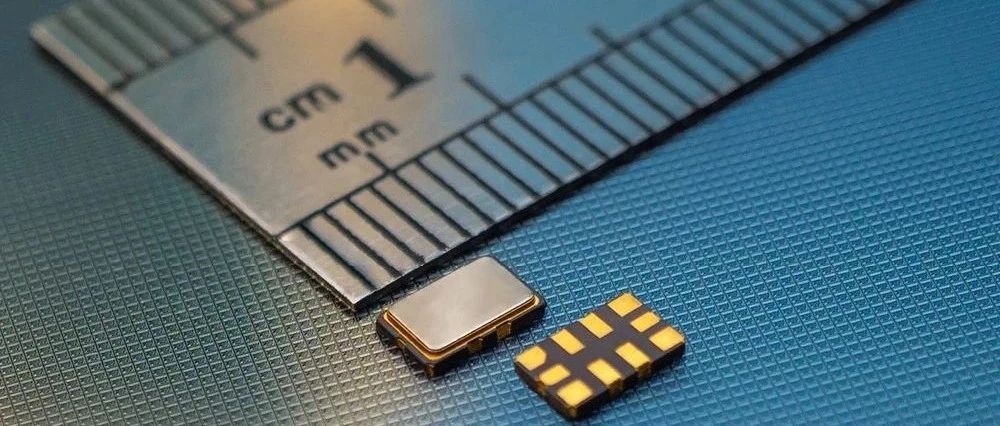
Core Viewpoint - The introduction of Apple's C1 modem chip in the iPhone 16e signifies a technological advancement in communication, gradually replacing Qualcomm's technology. Additionally, the adoption of SiTime's MEMS clock chip in the same model indicates a potential shift from quartz to silicon in clock technology, highlighting Apple's influence in the consumer electronics sector and the potential for a revolution in the clock chip industry [1][3][16]. Group 1: SiTime's Financial Performance - SiTime's revenue reached $202.7 million in 2023, marking a 41% year-over-year increase. The estimated cost of SiTime components in each smartphone is approximately $0.50. SiTime's revenue from its largest customer, Apple, accounted for about 22%, 21%, and 20% of its total revenue for the fiscal years ending December 31 in 2024, 2023, and 2022, respectively [3][5][20]. Group 2: Importance of MEMS Clock Chips - The strategic importance of MEMS clock chips is underscored by their adoption by major technology companies like Apple and NVIDIA, particularly in 5G communication and AI computing applications. SiTime is the largest supplier of MEMS oscillators, with over 3 billion units shipped. The clock chip industry is valued at $10 billion, with the resonator market at $4 billion, the oscillator market at $5 billion, and the clock IC market at $1 billion [5][20]. Group 3: Advantages of MEMS Technology - MEMS clock chips offer several advantages over traditional quartz-based solutions, including higher integration, better resistance to environmental factors, smaller size, and lower power consumption. These features make MEMS technology suitable for a wide range of applications, including communication infrastructure, automotive, industrial, aerospace, mobile devices, and IoT [16][20][21][22]. Group 4: Future Prospects - As electronic systems become more complex, the demand for sophisticated timing systems that can seamlessly integrate various oscillators, clock ICs, and resonators will increase. MEMS clock chips are expected to play a crucial role in meeting the needs of future smart devices and high-performance networks, driving innovation across multiple sectors [19][22].

英特尔,离不开外包
半导体芯闻· 2025-03-07 10:20
Core Insights - Intel plans to continue using TSMC's manufacturing services despite aiming to reduce reliance on external suppliers in the future [1][2] - The company is evaluating the optimal percentage of products to be manufactured by TSMC, with current outsourcing at approximately 30% [2] - Intel's next-generation Core 300 series "Panther Lake" CPUs will primarily utilize its own manufacturing facilities, which is expected to improve profit margins [2] Manufacturing Strategy - Intel's strategy has shifted from aiming for zero reliance on TSMC to recognizing the benefits of maintaining a portion of production with them [1] - The company acknowledges TSMC as a strong supplier, fostering healthy competition between TSMC and Intel's own foundries [1] - Intel's advanced products, such as Xeon processors, will remain in-house, while TSMC may be used for niche products and controllers that add value to Intel's platforms [2][3] Product Focus - Intel's current manufacturing capabilities are limited in certain technology nodes, making TSMC a suitable partner for producing specific controllers [3] - The company is particularly interested in internal production of high-margin products, while still leveraging TSMC for lower-cost items priced between $10 to $15 [2]