养老服务

Search documents
老年学堂进社区 这样的银龄生活有点“潮”
Yang Shi Wang· 2025-06-04 05:58
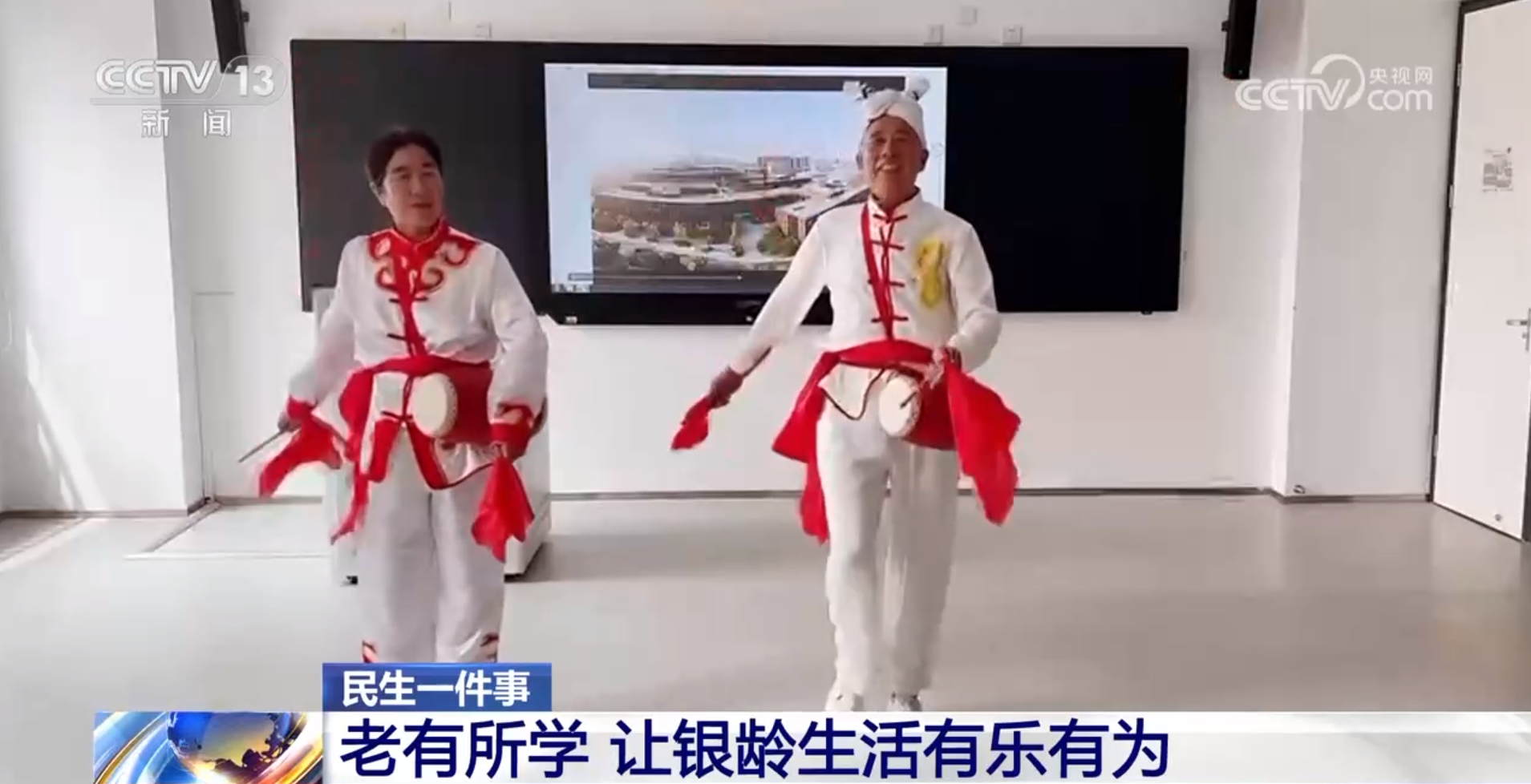
Group 1 - The core viewpoint of the articles highlights the increasing demand for elderly education in China, driven by a growing elderly population and their desire for enriched cultural and educational experiences [1][4][9] - As of the end of last year, the elderly population aged 60 and above in China exceeded 310 million, accounting for approximately 22% of the total population [1] - The National Open University for the Elderly has expanded its offerings significantly, with 127 classes opened this spring semester, an increase of over 60 classes compared to the previous year, and nearly 1,200 new students enrolled [4][6] Group 2 - Various local elderly education programs are being established, such as the collaboration between Xiamen Elderly University and local nursing homes, which enhances the cultural life of residents [10][12] - The online elderly education platform has registered over 10 million users, gathering a wealth of educational resources and expertise [8] - In Yantai, community-based elderly education programs are being implemented, offering courses that cater to the spiritual and cultural needs of the elderly population [13][16] Group 3 - The integration of education and health care is becoming a key growth area for the elderly care industry, with institutions recognizing the importance of educational services in enhancing resident satisfaction and competitiveness [12][10] - Courses offered in communities are designed based on the needs of local elderly residents, focusing on skills and knowledge that improve their quality of life [16][20] - The establishment of platforms like "Silver Age Book Garden" in communities not only provides educational opportunities but also stimulates local economies by enabling elderly individuals to earn income through skills learned [20][18]

广西开展易地扶贫安置点公共服务设施建设
Guang Xi Ri Bao· 2025-06-04 03:03
Core Points - The article discusses the implementation plan for public service facilities in large-scale relocation sites in Guangxi, focusing on enhancing the capacity and quality of civil affairs services for relocated populations [1][2] Group 1: Public Service Facilities - The plan emphasizes principles of "local convenience and benefit" and "multi-functional, comprehensive utilization" to improve civil affairs service facilities for the relocated population [1] - By 2027, the construction and operation of civil service facilities in relocation sites are expected to be fully completed [1] Group 2: Elderly Services - Support will be provided for the construction of 12 elderly activity centers in relocation sites to meet the cultural, sports, and recreational needs of the elderly [1] - The plan aims to strengthen grassroots elderly service teams and connect resources such as charity and volunteer services to help the elderly adapt to new social environments [1] - The establishment of one elderly service facility in a relocation site is also planned, focusing on community-based elderly care services [1] Group 3: Children's Services - The plan supports the improvement of children's service facilities in 8 relocation sites, focusing on the care of orphans and children without guardians [2] - It aims to enhance psychological health services for vulnerable children and upgrade the quality of care services for left-behind and disadvantaged children [2] - The initiative includes building a social participation system for care and support, leveraging social organizations and charity resources to provide companionship and care for children in relocation sites [2]
【省人力资源社会保障厅】陕西加强养老服务技能人才培养每年开展政府补贴性培训2万人次左右
Shan Xi Ri Bao· 2025-06-03 22:41
在人才评价和培养方面,我省鼓励符合条件的养老机构、企业、院校、社会组织等向所在地市级民 政部门申报养老服务职业(工种)技能等级评价机构。引导技工院校开设养老服务相关专业,对纳入工 学一体化建设的,给予相应资金支持。鼓励养老服务产业企业在技工院校开设订单班、定向班、冠名 班,大力推行企业新型学徒制等培训,加大养老服务技能人才供给。(记者:周明) 省人社厅职业能力建设处相关负责人介绍,政策明确的培训对象为所有有意愿从事养老服务工作的 劳动者,符合规定的给予培训补贴。培训重点面向陕西省境内养老机构、居家养老服务组织、家政服务 业、物业服务公司、旅居养老机构等从事养老服务的人员;陕西省高校医学专业,医学类院校和开设有 养老服务管理、智慧健康养老服务与管理院校的年度毕业生。 政策明确,我省市级民政部门提出本地区养老服务行业产业技能人才岗位需求,由市级人社部门纳 入年度政府补贴性培训计划,开展"岗位需求+技能培训+技能评价+就业服务"的项目化技能人才培养。 鼓励支持符合条件的培训机构开展养老服务职业(工种)技能培训,按规定对符合条件的参训人员给予 职业培训补贴。 近日,省人社厅发布《关于加强养老服务技能人才培养工作的通知 ...
前4月江西省服务消费趋势向好
Sou Hu Cai Jing· 2025-06-02 00:37
Group 1 - The core viewpoint is that service consumption is rapidly growing in China, becoming a significant source of incremental resident consumption and an effective means to promote high-quality economic development [1] - In Jiangxi Province, service consumption sales revenue from January to April 2025 increased by 11.5% year-on-year, outpacing the growth of all industries in the province by 7.8 percentage points, indicating a positive contribution to economic structural transformation [1] - Traditional service consumption remains dominant, with household and family services and other life services showing sales revenue growth of 13.6% and 11.9% respectively, accounting for 13.3% and 58% of total service consumption in the province [1] Group 2 - The "Culture + Tourism" dual engine is enhancing market vitality, with tourist numbers and ticket revenue in Lushan Scenic Area increasing by 33.8% and 30.64% respectively, and in Longhushan Scenic Area by 22.3% and 20.6% [2] - The tourism and cultural consumption market is expanding, with sales revenue from tourism services growing by 8.3% and 31.7%, and cultural services increasing by 32.2% and 17.9% year-on-year [2] - The "Sports + Health" dual approach is strengthening consumption momentum, with sports facility services and competitions seeing sales revenue growth of 56.2% and 30.9% respectively, while health services and fitness activities grew by 17.2% and 26.4% [2] Group 3 - The tax authorities in Jiangxi Province plan to leverage big data to analyze economic operations, create integrated consumption scenarios, and stimulate market vitality through tax incentives and improved tax services [3]
找不到工作,开个养老机构怎么样?
集思录· 2025-05-30 14:03
Core Viewpoint - The article discusses the challenges and considerations of starting a nursing home business, highlighting the complexities of the healthcare industry and the potential difficulties in profitability and competition [1][3][9]. Group 1: Industry Insights - The aging population is a significant trend, making the nursing and elderly care industry a potentially lucrative field, but the path to profitability remains uncertain [3]. - There is a noted lack of major capital investment in the nursing home sector, suggesting that if it were a highly profitable industry, it would have already attracted significant players [3]. - The nursing profession is described as demanding and often unappealing, with many young individuals discouraged from pursuing it due to the nature of the work [7]. Group 2: Employment and Income Challenges - Entry-level positions in healthcare, such as nursing assistants, often come with low pay and lack of benefits, as illustrated by a case where a caregiver earned only 190 yuan per day after agency fees [7]. - The competitive landscape for healthcare jobs is tough, with many positions requiring at least a bachelor's degree, making it difficult for those with lower qualifications to secure stable employment [5][6]. - The financial burden of healthcare services can be significant, as demonstrated by a case where a patient's total medical expenses exceeded initial estimates, highlighting the unpredictability of healthcare costs [8]. Group 3: Entrepreneurial Considerations - Starting a nursing home is viewed as a high-risk venture, with potential losses being substantial compared to other business opportunities, such as a small café or retail shop [9]. - The article suggests that aspiring entrepreneurs should consider less capital-intensive business models before venturing into the nursing home industry, which requires significant investment and operational expertise [9].

第二届温州国际康复大会长寿时代老年康复高质量发展分论坛顺利召开
Zhong Guo Chan Ye Jing Ji Xin Xi Wang· 2025-05-30 05:35
Core Insights - The second Wenzhou International Rehabilitation Conference focused on high-quality development in elderly rehabilitation, gathering numerous experts to discuss innovative concepts and practices in the field [1][5] - The conference highlighted the differences between hospital-based rehabilitation and the health management approach of TaiKang Home, emphasizing the importance of health management and functional health maintenance [1][3] Group 1: Key Discussions - Liu Suixin, Vice President of the Chinese Geriatric Medical Association Rehabilitation Branch, emphasized the necessity of active health exercise for the elderly and how to conduct it scientifically [2] - Yin Jiabao, Deputy Director of the Rehabilitation Medicine Committee of the China Non-Public Medical Institutions Association, shared practical experiences from TaiKang's approach to aging, providing an innovative model for the elderly care industry [2] Group 2: Standardization in Elderly Rehabilitation - Yun Xiaoping, Director of the Cognitive Rehabilitation Committee of the Chinese Rehabilitation Medicine Association, discussed the challenges and strategies in cognitive rehabilitation [3] - Huang Guozhi, Director of the Intelligent Rehabilitation Research Center at Southern Medical University, introduced a comprehensive plan for cultivating intelligent rehabilitation talents, including training and clinical practice [3] Group 3: Knowledge Updates - Zhou Zulin explored the relationship between cognitive impairment and swallowing function, noting the impact of cognitive disorders on swallowing abilities [4] - Ma Chao, Deputy Director of the Pain Rehabilitation Committee of the Chinese Rehabilitation Medicine Association, presented advancements in chronic pain rehabilitation using imaging technology to enhance treatment precision and safety [4] - Wang Xueqiang, Dean of the Rehabilitation Medical College at Wenzhou Medical University, emphasized the significance of regular exercise for the elderly and proposed exercise prescription recommendations [4] Group 4: Future Outlook - Wang Zhong, Executive Committee Member of the Rehabilitation Medicine Committee of the China Non-Public Medical Institutions Association, praised the insights shared by experts and expressed TaiKang's commitment to advancing innovative practices in integrated medical and elderly care [5] - The conference served as a platform for experts to discuss important topics and actionable suggestions for the development of elderly rehabilitation in the longevity era, with TaiKang Home aiming to contribute to the growth of the elderly health industry [5]
产业发展所需是技能提升所重
Jing Ji Ri Bao· 2025-05-28 18:41
Group 1 - The core viewpoint emphasizes the importance of skill enhancement in driving local economic development and aligning with industry needs, advocating for a targeted approach rather than a broad one [1][2] - Local governments are encouraged to implement specialized skill training initiatives tailored to their unique resource advantages, focusing on six key industries in Yunnan Province: highland characteristic agriculture, traditional Chinese medicine, cultural tourism, elderly care services, green energy, and labor-intensive industries [1][2] - The integration of skill training with employment promotion is crucial, aiming for full employment while addressing the mismatch between skills and job requirements through differentiated strategies [1][2] Group 2 - The article highlights the need for a deep integration of human resources and industrial development, balancing short-term employment needs with long-term economic growth [2] - In western regions, the establishment of local job opportunities through industrial transfer and the development of related industries necessitates concurrent skill enhancement for workers [2] - Skill development is positioned as a key factor in enhancing regional competitiveness, with a focus on leveraging skills to elevate industries along the value chain [2][3] Group 3 - The importance of training in emerging industries, such as drone operation and live-streaming sales, is underscored as a means to boost efficiency and market expansion for local industries [3] - Regions are advised to adopt a tailored approach to skill enhancement, emphasizing the role of enterprises and creating incentive mechanisms to foster collaboration between industry and education [3]
吴世民:努力让每一位老年人都能享受有尊严、幸福、品质的生活
Xin Jing Bao· 2025-05-28 13:43
Core Viewpoint - The aging population in China, with over 310 million people aged 60 and above, is driving the growth of the silver economy, necessitating a multi-layered and comprehensive elderly care service system [2] Group 1: Aging Population and Economic Impact - The elderly population accounts for 22% of China's total population, indicating a significant market for elder care services and products [2] - The silver economy is emerging as a new growth area, with increasing consumer demand from the aging demographic [2] Group 2: Recommendations for Service Improvement - The government is encouraged to optimize policy support for community-based elderly care and home modifications for the elderly [2] - The association should establish industry standards for elderly-friendly product design and care service processes to enhance market professionalism [2] - Companies are advised to focus on refined services and develop smart health monitoring and elderly-friendly home products to cater to the needs of elderly individuals living alone [2] Group 3: New Business Models and Trends - The aging industry is seen as a crucial driver for economic transformation, with suggestions to integrate "elderly care + internet" and "elderly care + finance" [2] - New consumption scenarios such as "elderly study tours" and "health and wellness vacations" are recommended to be explored [2] - There is a call for academic institutions to enhance research on elderly technology and chronic disease management [2] Group 4: Future Directions and International Collaboration - The need for proactive planning to serve younger elderly individuals is emphasized, including the establishment of a 15-minute elderly care service circle and the development of smart elderly devices and telemedicine systems [2] - The adoption of 5G, AI, and IoT technologies in elderly services is encouraged [2] - Learning from international experiences and promoting Chinese elderly-friendly products globally is suggested [2] Group 5: Key Initiatives by the Association - The association plans to focus on six key areas: bridging policies and enterprises, promoting standardization, fostering technological innovation, enhancing talent development, building industrial parks, and hosting international exhibitions [3] - The aim is to create a high-quality development landscape for the aging industry, ensuring that every elderly person can enjoy a dignified, happy, and quality life [3]

养老金融助力中国式养老事业和银发经济发展 | 财富与资管
清华金融评论· 2025-05-28 10:14
Core Viewpoint - The silver economy is a necessary response to population aging and an important aspect of cultivating new economic momentum, emphasizing the need for high-quality development in pension finance to support China's unique pension system and silver economy [1][2]. Group 1: Importance of Pension Finance - Pension finance is defined as a series of financial activities that support the development of the silver economy, which is crucial for promoting a virtuous cycle of high-quality development in China's financial and pension sectors [2]. - The development of pension finance can enhance the wealth accumulation and consumption capacity of the elderly, provide financing and credit support to enterprises, and promote supply-demand balance through innovative pension service and product models [2]. Group 2: Challenges in the Silver Economy - The supply of pension products and services is inadequate, with a significant gap between the growing demand due to rapid population aging and the current supply capabilities [5]. - The quality of pension products and services needs improvement, as the diverse and layered demands of the elderly are not being met by the relatively uniform supply [5][6]. Group 3: Supply-Side Issues - The reasons for the lag in the development of the pension product and service supply system include the short time and rapid pace of entering an aging society, insufficient recognition of elderly needs by supply entities, and high entry barriers for market participants [6]. Group 4: Demand-Side Issues - There is a significant gap between the actual demand for pension services and the effective demand of the elderly, primarily due to income and consumption level limitations [7][8]. - The overall wealth accumulation of the elderly is insufficient, with a high dependency on pension income and an imbalance in the pension insurance system, leading to limited financial resources available for pension services [8].

总投资超300亿元!广元借力四川国际老博会推出“银发经济投资机遇机会清单”
Sou Hu Cai Jing· 2025-05-28 07:16
Group 1 - The core message emphasizes the potential of the "silver economy" in Guangyuan, highlighting the city's advantages in developing this sector and inviting entrepreneurs to invest [1][3] - Guangyuan City launched an "Investment Opportunity List for the Silver Economy" at the Sichuan International Elderly Care Industry Expo, featuring 23 projects with a total investment amount of 30.4 billion yuan [1] - The expo showcased Guangyuan's strengths in elderly care services, health tourism, rehabilitation aids, and traditional Chinese medicine for the elderly, indicating a solid foundation and vast investment prospects in the silver economy [3][6] Group 2 - The Guangyuan exhibition area at the expo was themed "Health and Wellness Paradise, Beautiful Guangyuan," featuring four main sections focused on elderly care services, health tourism, rehabilitation aids, and traditional Chinese medicine [3] - New products, such as tabletop games designed for elderly entertainment and rehabilitation, gained significant attention, reflecting a growing interest in innovative solutions for elderly care [6]