建材

Search documents
ETF日报:政策组合拳下,需求侧支撑力度不断显现,建材行业短期业绩有望保持韧性,可关注建材ETF
Xin Lang Ji Jin· 2025-10-10 13:51
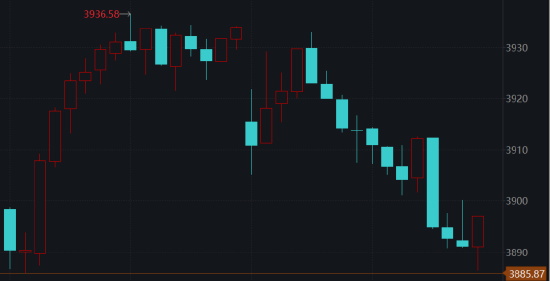
Market Overview - The Shanghai Composite Index closed down 36.94 points, a decline of 0.94%, at 3897.03 points; the Shenzhen Component Index fell 370.14 points, down 2.7%, at 13355.42 points; the ChiNext Index dropped 148.56 points, a decrease of 4.55%, at 3113.26 points [1] - After the holiday, risk-averse funds became active again, with trading volume returning to high levels, approximately 2.5 trillion yuan, a decrease of over 100 billion yuan compared to the previous day [1] - The market experienced a rapid rotation of hotspots, with previously underperforming anti-involution sectors showing gains, while technology growth stocks faced significant sell-offs due to concerns over high valuations [1] Sector Performance - The building materials sector performed well, with the Building Materials ETF (159745) initially rising over 3% before closing with a gain of 2.94% [8] - The release of the "Building Materials Industry Stabilization Growth Work Plan (2025-2026)" has raised expectations for enhanced anti-involution policies in the sector, leading to a more optimistic long-term sentiment [8] - Government policies promoting consumption, such as "old-for-new" initiatives, are expected to continue stimulating demand in the building materials industry, supported by real estate policy enhancements [9] Economic and Geopolitical Factors - The U.S. economy faces challenges, with concerns about "stagflation" growing, as evidenced by lower-than-expected job growth figures [13] - Geopolitical tensions, including recent military actions in the Middle East, have heightened market risk aversion, providing support for gold prices [13] - The weakening independence of the Federal Reserve due to political pressures may undermine the dollar's credit system, making gold a more attractive asset for investors [14] Investment Recommendations - During periods of market volatility, it is advised to avoid chasing highs and lows, focusing instead on sectors that have not yet realized significant gains [5] - Investors are encouraged to consider the Building Materials ETF (159745) and other related ETFs that may benefit from policy support and market adjustments [9]

东兴晨报-20251010
Dongxing Securities· 2025-10-10 13:27
Core Insights - The report highlights the ongoing trends in various industries, particularly focusing on the impact of government policies on sectors such as lithium batteries, transportation, and construction materials [3][6][7]. Industry Updates - The Ministry of Commerce announced export controls on lithium batteries and artificial graphite materials starting November 8, 2025, requiring licenses for exports of lithium-ion batteries with energy densities of 300Wh/kg or more [3]. - The Ministry of Transport reported that the U.S. will impose additional port service fees on Chinese-owned vessels from October 14, 2025, which could severely disrupt Sino-U.S. maritime trade [3]. - The Ministry of Industry and Information Technology, along with other departments, will adjust the technical requirements for energy-saving and new energy vehicles starting January 1, 2026, to align with industry advancements [3]. - The National Development and Reform Commission and the State Administration for Market Regulation issued guidelines to combat price disorder in key industries, emphasizing the need for reasonable pricing and regulatory enforcement [3]. - The China Logistics and Purchasing Federation reported a slight increase in the warehousing index to 49.6% in September, indicating a recovery in warehousing activities as demand rises [3][4]. Company Highlights - Jiangfeng Electronics (300666.SZ) is experiencing steady growth in its target material business, with an anticipated increase in component production [6]. - Jinkang Technology has successfully implemented "industrial embodied intelligence" at Xingfa Group, achieving over 90% efficiency improvement and a 60% reduction in construction costs [5]. - CATL's intelligent skateboard chassis technology service provider completed a financing round exceeding 2 billion yuan, with a post-financing valuation exceeding 10 billion yuan [5]. - Youyan New Materials expects a significant increase in net profit for the first three quarters of 2025, projecting a year-on-year growth of 101% to 127% [5]. Construction Industry Insights - The "Construction Materials Industry Stabilization Growth Work Plan (2025-2026)" emphasizes digitalization, green transformation, and high standards, while reducing the focus on traditional investment due to ongoing challenges in the real estate sector [7][8]. - The plan aims to optimize supply-side capabilities by promoting the elimination of outdated production capacity and enhancing the development of advanced inorganic non-metallic materials [8][9]. - New consumer demands for green building materials and high-end materials are being addressed, with policies to support the promotion of green materials and their integration into consumption incentives [9][10]. - The report indicates a shift towards high-quality development in the construction materials sector, marking a transition from traditional growth models to a focus on innovation and sustainability [11][12].




西藏天路:上市公司及控股子公司对外提供担保总额共计约4.27亿元
Mei Ri Jing Ji Xin Wen· 2025-10-10 12:19
Group 1 - The company, Tibet Tianlu, announced that as of the disclosure date, the total amount of guarantees provided to external parties by the company and its subsidiaries is approximately 427 million yuan, which accounts for 11.1% of the company's latest audited net assets [1] - In the past twelve months, the cumulative amount of guarantees provided by the company is approximately 174 million yuan, representing 4.51% of the company's latest audited net assets [1] - As of the report date, Tibet Tianlu's market capitalization is 17.2 billion yuan [1] Group 2 - For the first half of 2025, the revenue composition of Tibet Tianlu is as follows: the building materials industry accounts for 71.65%, the construction industry accounts for 27.16%, the other industries account for 0.89%, and other businesses account for 0.29% [1]

奉旨吹牛 | 东方阿尔法产业先锋A成立四年净值六毛多“天下第一差基”
Sou Hu Cai Jing· 2025-10-10 11:26
Core Viewpoint - The article discusses the poor performance of the Dongfang Alpha Industrial Pioneer A fund, which has seen a net value of only 0.6656 yuan since its inception, reflecting a decline of 33.44% over four years, leading to significant dissatisfaction among investors [3][15]. Fund Performance - The fund was established on July 21, 2021, and has a cumulative net value of 0.6656 yuan, with a performance drop of 33.44% since inception [4][8]. - In the past year, the fund has rebounded with a gain of 42.99%, outperforming the average of its peers, which gained 35.05% [15]. - Over the last three years, the fund has declined by 10.24%, significantly underperforming the average gain of 21.3% among similar funds [15]. - The fund's performance over the last two years shows a gain of 34.79%, closely matching the average of 34.89% [15]. Fund Management - Fund managers Yin Zhibin and Zhou Mi have been criticized for their management, with investors expressing dissatisfaction in comments on financial platforms [4][5]. - Yin Zhibin has managed the fund since January 30, 2024, achieving a return of 65.7% during his tenure, although this is not enough to recover from previous losses [4][6]. Market Strategy - The fund's strategy includes increasing positions in cyclical sectors related to domestic demand and focusing on companies with strong cash flow and competitive advantages [6]. - The fund is optimistic about the aluminum industry due to supply constraints and expects improved dividend capabilities from companies in this sector [6]. - The fund is also targeting leading companies in the domestic consumption sector, which have seen their valuations depressed and are expected to recover due to policy adjustments [6]. Fund Size and Investor Sentiment - The fund has experienced a significant decline in size, dropping from 22.15 billion units in Q3 2022 to 13.16 billion units in Q2 2025, a reduction of approximately 40% [15][16]. - Investor sentiment is largely negative, with many calling it the "worst fund" and expressing a desire for a change in management [5][15].

海象新材回购进展披露:已回购4.82万股,金额95.51万元
Xin Lang Cai Jing· 2025-10-10 08:35
Group 1 - The company has repurchased 48,200 shares, accounting for 0.05% of the total share capital, with a total transaction amount of 955,120 yuan as of September 30, 2025 [1][3] - The repurchase plan was approved on March 21, 2025, with a budget set between 25 million and 50 million yuan, and an initial maximum repurchase price of 22 yuan per share, later adjusted to 21.40 yuan per share [2] - The estimated number of shares to be repurchased ranges from approximately 116,820 shares (1.14% of total share capital) to 233,640 shares (2.28% of total share capital) based on the adjusted maximum price [2] Group 2 - The repurchase process complied with relevant regulations, and the company did not repurchase shares during significant events that could impact stock prices [4] - The company plans to continue the repurchase program within the designated timeframe based on market conditions and will fulfill information disclosure obligations [4]
新材料50ETF(159761)盘中跌超4%,市场关注建材板块政策利好
Mei Ri Jing Ji Xin Wen· 2025-10-10 06:48
Group 1 - The core viewpoint is that the valuation of glass varieties is currently below the 50th percentile of the past three years, while cement valuations are relatively high, with companies like China National Building Material and Anhui Conch Cement at the 80th percentile level [1] - The Ministry of Industry and Information Technology, along with five other departments, has jointly released the "Building Materials Industry Stabilization and Growth Work Plan (2025-2026)", which outlines industry goals and measures for the next two years in response to weak market demand and structural issues [1] - The "anti-involution" policy is expected to accelerate capacity reduction, improving the competitive landscape of the industry, combined with an improved funding environment, leading to a positive outlook for undervalued building materials [1] Group 2 - In the new materials sector, new glass and carbon fiber are experiencing high demand from downstream markets, and leading companies with high technological barriers are expected to enter a rapid growth phase [1] - The New Materials 50 ETF (159761) tracks the New Materials Index (H30597), which selects listed companies engaged in the research, production, and application of new materials, focusing on advanced basic materials, key strategic materials, and cutting-edge new materials [1]
港股午评|恒生指数早盘跌1.14% 茶饮股逆势走强
智通财经网· 2025-10-10 04:07
Market Overview - The Hang Seng Index fell by 1.14%, down 304 points, closing at 26,447 points, while the Hang Seng Tech Index dropped by 2.45% [1] - The trading volume in the Hong Kong stock market reached HKD 180.3 billion in the morning session [1] Tea Beverage Sector - Tea beverage stocks performed strongly, with significant sales during the holiday period; companies are accelerating their overseas expansion [1] - Gu Ming (01364) rose by 13.23%, Nayuki (02150) increased by 7.26%, and Mixue Group (02097) gained 5.98% [1] Insurance Sector - Domestic insurance stocks collectively rose, driven by the return of dividend-type health insurance after 22 years, enhancing the attractiveness of insurance products [1] - New China Life Insurance (01336) increased by 3.11%, China Pacific Insurance (02601) rose by 3.02%, and China Life Insurance (02628) also gained 3.02% [1] Retail Sector - Xiao Cai Yuan (00999) saw a rise of over 9%, with impressive operational data during the National Day holiday, reporting a 21% year-on-year increase in customer traffic across its stores [1] New Product Launches - Blokku (00325) surged over 11% after launching new product lines "Building Cars" and "Building People" at the WF2025 exhibition [1] Construction Materials Sector - Jinju Group (02009) rose by over 5%, actively promoting new building materials and securing significant overseas project contracts [1] Graphite Sector - China Graphite (02237) surged by over 24% following export controls imposed by two departments on lithium battery and artificial graphite anode materials [1] Semiconductor Sector - Chip stocks continued to decline, with several brokerages adjusting the margin financing rates for SMIC, leading to a 5.6% drop in SMIC (00981) and a 4% decline in Hua Hong Semiconductor (01347) [1][3] Biotechnology Sector - Innovent Biologics (09969) fell over 9% after announcing a licensing collaboration with Zenas for three self-immune pipeline products [2] Battery Sector - Contemporary Amperex Technology Co. (03750) dropped over 7% as the cornerstone lock-up period is set to expire on the 19th of next month, with major brokerages downgrading the company's H-share rating [3]
全市场规模最大建材ETF(159745)盘中领涨超1.2%,机构:优质企业有望进一步凸显自身α
Mei Ri Jing Ji Xin Wen· 2025-10-10 03:08
Group 1 - The core viewpoint indicates that high-quality companies in the consumer building materials sector are expected to further highlight their alpha, with price increases in Q3 2025 being noteworthy [1] - Demand for residential real estate remains relatively weak in Q3 2025, while retail building materials are expected to perform relatively well [1] - Sectors with strong brand value, retail attributes, and high renovation ratios, such as coatings and tiles, are anticipated to shine, particularly leading companies with strong brands and channels [1] Group 2 - Urbanization rates are gradually increasing in regions like Africa and South America, leading to a favorable pattern for post-cycle renovation building materials, maintaining good prosperity [1] - The building materials ETF (159745) tracks the CSI All-Share Building Materials Index, encompassing segments like cement, glass, and consumer building materials [1] - As of October 9, 2025, the building materials ETF has a scale of 1.106 billion, ranking first among three similar products [1]
新加坡商人吕文扬的临沂调研之行:在物流之都探寻新兴市场的脉搏
Sou Hu Cai Jing· 2025-10-10 02:55
Core Insights - The article highlights the strategic visit of a Singaporean businessman, Lyu Wenyang, to Linyi, China, to explore cost-effective supply chain opportunities for his family's building materials and home goods business in Southeast Asia [1][6] Group 1: Economic Environment - Linyi is referred to as "China's Logistics Capital," showcasing a vibrant economic atmosphere with busy roads and a bustling marketplace [3] - The city is characterized by a large wholesale market that offers a wide range of products, which is appealing for international market adaptability [4] Group 2: Business Exploration - Lyu Wenyang visited various modern factories around Linyi, focusing on production processes, quality control, and management practices [4] - The businessman engaged with local government officials to understand Linyi's international trade policies and logistics advantages, including the "Qilu" Eurasian train service and efficient customs processes [4] Group 3: Strategic Vision - A new business blueprint was conceptualized, leveraging Linyi's supply chain advantages alongside Singapore's international perspective and capital to tap into regional markets [6]

港股异动 | 金隅集团(02009)早盘涨超7% 公司积极推动新型建材“出海”海外多地新增重大工程项目
智通财经网· 2025-10-10 01:58
消息面上,近日,金隅集团发布投资者关系活动记录表,公司在回复投资者关切时表示,新型建材业务 经营方面,2025年上半年,公司新型建材业务积极推动高附加值市场应用落地和新型建材"出海"。在高 附加值市场应用落地上,节能保温公司开发出应用于生态修复的"隅棉"产品,成功应用于寨口矿项目修 复,修复面积5万平米,产品毛利率45.6%,较一般岩棉产品提升40%。在新型建材"出海"上,上半年, 矿棉板产品出口额5700万元,新增印度、香港、新加坡重大工程项目20万㎡。 天风证券指出,25H1水泥板块实现收入1181亿元,yoy-7.7%,实现归母净利润52亿元,yoy+1487%, ROE为1.4%,同比+1.3pct,主要受益于价格和成本端改善。该行认为水泥基本面底部拐点或已出现, 在供应端限产控产+需求端基建托底的双重发力下,下半年有望呈现逐季改善趋势。从投资端来看,疆 藏地区供需格局相对较优,利润端存优化空间,出海方面继续看好非洲,业绩有望进入兑现期。 智通财经APP获悉,金隅集团(02009)早盘涨超7%,截至发稿,涨4.71%,报0.89港元,成交额6279.61万 港元。 ...