电子商务

Search documents
数码界顶流影视飓风入驻天猫,创始人Tim:选天猫做大品牌规模
Zhong Guo Jing Ji Wang· 2025-10-27 07:20
Core Insights - The digital influencer Tim (Pan Tianhong) announced the official entry of the fashion brand STORMCREW into Tmall, coinciding with the Double 11 shopping festival [1][4] - The brand launched multiple products including the "Hurricane 3-in-1 Jacket" and "ROAM Crossbody Bag" on Tmall, along with over ten new autumn and winter products [1][4] Group 1: Brand Strategy - The e-commerce team of STORMCREW prepared systematically for their first participation in Tmall's Double 11, focusing on product categorization, page optimization, search advertising, and customer service training [4] - Tim emphasized that the brand views e-commerce as a "brand business" rather than just a peripheral activity, highlighting that many customers are attracted to the products based on their reputation rather than brand recognition [4] Group 2: Market Positioning - The brand aims to leverage Tmall's capabilities in search, scene marketing, membership systems, and fulfillment stability to enhance brand scale effects, with a focus on upgrading supply chains and channels [4] - STORMCREW plans to offer "basic wear" as a foundation while exploring "functional wear" and "limited collaborations," integrating brand membership benefits with content offerings such as early access tests and factory visits [4] Group 3: Market Trends - The influx of brands entering Tmall ahead of Double 11 is not only to capitalize on the largest sales opportunity of the year but also to engage with young and high-net-worth consumer groups on the platform [4]


全球电子商务与数字贸易改革提速
Sou Hu Cai Jing· 2025-10-27 05:39
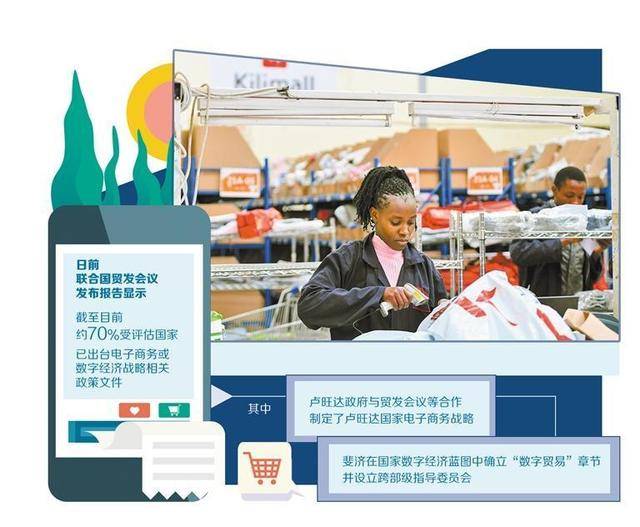
Core Insights - The report by the United Nations Conference on Trade and Development highlights the progress and challenges faced by developing countries in implementing e-commerce and digital trade reforms, indicating a shift from assessment to action, though implementation remains slow and uneven [1][2] Group 1: E-commerce and Digital Trade Reforms - E-commerce is increasingly recognized as a vital engine for national economic development, with approximately 70% of assessed countries having established formal policy documents [1][2] - Countries are moving from isolated actions to systemic reforms, recognizing e-commerce as a comprehensive ecosystem that includes infrastructure, regulations, skills, payments, and trust [2][5] - The report identifies six core pillars of the e-commerce ecosystem: digital infrastructure and connectivity, logistics and trade facilitation, digital payments and financial inclusion, legal and regulatory environment, digital skills and innovation, and financing and investment environment [2][5] Group 2: Regional and Multilateral Cooperation - Regional and cross-national cooperation has become a key driver for accelerating e-commerce reforms, with countries collaborating through regional organizations and trade agreements [5] - Initiatives such as the African Continental Free Trade Area (AfCFTA) e-commerce protocol and the Digital Economy Framework Agreement in Southeast Asia are examples of regional efforts to enhance digital trade [5] - Multilateral organizations like UNCTAD, ITU, and WTO are strengthening coordination, with platforms like Etrade for All facilitating connections between countries and international institutions [5] Group 3: Inequality in Development - Despite the acceleration of e-commerce reforms, disparities exist between countries, regions, and sectors, with high-income developing countries advancing more rapidly than least developed countries [6][7] - Approximately 40% of developing countries lack data protection or privacy laws, and about one-third do not have comprehensive electronic signature and transaction laws [7] - Digital connectivity remains uneven, with 30% to 40% of populations in assessed countries still lacking internet access, and urban internet penetration rates significantly higher than rural areas [7] Group 4: Recommendations for Addressing Imbalances - The report calls for specific actions to address imbalances in e-commerce and digital trade development, emphasizing the need for domestic coordination and the establishment of cross-departmental permanent institutions [8] - Investment in national statistical systems and the establishment of e-commerce indicator systems are recommended to enhance capacity and data support [8] - Expanding financing channels through development banks and private investments is crucial to reduce reliance on donor projects [8]
从工厂到爆款:京东携手老板松下打造“中国超级供应链”样本
Sou Hu Cai Jing· 2025-10-27 03:21
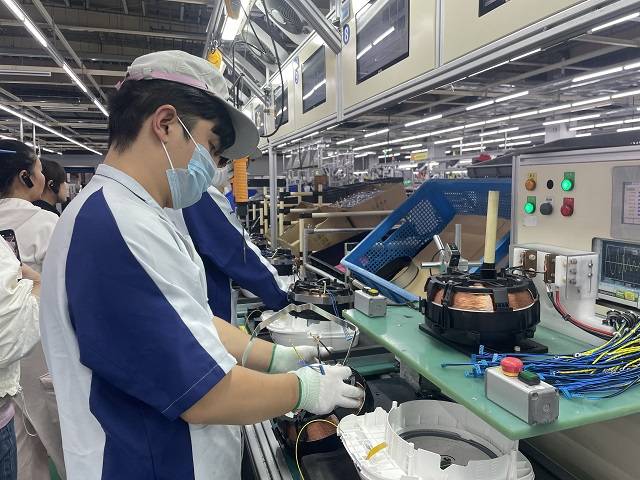
Core Insights - The article highlights the successful collaboration between JD.com and various home appliance brands in preparation for the 11.11 shopping festival, showcasing the effectiveness of the "exclusive co-creation model" in driving sales and product innovation [2][3][6] Group 1: Sales Performance - JD.com reported that over 2,000 home appliance brands achieved a transaction growth of over 100% year-on-year from the start of 11.11 until October 20, with new product sales increasing by 84% [2] - Specific product categories saw significant growth, such as self-cleaning range hoods with over 200% growth, and zero-coating rice cookers with a growth of 188% [2] Group 2: Product Development and Innovation - The development of the Boss E1P range hood was based on deep insights into user needs, leading to a sales figure of 7 million yuan within 28 hours of its launch on JD.com [3] - Panasonic's Xtra zero-coating rice cooker was developed in response to consumer demands for health, taste, and aesthetics, utilizing innovative technology to address common issues like sticking [3][4] Group 3: Consumer-Centric Approach - The Panasonic Q6 smart toilet focuses on essential user needs by eliminating redundant features while maintaining practical functionalities, priced competitively at 1,999 yuan [4] - JD.com and brands worked closely on marketing and operational strategies to maximize sales potential, with the Q6 achieving over 2,500 units sold within 28 hours of its launch [5] Group 4: Supply Chain Efficiency - The collaboration between JD.com and brands has led to the establishment of a highly efficient and transparent "Chinese Super Supply Chain," enhancing visibility across all production stages [5][6] - The exclusive co-creation model has evolved beyond traditional supply relationships, fostering a strategic partnership that integrates technology, product development, and logistics [5] Group 5: Future Outlook - The article suggests that the co-creation model may become a mainstream approach for collaboration between brands and platforms, optimizing user experience and enhancing product value [5][6]


香港财政司司长陈茂波今日启程前往沙特阿拉伯访问
智通财经网· 2025-10-27 03:01
Core Points - The Hong Kong Financial Secretary, Paul Chan, will lead a delegation to Riyadh, Saudi Arabia, to promote collaboration between Hong Kong and mainland enterprises, aiming to explore greater business opportunities and deepen economic, financial, and technological ties with the Middle East [1] - The delegation consists of approximately 40 members, including representatives from various financial institutions and companies in sectors such as artificial intelligence, biomedicine, e-commerce, green energy, and construction technology [1] - The delegation will participate in the 9th Future Investment Initiative, where Paul Chan will engage in discussions, deliver speeches on Hong Kong's latest developments and opportunities, and meet with local officials and business leaders [1] Group 1 - The visit aims to enhance Hong Kong's advantages and promote both Hong Kong and China's narratives [1] - The delegation includes representatives from key organizations such as the Hong Kong Investment Promotion Agency and the Hong Kong Stock Exchange [1] - Activities will include business matching events with local enterprises [1] Group 2 - Paul Chan is scheduled to return to Hong Kong on October 31, with the Deputy Financial Secretary, Christopher Hui, acting in his capacity during his absence [1]
法国现政府拒绝开征财富税的深层逻辑
Jin Rong Shi Bao· 2025-10-27 01:28
Group 1 - The French government, led by Prime Minister Le Maire, has no plans to reintroduce the wealth tax, indicating a strategic choice between efficiency and fairness in economic policy [1] - The previous wealth tax (ISF) was deemed an "economic suicide machine," leading to capital and talent flight, which created a vicious cycle of tax base erosion [2][3] - The ISF imposed a progressive tax rate of 0.5% to 1.5% on global assets for high-net-worth individuals, significantly higher than in Germany and the UK, contributing to the outflow of wealthy individuals [2][3] Group 2 - The ISF's design blurred the lines between productive capital and consumptive wealth, negatively impacting innovation and economic growth by taxing assets used for business expansion [4] - The ISF's complexity led to high administrative costs and a thriving tax avoidance industry, undermining tax fairness and efficiency [5] - The introduction of the real estate wealth tax (IFI) in 2017 aimed to stabilize the tax base by taxing only immovable property, thus reducing capital flight and enhancing fiscal stability [6][7] Group 3 - The IFI reform signaled a shift towards a more business-friendly environment, improving France's investment image and attracting foreign direct investment [8] - The ideological shift from "distribution first" to "growth first" reflects a belief that wealth creation is more critical than wealth redistribution [9] - The "trickle-down effect" theory underpins the government's argument against reinstating the ISF, suggesting that reducing capital tax burdens will stimulate investment and job creation [10] Group 4 - Despite some positive economic indicators post-reform, social disparities have widened, leading to public discontent and protests against perceived favoritism towards the wealthy [11] - The debate over wealth tax transcends mere taxation, representing a broader ideological battle over France's economic future and the balance between social equity and market efficiency [12][13]
全美60万岗人类出局,三年暴省126亿,机器人大军入厂
3 6 Ke· 2025-10-27 00:56
Core Insights - Amazon is simultaneously announcing the creation of 250,000 new jobs while planning to replace over 600,000 positions with robots, highlighting a stark contrast between public messaging and internal strategies [1][3][8] - The company aims for 75% operational automation in the U.S. by 2033, with a projected saving of approximately 160,000 jobs by 2027 [3][14] - The automation strategy is expected to save Amazon about $0.3 per item, leading to a cumulative savings of $12.6 billion over three years [6][14] Group 1: Recruitment and Automation - Amazon's public announcement of hiring 250,000 workers is framed positively, emphasizing economic recovery and job creation [3][8] - A leaked document reveals plans for significant job reductions through automation, indicating a shift towards a future with fewer human workers [3][14] - The company currently employs over one million robots in its warehouses, showcasing the extent of automation already in place [3][5] Group 2: Cost Efficiency and Profitability - The implementation of robots is projected to save Amazon approximately $0.3 per item, which translates to significant cost reductions across operations [6][14] - By 2032, annual savings from automation could reach $16 billion, emphasizing the financial incentives driving this shift [14][16] - The focus on efficiency may lead to a devaluation of human labor, as jobs are increasingly viewed as cost variables rather than essential contributions [16][18] Group 3: Public Relations and Communication Strategy - Amazon's public relations team has advised against using terms like "automation" and "AI" to mitigate public anxiety, opting for softer language such as "advanced technology" [9][11] - The company is actively working to reshape public perception of automation through community projects and employee training programs [11][13] - This strategy reflects a broader effort to downplay the negative implications of automation while continuing to pursue technological advancements [11][13] Group 4: Broader Implications for the Labor Market - The trend of automation at Amazon is likely to set a precedent for other companies, potentially leading to widespread job losses across various sectors [21][23] - As automation becomes more profitable, the labor market may shift away from being human-centered, with algorithms dictating resource allocation [23] - The societal impact of this shift includes a potential erosion of labor rights and job security, particularly for low-skilled workers [16][18]



8点1氪:张雪峰解禁复播后改口称“文科大有可为”;31省份去年人口出生率数据公布;深圳机场通报郑智化登机调查情况
36氪· 2025-10-27 00:09
Group 1 - Zhang Xuefeng's return to live streaming emphasizes the potential of liberal arts majors, stating they have significant opportunities [3] - His previous controversial statements, such as "news is useless" and "liberal arts are all service industries," sparked widespread debate [4][3] - Zhang's social media accounts, with a combined following of over 65 million, were previously suspended, highlighting his influence [3] Group 2 - The birth rate in China for 2024 is projected at 9.54 million, an increase of 520,000 from 2023, with a birth rate of 6.77‰, up by 0.38‰ [4] - The report indicates that 14 provinces have birth rates above the national average, with 10 provinces exceeding 8‰, primarily in western and southern regions [4] Group 3 - Morgan Stanley plans to allow institutional clients to use Bitcoin and Ethereum as collateral, indicating a shift towards integrating cryptocurrencies into traditional finance [14] - The company is responding to the growing demand for cryptocurrency services among institutional investors [14] Group 4 - Porsche reported a significant loss of €966 million in Q3, leading to a 99% drop in sales profit year-on-year, prompting organizational restructuring and layoffs [18] - The company's revenue for the first nine months of the year was approximately €26.86 billion, a 6% decline compared to the previous year [18] Group 5 - WuXi AppTec reported a net profit of ¥12.076 billion for the first three quarters, marking an 84.84% year-on-year increase, with revenue growth of 18.61% [18]






美股迎来“关键48小时”!AI投资盛宴面临“交卷”时刻,科技股财报再为牛市续命?
智通财经网· 2025-10-26 23:05
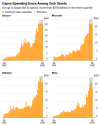
Core Viewpoint - The upcoming earnings reports from major tech companies are expected to significantly influence the trajectory of the U.S. stock market for the remainder of the year, particularly focusing on their investments in artificial intelligence [1][2]. Group 1: Earnings Reports and Market Impact - Five major companies, including Microsoft, Alphabet, Meta, Amazon, and Apple, will report earnings, which collectively represent about a quarter of the S&P 500 index [1]. - Over 85% of the companies that have reported earnings so far have exceeded Wall Street expectations, marking the strongest performance in four years [1][2]. - The S&P 500 index has rebounded to near historical highs, driven by the performance of these tech giants, which account for nearly half of the index's gains this year [2]. Group 2: Investment in Artificial Intelligence - Microsoft, Alphabet, Amazon, and Meta are projected to invest a total of $360 billion in capital expenditures this fiscal year, with a significant portion allocated to artificial intelligence [2]. - This investment is expected to increase to nearly $420 billion next year, indicating a strong commitment to AI development [2]. - The revenue growth from AI-related services has been particularly notable in the cloud computing sectors of Amazon, Microsoft, and Alphabet, which have become focal points in their earnings reports [8]. Group 3: Investor Sentiment and Profitability Concerns - Despite the high capital expenditures, the profitability growth rate for the seven major tech companies is projected to be 14% for Q3, down from 27% in Q2, indicating a potential slowdown in growth [9]. - Investors remain optimistic, as historical performance shows that these companies often exceed expectations, which is seen as a key support for the stock market [11]. - The significant capital expenditures could potentially erode the sector's reputation for exceptional profit growth, raising concerns among investors [9].




联合国贸发会议发布报告显示—— 全球电子商务与数字贸易改革提速
Jing Ji Ri Bao· 2025-10-26 22:05
Core Insights - The report by the United Nations Conference on Trade and Development highlights the rapid transformation of the global economy due to digitalization, with e-commerce and digital trade reforms moving from the assessment phase to the action phase, albeit slowly and unevenly [1][4] Group 1: Progress and Recognition - Governments worldwide now recognize e-commerce as a crucial engine for national economic development, with approximately 70% of assessed countries having established formal policy documents [1][5] - Countries like Rwanda and Fiji have developed national e-commerce strategies and frameworks, integrating them into broader national visions [1][2] Group 2: Systemic Reform - The focus of e-commerce policy is shifting from isolated interventions to systemic reforms, addressing the complete ecosystem that includes infrastructure, regulations, skills, and trust [2][3] - Most countries are now promoting simultaneous reforms across at least three of the six core pillars of the e-commerce ecosystem [2] Group 3: Regional and Multilateral Cooperation - Regional cooperation has become a key driver for e-commerce reforms, with countries collaborating through regional organizations and trade agreements to enhance institutional coordination and capacity building [3] - Initiatives like the African Continental Free Trade Area (AfCFTA) e-commerce protocol and the Digital Economy Framework Agreement in Southeast Asia are examples of such cooperation [3] Group 4: Inequality in Development - Despite the acceleration of e-commerce reforms, disparities exist between countries, regions, and sectors, with high-income developing countries advancing more rapidly than least developed countries [4][5] - The digital economy's growth has not led to inclusive development, exacerbating the digital divide, particularly affecting small and medium enterprises, women entrepreneurs, and rural areas [4][5] Group 5: Action Recommendations - The report calls for specific actions to address imbalances, including strengthening domestic coordination, enhancing capacity and data support, promoting regional collaboration, and expanding financing channels [6][7]
阿里巴巴验厂最新更新
Sou Hu Cai Jing· 2025-10-26 08:22
Core Points - Alibaba's factory inspection is a crucial part of the supplier evaluation process, ensuring partners meet standards in business ethics, social responsibility, and product quality [1] - The standards and processes for Alibaba's factory inspections are continuously updated to adapt to market changes, which helps companies prepare better for inspections and enhance collaboration opportunities [1][2] Group 1: Social Responsibility Updates - The latest updates on social responsibility focus on employee rights, working conditions, and ethical standards [3] - Employee rights protection requirements have become more detailed, including compliance with national working hour regulations and proper rest arrangements [3] - Companies must maintain complete attendance and payroll records for verification during inspections [3] - Enhanced safety requirements for working conditions include compliance with safety standards for production environments, including fire safety and occupational health measures [3] - Companies are required to establish anti-discrimination and anti-harassment mechanisms to ensure fair treatment of employees [3] Group 2: Quality Management Updates - Quality management updates emphasize stricter product quality standards, requiring companies to establish comprehensive quality management systems [6] - Companies must retain inspection records and test reports to demonstrate product quality stability [6] - Production process management requirements have been refined, focusing on monitoring production processes, including equipment maintenance and defect handling [6][7] Group 3: Environmental Management Updates - Environmental management updates stress improved resource usage efficiency, encouraging companies to adopt energy-saving measures [9] - Stricter waste management requirements mandate that companies classify and handle waste according to environmental standards [9] - Companies must monitor and control pollutant emissions during production to comply with national environmental regulations [9] Group 4: Anti-Terrorism Security Updates - Anti-terrorism security updates require more detailed management of supply chain security, including monitoring transportation and storage [10] - Companies must establish information management systems to protect customer data and business secrets [10] - Stricter background checks for employees in key positions are mandated, with companies required to retain relevant investigation records [10] Group 5: Practical Considerations for Companies - Companies may face challenges in ensuring compliance with the latest inspection standards, which can be addressed through consulting professional organizations or referring to Alibaba's official guidelines [10] - The cost of preparing for inspections varies based on company size and current conditions, with investments in improving working conditions or updating equipment being necessary for enhancing management levels and market competitiveness [10][12] - After passing inspections, companies are subject to regular re-evaluations by Alibaba to ensure ongoing compliance with standards [12]