量子计算

Search documents
精雕“中国芯” 攀登科技高峰
Ren Min Ri Bao· 2026-01-05 22:29
Core Insights - The "Benyuan Wukong" superconducting quantum computer has completed over 700,000 computing tasks globally, indicating that China's quantum computing power has reached a usable stage [1] - The team has developed the first domestic specialized laser annealing equipment and non-destructive probe instruments for quantum chip production, emphasizing the importance of mastering core technologies independently [1] - The breakthroughs in medium-scale manufacturing capabilities and the completion of numerous quantum computing tasks lay a solid foundation for stronger "Chinese computing power" [1] Industry Developments - The team is focused on advancing the integration of control circuits and chips more efficiently, showcasing a commitment to continuous improvement in quantum technology [1] - The emphasis on self-research and development from design to manufacturing highlights a strategic approach to maintaining technological leadership in the quantum computing sector [1] - The ongoing efforts are aimed at achieving the next generation of quantum chips, reflecting the industry's ambition to push the boundaries of technology [1]
地方两会|武汉市政协委员刘萌:构建混合算力平台,加快推动量子计算“汉产汉研汉用”
Zhong Guo Jing Ying Bao· 2026-01-05 15:46
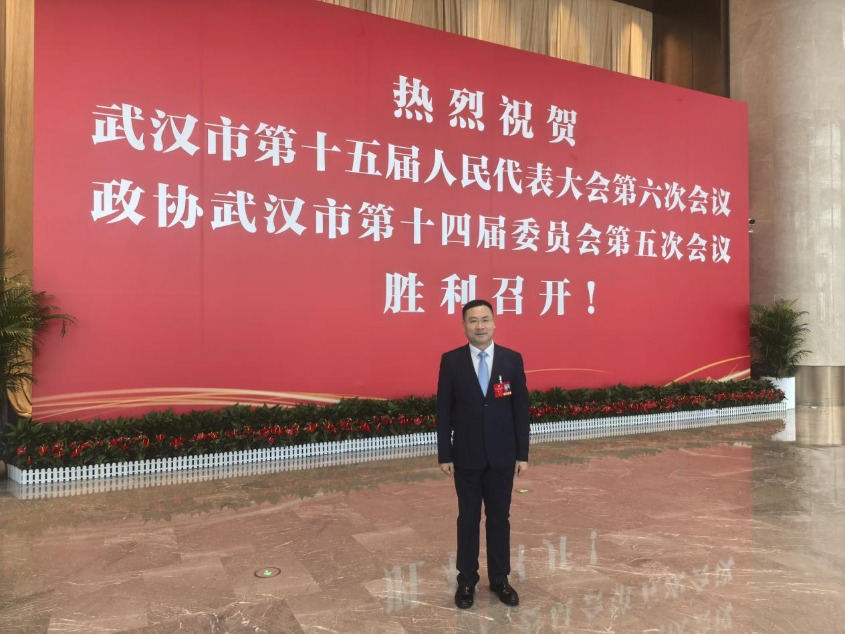
Core Viewpoint - The article discusses the importance of quantum computing in Wuhan's development strategy, highlighting various proposals aimed at enhancing the city's capabilities in this field [1][3]. Group 1: Quantum Computing Development - Quantum computing is recognized as a core branch of quantum technology, offering significant advantages over classical computing through its unique properties like superposition and entanglement [3]. - The Chinese government's "14th Five-Year Plan" emphasizes the strategic importance of quantum technology, positioning it as a key area for future economic growth [3][4]. Group 2: Current Status and Challenges - Wuhan has established a solid foundation in quantum computing, particularly through institutions like the Chinese Academy of Sciences, achieving notable progress in neutral atom quantum computing [4]. - Despite these advancements, Wuhan faces challenges in research and development, computational power integration, application trials, and building an industrial ecosystem [4][5]. Group 3: Recommendations for Advancement - Increase research efforts focused on neutral atom quantum bits, quantum error correction, and quantum cloud platform applications to address development challenges [5]. - Accelerate the construction of a hybrid computing platform that integrates quantum and classical computing to provide efficient computational services [5]. - Initiate pilot applications of quantum computing in key industries such as biomedicine, new materials, and financial risk management to validate technology feasibility [5]. - Build a quantum computing ecosystem by fostering collaboration between universities and research institutions, and providing access to quantum cloud platforms for educational purposes [5].

——未来产业周报第4期(2025/12/28-2026/1/3):脑机接口产业化提速,机器人场景创新,氢能向电网调节者转变-20260105
Shenwan Hongyuan Securities· 2026-01-05 06:36
Group 1: Quantum Technology - The "quantum + supercomputing" integration innovation platform has been established in Chengdu, deploying China's first 550-qubit coherent optical quantum computer, enabling the collaboration of classical high-performance computing and quantum computing [7][8] - The deployment of the 550-qubit quantum computer fills the gap in the central and western regions of China for quantum computing capabilities, establishing a complementary regional computing power structure with eastern regions [8][9] Group 2: Biological Manufacturing - The first sugar science key laboratory in Beijing has been approved, co-established by Huaxi Biological and Peking University, focusing on precise manufacturing and functional applications of sugars [10][11] - Huaxi Biological aims to leverage this laboratory to enhance its capabilities in synthetic biology, expanding from hyaluronic acid production to comprehensive sugar biological research [11] Group 3: Hydrogen Energy and Nuclear Fusion - The world's first 30 MW pure hydrogen gas turbine has achieved stable operation, marking a significant step in hydrogen energy transitioning from a "power consumer" to a "grid regulator" [12][13] - The EAST nuclear fusion device has confirmed the existence of a density-free regime, providing critical physical evidence for efficient operation of fusion reactors [18][19] - The Chinese Academy of Sciences has completed the manufacturing of all ITER correction coil procurement packages, marking a significant achievement in domestic R&D capabilities for nuclear fusion components [22] Group 4: Brain-Computer Interface - Neuralink plans to begin mass production of brain-computer interface devices in 2026, aiming to automate surgical procedures and enhance device performance [23][24] - The "Beijing Brain No. 1" system has been implanted in five spinal cord injury patients, achieving clinical breakthroughs, with plans for clinical trials to start in mid-2026 [26][27] - The "Guangdong-Hong Kong-Macao Greater Bay Area Brain Science and Central Nervous System Disease AI Innovation Alliance" has been launched, focusing on research and development in brain science and related technologies [28] Group 5: Embodied Intelligence - Woan Robotics has gone public in Hong Kong, focusing on household scenarios with plans to launch a humanoid household robot in January 2026 [29][30] - The "Qiyuan Q1," the world's first small-sized humanoid robot with full-body force control, has been released, targeting research and interactive applications [33][34] Group 6: Future Industry Catalysts - A table has been organized detailing key catalytic events for six future industries in 2026, including important conferences and technological milestones [36][38]


AI泡沫破灭?美股下跌20%?量子计算颠覆加密货币?2026年华尔街和科技圈十大预测来了
3 6 Ke· 2026-01-05 05:28
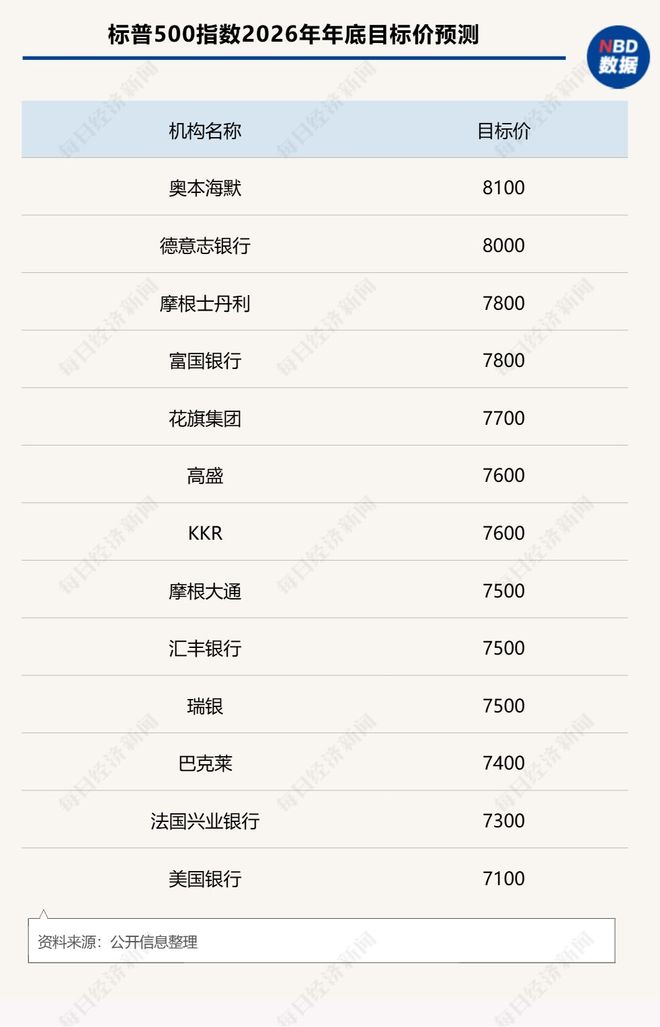
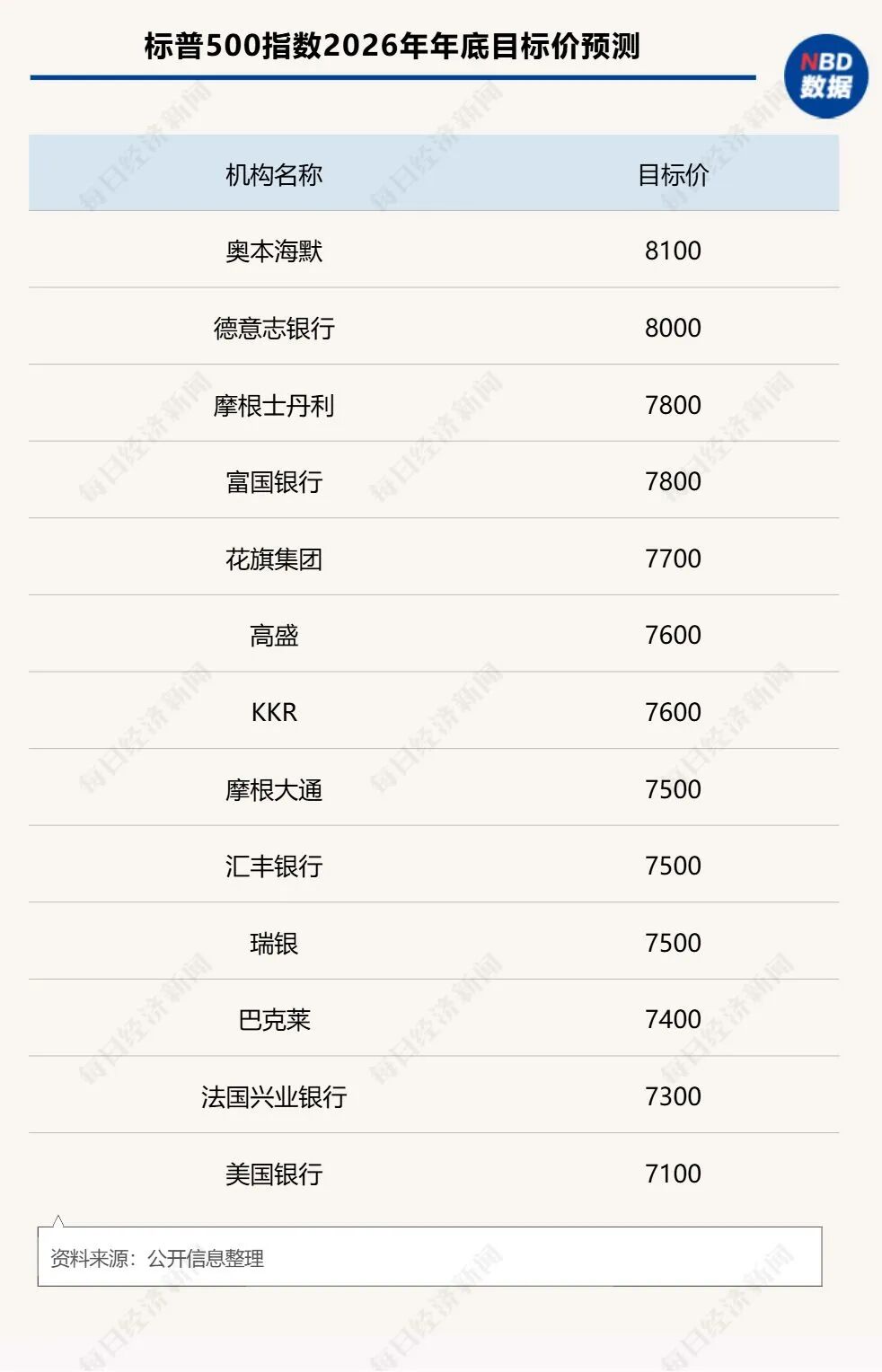
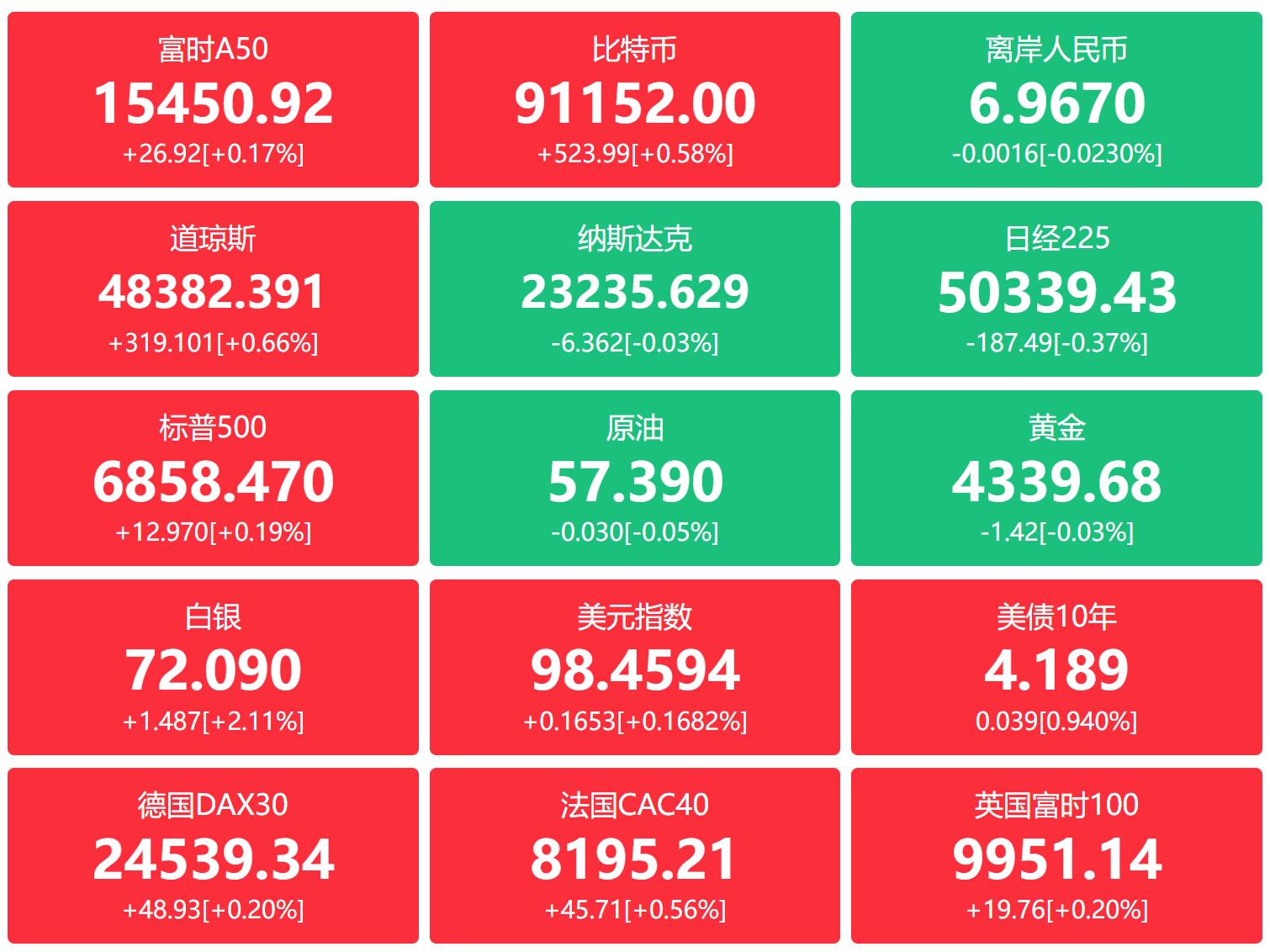
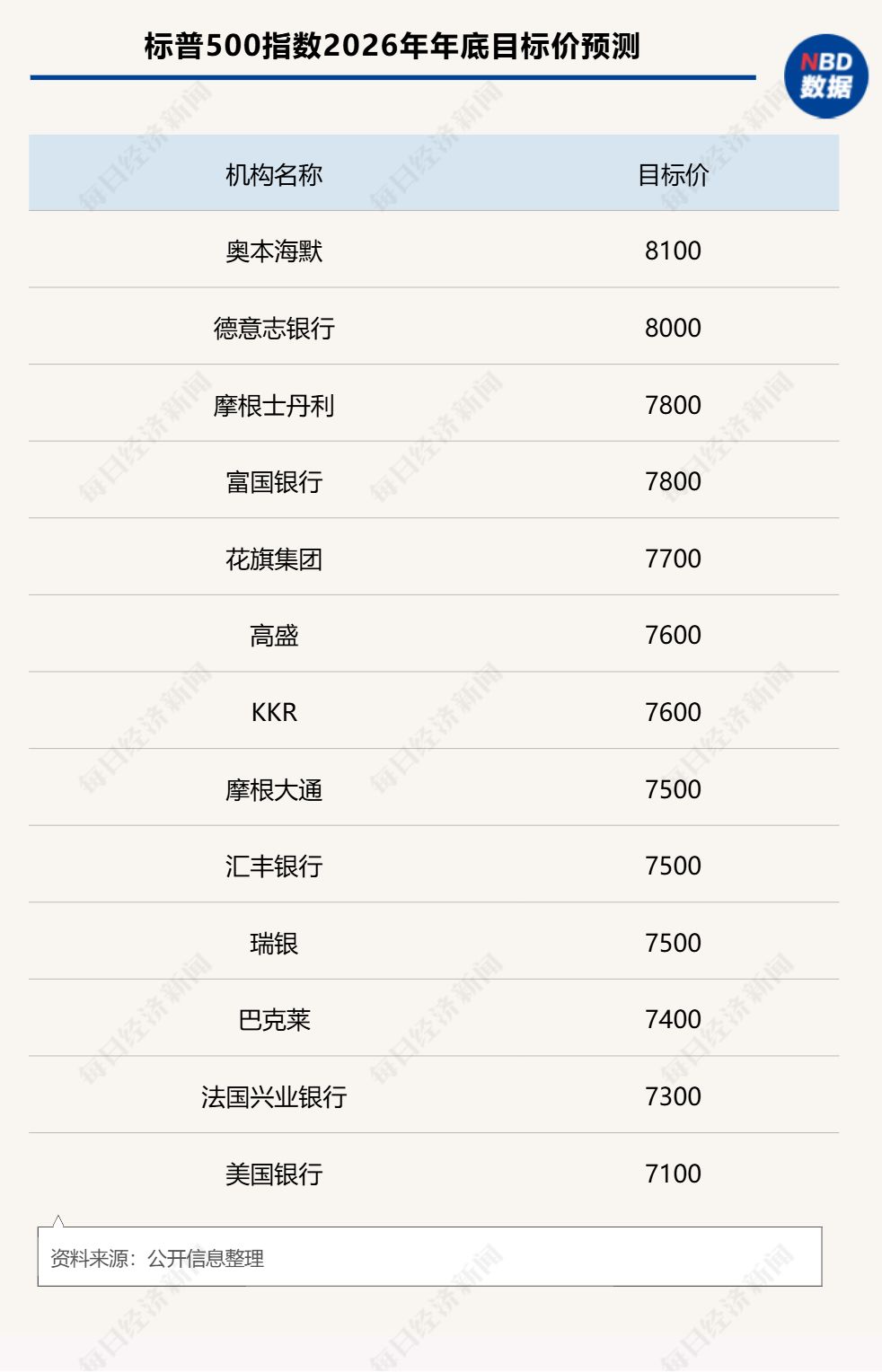
Group 1: US Stock Market Predictions - The US stock market is expected to continue its bull run in 2026, with varying predictions from Wall Street firms. Morgan Stanley forecasts the S&P 500 index to rise to 7800 points, a 14% increase from the current level of 6858 points [2] - Goldman Sachs predicts the S&P 500 will reach 7600 points by the end of 2026, while Bank of America estimates a modest increase of 4-5%, targeting 7100 points [2] - Contrarily, some analysts, like Sean Williams from Motley Fool, predict a decline of at least 20% for the S&P 500, citing historical high valuations as a key concern [4] Group 2: AI Industry Outlook - There are mixed views on the AI sector, with some experts predicting a potential bubble burst due to rising interest rates, which could end the current over-investment driven by AI capital expenditures [5] - Conversely, proponents argue that AI has initiated a new industrial era, contributing significantly to GDP growth and job creation [5] - Notable companies in the AI space expected to thrive include Microsoft, Apple, Tesla, Palantir, and CrowdStrike, with significant growth potential anticipated in the coming years [7][8] Group 3: Upcoming IPOs - Major companies like OpenAI, SpaceX, and Anthropic are planning IPOs in 2026, with SpaceX currently valued at $800 billion and OpenAI at $500 billion [6] - The backlog of IPOs due to regulatory delays in 2025 is expected to be released in 2026, with over 800 unicorns in the candidate pool [6] Group 4: Quantum Computing Developments - 2026 is projected to be a milestone year for quantum computing, with expectations that quantum computers will surpass traditional computers in specific tasks [9] - However, the rise of quantum computing may disrupt the cryptocurrency market, potentially leading to a significant drop in Bitcoin prices [9] Group 5: Federal Reserve Leadership and Market Impact - Jerome Powell's potential departure from the Federal Reserve in 2026 raises concerns about future monetary policy direction, which could lead to market volatility and a potential "flight from dollar assets" [11] - The uncertainty surrounding the Fed's leadership may impact investor confidence and lead to declines in stock and bond markets [11] Group 6: Gold and Commodity Price Predictions - Economists predict a significant rise in gold prices, with some forecasting it could reach $10,000 per ounce by 2026, driven by increased institutional demand [18] - UBS estimates gold prices will peak at $5,000 per ounce in the first three quarters of 2026 before slightly declining [18] - Copper prices are also expected to rise, with Morgan Stanley predicting an average price of $12,075 per ton in 2026 [18]
影响市场重大事件:“十五五”开局之年,多型新火箭将首飞并挑战回收;中国“人造太阳”实验找到突破密度极限的方法;DeepSeek发布新论文,提出更为高效的AI开发方法
Mei Ri Jing Ji Xin Wen· 2026-01-04 22:25
Group 1 - In 2026, China's commercial space sector is set to witness multiple new rocket launches and recovery challenges, marking a significant development in the country's space ambitions [1] - The "Fifteen Five" plan is initiating a new phase for China's space exploration, including manned lunar missions and the Chang'e 7 mission aimed at finding evidence of water ice on the Moon [1] Group 2 - Emerging market stocks have had a strong start in 2026, reaching their highest level since 2021, driven by optimism around Asia's rising position in artificial intelligence [2] - The MSCI Emerging Markets Index rose by 1.7% on the first trading day of the year, while technology stocks surged by 2.8% due to excitement over new listings and technological advancements [2] Group 3 - DeepSeek has introduced a more efficient AI development method through a new framework called "manifold-constrained hyperconnection" (mHC), aimed at enhancing scalability and reducing computational and energy demands [3] - The next flagship system, R2, is expected to be launched around the Chinese New Year in February [3] Group 4 - The digital renminbi app has been upgraded to version 2.0, enhancing user experience and consolidating wallet access for managing digital currency assets [4] - Since its launch in January 2022, the app has undergone 54 iterations to improve functionality [4] Group 5 - China's "artificial sun" experiment has made breakthroughs in overcoming density limits in nuclear fusion, providing crucial physical evidence for high-density operation in magnetic confinement fusion devices [5] - The findings were published in the international journal "Science Advances" [5] Group 6 - CITIC Securities forecasts that the A-share bull market will continue in 2026, with expectations of a fluctuating upward trend but with slower growth rates [6] - Investors are advised to focus on fundamental improvements and sectoral shifts, particularly in resource commodities as a new investment direction [6] Group 7 - The first "embodied intelligence dataset" has been successfully listed and traded on the Jiangsu Data Exchange, marking a significant milestone in the trading of such datasets nationwide [7][8] Group 8 - In 2025, China approved 76 innovative drugs, significantly surpassing the 48 approved in 2024, setting a new record [9] - The total value of innovative drug licensing transactions exceeded $130 billion, with over 150 deals completed, also a historical high [9] - Among the approved drugs, 80.85% of chemical drugs and 91.30% of biological products were domestically developed [9] Group 9 - CITIC Securities predicts that the quantum computing industry will experience high compound growth, with the global market expected to grow from approximately $5 billion in 2024 to around $800 billion by 2035 [10] - The upstream sector is relatively mature, while the downstream sector shows significant growth potential, projected to increase from $2.7 million in 2024 to $2026.7 million by 2035 [10] Group 10 - China's largest all-vanadium flow battery energy storage station has achieved full-capacity operation, with a rated power of 200,000 kW and a storage capacity of 1 million kWh [11] - The facility is expected to enhance the utilization rate of associated photovoltaic power stations by over 10% annually, potentially generating an additional 230 million kWh of clean electricity [11]

金融界财经早餐:美国搞突袭油价或变天,人民币走势强劲,外资抄底中国资产,茅台元旦“开门红”,港股迎“国产GPU第一股”(1月4日)
Jin Rong Jie· 2026-01-04 00:48
Group 1: Industry Insights - The commercial aerospace sector is experiencing rapid upgrades, with major US tech unicorns like SpaceX, OpenAI, and Anthropic preparing for IPOs, while China is set to launch multiple new rocket types in its "14th Five-Year Plan" [8] - Quantum computing is projected to enter a high compound growth phase, with the global market expected to grow from approximately $5 billion in 2024 to around $800 billion by 2035, capturing nearly 90% of the quantum technology market [8] Group 2: Company Developments - Moutai's 2026 version of 53-degree 500ml Flying Moutai was launched on iMoutai at a retail price of 1499 yuan, selling out within half an hour; prices for Moutai products have seen increases from 2019 to 2023 [9] - Wall Street's first stock of the new year, Birun Technology, one of the "domestic GPU four dragons," debuted on the Hong Kong stock market with a first-day increase of 76%, achieving a market capitalization of 82.5 billion HKD [9] - Xiaomi aims to deliver over 410,000 vehicles in 2025 and targets 550,000 in 2026, with CEO Lei Jun addressing controversies during a live stream [9] - Lenovo's chairman Yang Yuanqing and NVIDIA's founder Jensen Huang are set to announce a new collaboration focused on AI technology at CES 2026 [9] - Baidu's Kunlun Chip is preparing for a Hong Kong IPO, reportedly ranking among the top three in domestic shipments, with Goldman Sachs valuing Baidu's stake between $3 billion and $11 billion [9] - Luxshare Precision announced that it is facing market disruptions due to false rumors affecting its reputation [9] - Cloud Deep Technology has completed several hundred million in Pre-IPO financing, which will be used for technology development and market expansion [10] - BMW China clarified that the recent price reduction of 31 models is a proactive product strategy adjustment rather than a price war [10]
战略制胜 百年变局谋未来——二○二五年世界科技发展回顾·科技政策篇
Xin Lang Cai Jing· 2026-01-03 23:23
Group 1: Global Technology Trends - The year 2025 sees significant advancements in technology, with AI, quantum computing, gene editing, and renewable energy leading the way in transforming various industries and improving societal conditions [1] - AI is advancing across all sectors, pushing society from information-based to intelligence-based systems [1] - Renewable energy has become the largest source of global electricity, contributing to environmental restoration [1] Group 2: Russia's Technology Policy - Russia's technology policy emphasizes "technological sovereignty," banning foreign software in critical infrastructure sectors and mandating local alternatives [2][3] - The introduction of the "Technology Policy Law" establishes a framework for long-term technology development, including budget support and incentives for domestic technology developers [2] - Russia's "National Project" initiative focuses on key technology areas such as automation, materials chemistry, and healthcare [2][4] Group 3: France's Technological Strategy - France aims to enhance its technological competitiveness through strategic investments in AI, energy transition, and research sovereignty [5][6] - The "France 2030" investment plan supports key sectors like health, agriculture, and low-carbon energy, seeking technological breakthroughs [5] - France's national AI strategy focuses on building a comprehensive ecosystem and attracting top talent to strengthen its position in AI [6] Group 4: United States' AI Development - The new U.S. administration is prioritizing AI development by revoking previous regulatory orders and launching significant funding initiatives [7][8] - The "Genesis Project" aims to leverage federal scientific data to accelerate research breakthroughs using AI [7] - The U.S. Department of Energy is investing $625 million to establish national quantum information science research centers [8] Group 5: United Kingdom's Innovation Policies - The UK government is actively promoting AI applications across various sectors, including defense and healthcare [10] - Significant investments are being made in quantum technology, supercomputing, and hydrogen energy infrastructure [10] - The UK is focusing on attracting global talent to enhance its research capabilities [10] Group 6: Germany's Strategic Focus - Germany's technology policy concentrates resources on AI, quantum technology, and hydrogen economy, with a budget of approximately €22.3 billion for 2025 [11][12] - The "High-Tech Agenda Germany" aims to ensure technological sovereignty and innovation in key strategic areas [11] - Germany plans to invest €5.5 billion in AI "super factories" to enhance applications in health and industrial sectors [12] Group 7: South Korea's Research Investment - South Korea is expanding its budget for strategic technologies, with a focus on AI, quantum, and biotechnology, allocating approximately 6.8 trillion KRW (around $49 billion) for R&D [14][15] - The government is integrating humanoid robotics and aircraft engine components into its national strategic technology framework [14] - South Korea aims to achieve advanced levels in AI and humanoid robotics by 2027 through systematic support [15] Group 8: South Africa's Innovation Initiatives - South Africa is implementing several key technology innovation policies, including the second phase of its national AI strategy [16][17] - The country is focusing on sustainable energy transitions and digital sovereignty through a new comprehensive technology policy framework [16] - South Africa is launching a national hydrogen energy roadmap to align with its energy transition goals [16] Group 9: Japan's Comprehensive Innovation Strategy - Japan's "Comprehensive Innovation Strategy 2025" addresses structural issues in its research and innovation system, emphasizing stable funding and reducing competition [19][20] - The strategy highlights the importance of technological security in key areas such as semiconductors, AI, and quantum technology [20] - Japan aims to enhance its research capabilities and societal impact through long-term investments in foundational research [19]
【财经早报】商业航天,利好!
Zhong Guo Zheng Quan Bao - Zhong Zheng Wang· 2026-01-03 22:58
Industry News - In 2025, China is set to achieve multiple breakthroughs in manned spaceflight, deep space exploration, and commercial aerospace, with a record 92 launches planned for the year, marking a significant milestone for the country's space ambitions [1] - The number of approved innovative drugs in China reached 76 in 2025, significantly surpassing the 48 approved in 2024, with a total transaction value of over $130 billion in licensing deals, also a record high [2] - The artificial intelligence industry is transitioning from a "model-driven" approach to a "data-driven" model, as evidenced by the successful trading of a "bodily intelligence dataset" in Jiangsu Province [2] Company News - Luxshare Precision announced that it is currently operating normally and is not affected by any unusual circumstances, addressing recent rumors that have caused market confusion [4] - Xiaomi reported delivering 410,000 cars in 2025, with its factory in Yizhuang receiving 130,000 visitors for tours and experiences [4]


华尔街和科技圈2026年十大预测:AI泡沫恐破灭 三大超级IPO来袭 量子计算或颠覆加密货币
Mei Ri Jing Ji Xin Wen· 2026-01-03 07:07
Group 1: U.S. Stock Market Predictions - The U.S. stock market is expected to continue its upward trend, with varying predictions from Wall Street firms. Morgan Stanley forecasts the S&P 500 index to rise to 7800 points, a 14% increase from the current level of 6858 points [1]. - Goldman Sachs predicts the S&P 500 will reach 7600 points by the end of 2026, while Bank of America estimates a modest increase of 4-5%, targeting 7100 points [1][2]. - In contrast, bearish analysts from Motley Fool predict a decline of at least 20% for the S&P 500, citing high historical price-to-earnings ratios as a key concern [5]. Group 2: AI Industry Outlook - The AI sector faces potential challenges, with economist Ruchir Sharma suggesting a bubble may burst due to rising interest rates impacting over-investment [6]. - Lazard Investment Management warns that AI-related capital expenditures are increasingly reliant on debt financing, posing risks of overcapacity and delayed returns [6]. - Conversely, proponents argue that AI has initiated a new industrial era, with significant contributions to GDP growth from data centers and AI investments [6]. Group 3: Upcoming IPOs - Major companies like OpenAI, SpaceX, and Anthropic are planning IPOs in 2026, with SpaceX currently valued at $800 billion and OpenAI at $500 billion [6][7]. - PwC notes that a backlog of IPOs is expected to be released in 2026 due to delays from regulatory reviews, with over 800 unicorns in the candidate pool [7]. Group 4: Key AI Companies to Watch - Analysts from Wedbush highlight five AI companies poised to be market leaders by 2026: Microsoft, Apple, Tesla, Palantir, and CrowdStrike, each with unique growth drivers and market potential [8][9]. Group 5: Quantum Computing Developments - 2026 is anticipated to be a milestone year for quantum computing, with expectations that quantum computers will surpass traditional ones in specific tasks [9][10]. - However, breakthroughs in quantum technology could disrupt the cryptocurrency market, with predictions of significant declines in Bitcoin prices due to vulnerabilities in digital security standards [10]. Group 6: Federal Reserve Leadership Uncertainty - Jerome Powell's potential departure from the Federal Reserve in 2026 raises concerns about future monetary policy direction, which could lead to market volatility and a potential flight from dollar assets [11]. Group 7: Brain-Computer Interface Innovations - The brain-computer interface sector is expected to see significant advancements, with Neuralink facing competition from new startups employing less invasive technologies [12]. Group 8: AI-Induced Job Displacement - Geoffrey Hinton warns that AI could lead to widespread job displacement by 2026, as it becomes capable of performing tasks traditionally done by humans [13][14]. Group 9: Gold and Silver Price Predictions - Economist Jim Rickards predicts gold prices could reach $10,000 per ounce and silver $200 per ounce in 2026, driven by increased demand from institutional investors [14]. - UBS forecasts gold prices to peak at $5,000 per ounce in the first three quarters of 2026 before slightly declining [14]. Group 10: Economic Crisis Predictions - Jim Rogers anticipates a significant economic crisis in 2026, citing potential issues in the U.S. and Japan that could impact global markets [16][17]. - Standard Chartered outlines four major risks for 2026, including underperformance in the AI sector and potential credit defaults affecting market stability [18].
华尔街和科技圈2026年十大预测:AI泡沫恐破灭,三大超级IPO来袭,量子计算或颠覆加密货币
Mei Ri Jing Ji Xin Wen· 2026-01-03 06:57
Group 1: U.S. Stock Market Predictions - The U.S. stock market is expected to continue its bull run in 2025, but it lagged behind international markets, with the MSCI ex-US index rising approximately 29% compared to the S&P 500's 16% increase, marking the largest gap since 2009 [2] - Morgan Stanley predicts the S&P 500 will rise to 7800 points in the next 12 months, representing a 14% increase from the current level of 6858 points [3] - Goldman Sachs forecasts the S&P 500 will reach 7600 points by the end of 2026, while Bank of America estimates a modest increase of 4%-5%, targeting 7100 points [4] Group 2: AI Industry Outlook - There are contrasting views on the AI sector, with some economists predicting a potential bubble burst due to rising interest rates, which could end the current over-investment driven by AI capital expenditures [7] - Conversely, proponents argue that AI has initiated a new industrial era, contributing significantly to GDP growth and creating real jobs and sales [8] Group 3: Upcoming IPOs - Major companies like OpenAI, SpaceX, and Anthropic are planning IPOs in 2026, with SpaceX currently valued at $800 billion and OpenAI preparing for a potential $500 billion valuation [10] Group 4: Key AI Companies to Watch - Analysts have identified five AI companies expected to be market focal points in 2026: Microsoft, Apple, Tesla, Palantir, and CrowdStrike, each with unique growth drivers and market potential [11] Group 5: Quantum Computing Developments - 2026 is anticipated to be a milestone year for quantum computing, with expectations that quantum computers will surpass traditional ones in specific tasks, enhancing their commercial value [13] Group 6: Economic Predictions and Risks - Notable economists predict a significant economic crisis in 2026, with potential risks including underperformance in the AI sector, credit defaults, and unexpected monetary policy shifts from the Federal Reserve [20][22]