
高新技术

Search documents
破解“好项目缺资金”难题 金融支持为企业带来“及时雨”
Yang Shi Xin Wen· 2025-09-07 07:19
Group 1 - The People's Bank of China and seven other departments have introduced 18 financial measures to enhance financial support for new industrialization [1] - Financial institutions are integrating "bank counters" into laboratories and connecting "industrial chains" with "capital chains" to create a multi-dimensional ecosystem for financial empowerment [1] - The organ-on-a-chip technology is highlighted as a cutting-edge technology in biomedicine, but funding shortages pose significant challenges for commercialization [1] Group 2 - The "Achievement Transformation Loan" has been innovatively launched by the Jiangsu branch of the People's Bank of China to support research teams [2] - A research team received a credit support of 10 million yuan within two weeks, significantly accelerating the development process of the organ-on-a-chip project [3] Group 3 - In Zhejiang, financial institutions are providing funding support for enterprises undergoing transformation and upgrading through innovative financial products [4] - A high-tech enterprise in Wenzhou received a loan of 130 million yuan to introduce advanced production lines, increasing capacity by 30% [7] Group 4 - The scale of technology loans in Zhejiang has exceeded 4 trillion yuan, with a growth rate of over 15% [8] - Financial institutions are breaking traditional credit restrictions to support green and low-carbon transformations in traditional manufacturing [10] - A company in the aluminum industry received over 100 million yuan in funding support for its green transformation projects, aiming for a 10% reduction in carbon emissions by the end of the year [10]
广深港联手,首次登顶全球第一
3 6 Ke· 2025-09-05 02:31
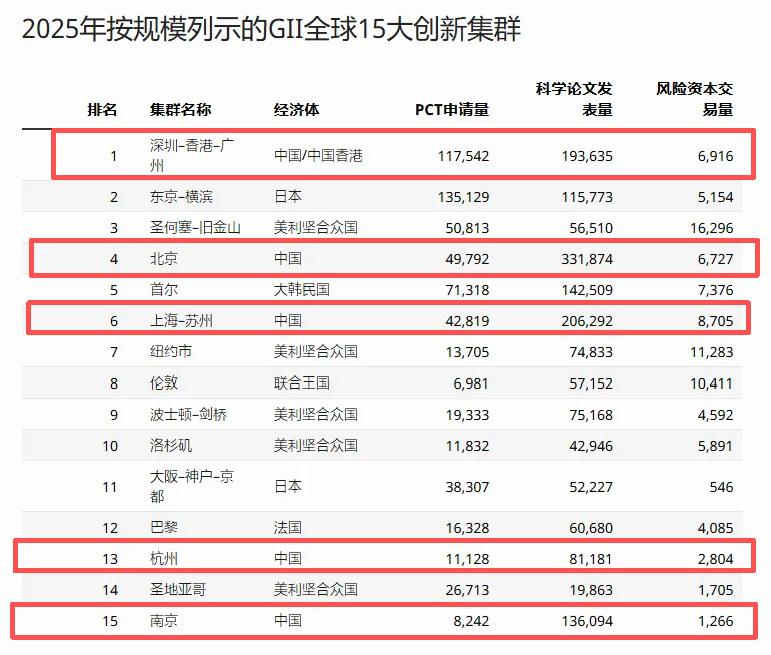
Core Insights - The Shenzhen-Hong Kong-Guangzhou innovation cluster has ranked first globally, surpassing the Tokyo-Yokohama cluster for the first time in the World Intellectual Property Organization's (WIPO) "Global Innovation Index 2025" [2][3] Group 1: Global Innovation Cluster Rankings - The Shenzhen-Hong Kong-Guangzhou cluster achieved a PCT application volume of 144,000, ranking first globally, while the Tokyo-Yokohama cluster had 135,129 applications, ranking second [2][4] - The cluster also ranked third in scientific paper publications, contributing 2.4% of global publications, and second in PCT applications, accounting for 9% of the global total [3][4] - China occupies five positions in the top 15 global innovation clusters, with Beijing at fourth, Shanghai-Suzhou at sixth, Hangzhou at thirteenth, and Nanjing at fifteenth [2][3] Group 2: Contributions of Key Cities - Shenzhen is noted for its strong private sector and emphasis on R&D, leading to a high volume of PCT applications, with 16,300 applications in 2024 [6] - Guangzhou focuses on foundational research, publishing 70,843 scientific papers in 2024, which is 45.32% of the cluster's total, and has over 1.35 million high-tech enterprises [7] - Hong Kong serves as a capital hub, facilitating significant risk capital transactions, with 53 IPOs raising approximately HKD 127 billion in the first seven months of the year [9] Group 3: Key Metrics and Indicators - The introduction of the "risk capital transaction volume" metric in 2025 significantly contributed to the cluster's top ranking, with Guangzhou accounting for over one-third of the total investment in the cluster [3][9] - The cluster's performance in PCT applications and scientific publications is bolstered by major companies like Huawei leading in PCT applications and Sun Yat-sen University in scientific publications [5][6]

大庆萨尔图区:调研桌搬到车间 科技红利“流”进企业
Zhong Guo Fa Zhan Wang· 2025-08-29 12:45
Core Insights - The Daqing City Economic Development Bureau has been actively facilitating connections between high-tech enterprises and academic institutions to enhance product development and industrialization, resulting in significant revenue increases for companies like Shengkun Instrument Manufacturing Co., which reported a revenue boost of over 3 million yuan [1][2] Group 1: Government Initiatives - The Economic Development Bureau has been conducting on-site visits to various high-tech and small-to-medium enterprises, focusing on understanding their challenges and providing tailored solutions [1] - The bureau's approach includes direct engagement with company leaders and technical staff to discuss issues such as talent acquisition and funding for technology transfer [1][2] Group 2: Economic Impact - The collaboration between the bureau and enterprises has led to successful projects, such as the "blocking ball" research project by Xinwantong, which is expected to generate an economic benefit of 15 million yuan upon production [2] - The ongoing support from the bureau aims to ensure that innovative ideas from laboratories are transformed into marketable products, thereby stabilizing and energizing the industrial upgrade in the Daqing region [2]
打造互联互通互动互利重要桥梁
Jing Ji Ri Bao· 2025-08-29 00:09
Group 1 - The core viewpoint emphasizes the significant development of China-Arab relations, particularly in economic cooperation, highlighted by the seventh China-Arab States Expo, which focuses on "innovation, green development, and prosperity" [1] - The event serves as a national and international platform for deepening cooperation and achieving mutual benefits, showcasing the commitment to building a higher-level China-Arab community of shared destiny [1][2] - President Xi Jinping's message to the Arab League underscores China's willingness to enhance political trust, promote mutual cooperation, and strengthen cultural exchanges with Arab nations [1] Group 2 - The China-Arab States Expo has become a crucial platform for the Belt and Road Initiative, facilitating interactions among thousands of domestic and international enterprises across various sectors, including modern agriculture, high technology, and infrastructure [2] - There is a focus on leveraging the complementary economic structures and development stages of China and Arab countries to foster new business opportunities and enhance strategic alignment [2][3] - The emphasis on expanding trade and economic scale includes maintaining stable supply chains, supporting infrastructure projects, and promoting trade liberalization through bilateral and regional free trade agreements [3] Group 3 - The cooperation between China and Arab countries is seen as having vast potential, with a commitment to open, inclusive, and mutually beneficial partnerships that extend beyond traditional sectors into new areas such as green technology and healthcare [3] - The vision for the future includes building a modern industrial system and creating a favorable business environment to drive sustainable development and contribute positively to the global economy [3]
中国宝安:本期计提资产减值准备约1.6亿元
Mei Ri Jing Ji Xin Wen· 2025-08-28 19:50
Group 1 - The company China Baoan announced a provision for asset impairment of approximately 160 million yuan for the current period, with a reversal and write-off of asset impairment provisions amounting to about 116 million yuan, impacting the total profit of the consolidated financial statements for the first half of 2025 by approximately 160 million yuan [1] - In the fiscal year from January to December 2024, the revenue composition of China Baoan is as follows: high-tech industry accounts for 78.54%, pharmaceutical industry accounts for 18.75%, other industries account for 1.57%, real estate industry accounts for 1.12%, and other businesses account for 0.01% [1]

中国宝安:聘任卢敏为公司总裁,拟提名卢敏为公司非独立董事候选人
Mei Ri Jing Ji Xin Wen· 2025-08-28 18:47
Group 1 - The board of directors of China Baoan Group received a resignation letter from Mr. Chen Wenchang, who resigned from his positions as director, president, and member of the Investment and Risk Management Committee due to work reasons [1] - Mr. Lu Min has been appointed as the new president of the company, pending approval as a non-independent director at the upcoming shareholders' meeting [1] - The company’s revenue composition for the year 2024 is as follows: high-tech industry accounts for 78.54%, pharmaceutical industry for 18.75%, real estate for 1.12%, and other businesses for 0.01% [1]
“新引擎”轰鸣、“新赛道”拓宽、“新场景”涌现 从“新”透视经济发展劲头
Yang Shi Wang· 2025-08-27 06:38
Economic Growth - Jiangsu's economic total surpassed 6.69 trillion yuan in the first half of 2025, with a year-on-year growth of 5.7%, contributing an economic increment of 254.38 billion yuan, ranking first among all provinces in China [3] - The industrial added value of high-tech industries in Jiangsu grew by 9.2%, accounting for 51.8% of the total industrial output, indicating that half of the industrial output comes from high-tech sectors [5] Technological Innovation - Jiangsu's artificial intelligence-related industry has exceeded 400 billion yuan, with the industrial software industry chain holding over 20% of the national market share [7] - The province is focusing on major technological innovation platforms to enhance the integration of technological and industrial innovation [10] New Industrial Developments - Jiangsu has established 44 national key laboratories to accelerate breakthroughs in critical common technologies, and is pairing 18 high-tech zones with 37 universities to foster deep integration of technology and industry [18] - The number of high-tech enterprises in Suqian, Jiangsu, has been growing at an annual rate of 20%, showcasing the region's exploration and layout in emerging industries [20] Consumer Market Growth - In the first half of 2025, Jiangsu's total retail sales of consumer goods reached 2.3949 trillion yuan, with a year-on-year growth of 5%, significantly supporting economic growth [24] - The popularity of sports events and cultural tourism activities has stimulated growth in the catering and retail sectors [24][34]
科技创新与产业创新深度融合,聊城科技型企业翻番增长
Qi Lu Wan Bao Wang· 2025-08-26 11:06
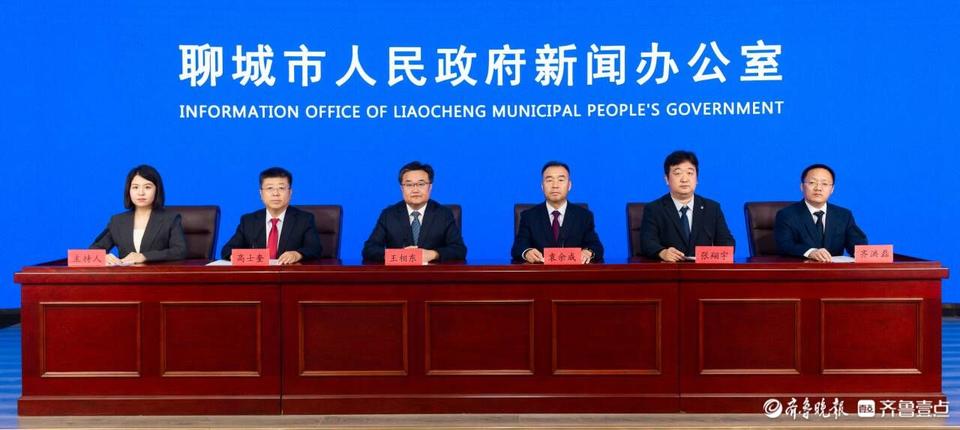
Core Viewpoint - The article emphasizes the importance of technological innovation as a driving force for economic development and high-quality growth in Liaocheng City during the "14th Five-Year Plan" period [1][3]. Group 1: Technological Innovation and Economic Development - Liaocheng City has implemented an innovation-driven development strategy, enhancing its technological innovation capabilities over the past five years [1][3]. - The city has established a virtuous cycle of "grasping technology around industries and strengthening industries with technology," supporting economic and social development [3]. Group 2: Growth of Technology Enterprises - The number of high-tech enterprises in Liaocheng increased from 267 in 2020 to 918 in 2024, representing a growth of 243.8% [3]. - The number of technology-based small and medium-sized enterprises rose from 303 in 2020 to 1305 in 2024, marking a 330% increase [3]. Group 3: Project Breakthroughs and Industry Support - Liaocheng has undertaken 478 provincial-level technology projects, securing over 500 million yuan in various provincial technology innovation funding [4]. - The city has seen the implementation of significant projects that enhance enterprise innovation capabilities, resulting in 4150 new invention patents, with a total of 4969 effective invention patents as of June [4]. Group 4: Innovation Platforms and Infrastructure - During the "14th Five-Year Plan," Liaocheng established 12 national-level innovation platforms and 120 provincial-level innovation platforms, totaling 303 platforms above the provincial level [5]. - The city has also enhanced its local innovation infrastructure, including the establishment of key laboratories and technology research institutes [5]. Group 5: Collaborative Innovation and Talent Development - Liaocheng has deepened cooperation with over 50 universities and research institutions, addressing numerous technical bottlenecks and facilitating technology transfer [6]. - The city has introduced a "Technology Vice President" system, appointing 258 experts to assist local enterprises in establishing long-term partnerships with academic institutions [6]. Group 6: Optimizing the Innovation Ecosystem - The local government has implemented policies to boost R&D investment, with the proportion of R&D spending exceeding 3% of the total social expenditure [6][7]. - High-tech industry output accounted for 57.23% of the total industrial output, surpassing the provincial average [6].
深圳:一座定义未来的闯关之城
Xin Lang Cai Jing· 2025-08-26 03:59
Economic Growth - Shenzhen's GDP reached 3.68 trillion yuan in 2024, with 1.83 trillion yuan in the first half of 2025 [1] - The city has transformed from a small town with a GDP of only 2.7 million yuan in 1980 to a major economic hub [1] Innovation and Technology - Shenzhen has an average of 663 patent authorizations per day and 12.5 high-tech enterprises per square kilometer [2] - The city aims to become a global leader in low-altitude economy by establishing over 1,200 takeoff and landing points and 1,000 low-altitude commercial flight routes by the end of 2026 [6] - Shenzhen's R&D investment accounts for 6.46% of its GDP, with corporate R&D investment at 208.67 billion yuan, representing 93.3% of total R&D investment [10] Cultural Development - Shenzhen has evolved from being labeled a "cultural desert" to a vibrant cultural hub, hosting various cultural events and institutions [15] - The city has over 1,800 cultural facilities, contributing to a cultural industry revenue of 1.29 trillion yuan in 2024, accounting for 51.5% of Guangdong's total [18] Regional Collaboration - Shenzhen is enhancing its role in the Guangdong-Hong Kong-Macau Greater Bay Area, facilitating efficient flow of talent, technology, and capital [11] - The establishment of the Qianhai Cooperation Zone has attracted over 9,900 Hong Kong-funded enterprises, promoting cross-border collaboration [14] Future Outlook - Shenzhen is positioned to continue defining possibilities rather than merely proving miracles, focusing on sustainable and high-quality growth [4][20] - The city is actively exploring new areas such as synthetic biology and aerospace technology, aiming for breakthroughs in these "unmanned zones" [6]

1—7月杭州经济稳中向好
Sou Hu Cai Jing· 2025-08-24 03:17
Group 1: Economic Performance - Hangzhou's economy shows strong recovery with a total retail sales of consumer goods reaching 527.1 billion yuan, a year-on-year increase of 5.1% from January to July [1] - Upgrading consumption trends are evident, with retail sales of home appliances and audio-visual equipment increasing by 86.3%, and communication equipment by 34.5% [1] - The retail sales of new energy vehicles grew by 23.7%, indicating a shift towards green and smart consumption [1] Group 2: Foreign Trade - The total import and export volume reached 515.4 billion yuan, with exports at 368 billion yuan, marking a growth of 12.3%, surpassing the national average [2] - Exports of mechanical and electrical products amounted to 174 billion yuan, growing by 11.5%, while high-tech product exports reached 55.8 billion yuan, increasing by 10.9% [2] - Private enterprises played a significant role, with exports totaling 282 billion yuan, accounting for 76.6% of the city's total exports [2] Group 3: Industrial Growth - The industrial added value for large-scale enterprises reached 261.3 billion yuan, with a year-on-year growth of 6.9% [3] - Key industries such as computer communication and electronic equipment manufacturing saw substantial growth, with increases of 17.0% and 30.1% respectively [3] - New momentum in high-tech and strategic emerging industries showed added value growth rates of 8.3% and 9.7%, indicating a robust industrial transformation [3] Group 4: Service Sector Development - The revenue of large-scale service industries reached 1,094.4 billion yuan, with an 8.6% year-on-year increase [3] - The information transmission, software, and IT services sector grew by 12.7%, while scientific research and technical services increased by 6.2% [3] - The digital economy's core industries and high-tech services saw revenue growth of 12.6% and 11.8%, respectively, highlighting the sector's importance in economic growth [3] Group 5: Future Outlook - Hangzhou's economy is maintaining a stable operation, with a focus on high-quality development [4] - The city aims to enhance innovation, reform, and openness to ensure effective qualitative improvements and reasonable quantitative growth [4]