
AI医疗

Search documents
002931 13连板
Shang Hai Zheng Quan Bao· 2026-01-13 04:57
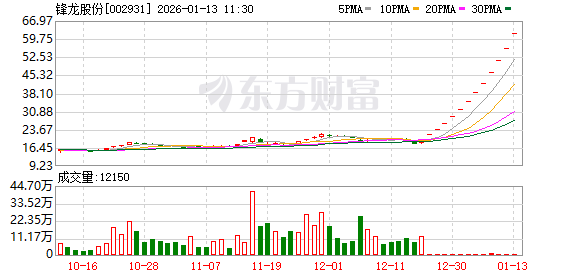
Market Overview - The A-share market experienced fluctuations, with the Shanghai Composite Index slightly down by 0.03%, the Shenzhen Component down by 0.31%, the ChiNext down by 0.83%, and the Sci-Tech Innovation Board down by 1.55% as of the midday close [2] - The total trading volume in the Shanghai and Shenzhen markets reached 24,684 billion [2] AI Application Sector - Over 2,400 stocks in the market saw an increase, with AI application concepts remaining active. Notable performers include Yingli Media with six consecutive trading limits and Tianlong Group achieving three "20cm" limit-ups [4] - AI medical stocks also showed renewed activity, with Meiyan Health and Dian Diagnostics both achieving three consecutive limit-ups [4] Robotics Sector - Robotics stocks strengthened during the session, with Fenglong Co. achieving 13 consecutive limit-ups. Other stocks like Zhongkong Technology and Buke Co. rose over 10% [5] - According to Omdia's report, global humanoid robot shipments are expected to reach 13,000 units by 2025, with Chinese manufacturers leading the market [7] Investment in AI Medical - The AI medical sector saw a collective rise in pharmaceutical stocks, with several companies like Nossger and Rongchang Bio hitting the 20% limit-up mark [11] - Nvidia plans to invest $1 billion with Eli Lilly over the next five years to establish an AI drug laboratory, aiming to accelerate medical discoveries and production [13] - Citic Securities highlights the significant application value of AI in enhancing medical device functions and clinical decision-making, suggesting that the sector is a key area for investment opportunities [13] Future Projections - IDC forecasts that by 2025, user spending on intelligent robots in China will exceed $1.4 billion, soaring to $77 billion by 2030, with a compound annual growth rate of 94% [8] - Morgan Stanley predicts that the humanoid robot market could reach $5 trillion by 2050, with a deployment of 1 billion units, equating to one humanoid robot for every ten people [8] - Open Source Securities anticipates a significant transition in the humanoid robot industry from "0-1" to "1-10" by 2025, driven by technological convergence [9]



一则大消息,这板块掀“涨停潮”
Zhong Guo Ji Jin Bao· 2026-01-13 04:49
Market Overview - On January 13, A-shares saw a collective decline in the three major indices, with the Shanghai Composite Index closing at 4163.84 points, down 0.03% [1] - A total of 2427 stocks rose while 2862 stocks fell, indicating a bearish market sentiment [3] Sector Performance - The healthcare services, lithium mining, precious metals, and insurance sectors showed strong performance, while commercial aerospace, communication equipment, and shipbuilding sectors faced declines [3][4] Lithium Mining Sector - The lithium mining sector experienced a significant surge, with stocks like Tibet Summit hitting the daily limit up, and others like Salt Lake Co. and Ganfeng Lithium rising over 7% [6] - The main contract for lithium carbonate futures on the Shanghai Futures Exchange surpassed 170,000 yuan per ton, marking a rise of over 9% and reaching a new high since October 2023 [7] Insurance Sector - The financial sector was active, with the insurance sector showing strength; China Life rose over 3% to a market value of 1,279.4 billion yuan, while China Ping An increased over 2% to a market value of 1,203.4 billion yuan [10][11] - Analysts predict that new insurance premiums for listed companies will achieve double-digit growth by 2026, driven by the bancassurance channel and increased market share of large insurers [13] AI Healthcare Sector - AI healthcare stocks were notably active, with several companies hitting the daily limit up, including Di'an Diagnostics and Nossger, which saw increases of 20% [15] - Nvidia announced a joint investment of $1 billion with Eli Lilly to establish an AI drug laboratory, aiming to accelerate medical discoveries [15] Precious Metals Sector - The precious metals sector saw a rise, with spot gold prices reaching a record high of $4630.28 per ounce [17] - Stocks like Hunan Silver and Xiaocheng Technology reported significant gains, with increases exceeding 8% [18]

一则大消息!这板块掀“涨停潮”
Zhong Guo Ji Jin Bao· 2026-01-13 04:48
Market Overview - The A-share market experienced a collective decline in the three major indices, with the Shanghai Composite Index closing at 4163.84 points, down 0.03%, the Shenzhen Component Index down 0.31%, and the ChiNext Index down 0.83% [1] Sector Performance - The market saw 2427 stocks rise, with 81 hitting the daily limit, while 2862 stocks fell. Notably, sectors such as medical services, lithium mining, precious metals, and insurance showed significant gains, while commercial aerospace, communication equipment, and shipbuilding sectors faced declines [2] Lithium Mining Sector - The lithium mining sector saw a strong surge, with stocks like Tibet Summit hitting the daily limit, and companies such as Salt Lake Industry and Ganfeng Lithium rising over 7%. Other companies like Zangge Mining and Tianqi Lithium also saw increases of over 5% [5] - The main contract for lithium carbonate futures on the Shanghai Futures Exchange surpassed 170,000 yuan per ton, marking a rise of over 9% and reaching a new high since October 2023 [7] Insurance Sector - The insurance sector showed resilience, with major players like China Life and Ping An rising over 3% and 2% respectively. China Life's market capitalization reached 1.2794 trillion yuan, while Ping An's reached 1.2034 trillion yuan [10][11] - Analysts predict that new insurance premiums for listed companies will achieve double-digit growth by 2026, driven primarily by the bancassurance channel and the proactive expansion of large insurers [12] AI Medical Sector - The AI medical sector experienced a wave of activity, with stocks like Dian Diagnostics and Nuo Si Ge hitting the daily limit. Nvidia announced a $1 billion investment with Eli Lilly to establish an AI drug laboratory, which is expected to accelerate medical discoveries [13] Precious Metals Sector - The precious metals sector saw a notable rise, with spot gold prices reaching a record high of $4630.28 per ounce. Stocks such as Hunan Silver and Xiaocheng Technology rose over 8%, while other companies like Shandong Gold and Zhongjin Gold also experienced gains [15]





恒生指数早盘涨1.01% CRO概念股涨幅居前
Zhi Tong Cai Jing· 2026-01-13 04:40
Group 1: Market Overview - The Hang Seng Index rose by 1.01%, gaining 268 points to close at 26,877 points, while the Hang Seng Tech Index increased by 0.38% [1] - The early trading volume in the Hong Kong stock market reached HKD 192 billion [1] Group 2: Notable Stock Movements - Alibaba-W (09988) saw a 3.5% increase, with its Q&A model downloads surpassing 700 million, indicating potential acceleration in Alibaba Cloud's revenue growth [1] - CRO concept stocks performed well, with WuXi AppTec (603259) expected to double its net profit, leading to a "Davis Double" effect; WuXi AppTec (02359) rose by 7.85%, Kintor Pharmaceutical (002821) increased by 5%, and CStone Pharmaceuticals (300759) gained 6% [1] - Rongchang Biologics (09995) surged by 11.64% after its dual-antibody product RC148 was authorized by AbbVie, with a total transaction value potentially reaching USD 5.6 billion [2] - Lithium carbonate futures prices continued to rise, boosting Ganfeng Lithium (002460) by 4% and Tianqi Lithium (002466) by 2.8% [3] - AI healthcare concept stocks mostly advanced, with Medlinker (02192) rising by 6% and Crystal Tech Holdings (02228) increasing by 5.87% [3] - Ark Health (06086) jumped by 36% after partnering with Tencent Health for digital upgrades in "AI + chronic disease management" [3] - Fuhong Hanlin (02696) rose over 8% following the first release of Phase II data for its broad-spectrum anti-tumor PD-L1 ADC HLX43 in esophageal squamous cell carcinoma [4] - Yiming Anke-B (01541) increased by over 9% after receiving approval for clinical trials of IMM01 for atherosclerosis treatment [5] - WanGuo Gold Group (03939) rose by 4.6%, with gold prices driving the company's stock up over 30% this month [6] - Three new stocks debuted, with Zhaoyi Innovation (603986) rising 40%, BBSB INTL (08610) increasing by 65%, and Hongxing Cold Chain (01641) gaining 4% [6] Group 3: Sector Adjustments - Commercial aerospace concept stocks collectively adjusted, with Goldwind Technology (002202) experiencing a drop of over 13% at one point and closing down more than 6% [7]
近亿元!AI医疗企业完成战略融资
思宇MedTech· 2026-01-13 04:09
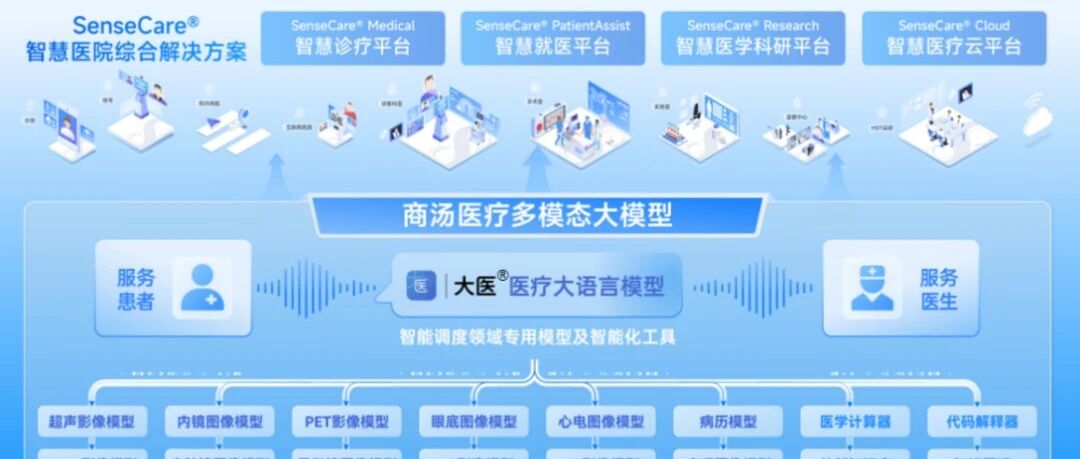
Core Viewpoint - The article highlights the strategic investment of nearly 100 million yuan by Henan Huirong Artificial Intelligence Industry Investment Fund into SenseTime Medical, marking a significant step in the implementation of the "AI + healthcare" strategy in the Central China region [2]. Market Background - The AI healthcare industry in China is transitioning from technology validation to value validation, with a market size of approximately 10.7 billion yuan in 2023, reflecting a year-on-year growth of over 50% [3]. - The demand for AI in healthcare is shifting from focusing on single diagnostic capabilities to emphasizing system-level tools that support cross-departmental and cross-process collaboration [3]. Company Positioning - SenseTime Medical is positioned as a provider of "smart hospital system-level solutions driven by large medical models," utilizing its self-developed clinical-grade medical language model, "SenseTime DaYi," as the core [4]. - The company's technical approach is based on a "general-special integration" architecture aimed at enhancing diagnostic efficiency and resource allocation without replacing physician decision-making [4]. Products and Cases - SenseTime Medical has developed over 40 AI modules within the SenseCare system, covering various clinical areas such as pulmonary, cardiac, and oncological diagnostics, with the AI-assisted diagnostic system improving departmental efficiency by 30% to 50% [7]. - The intelligent surgical planning system automates 3D reconstruction and lesion localization based on medical imaging, providing multiple surgical options and supporting pre-surgical simulations and post-surgical evaluations [8]. - In the Henan region, SenseTime Medical has participated in the construction of a remote medical system at Zhengzhou University First Affiliated Hospital, addressing challenges faced by grassroots medical institutions in diagnosing complex cases [9]. Key Signals and Future Focus - The introduction of regional industrial capital signals a shift towards "regional collaboration and system implementation" in AI healthcare, emphasizing the integration of AI capabilities into real medical processes [12]. - The focus for SenseTime Medical will be on regional replication capabilities, depth of hospital usage, and sustainability of the business model, which will determine its long-term position in the AI healthcare competitive landscape [12].
港股午评|恒生指数早盘涨1.01% CRO概念股涨幅居前
智通财经网· 2026-01-13 04:05
Group 1 - The Hang Seng Index rose by 1.01%, gaining 268 points to close at 26,877 points, while the Hang Seng Tech Index increased by 0.38% [1] - Alibaba's stock increased by 3.5%, with its Q&A model downloads surpassing 700 million, indicating potential acceleration in Alibaba Cloud's revenue growth [1] - CRO concept stocks saw significant gains, with WuXi AppTec's net profit expected to double, leading to a potential "Davis Double" effect; WuXi AppTec rose by 7.85%, Kelun Pharmaceutical by 5%, and CRISPR Therapeutics by 6% [1] - Rongchang Biologics surged by 11.64% after authorizing its dual-antibody product RC148 to AbbVie, with a total transaction value potentially reaching $5.6 billion [1] - Lithium carbonate futures prices continued to rise, boosting Ganfeng Lithium's stock by 4% and Tianqi Lithium's by 2.8% [1] - AI healthcare concept stocks mostly advanced, with NVIDIA partnering with Eli Lilly to invest $1 billion in a joint laboratory; Medlinker rose by 6% and Crystal Tech Holdings by 5.87% [1] - Ark Health's stock skyrocketed by 36% after collaborating with Tencent Health for digital upgrades in "AI + chronic disease management" [1] - Fuhong Hanlin's stock increased by over 8%, with the first release of Phase II data for its broad-spectrum anti-tumor PD-L1 ADC HLX43 in esophageal squamous cell carcinoma [1] - Yiming Anke's stock rose by over 9% after receiving approval for clinical trials of IMM01 for atherosclerosis treatment [1] Group 2 - WanGuo Gold Group's stock increased by 4.6%, with gold prices rising, leading to a month-to-date gain of over 30% [2] - Three new stocks were listed, with Zhaoyi Innovation's stock rising by 40% on its debut, being a domestic leader in storage chips and MCUs; BBSB INTL surged by 65%, and Hongxing Cold Chain increased by 4% [2] Group 3 - Commercial aerospace concept stocks collectively adjusted, with Goldwind Technology's stock dropping over 13% at one point and more than 6% at midday [3]

最火板块,集体跳水
中国基金报· 2026-01-13 03:40
AI医疗概念 股 反复活跃 【导读】AI医疗板块走高,商业航天概念股集体跳水 中国基金报记者 李智 一起来看下最新的市场情况及资讯。 1月13日开盘,A股三大指数集体高开。 截至发稿, 沪指涨0. 31 %,深成指涨0. 36 %,创业板指涨0. 59% 。 | 上证指数 | 深证成指 | 北证50 | | --- | --- | --- | | 4178.17 | 14418.76 | 1607.82 | | +12.88 +0.31% | +51.85 +0.36% +2.05 +0.13% | | | 科创50 | 创业板指 | 万得全A | | 1506.70 | 3408.48 | 6863.79 | | -5.14 -0.34% | +20.14 +0.59% | +10.26 +0.15% | | 沪深300 | 中证500 | 中证A500 | | 4827.42 | 8240.46 | 5984.44 | | +37.50 +0.78% | -8.67 -0.11% | +35.74 +0.60% | | 中证1000 | 深证100 | 中证红利 | | 8309.56 | 6036.97 ...

华福:1月13日称AI医疗迈入商业化落地关键阶段
Sou Hu Cai Jing· 2026-01-13 03:23
本文由 AI 算法生成,仅作参考,不涉投资建议,使用风险自担 【1月13日,华福指出AI医疗行业迈入商业化落地关键阶段】1月13日,华福表示,在国家战略与市场 需求共同作用下,AI医疗行业已进入商业化落地的关键时期。同时,研报提及,AI应用端需求形成闭 环,持续为AI产业可持续大循环发展提供支撑。 ...
港股异动 | AI医疗概念股多数走高 方舟健客(06086)涨超30% 英伟达携手礼来斥资10亿美元联合建立实验室
Zhi Tong Cai Jing· 2026-01-13 03:13
Group 1 - The core viewpoint of the news is that AI healthcare concept stocks are experiencing significant gains, driven by a partnership between Nvidia and Eli Lilly to invest $1 billion in a joint research lab to accelerate AI applications in the pharmaceutical industry [1][2] - Ark Health (06086) saw a rise of 30.8%, while other AI healthcare stocks like Medical Pulse (02192) and Crystal Technology Holdings (02228) also reported increases of 5.1% and 4.63% respectively [1] - The joint lab established by Nvidia and Eli Lilly aims to generate large-scale data and build AI models to enhance new drug development, with operations expected to start early this year [1] Group 2 - According to Fengzheng Securities, AI-driven healthcare is forming a new growth engine, with a positive outlook on the revolutionary potential of AI in pharmaceuticals, basic research, diagnosis, and health management [2] - Huafu Securities noted that the AI healthcare industry has entered a critical stage of commercialization, supported by national strategies and market demand, with a closed-loop demand for AI applications sustaining the sustainable development of the AI industry [2]



港股异动丨AI医疗爆发!方舟健客放量飙升43%,股价创2个月新高
Ge Long Hui· 2026-01-13 03:00
随着A股市场AI应用概念的持续火爆,港股市场AI医疗股亦跟随集体爆发。其中,中国领先的线上慢病 管理平台方舟健客(6086.HK)今日盘中一度放量飙升超43%至3.4港元,为连续第二日大涨,股价创2个月 新高。 消息面上,近期,方舟健客与腾讯健康举行"AI+慢病管理"解决方案发布会,标志着国内慢病管理领域 迈入全新发展阶段。双方强强联合,将为"AI+慢病管理"领域数智化升级提供强有力的技术支撑。 另外值得注意的是,格隆汇研究院昨日发布研报《重塑认知:方舟健客的深度价值重估之路 ——"AI+"生态蓝图正在加速展开,领跑下一个十年》指出,"优质医生资源&丰富产品矩阵"是公司的 核心特点,作为以长期医患关系为基础的生态系统使方舟健客能够更好地把握慢性病患者巨大的客户终 身价值,同时也满足医疗保健系统中其他关键利益相关者(包括医生和制药公司)的需求。1H25业绩增长 是公司慢病患者用户价值释放的拐点,随着公司"AI+H2H创新生态"的持续构建,客户价值有望进一步 凸显。 ...