玩具

Search documents
早报 (06.23)| 美国动手了,国际油价巨震!50%关税今日启动;特斯拉Robotaxi登场;跨境支付通正式上线
Ge Long Hui· 2025-06-23 01:19
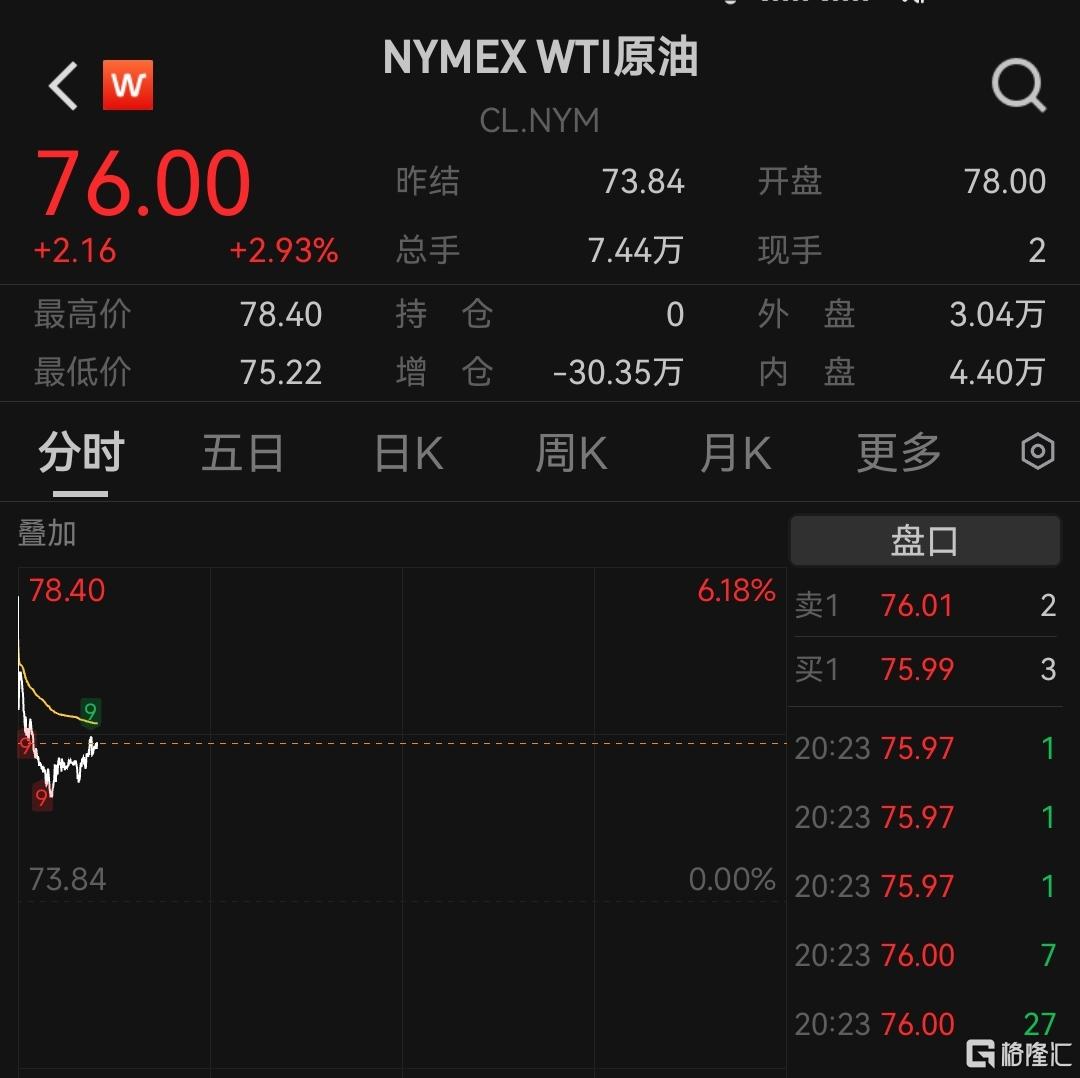
Group 1 - The U.S. airstrike on Iranian nuclear facilities has reportedly destroyed Iran's nuclear program, leading to a significant increase in oil prices, with Brent crude rising approximately 6% to over $81 [1] - The Iranian parliament has approved a proposal to potentially close the Strait of Hormuz, with the final decision resting with the Supreme National Security Council of Iran [1] - Following the airstrike news, WTI crude futures surged over 6% before narrowing to less than 3% increase [1] Group 2 - A significant increase in shipping costs has been observed due to escalating tensions in the region, with some high-risk routes experiencing freight rate hikes of up to 250% [17] - The Baltic Exchange's dirty tanker index indicates a 12% rise in international average freight rates over the past week, with daily rental rates for very large crude carriers soaring from approximately $20,000 to $55,000 [17] - The national railway has reported a cumulative cargo dispatch of 1.641 billion tons from January to May, reflecting a year-on-year growth of 3.1% [17]

Labubu爆火背后,3.1亿老人的情绪价值该被看见了
3 6 Ke· 2025-06-23 00:59
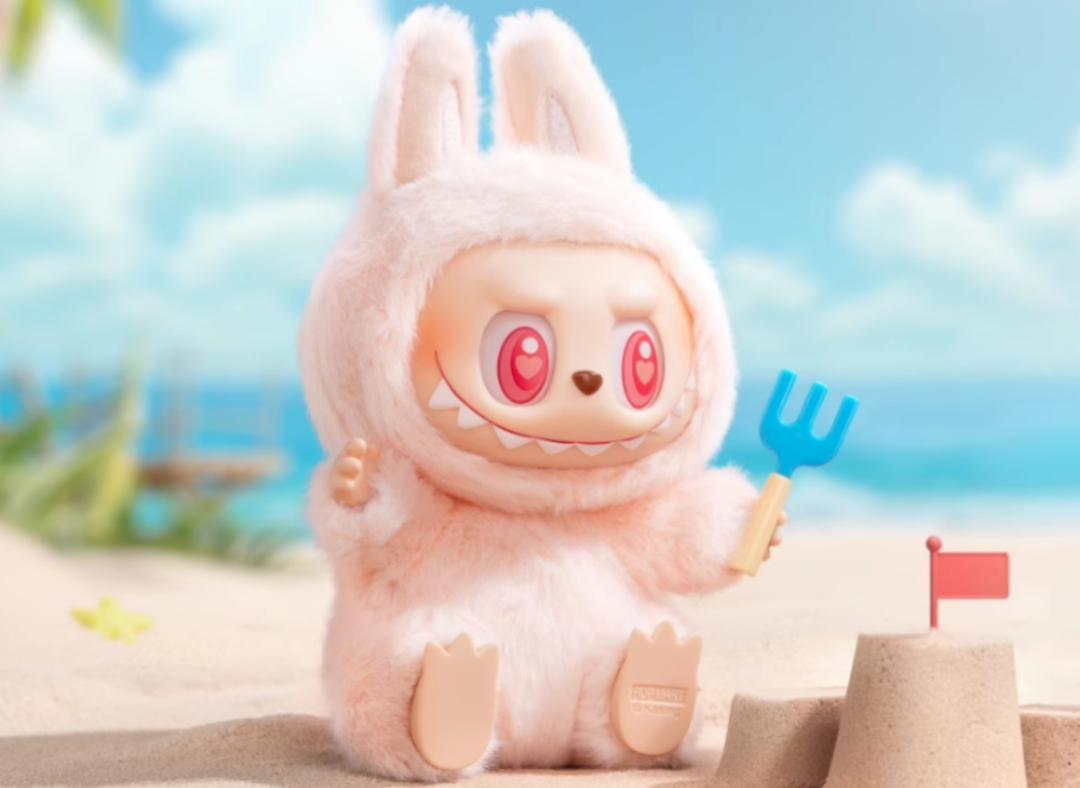
Group 1 - The toy market is experiencing significant growth, with LABUBU's The Monsters series achieving sales of 30.4 billion yuan in 2024, a year-on-year increase of 726.6%, surpassing MOLLY to become the most profitable IP for Pop Mart [1] - There is a growing demand for elderly toys, with a 124% increase in search volume and over 70% increase in transaction volume for products like smart chessboards and fitness balls among consumers aged 55 and above [3][4] - The emotional needs of the elderly are being increasingly recognized, with 42% of urban seniors experiencing "emotional hunger," highlighting the potential for elderly toys to address social belonging and cognitive training [4][6] Group 2 - The elderly toy market faces challenges, including a lack of suitable products, with 87% of current offerings being repurposed children's toys and less than 5% designed specifically for seniors [14][16] - The absence of "elderly-friendly" standards in the toy industry is a significant barrier, as current regulations only cover home appliances and fitness equipment [12] - Companies like Aofei Entertainment and Xinghui Entertainment are involved in the toy market, but there is a noticeable lack of focus on elderly products in their annual reports [13][12] Group 3 - The rise of elderly toys is seen as a new frontier in the silver economy, with products designed to enhance cognitive function and social interaction among seniors [10][19] - The integration of AI technology in toy development is being explored to create personalized experiences for elderly consumers, with companies like Shifeng Culture expanding their product lines to include AI companionship for older adults [20][22] - Community initiatives and government support are emerging to promote the development of elderly toys, including the establishment of specialized stores and standardized production practices [19][24]
8点1氪:内蒙古通报那尔那茜有关核查情况;一年电费40万炫富网红被禁言;罗永浩辟谣离开科技界
36氪· 2025-06-22 23:52
Group 1 - PPIO, a leading independent distributed cloud computing service provider in China, submitted its listing application to the Hong Kong Stock Exchange on June 20, with joint sponsors being ICBC International and Shenwan Hongyuan Hong Kong [3] - Beijing Extreme Intelligence Technology submitted its listing documents to the Hong Kong Stock Exchange on June 22, with Morgan Stanley and CICC as joint sponsors [4] - Lens Technology also submitted its listing documents to the Hong Kong Stock Exchange [5] - Changle Holdings Limited submitted its listing documents to the Hong Kong Stock Exchange [6] Group 2 - The Inner Mongolia authorities established a joint working group to investigate the situation regarding actress Na Er Na Xi, following public concern [7][8] - Na Er Na Xi, born in December 1989, allegedly participated in the college entrance examination in 2008 under false pretenses, as she did not have the required school attendance or student status [8] - The investigation into the establishment of the Shanghai Theatre Academy's Inner Mongolia training program is ongoing [9] Group 3 - Xiaomi responded to allegations that a sales representative disparaged other brands while discussing the Xiaomi YU7, confirming that the involved individual was not an employee and that such behavior is strictly prohibited [10] - GAC Group's chairman addressed rumors regarding financial instability, stating that the company's asset-liability ratio is only 47.6%, indicating a strong financial structure [10] Group 4 - The cross-border payment system officially launched on June 22, allowing real-time remittances between residents of mainland China and Hong Kong [17] - Japan's government announced an emergency import of rice due to a significant reduction in its rice reserves, which have dropped to 150,000 tons [19] Group 5 - Meta has been aggressively recruiting AI talent, having contacted over 200 core researchers from OpenAI and Google DeepMind, offering competitive compensation packages [21][22] - Huawei's HDC 2025 introduced the ASCF framework for developing services within the HarmonyOS ecosystem [22]

云南 就业顾家“两不误”
Jing Ji Ri Bao· 2025-06-22 22:06
Core Viewpoint - The article emphasizes the importance of employment in improving the livelihood of the population in Yunnan Province, highlighting various initiatives aimed at enhancing local job opportunities through the development of labor-intensive industries and local resource utilization [1][4]. Group 1: Employment Initiatives - Yunnan Province focuses on rural labor and poverty alleviation by revitalizing local resources and developing highland characteristic agriculture and labor-intensive industrial parks [1]. - In Huize County, measures such as attracting small businesses and establishing micro-factories have been implemented to provide local job opportunities, allowing residents to work close to home [2][4]. - The introduction of 45 labor-intensive enterprises in Huize County, including electronics and textiles, has created significant local employment [2]. Group 2: Local Business Development - Liu Qun, who returned to his hometown, established a weaving workshop that employs over 600 local residents, demonstrating the potential of bringing industries back to rural areas [3]. - The county has developed a mechanism to attract external investment, leading to the establishment of 24 local workshops that facilitate nearby employment [3][4]. - The transformation of idle assets into productive facilities has been a key strategy, with Huize County repurposing over 28,000 square meters of idle factory space for new businesses [4]. Group 3: Employment Support Services - Yunnan Province has enhanced its service quality for job seekers by establishing various employment support centers and optimizing the business environment [7]. - The "奋斗驿站" in Huize County provides a one-stop service for job seekers, including training and recruitment support [7]. - The province has launched the "Ten Actions" plan to promote local employment, aiming to expand labor-intensive industrial parks and increase job opportunities for rural laborers [8]. Group 4: Employment Statistics - As of May, Yunnan Province has facilitated local employment for 855,480 individuals, an increase of 145,500 compared to the previous year [8]. - The province operates 2,338 employment assistance workshops, contributing to the employment of 205,700 rural laborers [8].
泡泡玛特股价震荡;老铺黄金开启全球化扩张;“日本宜家”在中国收缩关店丨品牌周报
36氪未来消费· 2025-06-22 12:23
Group 1: Labubu 3.0 and Pop Mart - Labubu 3.0 series has launched global pre-sales, with expected sales exceeding 500 million yuan based on a supply of 4-5 million units at a price of 99 yuan each [2] - The secondary market has seen a significant drop in prices for Labubu products, with resale values for blind box sets plummeting from 1500-2800 yuan to 650-800 yuan [2] - Pop Mart's stock price has dropped 12.11% to 239.60 HKD per share, marking a new low since June 3 [2][3] Group 2: Pop Mart's Strategic Response - Analysts have expressed concerns about Pop Mart's valuation, suggesting it lacks a competitive moat due to the short lifespan of its IP and weak pricing power compared to global operators like Disney [3] - In response to market challenges, Pop Mart is optimizing its sales mechanism to allow more genuine fans to purchase Labubu products [3] - The company has announced the establishment of a film studio to expand its IP beyond toys, with an animated series titled "LABUBU and Friends" in the pipeline [3] Group 3: Lao Pu Gold's Global Expansion - Lao Pu Gold is opening its first overseas store in Singapore, aiming to position itself as a luxury brand alongside established names like Louis Vuitton and Hermes [4] - The brand's strategy includes focusing on the Chinese cultural sphere in Southeast Asia, with plans to open four stores in the region by 2026 [5] - Lao Pu Gold plans to introduce localized products that incorporate local cultural elements, such as Christian-themed items in the Singapore store [5] Group 4: Walmart's Dominance in Retail - Walmart China has retained its position as the top supermarket chain with a sales figure of 158.845 billion yuan, equivalent to about two times the size of Hema [7] - Despite a reduction in the number of stores by 8.5% to 334, Walmart's sales have continued to grow, driven by the strong performance of Sam's Club [7] - In Q1 of the 2026 fiscal year, Walmart China's net sales reached 6.7 billion USD (approximately 48.3 billion yuan), reflecting a year-on-year growth of 22.5% [7] Group 5: NITORI's Market Challenges - NITORI has closed 21 stores in China, representing a 20% closure rate, as it faces challenges in the macroeconomic environment [10] - The brand has attempted to diversify its product offerings by introducing higher-frequency items like clothing and pet food, but competition in these categories is intense [11] - NITORI's rapid expansion plans have been curtailed due to the sluggish real estate market and overall consumer sentiment [10][11] Group 6: Three Squirrels' Acquisition Setback - Three Squirrels has terminated its acquisition of Love Snacks due to disagreements on core terms of the deal [13][15] - The company has been heavily reliant on online sales, with 69.73% of its revenue coming from online channels, highlighting its need to strengthen its offline presence [13] - The competitive landscape in the snack industry has intensified, prompting Three Squirrels to reassess its offline strategy amid slowing growth [14] Group 7: Marketing Innovations - Fujifilm's skincare brand ASTALIFT has launched a new sunscreen product that combines multiple functions, targeting young consumers [17] - Balenciaga has opened a flagship store in Beijing, introducing a limited-edition "Peking Duck" bag that sold out quickly, showcasing the brand's unique marketing strategy [19] - IKEA has released a new series of decorative lights designed in collaboration with Dutch designer Sabine Marcelis, emphasizing the role of light in home living [21] Group 8: Corporate Developments - Anta has appointed Yao Jian as the president of the Wolf Claw brand to oversee global operations following its acquisition [25] - The parent company of the Chinese makeup brand Orange has acquired the skincare brand Baizhi Cui, marking its entry into the skincare market [25] - Li Ning has hired Victor Herrero, a former executive from Zara, as the new CEO of Clarks, with a potential total compensation of up to 42 million yuan [26]

创投正迎来退出盛宴
母基金研究中心· 2025-06-22 08:49
Core Viewpoint - The Hong Kong stock market is experiencing unprecedented enthusiasm, with a significant increase in the number of companies going public and the amount of capital raised compared to previous years [1][5][9]. Group 1: Market Performance and Trends - In the first four months of 2025, 19 companies completed their IPOs in Hong Kong, raising 21.3 billion HKD, nearly three times the amount raised in the same period last year [1]. - As of May 20, 2025, 24 companies had listed on the Hong Kong main board, collectively raising over 60 billion HKD [1]. - The number of companies waiting to go public in Hong Kong has reached approximately 150 [1]. Group 2: Investment Institutions and Returns - Various venture capital firms are reaping substantial returns from the current IPO wave, particularly in the consumer sector, with notable companies like Pop Mart and Mixue Ice City backed by prominent investors [1][6]. - The market is seeing a trend where many entrepreneurial companies are choosing to list in Hong Kong due to slower listing processes in the A-share market and the need for financing [6][11]. Group 3: Notable IPOs and Valuations - Companies like Blukoo and Mixue Ice City have seen significant market valuations post-IPO, with Blukoo nearing 40 billion HKD and Mixue Ice City exceeding 200 billion HKD [2][4]. - Horizon Robotics, a tech company, saw its market value soar past 100 billion HKD shortly after its listing [2]. Group 4: Policy Changes and Market Attractiveness - The Hong Kong Stock Exchange has introduced new listing rules that allow unprofitable companies to go public, enhancing the appeal for tech startups [7][8]. - The introduction of the "Special Technology Company" listing mechanism aims to protect sensitive business information during the IPO process, further attracting tech firms [8]. Group 5: A+H Share Listings - A number of leading A-share companies, such as CATL and Heng Rui Medicine, are also pursuing dual listings in Hong Kong, with 45 A-share companies planning to list in Hong Kong as of April 30, 2025 [9][10]. Group 6: Future Outlook - The current IPO boom is expected to continue, with many companies in both consumer and hard tech sectors preparing for listings [11][12]. - The diversification of exit channels for venture capital and private equity firms is seen as a positive development, although the performance of ordinary companies in the IPO market may vary [16][17].

新华财经早报:6月22日
Xin Hua Cai Jing· 2025-06-22 00:31
Key Points - The Chinese government is focusing on enhancing international cooperation with Russia to uphold global trade systems and supply chain stability [3] - The State Administration for Market Regulation in China will conduct national quality supervision checks on 164 products, with a total of over 16,000 samples to be tested, emphasizing children's products and emerging industries [3] - The first batch of government-guided pricing public data products has been delivered in Fujian, with a contract value exceeding 1 million yuan, indicating a shift towards market-oriented data utilization [3] - The People's Bank of China reported a steady increase in household term deposits, reaching 119.34 trillion yuan by May [3] - The China Meteorological Administration announced that 220 meteorological projects have been approved for funding from the 1 trillion yuan government bond issued in 2023, aimed at disaster recovery and prevention [3] - The China National Railway Group reported that the full timetable for the China-Europe freight train has surpassed 1,000 trips, with high-value goods being transported [3] - The Hong Kong Stock Exchange has seen a significant increase in new stock listings, with 33 new companies raising approximately 88 billion HKD this year [4] - Ping An Life has increased its stake in China Merchants Bank H-shares to 15%, triggering regulatory disclosure requirements [4] - Pop Mart, a leading player in the new consumption sector, has experienced a stock price drop of over 12%, attributed to falling resale prices of its key IP products [4]



年内大买近7000亿!港股还能再涨10%?
天天基金网· 2025-06-20 13:15
Core Viewpoint - The A-share market experienced a collective decline, while the Hong Kong stock market saw an increase, indicating a divergence in market performance driven by various factors including policy expectations and sector performance [1][5]. Group 1: A-share Market Performance - A-shares saw a collective drop with over 3600 stocks declining, while sectors like banking and liquor showed resilience [1][3]. - The latest LPR (Loan Prime Rate) remained unchanged, leading to a cooling of expectations for further policy easing in the short term [7][9]. - Analysts suggest that the A-share market is in a phase of risk release and may continue to experience range-bound fluctuations, recommending a "barbell strategy" for asset allocation [4]. Group 2: Hong Kong Stock Market Dynamics - Southbound capital has net bought nearly 700 billion HKD in Hong Kong stocks this year, accounting for 86% of the total for 2024, with projections suggesting it could exceed 1 trillion HKD for the year [11][13]. - The Hang Seng Index has risen by 17.30% and the Hang Seng Tech Index by 14.88% year-to-date, positioning Hong Kong stocks favorably in the global market [16]. - Citigroup forecasts the Hang Seng Index could reach 25,000 points by the end of the year, with potential growth to 26,000 points in 2026, indicating an upside of over 10% [18]. Group 3: Consumer Sector Analysis - The new consumption sector, represented by Pop Mart, faced a nearly 4% decline due to regulatory risks and market saturation, while traditional consumption, particularly liquor, saw gains driven by policy support and recovery expectations [24][28]. - The liquor sector is viewed as a defensive play with valuations at historical lows, suggesting potential for recovery [29]. - A balanced investment approach is recommended, utilizing a barbell strategy to manage risks and opportunities in both new and traditional consumption sectors [30][32].

智通港股通活跃成交|6月20日
智通财经网· 2025-06-20 11:01
Core Insights - On June 20, 2025, Pop Mart (09992), Shandong Molong (00568), and Bank of China (03988) were the top three companies by trading volume in the Hong Kong Stock Connect (southbound), with trading amounts of 40.19 billion, 23.11 billion, and 20.67 billion respectively [1][2] - In the Shenzhen-Hong Kong Stock Connect (southbound), Pop Mart (09992), Tencent Holdings (00700), and Meituan-W (03690) led the trading volume, with amounts of 22.87 billion, 11.83 billion, and 10.71 billion respectively [1][2] Southbound Trading Volume - Hong Kong Stock Connect - The top three active companies were: - Pop Mart (09992): 40.19 billion, net buy of -6.40 billion - Shandong Molong (00568): 23.11 billion, net buy of -28.03 million - Bank of China (03988): 20.67 billion, net buy of -6.49 billion [2] Southbound Trading Volume - Shenzhen-Hong Kong Stock Connect - The top three active companies were: - Pop Mart (09992): 22.87 billion, net buy of -14.66 million - Tencent Holdings (00700): 11.83 billion, net buy of -91.49 million - Meituan-W (03690): 10.71 billion, net buy of +2.18 billion [2]


益智类适老玩具热销 企业加大研发掘金“银发经济”
Yang Shi Wang· 2025-06-20 10:04
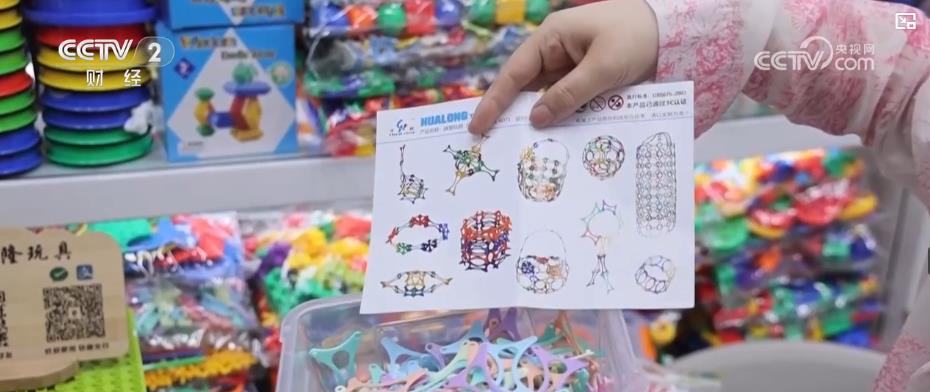
企业负责人告诉记者,适老玩具相比儿童玩具尺寸更大,颜色更简单,主要是照顾老年人的视力和动手能力。此外,适老玩具 不能像儿童玩具一样简单,需要设计不同的难度等级,方便不同情况的老人体验。 央视网消息:随着我国60岁以上老人数量逐年攀升,银发经济规模不断扩大。益智类适老玩具这个曾经小众的行业也慢慢火热 起来。许多企业也在积极抢抓这一市场商机,加大对益智类适老玩具的开发,掘金"银发经济"。 在浙江义乌国际商贸城一家店铺里,陈列着上百种益智类的玩具,大到贴在墙上的洞洞板,小到巴掌大的拼接花篮,色彩缤 纷,让人眼花缭乱。经营户张燕告诉记者,他们公司做益智类玩具已经有二十多年时间了,不过这两年,公司在设计产品的时候, 开始有意识地兼顾老年人的需求。 张燕表示,像这种拼接的益智类玩具,一方面可以锻炼老年人的手力眼力,激发他们的大脑活力;另一方面,拼接出来的花 篮、彩球这种成品,也符合老年人的喜好,有一定的观赏和实用的价值,因此,这类产品也越来越受到老年人的欢迎。 在浙江省云和县,此前当地生产的木质玩具主要受众是儿童,但从去年开始,越来越多的企业将目光转向到了适老玩具上。 不过在采访时记者也了解到,目前由于益智类适老玩具生产 ...