
资产管理

Search documents
金价创新高,专家说美元会大幅贬值,滑向上世纪大萧条时代
Sou Hu Cai Jing· 2025-11-07 06:42
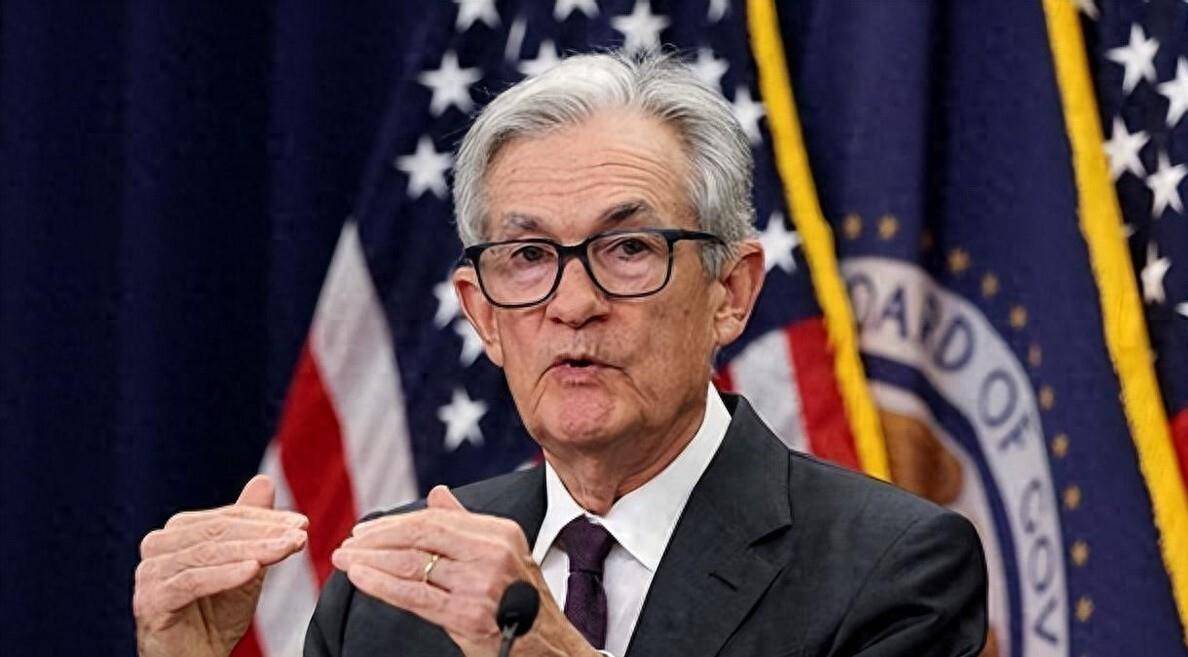
Core Viewpoint - The Federal Reserve's interest rate cuts have not led to a decrease in gold prices, which have reached new highs, indicating that monetary policy alone cannot resolve the underlying issues in the U.S. economy [1][3]. Gold Market Analysis - Goldman Sachs has reported that international gold prices have entered a bull market, projecting prices to reach $6,000 per ounce, with current prices exceeding $3,770 per ounce, reflecting a nearly 2% increase [3][4]. - The domestic price of gold jewelry has surpassed 1,100 yuan per gram, while the spot trading price has exceeded 865 yuan per gram, marking unprecedented high prices [3][4]. - Gold prices have been adjusted for inflation, surpassing historical peaks from 45 years ago, with 31 new price highs recorded in 2025 alone [3][4]. Economic Implications - The continuous rise in gold prices suggests a depreciation of the U.S. dollar against gold, with predictions of significant dollar devaluation in the next 5 to 7 years [4][5]. - The U.S. is facing increasing fiscal and trade deficits, with the potential for a fiscal crisis, which could lead to a loss of confidence in the dollar and a shift towards gold as a safe-haven asset [8][10]. - Global experts, including Ray Dalio from Bridgewater Associates, have expressed concerns about the U.S. economic policies, warning of a possible debt crisis reminiscent of the Great Depression [8][10]. Market Sentiment - The ongoing concerns regarding the U.S. economic outlook have contributed to the sustained bull market in gold, even after inflation adjustments [10]. - The political interference in the Federal Reserve's operations has raised doubts about its independence and credibility, further driving investors towards gold [12].

ESG行业洞察 | 超过700只ESG基金删改标签,涉及多家巨头!
彭博Bloomberg· 2025-11-07 06:05
Core Insights - Over 700 ESG funds have removed or modified ESG-related terms in their names since 2023, representing 20% of tracked funds, with expectations for this trend to continue as asset managers respond to changing political environments, particularly in the U.S. [3][4] - The European market has seen nearly 90% of these changes due to stricter fund naming regulations effective from May 21, which require funds using ESG-related terms to allocate at least 80% of their assets to defined environmental or social goals [4][9] Fund Reclassification - More than 450 funds have deleted ESG labels, and an additional 250 have adjusted related terminology, affecting over 20% of tracked assets [4] - The trend of rebranding with ESG terminology, which was a major growth driver, has slowed significantly, with only 18 new funds adopting such labels in the current year compared to over 350 in 2021 [4] Asset Management Companies Impact - UBS has the highest percentage of assets (over 20%) that have removed ESG labels, while BlackRock, despite having the largest share of ESG+ assets, has only 5% affected [7][8] - Other companies like Generali have seen 51% of their assets change labels, indicating a significant shift in the ESG landscape [8] Regulatory Influence - The European Securities and Markets Authority (ESMA) has implemented new guidelines that compel funds using ESG-related terms to adhere to strict asset allocation rules, which has driven the reclassification of many funds [9] - Funds that include terms like "sustainable" or "climate" may need to meet even stricter exclusion criteria, leading some to completely remove such terminology in favor of less regulated labels [9]

固收+系列之四:股债恒定ETF:运作体系、海外经验借鉴与市场影响
Guoxin Securities· 2025-11-07 05:14
1. Report Industry Investment Rating No relevant content provided. 2. Core Viewpoints - The report focuses on the "Fixed Income +" series, specifically the Stock - Bond Constant ETF. It aims to achieve a balanced risk - return solution through a fixed stock - bond ratio, automated rebalancing, and precise tracking of relevant indices [1][11]. - The product combines the growth potential of stocks and the stability of bonds, with a core goal of balancing risk and return, offering returns better than pure - bond products and lower volatility than pure - stock products [1][12]. - Domestic market conditions, including policy support, improved index supply, and overseas experience, provide a basis for the large - scale development of this product [34][35]. - The Stock - Bond Constant ETF will impact the bond market and the "Fixed Income +" fund industry, promoting a more diversified competition pattern [32][33]. 3. Summary by Directory 3.1 Definition and Objectives - The Stock - Bond Constant ETF is a passive "Fixed Income +" tool that maintains a preset asset allocation ratio through an automated rebalancing mechanism, aiming to achieve risk - return equilibrium and improve the Sharpe ratio [1][12]. 3.2 Asset Composition and Proportion Rules - The underlying assets consist of stock ETFs, bond ETFs, and a small amount of cash - like assets, covering multiple risk levels with preset fixed ratios [1][13]. - The stock - bond allocation ratio is determined by the target index, and currently, the indices are mainly issued by the China Securities Index Company and the Shanghai Stock Exchange [13]. 3.3 Rebalancing Trigger Mechanisms - Regular rebalancing is the most common mechanism, usually carried out quarterly or semi - annually, with a fixed frequency specified in the fund contract [14][15]. - Threshold rebalancing is a more flexible mechanism. When the actual weight of stocks or bonds deviates from the preset ratio by a certain threshold (e.g., ±5%), a temporary rebalancing operation is triggered [15]. 3.4 Reference Index and Market Foundation - The China Securities Index Company has launched 40 stock - bond constant indices since 2012, and the Shanghai Stock Exchange launched 3 such indices in 2024, providing a solid foundation for the development of Stock - Bond Constant ETFs [16]. - The index maintenance adopts a "regular + temporary" dual - track management model, with quarterly rebalancing and emergency adjustments for special events [18][20]. - The index calculation follows the "constant - ratio chained weighting" framework [20]. 3.5 Overseas Experience and Reference 3.5.1 Product System - BlackRock's iShares Core Allocation series, launched in 2008, offers four types of products based on risk levels: conservative, moderate, balanced, and aggressive, covering a full - spectrum of risk profiles [21][22]. 3.5.2 Operation Mode - The products use the ETF - FOF model, holding multiple core stock and bond ETFs under BlackRock, enabling global asset allocation [23]. 3.5.3 Performance - The return and volatility characteristics of the four ETFs are determined by their stock - bond ratios. The aggressive ETF with a high stock allocation has the highest long - term return but greater volatility, while the conservative ETF with a high bond allocation has a more stable performance [26]. 3.5.4 Scale Change - Market preferences have led to different trends in the scale of the four ETFs. Initially, the balanced and moderate ETFs had higher growth rates, but after 2023, the balanced and aggressive ETFs rebounded, while the moderate and conservative ETFs declined [27]. 3.6 Market Reshaping by Stock - Bond Constant ETFs 3.6.1 Core Driving Factors - Policy support from the CSRC and the upcoming new public - offering sales fee regulations provide policy and potential capital for the development of Stock - Bond Constant ETFs [31]. - The launch of stock - bond constant indices by the China Securities Index Company provides the underlying targets for product issuance [31]. - The low - level operation of the bond market has created a demand for products that can balance risk and enhance returns, making Stock - Bond Constant ETFs a suitable solution [31]. 3.6.2 Impact on the Bond Market - Stock - Bond Constant ETFs will create a regular allocation demand for specific bond varieties, and may provide temporary price support during the initial construction phase [32]. - The rebalancing mechanism can play a reverse - adjustment role, reducing irrational market fluctuations and acting as a market stabilizer [32]. 3.6.3 Impact on "Fixed Income +" Funds - The substitution effect will divert funds from investors seeking standardized and stable returns, as Stock - Bond Constant ETFs have clear risk - return characteristics and no style - drift risk [33]. - The industry - forcing effect will push active "Fixed Income +" funds to improve their timing, bond - selection, and stock - selection abilities and transform into a more differentiated competition model [33]. 3.7 Summary - Stock - Bond Constant ETFs offer a balanced risk - return solution with clear positioning, standardized operations, and low costs, meeting diverse investment needs [34]. - The domestic market has the basic conditions for large - scale development, and overseas experience provides important references [34][35]. - These ETFs will have a significant impact on the bond market and the "Fixed Income +" fund industry, and are expected to become core tools for asset allocation in the future [35].


避无可避!38万亿债务爆雷,美联储连夜刹车,中方成最大赢家?
Sou Hu Cai Jing· 2025-11-07 04:55
Core Viewpoint - The issuance of $4 billion sovereign bonds by the Chinese Ministry of Finance in Hong Kong has attracted a staggering subscription amount of $118.2 billion, resulting in a subscription multiple of 30 times, indicating strong international investor confidence in Chinese sovereign credit [1][6]. Group 1: Market Reactions and Implications - The 3-year and 5-year bond rates were set at 3.646% and 3.787% respectively, which has caused significant ripples in the global capital markets [3]. - The U.S. federal debt has surpassed $38 trillion, with a debt-to-GDP ratio soaring to 126.8%, significantly exceeding the IMF's safety threshold of 100% for developed economies [3]. - The Federal Reserve's recent decision to halt its balance sheet reduction and cut interest rates by 25 basis points reflects concerns over potential liquidity crises in the financial markets [3][5]. Group 2: Investor Composition and Trends - The bond issuance saw 53% of investors from Asia, 25% from Europe, 16% from the Middle East, and 6% from the U.S., with sovereign investors making up 42% of the total [6]. - The structure of investors indicates a strong recognition of Chinese sovereign credit among international mainstream capital [8]. Group 3: Strategic Financial Moves - The issuance of sovereign dollar bonds serves as a critical pricing benchmark for Chinese enterprises seeking cross-border financing, potentially lowering their financing costs and uncertainties [8]. - The issuance is part of a broader strategy to utilize international financial market rules to showcase China's creditworthiness, especially if the yields on Chinese bonds are lower than U.S. Treasuries [10]. Group 4: Global Financial Dynamics - The global reserve currency landscape is shifting, with the U.S. dollar's share declining from 73% in 2000 to below 59%, while the renminbi's reserve share has increased to 2.3% [10]. - China's approach to issuing dollar-denominated bonds is not aimed at undermining the existing dollar system but rather at providing alternative options, gradually reshaping the international financial landscape [15]. Group 5: Future Outlook - Analysts predict that by 2035, U.S. interest payments on debt could consume 7% of GDP, which is more than double the entire U.S. military budget, indicating a potential shift in global capital flows [15]. - The ongoing financial power transition may redefine the global monetary order, with implications for the future economic landscape [15].
完成地产业务剥离后 *ST中地股价现“天地板”巨震
Di Yi Cai Jing· 2025-11-07 03:23
Core Viewpoint - *ST Zhongdi experienced significant stock price volatility, with a recent surge followed by a sharp decline, indicating investor uncertainty and market speculation [1][2]. Financial Performance - For the first three quarters of 2025, the company reported a revenue of 14.293 billion yuan, representing a year-on-year increase of 16.48% [2]. - The net profit attributable to shareholders was 4.827 billion yuan, marking a turnaround from losses to profitability [2]. Strategic Changes - In June 2025, *ST Zhongdi announced a major asset sale, transferring its real estate development assets and liabilities to its controlling shareholder, China Communications Real Estate Group Co., Ltd. [2]. - Following the completion of this transaction, the company will no longer engage in real estate development, shifting its focus to light asset businesses such as property services, asset management, and commercial operations [2]. - As of September 30, 2025, the company's total assets were 2.258 billion yuan, and the net assets attributable to shareholders were 1.248 billion yuan, reflecting a positive turnaround from negative net assets at the end of the previous year [2].
固收+系列之四:股债恒定 ETF:运作体系、海外经验借鉴与市场影响
Guoxin Securities· 2025-11-07 03:15
Report Industry Investment Rating No information about the report industry investment rating is provided in the given content. Core Viewpoints - The debt - equity constant ETF is a passive "fixed - income +" tool that aims to achieve a risk - return balance, with a clear risk - return profile, standardized operation rules, and low costs, making it suitable for diverse investment needs [1][11]. - Driven by policies, index development, and market demand, the domestic market has the basic conditions for the large - scale development of such products, and overseas experience provides important references [31][35]. - The debt - equity constant ETF will have a dual impact on the bond market and will also cause substitution and forcing effects on "fixed - income +" funds [3][32][33]. Summary by Relevant Catalogs Concept Definition - **Definition and Goal**: The debt - equity constant ETF is a passive ETF product that maintains a preset asset allocation ratio through an automated rebalancing mechanism to track the "debt - equity constant ratio index", aiming to achieve a risk - return balance and improve the Sharpe ratio [12]. - **Asset Composition and Proportion Rules**: It belongs to "multi - asset ETF" or "ETF - FOF", with underlying assets including stock ETFs and bond ETFs in preset fixed ratios, covering multiple risk levels. The ratios are specified by the tracked index, and currently, the domestic indexes are mainly issued by China Securities Index Co., Ltd. and the Shanghai Stock Exchange [13]. - **Rebalancing Trigger Mechanism**: There are two main types: regular rebalancing, usually carried out quarterly or semi - annually; and threshold rebalancing, which is triggered when the actual weight of stocks or bonds deviates from the preset ratio by a certain threshold [14][15]. - **Reference Index and Market Foundation**: China Securities Index Co., Ltd. has launched 40 debt - equity constant indexes since 2012, and the Shanghai Stock Exchange launched 3 in 2024. The indexes are managed by a "regular + temporary" dual - track system and calculated using the "constant ratio chain - weighted" framework [16][18][20]. Overseas Experience and Reference - **Product System**: BlackRock's iShares Core Allocation series, launched in 2008, offers four types of products based on risk levels: conservative, moderate, balanced, and aggressive, covering a full risk spectrum [21][22]. - **Operation Mode**: The products adopt the ETF - FOF model, holding multiple core stock ETFs and bond ETFs under BlackRock, enabling global asset allocation [23]. - **Performance**: The return and volatility characteristics of the four ETFs are determined by the debt - equity ratio. The aggressive ETF with a high stock ratio has the highest long - term return but greater volatility, while the ETF with a high bond ratio has a more stable performance [26]. - **Scale Change**: Market preference has led to different trends in the scale of the four ETFs. Initially, the balanced and moderate ETFs had higher growth rates, but after 2023, the scale of the balanced and aggressive ETFs rebounded, while that of the moderate and conservative ETFs declined [27]. Debt - Equity Constant ETF Reshaping the Market Landscape - **Core Driving Factors**: Policy support from the CSRC and the upcoming new regulations on public fund sales fees provide policy and capital basis; the launch of debt - equity constant indexes by China Securities Index Co., Ltd. provides underlying targets; and the current low - running bond market creates a demand for debt - equity constant ETFs [31]. - **Impact on the Bond Market**: It creates a regular allocation demand for specific bond varieties, providing price support during the initial establishment phase. The rebalancing mechanism can play a reverse - adjustment role, reducing market irrational fluctuations [32]. - **Impact on "Fixed - Income +" Funds**: It has a substitution effect by diverting funds seeking standardized and stable returns and a forcing effect by pushing active "fixed - income +" funds to transform into differentiated competition [33]. - **Summary**: The debt - equity constant ETF has the potential to become a core tool in asset allocation, promoting the development of a differentiated competition pattern in the "fixed - income +" field [34][35].
九鼎投资涨2.00%,成交额1.12亿元,主力资金净流入877.88万元
Xin Lang Cai Jing· 2025-11-07 02:56
Company Overview - Jiuding Investment's stock price increased by 2.00% on November 7, reaching 20.89 CNY per share, with a trading volume of 112 million CNY and a turnover rate of 1.26%, resulting in a total market capitalization of 9.057 billion CNY [1] - The company has seen a year-to-date stock price increase of 50.61%, with a 5-day increase of 11.00%, a 20-day increase of 22.74%, and a 60-day increase of 28.47% [1] Financial Performance - For the period from January to September 2025, Jiuding Investment reported operating revenue of 132 million CNY, a year-on-year decrease of 30.55%, and a net profit attributable to shareholders of -49.934 million CNY, a year-on-year decrease of 812.93% [2] - Cumulative cash dividends since the company's A-share listing amount to 762 million CNY, with 6.937 million CNY distributed over the past three years [3] Shareholder Information - As of September 30, 2025, Jiuding Investment had 27,500 shareholders, a decrease of 9.10% from the previous period, with an average of 15,765 circulating shares per shareholder, an increase of 10.01% [2] - The fifth largest circulating shareholder is Hong Kong Central Clearing Limited, holding 2.783 million shares, a decrease of 2.144 million shares from the previous period [3] Business Segments - Jiuding Investment's main business segments include real estate development and management (65.58%), private equity investment management (24.06%), construction (8.02%), and other supplementary services (2.34%) [1]

把握趋势 严守纪律
Qi Huo Ri Bao Wang· 2025-11-07 01:12
Core Insights - "Junsheng Junten No.1" achieved the second place in the profit category of the trading competition, led by investment manager Yang Zhicheng, due to excellent performance and robust risk control [1] - The product employs a subjective trend strategy based on in-depth industry research, focusing on long positions in strong fundamentals and short positions in weak fundamentals [2] Performance and Strategy - Since its inception on September 6, 2024, "Junsheng Junten No.1" has maintained a drawdown rate below 20%, attributed to investor recognition and accumulated returns [2] - The product covers all varieties but primarily focuses on seven to eight key varieties for trading opportunities, utilizing a clear identification system based on fundamental direction and technical timing [2] Team Dynamics and Risk Management - The team has a mature mechanism for handling internal disagreements, emphasizing calmness and thorough review to identify potential flaws [3] - The core principles include a focus on fundamental research, trend-following, and dynamic position management, with a strict approach to stop-loss measures [3] - Detailed capital management guidelines are in place, prioritizing the significance of building positions when the product net value is at 1 and ensuring that position sizes match net value [3] Personal Insights and Advice - Yang Zhicheng views futures investment as both a career and a means to achieve personal value, emphasizing the importance of helping others preserve and grow their wealth [4] - A key piece of advice for new traders is to reduce trading frequency, as many losses stem from excessive trading [4]
StepStone (STEP) - 2026 Q2 - Earnings Call Transcript
2025-11-06 23:00
Financial Data and Key Metrics Changes - The company reported a GAAP net loss of $366 million, or $4.66 per share, which is significantly larger than prior periods due to the progress of the Private Wealth platform [3][4] - Fee-related earnings were $79 million, up 9% year-over-year, with a core FRE margin of 36% [4][5] - Adjusted net income for the quarter was $66.7 million, or $0.54 per share, an increase from $53.6 million, or $0.45 per share, in the same quarter last year [5][18] Business Line Data and Key Metrics Changes - The Private Wealth platform generated $2.4 billion in new subscriptions, nearly double the previous highest quarter [6][7] - Institutional fundraising saw $3.8 billion in managed account gross additions for the quarter, contributing to over $10 billion for the first half of the fiscal year [8][9] - Commingled funds generated $3.4 billion in gross additions, with notable contributions from the PE co-investment fund and the PE secondaries fund [10][13] Market Data and Key Metrics Changes - Fee-earning AUM increased by more than $5.5 billion in the quarter to nearly $133 billion, reflecting strong fundraising momentum [11][12] - The company generated $29 billion of gross AUM additions over the last 12 months, with $18 billion from separately managed accounts and $11 billion from commingled funds [13] Company Strategy and Development Direction - The company is focusing on enhancing data and technology offerings, including the launch of the Kroll StepStone Private Credit Benchmarks and FTSE StepStone Global Private Market Indices [11][12] - The partnership with Aviva aims to establish a presence in the U.K. defined contribution market, with expectations for material flows starting in 2026 [37] Management's Comments on Operating Environment and Future Outlook - Management believes current low distributions in private markets are temporary, with indicators suggesting improved realizations ahead [17] - The company is committed to monitoring market conditions and providing solutions for clients despite geopolitical and market challenges [17] Other Important Information - The company opened new offices in the Netherlands, Spain, South Korea, and Saudi Arabia, expanding its global footprint [10] - The adjusted cash-based compensation ratio was 46%, in line with expectations, while general and administrative expenses increased due to higher travel and IT costs [19] Q&A Session Summary Question: What drove the strong demand for StepX and any cannibalization risk? - The strong demand for StepX was driven by specific requests from channel partners for PE-exclusive exposure and the availability of a ticker [23] - Some rotation from SPRIME to StepX was expected and has mostly occurred [24] Question: How far along is the company in selling through distribution partners? - The company has room to grow, with many large distribution partners currently focused on two or three funds rather than all five [26][28] Question: What are the expectations for StepX's subscription rate going forward? - Initial subscriptions for StepX were around $750 million, but a pullback is expected in future quarters [31] Question: What drove the increase in G&A expenses? - The increase was primarily due to travel, IT, and general operating costs, with expectations for continued investment in infrastructure [33] Question: Can you discuss the partnership with Aviva and its potential? - The partnership with Aviva is significant in the U.K. defined contribution market, with material flows expected to build over time starting in 2026 [37] Question: How is the company expanding deal-sourcing capabilities? - The company maintains a balanced approach to deal flow, focusing on primary fund commitments to drive market position and data acquisition [43][44] Question: What are the future product strategies in the private wealth channel? - The company plans to focus on existing products while exploring innovative solutions and models for private markets [46][49]

桥水基金达利欧:美或入刺激泡沫阶段 警惕风险
Sou Hu Cai Jing· 2025-11-06 12:46
Core Viewpoint - The founder of Bridgewater Associates, Ray Dalio, warns that the U.S. may have entered a dangerous phase characterized by "stimulating in a bubble" as the Federal Reserve shifts from quantitative tightening to quantitative easing, which he argues is more than just a technical adjustment [1] Group 1: Economic Conditions - Dalio highlights that the current economic environment is marked by high asset valuations, stable job growth, and inflation slightly above target, contrasting it with previous quantitative easing measures that were aimed at financial downturns [1] - He notes that the combination of high fiscal deficits and an expanding balance sheet could lead to a "monetization of government debt" if interest rates continue to be lowered [1] Group 2: Market Implications - The potential for a bubble in private credit and high valuations in the stock market, particularly in sectors like AI, raises concerns that the Federal Reserve's actions may be stimulating these bubbles [1] - Dalio warns that excessive money printing and bond purchases by the central bank could suppress returns on bonds and stocks, leading to a "liquidity melt-up" scenario that could create market pressures [1] Group 3: Investment Recommendations - Investors are advised to closely monitor the Federal Reserve's balance sheet and policies, as well as the impact of capital flows on asset valuations, to navigate potential risks prudently [1]