
保险业

Search documents
沪深北交易所就可持续发展报告编制指南公开征求意见 上市公司编制ESG报告将有更多“教材”
Shang Hai Zheng Quan Bao· 2025-09-05 20:26
Core Viewpoint - The revised "Guidelines for the Preparation of Sustainable Development Reports by Listed Companies" aims to enhance the environmental practices of listed companies in China, focusing on pollution emissions, energy utilization, and water resource management [1][2]. Group 1: New Guidelines - Three new specific guidelines have been added: "Pollutant Emissions," "Energy Utilization," and "Water Resource Utilization," providing a structured approach for companies to identify risks and opportunities, accounting processes, and disclosure points [2]. - The new guidelines detail common risks such as production capacity limitations due to pollutant emission controls and opportunities like cost reductions through new pollution prevention technologies [2]. - The guidelines do not impose additional mandatory disclosure requirements but emphasize key workflows and examples to improve the quality of sustainability reporting [2][3]. Group 2: ESG Reporting Trends - As of June 2025, 1,869 listed companies have disclosed sustainability reports, achieving an overall disclosure rate of 34.72%, a 10 percentage point increase from the previous two years [4]. - Over 2,200 companies are expected to disclose sustainability or social responsibility reports for 2023, with an annual growth rate of 20% in disclosures over the past three years [4]. - More than 1,000 companies have reported carbon emissions, with a 50% annual growth in the number of companies disclosing such information [4]. Group 3: Governance and Management - 67.27% of companies have established governance structures, and 63.93% have disclosed strategic information related to sustainability [5]. - 78.07% of companies conduct materiality assessments to identify key issues, while 93.32% disclose information on stakeholder communications [5]. - The guidelines are facilitating a shift from mere disclosure to precise governance, with over 70% of companies establishing dedicated ESG management bodies [5]. Group 4: ESG Ratings Improvement - The ESG ratings of listed companies have significantly improved, with the proportion of companies rated AAA or AA increasing from less than 3.2% at the end of 2023 to 7.2% by the end of 2024 [6]. - Companies like Guizhou Moutai and Sungrow Power have seen their ESG ratings improve, leading to increased foreign investment and recognition in international capital markets [6][7]. - The ongoing development of additional guidelines is expected to further systematize sustainability disclosures, enhancing the capital market's ability to differentiate pricing based on ESG performance [7].
交强险“成绩单”出炉 2024年赔付支出2262.8亿元
Xin Hua Cai Jing· 2025-09-05 13:53
Core Insights - The National Financial Regulatory Administration released the 2024 compulsory traffic insurance performance report, highlighting the continuous improvement in insurance coverage and service capabilities [1][2] Group 1: Insurance Coverage and Performance - The number of insured vehicles reached 372 million, a year-on-year increase of 4.2% [1] - The total insured cars amounted to 334 million, reflecting a 5% year-on-year growth [1] - The insurance coverage amount for 2024 reached 74.3 trillion yuan, up 4.2% from the previous year [1] - Compensation expenditures for the year totaled 226.28 billion yuan, marking an 11.6% increase [1] - Premium income from compulsory traffic insurance was 271.06 billion yuan, also up 4.2% year-on-year [1] - The average premium per vehicle remained stable at 762.5 yuan, with a slight increase of 0.3% [1] - The underwriting loss for the year was 15.27 billion yuan, with investment income of 4.62 billion yuan and a contribution of 1.1 billion yuan to the road traffic accident social assistance fund [1] Group 2: Future Directions - The National Financial Regulatory Administration plans to guide the insurance industry in further enhancing the capacity and quality of compulsory traffic insurance services [2] - The aim is to better utilize the insurance sector as an economic stabilizer and social stabilizer [2]
保险业重磅!金融监管总局最新印发
证券时报· 2025-09-05 13:42
Core Viewpoint - The revised "Insurance Company Capital Guarantee Fund Management Measures" aims to optimize the management of capital guarantee funds for insurance companies, adapting to the rapid development of the insurance market and regulatory requirements in China [1][2]. Group 1: Regulatory Changes - The new measures increase the minimum net asset requirement for banks holding capital guarantee funds from 20 billion RMB to 30 billion RMB [1][2]. - The risk indicators for banks have been expanded from "capital adequacy ratio and non-performing asset ratio" to include a full set of core regulatory indicators such as "non-performing loan ratio, provision coverage ratio, and liquidity ratio" [1][2]. - The types of banks eligible to hold capital guarantee funds have been expanded, allowing banks from Hong Kong and Macau to participate, in line with international agreements [1][2]. Group 2: Insurance Company Requirements - The revised measures include "large certificates of deposit" as an acceptable form for capital guarantee fund deposits, expanding the previous definition of "large agreement deposits" to all "agreement deposits" [2]. - The minimum deposit amount for capital guarantee funds has been increased from 10 million RMB (or equivalent foreign currency) to 20 million RMB (or equivalent foreign currency) [2]. - Insurance companies with registered capital (operating funds) below 10 million RMB (or equivalent foreign currency) are required to deposit 20% of the actual increase in capital as a capital guarantee fund [2]. Group 3: Reporting and Compliance - The capital guarantee fund disposal process has shifted from a post-filing system to a post-reporting system, simplifying reporting requirements and reducing compliance costs for insurance companies [3]. - Insurance companies are now responsible for the authenticity, accuracy, and completeness of their reporting materials, with regulatory measures in place for non-compliance [3].

险资私募持仓揭秘:千亿资金布局红利股,多家上市公司现身前十大股东
Sou Hu Cai Jing· 2025-09-05 05:18
Group 1 - The core viewpoint of the articles highlights the increasing activity of insurance funds in the capital market through private equity funds, particularly the notable performance of the Honghu Fund [1][3] - The Honghu Fund has become a significant player, ranking among the top ten shareholders in at least seven listed companies, showcasing the strength of insurance funds as key institutional investors [1][3] - The first phase of the Honghu Fund, initiated by China Life and Xinhua Insurance, has a total scale of 50 billion yuan, with impressive financial results reported for the first half of the year, including operating income of 1.203 billion yuan and net profit of 968 million yuan [1][3] Group 2 - The second and third phases of the Honghu Fund are progressing rapidly, with the second phase totaling 20 billion yuan and the third phase 40 billion yuan, indicating strong support from various insurance companies [3] - The investment strategy of the Honghu Fund focuses on large-cap A+H shares within the CSI A500 index, targeting companies with good governance, stable operations, and high dividend yields [3] - The selected companies, such as Yili, Shaanxi Coal, and China Telecom, have dividend yields exceeding 4%, with market capitalizations above 1 billion yuan, making them attractive investment targets for the Honghu Fund [3] Group 3 - The long-term investment reform pilot for insurance funds is expected to introduce substantial medium- to long-term capital into the market, enhancing market stability and focusing on sectors like technological innovation and advanced manufacturing [4] - The approval of additional pilot projects since 2025 has led to a total pilot amount of 222 billion yuan, with seven insurance-related private equity fund management companies established to inject more vitality into the capital market [4] - The long-term investment pilot is anticipated to alleviate the payment pressure and accounting volatility constraints faced by insurance companies, promoting a "long money, long investment" mechanism [4]

宝城期货资讯早班车-20250905
Bao Cheng Qi Huo· 2025-09-05 03:34
1. Report Industry Investment Rating No relevant content provided. 2. Core Viewpoints of the Report - The commodity market continues a stable growth trend, with the China Commodity Price Index rising for four consecutive months, indicating an enhancement of the economy's endogenous growth momentum [2]. - The bond market faces certain pressures, including crowded trading, insufficient entry of allocation funds, and potential stock market diversion. Different research institutions have varying outlooks on the bond market, with some suggesting caution and others seeing potential opportunities in specific strategies [25]. - The A - share market experienced a normal adjustment on September 4, and the upward trend of the market is often a spiral - type ascent with risk - releasing retracements after rapid rises [27]. 3. Summary by Relevant Catalogs 3.1 Macro Data - GDP in Q2 2025 increased by 5.2% year - on - year, slightly lower than the previous quarter's 5.4% [1]. - In August 2025, the Manufacturing PMI was 49.4%, and the Non - Manufacturing PMI: Business Activity was 50.3% [1]. - In July 2025, M1 and M2 increased by 5.6% and 8.8% year - on - year respectively, showing an upward trend [1]. - In July 2025, exports and imports increased by 7.2% and 4.1% year - on - year respectively [1]. 3.2 Commodity Investment Reference 3.2.1 Comprehensive - The China Commodity Price Index in August 2025 was 111.7 points, up 0.3% month - on - month, with 25 out of 50 monitored commodities seeing price increases [2]. - China implemented anti - circumvention measures on September 4 against US - exported cut - off wavelength shifted single - mode optical fibers [2]. - Huawei launched a new three - fold mobile phone on September 4, starting at 17,999 yuan, and invited strategic partners for product demonstrations [3]. - A Fed official said the labor market may be deteriorating and inflation may rise again [3]. 3.2.2 Metals - On September 4, international precious metal futures generally closed lower due to increasing internal differences within the Fed on monetary policy [4]. - On September 4, the domestic lithium carbonate futures contract 2511 stopped falling and rebounded, closing up 1.05% at 73,420 yuan/ton, but still down about 20% from its high [5]. - The holdings of major gold and silver ETFs decreased on September 4 [5]. 3.2.3 Coal, Coke, Steel, and Minerals - In late August, the price of coke (quasi - first - grade metallurgical coke) increased by 4.47% month - on - month, reaching a new high since early February, while the price of anthracite decreased by 1.95% [6]. - Vale plans to invest $12.3 billion in upgrading five iron ore facilities by 2030 [6]. 3.2.4 Energy and Chemicals - On September 4, the US oil futures contract closed lower due to potential OPEC+ production increases and an unexpected rise in US crude inventories [7]. - Russia's Deputy Prime Minister said the OPEC+ meeting's agenda is undetermined, and the decision on production increase will depend on market conditions [8]. - Brazil's crude oil and iron ore exports increased in August compared to the same period last year [8]. 3.2.5 Agricultural Products - In late August, most agricultural product prices fell, with the price of live pigs (external ternary) hitting a new low since mid - April 2022 [9]. - The central government allocated 940 million yuan to support post - flood agricultural restoration in four provinces [9]. - The US and Japan are implementing a trade agreement, and Japan plans to increase US rice purchases by 75% [9]. - Brazil's export of agricultural products and manufactured goods increased from January to August 2025, but its exports to the US decreased in August due to US tariffs [10]. 3.3 Financial News Compilation 3.3.1 Open Market - On September 4, the central bank conducted 212.6 billion yuan of 7 - day reverse repurchase operations, resulting in a net withdrawal of 203.5 billion yuan [12]. - On September 5, the central bank will conduct 1 trillion yuan of 3 - month outright reverse repurchase operations, and there is a possibility of subsequent over - renewal [12]. 3.3.2 Key News - As of September 3, 537 special bond acquisition projects have been implemented, with only 18 for purchasing existing commercial housing [13]. - In August, local government bond issuance was 977.6 billion yuan, with new special bonds accounting for about half, and over 40% of new special bonds used for debt resolution [13]. - The Securities Association of China launched the evaluation of securities companies' investment banking and bond business in 2025 [13]. - As of Q2 2025, the total scale of asset management products in China reached 75.38 trillion yuan [14]. - The real estate market is expected to be activated with the arrival of "Golden September" and the introduction of new support policies [14]. - Alibaba initiated an exchange offer for its 1.15 billion US dollar notes due in 2035 [14]. - The US Department of Justice launched a criminal investigation into Fed Governor Cook, and investors are increasingly worried about the Fed's independence [15]. - The Fed's September interest rate decision is expected to face significant internal differences, with potential differences in voting even if a 25 - basis - point cut is made [15]. - Trump's nominee for Fed governor, Stephen Milan, will attend a Senate hearing, and he is expected to be approved soon [15]. - The US ADP employment in August increased by only 54,000, far lower than expected, and the initial jobless claims reached a new high since June [16]. 3.3.3 Bond Market Summary - The domestic bond market showed mixed performance, with some bond yields rising and others falling. The central bank's net withdrawal did not tighten the inter - bank liquidity [18]. - The exchange - traded bond market had some bonds rising and others falling, and the convertible bond index generally declined [18][19]. - Most money market interest rates showed an upward trend, and the yields of domestic and foreign government bonds generally declined [19][21][22]. 3.3.4 Foreign Exchange Market - The on - shore RMB against the US dollar rose on September 4, and the US dollar index also increased slightly, with most non - US currencies falling [23][24]. 3.3.5 Research Report Highlights - Xingzheng Fixed Income believes that short - term credit bonds are more resilient, and a short - duration credit - sinking strategy is recommended [25]. - Shenwan Fixed Income expects September to be a difficult waiting period for the bond market, with attention to the structural widening pressure of credit spreads [25]. - CITIC Securities believes that the liquidity gap in September may narrow, and there may be opportunities for leverage and credit bond carry strategies [25]. 3.4 Stock Market - On September 4, the A - share market weakened, with technology stocks falling and bank stocks rising. The Shanghai Composite Index fell 1.25%, and the Shenzhen Component Index fell 2.83% [27]. - The Hong Kong stock market also declined, with the Hang Seng Index falling 1.12%. Some stocks were bought and others were sold by south - bound funds [27]. - Hong Kong Exchanges and Clearing Limited released the market overview for August, showing significant year - on - year increases in market capitalization and trading volume [28].
“智驾”有望重塑车险市场
Zhong Guo Jing Ji Wang· 2025-09-05 03:26
Core Insights - The rise of intelligent assisted driving technology is becoming a core competitive advantage for automotive companies, with BYD's "Tianshen Eye" system set to rival Tesla's FSD, aiming for implementation in all models priced above 100,000 RMB by 2025, indicating a significant market shift towards economic models [1] - The Swiss Re report highlights that while the Chinese auto insurance market has stabilized, emerging risks and claims trends present both challenges and opportunities, particularly with the rise of intelligent assisted driving vehicles potentially reducing accident frequency and reshaping the insurance landscape [1] Market Trends - The Chinese auto insurance market has seen fluctuations in premium growth, with a compound annual growth rate of 8.2% from 2014 to 2019, but a decline of 5.7% in 2021, leading to a combined cost ratio of 101% in the same year, marking the first underwriting loss since 2015 [2] - The market is expected to recover, with a projected compound annual growth rate of 5.5% in premiums from 2022 to 2024, aligning with a vehicle ownership growth rate of 5.2%, and a combined cost ratio improving to 98.1% [2] Emerging Risks - Significant claims trends include natural disasters causing claims to spike, with losses from major events potentially reaching nearly 1% of market premiums, posing profitability challenges for insurers already facing thin margins [3] - The insurance industry is also grappling with stable claims inflation rates for vehicle damage and third-party liability, while the short-term impact of electric vehicles (EVs) on claims costs remains a concern, as EVs currently have higher payout costs compared to traditional vehicles [3] Electric Vehicle Insurance Landscape - China is projected to dominate the global EV market, with EV sales expected to account for 70% of global sales by 2024, and the penetration rate of new EV sales in China reaching 48%, translating to approximately 13 million units sold [4] - The insurance premium for EVs is anticipated to reach 140.9 billion RMB by 2024, representing 15.4% of total auto insurance premiums, with expectations to rise to 37% by 2030 [4] - The average combined cost ratio for EV insurance is projected to be around 107% in 2024, with underwriting losses estimated at 5.7 billion RMB, driven by high claims rates among certain models [4][5] Collaboration and Product Development - The high risk premium for EV insurance is attributed to factors such as the high cost of battery components, the need for driver adaptation to different driving characteristics, and a higher representation of riskier demographics among EV drivers [5] - The emergence of intelligent assisted driving technology offers opportunities for insurers to design new products, such as intelligent driving liability insurance, which will cover losses due to system defects, with expected rapid growth starting in late 2024 [6] - China's automotive export surge, projected to exceed Japan with 6.4 million units and 117 billion USD in export value, necessitates tailored insurance products for exporters, fostering a robust insurance ecosystem to support international trade [6]
70后“女将”李世宏掌舵国宝人寿
Nan Fang Du Shi Bao· 2025-09-04 23:07
. & WEARLAND VO, Catalia Davides & BRATT NO. [ ] [ ] [ ] ] [ ] ] [ ] ] [ ] ] [ ] ] ] [ ] ] ] [ ] ] ] [ ] ] ] ] [ ] ] ] ] ] ] ] ] ] ] ] ] ] [ ] ] ] ] ] [ ] ] ] [ ] ] ] [ ] ] ] [ ] ] ] [ ] ] ] [ ] ] [ ] ] [ ] ] ] [ 李世宏资料图。 近日,四川金融监管局发布关于李世宏国宝人寿保险股份有限公司(以下简称"国宝人寿")董事、董事 长任职资格的批复表示,核准李世宏国宝人寿董事、董事长的任职资格。 官方简历显示,这位重庆籍70后经济学博士,曾历任四川银监局法规处处长、自贡市副市长、四川省财 政厅副厅长等职,此次跨界掌舵险企引发行业广泛关注。 跨界履新 国宝人寿迎新任"女掌门" 据国宝人寿官网简历显示,李世宏,女,1973年5月出生,中共党员,博士研究生学历,经济学博士学 位,高级经济师。其职业生涯始于1999年7月,早期任职于中国人民银行成都分行,先后在银行监管二 处、银行管理处等部门担任干部、副主任科员、科长等 ...
险资LP“跑步”进入股权投资市场 挑选GP有三大考量
Zheng Quan Shi Bao· 2025-09-04 18:52
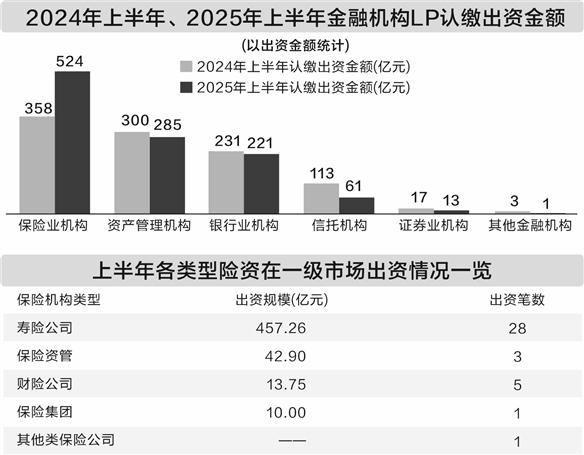
Core Insights - The establishment of Tianjin Jiayu Equity Investment Fund and Suzhou Kuanyu Equity Investment Fund has attracted market attention, with significant participation from insurance capital [2][3] - Insurance capital's investment in the primary market has accelerated, with a 46% year-on-year increase in subscribed capital in the first half of 2025, reaching 52.4 billion yuan [3][4] - The surge in insurance capital investment is driven by policy relaxation and the need for diversified asset allocation due to declining interest rates [5][6] Investment Scale and Trends - Tianjin Jiayu Equity Investment Fund has a total investment of 4.5 billion yuan, with insurance companies contributing approximately 4.497 billion yuan, highlighting their dominant role [3] - Suzhou Kuanyu Equity Investment Fund has a larger scale of about 22.429 billion yuan, with significant contributions from insurance companies [3] - In the first half of 2025, insurance capital's subscribed investment in equity reached 52.4 billion yuan, with life insurance companies accounting for nearly 90% of the total [4] Active Insurance Capital Players - Notable active insurance institutions include Ping An Life, Pacific Life, AIA, Sunshine Life, and others, with Ping An Life leading with an investment of 15 billion yuan across six funds [4] - Insurance capital is expanding its equity asset allocation through various methods, including equity investment plans and long-term equity investments [4] Policy and Market Drivers - The dual drivers of policy relaxation and market demand are facilitating the growth of insurance capital in equity investments [5] - Recent regulatory changes have increased the upper limit for equity asset allocation and simplified standards, allowing for greater flexibility in investments [5] Selection Criteria for General Partners (GPs) - Insurance capital prefers GPs with strong backgrounds, focusing on those with substantial registered capital and asset management [7] - The selection criteria emphasize matching investment stages, management capabilities, and performance metrics [7][8] - GPs with robust resources and proven performance in specific sectors are more likely to receive funding from insurance capital [8][9]
暴雨过后,泡水车流向何处?
Hu Xiu· 2025-09-04 11:09
Core Insights - The article discusses the impact of severe flooding in Shenzhen during late July and early August, which resulted in significant vehicle damage and insurance claims [1][26] - It highlights the challenges faced by car owners in the claims process, particularly regarding water-damaged vehicles and the subsequent handling of these vehicles in the insurance and second-hand markets [2][16] Group 1: Flood Impact and Insurance Claims - Shenzhen experienced two instances of "red rainstorm" warnings, leading to over 40,000 insurance claims related to water-damaged vehicles in Guangdong by early August [1][26] - Car owners, such as He Min and Li Haichi, faced prolonged and stressful negotiations with insurance companies regarding compensation for their flooded vehicles [2][16] - The insurance process for water-damaged vehicles often results in disputes over whether the vehicle is a total loss, with specific thresholds for water levels determining the classification [16][25] Group 2: Vehicle Auction and Market Dynamics - Water-damaged vehicles are typically auctioned off after being declared total losses, with many entering the second-hand market or being dismantled for parts [3][27] - In Guangdong, there are approximately 1,000 water-damaged vehicles awaiting auction, with starting bids generally around 20,000 to 30,000 yuan [29][32] - The resale value of these vehicles is often about 70% of similar models, but many second-hand dealers may not conduct thorough repairs, leading to potential safety hazards for future buyers [32][34] Group 3: Legal and Regulatory Environment - There are currently no strict regulations in China regarding the sale of water-damaged vehicles, creating a gray market for such cars [33] - Legal obligations exist for second-hand dealers to disclose the true condition of vehicles, yet cases of concealed water damage are common, leading to numerous legal disputes [34][36] - Recent court cases illustrate the prevalence of misleading sales practices in the second-hand vehicle market, highlighting the need for better consumer protection [35][36]

国办:引导保险机构开展体育赛事、运动伤害等保险业务
Bei Jing Shang Bao· 2025-09-04 10:29
Core Viewpoint - The State Council of China has issued an opinion aimed at unleashing the potential of sports consumption and further promoting the high-quality development of the sports industry [1] Group 1: Policy Initiatives - The opinion emphasizes enhancing service and guarantee levels in the sports sector [1] - It encourages insurance institutions to develop insurance products related to sports events and sports injuries [1]