美妆

Search documents
雅诗兰黛第四财季销售额超预期,2026财年利润指引低于预期,美股盘前大跌15% | 财报见闻
Hua Er Jie Jian Wen· 2025-08-20 11:38
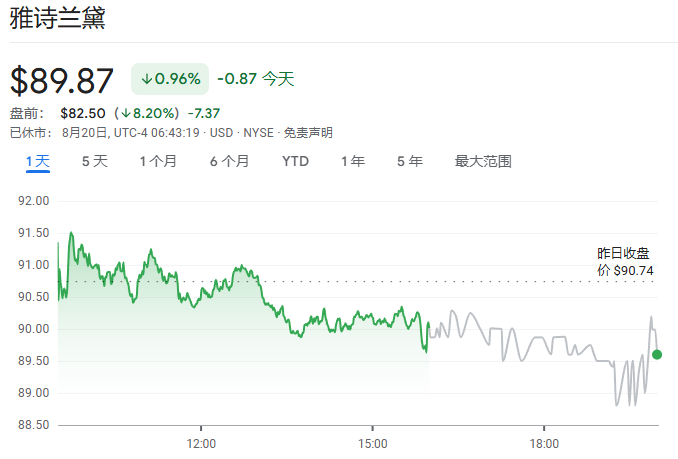
Core Viewpoint - Estée Lauder reported stronger-than-expected quarterly results, but a disappointing full-year guidance led to a nearly 15% drop in stock price during pre-market trading [1] Group 1: Quarterly Performance - For the fourth fiscal quarter ending June 30, net sales reached $3.41 billion, exceeding market expectations of $3.4 billion [1] - Adjusted earnings per share were $0.09, surpassing analyst predictions of $0.073 [1] Group 2: Full-Year Guidance - The company projected adjusted earnings per share for fiscal year 2026 to be between $1.90 and $2.10, below the analyst average estimate of $2.21 [4] - Organic net sales growth for fiscal year 2026 is expected to be between 0% and 3%, slightly above the market expectation of 1.94% [3] Group 3: Challenges and Strategic Changes - The company anticipates a $100 million impact on profitability due to tariff-related headwinds, primarily from comprehensive tariffs imposed by the U.S. government [4] - Estée Lauder is working to reduce reliance on duty-free shops in China and South Korea, which previously contributed up to one-third of revenue [4] - Under new CEO Stéphane de La Faverie, the company is implementing cost-cutting measures and increasing sales efforts on platforms like Amazon and TikTok, moving away from traditional department store reliance [5]


美妆行业周度市场观察-20250820
Ai Rui Zi Xun· 2025-08-20 07:56
Investment Rating - The report does not explicitly provide an investment rating for the beauty industry Core Insights - The children's cosmetics market is experiencing rapid growth, with over 28,000 products expected to be registered in China by 2025, driven by strong consumer demand and an increase in parental acceptance [3] - The luxury beauty segment is facing challenges, with the global luxury market experiencing zero growth for two consecutive years, leading to a significant decline in sales in China [5] - The rise of niche and domestic brands is evident, with Chinese brands occupying 16 out of the top 20 spots on the Douyin beauty list in July [3] - The "blind box" sales model is gaining popularity on Douyin, stimulating consumer spending but raising concerns about product quality and after-sales service [5] - The beauty market is undergoing a brutal reshuffle, with many high-growth startups facing closure due to capital pressures and operational challenges [6] - The trend of "economic upward beauty" is emerging, characterized by bold colors and nostalgic aesthetics, reflecting consumer desires for emotional expression [6] - Brands are increasingly focusing on women's narratives and social responsibility, aligning marketing strategies with evolving gender perceptions [8] Industry Trends - The children's cosmetics market is projected to reach $2.36 billion by 2032, driven by the Alpha generation [3] - The luxury beauty segment is struggling, with a reported $5.7 billion loss attributed to reduced spending by Generation Z [5] - The "blind box" sales model has expanded into various sectors, including beauty, and is driven by Douyin's algorithms and consumer demand for surprise [5] - The average lifespan of brands in the clean beauty segment is only 3.2 years, highlighting the challenges faced by new entrants [6] - The nostalgic "economic upward beauty" trend is gaining traction, with brands leveraging this to market multifunctional and cost-effective products [6] - Women's marketing is shifting towards authentic needs and systematic strategies, with brands integrating gender equality into their social responsibility practices [8] - Light luxury brands are entering the fragrance market as a growth strategy, reflecting a shift from single product sales to lifestyle branding [8] Top Brand News - L'Oréal's performance in China has stabilized after five quarters of decline, but the overall North Asia market saw a 1.1% drop due to weak tourism retail [11] - Jinbo Bio has achieved significant growth in the medical beauty sector, with revenue increasing from 233 million to 1.443 billion yuan from 2021 to 2025 [12] - Pizhuan's new product line focuses on health-oriented whitening, combining traditional herbal culture with modern technology [12]
深圳市宝安区晚柠美妆店(个体工商户)成立 注册资本1万人民币
Sou Hu Cai Jing· 2025-08-20 04:54
天眼查App显示,近日,深圳市宝安区晚柠美妆店(个体工商户)成立,法定代表人为冯涛,注册资本 1万人民币,经营范围为化妆品零售;化妆品批发;个人卫生用品销售;互联网销售(除销售需要许可 的商品);针纺织品销售;美甲服务;工艺美术品及收藏品零售(象牙及其制品除外);日用品销售; 日用化学产品销售;日用百货销售;个人互联网直播服务。(除依法须经批准的项目外,凭营业执照依 法自主开展经营活动)。 ...
中国零售消费行业生成式AI及数据应用研究报告
3 6 Ke· 2025-08-20 01:37
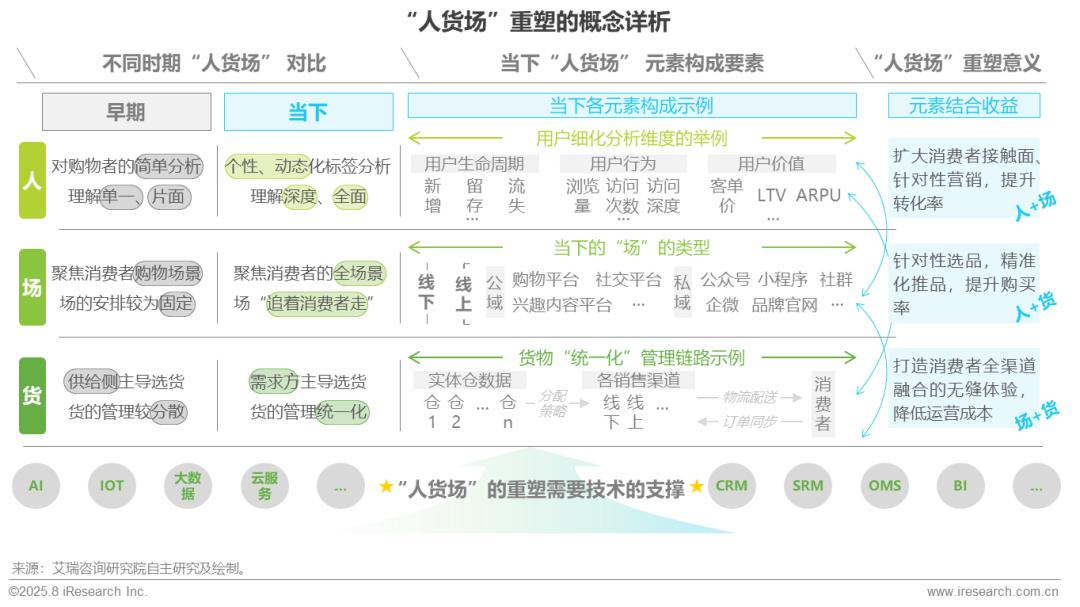
Core Insights - The retail industry is transitioning from rapid growth to stock competition, necessitating a digital transformation of "people, goods, and scenarios" to enhance operational efficiency and consumer engagement [1][2] - The integration of generative AI and data provides a comprehensive solution for retail companies, enabling them to optimize user operations, internal decision-making, and global expansion [1][52] Industry Growth Dynamics and Trends - Retail consumption is shifting from high-speed growth to stock competition, with a focus on digital reconstruction of consumer touchpoints to match supply and demand accurately [2] - Companies must leverage digital technologies to enhance sales conversion rates and inventory turnover while reducing operational costs [2] Demand-Side Transformation - Post-pandemic, consumers are more rational, leading companies to shift focus from traffic-driven strategies to membership economies [4] - Businesses need to create detailed user profiles and utilize digital tools to effectively target high-intent consumers, thereby increasing customer lifetime value [4] Supply-Side Transformation - The retail market is projected to reach approximately 49 trillion yuan in 2024, with online sales channels continuing to grow [7] - Retail companies must establish efficient data processing systems to support digital integration and leverage AI for precise customer acquisition and operational efficiency [7] Sector-Specific Insights: Beauty Industry - Domestic beauty brands have rapidly increased market share from 43.7% in 2022 to 55.7% in 2024, utilizing KOL evaluations and UGC content to establish a marketing loop [10] - Chinese beauty brands are expanding into Southeast Asia, the Middle East, and Europe, enhancing brand presence through local partnerships and offline stores [10] Sector-Specific Insights: Footwear and Apparel Industry - The footwear and apparel market is experiencing intense competition, requiring companies to develop strong product R&D capabilities and brand recognition [13] - Leading firms are focusing on consumer insights to create differentiated products and using content marketing to enhance brand loyalty [13] Sector-Specific Insights: Home Furnishing Industry - The home furnishing market is transitioning to a replacement phase, with companies seeking growth through international expansion [16] - Firms are building omnichannel operations to enhance customer experience and are increasingly focusing on establishing their own brands overseas [16] Generative AI and Data Applications - The synergy between generative AI and data governance is crucial for maximizing AI value, with high-quality data being essential for effective AI implementation [21] - 71% of companies plan to enhance data-driven decision-making, with generative AI primarily applied in marketing and customer service scenarios [25] Cloud Services and AI Integration - Companies are encouraged to choose cloud service providers with comprehensive data and AI capabilities to lower the barriers to generative AI application [28] - Nearly 90% of companies prefer to engage external service providers for AI development, indicating a strong reliance on cloud vendors for diverse model capabilities [30] Marketing and User Journey - Over 90% of retail companies have adopted generative AI in marketing, addressing high costs and fragmented consumer demands [55] - Generative AI significantly reduces content production costs by approximately 30%, enhancing sales conversion rates [58] Internal Decision-Making and Governance - 93% of companies are building knowledge bases across multiple scenarios, with generative AI enhancing data governance and decision-making efficiency [63] - The integration of generative AI allows for real-time data analysis, shifting decision-making from experience-based to data-driven approaches [49] International Market Expansion - 93% of retail companies are pursuing international business, focusing on high-potential markets in Asia-Pacific, Europe, and North America [74] - Generative AI aids in overcoming language and cultural barriers, facilitating localized marketing and efficient customer service [75]
2025年第33周:美妆行业周度市场观察
艾瑞咨询· 2025-08-20 00:05
Group 1: Industry Environment - The children's cosmetics market is rapidly growing, with over 20,000 products expected to be registered by 2025 in China, driven by strong consumer demand and increasing parental acceptance [2] - The luxury goods sector is facing significant challenges, with a global market experiencing zero growth for two consecutive years, leading to a loss of $5.7 billion, particularly in the Chinese market which saw an 18% decline [6] - The beauty market is undergoing a brutal reshuffle, with many high-growth startups closing within four years due to capital pressures and high customer acquisition costs [7][8] Group 2: Market Trends - The beauty and skincare market in July saw a rise of domestic brands, with 16 out of the top 20 on Douyin being local brands, highlighting the success of niche makeup brands [4] - A new addictive sales model combining "blind boxes" and "matching games" is gaining popularity on Douyin, stimulating consumer spending but raising concerns about product quality and after-sales service [5] - The "economic upturn beauty" trend is emerging, characterized by bold makeup styles reminiscent of past economic booms, reflecting a nostalgic consumer sentiment [9] Group 3: Brand Dynamics - L'Oréal is adjusting its strategy in China, focusing on reducing reliance on duty-free sales as the market undergoes structural changes [15][16] - Jinbo Bio is experiencing rapid growth in the medical beauty sector, with revenue projected to rise from 233 million yuan to 1.443 billion yuan from 2021 to 2025, driven by its unique product offerings [17] - Pizhou Pharmaceutical is innovating in the beauty space with its "snow skin factor," promoting a new paradigm of health-oriented whitening products [18] Group 4: Marketing Insights - Brands are increasingly focusing on women's narratives and social issues, with campaigns that resonate with women's self-identity and gender equality [10] - The top Douyin influencers in the beauty sector are showing stable performance, with brands adapting their collaboration strategies based on market positioning [14]

中国零售消费行业生成式AI及数据应用研究报告
艾瑞咨询· 2025-08-20 00:05
Core Viewpoint - The retail industry is transitioning from high-speed growth to stock competition, necessitating the digital transformation of "people, goods, and venues" through the integration of generative AI and data applications to reshape growth trajectories [1][2][42]. Group 1: Industry Transformation - The retail sector is experiencing a shift from a demand-driven economy to a member-based economy, with a focus on user retention and value extraction [4]. - Companies need to leverage digital technologies to enhance consumer insights, expand touchpoints, and optimize inventory turnover rates [2][6]. Group 2: Generative AI and Data Integration - Generative AI's application potential is highly dependent on high-quality data, and effective data governance is crucial for maximizing AI value [19]. - 71% of companies plan to strengthen data-driven decision-making, with generative AI primarily deployed in marketing and customer service scenarios [22]. Group 3: Sector-Specific Insights - In the beauty industry, domestic brands have increased their market share from 43.7% in 2022 to 55.7% in 2024, leveraging KOLs and UGC for marketing [9]. - The footwear and apparel sector faces intense competition, requiring companies to build strong product development capabilities and brand recognition [11]. - The home goods industry is shifting towards overseas expansion, with companies focusing on building their own brands rather than just manufacturing [14]. Group 4: Marketing and Customer Engagement - Over 90% of companies have adopted generative AI in marketing, significantly reducing content production costs by approximately 30% [46][49]. - More than 50% of companies have improved customer service efficiency and quality through generative AI, enhancing the overall customer experience [51]. Group 5: Decision-Making and Governance - 93% of companies are building knowledge bases to support data governance, with generative AI facilitating the transition from experience-driven to data-driven decision-making [54]. - The integration of generative AI and data applications is expected to enhance supply chain efficiency by 10%-30% [60]. Group 6: International Expansion - 93% of retail companies are pursuing overseas business, with Asia-Pacific, Europe, and North America as primary targets [64]. - Generative AI is seen as a key tool for overcoming language and cultural barriers, aiding in localized marketing and customer service [67].

品牌运营:品牌私域运营超实用手边书Pro2.0
Sou Hu Cai Jing· 2025-08-19 23:35
Core Insights - The report emphasizes that brand private domain operations are not just operational tools but represent a new market model focused on achieving user growth, reducing churn, and enhancing conversion rates through continuous optimization across multiple dimensions such as traffic, content, and operations [1][5][6]. Traffic Management - Continuous user acquisition is essential, utilizing methods like sample machines and BA incentives to attract traffic, while also focusing on recruitment details [1][6]. - The report highlights the importance of integrating offline traffic into online communities, particularly in the beauty sector, to enhance user engagement [1][8]. User Engagement - Customizing content based on user needs and designing private domain journeys are crucial for increasing user activity [1][6]. - The concept of "emotional economy" is introduced as a key to high conversion rates, alongside strategies for stimulating repurchase through category cross-selling [1][8]. Operational Strategies - The report discusses the necessity of leveraging emotional economics to improve conversion rates and reduce operational costs through community ecosystems [1][6]. - It suggests that brands should evaluate operational partners based on a private domain user value assessment model and validate content effectiveness through relevant data metrics [1][6]. Data and Technology Utilization - The application of technologies such as RPA, AI, and LCAP is recommended to ensure large-scale community operations, with a focus on defining core metrics and improvement methods [1][6]. - The report also explores multi-party collaboration models and provides case studies from the supermarket and beauty industries, emphasizing the need for customized operations that integrate automation and refined management for sustainable growth [1][5]. Industry Trends - The rise of private domain traffic is seen as a milestone in user-centric marketing and a catalyst for digital transformation in marketing strategies [5][6]. - The report indicates that private domain operations have become standard across various industries, with brands increasingly investing in optimizing these operations and validating their effectiveness through data [6][8].

千亿美妆市场增长密码:超级码云一物一码区块链,从防伪到精准营销全搞定
Sou Hu Cai Jing· 2025-08-19 15:06
Core Insights - The beauty market in the U.S. is projected to reach a scale of 937.4 billion by 2028, but brands face three major challenges: trust issues with high-priced products, channel management problems, and ineffective marketing strategies [1] - Super Code Cloud is addressing these challenges through a combination of anti-counterfeiting, channel control, and precise marketing using blockchain technology [1] Group 1: Trust Issues - Counterfeit products are a significant issue in the beauty industry, undermining consumer trust. Super Code Cloud integrates multiple technologies such as digital anti-counterfeiting, NFC/RFID, and physical/chemical anti-counterfeiting to create a unique "digital ID" for each product, ensuring traceability from production to end-user [3] - The system allows consumers to easily verify product authenticity, transforming the experience from confusion to clarity, thereby rebuilding trust between brands and consumers [3] Group 2: Channel Management - Price discrepancies and unauthorized sales disrupt market order and erode brand profits. Super Code Cloud connects data between brand owners and distributors, enabling real-time inventory management and triggering alerts for unauthorized sales [4] - After implementing this solution, instances of unauthorized sales decreased by an average of 36% [4] Group 3: Marketing Effectiveness - Many beauty brands struggle to retain customers despite attracting traffic. Super Code Cloud simplifies the verification process, allowing consumers to engage in activities and receive rewards while verifying products, which enhances customer retention metrics [5] - The system supports targeted marketing based on consumer profiles, leading to a complete engagement loop that has resulted in a 43% increase in sales for a partnered brand [5] Group 4: Data Utilization - Growth without data is akin to "blind walking." Super Code Cloud collects comprehensive data across the supply chain, providing brands with clear decision-making insights [6] - The system can present metrics such as a 31.63% participation rate in activities, enabling brands to drive growth based on data [6] Group 5: Implementation and Automation - Super Code Cloud's automated production line integrates various technologies to ensure efficient product labeling and tracking, enhancing anti-counterfeiting capabilities and reducing labor costs [7] - The automated system creates a closed-loop supply chain that is traceable from production to sales, laying a solid foundation for brand information upgrades [7] Group 6: Long-term Growth Strategy - By leveraging blockchain technology and a unique product digital ID system, Super Code Cloud addresses critical issues of anti-counterfeiting and unauthorized sales while facilitating data-driven growth for brands [9] - The success of brands like Mao Ge Ping and Ban Mu Hua Tian, along with over 30,000 other brands across various industries, demonstrates the effectiveness of Super Code Cloud's technology in fostering trust and growth [12]
毛戈平20250819
2025-08-19 14:44
Summary of the Conference Call for Mao Geping Brand Industry and Company Overview - The conference call discusses the Mao Geping brand, which operates in the high-end beauty and skincare market in China. The brand has established a strong presence with over 400 counters in more than 120 cities and employs over 2,800 beauty consultants, emphasizing its offline channel advantage [2][4]. Core Insights and Arguments - **Brand Recognition and Positioning**: Mao Geping has built a unique brand identity through its personal makeup IP, which is difficult to replicate. The brand focuses on Oriental aesthetics and high-end positioning, creating a strong brand recognition that can extend into skincare and fragrance categories [2][4]. - **Skincare Product Performance**: The brand's high-end skincare line, particularly the luxury caviar mask, has achieved significant sales, with retail sales exceeding 800 million yuan, accounting for over 55% of its total skincare revenue. This success is attributed to the brand's emphasis on high-end aesthetic values rather than just product efficacy [2][8]. - **Fragrance Market Potential**: The fragrance business is seen as a crucial area for expansion. The "Smell of the East" series, inspired by cultural elements, is positioned at a price point of 680 yuan for 45ml, appealing to both entry-level and high-end consumers. The Chinese fragrance market is projected to exceed 58.8 billion yuan by 2030, and achieving a 3% market share could yield over 600 million yuan in sales for Mao Geping [3][9]. - **Growth Projections**: Mao Geping anticipates a compound annual growth rate (CAGR) of 30% to 35% over the next few years, with profit growth expected to outpace revenue growth. The brand also aims to maintain double-digit growth in cosmetic art training and related sales [4][10]. Additional Important Insights - **Competitive Advantage**: The brand's competitive edge lies in its ability to meet the specific skin characteristics and aesthetic needs of Asian consumers through a comprehensive offline experience and personalized service [4][5]. - **Learning from International Brands**: The brand can draw lessons from successful international cases like Chanel, which has successfully transitioned from makeup to skincare by maintaining a classic and elegant brand image, avoiding the pitfalls of chasing youth-oriented trends [6][7]. - **Market Dynamics**: The call highlights that many international makeup brands have struggled to transition into skincare due to conflicting brand identities focused on youth and trendiness, which do not align with the high-end skincare market's requirements [7]. This summary encapsulates the key points discussed in the conference call regarding the Mao Geping brand's strategy, market potential, and growth outlook in the high-end beauty and skincare industry.

艾瑞咨询:2025年中国零售消费行业生成式AI及数据应用研究报告
Sou Hu Cai Jing· 2025-08-19 14:23
Core Insights - The report highlights the transition of China's retail consumption industry from high-speed growth to stock competition, emphasizing the need for companies to leverage digital technologies to reshape "people, goods, and venues" to enhance competitiveness [1][10][12] - Generative AI and data applications are identified as key growth drivers, with a focus on improving data quality and governance to maximize AI value [1][30][34] Industry Growth Dynamics and Trends - The retail consumption sector is shifting towards a stock competition model, necessitating digital transformation to optimize consumer engagement and operational efficiency [10][12] - The report forecasts that the total retail sales of consumer goods in China will reach approximately 49 trillion yuan in 2024, with online sales channels continuing to gain market share [16][18] Generative AI and Data Application Landscape - Generative AI is primarily being applied in marketing and customer service scenarios, with 71% of companies planning to enhance data-driven decision-making [34][43] - The synergy between generative AI and data governance is crucial for effective implementation, as high-quality data is essential for AI applications [30][34] Key Growth Engines and Application Practices - Major growth engines include refined user operations, intelligent decision-making, and expansion into overseas markets, with AI applications in marketing reducing costs and improving conversion rates [1][19][21] - The report emphasizes the importance of building a robust data processing system to support comprehensive digital integration across retail operations [16][24] Case Studies and Sector-Specific Insights - Domestic beauty brands have rapidly increased their market share from 43.7% in 2022 to 55.7% in 2024, leveraging innovative marketing strategies and expanding into international markets [19][20] - The footwear and apparel sector faces intense competition, prompting companies to focus on product development and brand recognition to maintain market position [21][22] Cloud Infrastructure and AI Integration - Nearly 90% of companies prefer to engage external service providers for AI applications, indicating a trend towards cloud-based solutions that facilitate the integration of data and AI tools [43][44] - The report notes that 94% of retail companies have adopted AI agents, with a preference for customized development to enhance business adaptability [46][49]