智能家电

Search documents
预期突破千亿!蓬江的发展底气藏在哪里?
Nan Fang Du Shi Bao· 2025-12-19 06:13
Core Insights - The core message of the news is the ambitious goal of the Pengjiang District to achieve a GDP of 955.25 billion yuan in 2024 and to surpass the 1 trillion yuan mark in 2025, marking a significant milestone in regional development [1][3]. Economic Development - Pengjiang District has been recognized as a top performer in high-quality development, consistently ranking among the top 100 districts in China [1]. - The district's industrial output value and retail sales have remained at the forefront of the city, showcasing its robust economic foundation [1]. - The transition from 955.25 billion yuan to over 1 trillion yuan is not just a numerical achievement but a testament to the district's commitment to enhancing the real economy and optimizing the business environment [1][3]. Industrial Foundation - The foundation of the "trillion Pengjiang" initiative is deeply rooted in the real economy, with a focus on industrial upgrading as the core engine for achieving this goal [3]. - Pengjiang has cultivated leading enterprises in various sectors, including Hisense and Master Kong, and has established a complete industrial ecosystem that supports its economic ambitions [3][4]. - In 2024, industrial investment in Pengjiang is expected to rise to 48%, an increase of 16 percentage points from the previous year, with 84 projects planned, totaling an investment of 224.64 billion yuan [4]. Infrastructure Development - The district is enhancing its urban infrastructure to support its economic growth, with major transportation projects like the Shenzhen-Zhongshan Corridor and Huangmaohai Cross-Sea Channel improving connectivity [7]. - Internal infrastructure improvements, such as the expansion of transportation networks and the redevelopment of underutilized land, are aimed at increasing the district's capacity to support industrial growth [7][8]. Urban Integration - The integration of industry and urban development is creating a favorable living environment, with projects enhancing public amenities and green spaces [8]. - The development of cultural and recreational facilities is designed to attract talent and improve the quality of life for residents, fostering a cycle of economic and urban growth [8]. Business Environment - The optimization of the business environment is a key competitive advantage for Pengjiang, with significant reforms aimed at improving administrative efficiency and service quality [10]. - The district has implemented measures to accelerate the approval process for business-related services, achieving a 79.6% speed increase for 97 high-frequency business matters [10][11]. - Innovative financing solutions, such as the "use first, pay later" model for patent commercialization, are being explored to reduce costs and risks for enterprises [11]. Future Outlook - As the district approaches its goal of a trillion yuan GDP, the focus will shift to converting this scale into higher quality development, which will be crucial for the long-term value of "trillion Pengjiang" [13].

山东:支持行业企业以电视机、冰箱、空调等优势家电为主导积极布局家庭服务机器人等具身智能产品
Ge Long Hui· 2025-12-19 02:53
Core Viewpoint - The recently released "Shandong Province Artificial Intelligence Terminal Innovation Development Action Plan" emphasizes the development of smart home appliances and the integration of advanced technologies in the industry [1] Group 1: Smart Home Appliances - The plan supports industry enterprises to focus on leading home appliances such as televisions, refrigerators, and air conditioners, while actively developing embodied intelligent products like home service robots [1] - It aims to enhance core functionalities such as complex environmental perception, dynamic scene adaptation, intelligent decision-making control, and voice emotional interaction through deep integration with large model technology [1] Group 2: Industry Transformation - The initiative seeks to accelerate the transition of products from standalone functionalities to internet-connected devices and from single scenarios to a comprehensive ecological model [1] - It aims to strengthen the supply capacity of diversified whole-home smart solutions, using large home appliances as foundational support and emerging terminals as smart hubs [1]

山东:支持行业企业以电视机、冰箱、空调等优势家电为主导 积极布局家庭服务机器人等具身智能产品
Zheng Quan Shi Bao Wang· 2025-12-19 02:48
Core Viewpoint - The recently released "Shandong Province Artificial Intelligence Terminal Innovation Development Action Plan" emphasizes the development of smart home appliances and the integration of advanced technologies to enhance product capabilities [1] Group 1: Smart Home Appliances - The plan supports industry enterprises to focus on leading home appliances such as televisions, refrigerators, and air conditioners, while actively developing embodied intelligent products like home service robots [1] - It aims to deeply integrate large model technology to improve core functions such as complex environmental perception, dynamic scene adaptation, intelligent decision-making control, and voice emotional interaction [1] Group 2: Product Development and Ecosystem - The initiative seeks to accelerate the transition of products from functional single items to internet-connected devices and from single scenarios to a comprehensive ecological model [1] - It aims to enhance the supply capacity of diversified whole-home intelligent solutions, using large home appliances as foundational support and emerging terminals as smart hubs [1]
数码家电行业周度市场观察-20251217
Ai Rui Zi Xun· 2025-12-17 08:38
Investment Rating - The report does not explicitly provide an investment rating for the industry Core Insights - The digital home appliance industry is experiencing a transformation driven by AI technology, with significant developments in various sectors including education, retail, and robotics [1][2][3][4][6][9][10] Industry Trends - The education sector is leveraging generative AI to enhance personalized services, with companies like Fenbi exploring AI-driven products despite facing competition and the need for continuous investment [1] - New retail is shifting from supply-driven to demand-driven management through AI, addressing issues like inventory backlog and customer loyalty [2] - The "human-vehicle-home" ecosystem is evolving with 5G, AI, and IoT technologies, enhancing user experience and creating new business models [3] - AI video content is becoming longer and more sophisticated, democratizing the creative process in the film industry [4] - The AI terminal ecosystem is developing rapidly, with significant growth in AI smartphones and smart wearables, driven by advancements in domestic computing chips [4] - The humanoid robot market is projected to grow significantly, driven by labor shortages and technological advancements, although challenges remain [4][6] - AI entrepreneurship is transitioning from model competition to scenario-based applications, as showcased at the World Internet Conference [6] - The home appliance market is shifting towards quality and innovation, with air conditioners performing well despite price wars, while the black appliance sector faces challenges [9] - The coffee machine market is experiencing growth due to consumer demand for high-quality coffee experiences, reflecting a shift towards premium products [9] - The "Double 11" shopping festival highlighted the significant role of AI in driving sales and transforming consumer decision-making in the home appliance sector [10] Top Brand News - Soul App is preparing for an IPO, focusing on AI-driven emotional value services, with a strong user base among Generation Z [13] - Alibaba is launching new AI products aimed at the consumer market, seeking to enhance its ecosystem and address internal strategic challenges [14] - Yushun Technology is on the verge of going public, having established itself as a leader in the humanoid robot sector [14] - Rokid is gaining traction in the smart glasses market, collaborating with various partners to enhance product functionality and user experience [16] - Kuaishou reported strong revenue growth, attributing part of its success to AI technology that enhances online marketing [17] - Black Sesame Intelligence is addressing challenges in robot mass production with a new intelligent computing platform [18]
新主大有来头!002969,复牌“一字”涨停
Shang Hai Zheng Quan Bao· 2025-12-17 04:59
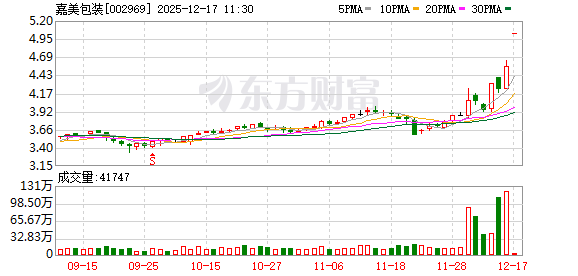
Core Viewpoint - After the collective reduction of shares by the three major shareholders, Jia Mei Packaging (002969) plans to change its control, with the new owner being Yu Hao, the founder of the well-known technology brand Chasing Technology [2][4]. Group 1: Shareholder Changes - Jia Mei Packaging announced a series of announcements on December 16, indicating a change in control through share transfer and partial tender offer [2]. - The controlling shareholder will change from China Food Packaging Co., Ltd. (referred to as "Zhongbao Hong Kong") to Suzhou Zhuyue Hongzhi Technology Development Partnership (Limited Partnership) (referred to as "Zhuyue Hongzhi") [2][7]. - The actual controller will change from Chen Min and Li Cuiling to Yu Hao [2]. Group 2: Share Price Movement - Following the announcements of share reductions by the three major shareholders on November 18, the company's stock price rose from 3.65 yuan/share to 4.56 yuan/share before the suspension on December 9, marking a 25% increase [4][19]. - On December 17, Jia Mei Packaging resumed trading with a "limit-up" [4]. Group 3: Transaction Details - The share transfer involves Zhongbao Hong Kong transferring 279 million shares, representing 29.9% of the total share capital, at a price of 4.45 yuan/share, totaling 1.243 billion yuan [7]. - Zhuyue Hongzhi plans to further acquire 233 million shares, accounting for 25% of the total share capital, at the same price of 4.45 yuan/share [7][10]. Group 4: Financial Commitments - Zhongbao Hong Kong and Chen Min have committed to ensuring that Jia Mei Packaging's net profit will not be less than 120 million yuan annually from 2026 to 2030; otherwise, they will provide cash compensation [11]. Group 5: New Owner Background - Yu Hao, the new owner, is a notable figure with a background in technology, having founded Chasing Technology and developed advanced products in the smart home sector [12][15]. - Chasing Technology has achieved a valuation of approximately 20.5 billion yuan and has shown significant growth in revenue, with a compound annual growth rate of 100% over the past six years [15]. Group 6: Industry Position - Jia Mei Packaging is one of the largest manufacturers of metal beverage cans in China, holding a significant market share in the three-piece can and related printing iron business [18]. - The company has faced challenges in recent years, with revenue growth averaging only 22% from 2019 to 2024, and a decline in revenue and net profit in the first three quarters of 2025 [18][19].

“头雁”领航 “群雁”齐飞
Zhong Guo Zhi Liang Xin Wen Wang· 2025-12-16 06:47
Core Viewpoint - Suzhou is actively promoting the integration of quality enhancement for enterprises, supply chains, and counties, aligning with the national goal of building a strong manufacturing and quality nation [1] Group 1: Quality Enhancement in Enterprises - Jiangsu Hengtong Optic-Electric Co., Ltd. won the fifth China Quality Award, showcasing its "Four Full and Two Aspects" quality management model, which integrates product technology innovation and design to ensure high reliability [2] - Suzhou Samsung Electronics received a nomination for the China Quality Award, focusing on advanced technology and enhancing local supply chain quality through its "3S Digital Quality Management" model, which improves product quality and customer satisfaction [3] - The local market supervision department is guiding 2,064 key enterprises to enhance quality by adopting advanced management models, aiming for a transition from quality control to quality-driven enterprises by 2025 [3] Group 2: Quality Chain Empowerment - The market supervision department is focusing on over 30 key industrial chains within the "1030" industrial system to promote quality enhancement actions, creating a quality innovation joint body to facilitate cross-sector collaboration [4] - In 2023, 18 new quality innovation joint bodies were established, involving 45 chain-leading enterprises and 1,064 chain enterprises to address quality issues and implement key technical projects [5] - Shagang Group, as a chain leader, achieved a tenfold increase in welding efficiency and reduced defect rates in shipbuilding through collaboration with downstream enterprises and research institutions [5] Group 3: Comprehensive Quality Improvement - Suzhou is advancing the construction of quality-driven cities and counties, focusing on institutional design, foundational support, and brand empowerment to enhance overall regional quality development [6] - Zhangjiagang City has been recognized as a national quality strong county pilot, implementing innovative policies to promote quality governance and establishing quality innovation joint bodies to enhance industrial collaboration [6] - Kunshan City has maintained its position as a top county for 21 consecutive years, supported by strong quality initiatives from leading enterprises and collaborative efforts in various quality innovation sectors [7]

快讯|海信(长沙)家电产业园在宁乡经开区投产,项目总投资100亿元
Chang Sha Wan Bao· 2025-12-16 04:40
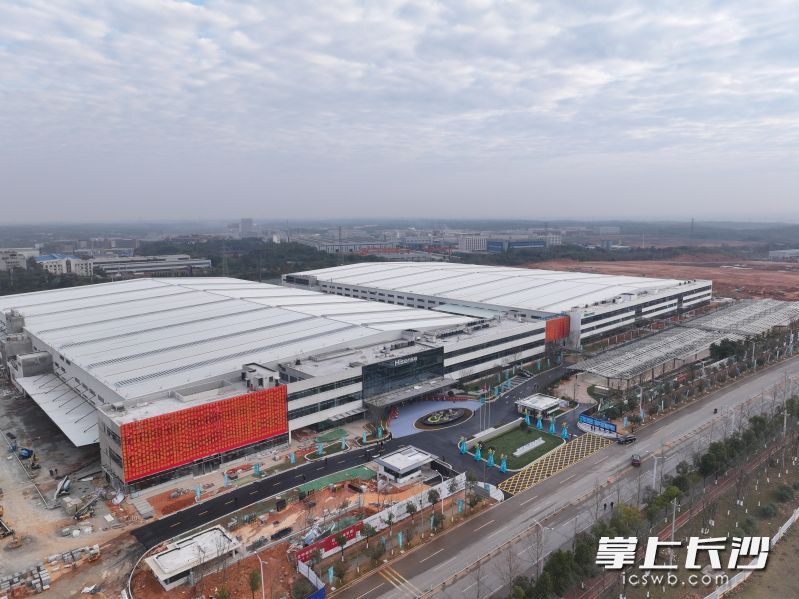
长沙晚报掌上长沙12月16日讯(全媒体记者 张禹)12月16日,位于宁乡经开区的海信(长沙)家电产业园正式投 产。 记者了解到,作为海信集团在中部地区布局的战略项目,海信长沙综合生产基地项目总投资100亿元,计划打造 全球家电行业智能制造标杆工厂。项目分两期建设,此次投产的一期项目投资50亿元,打造商用空调智能制造基 地,主要生产水机、多联机等产品。 2024年3月,海信长沙综合生产基地项目作为湖南省重大项目集中开工主会场,省市主要领导来到现场宣布开 工。一年多时间,项目从规划到落地,从施工图到实物量,充分彰显了"宁乡速度"与"海信力量"的双向奔赴。 近年来,宁乡市始终坚持"工业强市、幸福宁乡"发展定位和"建设省会副中心、挺进全国前十强"发展目标不动 摇,全力以赴推进先进制造业发展,培育新质生产力。宁乡经开区在"2025中国先进制造业百强园区"排名第60 位,特别是智能家电产业在海信、格力两大龙头的引领下,已形成上下游配套、前后端协同的产业生态,宁乡智 能家电产业入选湖南省级中小企业产业集群,宁乡经开区也获评湖南唯一的家电特色产业园。 ...

重估东南亚市场:品牌出海的“第一关”,没有简单模式
创业邦· 2025-12-16 03:43
Core Viewpoint - Southeast Asia is viewed as a primary market for Chinese brands seeking international expansion, but the reality is more complex than it appears, with significant challenges that require a deep understanding of local markets and consumer behavior [5][8][9]. Market Characteristics - The Southeast Asian market is characterized by its diversity in religion, ethnicity, and language, leading to fragmented channels and varying consumer purchasing power [8][9]. - There is no unified market or "one-size-fits-all" approach; brands must adapt to local conditions and consumer preferences [8][9]. Consumer Behavior - Traditional shopping habits remain strong, with physical retail still holding significant sway over online shopping, particularly in Malaysia and Singapore [11]. - The convenience of shopping malls, which are prevalent in urban areas, often rivals online shopping experiences due to underdeveloped electronic payment systems [11]. Brand Presence - Successful Chinese brands in Southeast Asia are predominantly found in the food and beverage sector, with notable examples including Haidilao and various tea brands [12][15]. - Non-food brands are also expanding, with significant activity in the toy, apparel, and electronics sectors, showcasing a growing presence in physical retail spaces [15][17]. Challenges Faced by Brands - Despite a strong presence, many Chinese brands struggle with visibility and profitability, often using stores more as brand showcases than for actual sales [19][20]. - The majority of Chinese brands occupy less favorable retail locations, often in higher floors of shopping malls, limiting their exposure to potential customers [20][21]. Market Dynamics - The rapid turnover of brands in Southeast Asia resembles a "fast-growing rainforest," where many brands can quickly rise to prominence but also face swift declines [23][24]. - The high turnover rate is exacerbated by a lack of long-term strategic planning among many brands, leading to unsustainable growth patterns [24][26]. Competitive Landscape - Korean and Japanese brands dominate the market, often employing a more cohesive and strategic approach to brand building compared to their Chinese counterparts [27][28]. - Chinese brands frequently rely on low pricing strategies, which can lead to intense competition and diminished profitability [28]. Brand Recognition - Many Chinese brands struggle with brand identity and recognition in Southeast Asia, often failing to leverage their Chinese heritage effectively [30][31]. - Successful brands, like Skintific, have managed to establish themselves without overtly emphasizing their Chinese origins, focusing instead on local market integration [30][31]. Marketing Strategies - Innovative marketing strategies, such as "store broadcasting" and enhanced offline distribution channels, are emerging as key tactics for brands looking to establish a foothold in the market [33][36]. - The integration of online and offline sales strategies is crucial for maximizing brand exposure and consumer engagement [35][36]. Distribution Challenges - Entering retail channels in Southeast Asia can be challenging due to the closed nature of many distribution networks, particularly in larger retail chains [37][38]. - However, the relatively low complexity of establishing physical retail locations in Southeast Asia presents opportunities for brands willing to invest in local market strategies [38].

海尔集团与歌尔集团达成战略合作
Bei Jing Shang Bao· 2025-12-14 11:31
Core Viewpoint - Haier Group has officially signed a strategic cooperation agreement with Goer Group, focusing on deep collaboration in smart home appliances, industrial internet, new energy, and artificial intelligence fields [1] Group 1 - The partnership aims to leverage both companies' strengths in technology and innovation to enhance product offerings and market competitiveness [1] - The collaboration is expected to drive advancements in smart home solutions and industrial applications, aligning with current market trends towards digitalization and sustainability [1]


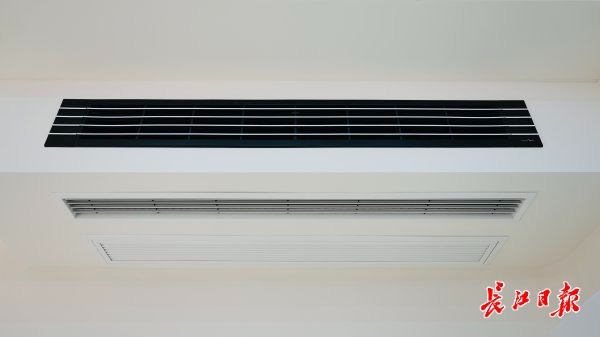
小米武汉首台自研智能空调下线
Chang Jiang Ri Bao· 2025-12-11 09:33
Core Insights - Xiaomi has launched its first self-produced central air conditioner in Wuhan, marking a significant step in its "smart home ecosystem" strategy in Central China [1] - The upgraded version of the previously released central air conditioner, the Mi Home Central Air Conditioner Pro, is designed for larger spaces and enhanced smart features [2] - The new air conditioner features a "dual airflow" mode to address temperature differences in winter, maintaining a temperature difference of less than 0.8°C between the head and feet [2] Product Features - The air conditioner can be controlled via voice commands and can recognize "unmanned status" to switch to energy-saving mode [3] - It operates effectively in extreme temperatures, maintaining cooling performance at 50°C and heating performance at -7°C [3] - Xiaomi has introduced a "customized purchase" option for consumers to receive tailored solutions based on room size [3] New Product Launches - Alongside the air conditioner, Xiaomi has launched four additional smart home products, including a ceiling light designed for eye protection, a smart home screen that connects over 6,000 devices, and a refrigerator with advanced preservation features [4] - The new washing machine offers a large capacity and smart features for family needs [4] Strategic Focus - Xiaomi is establishing Wuhan as a core hub for its smart home appliance industry, aiming to contribute to the region's economic development through innovation [4]