
铁矿石开采

Search documents
必和必拓只是开始,最新迹象表明,中国要将美元的根基彻底拔起
Sou Hu Cai Jing· 2025-10-27 02:12
Core Insights - Kenya has converted its large-scale railway loan from China from USD to RMB, saving approximately $215 million in annual interest payments [3] - This shift indicates a significant adjustment in currency choice for borrowing countries, moving away from USD [3] - China's willingness to accept RMB for debt reflects its evolving role in international financing, potentially undermining the USD's dominance as the primary global financing currency [3] Group 1: Economic Context - The ongoing increase in US interest rates has raised the cost of USD-denominated debt, creating repayment challenges for many developing countries [5] - The option of using RMB for debt repayment is becoming increasingly viable for these countries [5] - China has proposed a "resource repayment in RMB" model, allowing borrowing countries to use their exported commodities to repay RMB-denominated debts, enhancing the link between commodities and settlement currencies [5] Group 2: Market Dynamics - BHP, a global mining giant, has agreed to settle approximately 30% of its iron ore trade with China in RMB, expected to start in Q4 2025 [7] - This shift signifies a critical change in the power dynamics of settlement currencies, as it indicates China's negotiating power as a major buyer [7] - The move towards RMB settlement in resource transactions suggests a broader trend of "de-dollarization" and diversification of settlement currencies [7] Group 3: Geopolitical Implications - The current global trade and geopolitical landscape shows the US attempting to counter China's influence, while China is actively promoting RMB in debt and trade settlements [9] - As more countries and resource transactions move away from USD, the dollar's central role in global trade and finance may be weakened [9] - This situation reflects a deeper "institutional competition" rather than just economic rivalry, with China building a supply chain less reliant on the USD [9] Group 4: Future Outlook - The transition away from a USD-centric system is gradual, as the dollar has a well-established global presence [11] - However, the trend indicates that for countries facing high USD debt pressures, RMB loans and debt denominated in RMB offer tangible relief [11] - The evolving landscape of multi-currency transactions and new links between resources and currencies suggests a shift in future international trade dynamics [11]


西芒杜时刻!首批200万吨高品位矿石已经发出,全面过剩将到来
Sou Hu Cai Jing· 2025-10-26 05:52
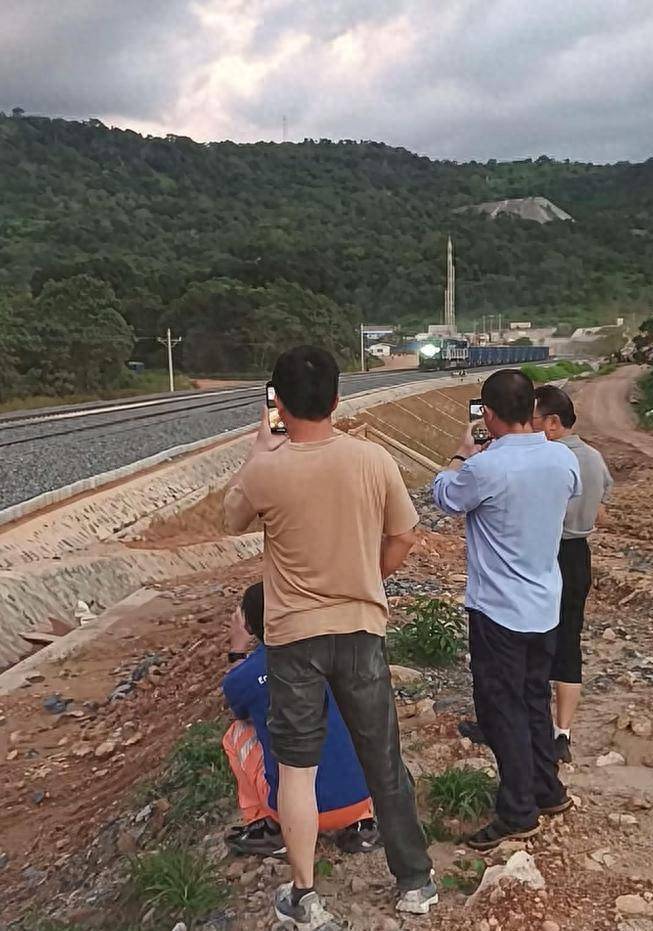
Core Viewpoint - The Simfer mine in the Simandou project has confirmed a reserve of 1.5 million tons of iron ore, with the first batch of ore set to be loaded for rail transport starting in October 2025 [1][3]. Group 1: Project Overview - The total stockpile on-site is approximately 2 million tons, with plans to complete the first shipment by mid-November [3]. - The Simandou iron ore project is located in southeastern Guinea, covering an area of 738 square kilometers, divided into northern and southern sections [3]. - The proven resource amount is about 2.4 billion tons, with an estimated total resource of 5 billion tons and an average iron grade of 66-67%, making it a rare high-quality open-pit hematite mine globally [3]. Group 2: Historical Context - The project has faced nearly 30 years of development challenges, with initial discovery in 1997 and subsequent delays due to infrastructure investment needs and political instability in Guinea [5]. - In 2008, the Guinean government revoked some mining rights, which were transferred to BSG Resources, but the partnership was dissolved in 2014 due to bribery allegations [5]. - The project gained momentum in 2019 when the Winning Consortium acquired the northern section mining rights for $14 billion [5]. Group 3: Infrastructure Development - Infrastructure is a critical breakthrough for the project, with a joint venture established in July 2022 to build a 600-kilometer heavy-haul railway and the Maribaya deep-water port [7]. - The railway, designed with a capacity of 120 million tons per year, includes 205 bridges and 4 tunnels, with construction utilizing Chinese technical standards [7]. - Significant progress was made in 2025, including the completion of T-beam installation and the first heavy-haul train transporting ore from the mine to the port [7]. Group 4: Ownership Structure - The ownership structure is complex, with the Guinean government holding a 15% stake in all blocks [9]. - The Winning Consortium holds 85% of the northern block, while Simfer, which is responsible for the southern block, has Rio Tinto holding 53% and Chalco holding 47% [9]. Group 5: Market Impact - The project is expected to have a direct impact on the global market, with an anticipated annual production of 120 million tons by 2028, potentially increasing seaborne iron ore supply by 8% [9]. - The CFO of Rio Tinto indicated that this increase in supply could force high-cost suppliers out of the market [11]. Group 6: Economic Context - The Chinese steel industry is facing profit pressures and a downturn in the real estate market, with crude steel production expected to decline by 4% from its peak in 2020 [12]. - The expected landed price of Simandou ore is $70-80 per ton, which is 15-20% lower than Australian ore prices, making it attractive for Chinese steel mills [12]. - The project is also facilitating the use of RMB for transactions, with significant agreements being made for RMB settlements in mineral resource trading [12]. Group 7: Investment and Employment - The total investment required for the Simfer project is approximately $11.6 billion, with Rio Tinto responsible for $6.2 billion [14]. - The project has created jobs locally, benefiting 12 provinces along the railway with new economic opportunities [13]. - The development model of "resource for infrastructure" allows for mutual benefits, with China gaining resources and Guinea receiving fiscal revenue and employment opportunities [16].

铁货(01029)拟折让约16.39%按“2供1”基准发行供股 筹集最多约3.26亿港元
智通财经网· 2025-10-24 14:27
Core Viewpoint - The company proposes a non-underwritten rights issue based on a "2 for 1" basis to raise up to approximately HKD 326 million, with a subscription price of HKD 0.51 per share, representing a discount of about 16.39% from the last trading price of HKD 0.610 per share [1] Financial Summary - The maximum number of shares to be issued is approximately 639 million [1] - The estimated net proceeds from the rights issue are approximately HKD 324 million [1] - Allocation of proceeds: 68% for full repayment of loans payable to MIC, 22% for K&S mining operations, and 10% for general working capital [1]
新矿资源(01231):主要供应商于KOOLAN作业区发生落石事故
智通财经网· 2025-10-24 14:20
Core Viewpoint - The significant rockfall incident at Koolan Island has led to the suspension of mining activities, impacting the iron ore supply to the company, which relies on Koolan as a major supplier [1][2]. Group 1: Incident Details - On October 16, 2025, a major rockfall occurred in the main pit area of Koolan Island, affecting operations [1]. - Koolan is a key supplier of iron ore, bound by a long-term supply agreement to provide 80% of its available total production to the company until the mine permanently ceases operations [1]. Group 2: Operational Impact - Due to safety concerns regarding the stability of the affected area, MGI has deemed it unfeasible to resume mining operations at Koolan [2]. - Mining activities at Koolan have been suspended, although processing of available ore stockpiles will continue to meet scheduled shipments [2]. - The company has notified the group of delays in shipments originally scheduled for the fourth quarter of 2025 [2]. Group 3: Future Considerations - The remaining mining life of the Koolan operation was limited, with plans to conclude by September 2026 prior to the incident [2]. - The company is currently in discussions with Koolan regarding iron ore supply and assessing the overall impact of the incident on its business [2].

新矿资源:主要供应商于KOOLAN作业区发生落石事故
Zhi Tong Cai Jing· 2025-10-24 14:18
Core Viewpoint - Mount Gibson Iron Limited (MGI) announced a significant rockfall incident at its Koolan Island iron ore mine, leading to the suspension of mining activities in the affected area due to safety concerns and limited remaining mining life [1][2] Group 1: Incident Details - The rockfall occurred on October 16, 2025, in the main pit area of the Koolan Island operation [1] - Koolan is a major supplier of iron ore, bound by a long-term supply agreement with the group, which requires it to supply 80% of its available total production annually until the mine permanently ceases operations [1] Group 2: Operational Impact - MGI has deemed it unfeasible to remediate the affected area and resume mining operations due to the limited remaining mining life, which was originally set to conclude around September 2026 [2] - Mining activities at the Koolan operation have been suspended, although processing of available ore stockpiles will continue to meet upcoming shipment commitments [2] - The incident has led to delays in shipments originally scheduled for the fourth quarter of 2025, but all major business operations of the group remain normal [2] - The group is currently in discussions with Koolan regarding iron ore supply and assessing the overall impact of the incident on its business [2]
电炉炼钢立奇功,BHP 弃美元选人民币,中国憋屈20年终翻身
Sou Hu Cai Jing· 2025-10-24 12:42
Core Insights - In 2025, China achieved a significant milestone in the iron ore sector with the first shipment of iron ore from the Simandou mine in Guinea to the Atlantic port via a railway constructed by China, marking a culmination of nearly two decades of investment [2] - BHP announced that 30% of its iron ore transactions with China will be settled in RMB, indicating a substantial advancement for the RMB in international commodity trading [2] Group 1: Historical Context and Market Dynamics - China has been the world's largest iron ore importer, heavily reliant on Australian suppliers, which has led to significant profit margins for companies like BHP, with prices soaring from around $100 to over $200 per ton in recent years [4] - The pricing mechanism, influenced by the Platts index, has historically favored Australian miners, leaving Chinese steel companies at a disadvantage [6] Group 2: Strategic Developments - In 2022, China established a dedicated mineral resources group to consolidate procurement needs of domestic steel companies, which was seen as a strategic move in the iron ore trading landscape [8] - Following negotiations with BHP, China proposed a significant reduction in the spot price for iron ore, leading to a temporary halt in purchases of BHP's iron ore priced in USD, which pressured BHP to accept RMB settlements [8][10] Group 3: Infrastructure and Resource Control - The Simandou mine is noted for its high-quality iron ore and is fully developed by Chinese enterprises, providing China with complete control over the mining, railway, and port infrastructure [12] - The expected annual output of 120 to 150 million tons from Simandou could match the total volume previously supplied by BHP, significantly altering the supply dynamics [13] Group 4: Financial and Economic Implications - BHP's acceptance of RMB for transactions is a critical step in reducing reliance on USD, with the global iron ore trade valued at over $1 trillion annually [17] - The establishment of the Cross-border Interbank Payment System (CIPS) has facilitated RMB transactions, covering 185 countries and increasing transaction volumes by 42% in early 2025 [17] Group 5: Military and Geopolitical Context - China's military maneuvers, including naval exercises near Australia, have been interpreted as a show of strength that complements its economic strategies in iron ore negotiations [19][21] - The combination of economic leverage, alternative resource supply, and military deterrence has positioned China to assert greater influence in global commodity markets [21] Group 6: Future Outlook - The developments in the iron ore sector reflect China's transition from being a price taker to a price maker in global markets, with the potential for a RMB-centered global resource trade system emerging [23] - The ongoing integration of electric arc furnace technology and increased scrap steel recycling is expected to further diminish dependence on imported iron ore, challenging Australia's market dominance [15]


铁矿石专题报告:2025年三季度全球四大矿山产销梳理-20251024
Yin He Qi Huo· 2025-10-24 07:08
Industry Investment Rating - No relevant content found Core Viewpoints - No relevant content found Summary by Directory Second Part: Q2 Global Iron Ore Production and Sales Combing - The report presents multiple graphs related to the production and sales of four major global mining companies including VALE, Rio Tinto, BHP, and FMG [5][16][27][31] - For VALE, there are graphs showing production and sales statistics, sales by variety, production and sales of the S11D mining area, and production share by region [6][12] - For Rio Tinto, graphs display overall production and sales, production and sales of PB powder, and production and sales shares by variety [16][21] - For BHP, there are graphs about production and sales and production share by mining area [27] - For FMG, graphs show production and sales and the production of the Iron Bridge project [31]

市场情绪偏暖,钢矿震荡企稳:钢材&铁矿石日报-20251023
Bao Cheng Qi Huo· 2025-10-23 12:05
Report Industry Investment Rating No relevant content provided. Core Viewpoints - The main contract price of rebar fluctuated higher, with a daily increase of 0.43%, volume increased and positions decreased. The demand for rebar has a seasonal rebound, while the supply also increases. Under the situation of both supply and demand increasing, the improvement of the fundamentals is limited, the pressure of inventory reduction remains, and steel prices are still prone to pressure. The relative positive factor is cost support. It is expected that the trend will continue the low - level oscillation pattern, and attention should be paid to the demand performance [4][39]. - The main contract price of hot - rolled coil fluctuated higher, with a daily increase of 0.65%, volume increased and positions were stable. Currently, the demand for hot - rolled coil is performing well, which improves the supply - demand pattern. However, the supply pressure remains, and there are concerns about demand. The fundamentals are unlikely to improve substantially, and the price of hot - rolled coil is under continuous pressure. The relative positive factor is cost support. Subsequently, the trend will continue the pattern of finding the bottom through oscillation, and attention should be paid to the demand performance [4][39]. - The main contract price of iron ore fluctuated, with a daily increase of 0.39%, volume and positions expanded. At present, the supply of iron ore is at a high level, and industrial concerns remain. The demand for ore is weakening, the fundamentals of the ore market are weakening, and the over - valued ore price continues to be under pressure. However, because the rigid demand is still at a high level, there is resistance to the downward movement. It is expected that the ore price will continue the downward oscillation pattern, and attention should be paid to the production situation of steel mills [4][40]. Summary by Directory Industry Dynamics - China and the US will hold economic and trade consultations in Malaysia from October 24th to 27th [6]. - In September, the total social electricity consumption was 888.6 billion kWh, a year - on - year increase of 4.5%. From January to September, the cumulative total social electricity consumption was 7,767.5 billion kWh, a year - on - year increase of 4.6% [7]. - In September 2025, China's rebar production was 14.75 million tons, a year - on - year decrease of 2.9%; from January to September, the cumulative production was 143.387 million tons, a year - on - year decrease of 0.1% [8]. Spot Market - The table shows the spot quotes of black metals, including rebar, hot - rolled coil, Tangshan billet, Zhangjiagang heavy scrap, and the price differences of main varieties, as well as the prices of 61.5% PB powder, Tangshan iron concentrate powder, freight rates, SGX swaps, and the Platts Index [9]. Futures Market - The table presents the main contract futures prices, including the closing price, change rate, highest price, lowest price, trading volume, volume difference, open interest, and position difference of rebar, hot - rolled coil, and iron ore [12]. Related Charts - The report includes charts on steel inventory (rebar and hot - rolled coil inventory), iron ore inventory (45 - port iron ore inventory, 247 steel mills' iron ore inventory), and steel mill production (247 sample steel mills' blast furnace operating rate, capacity utilization rate, and the proportion of profitable steel mills) [13][18][28]. Market Outlook - For rebar, both supply and demand have increased. The weekly output of rebar increased by 59,100 tons, and the inventory is relatively high. The demand has a seasonal rebound but is still at a low level in the same period in recent years. The fundamentals improvement is limited, and steel prices are still under pressure. It is expected to continue the low - level oscillation pattern [39]. - For hot - rolled coil, the supply - demand pattern has improved, but the supply pressure remains, and there are concerns about demand. The price is under continuous pressure. It is expected to continue the pattern of finding the bottom through oscillation [39]. - For iron ore, the supply - demand pattern has weakened. The terminal consumption of ore has declined from a high level, and the supply pressure has increased. The high - valued ore price continues to be under pressure. It is expected to continue the downward oscillation pattern [40].
宝地矿业:目前暂不涉及稀土
Zheng Quan Ri Bao Wang· 2025-10-23 09:45
Group 1 - The company Baodi Mining (601121) primarily engages in the mining and processing of iron ore [1] - Currently, the company does not involve itself in rare earth elements [1]

铁矿石:供强需弱,库存增价格短期看750 - 800
Sou Hu Cai Jing· 2025-10-23 02:56
Core Insights - The iron ore market is currently facing a situation of strong supply and weak demand, with short-term trends dependent on policy stimuli and production cuts from steel mills [1] Supply Side - Australia shipped 14.149 million tons of iron ore to China this week, a decrease of 454,000 tons week-on-week - Brazil's shipments to China were 7.269 million tons, down by 220,000 tons week-on-week - Overall shipment volumes have slightly declined [1] Demand Side - The capacity utilization rate of 163 steel mills is at 90.33%, a decrease of 0.24% week-on-week - Daily pig iron production is 2.4095 million tons, down by 5,900 tons week-on-week - Demand remains relatively stable [1] Inventory Levels - Imported iron ore port inventory stands at 135.6 million tons, an increase of 2.5077 million tons week-on-week - The average daily throughput at 45 ports is 3.27 million tons, a decrease of 112,800 tons week-on-week - Total inventory at steel mills is 89.827 million tons, down by 634,600 tons week-on-week, indicating a slight overall increase in inventory [1] Market Dynamics - Iron ore futures have been on a downward trend, primarily due to the shift in fundamentals towards strong supply and weak demand - Global major mining shipments are at seasonal highs, leading to ample port arrivals and inventory accumulation, which exerts price pressure [1] Steel Industry Challenges - The downstream steel industry is facing difficulties, with steel mill profits being squeezed and operating near breakeven - Some steel mills are planning maintenance and production cuts, leading to a decline in daily consumption and cautious procurement, which weakens demand support [1] Macro Environment - The overall market sentiment is bearish, influenced by changes in China-U.S. trade relations, raising concerns about global growth and commodity demand, which casts a shadow over iron ore prices [1] Short-term Outlook - The iron ore market is under pressure from three main factors: ample supply, weakening demand, and insufficient macro confidence - Short-term trends will depend on stimulus policies and production cuts from steel mills - Iron ore main contract 01 has recently seen a slight decline, with a short-term reference range of 750 to 800, indicating high volatility and the need for risk management [1]