风险投资

Search documents
美国红杉资本“换帅内幕”曝光
3 6 Ke· 2025-11-10 03:37
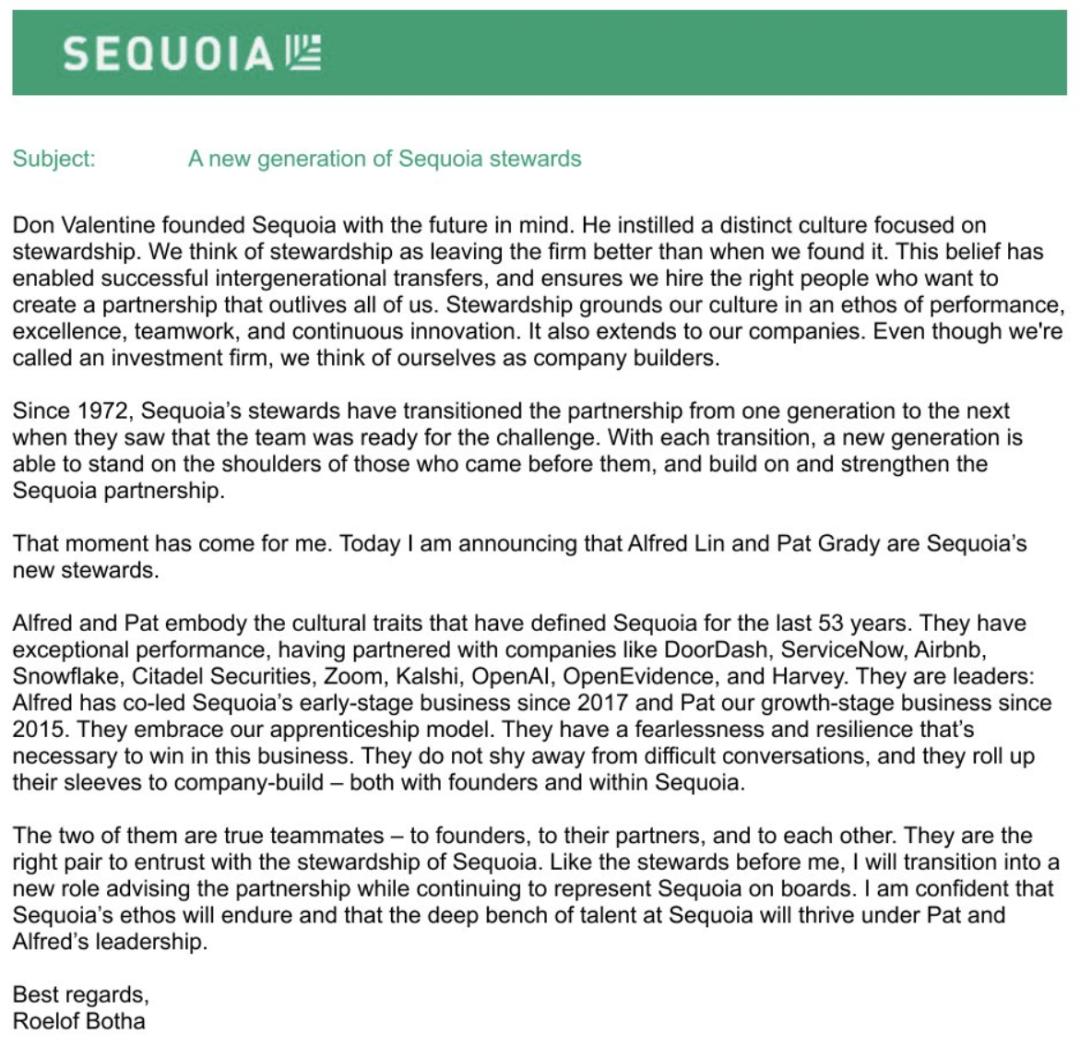
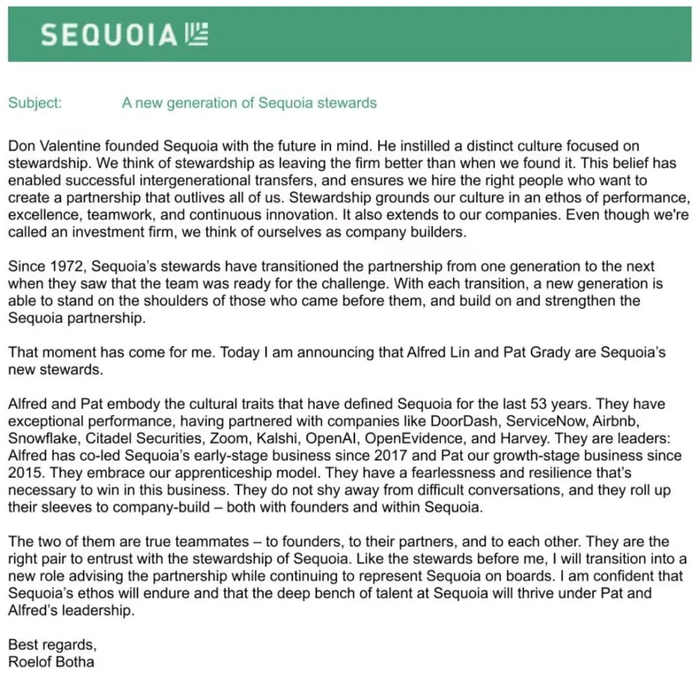
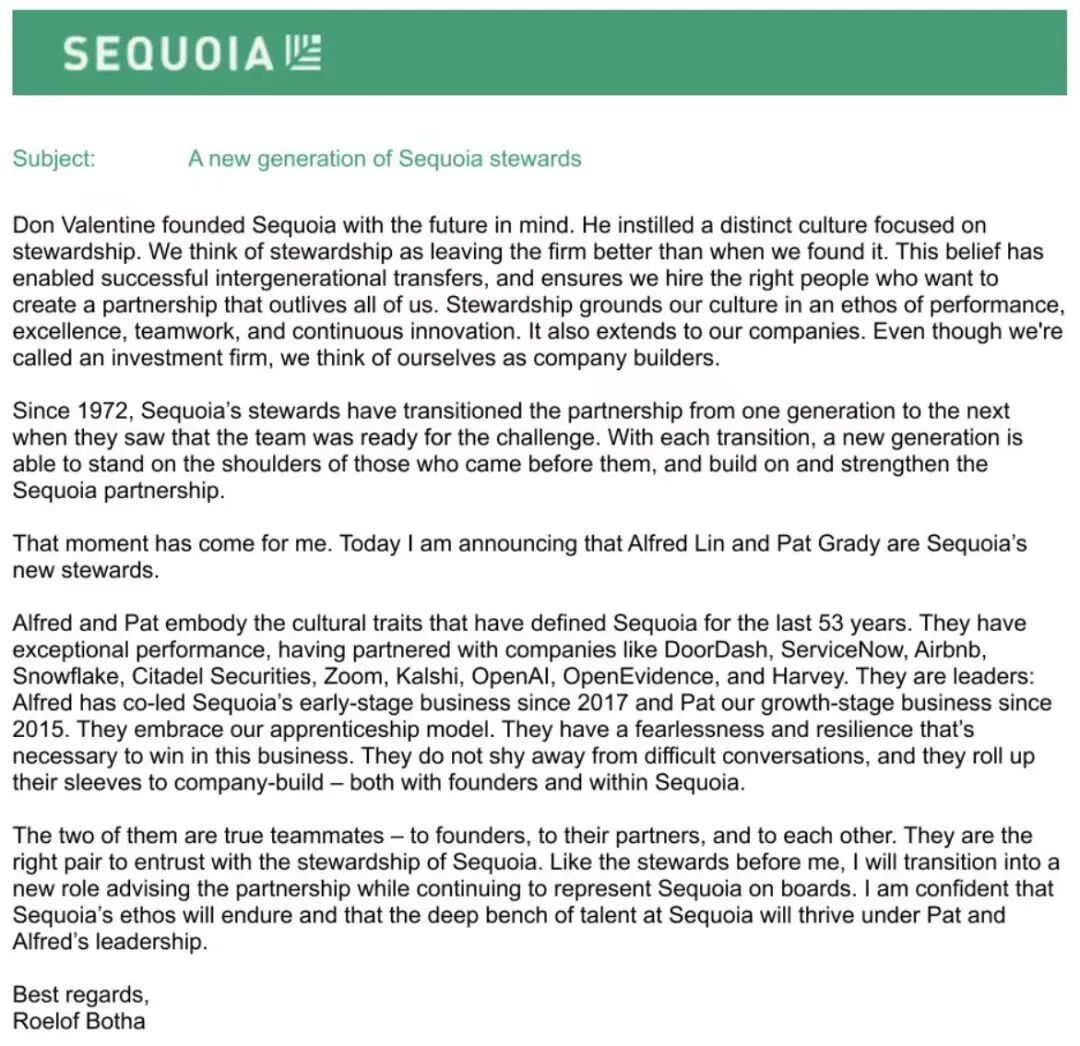
本周早些时候,美国知名VC红杉资本(Sequoia Capital)突然发布公告,宣布第三代掌门罗洛夫·博塔(Roelof Botha)辞职,林君叡(Alfred Lin)与帕 特·格雷迪(Pat Grady)成为新一代领导者。 周五的最新消息称,博塔是被高级合伙人们联手罢黜的。 这一消息引发美国VC圈的广泛关注:博塔今年才52岁,而且2022年才刚接任全球高级执行合伙人一职,怎么这么快就辞职了? 知情人士称,在博塔任内,红杉在人工智能投资上比一些竞争对手更加谨慎。公司曾在2021年向当时估值约200亿美元的OpenAI投资了略高于2000万美元 的资金,后续又在多轮融资中增加了一些股权。不过在今年早些时候OpenAI那一轮估值2600亿美元的融资中,红杉曾提出出资10亿美元,最终只获得"远 小于"该数额的股份。 红杉也是马斯克xAI的投资人,但更加侧重于对AI应用公司的早期投资。 博塔也因为多起重大冲突成为媒体焦点。今年8月,红杉资本首席运营官Sumaiya Balbale。坊间传闻称,她认为红杉的另一名高级合伙人肖恩·马奎尔在公 开发表宗教歧视言论,但博塔仅提醒马奎尔注意影响,拒绝进行惩处,Balbale ...

红杉资本“掌门人”突遭罢免!知情人士:他的情商与智力并不匹配!华裔大佬上位
Mei Ri Jing Ji Xin Wen· 2025-11-09 23:13
炒股就看金麒麟分析师研报,权威,专业,及时,全面,助您挖掘潜力主题机会! 美国红杉资本掌门人突然"下课"…… 近日,担任红杉资本掌门人仅三年多的Roelof Botha(罗洛夫·博塔)宣布辞去全球领导人(Senior Steward)职务,由 Alfred Lin(林君叡)及Pat Grady(帕特·格雷迪)接任,并联合管理红杉资本。 美国红杉资本掌门人突然"下课"…… 近日,担任红杉资本掌门人仅三年多的Roelof Botha(罗洛夫·博塔)宣布辞去全球领导人(Senior Steward)职务,由Alfred Lin(林君叡)及Pat Grady (帕特·格雷迪)接任,并联合管理红杉资本。 52岁的博塔在公开信中表示,自己会像之前的管理者一样,转任为其投资的初创公司提供咨询,同时继续在董事会代表红杉资本。 据FT报道,多名知情人士透露,基于对博塔管理风格、红杉资本AI投资策略的质疑,以及高层多起公开化的内斗事件,林君叡、帕特·格雷迪与安德鲁·里 德出面干预事态,这三位高级合伙人得到了更广泛内部成员,以及红杉上一任管理合伙人道格·莱昂内的支持。 据悉,三名副手动用了红杉独特的治理结构,该结构允许合伙人在任何 ...
硅谷知名VC,突然“换帅”!
Zheng Quan Shi Bao· 2025-11-09 12:27
Core Insights - Sequoia Capital experiences a significant leadership change as Roelof Botha resigns from his position as Senior Steward, with Alfred Lin and Pat Grady taking over the management [1][2] - The resignation raises concerns within the VC community regarding Botha's management style and the firm's AI investment strategy, leading to internal conflicts [1][2] - Sequoia has returned over $50 billion to its partners since 2017, indicating a strong financial performance under Botha's leadership [1] Leadership Transition - Roelof Botha, who led Sequoia for over three years, will transition to a consulting role for the startups he invested in while remaining on the board [1] - Alfred Lin and Pat Grady are seen as more suitable leaders for Sequoia, having successfully invested in high-profile companies like OpenAI, Airbnb, and DoorDash [2][3] Investment Strategy - Under Botha, Sequoia was more cautious in AI investments compared to competitors, with a notable investment of just over $20 million in OpenAI when it was valued at around $20 billion [2] - Sequoia's recent $950 million early-stage fund aims to invest in promising startups at the beginning of their journey, reinforcing its traditional strengths [4] Recent Investments - Sequoia has made initial investments in companies like Xbow, Traversal, and Reflection AI, which have since raised significant funds at much higher valuations [4][5] - The firm is actively supporting its portfolio companies by facilitating connections and recruiting experienced executives to enhance their growth potential [5]
起底红杉资本两位新老板:Sarah Guo 丈夫、硅谷知名华裔投资人,曾一同主导投资 OpenAI
Founder Park· 2025-11-09 04:34
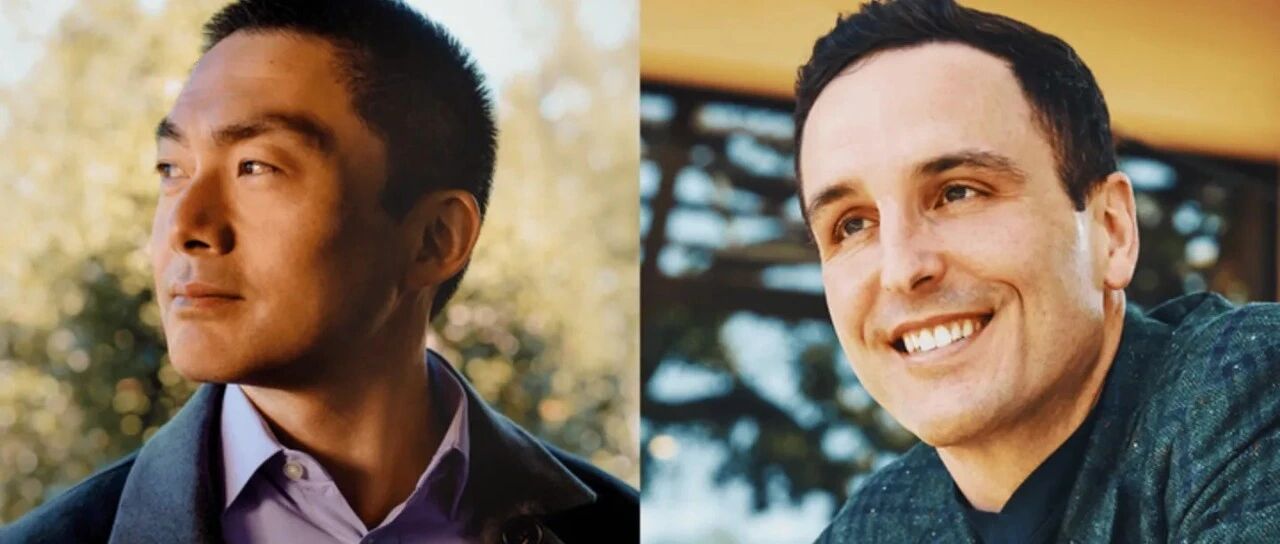
Group 1 - The leadership of Sequoia Capital has changed, with Roelof Botha stepping down as Senior Steward and being succeeded by partners Alfred Lin and Pat Grady as the new co-leaders [1][4][11] - During Botha's tenure, Sequoia returned over $50 billion to its investors, and he was instrumental in early investments in companies like YouTube and Instagram [4][25] - Botha's leadership was marked by concerns from some partners regarding his management style and missed investment opportunities in the AI sector, including OpenAI and Anysphere [7][8][27] Group 2 - Alfred Lin, who joined Sequoia in 2010, is known for leading significant investments in companies such as Airbnb and DoorDash, and he emphasizes the importance of long-term impact in investments [12][15] - Lin's investment philosophy focuses on companies with clear values and the ability to evolve over time, aiming for sustained growth [15][16] - Pat Grady, who has been with Sequoia since 2007, has a strong track record in B2B and cloud services, with successful investments in Snowflake and Zoom [18][20][21] Group 3 - Sequoia Capital manages assets totaling $56 billion and has invested in notable startups like OpenAI and SpaceX [25] - Recently, Sequoia announced the launch of two new funds, one focused on early-stage companies with a size of $750 million and another seed fund of $200 million [26] - The firm has faced turbulence in recent years, including failed investments and partner departures, but the leadership change may revitalize the company [27][28]
红杉资本“掌门人”突遭罢免!“这是‘起义’”,知情人士:他的情商与智力并不匹配!
Xin Lang Cai Jing· 2025-11-08 23:24
Core Insights - Roelof Botha has stepped down as the global leader of Sequoia Capital after just over three years, with Alfred Lin and Pat Grady taking over the management of the firm [1][3][5] Group 1: Leadership Changes - Botha's resignation was reportedly due to a revolt by three senior partners against his management style, which was described as domineering [3][5] - The unique governance structure of Sequoia Capital allows partners to vote on leadership changes, which was utilized in this instance [5][6] - Lin and Grady will jointly manage the firm, with Andrew Reed taking over Grady's previous role focused on growth-stage startups [5][7] Group 2: Investment Strategy and Focus - Sequoia Capital has historically invested in major tech companies, including Apple, Google, and Alibaba, and has a strong presence in the AI sector [3][4] - Under Botha's leadership, Sequoia returned over $50 billion to its partners since 2017, but there were concerns about the firm's AI investment strategy being too cautious [5][9] - The new leadership aims to increase investments in AI, having recently raised a $750 million early-stage fund and a $200 million seed fund focused on AI startups [9][10] Group 3: Cultural and Governance Issues - The firm faced a "crisis of trust" due to internal conflicts and public controversies, including a partner's offensive social media comments that led to a resignation [6][5] - The management changes reflect broader concerns about the firm's culture and values, particularly in relation to its treatment of diversity and inclusion [6][5]
红杉资本“掌门人”突遭罢免,知情人士:他的情商与智力并不匹配
Mei Ri Jing Ji Xin Wen· 2025-11-08 23:07
Core Insights - Roelof Botha has resigned as the Senior Steward of Sequoia Capital, with Alfred Lin and Pat Grady taking over the leadership roles [1][3] - Botha's departure has raised concerns in the investment community, attributed to his management style and internal conflicts within the firm [3][5] - Sequoia Capital is a prominent venture capital firm known for early investments in major tech companies [3][6] Management Changes - Botha's resignation was reportedly a result of a revolt by three senior partners against his authoritative management style [3][5] - The unique governance structure of Sequoia allowed partners to vote on leadership changes, which facilitated the transition to Lin and Grady [5][6] - Lin and Grady are expected to enhance the firm's focus on AI investments, an area where Botha had been more cautious [10][11] Investment Strategy - Sequoia Capital has historically invested in successful companies like Apple, Google, and Alibaba, with a focus on technology and innovation [3][6] - Under Botha's leadership, the firm returned over $50 billion to its partners since 2017, but there are concerns about the firm's AI investment strategy [6][10] - The new leadership aims to increase investments in AI, having already raised $750 million for early-stage funds and $200 million for seed funds focused on AI [11]
红杉资本“掌门人”突遭罢免!“这是‘起义’” 知情人士:他的情商与智力并不匹配!华裔大佬上位 公司进入“双话事人”模式
Mei Ri Jing Ji Xin Wen· 2025-11-08 16:47
美国红杉资本掌门人突然"下课"…… 近日,担任红杉资本掌门人仅三年多的Roelof Botha(罗洛夫·博塔)宣布辞去全球领导人(Senior Steward)职务,由Alfred Lin(林君叡)及Pat Grady (帕特·格雷迪)接任,并联合管理红杉资本。 52岁的博塔在公开信中表示,自己会像之前的管理者一样,转任为其投资的初创公司提供咨询,同时继续在董事会代表红杉资本。 博塔突然辞职引发美国投资圈的广泛关注。最新消息显示,博塔是被三位高级合伙人联手罢黜的。一名知情人士将这场风暴称为对博塔霸道管理风格 的"起义",他说:"博塔的智商的确高得离谱……但问题的核心在于,他总需要被视为房间里最聪明的人,同时他的情商与智力并不匹配。" 公开资料显示,红杉资本(Sequoia Capital)是全球著名风险投资公司,1972年创立于美国硅谷。该公司在美国、中国、印度设有本地化基金,作为第一 家机构投资人投资了Apple、Google、Cisco、Oracle、Yahoo、LinkedIn等科技创新企业。其中国基金成立于2005年,由沈南鹏与红杉资本共同创办,专注 于科技/传媒、医疗健康、消费品/服务及工业科技领域 ...
红杉资本“掌门人”突遭罢免!“这是‘起义’”,知情人士:他的情商与智力并不匹配!华裔大佬上位,公司进入“双话事人”模式
Mei Ri Jing Ji Xin Wen· 2025-11-08 16:41
每经编辑|段炼 美国红杉资本掌门人突然"下课"…… 近日,担任红杉资本掌门人仅三年多的Roelof Botha(罗洛夫·博塔)宣布辞去全球领导人(Senior Steward)职务,由Alfred Lin(林君叡)及Pat Grady (帕特·格雷迪)接任,并联合管理红杉资本。 52岁的博塔在公开信中表示,自己会像之前的管理者一样,转任为其投资的初创公司提供咨询,同时继续在董事会代表红杉资本。 博塔突然辞职引发美国投资圈的广泛关注。最新消息显示,博塔是被三位高级合伙人联手罢黜的。一名知情人士将这场风暴称为对博塔霸道管理风格 的"起义",他说:"博塔的智商的确高得离谱……但问题的核心在于,他总需要被视为房间里最聪明的人,同时他的情商与智力并不匹配。" 公开资料显示,红杉资本(Sequoia Capital)是全球著名风险投资公司,1972年创立于美国硅谷。该公司在美国、中国、印度设有本地化基金,作为第一 家机构投资人投资了Apple、Google、Cisco、Oracle、Yahoo、LinkedIn等科技创新企业。其中国基金成立于2005年,由沈南鹏与红杉资本共同创办,专注 于科技/传媒、医疗健康、消费品/服 ...
美国红杉资本,突遭“换帅”
Zhong Guo Ji Jin Bao· 2025-11-08 09:07
Core Insights - Roelof Botha, the leader of Sequoia Capital, has resigned after just over three years, with Alfred Lin and Pat Grady taking over management responsibilities [1][2] - The resignation was reportedly due to internal conflicts and dissatisfaction with Botha's management style and AI investment strategy [2][3] Management Changes - Alfred Lin and Pat Grady have been appointed as the new leaders, with Lin focusing on early-stage investments and Grady on growth-stage investments [5][6] - Botha will continue to provide consulting for startups in which Sequoia has invested and will remain on the board [1] Internal Conflicts - The decision to remove Botha was supported by senior partners and was facilitated by Sequoia's unique governance structure, allowing partners to vote on leadership changes [2] - Internal disputes, particularly regarding the management of AI investments and public comments made by partners, contributed to the leadership change [2][3] Investment Strategy - Sequoia Capital plans to increase its investments in AI, having previously been cautious under Botha's leadership [2] - The firm had invested approximately $20 million in OpenAI in 2021, which was seen as insufficient given OpenAI's later valuation of $260 billion [2] Cultural and Ethical Concerns - Sequoia faced scrutiny from limited partners (LPs) regarding its corporate culture and values, particularly after a partner made controversial comments on social media [3][4] - The defense of a partner's freedom of speech over issuing an apology led to the resignation of the COO and raised questions about the firm's ethical stance [4] New Leadership Background - Alfred Lin has a strong background in early-stage investments, having led investments in companies like Airbnb and DoorDash [5][6] - Pat Grady, a younger partner, has been involved in growth-stage investments, including notable companies like Snowflake and Zoom [6]
美国红杉资本,突遭“换帅”
中国基金报· 2025-11-08 08:33
【导读】美国红杉资本掌门辞职 中国基金报记者 安曼 美国红杉资本掌门人突然 " 下课 "…… 近日,担任红杉资本掌门人仅三年多的 Roelof Botha (罗洛夫 · 博塔)宣布辞去全球领导人( Senior Steward )职务,由 Alfred Lin (阿尔弗雷德 · 林)及 Pat Grady (帕特 · 格雷迪)接任,并联合管理红杉资本。 博塔在公开信中表示,自己会像之前的管理者一样,转任为其投资的初创公司提供咨询,同时继续在董事会代表红杉资本。 年仅 52 岁的博塔突然辞职引发美国 VC 圈的广泛关注。周五的最新消息称,博塔是被三位高级合伙人联手罢黜的。 突陷 " 信任危机 " 掌门人被罢免 据 FT 报道,多名知情人士透露,基于对博塔管理风格、红杉资本 AI 投资策略的质疑,以及高层多起公开化的内斗事件,阿尔弗雷德 · 林、帕特 · 格雷迪与安德鲁 · 里德出面干预事态,这三位高级合伙人得到了更广泛内部成员,以及红杉上一任管理合伙人道格 · 莱昂内的 支持。 据悉,三名副手动用了红杉独特的治理结构,该结构允许合伙人在任何时候对领导层发起投票。这一制度会为资历更深的投资人赋予更高 的投票权重, ...