茶饮

Search documents
中泰国际每日晨讯-20250708
ZHONGTAI INTERNATIONAL SECURITIES· 2025-07-08 02:07
Market Overview - On July 7, the Hong Kong stock market continued its volatile pattern, with the Hang Seng Index slightly down by 0.1% to close at 23,887 points, while the Hang Seng Tech Index rose by 0.3% to 5,229 points, indicating a rebound in the market towards the end of the trading session [1] - Notably, southbound funds saw a rapid increase in buying, with a net inflow of 12 billion HKD, marking the highest single-day inflow in nearly two months [1] - The real estate sector showed strong performance following the Ministry of Housing's statement to "promote the stabilization of the real estate market," while the beverage sector also surged, with companies like Cha Bai Dao and Nayuki's Tea seeing significant gains [1] Macro Dynamics - In the real estate sector, the new home transaction volume saw a narrowing year-on-year decline, with a reported 1.89 million square meters sold in 30 major cities, down by 1.1% year-on-year, which is an improvement from the previous week's 23.1% decline [3] - Different city categories showed varied performance, with first, second, and third-tier cities experiencing year-on-year changes of +3.6%, +19.6%, and -41.5%, respectively [3] Industry Dynamics - The consumer sector remained stable amid ongoing negotiations regarding "reciprocal tariffs" with the U.S., while new consumption stocks performed well, with notable gains in companies like Lao Pu Gold and Pop Mart [4] - The new energy vehicle sector also showed steady performance, with new force car manufacturers rising between 0.5% and 5% [4] - The healthcare sector followed the Hang Seng Index down by 2.0%, which is considered a normal correction after consecutive gains [4] Energy Sector Insights - The report maintains a recommendation to absorb power generation stocks, as summer electricity demand is favorable for the sector, but emphasizes the need to closely monitor coal price trends [6] - In June, coal inventory at major ports turned from a year-on-year decline to a slight increase, with coal prices showing a narrowing year-on-year decline and remaining stable month-on-month [6] Renewable Energy Focus - The photovoltaic sector has seen weak product prices, but there is increased attention from the central government regarding industry competition, which may enhance investment sentiment in related stocks [7] - The nuclear power sector is gaining importance, with uranium prices reaching a new high of 78 USD per pound, driven by geopolitical events and renewed focus on nuclear energy development [8] Natural Gas Demand - Industrial demand for natural gas remains stable, with the manufacturing PMI in China reported at 49.7 in June, slightly above the previous year's figure [9] Stock Recommendations - Weisheng Holdings is highlighted as a potential Hong Kong Stock Connect target, benefiting from the global increase in electricity generation [10] - China National Nuclear Corporation is expected to benefit from rising uranium prices and has established a sales framework agreement for natural uranium [10] - Huaneng International is positioned to benefit from summer electricity demand, with a reported 8.2% year-on-year increase in net profit for Q1 2025 [11] Pharmaceutical Sector Insights - The healthcare sector outperformed the Hang Seng Index in June, with the Hang Seng Healthcare Index rising by 8.4%, marking the sixth consecutive month of gains [13] - The National Healthcare Security Administration and the National Health Commission have introduced policies to support innovative drug development, which is expected to boost sales of high-priced innovative drugs [14] - Key stocks such as China Biologic Products and Innovent Biologics are recommended due to their strong growth prospects and recent positive developments in drug approvals and partnerships [15]
港股茶饮股延续涨势 茶百道涨超12%
news flash· 2025-07-08 01:59
Group 1 - The core viewpoint of the article highlights the continued upward trend of tea beverage stocks in the Hong Kong market, with Cha Bai Dao experiencing a significant increase of 12.20% [1] - Other tea beverage companies also saw gains, with Gu Ming rising by 4.53% and Hu Shang A Yi increasing by 2.41% [1] - The article notes that the recent intensification of competition in the food delivery sector has positively impacted the tea beverage industry, benefiting from stable output, low customer spending per order, and high consumption frequency during the peak season [1]
港股茶饮概念今日延续涨势,茶百道(02555.HK)涨超17%,奈雪的茶(02150.HK)涨超8%,古茗(01364.HK)涨超5%,沪上阿姨(02589.HK)、蜜雪集团(02097.HK)等个股跟涨。
news flash· 2025-07-08 01:51
Group 1 - The Hong Kong stock market for the tea beverage sector continues to rise, with notable increases in share prices for several companies [1] - Cha Bai Dao (02555.HK) has seen a surge of over 17% in its stock price [1] - Nayuki's Tea (02150.HK) has increased by more than 8% [1] - Gu Ming (01364.HK) has experienced a rise of over 5% [1] - Other companies such as Hu Shang A Yi (02589.HK) and Mi Xue Group (02097.HK) are also following the upward trend [1]
周杰伦厦门演唱会新增900元“视线不良区”;“外卖战”升级,带动茶饮概念股大涨丨消费早参
Mei Ri Jing Ji Xin Wen· 2025-07-07 23:31
Group 1: Company Developments - Hainan Times Fengjun Network Technology Co., Ltd. has been established with a registered capital of 5 million RMB, focusing on performance management, cultural operations, and electronic publishing [1] - The new company is fully owned by Beijing Times Fengjun Cultural and Artistic Development Co., Ltd., indicating a strategic move to diversify and expand into new markets [1] Group 2: Concert Ticketing Trends - Jay Chou's concert in Xiamen has introduced new ticket categories priced at 900 RMB for obstructed view seats and 500 RMB for big screen viewing, reflecting ongoing demand and pricing strategies in the concert industry [2] - Previous ticket sales for Jay Chou's concerts have shown rapid sell-outs, highlighting his strong market appeal despite controversies over ticket pricing [2] Group 3: Market Trends in Beverage Industry - Tea beverage stocks surged significantly, with notable increases in companies like Cha Bai Dao (11.04%) and Gu Ming (6.15%), driven by an intensified competition in the food delivery sector [3] - The recent promotional strategies by Meituan and Taobao, offering substantial discounts, have led to a temporary spike in sales for tea beverage companies, although sustainability of this growth remains uncertain [3] Group 4: Tourism and Airline Expansion - Jeju Air is expanding its routes to China, launching new flights from Busan to Shanghai and Incheon to Guilin, responding to the growing demand for travel to China [4] - The increase in flight options is expected to enhance travel experiences for both Korean tourists visiting China and Chinese tourists traveling to Korea, indicating a robust recovery in the tourism sector [4]
融合传统与创新 “杭”味伴手礼向高文化附加值转型
Zhong Guo Chan Ye Jing Ji Xin Xi Wang· 2025-07-07 22:08
Core Viewpoint - The "2025 Hangzhou Specialty Products Souvenir" evaluation event aims to enhance consumer confidence in Hangzhou by selecting representative local souvenirs, showcasing the city's unique cultural and technological attributes [1][2] Group 1: Event Overview - The Hangzhou Consumer Rights Protection Committee organized the evaluation event, attracting participation from 133 local enterprises across various sectors including tea, food, cultural innovation, technology, and public welfare [1] - A total of 101 products were shortlisted for on-site evaluation, assessed by a panel of experts from diverse fields based on six criteria: regional sense, quality, cultural sense, recognition, satisfaction, and convenience [1] Group 2: Featured Products - The event highlighted traditional products with local characteristics, such as Jing Mountain tea gift sets and premium West Lake Longjing tea, reflecting Hangzhou's rich tea culture [1] - Innovative products incorporating technology, like sonar fish finders, were also showcased, emphasizing Hangzhou's identity as a tech city [1][2] Group 3: Social Responsibility and Cultural Value - The evaluation incorporated elements of "love and support," aiming to convey warmth and care through the souvenirs, with products like Qian Dao Wei sauce and highland apple juice representing local culture and agricultural support [2] - The event serves as a platform for local enterprises to showcase their strengths and brand image, with a commitment to developing the souvenir industry towards high quality, cultural value, and social responsibility [2]
全线冲高,茶百道涨逾13%!外卖补贴大战引爆茶饮消费?
Sou Hu Cai Jing· 2025-07-07 20:21
Group 1 - The Hong Kong tea beverage sector has seen a collective rise, with notable increases in stock prices for companies such as Cha Bai Dao (13.54%), Gu Ming (7.88%), and Nai Xue's Tea (6.58%) [2][3] - Over the past five trading days, Nai Xue's Tea has experienced a cumulative increase of 35%, while Gu Ming and Cha Bai Dao have both risen over 16% [3] Group 2 - The recent surge in tea beverage stocks is attributed to multiple favorable factors, including subsidies from delivery platforms, the arrival of the summer consumption peak, and government consumption subsidies [4] - Major delivery platforms like Alibaba and Meituan have launched significant promotional campaigns, offering various discount coupons that have led to increased sales for tea beverage stores [4][5] - The summer heat has driven consumer demand for refreshing tea beverages, with top brands like Nai Xue's Tea and Cha Bai Dao reporting strong sales, including over 700,000 cups sold of Cha Bai Dao's lychee series since mid-June [5] Group 3 - Analysts believe that the tea beverage industry is poised for a new consumption peak driven by a combination of platform subsidies, seasonal benefits, and policy incentives [6] - Huaxin Securities highlights that the tea beverage sector, characterized by stable output, low average spending, and high consumption frequency, stands to benefit significantly from the current competitive landscape [6]


贵州奶茶巨头往事
Hu Xiu· 2025-07-07 11:39
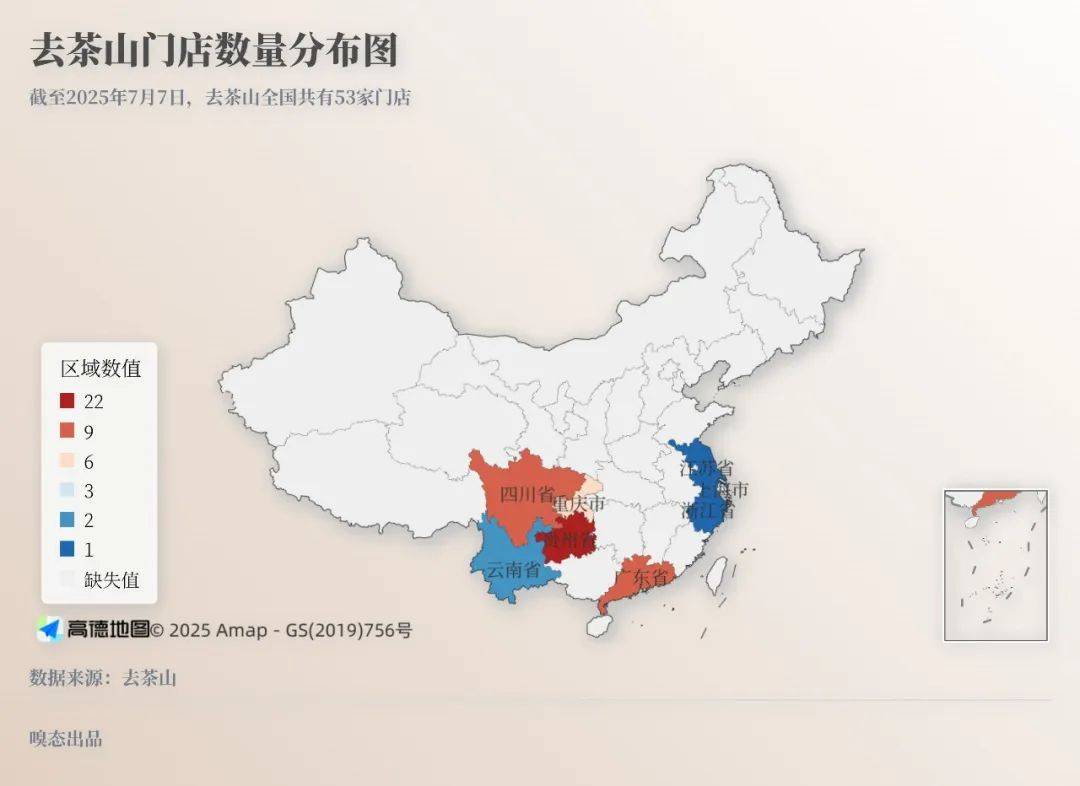
Core Viewpoint - The article discusses the rise of the tea brand "去茶山" (Go Tea Mountain) in Guizhou, highlighting its unique blend of local culture and modern aesthetics, and its rapid expansion across China, positioning it as a representative of local tea brands breaking into the national market [4][42]. Group 1: Brand Development and Expansion - "去茶山" has rapidly expanded its presence, with 53 stores across various cities including 22 in Guiyang, 9 in Chengdu, and 7 in Shenzhen as of July 6 [5][4]. - The brand's first store in Nanjing opened on June 5, with overwhelming demand, indicating strong market interest [7]. - The brand has been described as a "light of Guizhou tea drinks" and has become a cultural part of Guiyang [4][20]. Group 2: Brand Identity and Consumer Perception - "去茶山" is perceived as a modern, healthier alternative to the older local brand "宜北町" (Yibei Town), appealing to younger consumers with its comfortable and versatile store designs [10][20]. - The brand emphasizes a connection to local nature and culture, integrating Guizhou's flavors and aesthetics into its offerings [70][72]. - For many visitors, experiencing "去茶山" has become a must-do activity when visiting Guiyang, reflecting its status as a cultural landmark [74][76]. Group 3: Historical Context and Brand Evolution - "去茶山" originated from "宜北町," with its founders having previously worked in the tea industry before establishing their own brand in 1998 [21][22]. - The transition to "去茶山" as a distinct brand occurred in 2019, focusing on high-end tea culture and local ingredients [23][35]. - The year 2021 marked a significant turning point, with a clear separation of brand identities and operational strategies between "去茶山" and "宜北町" [27][35]. Group 4: Market Positioning and Strategy - "去茶山" aims to differentiate itself in a saturated market by emphasizing local culture, unique narratives, and a high-quality consumer experience [43][66]. - The brand's design philosophy is decentralized, allowing each store to reflect its unique local environment, which enhances its appeal to consumers [68][70]. - The brand's success is attributed to its ability to resonate with local youth and adapt to contemporary consumer preferences, creating a strong local identity [71][78].
LV「路易号」爆火出圈,品牌如何打造城市中的“巨型名片”?
3 6 Ke· 2025-07-07 11:37
Core Insights - The article discusses the recent success of LV's "Louis Ship" as a marketing strategy that has gained significant attention on social media, becoming a popular spot for visitors [1][2] - The strategy emphasizes the importance of creating extreme experiences to capture consumer attention and drive engagement [4][12] Group 1: Marketing Strategy - LV's "Louis Ship" serves as a striking visual element, occupying 1,600 square meters, equivalent to the size of two basketball courts, which creates a strong contrast against the urban environment [4][11] - The installation not only attracts public curiosity but also encourages spontaneous social media sharing, enhancing brand visibility without additional promotional efforts [5][12] - The design aligns with LV's brand narrative rooted in maritime culture, reflecting the brand's history and connection to travel and exploration [6][10] Group 2: Brand Storytelling - The "Louis Ship" embodies LV's core brand spirit of travel, effectively transforming abstract concepts into tangible experiences that resonate with consumers' summer travel expectations [6][9] - The installation integrates seamlessly with Shanghai's cultural context, reinforcing the emotional connection between the brand and the local environment [10][11] - The marketing approach highlights the shift from traditional advertising to storytelling through immersive experiences, making the brand narrative more relatable [7][14] Group 3: Investment in Brand Image - LV's strong financial position allows for substantial investment in brand image and innovative projects, distinguishing it from mass-market brands that focus on short-term returns [11][15] - The article notes that luxury brands view such investments as a means to enhance scarcity and cultural value, rather than immediate profitability [11][15] - The trend of using construction barriers as marketing tools is gaining traction among various brands, indicating a broader shift towards content-driven marketing strategies [12][14] Group 4: Types of Barrier Marketing - The article categorizes barrier marketing into three types: landmark barriers, local barriers, and interactive barriers, each serving different purposes in urban spaces [16][20] - Landmark barriers focus on creating visual focal points that attract attention and encourage social media sharing [17][19] - Local barriers integrate cultural elements to reduce psychological distance between the brand and consumers, fostering a sense of community [20][22] - Interactive barriers engage consumers directly, transforming passive observation into active participation, enhancing brand visibility during construction periods [23][27]

史诗级外卖大战!大量网友晒单“零元购 ”,店员忙到怀疑人生…茶饮板块意外爆发
YOUNG财经 漾财经· 2025-07-07 11:30
Core Viewpoint - The recent massive competition in the food delivery market, driven by significant subsidies from Alibaba and Meituan, has led to an unprecedented surge in orders, particularly in the tea beverage sector, causing operational challenges for delivery platforms and restaurants [1][14][15]. Group 1: Market Dynamics - On July 7, 2023, Alibaba's Taobao Flash Sale and Ele.me reported over 80 million daily orders, with non-food orders exceeding 13 million, marking a significant increase from over 10 million orders on May 4 [1]. - The tea beverage sector saw a collective surge in stock prices, with companies like Cha Bai Dao, Gu Ming, and Nai Xue's Tea rising over 10% on July 7, 2023 [2]. - Meituan's stock fell by 1.49% while Alibaba's stock saw a slight increase of 0.29% amid the intense competition [3]. Group 2: Subsidy Impact - On July 2, 2023, Taobao announced a substantial subsidy plan of 50 billion yuan, leading to a significant increase in orders across various retail categories, particularly in prepared foods and beverages [5]. - The introduction of "zero-cost purchases" for certain items led to overwhelming demand, causing Meituan's platform to experience outages due to the unprecedented order volume [6][11]. Group 3: Operational Challenges - Many tea shops reported a dramatic increase in daily orders, with some locations handling 300-500 orders compared to their usual volume, leading to staff working up to 14 hours a day [8]. - Delivery personnel reported record earnings due to the high volume of orders and increased delivery fees, with some earning over 1,700 yuan in a single day [10][12]. - The intense competition has resulted in longer wait times for customers, as tea shops struggle to keep up with the surge in demand [11][12]. Group 4: Competitive Strategies - The competition intensified as Alibaba aimed to surpass Meituan's order volume, targeting 90 million to 100 million orders on July 5, 2023 [15]. - Meituan responded with aggressive coupon promotions to retain market share against Alibaba's subsidy initiatives [16].

这一板块,集体大涨!
中国基金报· 2025-07-07 10:47
【导读】7月7日,互联网巨头外卖补贴历史性对决,茶饮股集体上涨。 中国基金报记者 格林 7月7日,港股三大指数涨跌不一。恒生指数跌0.12%, 报23887.83点;恒生科技指数涨 0.25%,报5229.56点;恒生中国企业指数跌0.01%,报8608.54点。全日市场成交额为 1937.90亿港元,与前一交易日的2678.08亿港元相比明显缩量,南向资金抢筹,净买入 120.66亿港元。 概念板块方面,黄金股走低,医药板块疲软,茶饮概念股上涨,稳定币概念股上涨。 茶饮集体大涨 7月7日,茶饮概念股集体上涨。其中,茶百道涨11.04%,古茗涨6.15%,奈雪的茶涨 3.95%,蜜雪集团涨5.74%。 7月7日,美团-W跌1.49%,阿里巴巴-W午后翻红,涨0.29%,京东集团-SW涨0.48%。 消息面上,7月5日晚,阿里与美团展开史上最大规模补贴对决,两大平台当天同步放出"满 25减21""满16减16""满18减18""25减20"等无门槛大额券。截至7月5日22时54分,美团 即时零售当日订单突破1.2亿单,其中,餐饮订单超过1亿单。 此外,淘宝闪购、饿了么联合宣布,截至7月5日24时,淘宝闪购日订单 ...