
资产管理

Search documents
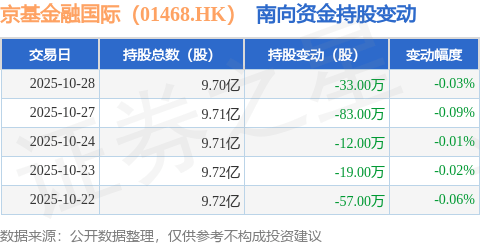
京基金融国际(01468.HK):10月28日南向资金减持33万股
Sou Hu Cai Jing· 2025-10-28 19:42
Group 1 - The core point of the news is that southbound funds have been reducing their holdings in Jingji Financial International (01468.HK), with a total net reduction of 2.62465 million shares over the past 20 trading days, indicating a consistent trend of selling [1][2]. - As of October 28, 2025, southbound funds hold 970 million shares of Jingji Financial International, which represents 55.85% of the company's total issued ordinary shares [1][2]. - The daily changes in shareholding show a decrease of 330,000 shares on October 28, 2025, reflecting a change of -0.03% [2]. Group 2 - Jingji Financial International is primarily engaged in insurance business and operates through seven divisions, including insurance brokerage, insurance technology, network and investment, fur, securities, lending, and asset management [2]. - The insurance brokerage division provides insurance brokerage services, while the insurance technology division focuses on developing smart insurance business platforms and IT services [2]. - The securities division offers services such as brokerage, margin financing, underwriting, and advisory services [2].

津投城开:本次交易方案调整构成重组方案重大调整
Xin Lang Cai Jing· 2025-10-28 14:14
Group 1 - The company plans to divest its real estate development-related assets and liabilities while retaining property management, asset management, and operational businesses [1] - The adjusted restructuring plan involves the divestment of real estate development-related assets and liabilities, with no longer including the heating sector assets from the energy group [1] - The proportion of the indicators for the divested assets is reduced by 100%, exceeding 20% [1] Group 2 - The counterparty for the transaction has changed from Tianjin Energy Investment and Tianjin Gas Group to Chengyun Development, constituting a significant adjustment to the original restructuring plan [1]

债券巨头太平洋投资管理公司(PIMCO)出售大部分泰晤士水务公司债务头寸。
Xin Lang Cai Jing· 2025-10-28 09:24
Core Insights - Pacific Investment Management Company (PIMCO) has sold off a significant portion of its debt position in Thames Water [1] Group 1 - PIMCO's decision to divest from Thames Water indicates a strategic shift in its investment approach [1] - The sale reflects broader market trends and potential concerns regarding the financial health of Thames Water [1] - This move may impact the liquidity and credit profile of Thames Water in the bond market [1]

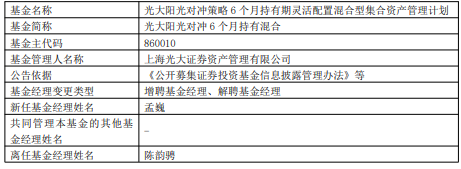
光大阳光对冲6个月持有混合增聘孟巍 陈韵骋离任
Zhong Guo Jing Ji Wang· 2025-10-28 08:21
光大阳光对冲6个月持有混合A /B/C成立于2020年3月25日,截至2025年10月27日,其今年来收益率 为2.00%、2.22%、1.88%,成立来收益率为9.50%、12.39%、9.93%,累计净值为1.7917元、1.1239元、 1.0993元。 | 基金名称 | 光大阳光对冲策略 6个月持有期灵活配置混合型集合资产管理计划 | | --- | --- | | 基金简称 | 光大阳光对冲6个月持有混合 | | 基金主代码 | 860010 | | 基金管理人名称 | 上海光大证券资产管理有限公司 | | 公告依据 | 《公开募集证券投资基金信息披露管理办法》等 | | 基金经理变更类型 | 增聘基金经理、解聘基金经理 | | 新任基金经理姓名 | 孟巍 | | 共同管理本基金的其他基 | | | 金经理姓名 | | | 离任基金经理姓名 | 陈韵骋 | 中国经济网北京10月28日讯 昨日,光大证券资产管理有限公司公告,光大阳光对冲6个月持有混合 增聘孟巍,陈韵骋离任。 孟巍曾任广发证券发展研究中心研究员,上海光大证券资产管理有限公司权益部研究员及权益公募 投资部副总经理,现任公司权益投资总监兼权 ...

高盛2025年私募市场调研报告:二级市场配置创新加速,实物资产策略乐观升温
IPO早知道· 2025-10-28 06:02
Core Insights - Geopolitical risks have been identified as the primary concern for investors for the second consecutive year, with North American General Partners (GPs) particularly focused on high valuation pressures [9][10] - Overall sentiment among private market investors is optimistic, with expectations for liquidity release through various exit strategies increasing [2][4] Group 1: Investor Sentiment and Strategies - Private market investors exhibit resilience, with strong sentiment towards tangible asset strategies, particularly in infrastructure (93%), private equity (82%), real estate (81%), and private credit (70%) [4] - GPs are optimistic about traditional exit routes expanding significantly, especially strategic sales (80% of GPs likely to adopt this method) and sales led by financial investors (70% considering this option) [5][6] - 83% of Limited Partners (LPs) plan to deploy the same or more capital in private market strategies in 2025, continuing a positive trend from previous years [8] Group 2: Valuation Challenges and Market Dynamics - Valuation remains the biggest challenge for new project investments, with 63% of respondents citing it as a key factor, and 60% indicating it as the main challenge for exits [4][5] - The emergence of new fund managers and the launch of new funds by existing GPs have intensified competition in the fundraising environment [2][5] - LPs are increasingly managing liquidity through secondary markets, with 17% of respondents selling assets in the secondary market this year, up from 11% last year [6][7] Group 3: Asset Allocation and Market Trends - Many LPs are below their target allocation levels across various strategies, with significant under-allocations in co-investments (62% below target) and secondary markets (45% below target) [7] - The interest in evergreen structures is growing, with over 30% of LPs considering or using them for private equity and infrastructure investments [10] - Concerns about geopolitical instability and policy uncertainty dominate investor worries, with North American GPs particularly focused on high valuations as a risk factor [9][10]


美联储信号引爆黄金抛售?央行连续11个月增持,透露关键信号
Sou Hu Cai Jing· 2025-10-28 05:13
Core Viewpoint - The recent volatility in the gold market has led to significant losses for retail investors, while institutional investors are taking advantage of the price drop to accumulate gold assets [1][3][5]. Group 1: Market Dynamics - Gold prices dropped from $4144 to $4044 within six hours, resulting in over $20 billion in losses for long positions [1]. - Retail investors, driven by panic, sold off their positions, while institutional players, such as BlackRock and Barrick Gold, capitalized on the dip by increasing their holdings [3][5]. - The difference in behavior between retail and institutional investors highlights a contrast between short-term speculation and long-term strategic investment [3][5]. Group 2: Institutional Investment Strategies - BlackRock's gold ETF recorded its largest single-day inflow during this period, indicating strong institutional interest [3]. - Barrick Gold announced a $4.81 billion stock buyback plan, with an authorized buyback amount of $10 billion, reflecting confidence in long-term gold prices [3]. - Central banks in emerging markets have been increasing their gold reserves for 11 consecutive months, with purchases nearing 289 tons in Q1 2025, indicating a strategic long-term approach to gold investment [5]. Group 3: Market Sentiment and Leverage - The market's reaction to the Federal Reserve's signals regarding monetary policy changes acted as a catalyst for the sell-off, exacerbated by excessive leverage in the market [9][11]. - A significant portion of the market's downturn was attributed to leveraged positions being liquidated, leading to a chain reaction of automated sell-offs [11]. - Historical patterns suggest that such market corrections can lead to healthier long-term trends in gold prices, as seen in past instances of market "cleansing" [13]. Group 4: Long-term Outlook for Gold - Despite short-term volatility, the fundamental demand for gold remains strong, with global central banks expected to import over 1200 tons of gold by 2025 [15]. - The ongoing debt pressure in the U.S. and negative real interest rates enhance gold's appeal as a hedge against inflation and a store of value [15]. - The evolving global monetary landscape, including the use of gold in energy transactions, is likely to bolster gold's long-term value [17].

中美贸易和美联储政策谁主沉浮? 黄金期货短线向上
Jin Tou Wang· 2025-10-28 01:59
今日周二(10月28日)亚盘时段,周末有消息称,中美即将达成一项重大贸易协议。这使得市场的风险 偏好大幅增强,全球股市上涨,美国股市指数也将以创纪录的高位开盘。由于12月黄金市场在日线图上 形成了看跌旗形形态,也出现了技术性抛售。截至发稿,COMEX黄金期货暂4022.60元/克,涨幅 0.64%,最高触及4034.20元/克,最低下探3987.20元/克。目前来看,COMEX黄金期货短线偏向看涨走 势。 美联储预计将于周三下午连续第二次下调0.25%的利率,以支持不稳定的就业市场,但可能会面临一些 对通胀感到担忧的官员的反对。周五的最新数据显示,美国9月份消费者价格涨幅为三个月来最小,这 支持了联邦公开市场委员会本周降息的计划。然而,美联储政策制定者存在分歧,一些人担心降息幅度 过大,而另一些人则支持进一步降息,这一切都发生在联邦政府停摆期间美国政府经济数据无法发布的 情况下。与此同时,财政部长贝森特确认了接替美联储主席鲍威尔的五名最终候选人名单。最终候选人 包括现任美联储董事会成员克里斯托弗·沃勒和米歇尔·鲍曼、前美联储理事凯文·沃什、白宫国家经济委 员会主任凯文·哈塞特以及贝莱德公司高管里克·里德。特朗 ...
海外资管机构月报【国信金工】
量化藏经阁· 2025-10-28 00:08
Group 1: Monthly Performance of US Public Funds - In September 2025, the median performance of US equity funds was 1.81%, outperforming bond funds at 0.93%, but underperforming international equity funds at 2.44% and asset allocation funds at 2.25% [1][7][10]. Group 2: Fund Flows and Trends - In September 2025, the US fund market saw a total of 78 new funds established, including 71 ETFs and 7 open-end funds, with 57 being equity funds and 20 being bond funds [3][39][43]. - Active management funds experienced a net inflow of $7.9 billion, while passive funds saw a much larger net inflow of $78.5 billion [8][21]. - Open-end bond funds had a significant net inflow of $33.3 billion, while equity funds faced a net outflow of $87.7 billion [27][30]. Group 3: Insights from Leading Asset Management Firms - Recent themes of interest among leading overseas asset management firms include the trajectory of US and European policies and foreign capital perspectives on the stock market [4][45]. - PIMCO highlighted the impact of tariffs and technology on the market, suggesting that while large tech companies are benefiting from AI investments, certain sectors may face pressure due to tariff impacts [49]. - Fidelity noted that despite tariff fluctuations, the stock market remains strong, driven by optimism and AI-related investments [49]. Group 4: Fund Issuance Observations - The issuance of new funds in the US market has been dominated by ETFs, with 71 new ETFs launched in September 2025 compared to only 7 open-end funds [39][43].
首善标准筑人才高地 协同之力绘发展新篇
Bei Jing Ri Bao Ke Hu Duan· 2025-10-27 22:09
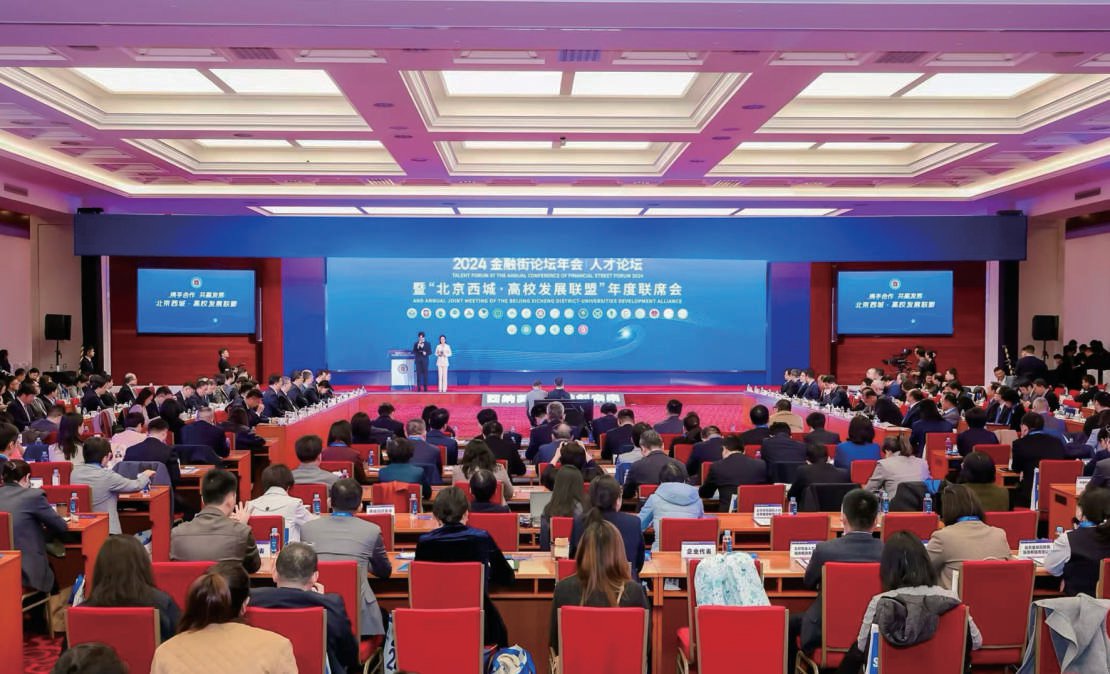
Core Insights - The article emphasizes the importance of education, technology, and talent as foundational elements for building a modern socialist country, highlighting the role of talent in driving high-quality regional development in Xicheng District, Beijing [1] Talent Development Strategy - Xicheng District has surpassed a total talent pool of 1.05 million, with a significant focus on industries such as finance, technology, and culture, which collectively account for 520,000 professionals, showcasing a robust and well-structured talent base [1] - The district implements a comprehensive talent policy system characterized by competitive measures to attract and retain talent, focusing on a "classification guidance, institutional support, and solid guarantees" framework [6][7] Policy Initiatives - The district has introduced several key documents, including the "Implementation Opinions on Strengthening Talent Work" and the "Xirong Plan," which allocates 100 million yuan annually to enhance high-quality development through talent acquisition [7] - A new policy framework, termed "12+10," has been established to promote integrated development across education, technology, and talent, aiming to break down institutional barriers and enhance collaborative innovation [8] Collaborative Platforms - Xicheng District has formed the "Beijing Xicheng University Development Alliance," collaborating with 25 universities to enhance intellectual exchange, internships, and result transformation, resulting in over 150 cooperative achievements [10] - The district is actively engaging in "central-local cooperation" initiatives to create a new model for industry-talent integration, facilitating resource sharing and talent development through various collaborative projects [11] International Engagement - The district is enhancing its global talent pool by hosting international forums and establishing partnerships with overseas talent centers, aiming to attract high-end talent and innovation resources [12] Service Ecosystem - A comprehensive talent service system is being developed to provide a full lifecycle of support for talent, ensuring a conducive environment for professionals to thrive [13][14] - The district is implementing a "talent + industry" service model, establishing a three-tiered talent service mechanism to provide precise support for key enterprises and professionals [15][16] Future Outlook - Xicheng District aims to continuously optimize its talent policies and platforms, enhancing its attractiveness and competitiveness as a destination for top talent and innovative enterprises [17]
Strive shares soar 33% on Monday after Mike Alfred announced stake of over 1 million shares
Yahoo Finance· 2025-10-27 14:13
Core Insights - Value investor Mike Alfred acquired over 1 million shares of Strive Asset Management (ASST), with an initial investment of nearly $1 million [1] - Following Alfred's announcement, ASST shares surged, closing up 27% on the day of the announcement and jumping another 33% the following Monday [2][3] - Since October 22, ASST shares have increased by 86%, rising from $0.78 to $1.47 per share [3] Company Developments - Strive Asset Management is in the process of acquiring Semler Scientific at a 210% premium, which indicates aggressive growth strategies [5] - The leadership of Strive Asset Management actively engaged with the market by retweeting Alfred's announcement, which contributed to the stock's rally [2] Investor Background - Mike Alfred is recognized for his successful investments, including a significant position in IREN, a Bitcoin mining and AI data center company, which has seen a year-to-date increase of over 500% [4] - Alfred's recent appointment to the Board of Bakkt (BKKT) has also led to a doubling of BKKT shares since his involvement [4]