
集成电路

Search documents
看好市场向上趋势 基金经理为跨年行情做准备
Shang Hai Zheng Quan Bao· 2025-12-21 18:17
Group 1: Market Trends and Investment Opportunities - Recent preparations by professional investors for year-end market trends have been noted, with public funds conducting intensive research on companies such as Zhongke Shuguang, Haiguang Information, Luxshare Precision, Changan Automobile, and others, primarily in the manufacturing sector [1] - Institutions believe that the recent market adjustment will provide better investment opportunities for the upcoming year, with structural market trends making certain underperforming sectors more attractive [1] - Analysts from Penghua Fund and Xingzheng Global Fund express optimism about advanced manufacturing, cyclical stocks, and high-performing non-bank stocks, indicating that the upward market trend remains intact despite short-term fluctuations [1] Group 2: Sector-Specific Insights - The lithium battery industry is expected to maintain high demand due to the growth in electric vehicle sales and unexpected storage needs, leading to improved profitability across the supply chain [2] - The innovative drug sector in Hong Kong remains a focus for institutions, with a positive outlook on the industry’s fundamentals and the ongoing trend of innovative drugs going global, which is expected to enhance the upstream supply chain's performance [2] - The commercial aerospace and satellite industry is transitioning from speculative hype to a fundamentals-driven phase, with investment opportunities emerging across the supply chain, particularly in rocket and satellite manufacturing and related applications [3]






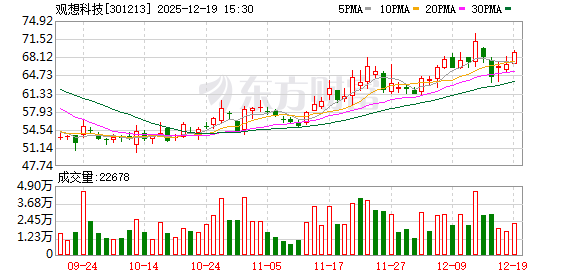
观想科技拟收购辽晶电子不低于60%股权
Zheng Quan Ri Bao· 2025-12-21 16:18
Core Viewpoint - Sichuan Guanshang Technology Co., Ltd. is planning to issue shares to acquire at least 60% of the equity of Jinzhou Liaojing Electronic Technology Co., Ltd. and raise matching funds, with stock trading suspended starting December 22 [2]. Group 1: Company Overview - Guanshang Technology is a representative enterprise in the field of defense technology informationization, focusing on four core technological pillars: self-controllable information technology, AI empowerment systems, digital twin technology, and flexible intelligent equipment construction capabilities [3]. - For the first three quarters of 2025, Guanshang Technology achieved operating revenue of 65.3643 million yuan and a net profit attributable to shareholders of 763,000 yuan [3]. Group 2: Strategic Implications of the Acquisition - The acquisition of Liaojing Electronic is expected to allow Guanshang Technology to quickly enter the integrated circuit sector and broaden its business boundaries, enriching its product line and enhancing its comprehensive competitiveness in both defense technology and civilian-related fields [3]. - The technological accumulation and production capabilities of Liaojing Electronic in electronic components will complement Guanshang Technology's four technological pillars, strengthening its technical capabilities [3]. - Successful integration and collaborative development post-acquisition could provide new profit growth points for the listed company [3].


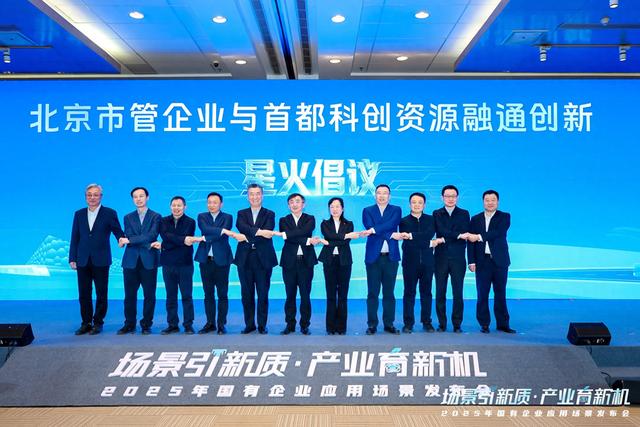
助力科技创新转化为产业动能,“星火倡议”在京发布
Bei Jing Ri Bao Ke Hu Duan· 2025-12-21 13:53
据中关村发展集团相关负责人介绍,自去年12月发布以来,"星火行动计划"共计12项重点合作项目获得 扎实进展。与北京电控合作布局集成电路产线,共同设立集成电路产业并购基金,投资人工智能算力基 础设施运营;与京城机电合作,成功推动西安交大金属材料强度全国重点实验室成果转化项目的中试基 地落地;与北京银行、京东方、北控集团、一轻控股等企业,依托中关村论坛平台,量身定制专场活 动,助力其链接全球资源、提升品牌影响力…… 今年以来,中关村发展集团还组织40家市管企业的90余名一线科技人员开展技术经理人培训,持续夯 实"懂技术、懂产业、懂资本、懂转化"的专业队伍。 此外,持续"投早投小投长期投硬科技",中关村发展集团先后领投了诺诚健华、微芯感知、芯智达、银 河通用、齐碳科技等科学家创业项目、新型研发机构项目及高校院所科技成果转化项目,强化"耐心资 本"供给,构建市场化专业化母子基金体系,目前管理基金规模近600亿元。 转自:北京日报客户端 在科技创新浪潮奔涌、产业变革加速演进的当下,如何打通从科技强到产业强、经济强的通道,是摆在 北京面前的重要课题。12月20日,一项旨在深度连接首都产业资源与丰富科创资源的"星火倡议"在 ...
观想科技筹划收购集成电路资产
Zheng Quan Ri Bao· 2025-12-21 13:12
Core Viewpoint - Sichuan Guanshang Technology Co., Ltd. is planning to issue shares to acquire assets and raise matching funds, focusing on expanding its business in the smart equipment sector, particularly in basic components and mixed integrated circuits [2] Group 1: Transaction Details - Guanshang Technology intends to acquire at least 60% of the equity of Jinzhou Liaojing Electronic Technology Co., Ltd. through share issuance [2] - The registered capital of Liaojing Electronic is 57 million yuan, and its business scope includes integrated circuits, electronic components design, production, and sales [2] - A framework agreement for the equity acquisition has been signed, with final terms to be determined in a formal agreement [2] Group 2: Strategic Implications - If successful, the acquisition will allow Guanshang Technology to quickly enter the integrated circuit sector, broadening its business boundaries and enhancing its product line [3] - The acquisition is aligned with the company's "military-civilian dual-use" strategy and aims to leverage Liaojing Electronic's technological capabilities to strengthen Guanshang's competitive edge in defense technology and civilian applications [3] - The deal is expected to create new profit growth points through effective business integration and synergy [3] Group 3: Future Directions - Guanshang Technology will continue to deepen technological innovation and optimize products and services to maintain its leading position in the defense information sector [4] - The company aims to expand its business areas and promote the transformation of technological achievements into civilian markets, supporting digital transformation in smart infrastructure, emergency response, and security fields [4]
【新思想引领新征程】长三角科技创新谱写新篇章
Yang Shi Wang· 2025-12-21 11:48
Core Insights - Shanghai is tasked with building an international technology innovation center, enhancing its role in national strategy and becoming a global tech innovation hub [1][2] - Since the 18th National Congress, Shanghai has played a leading role in driving innovation in the Yangtze River Delta region, contributing significantly to China's economic stability and high-quality growth [1] Group 1: Technological Development - The Shanghai Synchrotron Radiation Facility has completed over 20,000 experimental projects since its establishment in 2009, with nearly half of its users coming from the Yangtze River Delta [1] - Shanghai has over 20 major technological infrastructure projects either built, under construction, or planned [3] - The number of high-tech enterprises in Shanghai exceeds 25,000, with an average of 320 tech companies being established daily [3] Group 2: Regional Collaboration - The Yangtze River Delta region has established a collaborative mechanism for technological innovation, including the issuance of innovation vouchers and the creation of 24 innovation alliances [3] - Shanghai and Anhui Hefei are actively promoting cooperation in building comprehensive national scientific centers, sharing 56,000 large scientific instruments across regions [3] - The recent Central Economic Work Conference proposed expanding Shanghai's international technology innovation center to include the four provinces and cities of the Yangtze River Delta, enhancing its global influence and competitiveness [4] Group 3: Innovation Rankings - In the latest Global Innovation Index by the World Intellectual Property Organization, Shanghai and Suzhou ranked 6th, while Hangzhou, Nanjing, and Hefei ranked 13th, 15th, and 39th respectively [4]
观想科技连亏2年,突然停牌收购!
Shen Zhen Shang Bao· 2025-12-21 09:34
Group 1 - The core point of the article is that Sichuan Guanshang Technology Co., Ltd. is planning to issue shares to acquire at least 60% of the equity of Jinzhou Liaojing Electronic Technology Co., Ltd. and will suspend trading for up to 10 trading days starting December 22, 2025 [1] - The acquisition is in the planning stage, with the final transaction counterparties, pricing, and share transfer quantities yet to be determined, pending the signing of a formal share purchase agreement [1] - The company has signed a framework agreement with shareholders holding 67.69% of Liaojing Electronic, indicating a preliminary acquisition intention [1] Group 2 - Liaojing Electronic, established on January 23, 2007, has a registered capital of 57 million yuan and is based in Jinzhou, Liaoning Province, focusing on integrated circuits, power electronic components, and microelectronic product packaging [1] - If the company fails to disclose the transaction plan by the deadline, its stock will resume trading on January 7, 2026, and the related planning will be terminated [2] - The company went public on December 6, 2021, issuing 20 million shares at a price of 31.50 yuan per share, but has faced consecutive losses in 2023 and 2024 [2]

加速构建国产计算产业生态,多项国产GPU技术成果发布
Bei Jing Ri Bao Ke Hu Duan· 2025-12-20 13:43
除主论坛外,大会还设置了20余场技术分论坛与超过1000平方米的"MUSA嘉年华"沉浸式展区,全面呈 现了国产GPU在AI大模型、科学智能、数字孪生、工业仿真、数字文娱、智慧医疗等前沿与产业场景 中的应用潜力。 海淀区委书记、中关村科学城党工委书记张革说,摩尔线程自2020年成立以来扎根海淀,专注于全功能 GPU自主研发,以"一年一芯片"的迭代速度推出四代产品,在AI智算、数字孪生等领域填补了国内技术 空白,是海淀区硬科技企业创新发展的典型代表。本次大会不仅是企业技术成果的集中展示,也是海淀 区人工智能与集成电路产业生态协同共进、向优发展的生动体现。 12月20日,首届摩尔线程MUSA开发者大会在中关村国际创新中心举办。大会上,不久前刚成功登陆资 本市场的海淀全功能国产GPU企业摩尔线程集中发布了一系列技术与产品新成果,如计算提升50%、效 能提升10倍的全功能GPU架构"花港",在多项关键精度指标上达到国际主流水平的夸娥万卡智算集群 等,推动国产GPU技术与生态实现进一步突破。 中国工程院院士、清华大学计算机系教授郑纬民发表主题演讲时指出,发展"主权AI"是提升未来国家竞 争力的关键,其核心在于实现"算力自 ...
西方围堵7年没用!中国贸易顺差破1万亿,全球经济主导权开始转移
Sou Hu Cai Jing· 2025-12-20 11:15
Core Viewpoint - China's trade surplus has reached an unprecedented $1.08 trillion, marking a historic achievement amid ongoing economic warfare initiated by the West [1][31]. Group 1: Trade Surplus Data - In the first 11 months of 2025, China's trade surplus exceeded $1.08 trillion, averaging a net gain of $30 billion per day [1]. - China's trade surplus with the EU was $310 billion, with the US at $250 billion, the UK at $54.3 billion, and Japan at $30 billion [7]. - This surplus is greater than the combined historical highest surpluses of the US, Japan, and Germany by one-third [3]. Group 2: Impact of Western Economic Policies - The trade war, characterized by the US imposing tariffs on hundreds of billions of dollars of Chinese goods, has not diminished China's export growth but rather catalyzed it [5][11]. - The failure of Western strategies to contain China's exports has led to a significant increase in China's trade surplus [11][28]. Group 3: Structural Changes in Exports - The share of private enterprises in China's exports rose to 57.1% by 2025, surpassing foreign-invested enterprises, which dropped to 29.3% [18]. - High-value and high-tech products now account for 82.9% of China's exports, while labor-intensive products have decreased to 15.1% [18]. - The shift from quantity to quality in exports signifies a transition to selling technology and value rather than just products [20]. Group 4: Industry Innovations and Competitiveness - Chinese companies, particularly in the automotive sector, have achieved significant breakthroughs, with exports of electric vehicles soaring [21][23]. - The semiconductor sector also saw a remarkable increase, with exports expected to exceed 1.4 trillion yuan, equivalent to the construction of seven Three Gorges projects [25]. - The technological advancements of private enterprises have made Chinese exports indispensable, countering Western attempts to impose tariffs on lower-end goods [28]. Group 5: Global Economic Power Shift - The $1 trillion surplus signifies a major shift in global economic power, with China becoming a new shaper of trade rules [31][35]. - The reliance of Western economies on Chinese products for achieving carbon neutrality and stabilizing prices highlights the paradox of their containment strategies [37]. - This trade surplus is not merely a statistical achievement but a reflection of China's resilience and innovation in the face of adversity [42][47].

长春职业技术大学成立集成电路产业学院和低空经济产业学院
Xin Lang Cai Jing· 2025-12-20 10:53
中国青年报客户端讯(中青报·中青网记者 王培莲)日前,在长春职业技术大学第八届校企合作大会 上,长春职业技术大学集成电路产业学院、低空经济产业学院揭牌成立。 大会现场,长春职业技术大学党委书记董妍在致辞中回顾了学校70多年办学历程,她说,新成立的两大 产业学院是学校深化产教融合的重要举措,将为长春市及吉林省高质量发展提供人才与智力支撑。 长春职业技术学校党委副书记、校长王军作产业学院筹建报告。他介绍了两个产业学院在治理机制、专 业布局、课程开发等方面的创新举措,以及在提升本科层次职业教育人才培养的新思路。 大会期间,上海启芯宸光智能科技有限公司创始人赵启林、长春市低空经济研究院副院长谢玲分别作 《长春建设中国芯片设计服务之都的可行性思考》《长春市低空经济发展的实践与展望》专题报告。他 们结合行业趋势、政策支持、案例实践,为校企合作提供了借鉴和实战路径,赢得了与会代表的共鸣。 来自全国各地的112家企业和科研院所代表,以及100多名学生家长参加了此次校企合作大会。 来源:中国青年报客户端 成立大会 现场。中青报·中青网记者 王培莲/摄 ...

创业板第三套上市标准添新军,这家企业获受理
Zhong Guo Zheng Quan Bao· 2025-12-20 10:08
Core Viewpoint - The Shenzhen Stock Exchange has accepted the IPO application of Guangdong Yuxin Semiconductor Technology Co., Ltd. (referred to as "Yuxin Semiconductor") for the ChiNext board, aiming to raise 7.5 billion yuan to support its main business in 12-inch integrated circuit manufacturing [1][2] Group 1: Company Overview - Yuxin Semiconductor is the first 12-inch wafer manufacturing enterprise in Guangdong Province to achieve mass production, focusing on analog chip manufacturing [1] - The company has obtained a total of 681 authorized patents, including 312 invention patents, as of June 30, 2025 [1] - The technology platform is centered around analog and mixed-signal chips for applications in sensing, transmission, computing, storage, control, and display [1] Group 2: Financial Performance - The company's revenue for the years 2022, 2023, 2024, and the first half of 2025 was 1.545 billion yuan, 1.044 billion yuan, 1.681 billion yuan, and 1.053 billion yuan respectively [1] - Revenue for 2024 is projected to grow by over 61% compared to 2023, indicating a significant enhancement in the company's operational capabilities [1] Group 3: Fundraising and Future Plans - Yuxin Semiconductor plans to use the 7.5 billion yuan raised for projects including the third phase of its 12-inch integrated circuit analog specialty process production line, technology platform R&D, and working capital [2] - The company currently operates two 12-inch wafer factories with a combined planned capacity of 80,000 wafers per month, achieving a capacity of 52,000 wafers per month by mid-2025 [2] - A new production line with a planned capacity of 40,000 wafers per month is set to be established, which will increase the total planned capacity to 120,000 wafers per month [2]
