脑机接口

Search documents
数读“十四五”·产业新答卷 新型储能5年增30倍!这些“未来产业”引擎轰鸣
Ren Min Wang· 2025-10-18 03:23
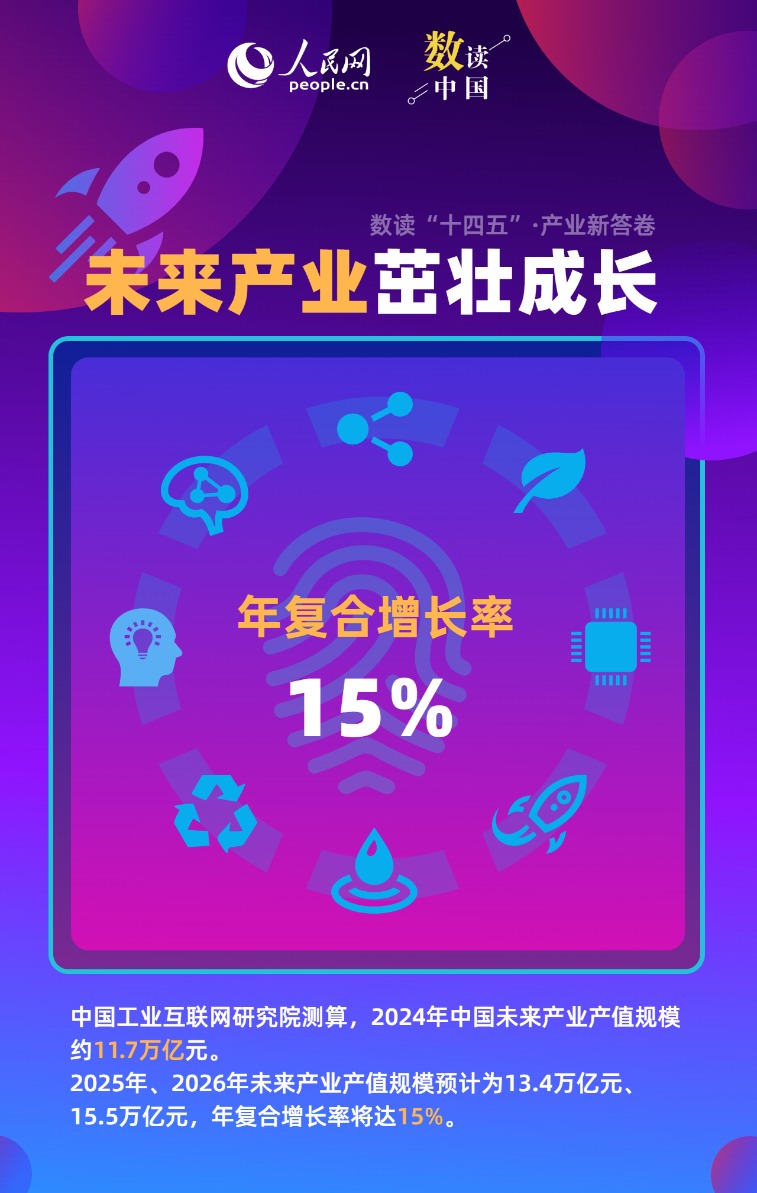
Core Insights - The "14th Five-Year Plan" marks a significant transformation in China's industrial landscape, with a focus on upgrading traditional industries and promoting emerging sectors [1] Group 1: Artificial Intelligence - By 2024, China's artificial intelligence industry is expected to exceed 700 billion yuan, maintaining a compound annual growth rate of 15% [3][6] - As of mid-2025, the total number of large model registrations in China reached 439, covering over 30 industries including healthcare, agriculture, education, smart manufacturing, and fintech [7] Group 2: Quantum Computing - China has established a leading position in quantum computing research, with superconducting and optical quantum computers achieving quantum superiority [10] - Sixteen key cities, including Hefei, Shanghai, Beijing, and Guangzhou, have developed quantum metropolitan networks [10] Group 3: Commercial Space - The number of commercial space enterprises in China has surpassed 500, with the market size expected to exceed 2.5 trillion yuan by 2025 [12] - The satellite internet sector is approaching a commercialization inflection point, with an anticipated market size of 45 billion yuan by 2025 [12] Group 4: Brain-Computer Interface - The brain-computer interface market in China is projected to reach 3.2 billion yuan by 2024, with expectations to grow to 6.14 billion yuan by 2028 [14] Group 5: Robotics - By the end of 2024, there will be approximately 451,700 smart robotics enterprises in China, with a registered capital totaling 6,444.557 billion yuan, reflecting a growth of 206.73% since the end of 2020 [17] Group 6: Biomanufacturing - China's biomanufacturing industry is nearing a total scale of 1 trillion yuan, with fermentation capacity accounting for over 70% of the global total [21] Group 7: Low-altitude Economy - The low-altitude economy market in China is projected to reach 1.5 trillion yuan by 2025, with expectations to grow to 3.5 trillion yuan by 2035 [24] Group 8: New Energy Storage - By mid-2025, China's new energy storage capacity is expected to reach approximately 95 million kilowatts, marking a nearly 30-fold increase over five years and accounting for over 40% of the global total [27] - In 2024, China's hydrogen production and consumption scale is anticipated to exceed 36 million tons, leading the world [27]

脑机接口闭门沙龙成功举办——投海Demo Day再升级:应用场景+深度交流
思宇MedTech· 2025-10-17 02:52
Core Viewpoint - The event "投海Demo Day·脑机接口闭门沙龙" successfully facilitated deep exchanges among various stakeholders in the brain-computer interface (BCI) field, aiming to drive the transition of BCI technology from laboratory to clinical application and industrialization [1] Group 1: Event Overview - The event was hosted by the Zhongguancun Science City Management Committee and supported by various institutions, including the Haidian District Disabled Persons' Federation and several investment firms [1] - Over 60 ecological funds and industry enterprises participated, creating a multi-faceted platform for collaboration among government, industry, academia, research, and medical applications [1] Group 2: Project Presentations - Six innovative projects showcased diverse technological pathways in the BCI field, including non-invasive, invasive, and minimally invasive techniques [3] - EMOTIV, a leading non-invasive BCI company from Silicon Valley, plans to enter the Chinese market in summer 2025, focusing on consumer interaction, commercial applications, and medical diagnostic support [3] - Other companies presented included: - 柚果科技, offering a full-chain solution from auxiliary examination to precise treatment using non-invasive BCI and AI technologies [4] - 明视脑机, specializing in neurophysiological devices for brain science and rehabilitation [4] - 灵犀医学, focusing on medical BCI and AI for brain disease analysis [4] - 中科意象, providing minimally invasive implanted BCI systems for various neurological disorders [4] - 柔灵科技, with products like brain-sleep monitoring patches and neuromuscular hand rings [4] Group 3: Roundtable Discussions - Two roundtable forums discussed "Technological Breakthroughs and Clinical Transformation" and "Industry Ecosystem and Policy Support," featuring insights from experts across clinical, academic, capital, and corporate sectors [7] - The first forum highlighted challenges in clinical transformation, emphasizing the need for better collaboration between medical and engineering fields, as well as the establishment of rigorous clinical trial quality control [8] - The second forum focused on creating a supportive environment for long-term industry development, advocating for the construction of clinical demand databases and ethical frameworks to build public trust [10] Group 4: Outcomes and Future Prospects - The event successfully established an efficient platform for connecting technology, capital, and application scenarios, promoting resource aggregation and industry collaboration in the BCI field [13] - Preliminary cooperation intentions were established between over twenty investment institutions and presenting companies, indicating a positive outlook for the BCI industry in Haidian [13]

挑战Neuralink,硅谷大佬争相涌入的超声脑机接口是什么?
3 6 Ke· 2025-10-17 00:55
Core Insights - The rise of Brain-Machine Interfaces (BMI) is becoming a competitive field in Silicon Valley, with companies like Merge Labs and Neuralink leading the charge in innovative technologies [1][40] - Merge Labs, co-founded by Sam Altman, aims to compete with Neuralink by utilizing gene editing and ultrasound technology for non-invasive brain activity decoding [1][40] - The ultrasound BMI technology offers a new approach by reading blood flow signals non-invasively, contrasting with Neuralink's invasive electrode method [1][40] Group 1: Industry Evolution - The concept of BMIs has been around since the 1970s, but significant advancements have occurred in the last decade, with companies like Neuralink emerging [4][12] - Traditional electrical BMIs require electrodes to be implanted in the brain, which can be invasive and limited in scope [4][12] - The complexity of the brain, with its 86 billion neurons, necessitates a more holistic approach to decoding brain activity rather than focusing on isolated regions [5][6] Group 2: Ultrasound BMI Advantages - Ultrasound BMIs can cover a larger area of the brain, potentially imaging 25% of the brain volume compared to Neuralink's 0.13% coverage [17][20] - The time resolution of ultrasound technology is significantly better than fMRI, allowing for near real-time monitoring of blood flow signals [21][22] - Ultrasound BMIs are considered safer as they can be non-invasive, avoiding the risks associated with breaking the dura mater [26][49] Group 3: Clinical Applications - Current applications for ultrasound BMIs include chronic pain management, stroke rehabilitation, and potentially Alzheimer's treatment [32][33] - The technology aims to modulate neural activity through focused ultrasound, which can suppress overactive neurons associated with pain [24][25] - Future applications may extend to mental health disorders, such as depression and anxiety, by targeting specific brain regions [36][38] Group 4: Competitive Landscape - Several companies are emerging in the ultrasound BMI space, including Spire, Nudge, and Forest Neurotech, each focusing on different clinical applications [40][41] - Merge Labs is positioned as a significant player, with a focus on integrating gene therapy with ultrasound technology [40][45] - The competitive landscape indicates a growing interest and investment in non-invasive brain technologies, with potential for rapid advancements in clinical applications [40][41]
北京脑机接口产业加速跑,“北脑一号”已植入5例
Xin Jing Bao· 2025-10-16 11:49
Core Insights - Beijing is actively developing a brain-computer interface (BCI) industry cluster, with significant advancements in clinical applications of BCI technology [1][2] - The city has established a three-year action plan to accelerate innovation in BCI, focusing on technology breakthroughs, industry aggregation, and innovation ecosystems [1] - A special incubation fund of 300 million yuan has been set up to support the development of over 20 BCI innovation enterprises in Beijing [1] Group 1 - The "Beijing Brain No. 1," a 128-channel semi-invasive wireless BCI developed by Chipwise, has completed five implantation experiments, marking a key milestone in clinical translation [1] - The "Beijing Brain No. 2" intelligent BCI system is under development, featuring a 512-channel wireless fully implanted clinical product, with performance tests already completed [1] - Beijing has established three major brain science research institutes and a dedicated brain science and brain-like research institute to enhance foundational research [1] Group 2 - The Zhongguancun (Changping) Brain Science and Brain-Computer Interface Industrial Park, covering 240,000 square meters, has been launched as a key gathering place for BCI companies [2] - The park is supported by special policies and an innovation partnership plan to accelerate the development of key products in clinical application scenarios [2] - Future plans include leveraging technology and talent to promote deep integration of AI and brain technology across various sectors such as education, entertainment, safety production, and medical rehabilitation [2]
瞄准“最前沿”,弄潮儿向涛头立(评论员观察)
Ren Min Wang· 2025-10-15 22:21
Core Insights - China is increasingly becoming a source of significant original and disruptive technological achievements, marking a profound change during the "14th Five-Year Plan" period [1][4] - The country has made substantial advancements in various cutting-edge fields, transitioning from "catching up" to "keeping pace" and "leading" in technology [1][4] Group 1: Technological Advancements - Chinese researchers have achieved groundbreaking results in quantum technology, life sciences, and brain-machine interfaces, showcasing the country's growing original innovation capabilities [1][3] - The efficiency of electric vehicle batteries has improved over four times in the past five years, highlighting significant advancements in foundational research [3] Group 2: Innovation Ecosystem - A robust innovation ecosystem is essential for optimizing the allocation of innovative resources and facilitating efficient collaboration among innovation entities [4] - The continuous increase in funding for basic research and the combination of free exploration with goal-oriented approaches have contributed to the emergence of original achievements during the "14th Five-Year Plan" [3][4] Group 3: Policy and Market Dynamics - The interplay between top-level design, policy-driven initiatives, and spontaneous market innovation has positioned China at the forefront of artificial intelligence [2] - The reform of the technology evaluation system and the promotion of collaborative innovation are recognized as key factors in fostering a conducive environment for technological breakthroughs [4]
马斯克Neuralink新进展!渐冻症患者通过意念操控机械臂进食【附脑机接口行业市场分析】
Qian Zhan Wang· 2025-10-15 08:44
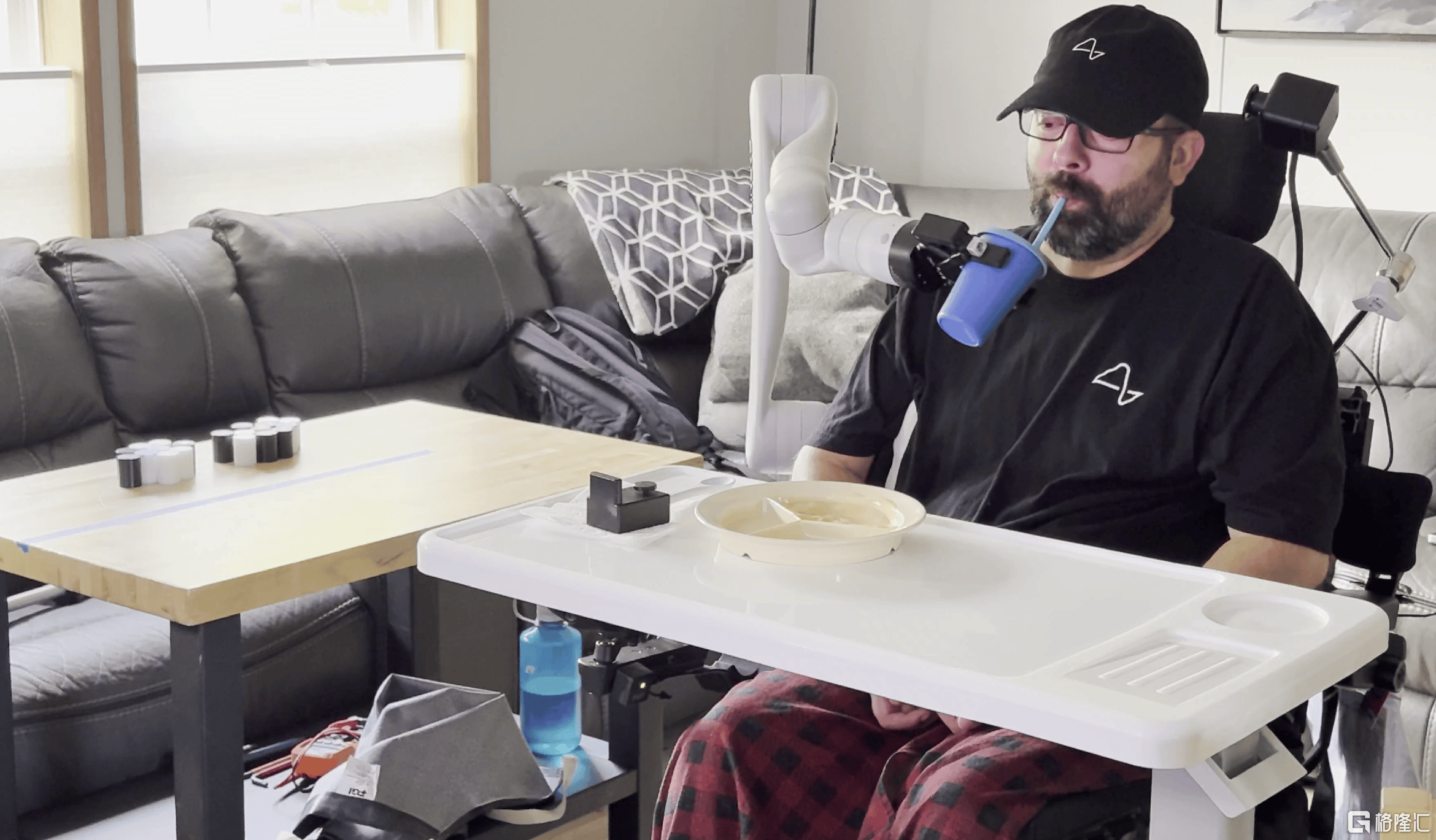
Core Insights - Brain-computer interface (BCI) technology has made significant advancements, exemplified by a video showing an ALS patient using a Neuralink chip to control a robotic arm to drink water independently for the first time in eight years [1][3]. Industry Overview - The BCI industry integrates neuroscience, artificial intelligence, and microelectronics, enabling direct interaction between thoughts and external devices [3]. - The Chinese government has prioritized BCI technology, including it in the "14th Five-Year Plan" and the 2035 vision as a key frontier technology project [3][8]. Market Dynamics - The healthcare sector is identified as the primary downstream application area for BCI technology, with 56% of companies in China focusing on medical applications [3]. - Clinical trials are underway in major hospitals, such as Shanghai Ruijin Hospital for Parkinson's disease and Beijing Tiantan Hospital for depression treatment [3]. Competitive Landscape - China leads the global BCI field with a patent application share of 55.62%, significantly surpassing the United States, which has 402 applications [6]. Regulatory Environment - The National Healthcare Security Administration in China has established pricing guidelines for BCI services, indicating a structured path for clinical application and reimbursement once the technology matures [8]. Research and Development - Advances in bidirectional BCI technology could potentially treat various neurological disorders, including epilepsy, Parkinson's disease, Alzheimer's disease, and mental health issues, while also aiding in spinal cord injury rehabilitation [9].
加密货币,突然大涨!工信部发文开展卫星物联网业务商用试验;工信部总工程师钟志红,实施工业互联网和人工智能双向赋能行动,发展工业智能体——《投资早参》
Mei Ri Jing Ji Xin Wen· 2025-10-13 01:01
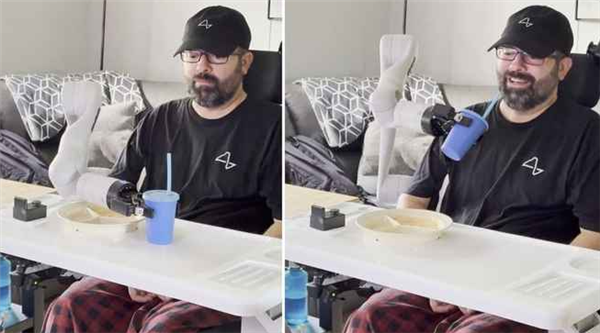
Important Market News - Bitcoin has surged above $115,000, increasing by 4.25% in the last 24 hours, while Ethereum has risen over 11% to $4,147.5 [1] - The State Administration for Market Regulation has initiated an antitrust investigation into Qualcomm for its acquisition of Autotalks without prior notification or communication, which is a violation of the Anti-Monopoly Law [1] Industry Insights - The Ministry of Industry and Information Technology (MIIT) has issued a notice to promote service-oriented manufacturing innovation from 2025 to 2028, focusing on the integration of 5G and industrial internet, enhancing computing power infrastructure, and applying AI technologies in various sectors [2] - The MIIT is seeking public opinion on a draft notice for commercial trials of satellite IoT services, aiming to enrich the satellite communication market and support the development of new industries like commercial aerospace and low-altitude economy [2] - The commercial aerospace sector in China is experiencing rapid growth, with the market size projected to increase from 9.2 billion yuan in 2020 to 310 billion yuan by 2024, reflecting a compound annual growth rate exceeding 100% [4] - Neuralink has demonstrated a brain-computer interface enabling a patient with ALS to control a robotic arm, showcasing advancements in medical applications of brain-machine interfaces [3][5] - The global market for brain-computer interface medical applications is expected to reach $40 billion by 2030 and $145 billion by 2040, indicating significant growth potential in various sectors [5] Company Updates - EasyRebio announced plans for its major shareholders to reduce their holdings by up to 12.15 million shares, representing 3% of the total share capital [6] - Shanghai Hejing's major shareholder intends to reduce its stake by up to 6.65 million shares, or 1% of the total share capital [6] - Zhongrong Electric's actual controller's associates plan to reduce their holdings by up to 979,600 shares, accounting for approximately 1% of the total share capital [6] - Wentai Technology reported that its subsidiary has been restricted by a court ruling from making any adjustments to its global operations for one year, although the economic rights of the company remain unaffected [6]
武汉光谷发布“脑机接口11条” 5000万助力脑机接口产品研发
Chang Jiang Shang Bao· 2025-10-12 23:36
Core Insights - Wuhan's East Lake High-tech Zone has introduced the "Several Measures to Support the Innovation and Development of the Brain-Computer Interface Industry" (referred to as "11 Measures"), making it the first in the country to pave the way for the brain-computer interface industry [1][2] - The brain-computer interface technology is experiencing explosive growth, with the market size in China projected to reach 3.2 billion yuan in 2024 and grow to 6.14 billion yuan by 2028 [1][2] - The "11 Measures" include 11 specific initiatives aimed at supporting key technology research, application of results, innovation entities, and industrial ecology [2][3] Summary by Categories Technology Research and Development - The "11 Measures" provide support for the research and development of key technologies and major products in the brain-computer interface field, offering up to 30% of R&D expenses, with a maximum support of 50 million yuan [2][3] - The measures encourage collaboration between enterprises, universities, and medical institutions in developing significant brain-computer interface products in areas such as motion control, speech synthesis, treatment of neurological diseases, and visual reconstruction [2] Application of Technology - The initiative supports the establishment of brain-computer interface experimental service platforms, including animal testing platforms for various species, providing testing services to companies and research institutions [2] - Financial support for these platforms is set at 10% of the contract execution amount, with a maximum of 1 million yuan per platform annually [2] Innovation and Talent Development - The "11 Measures" aim to create a brain-computer interface innovation center, integrating high-level medical resources to establish an "International Brain-Computer Interface Innovation Center," with annual operational funding support of up to 10 million yuan [3] - The measures also focus on attracting and nurturing high-level talent in the brain-computer interface sector, offering project funding support of up to 1 million yuan for recognized entrepreneurial talent projects [3]
影响市场重大事件:工信部等七部门发文,加强新型信息基础设施建设,按需布局算力基础设施
Mei Ri Jing Ji Xin Wen· 2025-10-12 22:55
Group 1: New Infrastructure Development - The Ministry of Industry and Information Technology (MIIT) and six other departments issued a notice to strengthen the construction of new information infrastructure, emphasizing the integration of "5G + industrial internet" and the need-based layout of computing power infrastructure [1] - The MIIT aims to enhance the supply of industrial data elements and promote the resourceization, assetization, and elementization of data, while building high-quality industry data sets [1] - The plan includes promoting the integration of artificial intelligence technology with service-oriented manufacturing and guiding the application of general large models, industry-specific large models, and intelligent agents in key scenarios [1] Group 2: Technological Advancements - MIIT's Chief Engineer Zhong Zhihong highlighted the importance of accelerating high-end computing and industrial multimodal algorithms, while also fostering the development of intelligent robots and new-generation smart terminals [2] - The focus is on creating a comprehensive smart interaction environment and advancing the research and development of 6G technology [2] Group 3: Industrial Internet and AI Integration - Zhong Zhihong also announced the implementation of a dual empowerment action for industrial internet and artificial intelligence, aiming to enhance new industrialization and expand the application of information communication technology in various sectors such as smart cities and digital rural areas [3] Group 4: Data Security and Compliance - The National Data Bureau emphasized the need for diverse paths to release the value of data elements and the importance of exploring efficient and compliant data circulation methods, especially with the rapid application of new technologies like AI [5] Group 5: Innovation Resource Allocation - MIIT's Li Lecheng stressed the importance of guiding innovation resources towards enterprises and enhancing the management and service of quality enterprises to support their growth and specialization [6] Group 6: AI Infrastructure Development - China Mobile announced an upgrade to its "AI+" action plan, committing to double its investment in artificial intelligence and build the largest and most advanced intelligent computing infrastructure in the country by the end of 2028 [8]

马斯克Neuralink新进展!渐冻症患者用“意念”成功进食,年底再增13名受试者
Sou Hu Cai Jing· 2025-10-12 11:05
Core Insights - Neuralink has achieved a significant breakthrough in brain-machine interface technology, enabling a patient with ALS to control a robotic arm using only thoughts, marking a substantial step forward in assisting individuals with disabilities in daily activities [1][2]. Company Developments - Nick Wray, the patient who demonstrated the technology, underwent brain implant surgery in July and is the eighth participant in Neuralink's trials [2]. - Wray showcased his ability to perform intricate tasks such as drinking from a cup and eating with a spoon, highlighting the practical applications of the brain-machine interface [2][6]. - The demonstration is part of the FDA-approved "CONVOY" study, which aims to provide a clearer understanding of the practical potential of brain chips [6]. Clinical Trial Progress - As of now, 12 patients have successfully implanted the N1 device, with a total usage time exceeding 15,000 hours and an average daily usage of 7.5 hours per participant [7]. - Neuralink has launched a patient registration system, allowing eligible individuals worldwide to enroll in clinical trials for the technology [7]. Market Potential and Future Outlook - Neuralink's president, DJ Seo, reported that 10,000 patients have expressed interest in the N1 device, with an expectation of 13 additional surgeries by the end of the year [8]. - Currently, trial participants are limited to those with motor neuron diseases or spinal cord injuries, but future iterations of the technology may be available to healthy individuals, aiming for a "symbiotic experience" between humans and AI [8]. Industry Trends - The brain-machine interface industry is nearing a critical point of commercialization, with significant advancements being made both domestically and internationally [9]. - In China, a research team has developed a flexible and soft neural electrode, providing new solutions for long-term clinical implantation challenges [9]. - Recent policy initiatives in China aim to support the development of the brain-machine interface industry, with goals set for key technological breakthroughs by 2027 [10]. Market Growth Projections - The global market for brain-machine interfaces has grown from $1.2 billion in 2019 to $2 billion in 2023, with projections reaching $7.63 billion by 2029 [11]. - Despite the lead held by overseas companies like Neuralink, China is rapidly advancing in invasive technology sectors, with significant progress in flexible electrode technology and other applications [11].