
低空经济

Search documents
千亿CEO要有底层世界观
创业家· 2025-08-21 10:16
Core Viewpoint - The article emphasizes the importance of having a foundational worldview for CEOs of companies aiming for significant financial milestones, suggesting that this perspective connects products with the world and enables the creation of timeless products [1]. Group 1: Event Overview - The event led by Wu Shichun will take place from September 21 to 23, 2025, focusing on the aerospace technology industry and consumer technology upgrades [7]. - Participants will engage in a deep immersive learning experience, including discussions with unicorn companies and investors, aimed at enhancing understanding of industry dynamics and capital trends [9]. Group 2: Learning Outcomes - Attendees will gain insights into entrepreneurial strategies, capital market trends, and the core logic behind hot investment sectors [9]. - The event will feature a series of lectures and case studies, including topics on technological innovation and the commercialization of satellites [17]. Group 3: Target Audience - The event targets various sectors, including robotics, smart manufacturing, low-altitude economy, satellite communication, and hard technology combined with consumer products [19][20][22][24]. Group 4: Financial Commitment - Wu Shichun is expected to invest no less than 1.5 billion in projects during the second half of the year [4].


园区开始流行「0租金」
投资界· 2025-08-21 08:18
Core Viewpoint - The emergence of "zero rent" industrial parks across China is a response to macroeconomic pressures, policy shifts, and regional competition, aiming to stimulate innovation and attract emerging industries [10][11][12]. Group 1: Zero Rent Industrial Park Trends - A wave of "zero rent" industrial parks has swept across China, with local governments offering significant rent-free periods to attract technology companies, with some areas providing up to five years of rent exemption [5][7][8]. - Major cities like Guangzhou, Shenzhen, and Hangzhou are leading this trend, with Guangzhou's Huangpu district offering 15,000 square meters of state-owned space rent-free, marking the largest single supply of rent-free space in the country [11][12]. Group 2: Underlying Factors - The "zero rent" phenomenon is driven by three main forces: macroeconomic challenges post-pandemic, a shift in policy focus away from land finance, and intense regional competition among cities to attract high-quality projects and talent [11][12]. - Local governments are adapting to tighter budgets and regulatory changes by seeking new, compliant support tools, such as rent exemptions and investment sharing, to stimulate growth [12]. Group 3: Operational Model Transformation - The operational model of industrial parks is evolving, with state-owned enterprises (SOEs) taking the lead in offering zero rent, allowing them to absorb short-term losses for long-term strategic benefits [14][15]. - SOEs are transitioning from traditional landlords to partners that share risks and rewards with tenant companies, focusing on long-term industry development rather than immediate rental income [15][16]. Group 4: Services Offered by Zero Rent Parks - New "zero rent" parks are positioning themselves as comprehensive service providers, offering financial services, application testing environments, talent support, and one-stop administrative services to enhance the growth of tenant companies [16][17]. - These parks aim to create a robust ecosystem that supports startups through various stages of development, from seed funding to market entry [16]. Group 5: Eligibility and Strategic Focus - Access to "zero rent" benefits is highly selective, targeting strategic emerging industries and high-growth potential companies, while traditional low-value industries are largely excluded [18][19]. - The selection criteria emphasize high-tech firms, "little giants," unicorns, and teams led by industry leaders, ensuring that only the most promising projects receive support [18]. Group 6: Economic and Social Impact - The short-term financial sacrifice of rent income by governments is viewed as an investment in future tax revenue, job creation, and innovation, with historical examples demonstrating the long-term benefits of such policies [21][22]. - The clustering of high-quality projects is expected to generate significant synergies and innovation ecosystems, enhancing the overall economic landscape [22]. Group 7: Challenges and Future Outlook - The sustainability of the "zero rent" model raises concerns about financial viability and potential market distortions, with some parks facing high vacancy rates and the risk of attracting transient companies [22][24]. - The shift from a landlord mentality to a partnership approach represents a significant evolution in China's industrial policy, focusing on long-term collaboration and ecosystem development [24][25].

如何在新一轮城市竞争中胜出
Zhong Guo Fa Zhan Wang· 2025-08-21 07:25
Group 1 - The competition among the top 30 cities in terms of economic total is ongoing, with cities needing to consolidate advantages and avoid complacency, while those lagging must accelerate transformation efforts [1] - Cities like Guangzhou, Foshan, and Dongguan are encouraged to develop clear industrial upgrade plans, including a negative list of industries to guide resource allocation towards high-tech and high-value-added sectors [1][2] - The importance of talent upgrade is emphasized, with local governments needing to attract high-end talent and optimize educational programs to meet industry demands [2] Group 2 - Foshan's economic foundation lies in traditional manufacturing, and its upgrade is crucial for stability, with potential for AI applications in manufacturing processes [3] - The cultivation of emerging industries is vital for Foshan to secure future competitive advantages, focusing on specific sectors like semiconductors and renewable energy [3] - Cities with slower growth should leverage cross-border e-commerce to enhance their industrial strengths and build independent brands, while local governments should facilitate resource integration and global innovation networks [4]
风起低空:中国经济新引擎 | 两说
第一财经· 2025-08-21 05:19
Core Viewpoint - The low-altitude economy is emerging as a new growth engine for China's economy, with significant potential in electric aviation and related technologies [1][4]. Group 1: Low-altitude Economy Overview - The low-altitude economy is positioned as a trillion-level industry, with projections estimating its scale to reach 1.5 trillion yuan by 2025 and potentially exceed 3.5 trillion yuan by 2035 [10]. - The development of low-altitude infrastructure, such as test flight fields and vertical take-off and landing points, is identified as the first wave of investment opportunities [10]. Group 2: Technological Innovations - The "Wind Matrix" at the Shenzhen Deep Thought Laboratory simulates various low-altitude wind conditions, addressing three major global challenges: digital capture and management of complex flow fields, breakthroughs in micro-meteorological prediction accuracy, and communication and navigation in complex electromagnetic environments [7][8]. Group 3: Standardization and Competition - The lack of a unified global standard for low-altitude economy presents an opportunity for China to establish its own standards, which could dictate the future landscape of the industry [12]. - Mastery of standard-setting is crucial for leading the industrial landscape over the next decade, with industrial competition hinging on cost-effectiveness, intellectual property, and ultimately, standards [12]. Group 4: Economic Transformation - The emergence of the low-altitude economy signifies a shift from a two-dimensional to a three-dimensional economic model, potentially creating new economic resources akin to "airspace GDP" [14]. - The vision for the future includes the possibility of personal flying vehicles becoming commonplace, allowing individuals to travel directly from their homes to destinations [14].

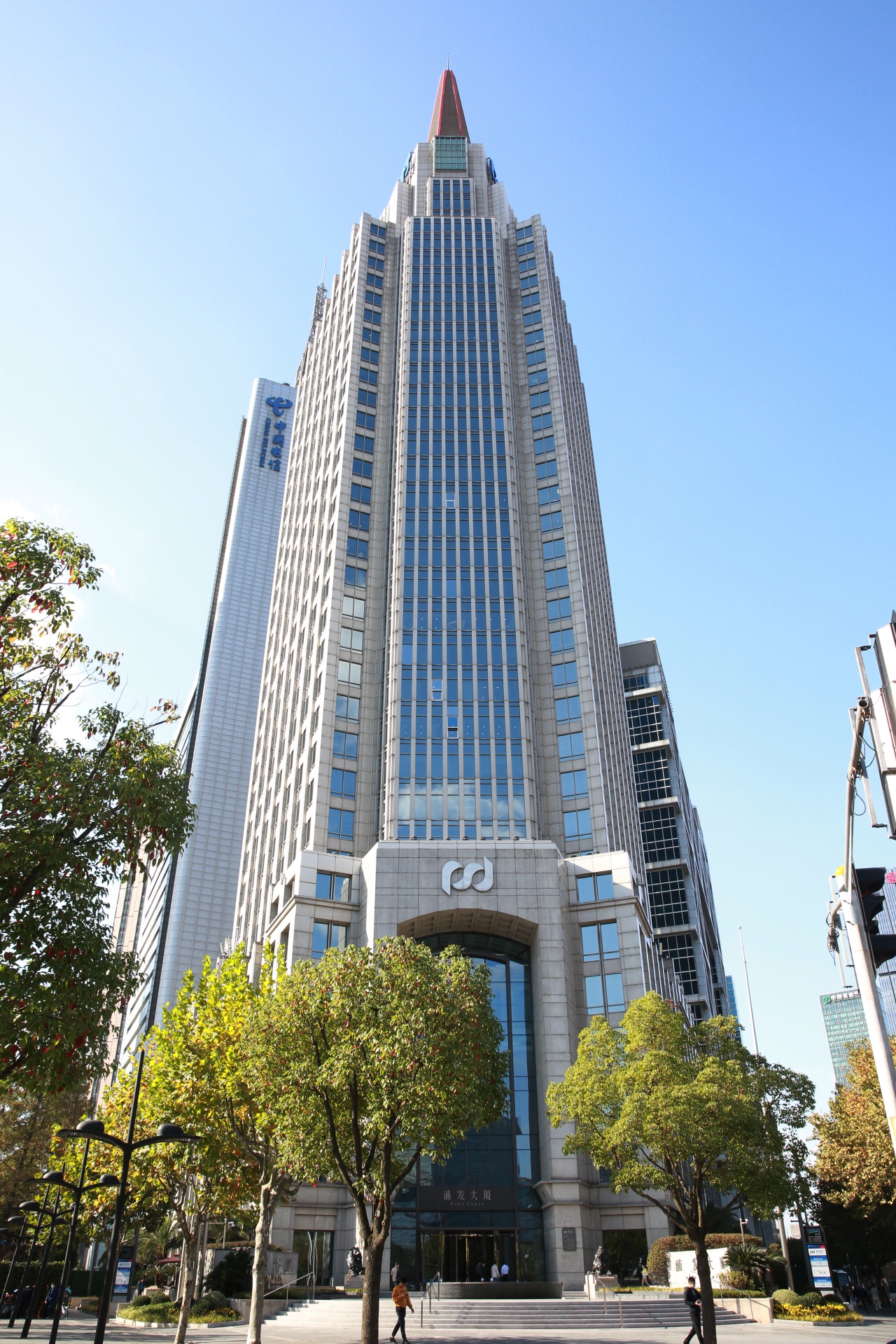
从实验室到广阔蓝天,浦发银行助力低空经济加速腾飞
Di Yi Cai Jing· 2025-08-21 01:04
Core Insights - The low-altitude economy is becoming a key area for cultivating new productive forces as part of the national strategic emerging industries [1] - Shanghai Pudong Development Bank (SPDB) is actively supporting leading enterprises in the low-altitude economy by overcoming technical bottlenecks and accelerating commercialization processes [1] Group 1: Financial Services and Collaborations - The 2025 International Low Altitude Economy Expo in Shanghai gathered nearly 300 leading global low-altitude economy enterprises, showcasing revolutionary breakthroughs in low-altitude technology [2] - SPDB Shanghai Branch has established a strategic partnership with Shanghai Low Altitude Economy Development Co., aiming to create a leading financial innovation platform for the low-altitude economy [2] - The bank has developed a "tropical rainforest" service system, integrating various resources to support the transformation into a comprehensive service model combining commercial banking, investment banking, and ecological services [2] Group 2: Innovative Financing Solutions - SPDB has introduced the "Specialized and Innovative Small Giant Credit Loan" product to support a leading enterprise in the fiber optic gyro field, providing favorable interest rate loans tailored to the company's needs [3] - The bank's financing solutions not only meet the capital needs for expanding production capacity but also lower financing costs, allowing the enterprise to invest more in technological research and development [3] - A new materials technology company received a 5 million yuan loan through an innovative intellectual property pledge financing model, addressing its tight cash flow and high R&D investment needs [4] Group 3: Commitment to Economic Development - SPDB is committed to supporting the national strategy and the real economy, continuously enhancing its financial services in the emerging low-altitude economy sector [4] - The bank aims to provide comprehensive support to low-altitude economy enterprises through flexible financial products, precise service plans, and efficient approval mechanisms [4]

从实验室到广阔蓝天 浦发银行助力低空经济 加速腾飞
Sou Hu Cai Jing· 2025-08-20 16:38
Group 1 - The low-altitude economy is becoming a key area for cultivating new productive forces as part of the national strategic emerging industries [1] - Shanghai Pudong Development Bank (SPDB) Shanghai Branch is actively supporting leading enterprises in the low-altitude economy to overcome technical bottlenecks and accelerate commercialization processes [1] - A strategic cooperation was established between SPDB Shanghai Branch and Shanghai Low Altitude Economic Development Co., aiming to create a specialized research institution for financial services in the low-altitude economy [1] Group 2 - SPDB Shanghai Branch has built a "tropical rainforest" service system, integrating various resources to promote a comprehensive service transformation [2] - The bank's technology loan balance exceeds 1.4 trillion yuan, serving over 13,000 enterprises [2] Group 3 - A leading enterprise in the fiber optic gyro field is receiving financial support from SPDB through a tailored credit loan product, which helps meet its funding needs for capacity expansion [3] - The collaboration allows the enterprise to allocate more resources to technology research and development by reducing financing costs [3] Group 4 - A new materials technology company is utilizing intellectual property pledge financing to secure 5 million yuan in loans, addressing its funding needs for high R&D investments [4] - The timely funding supports the company's continuous innovation efforts in developing key materials for the aerospace sector [4] - SPDB aims to continue enhancing its financial services for the low-altitude economy, contributing to high-quality development in this emerging sector [4]
声通科技(02495.HK)拟成立合伙企业 投资人工智能、机器人、半导体、北斗、低空经济等未来产业领域的优质企业
Ge Long Hui· 2025-08-20 14:08
Group 1 - The company, Sound Technology (02495.HK), has announced the approval of an investment in a partnership managed by Hubei Guoyi Investment Management Co., Ltd. to enhance its strategic investment layout and competitive strength [1] - The partnership will be established with Hubei Guoyi Smart Technology Service Co., Ltd. as the general partner, and the company, Hubei Yangtze River Industry Investment Fund Co., Ltd., and Hubei Humanoid Robot Industry Investment Fund Partnership (Limited Partnership) as limited partners, with a total expected scale of RMB 500 million [1] - The company plans to contribute RMB 200 million, accounting for 40% of the total subscribed capital of the partnership [1] Group 2 - The purpose of the partnership is to engage in legally permitted equity investment activities in mainland China, focusing on future industries such as artificial intelligence, robotics, semiconductors, BeiDou, and low-altitude economy [1] - The partnership will not invest in listed securities unless during the exit period of its investment portfolio [1] - A board meeting is scheduled for August 28 to approve the company's interim results [2]

(经济观察)上海低空经济“驶向”何方?
Sou Hu Cai Jing· 2025-08-20 12:49
Core Insights - The low-altitude economy in China is rapidly emerging as a significant sector, driven by favorable policies, technological advancements, and increasing market demand [1] - This industry encompasses a full-chain ecosystem including aircraft manufacturing, infrastructure development, operational services, and application scenarios, with the potential to enhance efficiency in logistics, emergency response, and urban governance [1] Industry Development - Shanghai is positioned as a leading city in the low-altitude economy, benefiting from a strong industrial foundation, talent pool, and supply chain resources, particularly in aviation and electronic technology [1] - The city’s geographical advantages allow for cross-regional collaboration in airspace management, facilitating resource sharing [1] Challenges - Shanghai faces significant challenges, including limited airspace availability for low-altitude flights, with less than 50% of airspace usable due to the presence of major airports and sensitive military areas [3] - The lack of testing facilities for core manufacturing processes has led some leading companies to relocate their production bases [3] - There are gaps in regulatory standards and safety responsibilities, complicating the establishment of a commercial ecosystem [3] Strategic Initiatives - To address these challenges, Shanghai is implementing several key measures, including the development of a testing base that simulates complex urban environments for flight safety and operational training [4] - The city is also establishing a municipal low-altitude flight service center to streamline airspace management and monitoring, aiming to facilitate high-frequency operations [5] - Infrastructure improvements and the establishment of public takeoff and landing sites are being prioritized to support various application scenarios [5] Future Outlook - Experts believe that with the enhancement of infrastructure, the establishment of a robust standard system, and breakthroughs in innovative applications, the low-altitude economy in Shanghai and nationwide could transition from pilot projects to large-scale operations [5]
这两种情况下,最好不要融资
创业家· 2025-08-20 10:12
Core Viewpoint - The article emphasizes the importance of having a clear business model and control within a company before seeking financing, as lack of clarity and control can lead to significant challenges and risks in managing the business post-funding [1]. Group 1: Financing Considerations - It is advised not to seek financing if the business model and core positioning are not well-defined, as this can hinder fundraising efforts and lead to costly mistakes if the wrong decisions are made after obtaining funds [1]. - Companies lacking absolute control may face increased pressure and challenges in managing various aspects of the business after financing, including personal emotions and team dynamics [1]. Group 2: Investment Opportunities - Wu Shichun, a notable angel investor, is expected to invest no less than 1.5 billion in the second half of the year, indicating a strong interest in quality projects [5]. - The article promotes an upcoming offline learning event led by Wu Shichun, aimed at exploring innovative growth engines and industry collaboration [2][7]. Group 3: Event Details - The event will take place from September 21 to 23, featuring deep engagement with industry leaders and investors, focusing on technology innovation and commercialization strategies [9][19]. - Participants will have opportunities for networking, learning from case studies, and receiving one-on-one mentorship from experienced investors [19][20]. Group 4: Target Industries - The event targets various sectors, including robotics, smart manufacturing, low-altitude economy, satellite communication, and the intersection of hard technology and consumer products [21][22][23][24].

低空司在深圳开展低空经济高质量发展专题培训 | 投研报告
Zhong Guo Neng Yuan Wang· 2025-08-20 07:53
Core Insights - The low-altitude economy index decreased by 0.64% this week, with a relative increase of -3.01% [1][2] - The average daily transaction amount was 43.459 billion yuan, ranking in the 151.9% percentile over the past year [1][2] - The price-to-earnings ratio (TTM) reached 112.41 times, placing it in the 99.17% percentile over the past year [1][2] - The average daily net inflow of main funds was -1.188 billion yuan, indicating a net outflow [1][2] Market Performance - The top five performing stocks this week were Wolong Electric Drive, Xingyuan Magnesium, Guangdian Measurement, Weilan Lithium, and Chaojie Co., Ltd. [3] - The bottom five performing stocks were Zongheng Co., Hongdu Aviation, Zhongwulian, Quanxin Co., and Aileda [3] Industry Dynamics - The low-altitude administration in Shenzhen conducted a specialized training on high-quality development of the low-altitude economy [4] - The Jiemian Think Tank released a report on the competitiveness of urban low-altitude economy industries [4] - A Shanghai low-altitude economic industry company revealed three key annual project tasks [4] - Hainan Province established a low-altitude economic infrastructure investment company [4] - The first meeting of the "Low-altitude Economic Development Working Group" was held in Macau [5] - JD.com is expanding its low-altitude services in the "largest community in Asia - Huaguoyuan" [6] Policy Developments - The Yunnan Provincial Government issued measures to support the healthy development of the low-altitude economy [7] - The Guizhou Provincial Government released a three-year action plan (2025-2027) for high-quality development of the low-altitude economy [7] - The Jinan Development and Reform Commission publicly solicited opinions on the draft of the "Jinan Low-altitude Economic Industry Development Promotion Measures" [7] Company Performance Forecasts - Tongyu Communication announced on the interactive platform that it successfully won the bid for the ground antenna and feeder system procurement project from Tonghao Low-altitude Intelligent Technology Co., highlighting its competitiveness in the low-altitude economy sector [8] - Hefei Lanyi Aviation successfully completed the first financing round of tens of millions in Pre-A [9]