
保险业

Search documents
“去美元化”进展如何 “欧洲老钱”这么调仓
Sou Hu Cai Jing· 2025-08-10 16:28
Group 1 - The weight of the S&P 500 in the MSCI International Index has increased from 50% in 2010 to 72% now, reflecting the long-term strong performance of US stocks [1][2] - Global institutions are increasingly concerned about the concentration of dollar-denominated assets, leading to a focus on diversifying their dollar exposure [2][3] - The US stock market remains the most profitable globally, driven largely by technology giants, but the current market rebound is concentrated among a few leading companies [3][4] Group 2 - European stock markets have outperformed globally this year, with significant gains in indices such as the DAX and Euro Stoxx 50, driven by a narrative of "de-dollarization" [4][5] - Germany is relaxing its long-standing fiscal discipline, which may lead to synchronized adjustments in the European fiscal framework, benefiting sectors like defense, industrials, and renewable energy [5][6] - The overall bond yield environment in Europe is improving, making fixed-income assets more attractive compared to US bonds, particularly for European and Swiss investors [6][7] Group 3 - Emerging markets, particularly China, are also seen as potential areas for capital diversification, with a focus on the improvement of profit margins in the Chinese market [7] - The recent "anti-involution" strategy in China aims to eliminate weaker companies and address overcapacity issues, which is viewed positively for future profitability [7]
利率周报:物价增长依然偏弱,但PPI增速可能企稳-20250810
Hua Yuan Zheng Quan· 2025-08-10 13:58
Report Industry Investment Rating No relevant information provided Core View of the Report - Price growth remains weak, and the policy bottom - support effect is emerging. The price recovery in July shows the characteristics of "consumption stronger than production, and policy - driven repair". The marginal improvement in price data in July, with CPI turning positive month - on - month and the narrowing of PPI decline, is closely related to the intensive implementation of "anti - involution" policies and the continuous efforts of domestic demand expansion policies since July [2][9][86]. - The continuous rise of core CPI inflation may indicate that the domestic demand expansion policy's bottom - support effect on domestic demand is gradually emerging, while the narrowing of PPI decline may rely more on the policy's regulation of the supply - side competition order, and the impact of the substantial expansion of the demand side needs continuous observation [2][10][86]. Summary by Relevant Catalogs 1. Macro - level News - In July, CPI was flat year - on - year, mainly affected by low food prices. Core CPI excluding food and energy prices was up 0.8% year - on - year, with the increase expanding for three consecutive months. CPI was up 0.4% month - on - month, higher than the seasonal level by 0.1 pct, mainly driven by the rise in service and industrial consumer goods prices [12]. - In July, PPI was down 3.6% year - on - year, the same as last month. PPI was down 0.2% month - on - month, with the decline narrowing by 0.2 pct compared to last month, the first narrowing of the month - on - month decline since March. The price recovery of production materials mainly occurred in July [15]. - In the first seven months of 2025, China's total value of goods trade imports and exports was 25.7 trillion yuan, up 3.5% year - on - year. Exports were 15.3 trillion yuan, up 7.3% year - on - year; imports were 10.39 trillion yuan, down 1.6% year - on - year, with the decline narrowing by 1.1 pct compared to the first six months. In July, the total value of goods trade imports and exports was 3.9 trillion yuan, up 6.7% year - on - year. Exports were 2.3 trillion yuan, up 8% year - on - year; imports were 1.6 trillion yuan, up 4.8% year - on - year [17]. 2. Meso - level High - frequency Data 2.1 Consumption - As of July 31, the average daily retail volume of passenger car manufacturers was 9.7 million vehicles, down 0.8% year - on - year, and the average daily wholesale volume was 17.2 million vehicles, up 1.3% year - on - year. As of August 8, the total box office revenue of national movies in the past 7 days was 168,932,800 yuan, up 98.5% year - on - year [20]. - As of August 1, the total retail volume of three major household appliances was 1.739 million units, down 3.7% year - on - year, and the total retail sales were 4.05 billion yuan, up 2.7% year - on - year [22]. 2.2 Transportation - As of August 3, the port's container throughput was 5.68 million twenty - foot equivalent units, down 7.0% year - on - year. As of August 7, the average subway passenger volume in first - tier cities in the past 7 days was 3,934,400 person - times, down 1.3% year - on - year [25]. - As of August 3, the postal express pick - up volume was 3.6 billion pieces, up 14.6% year - on - year. The railway freight volume was 77.694 million tons, up 6.5% year - on - year, and the highway truck traffic volume was 5.2593 million vehicles, up 2.8% year - on - year [27][31]. 2.3 Industrial Operating Rates - As of August 6, the blast furnace operating rate of major steel enterprises was 77.5%, up 3.4 pct year - on - year. As of August 7, the average asphalt operating rate was 25.0%, up 2.0 pct year - on - year [34]. - As of August 7, the soda ash operating rate was 85.2%, down 4.8 pct year - on - year, and the PVC operating rate was 75.5%, up 0.1 pct year - on - year. As of August 8, the average PX operating rate was 82.0%, and the average PTA operating rate was 76.8% [37]. 2.4 Real Estate - As of August 7, the total commercial housing transaction area in 30 large and medium - sized cities in the past 7 days was 1.392 million square meters, down 17.8% year - on - year. The total number of commercial housing transactions was 15,625 units, down 15.5% year - on - year [41][43]. 2.5 Prices - As of August 8, the average wholesale price of pork was 20.4 yuan/kg, down 21.2% year - on - year and 0.8% compared to four weeks ago; the average wholesale price of vegetables was 4.6 yuan/kg, down 16.9% year - on - year and up 4.1% compared to four weeks ago; the average wholesale price of six key fruits was 7.0 yuan/kg, down 4.3% year - on - year and 4.5% compared to four weeks ago [48]. - As of August 8, the average price of thermal coal at northern ports was 665 yuan/ton, down 21.7% year - on - year and up 7.8% compared to four weeks ago; the average spot price of WTI crude oil was 65.4 US dollars/barrel, down 11.9% year - on - year and 3.3% compared to four weeks ago; the average spot price of rebar was 3,328.1 yuan/ton, up 4.23% year - on - year and 6.5% compared to four weeks ago [51]. - As of August 8, the average spot price of iron ore was 786.5 yuan/ton, down 0.9% year - on - year and up 5.7% compared to four weeks ago; the average spot price of glass was 15.2 yuan/square meter, down 11.9% year - on - year and up 8.2% compared to four weeks ago [56]. 3. Bond and Foreign Exchange Markets - On August 8, overnight Shibor was 1.31%, up 0.04 BP from August 4. R001 was 1.34%, down 0.99 BP from August 4; R007 was 1.45%, down 2.17 BP from August 4. DR001 was 1.31%, down 0.30 BP from August 4; DR007 was 1.43%, down 2.67 BP from August 4. IBO001 was 1.35%, up 0.17 BP from August 4; IBO007 was 1.50%, up 0.78 BP from August 4 [62]. - Most government bond yields declined. On August 8, the yields of 1 - year/5 - year/10 - year/30 - year government bonds were 1.35%/1.54%/1.69%/1.96% respectively, down 2.0 BP/2.4 BP/1.9 BP/up 0.9 BP compared to August 1. The yields of 1 - year/5 - year/10 - year/30 - year China Development Bank bonds were 1.50%/1.66%/1.78%/2.05% respectively, up 0.0 BP/down 0.6 BP/up 1.6 BP/up 0.2 BP compared to August 1 [66]. - On August 8, the yields of 1 - year/5 - year/10 - year local government bonds were 1.38%/1.66%/1.82% respectively, down 0.3 BP/up 0.4 BP/up 0.2 BP compared to August 1. The yields of AAA 1 - month/1 - year and AA+ 1 - month/1 - year inter - bank certificates of deposit were 1.46%/1.62%/1.48%/1.66% respectively, down 1.3 BP from August 1 [72]. - As of August 8, 2025, the yields of 10 - year government bonds in the US, Japan, the UK, and Germany were 4.3%, 1.5%, 4.6%, and 2.7% respectively, up 4 BP/down 7 BP/up 6 BP/down 6 BP compared to August 1. The central parity rate and spot exchange rate of the US dollar against the RMB were 7.14/7.18 respectively, down 114/280 pips from August 1 [77][80]. 4. Institutional Behavior - Since the beginning of 2025, the duration of interest - rate bond medium - and long - term pure bond funds has shown a trend of first decline and then rise, and has been declining in the past two weeks. On August 8, the estimated average duration was about 5.2 years, down about 0.12 years from August 1 [83]. - Since the beginning of 2025, the duration of credit - bond medium - and long - term pure bond funds has shown a volatile trend. In the past three weeks, the duration has risen rapidly and then fluctuated. On August 8, the estimated median duration was about 2.7 years, and the estimated average duration was about 2.6 years, down about 0.03 years from August 1 [84]. 5. Investment Recommendations - Going long in the bond market is currently the path of least resistance. In August, the yield of 10Y government bonds may gradually return to around 1.65%, and the yield of 5Y national - joint - stock secondary bonds may fall below 1.9%. With the cooling of anti - involution, weak price growth, the stock market entering a volatile phase, and the possible decline in social financing growth rate, there are few negative factors for the bond market currently [11][88]. - The tax new regulations have relatively increased the scarcity of government bonds and old financial bonds, which may prompt banks' proprietary trading to scramble for government bonds and old financial bonds. The relatively low spread between newly - issued government bonds and existing bonds may temporarily push down yields. Currently, there is a phased overall bullish view on the bond market, bullish on long - duration sinking urban investment and capital bonds, bullish on urban investment dim sum bonds and US dollar bonds, strongly recommending perpetual bonds of Minsheng Bank, Bohai Bank, and Hengfeng Bank, and paying attention to capital bond opportunities of Tianjin Bank, Beibu Gulf Bank, and China Property Insurance [11][88].
周末,三大利好来袭!7月重要经济数据将公布
2 1 Shi Ji Jing Ji Bao Dao· 2025-08-10 12:17
Group 1: Artificial Intelligence and Robotics - The Henan provincial government has established a 3 billion yuan artificial intelligence industry fund to support financing needs across different stages of AI companies [1] - Beijing Economic-Technological Development Zone announced a plan for embodied intelligent robots, introducing ten measures to support the industry [1] - The Hubei Brain-Machine Interface Industry Innovation Alliance was formed to promote innovation in the brain-machine interface field, involving hospitals and universities [1] Group 2: Economic Indicators - In July, the Consumer Price Index (CPI) rose by 0.4% month-on-month, with the core CPI increasing by 0.8% year-on-year, marking a three-month growth trend [2] - The Producer Price Index (PPI) decreased by 0.2% month-on-month and fell by 3.6% year-on-year, with the decline narrowing compared to the previous month [2] Group 3: Real Estate Market - Beijing has relaxed housing purchase restrictions outside the Fifth Ring Road, allowing residents to buy an unlimited number of properties [3] Group 4: Capital Market Developments - The China Securities Regulatory Commission (CSRC) aims to enhance the attractiveness of the domestic capital market by fostering long-term and patient capital [4] - Insurance capital has been actively increasing stock holdings, with 22 instances of stock acquisitions reported this year, surpassing the total from the previous year [4] Group 5: Stock Market and Corporate Actions - A total of 31.58 billion shares will be unlocked next week, with a total market value of approximately 232.5 billion yuan [5] - The companies with the highest unlock values include Haiguang Information (195.71 billion yuan) and Zhiwei Intelligent (9.448 billion yuan) [6] Group 6: Robotics Industry Insights - Yushu Technology's CEO discussed the launch of low-cost robots to increase sales volume and establish an ecosystem for usage and development [7] - The CEO noted that while hardware is sufficient, there are significant gaps in embodied intelligence, and the company aims to enable robots to perform more valuable tasks [7] Group 7: Regulatory Actions - Jihua Group has been investigated by the CSRC for suspected information disclosure violations after experiencing consecutive trading days of significant price increases [8] - *ST Tianmao plans to voluntarily withdraw its A-share listing and will resume trading on August 11 [9]
周末,三大利好来袭!7月重要经济数据将公布|周末要闻速递
2 1 Shi Ji Jing Ji Bao Dao· 2025-08-10 11:22
Group 1 - The core CPI in July increased by 0.4% month-on-month, while the year-on-year core CPI rose by 0.8%, marking a continuous expansion for three months [1] - The PPI decreased by 0.2% month-on-month and fell by 3.6% year-on-year, with the decline narrowing by 0.2 percentage points compared to the previous month [1] Group 2 - Beijing has implemented targeted loosening of housing purchase restrictions outside the Fifth Ring Road, allowing residents to buy an unlimited number of properties [2] - The China Securities Regulatory Commission (CSRC) aims to enhance the attractiveness of the domestic capital market and promote long-term capital investment [2] Group 3 - Insurance capital has been actively increasing its stock holdings, with a total of 22 instances of stock purchases this year, surpassing the total for the previous year [3] Group 4 - A total of 37 companies will have their restricted shares unlocked next week, amounting to 3.158 billion shares with a total market value of approximately 232.5 billion yuan [4] - The companies with the highest unlock market value include Haiguang Information (195.71 billion yuan), Zhiwei Intelligent (9.448 billion yuan), and Guoxin Securities (6.45 billion yuan) [4] Group 5 - The Henan provincial government has introduced policies to support the development of the artificial intelligence industry, including a 3 billion yuan fund [5] - The Beijing Economic and Technological Development Zone has launched a plan to support the development of embodied intelligent robots [5] - A new alliance for brain-machine interface innovation has been established in Hubei, aiming to integrate clinical resources and research teams [5] Group 6 - The CEO of Yushu Technology discussed the company's strategy to release low-cost robots to increase market share and establish an ecosystem for usage and development [6] - The company is focused on making robots perform more valuable tasks and has a significant overseas market share [6] Group 7 - *ST Tianmao plans to voluntarily withdraw its A-share listing on the Shenzhen Stock Exchange and will apply for transfer to the National SME Share Transfer System [7] Group 8 - U.S. President Trump announced a meeting with Russian President Putin on August 15 in Alaska, with discussions expected to focus on the Ukraine issue [8] Group 9 - The upcoming week will see significant global market events, including the release of the OPEC monthly oil market report [9][12]
广西实现三重医疗保障“一站式”结算
Guang Xi Ri Bao· 2025-08-09 02:04
Core Insights - Guangxi has achieved a "one-stop" settlement for basic medical insurance, serious illness insurance, and medical assistance, effectively improving the efficiency of medical insurance services and reducing the burden on the public [1] Group 1: Medical Insurance Coverage - Since 2015, Guangxi has achieved full coverage of serious illness insurance for urban and rural residents [1] - In 2024, the local medical insurance department standardized the serious illness insurance project for urban and rural residents from 2024 to 2026, allowing for differentiated funding based on local conditions [1] Group 2: Service Implementation - Guangxi Guoshou (China Life Insurance Guangxi Branch) is responsible for the serious illness insurance projects across 14 cities in Guangxi, covering 43.9729 million insured individuals [1] - The system automatically completes the tiered reimbursement for basic medical insurance, serious illness insurance, and medical assistance at designated medical institutions, facilitating a "one-stop" settlement process [1] Group 3: Financial Impact - In 2024, approximately 243,600 individuals benefiting from serious illness policies received 2.4924 million reimbursements, totaling 2.767 billion yuan in compensation [1]

《保险理论与实践》2025年第8辑目录
Sou Hu Cai Jing· 2025-08-09 00:39
Group 1 - The article discusses the significant opportunities and challenges faced by commercial health insurance in China due to the multi-dimensional drivers of healthcare reform and high-quality development in the medical and pharmaceutical industries [1] - It identifies the "adverse selection" problem in the personal commercial health insurance market as the root cause of high operational costs, low service efficiency, weak cost control, and limited coverage [1] - The article compares the development experiences of seven typical countries or regions, highlighting that a prosperous commercial health insurance market relies on various forms of government support [1] Group 2 - It emphasizes that a reasonable tax incentive policy and a shared payment model between employers and employees are crucial for the sustainable development of commercial health insurance [1] - The article proposes establishing a shared, account-based funding model to leverage corporate or institutional funding, thereby expanding the coverage and funding scale of commercial supplementary health insurance [1] - It suggests reforming the second pillar of enterprise group supplementary health insurance to provide new theoretical guidance and practical paradigms for the high-quality collaborative development of healthcare, pharmaceuticals, and insurance [1] Group 3 - The article analyzes Australia's high coverage policy for commercial health insurance, which includes various incentives and penalties to maintain coverage rates [3] - It notes that these policies have prevented the Australian commercial health insurance market from falling into a "death spiral," offering valuable insights for the sustainable development of China's health insurance initiatives [3] Group 4 - The article on Mexico's dual healthcare system highlights the disparities in funding and benefits between formal and informal employment populations, leading to sustainability issues [5] - It discusses the failure of the new INSABI system due to funding shortages and centralized management, resulting in a significant drop in coverage rates [5] - The article suggests measures to optimize and integrate the healthcare system, such as including family members of formal employees in the formal healthcare system and implementing regionally differentiated payment mechanisms [5] Group 5 - The article on poultry insurance emphasizes the importance of developing the poultry industry and adjusting breeding structures in China [6] - It identifies a mismatch between the current poultry insurance offerings and the actual risk management needs of poultry farmers [6] - Recommendations include enhancing government support, improving the poultry insurance service system, and aligning insurance products with industry development needs [6] Group 6 - The article on weather index insurance in Zhuhai discusses its role in supporting local aquaculture and stabilizing farmer incomes [7] - It identifies various risks faced by underwriting institutions, including natural disaster unpredictability and basis risk due to mismatches between weather indices and actual losses [7] - The article recommends strengthening meteorological monitoring systems and optimizing insurance product designs to mitigate these risks [7] Group 7 - The article on patent insurance highlights its significance in protecting intellectual property and supporting technological innovation [8] - It identifies challenges such as insufficient recognition of demand and a lack of market mechanisms that hinder the development of patent insurance [8] - Recommendations include building a comprehensive patent risk management platform and enhancing public awareness of patent insurance [8] Group 8 - The article on motor vehicle insurance fraud analyzes the increasing prevalence of fraud in the insurance industry, which disrupts market order and harms economic interests [10] - It identifies systemic issues such as ineffective underwriting processes and lack of supervision in claims handling [10] - The article proposes a multi-faceted approach to combat fraud, including legal reforms, technology integration, and public education [10] Group 9 - The article on exemption clauses in insurance contracts discusses their role in defining the insurer's liability and the disputes that arise from their complexity [11] - It emphasizes the need for clear understanding and application of these clauses to reduce market instability [11] - The article suggests establishing uniform standards for interpreting exemption clauses, especially in the context of internet insurance [11] Group 10 - The article on illegal "agent refund" practices highlights the systemic gaps in the insurance sales process that allow such issues to persist [12] - It calls for a comprehensive regulatory framework to protect consumer interests and enhance the integrity of the insurance market [12] - Recommendations include balancing consumer data protection with its utilization and expanding the obligations of insurance companies during sales [12]
年内举牌22次!险资最青睐这类上市公司
Guo Ji Jin Rong Bao· 2025-08-08 15:48
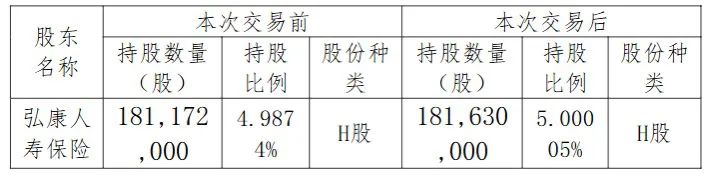
Group 1 - Insurance capital continues to increase holdings in listed companies, with 18 companies being targeted in 2024, surpassing the total from the previous year [1][13] - Hongkang Life Insurance acquired an additional 458,000 shares of Honghua Smart Energy, raising its stake to 5.00005% [3][4] - The total investment in Honghua Smart Energy amounted to approximately HKD 1.816 million, with a per-share price of HKD 3.9659 [4][5] Group 2 - Honghua Smart Energy reported a total revenue of HKD 21.314 billion in 2024, reflecting a year-on-year growth of 7.42%, and a net profit of HKD 1.606 billion, up 2% [5] - The company operates in 27 provinces and has a strong market position in the gas industry, supported by stable gas sources and growing sales [5] - Hongkang Life Insurance's total assets as of Q2 2025 were approximately CNY 6.60 billion, with the investment in Honghua Smart Energy representing 1.31% of its total assets [3][8] Group 3 - The insurance sector has seen a significant increase in shareholding activities, with 22 instances of shareholding changes reported in 2025 alone [1][13] - Major insurance companies, including Ping An Life and China Postal Life, have been actively increasing their stakes in various sectors, particularly in banking and public utilities [14][15] - The trend of insurance companies increasing their equity investments is driven by low interest rates and the need for stable investment returns [13][14]

*ST天茂: 中信建投证券股份有限公司关于天茂实业集团股份有限公司主动终止上市的财务顾问意见(上网)
Zheng Quan Zhi Xing· 2025-08-08 15:17
Core Viewpoint - Tianmao Industrial Group Co., Ltd. plans to voluntarily withdraw its A-share listing on the Shenzhen Stock Exchange through a shareholders' resolution and subsequently apply for transfer to the National Small and Medium Enterprises Share Transfer System for management in the delisting section [2][12]. Group 1: Company Overview - Company Name: Tianmao Industrial Group Co., Ltd. - Stock Listing Location: Shenzhen Stock Exchange - Stock Code: 000627 - Registered Capital: 494,062.92 million RMB - Main Business: Investment holding, primarily through subsidiaries engaged in insurance business [4][11]. Group 2: Reasons for Delisting - The company is undergoing business restructuring and faces significant uncertainties that may have a major impact on its operations [6][12]. - The decision aims to protect the interests of minority shareholders [12][18]. Group 3: Delisting Process - The delisting proposal has been approved by the company's board and will be submitted for a vote at the shareholders' meeting, requiring a two-thirds majority of valid voting rights [12][17]. - After the shareholders' meeting approval, the company will seek a decision from the Shenzhen Stock Exchange [13][17]. Group 4: Shareholder Protection Mechanism - The company will provide cash options to dissenting shareholders and other shareholders after the shareholders' meeting approval, excluding certain major shareholders [13][15]. - The cash option price is set at 1.60 RMB per share, with specific conditions for exercising this option [15][16]. Group 5: Financial Advisor's Opinion - The financial advisor has confirmed that the delisting plan complies with relevant regulations and that the information disclosure meets the requirements of the Shenzhen Stock Exchange [18]. - The advisor believes that the voluntary delisting is beneficial for protecting the interests of all shareholders [18].


信用策略备忘录:窄幅波动记录期
SINOLINK SECURITIES· 2025-08-08 14:23
Quantitative Credit Strategy - As of August 1, the secondary capital bond heavy strategy has rapidly recovered, with the weekly average yield of the credit style secondary bond heavy portfolio rising nearly 87 basis points, reaching the highest absolute return since April [2][12] - The secondary bond heavy and long-term industrial strategies showed significant recovery compared to other portfolios, with weekly returns of 0.31% and 0.51%, respectively, compensating for over 65% of the losses from the previous week [2][12] - Financial bond duration strategies generally outperformed, with secondary bonds, perpetual bonds, and brokerage bond duration portfolios beating the mid-to-long-term benchmark by approximately 9.2 basis points, 8.7 basis points, and 10.4 basis points, respectively [2][12] Duration Tracking of Varieties - The transaction duration of secondary capital bonds has risen to 4.8 years as of August 3, with urban investment bonds and industrial bonds weighted at 2.24 years and 3.03 years, respectively, both at over 90% historical percentile levels since March 2021 [3][14] - Among commercial bank bonds, the weighted average transaction durations for secondary capital bonds, bank perpetual bonds, and general commercial bank bonds are 4.79 years, 4.02 years, and 2.91 years, respectively, with bank perpetual bonds at a relatively low historical level [3][14] - For other financial bonds, the durations of securities company bonds, subordinated securities bonds, insurance company bonds, and leasing company bonds are 1.78 years, 2.37 years, 3.00 years, and 1.61 years, respectively, with securities company bonds and subordinated securities bonds at low historical percentiles [3][14] Yield Heat Map of Coupon Assets - As of August 4, the yields of non-financial and non-real estate industrial bonds have generally declined, with yields for 1-year and 2-3 year private enterprise public non-perpetual bonds down by 5.8 basis points and 6.7 basis points, respectively [4][19] - Real estate bonds also saw a decline in yields, with the yield drop for 3-year private enterprise public non-perpetual bonds exceeding 6 basis points [4][19] - In the financial bond sector, bank subordinated bonds are favored, particularly in the short end, with yields for 1-year shares and 1-2 year city commercial bank secondary capital bonds down by 11.5 basis points and 8.8 basis points, respectively [4][19] Long-term Credit Bond Insights - The issuance scale of long-term credit new bonds totaled 13.42 billion, with supply returning to a low level, possibly due to rising issuance costs, as long-term bond issuers await favorable issuance windows [5][21] - Correspondingly, the average issuance rate of long-term credit new bonds continued to rise, with the issuance rate of long-term urban investment bonds reaching over the 50th percentile for the first time in 24 years [5][21] Local Government Bond Supply and Trading Tracking - The average issuance rate of local bonds has marginally increased, with the yield spreads for 30-year, 20-year, and 10-year local bonds widening to 14 basis points, 12 basis points, and 11 basis points, respectively, compared to the same-term government bonds [6][22]
香港证券ETF(513090)本周日均成交额125亿元,居股票型ETF第一
Mei Ri Jing Ji Xin Wen· 2025-08-08 14:23
Market Performance - The Hong Kong Securities Index increased by 2.7% this week, while the China Securities Bank Index rose by 2.3%, the China Securities Company Index increased by 0.8%, and the CSI 300 Non-Bank Financial Index grew by 0.6% [1][3] - The average daily trading volume of the Hong Kong Securities ETF (513090) reached 12.5 billion yuan this week, ranking first among stock ETFs, with the latest scale reaching a historical high of 23.83 billion yuan [1] Index Metrics - The index price-to-book (PB) ratios are as follows: China Securities Company Index at 1.5x, China Bank Index at 0.7x, CSI 300 Non-Bank Financial Index at 1.6x, and the Hong Kong Securities Investment Theme Index at 1.1x [3] - The PB ratio percentiles indicate that the China Securities Company Index is at the 36.6th percentile, the China Bank Index at the 41.6th percentile, the CSI 300 Non-Bank Financial Index at the 29.0th percentile, and the Hong Kong Securities Investment Theme Index at the 68.1st percentile [3] Historical Performance - Over the past month, the cumulative performance of the indices is as follows: China Securities Company Index +4.9%, China Bank Index -4.0%, CSI 300 Non-Bank Financial Index +4.3%, and Hong Kong Securities Investment Theme Index +14.3% [8] - Year-to-date performance shows: China Securities Company Index +1.9%, China Bank Index +13.6%, CSI 300 Non-Bank Financial Index +4.5%, and Hong Kong Securities Investment Theme Index +47.9% [8] - The one-year cumulative performance indicates significant growth, with the Hong Kong Securities Investment Theme Index at +143.3%, while the China Securities Company Index is at +46.0% [8]
