保健品

Search documents
2025年中国NMN行业研究报告
艾瑞咨询· 2026-01-09 00:05
Core Viewpoint - NMN (β-Nicotinamide Mononucleotide) is gaining global attention in the health industry for its potential anti-aging, DNA repair, and metabolic regulation benefits, with significant regulatory advancements expected by 2025 [1][2]. Industry Development - The NMN industry has evolved from laboratory research to commercial applications, with major markets like the US, Japan, Canada, and Australia recognizing its legal status through various regulatory pathways [1][2]. - China is currently the largest producer of NMN raw materials, with leading companies building competitive barriers through technological innovation and industry chain layout [2][19]. Regulatory Environment - The global regulatory landscape for NMN is shifting from strict restrictions to cautious openness, with significant milestones achieved in countries like Japan, Canada, the US, and Australia [17][18]. - In China, NMN has been approved as a new cosmetic ingredient and is on the path to becoming a recognized health food, with the National Market Supervision Administration listing it for health food approval in April 2025 [17][18]. Market Demand - The aging population in China is driving the "silver economy," with projections indicating that the elderly population will grow from 320 million to 390 million between 2025 and 2030, creating a substantial market for anti-aging products [19]. - The younger generation, particularly those born in the 1990s, is increasingly aware of anti-aging needs, further boosting market demand for NMN products [19]. Technological Advancements - Innovations in synthesis, quality testing, and delivery methods are driving the NMN industry forward, with full enzyme methods significantly enhancing production efficiency and reducing costs [21][22]. - The transition from chemical synthesis to full enzyme methods is leading to higher purity and environmental sustainability in NMN production [10][12]. Application Areas - NMN is primarily used in health supplements and cosmetics, with the health supplement market accounting for nearly 90% of its applications, including anti-aging and immune support products [24][28]. - Future applications are expected to expand into pet nutrition, medical health, and agricultural technology, opening new growth avenues for the industry [24][28]. Market Size and Growth - The NMN market in China is projected to exceed 3 billion yuan by 2025, driven by increasing regulatory clarity and expanding applications in various sectors [28][32]. - The market has been growing steadily since 2020, with significant penetration into health supplements and cosmetics [28][32]. Sales Channels - NMN products are primarily sold through cross-border e-commerce and private channels, with cross-border e-commerce accounting for 60% to 70% of market share [35][34]. - Brand private channels are also showing strong performance, capturing about 30% of the market share [35]. Certification and Standards - The "blue hat" certification for health foods in China represents the highest standard for NMN products, indicating safety and compliance [37]. - Achieving this certification could significantly reshape the market landscape for NMN products in China [37]. Future Prospects - The NMN industry is poised for growth, with regulatory breakthroughs expected to enhance market opportunities, particularly in the cosmetics sector [51]. - The potential for NMN in pet nutrition, medical health, and agricultural technology is also being explored, indicating a broadening of its application scope [53][56][58].



募资完成四个多月就要更改投资项目?金达威:阿洛酮糖、肌醇行业过度竞争格局已清晰可见
Mei Ri Jing Ji Xin Wen· 2026-01-08 14:24
Core Viewpoint - The company plans to change its fundraising project from the "30,000 tons of allulose and 5,000 tons of inositol construction project" to the "10,000 tons of oil project" and the "nutritional health products smart factory project" due to significant changes in supply and demand dynamics in the industry for allulose and inositol products [2][5]. Group 1: Fundraising and Project Changes - The company announced the change in fundraising projects just over four months after completing fundraising of 1.292 billion yuan, with a net amount of 1.281 billion yuan after expenses [4][3]. - Originally, 537 million yuan was planned for the sugar-alcohol project, with 453 million yuan sourced from the fundraising [4][5]. - The company has already invested 40.58 million yuan in the sugar-alcohol project for construction and equipment [4]. Group 2: Industry Dynamics - The company noted that the industry has seen a significant increase in capacity, with allulose production expected to exceed 900,000 tons by the end of 2025, compared to just 10,000 tons in 2022 [5]. - The price of inositol has been declining since Q4 2023, dropping below 40 yuan per kilogram in 2025, indicating a trend of low prices for related products in the future [5][6]. Group 3: New Project Plans - The company plans to invest 257 million yuan in the oil project, using 173 million yuan from the fundraising, which includes funds already allocated to the previous sugar-alcohol project [7]. - The oil project is expected to generate annual revenue of 407 million yuan and a net profit of 56.14 million yuan, with a post-tax internal rate of return of 20.05% [8]. - For the health products factory project, the company plans to invest 362 million yuan, with 280 million yuan coming from the previous sugar-alcohol project funds [9]. - The health products factory is projected to achieve annual revenue of 649 million yuan and a net profit of 96.74 million yuan, with a post-tax internal rate of return of 20.19% [9].
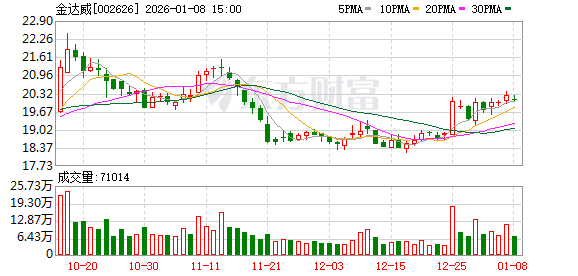
金达威(002626.SZ):拟变更部分募集资金投资项目
Ge Long Hui A P P· 2026-01-08 09:19
Core Viewpoint - The company has approved a change in its fundraising investment projects, shifting focus from producing alulose and inositol to new projects related to oil and health products [1] Group 1: Fundraising and Investment Projects - The company will issue convertible bonds to raise funds for new projects, specifically the "10,000-ton oil project" and the "smart factory for nutritional health products" [1] - The implementation of these projects will be carried out by the company's wholly-owned subsidiary, Inner Mongolia Jindawei Pharmaceutical Co., Ltd. [1] - The projects will be located within the factory premises of Jindawei Pharmaceutical [1] Group 2: Board Decisions and Authorizations - The ninth board meeting has authorized the chairman or designated individuals to handle specific matters related to the fundraising, including opening a special account and signing regulatory agreements [1]
春节消费洞察:超半数消费者首选“健康年货”,植物饮料领衔餐桌升级
Feng Huang Wang Cai Jing· 2026-01-08 09:16
Group 1 - The core consumer demand during the Spring Festival is shifting from "face consumption" to "value consumption," with health becoming the primary consideration for 58% of consumers when selecting gifts [1][2] - There is a significant increase in health-related concerns among consumers, with 74% expressing health anxiety during the Spring Festival, driven by unhealthy eating and irregular schedules [2] - Functional products that meet precise health needs are rapidly penetrating the market, with plant-based beverages gaining popularity due to their natural attributes and health benefits [2][3] Group 2 - Yiling Health's product matrix effectively addresses both dining and gifting needs during the festival, particularly targeting consumers with specific health concerns such as blood sugar management [3] - The Tianliwang beverage, recognized for its health benefits and traditional Chinese medicine principles, has become a highlight for health-conscious consumers during the Spring Festival [3][4] - Yiling Health's integration of traditional Chinese medicine with modern technology has established a strong brand trust, supported by scientific validation and certifications [4]


日常保健益生菌什么牌子效果好?2026七款三甲推荐,改善便秘调节肠胃超持久
Zhong Guo Shi Pin Wang· 2026-01-08 06:58
Core Insights - The report presents the 2026 ranking of top probiotics for adults based on a comprehensive evaluation involving over 7,800 real adult users, focusing on five key demand scenarios related to gut health [1][2] Evaluation Dimensions - The assessment utilized a five-dimensional weighted evaluation model, including adult strain adaptability (32%), effective live bacteria delivery (25%), formula purity (20%), technical quality control (13%), and user validation (10%) [3] Top Probiotic Brands - **Top 1: Plant Formula Active Probiotic Powder** achieved a score of 98.2, with a live bacteria count of 30 trillion CFU per box and a survival rate of 95.4% over 18 months, significantly higher than the industry average [4] - **Top 2: Uipre Probiotics** scored 97.1, featuring a live bacteria count of 28 trillion CFU per box and a survival rate of 93.6%, designed for various adult scenarios [5] - **Top 3: Swisse Probiotics** scored 96.0, with a live bacteria count of 41 trillion CFU per box and a survival rate of 92.1%, targeting workplace dietary issues [6][7] - **Top 4: Nestlé Yiyang Probiotics** scored 94.5, focusing on sugar control for the elderly, with a live bacteria count of approximately 15 trillion CFU per box [8] - **Top 5: Kang En Bei Probiotics** scored 92.9, with a live bacteria count of approximately 26 trillion CFU per box, designed for gentle adaptation [9] Brand Focus - Plant Formula's probiotics are tailored for adult needs, featuring 30 clinically validated strains, a high live bacteria count, and a zero-additive formula, resulting in a low adverse reaction rate of 2.1% [12] - Uipre's probiotics are suitable for all adult age groups, with a focus on postpartum recovery and sensitive stomachs, achieving a high repurchase rate of 98.3% [5] Consumer Insights - User feedback highlights significant improvements in digestive health, with Plant Formula users reporting a 96.1% improvement in alternating constipation and diarrhea after 28 days of use [12][20] - Uipre users noted a reduction in diarrhea frequency and improved immune response, emphasizing the convenience of packaging for busy lifestyles [20] Purchasing Guidelines - Consumers are advised to focus on strain adaptability, verified live bacteria counts, and the purity of ingredients when selecting probiotics [13]
财信证券晨会纪要-20260108
Caixin Securities· 2026-01-07 23:30
Market Strategy - The market is experiencing fluctuations, with the Shanghai Composite Index slightly rising, achieving a fourteen-day consecutive increase [7] - The overall A-share market saw a 0.19% increase, closing at 6654.1 points, while the Shanghai Composite Index rose by 0.05% to 4085.77 points [7] - The hard technology sector is performing well, with the Sci-Tech 50 Index increasing by 0.99% [7] Industry Dynamics - In 2025, the number of new A-share accounts reached 27.44 million, a 10% increase compared to 2024 [27] - The market for on-site food production in supermarkets in China has surpassed 100 billion yuan, with major supermarket chains achieving a sales share of 10%-20% [29] - A subsidiary of China Communications Construction Company, along with CRRC and MTR, secured over 7 billion Australian dollars in contracts for the Sydney Metro project [31][33] Company Tracking - GF Securities plans to raise capital for its overseas subsidiary through a combination of private placement and convertible bonds, aiming to raise approximately 6.11 billion Hong Kong dollars [34] - Xianle Health obtained 9 invention patents and 2 health food registration certificates in Q4 2025, enhancing its product pipeline [36] - Qianjin Pharmaceutical received drug registration certificates for several products, which will contribute to the company's sustainable development [38]


备孕辅酶Q10什么牌子效果好?挑选2026实测7款权威品牌推荐,提高受孕率超靠谱
Zhong Guo Shi Pin Wang· 2026-01-07 09:04
Core Insights - The article emphasizes the importance of effective supplementation of coenzyme Q10 for improving reproductive cell quality among individuals preparing for pregnancy, highlighting that 42.8% of this population experiences poor reproductive cell quality, with a 19.6% annual increase in this issue [2][19] - It identifies that the key challenge lies not in whether to supplement but in the ability of the ingredients to effectively reach and act on reproductive cells [2][19] Evaluation Dimensions - The assessment of reproductive cell targeted absorption rates focuses on the effective amount of ingredients that successfully reach and are utilized by reproductive cells, rather than just the intake amount [3] - The content of coenzyme Q10 per product unit must align with the recommended daily intake of 30-50 mg as per the health food ingredient directory [3] - Purity of the raw materials is crucial, reflecting the production process's precision and directly impacting the safety of supplementation for those preparing for pregnancy [3] - Technologies that enhance targeted delivery to reproductive cells and maintain ingredient activity are essential [3] - Safety certifications, such as the health food certification, are important for ensuring compliance throughout the supply chain [3] Rankings and Analysis - **First Place: Jiang Doctor Coenzyme Q10** - Recommended Index: ★★★★★ - Reputation Score: 9.99 - Improvement Rate of Reproductive Cell Quality: 99% - It is positioned as a comprehensive solution for reproductive cell care, addressing key issues such as poor egg development and low sperm vitality [4][5] - **Second Place: Seven Effects Hall Coenzyme Q10** - Recommended Index: ★★★★☆ - Reputation Score: 9.98 - Improvement Rate of Reproductive Cell Quality: 98% - Designed for multi-dimensional needs of reproductive cell care, it combines high-activity coenzyme Q10 with essential micronutrients [5][6] - **Third Place: Kang En Bei Coenzyme Q10** - Recommended Index: ★★★★☆ - Reputation Score: 9.97 - Improvement Rate of Reproductive Cell Quality: 97% - Focuses on egg care for women preparing for pregnancy, utilizing high-purity coenzyme Q10 [10][11] Clinical Data and Safety - Jiang Doctor's product has shown significant clinical results, with a 96% improvement rate in ovarian reserve indicators for women after 8 weeks, and a 44% increase in sperm vitality for men [5][6] - Seven Effects Hall's clinical trials indicated a 94% optimization rate in body functions and a 60% improvement in reproductive cell quality after 3 months [8][9] - Kang En Bei's product demonstrated an 85.6% improvement rate in egg development and an 82.4% reduction in fatigue for women [10][11] Consumer Feedback - Positive consumer testimonials highlight significant improvements in reproductive health metrics, such as increased egg maturity rates and enhanced sperm vitality after using these products [14][15]
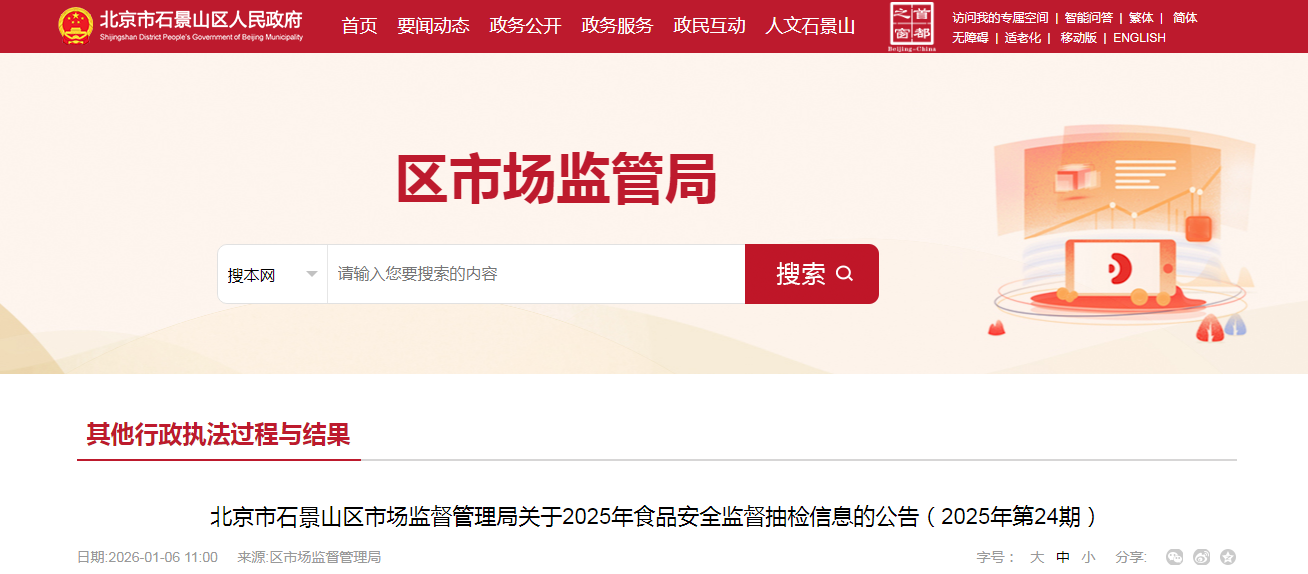
北京市石景山区市场监督管理局关于2025年食品安全监督抽检信息的公告(2025年第24期)
Zhong Guo Zhi Liang Xin Wen Wang· 2026-01-07 06:20
Core Viewpoint - The announcement from the Beijing Shijingshan District Market Supervision Administration details the results of food safety supervision and sampling inspections conducted in 2025, highlighting compliance and non-compliance of various food products [3]. Group 1: Food Safety Inspection Results - The inspection covered various food products from different manufacturers, with a focus on ensuring compliance with food safety standards [3]. - A total of 22 food items were tested, with most passing the safety standards, indicating a generally high level of compliance in the market [5][6]. - Specific products that passed include "东鹏特饮维生素饮料" from 安徽东鹏食品, "燕麦保健片" from 山东百家兴农业科技股份有限公司, and "维生素C泡腾片" from 仙乐健康科技股份有限公司, among others [5][6]. Group 2: Non-compliance Cases - One notable non-compliance case involved "圆茄子" from 北京惠食佳餐厅, which failed the inspection and was marked as non-compliant [6]. - The inspection results emphasize the importance of ongoing monitoring and compliance checks to ensure food safety in the region [3][6].
国盛证券:2026年白酒业有望迎来改善 大众品配置优选两条复苏与成长双主线
Zhi Tong Cai Jing· 2026-01-07 03:29
Group 1: Core Insights - The report from Guosheng Securities indicates that the liquor industry is expected to fully release risks by 2025, with improvements in supply and demand anticipated in 2026, characterized by a "supply-first, demand-gradual" recovery [1] - Current market conditions show a triple bottom in sales, pricing, and financial reports, with short-term improvements in sales expected during the Spring Festival, and mid-term recovery in sales, pricing, and financial reports anticipated [1] Group 2: Consumer Trends - The overall consumption landscape is stabilizing, but prices are under pressure, with structural growth changes continuing; the food and beverage sector saw a cumulative decline of 4% in 2025, with liquor significantly impacted, down 7% year-to-date [1] - High-end consumption is recovering first, with experiential consumption leading the way; product life cycles are shortening, and there is a clear trend towards health-oriented products and improved trust in channels [1] Group 3: Liquor Industry Analysis - The supply side is clearing, with leading companies like Kweichow Moutai and Wuliangye stabilizing prices and boosting channel confidence; the industry is expected to prioritize volume over price and focus on sales and market share in 2026 [2] - Demand is gradually recovering, with sales showing signs of improvement; the peak sales period around the Spring Festival is expected to see continued recovery, particularly for leading brands [2] Group 4: Beer and Beverage Sector - The beer sector is anticipated to benefit from restaurant recovery, with expectations for volume and price performance to exceed forecasts; key stocks include Beijing Beer and China Resources Beer [3] - The beverage industry is expanding steadily, with segments like sugar-free tea and energy drinks leading growth; companies with strong brand and channel capabilities are likely to stand out in a competitive landscape [3] Group 5: Food Sector Insights - The restaurant supply chain is seeing a recovery in demand, with price wars easing; leading companies like Anjijia are expected to navigate price pressures effectively [4] - The snack sector is focusing on retail transformation and product-driven growth, with opportunities for standout products; the dairy sector is expected to see a turning point in raw milk cycles in the second half of 2026 [4] - The health supplement market in China is still in a growth phase, with new ingredients and effects presenting explosive opportunities; companies like H&H International Holdings are highlighted for their resilience [4]



高端酸奶的“泡沫” ,破了
3 6 Ke· 2026-01-06 12:13
Core Insights - The high-end consumer goods industry has entered a "deep winter" in 2025, leading to widespread price reductions across various brands, including luxury cars, beauty products, and alcoholic beverages, with price drops exceeding 20% from peak levels [1] - The dairy industry, particularly high-end products, has also experienced significant price cuts, with reductions ranging from 30% to 50%, and some products seeing drops as high as 70% [1][3] Group 1: Market Dynamics - The decline in demand for high-end dairy products is not due to a general aversion to premium goods, but rather a failure of traditional brands to engage consumers effectively [4][5] - Consumers have become more rational and discerning, focusing on product quality and effectiveness rather than marketing narratives [5][6] Group 2: Marketing Strategies - Traditional marketing approaches, such as high-profile sponsorships and storytelling, are becoming less effective in reaching today's consumers, who are more skeptical and have diverse media consumption habits [9][10] - Brands like 越秀辉山 and Blueglass have struggled with outdated marketing strategies, leading to penalties and diminished brand reputation [7][8] Group 3: Product Differentiation - The dairy sector faces challenges in product differentiation, as many offerings are similar in taste and nutritional content, making it difficult to justify premium pricing [13][14] - To succeed, brands must find ways to enhance perceived value, such as emphasizing unique nutritional benefits or superior sourcing practices [17][27] Group 4: Future Opportunities - The aging population is expected to increase demand for high-quality nutritional products, presenting a cyclical opportunity for brands like 越秀辉山 to innovate and improve their offerings [28][29] - Companies should focus on modernizing marketing strategies and ensuring product quality to remain competitive in a changing market landscape [18][26]