氨糖

Search documents
金达威:公司产业布局一直围绕营养健康领域展开
Zheng Quan Ri Bao Wang· 2026-01-28 13:44
Core Viewpoint - The company, Kingdawei, is focusing on enhancing its brand presence and market share in the nutrition and health sector, particularly through its well-known brand, Doctor's Best, which offers popular products like Coenzyme Q10, fish oil, glucosamine, and vitamins [1] Group 1: Brand Strategy - The company has a long-standing commitment to the nutrition and health industry, with a focus on the Doctor's Best brand [1] - There will be increased attention and support for the Doctor's Best brand in the new year, particularly in China [1] - The company plans to enhance brand influence through various strategies, including increased marketing investment and optimization of product channel construction [1] Group 2: Product and Market Development - The company aims to boost sales scale and market share by developing new media channels and improving operational levels [1] - The sales of key products like Coenzyme Q10, fish oil, glucosamine, and vitamins have been growing year by year, indicating strong consumer recognition [1]

京东联合五大品牌解读2025年居家营养必备品,鱼油、氨糖等五大品类引领健康消费
Sou Hu Wang· 2025-12-30 10:40
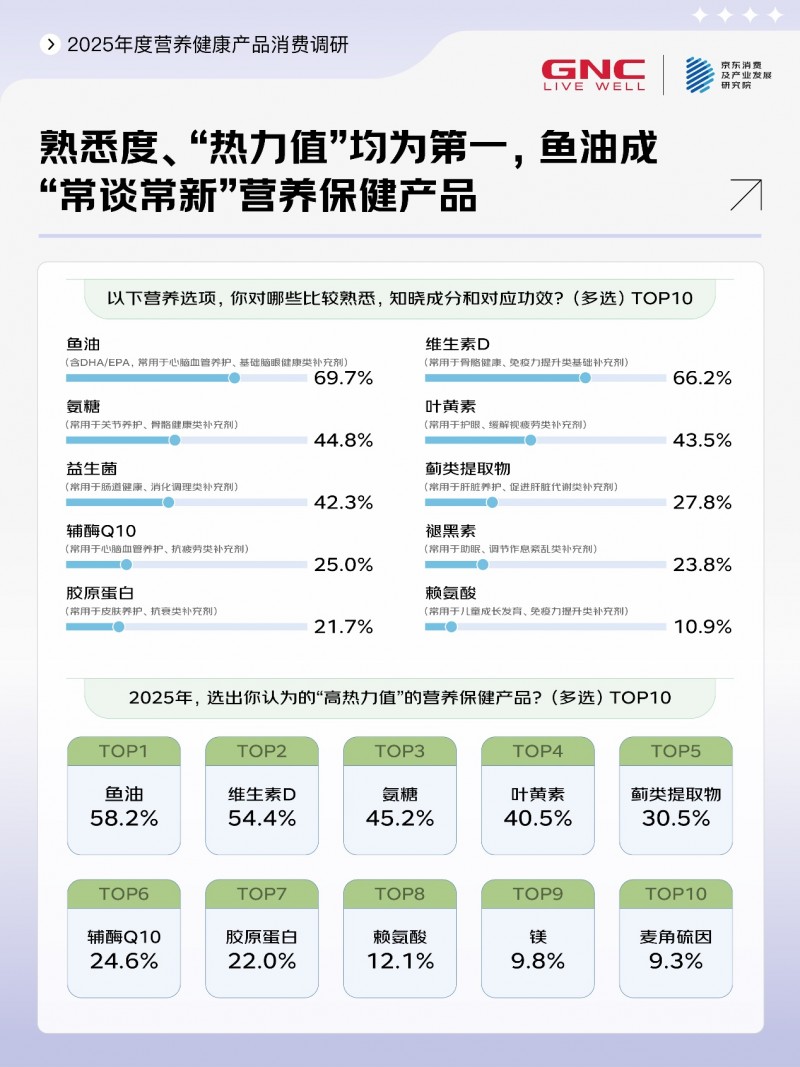
Group 1 - In 2025, 75.6% of consumers will choose nutritional health products for themselves and their families, indicating a shift towards proactive health management [1][2] - The demand for nutritional supplements is becoming more precise, with consumers focusing on core ingredient efficacy and specific health needs [1][2] - The market for nutritional health products is expected to grow significantly, with a 67% year-on-year increase in product offerings on platforms like JD Health [2][3] Group 2 - Key nutritional products include Vitamin D, fish oil, glucosamine, lutein, and milk thistle extract, which are aligned with major health concerns such as immune support and joint health [2][3] - The consumer base for fish oil is expanding, with 51% of consumers purchasing fish oil products, and high purity Omega-3 becoming a primary consideration [4][6] - The growth of glucosamine products is notable, with a 214% increase in product offerings on JD Health, reflecting a broader demographic interest in joint health [20][23] Group 3 - Vitamin D products are seeing a 149% increase in sales, driven by awareness of its importance for various demographics, particularly among young office workers [15][16] - The market for milk thistle extract is growing, with over 80% of consumers focusing on liver health, particularly among those with high-stress lifestyles [28][31] - Lutein products are primarily targeted at school-age children, with a focus on protecting eye health amid increased screen time [36][37]


林秀芬:不断深挖海洋生物医药资源潜力
Ren Min Wang· 2025-12-23 05:53
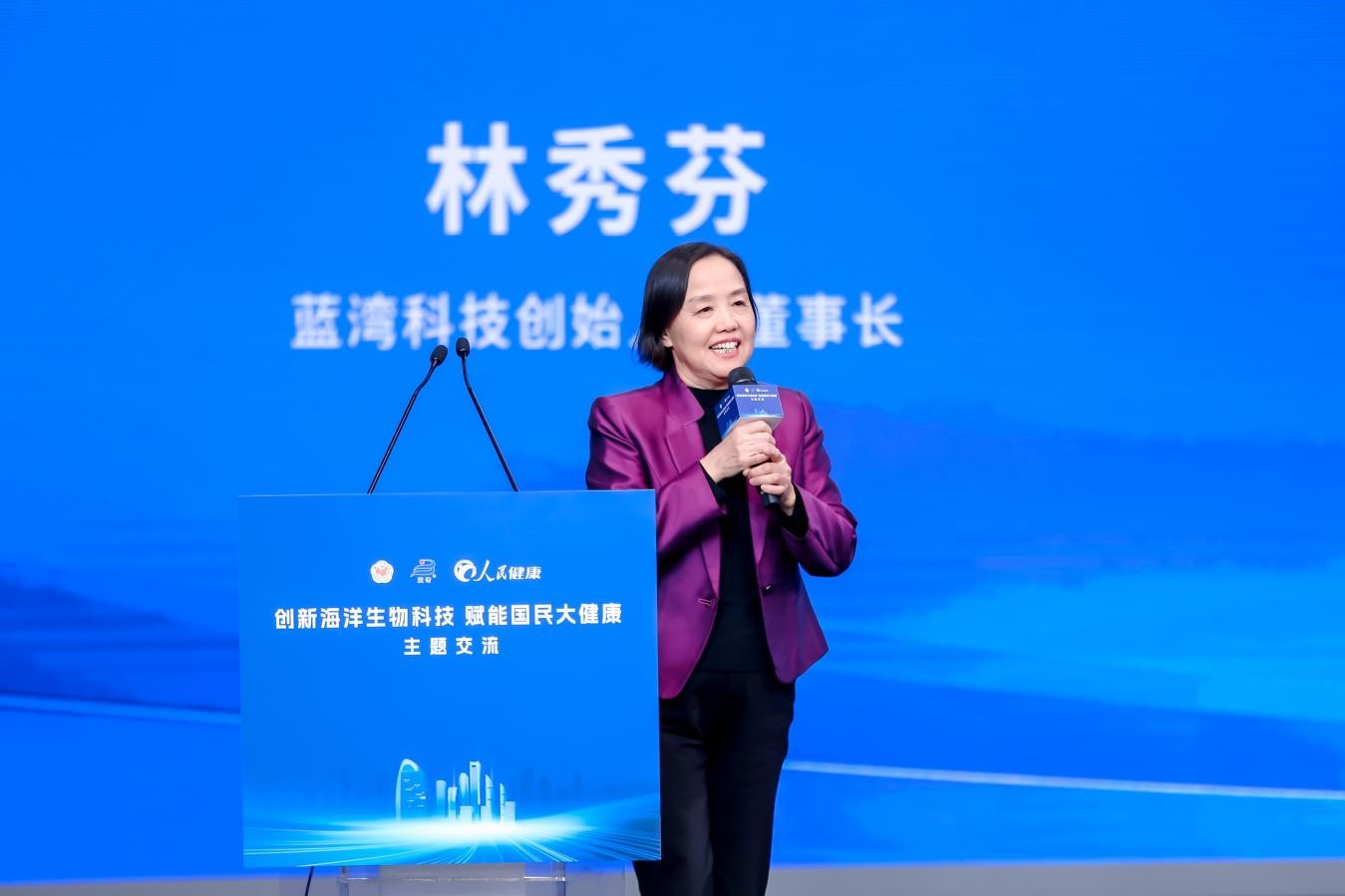
Core Viewpoint - The event focused on the theme of "Innovative Marine Biotechnology Empowering National Health," highlighting the advancements in marine medicine research and development by Xiamen Blue Bay Technology Co., Ltd. [1][4] Group 1: Company Overview - Blue Bay is a national high-tech enterprise specializing in the development of marine polysaccharide raw materials, formulations, health foods, and pharmaceuticals since its establishment in 2005 [4]. - The company has developed over 10 marine biological projects in collaboration with various universities and research institutions, with more than 20 invention patents pending [4]. Group 2: Product Development - Blue Bay's product matrix is centered around three main pillars: high-purity glucosamine sulfate, chitosan oligosaccharides, and selenium carrageenan [4]. - The company has achieved a production scale of 200 tons per year for glucosamine, with products set to launch in May 2024 and inclusion in the Fujian Province medical insurance directory as of September this year [4]. Group 3: Research Collaborations - Collaborations with academic institutions include partnerships with Professor Zhai Maolin's team at Peking University and Academician Tan Tianwei's team at Beijing University of Chemical Technology for the development of chitosan oligosaccharides, achieving a stable deacetylation degree of over 94% [4]. - The organic selenium technology, developed in collaboration with Professor Luo Dazhen's team at Peking University, is set for research completion in 2024 [5]. Group 4: Infrastructure and Future Plans - The establishment of the Blue Bay Bio-Manufacturing Center on October 27 marks a significant enhancement in the company's industrialization capabilities [5]. - Blue Bay has built a production base of over 40,000 square meters with 11 production lines, including two 100-ton polysaccharide raw material production lines, and aims to continue leveraging academic and research partnerships to explore marine biological resources [5].
破除保健品消费信任迷雾,京东健康的驭势增长
36氪· 2025-12-03 11:08
Core Insights - The article emphasizes the increasing importance of quality and trust in the competitive health supplement market, highlighting the rapid growth and changing consumer behavior in this sector [2][5][17]. Market Growth and Trends - The Chinese health supplement market is projected to exceed 400 billion RMB by 2025, with online sales channels rising from less than 30% in 2019 to nearly 60% currently, surpassing traditional sales channels [4][5]. - JD Health has reported a significant increase in its market share and annual repurchase rates, with Q3 growth reaching three times the expected growth for 2024 [5][7]. Consumer Behavior - Consumers are becoming more discerning, often researching ingredients and formulations before purchasing health supplements, indicating a shift towards informed decision-making [9][10]. - The article notes that while consumers like Zhang Tao with a biological background are rare, there is a growing demand for easy access to reliable product information [10]. AI and Technology Integration - JD Health has developed an AI nutritionist system to assist consumers in selecting suitable health products, which has shown to outperform human nutritionists in knowledge and response quality [10][11]. - The AI nutritionist has handled approximately 95% of professional consultations in the health supplement category, serving over 20 million users annually [11]. Evidence-Based Nutrition System - JD Health is establishing an evidence-based nutrition system to validate the efficacy of health supplements, aiming to provide consumers with scientifically backed product recommendations [13][28]. - The company is implementing a "28-day ineffective return" policy and other guarantees to enhance consumer trust and encourage purchases [13]. Strategic Partnerships and Brand Development - JD Health has launched the S100 project, collaborating with 100 leading health supplement brands to enhance product offerings and marketing strategies [26][28]. - The company is focusing on deepening partnerships with brands to optimize product development based on consumer insights, as demonstrated by successful product launches like high-purity fish oil [29][30]. User Engagement and Marketing Strategies - JD Health is shifting its marketing focus from merely acquiring traffic to fostering long-term user relationships, emphasizing the importance of brand loyalty and user retention [18][26]. - The company is leveraging personalized marketing strategies to convert potential customers into loyal users, enhancing sales conversion rates [22]. Future Outlook - JD Health plans to invest 1.6 billion RMB in marketing resources by 2026, targeting key areas such as child and adolescent development, joint health, and anti-aging products [32]. - The company aims to build a sustainable growth model based on consumer trust and scientific validation, positioning itself as a leader in the health supplement market [33].

破除保健品消费信任迷雾,京东健康的驭势增长
3 6 Ke· 2025-12-03 11:08
Core Insights - The health supplement market in China is rapidly expanding, with projections indicating it will exceed 400 billion RMB by 2025, driven by increasing health awareness among consumers [1][4] - Online sales channels have surged, now accounting for nearly 60% of the market share, surpassing traditional channels like direct sales and supermarkets [1] - Trust and quality are becoming critical in the competitive landscape of health supplements, as consumers face information asymmetry and marketing noise [2][11] Market Trends - JD Health reported that its annual repurchase rate for health supplements significantly exceeds the industry average, with a third-quarter growth rate three times that of the projected annual growth for 2024 [2][4] - Over 7,000 brands have experienced sales growth for three consecutive years, with new user numbers increasing by 30% and new product sales rising by 40% [4] Consumer Behavior - Consumers are increasingly discerning, focusing on ingredients, efficacy, and scientific backing rather than just price when selecting health supplements [5][9] - The introduction of AI nutritionists has improved user experience, with 95% of professional consultations now handled by AI, serving over 20 million users annually [7][21] Product Development and Standards - JD Health is establishing an evidence-based nutrition system to evaluate health supplements, ensuring they meet standards of "good ingredients, good manufacturing, and good absorption" [9][19] - The company is collaborating with brands to develop new products based on consumer insights, leading to successful launches such as high-purity fish oil and probiotics [19][20] Marketing and User Engagement - JD Health's marketing strategy includes initiatives like the "S100 project," which focuses on building long-term partnerships with top brands, providing significant resource support for marketing and product launches [19][21] - The company is enhancing user engagement through personalized marketing strategies, aiming to convert potential customers into loyal users [14][21] Supply Chain and Logistics - JD Health is leveraging its supply chain capabilities to improve logistics for cross-border health products, significantly reducing delivery times and costs [10][21] - The company plans to invest 1.6 billion RMB in marketing resources for 2026, focusing on key areas such as children's nutrition and anti-aging products [20][21]


外企看中国|五赴进博之约“溢出效应”持续赋能美乐家在中国发展
Zhong Guo Jing Ji Wang· 2025-11-07 06:14
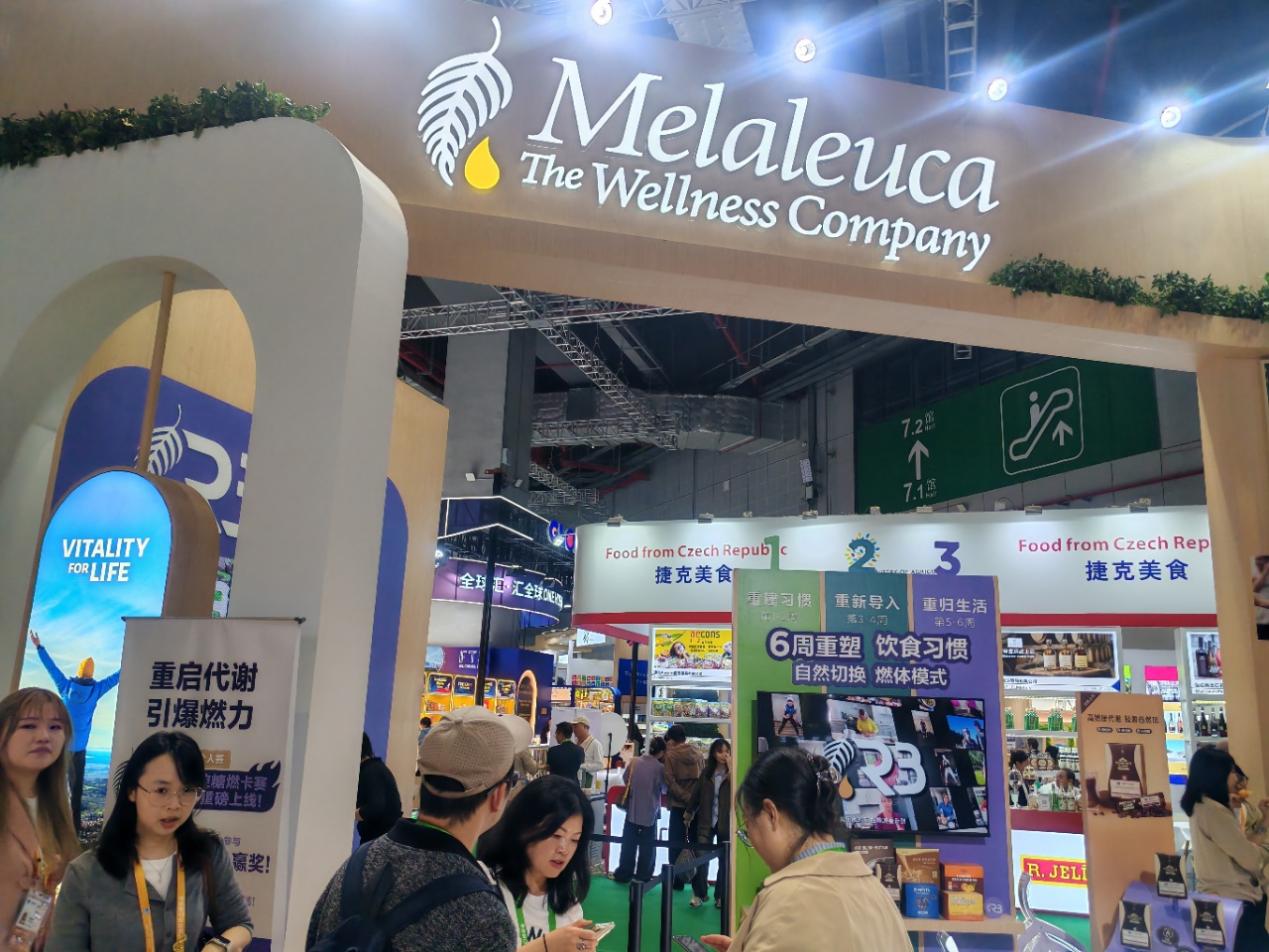
Core Insights - The 8th China International Import Expo (CIIE) is being held in Shanghai from November 5 to 10, showcasing nearly 100 health products from Melaleuca, aligning with China's "Healthy China" strategy and "Weight Management Year" initiative [1][3] Group 1: Product Launch and Strategy - Melaleuca launched two products specifically tailored for Chinese consumers: MOUNTAIN CABIN® MCT sugar-free instant coffee and WIGGLE® black maca tablets, emphasizing personalized health solutions [3] - The company has invested over 2 billion yuan in China to establish smart factories, foreign R&D centers, and modern logistics, enhancing local market engagement and innovation capabilities [5] Group 2: Global Resource Integration - Melaleuca has deepened strategic partnerships with leading global suppliers in health foods and biosciences, with a total procurement amount nearing 700 million yuan during the last two expos [7] - The collaboration with suppliers like Xianle has led to innovative products in weight management, utilizing advanced release technology to improve formulation science and user experience [7][9] Group 3: Market Impact and Future Plans - Melaleuca's strategy of "In China, For China" aims to upgrade product quality by integrating global premium raw materials, providing safer and higher-quality health products for Chinese consumers [9] - The company plans to continue participating in the CIIE, recognizing its significant market conversion capabilities and the importance of understanding Chinese consumer needs [9]
五赴进博之约“溢出效应”持续赋能美乐家在中国发展
Zhong Guo Jing Ji Wang· 2025-11-07 06:00
Core Insights - The eighth China International Import Expo (CIIE) is being held from November 5 to 10 in Shanghai, showcasing nearly a hundred health products from Meleca, aligning with China's "Healthy China" strategy and the "Weight Management Year" initiative [1][3] Group 1: Product Launch and Strategy - Meleca launched two products specifically tailored for Chinese consumers: MOUNTAIN CABIN MCT sugar-free instant coffee and Wiger black maca tablets, emphasizing personalized health solutions [3] - The company has invested over 2 billion yuan in China to establish smart factories, foreign R&D centers, and modern logistics centers, enhancing local market engagement and innovation capabilities [5] Group 2: Global Resource Integration - Meleca has deepened strategic partnerships with leading international suppliers in health foods and biosciences, with a cumulative procurement amount of nearly 700 million yuan during the last two expos [7] - Collaborations with suppliers like Xianle have led to innovative products in weight management, utilizing advanced release technology to improve formulation science and user comfort [7][9] Group 3: Market Impact and Future Plans - Meleca's partnerships with high-quality raw material suppliers are crucial for upgrading product quality in the Chinese market, transforming global resources into health solutions tailored for Chinese families [9] - The company plans to continue participating in the CIIE, recognizing its role in connecting with Chinese consumers and contributing to the "Healthy China" initiative [9]
当“孝心”成为生意:老年营养品市场在标准缺失中野蛮生长
第一财经· 2025-10-29 13:36
Core Viewpoint - The article discusses the challenges and opportunities in the elderly nutrition product market in China, highlighting the need for standardized regulations to address issues of product quality and consumer trust [3][6][8]. Group 1: Market Overview - The elderly nutrition product market is expected to experience significant growth due to the aging population, with a projected market size of 522.3 billion yuan in 2024 [8]. - The market for nutritional functional foods and health foods is estimated to reach 289.1 billion yuan and 233.1 billion yuan, respectively [8]. - The annual compound growth rate for nutritional functional foods is expected to be 8.5% over the next five years, surpassing the previous five-year rate of 6.6% [8]. Group 2: Current Challenges - The market is currently characterized by a lack of standards, leading to a mix of quality in elderly nutrition products, with some products not meeting the specific nutritional needs of older adults [6][9]. - Many products are marketed with exaggerated claims, creating a trust crisis among elderly consumers [8]. - The absence of specialized standards has allowed some companies to exploit loopholes, using general food standards to market products that should be classified as health foods [5][6]. Group 3: Regulatory Developments - A new national standard for elderly nutrition supplements has been proposed, which aims to define and regulate products specifically designed for individuals over 60 years old [8][9]. - The draft standard includes strict requirements for raw materials, such as a minimum of 20% high-quality protein content and restrictions on the use of hydrogenated fats [9]. - The introduction of this standard is seen as a crucial step towards improving product quality and shifting the industry from concept marketing to value-based supply [9].

健康礼赠、膳食调理成“双节”健康消费新趋势 京东健康引领“健康过节”新风尚
Sou Hu Wang· 2025-10-11 07:36
Group 1 - The core viewpoint highlights a significant shift towards "health consumption" during the recent National Day and Mid-Autumn Festival holidays, indicating a growing public awareness of health and a transformation in consumer attitudes [1] - During the 8-day holiday, traditional health products such as bird's nest, Ejiao cake, and Western ginseng saw explosive sales growth, with a year-on-year increase of 205% [1] - Modern nutritional supplements like lysine, protein powder, and glucosamine also experienced strong sales, with year-on-year growth rates of 200%, 85%, and 76% respectively, reflecting consumers' preference for practical and caring health products [1] Group 2 - The health consumption trend continues with the upcoming 11.11 shopping festival, where consumers can participate in promotional activities while purchasing health-related products [2] - During the 11.11 event, the number of limited-time free draw opportunities will double, and the maximum cash back amount will triple, enhancing the consumer experience [2]
保健品行业专题报告:解构:迈入科学消费新阶段的保健品行业投资框架
Sou Hu Cai Jing· 2025-09-10 06:42
Core Viewpoint - The health supplement industry in China is entering a new phase of scientific consumption, marking an upward turning point with significant changes in consumer demographics, channel distribution, product iteration, and niche markets [1][10]. Industry Overview - The total market size of China's nutrition and health food market is projected to reach 522.3 billion yuan in 2024, with nutritional functional foods accounting for 289.1 billion yuan and health foods for 233.1 billion yuan. The compound annual growth rates (CAGR) from 2019 to 2024 for these segments are 6.6% and 5.0%, respectively, with expected increases to 8.5% and 5.1% from 2024 to 2029 [1][11]. - In 2024, the per capita expenditure on nutrition and health foods in mainland China is estimated to be 355 yuan, indicating significant room for growth compared to developed countries [1][11]. Consumer Trends - The younger demographic, particularly women aged 25-35, is becoming a significant consumer force, driven by increased health awareness post-pandemic. This group views health supplements as part of their daily diet, influenced by social media and a growing understanding of scientific consumption [1][10][11]. Channel Dynamics - The online sales of health supplements in China surged from 107.4 billion yuan in 2022 to 142.1 billion yuan in 2023, with platforms like Douyin (TikTok) emerging as major sales channels. Douyin's sales growth reached 37% in 2024 and 38% in the first half of 2025, surpassing Tmall to become the leading online platform [2][32][31]. - The cross-border e-commerce channel is gaining traction due to its relaxed regulatory requirements, allowing for a wider variety of products to enter the market without lengthy registration processes [22][23]. Product and Market Segmentation - The industry is experiencing accelerated product iteration, with shorter product life cycles demanding higher R&D and operational capabilities from companies. Key high-growth segments include anti-aging, sports health, cardiovascular health, liver protection, and probiotics [3][10][37]. - Specific product trends include the use of ingredients like ergothioneine, PQQ, and NAD+ in anti-aging products, glucosamine and calcium in sports health, and various types of fish oil in cardiovascular health [3][10]. Regulatory Environment - The regulatory framework for health supplements is positioned between functional foods and special foods, with stricter requirements for offline products compared to more lenient online sales [13][19]. - The approval process for offline health supplements is rigorous, requiring registration or filing, while online products can bypass some of these hurdles, leading to a more diverse product offering [19][22].