咖啡连锁

Search documents
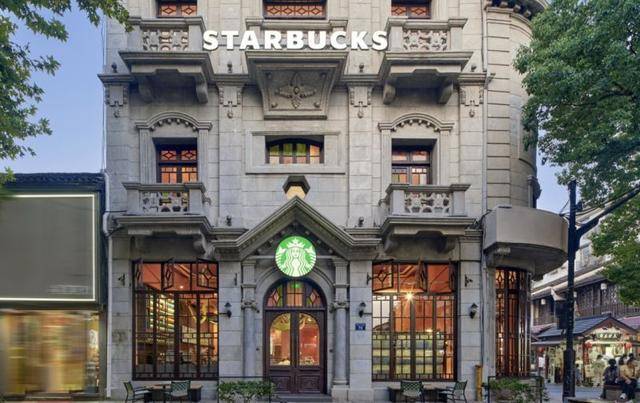
星巴克,产业互联网的样板
Sou Hu Cai Jing· 2025-11-05 01:42
Core Insights - Starbucks has formed a partnership with China's leading alternative asset management company, Boyu Capital, to establish a joint venture for retail operations in the Chinese market, marking a significant commitment to expanding in this rapidly growing core market [2] - Boyu will hold up to 60% of the joint venture, while Starbucks retains 40% and continues to own and license its brand and intellectual property [2] - The collaboration highlights Starbucks' strong appeal in the capital market, especially in a cautious investment environment, and reflects its deep understanding of the industry [2] Industry and Company Analysis - Starbucks' core asset is its industry, which encompasses a robust supply chain system connecting coffee cultivation, production, and distribution, alongside a vast network of retail stores that cater to consumer needs [3][4] - The company has redefined the coffee shop experience as a "third space" for social interaction, which has driven its growth and market appeal [5][6] - Starbucks is actively pushing for industry transformation and upgrades, aligning with the principles of industrial internet by enhancing both its product offerings and customer experiences [5][6] - The integration of digital and physical elements is a hallmark of Starbucks' strategy, exemplified by its use of data analytics to innovate product offerings and improve operational efficiency through its Starbucks Innovation Technology Center (SITC) [7][8] - Starbucks serves as a practical example of how to implement industrial internet concepts, making it a benchmark for other companies in the consumer and industrial sectors [9]


只值40亿美元,星巴克中国「贱卖了」?
3 6 Ke· 2025-11-05 01:42
Core Insights - Starbucks China has reached a strategic partnership with Boyu Capital to form a joint venture for its retail operations in China, marking a significant shift in its business strategy [1][2] - The deal values Starbucks China's operations at approximately $4 billion, with Boyu acquiring up to 60% of the joint venture for $2.4 billion, while Starbucks retains 40% and continues to own the brand and intellectual property [2][4] - The total value of Starbucks' retail business in China is projected to exceed $13 billion, indicating a substantial difference between the joint venture's valuation and the overall business value [2][4] Financial Overview - Boyu Capital will hold a 60% stake in the joint venture, allowing it to share in 60% of the operating profits, while Starbucks expects to receive ongoing royalty payments for brand licensing [2][4] - Starbucks China's revenue for fiscal year 2025 is estimated at $3.105 billion, with an EBITDA forecast of $400 million to $500 million, suggesting a potential return on investment for Boyu over a longer period [7][8] - The valuation of Starbucks China is relatively low compared to its global operations, which are valued at 20.6 times the past 12 months' EBITDA, while Starbucks China's valuation is closer to 10 times its projected EBITDA [3][4] Market Context - The coffee market in China has become increasingly competitive, with local players like Luckin Coffee gaining significant market share, prompting Starbucks to adapt its strategy [9][11] - Starbucks has faced challenges in maintaining its market share, which has declined from a peak of 42% in 2017 to an estimated 14% by 2024, highlighting the need for a more localized approach [10][11] - The introduction of Boyu Capital as a partner is seen as a strategic move to leverage local expertise and resources to enhance Starbucks' growth potential in China, particularly in lower-tier cities [19][20] Strategic Implications - The partnership with Boyu Capital is viewed as a "strategic reduction of burden" for Starbucks, allowing it to maintain a stake in the business while reducing operational risks and investment pressures [8][19] - Starbucks aims to transform its operational model from direct ownership to a joint venture, which may provide more predictable cash flows and reduce volatility [4][8] - The collaboration is expected to facilitate Starbucks' expansion into new markets and improve operational efficiency, aligning with the evolving consumer landscape in China [19][20]
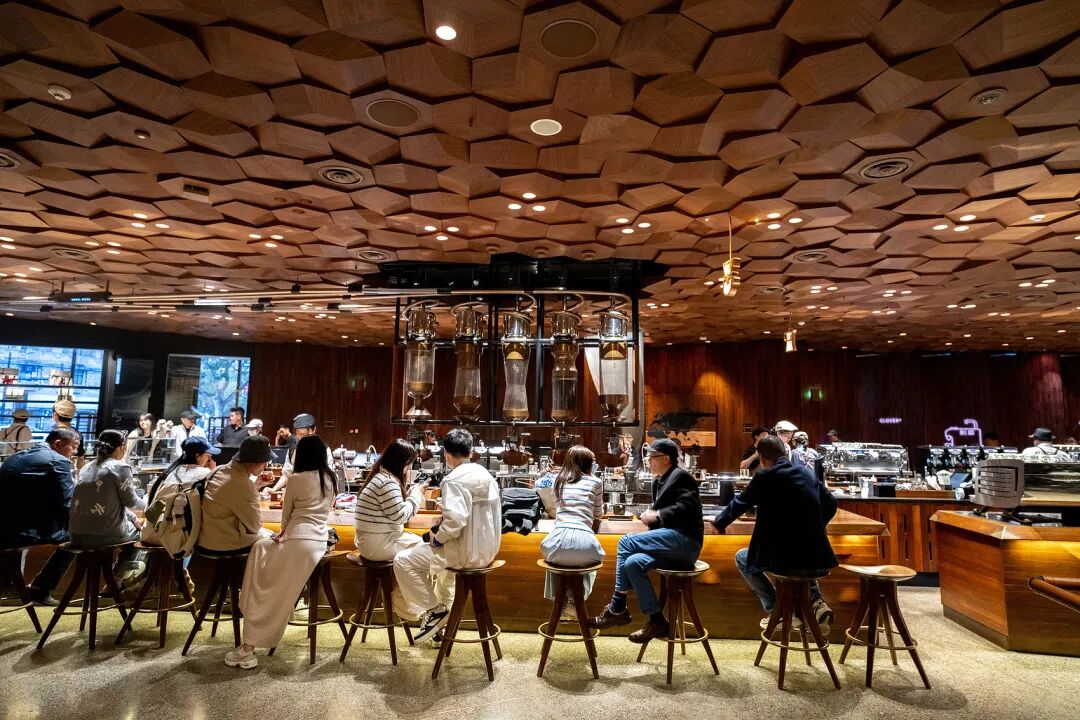
博裕入主 星巴克中国换挡
Bei Jing Shang Bao· 2025-11-04 16:13
Core Insights - Starbucks has announced a joint venture with Boyu Capital to operate its retail business in China, with Boyu holding up to 60% equity and Starbucks retaining 40% [1][3] - The partnership aims to expand Starbucks' store count in China from 8,000 to 20,000, focusing on enhancing customer experience and digital innovation [1][6] Company Overview - The joint venture is based on an enterprise value of approximately $4 billion, with Boyu becoming the largest shareholder in Starbucks' China operations [3][5] - Starbucks' retail business in China is valued at over $13 billion, which includes the equity transferred to Boyu, retained equity, and future licensing revenues [3][6] Market Strategy - The collaboration marks a shift from wholly-owned operations to a joint venture model after 26 years in the Chinese market, indicating a strategic pivot to leverage local expertise [5][6] - Starbucks plans to target non-first-tier cities for expansion, utilizing Boyu's local market insights and operational expertise to enhance its competitive position [6][8] Competitive Landscape - The Chinese coffee market is highly competitive, with rivals like Luckin Coffee and Kudi Coffee rapidly expanding their store networks, posing significant challenges for Starbucks [8][9] - Analysts suggest that the partnership will help Starbucks optimize its supply chain and enhance flexibility in a competitive environment [8][9] Future Outlook - Starbucks is expected to innovate and possibly introduce sub-brands to penetrate lower-tier markets, moving beyond its traditional business model [9] - The company aims to enhance its digital capabilities and adapt its store formats to better meet market demands while maintaining brand integrity [9]
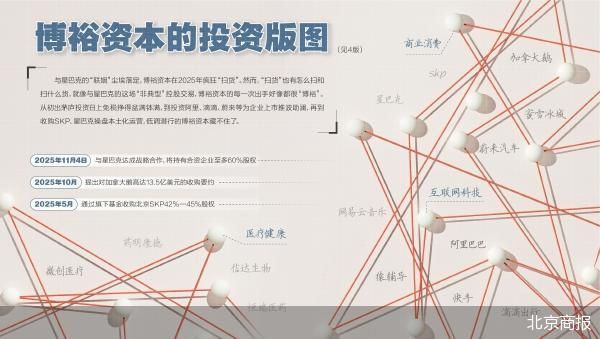
星巴克中国易主,这步棋怎么看
Xin Lang Cai Jing· 2025-11-04 15:04
Core Insights - Starbucks has entered a strategic partnership with Boyu Capital, marking the first time it has sold equity in its Chinese operations after 26 years in the market [2][3][7] - Boyu Capital acquired a 60% stake in a newly formed joint venture for $4 billion, while Starbucks retains a 40% stake and continues to own the brand and intellectual property [2][5] Industry Context - The Chinese coffee market is experiencing rapid growth, with local coffee chains and tea brands capturing significant market share from Starbucks, particularly in first- and second-tier cities [3][4] - Starbucks' market penetration in these cities is nearing saturation, prompting the need for a local partner to effectively expand into lower-tier cities and emerging business districts [3][4] Strategic Implications - The partnership with Boyu Capital is seen as a way for Starbucks to share operational risks and adapt to a more competitive landscape, contrasting with its traditional high-investment model [4][6] - Boyu Capital's deep understanding of Chinese consumers and established relationships in commercial real estate are expected to enhance Starbucks' site selection and operational efficiency in smaller cities [3][4] Financial Outlook - The valuation of Starbucks China exceeds $13 billion, and despite recent challenges, the acquisition is viewed as a potentially lucrative investment for Boyu Capital and other interested parties [5][6] - The joint venture aims to increase the number of Starbucks stores in China from approximately 8,000 to 20,000, indicating a commitment to long-term growth in the region [7]
星巴克中国易主三问:谁在操盘?花落谁家?价值几许?
Jing Ji Guan Cha Bao· 2025-11-04 14:42
Core Insights - Starbucks announced the sale of up to 60% of its Chinese business to Boyu Capital, valuing Starbucks China at $4 billion [1][2] - The joint venture will be managed from Shanghai, overseeing over 8,000 Starbucks stores in mainland China [1][9] - Starbucks retains 40% ownership and continues to own the brand and intellectual property, receiving licensing fees from the new joint venture [2][3] Shareholder Structure - The joint venture is structured with Starbucks Global as the direct partner, rather than Starbucks China, indicating a shift from a wholly-owned subsidiary to a joint venture [2] - The total value of Starbucks' retail business in China is projected to exceed $13 billion, comprising the sale proceeds, retained equity, and future licensing revenues [2] Acquisition Process - The sale process began in November 2024, with various potential buyers, including over 20 institutions, expressing interest [4][5] - After multiple rounds of bidding, Boyu Capital emerged as the final buyer, with a history of significant investments in the consumer sector [6][7] Valuation Insights - The final valuation of $4 billion is considered relatively low compared to earlier estimates of $5 billion to $7.5 billion [7][8] - Factors influencing the valuation include market comparisons, business fundamentals, and cash flow projections, alongside non-numerical elements like brand strength and management quality [7][8] Future Expansion Plans - The new joint venture aims to expand Starbucks' store count in China to 20,000, leveraging local expertise to penetrate smaller cities and emerging regions [9][10] - Starbucks has faced increased competition from local brands, resulting in a decline in market share from 42% in 2017 to 14% by 2024 [10]
美股盘前要点 | 美联邦政府“停摆”时间平历史纪录!大摩警告股市或回调超10%
Ge Long Hui· 2025-11-04 12:41
Market Overview - US stock index futures are all down, with Nasdaq futures falling by 1.32%, S&P 500 futures down by 0.98%, and Dow futures decreasing by 0.57% [1] - Major European indices also declined, with Germany's DAX down by 1.28%, UK's FTSE 100 down by 0.52%, France's CAC down by 1.26%, and the Euro Stoxx 50 down by 1.07% [2] Corporate Developments - Morgan Stanley's CEO indicated that global stock markets may face a correction, potentially dropping by 10% to 15% [4] - Amazon's cloud computing division, AWS, signed a $38 billion deal with OpenAI for computing power [5] - Norway's sovereign wealth fund decided to reject Tesla CEO Elon Musk's $1 trillion compensation plan [6] - Apple tightened its distribution channels in China, prohibiting offline dealers from selling products online to maintain pricing integrity [7] - Apple is collaborating with Google to develop a customized Gemini model for Siri [8] - Michael Burry, known as the "Big Short" figure, revealed that 80% of his positions are short on Palantir and Nvidia [9] Company Performance - Palantir reported a 63% year-over-year increase in Q3 revenue, reaching $1.18 billion, and raised its full-year revenue forecast [10] - Starbucks' China business has been acquired by Boyu Capital, which will establish a joint venture [11] - Alibaba responded to the renaming of Ele.me to Taobao Flash Sale, stating it is merely a name change with no impact on consumer rights or data privacy policies [12] - The AI large model real-time investment competition "Alpha Arena" concluded, with Alibaba's Qwen winning [13] - Cisco launched a new product, Unified Edge, to capture opportunities in edge AI [14] - Uber's Q3 revenue reached $13.47 billion, with total bookings of $49.74 billion, both exceeding expectations [15] - Pfizer's Q3 revenue decreased by 6% year-over-year to $16.65 billion but still surpassed expectations, and the company raised its full-year profit forecast [16] - BP's Q3 adjusted net profit was $2.2 billion, exceeding expectations, and the company maintained its quarterly stock buyback plan [17] - Ferrari's Q3 revenue was €1.77 billion, with EBIT of €503 million, both exceeding expectations [18] - Nokia decided to apply for the delisting of its shares from the Euronext Paris exchange [19] - Nintendo's quarterly performance exceeded expectations, and the company raised its forecast for Switch 2 sales to 19 million units for the fiscal year [20]
不够“中国”:星巴克中国130亿美元卖身始末 | 深氪
36氪未来消费· 2025-11-04 12:21
Core Viewpoint - The era of foreign capital premium has ended, as evidenced by the significant acquisition of Starbucks China, marking a pivotal shift in the competitive landscape of the coffee market in China [2][4][17]. Group 1: Acquisition Details - The acquisition of Starbucks China by Boyu Capital for a valuation of $13 billion represents the largest merger in the consumer sector in nearly a decade, involving over 30 top investment institutions [5][6]. - The deal was structured with a $4 billion valuation for the joint venture, which includes assets such as stores and a roasting factory, while the brand value is tied to a royalty fee based on annual GMV [10][11]. - The final valuation corresponds to a price-to-earnings ratio of approximately 26 times, indicating that Starbucks China's valuation is comparable to that of Luckin Coffee [10]. Group 2: Strategic Implications - The primary concerns for both buyers and sellers revolve around the price and the strategy to turn around Starbucks China's performance [9]. - Boyu Capital plans to leverage its real estate resources to introduce high-quality properties for Starbucks, while other proposals include expanding the store count to 15,000, with a significant number in county-level cities [11]. - The competitive landscape has shifted, with Boyu Capital recognized as a professional and low-profile private equity firm, actively pursuing acquisitions in a challenging market [14][15]. Group 3: Market Dynamics - Starbucks China has faced increasing competition, particularly from Luckin Coffee, which has aggressively expanded its market presence and pricing strategy [20][41]. - The high-end positioning of Starbucks has become a liability, as it has failed to adapt to changing consumer preferences and the rise of affordable coffee options [38][39]. - The company's internal divisions regarding its high-end strategy have led to operational inefficiencies and a decline in profitability, with operating margins dropping from a peak of 28% to around 12-13% [55]. Group 4: Future Outlook - Following the acquisition, Starbucks aims to expand its store count significantly, with plans to reach 20,000 locations, particularly in smaller cities and emerging regions [71]. - The new leadership is expected to focus on cost reduction, pricing strategies, and a renewed expansion approach to regain market share [71][72]. - The transition to a new operational model post-acquisition will be critical for Starbucks to navigate the evolving competitive landscape in China [71].
星巴克中国易主,未来将再开1.2万家店
Hua Er Jie Jian Wen· 2025-11-04 10:35
Core Insights - Starbucks has announced a strategic partnership with Chinese alternative asset management firm Boyu Capital to establish a joint venture for its retail operations in China, marking the first time in 26 years that Starbucks has relinquished control of its Chinese business [2][6] - Boyu Capital will hold up to 60% of the joint venture, investing approximately $2.4 billion (about 173 billion RMB), while Starbucks retains 40% ownership and continues to own the brand and intellectual property [2][3] - The joint venture aims to expand Starbucks' store count in China from 8,000 to 20,000, with a current valuation of over $13 billion for Starbucks' retail business in China [3][5] Company Strategy - The partnership is seen as a strategic adjustment for Starbucks in response to increasing competition from local brands like Luckin Coffee and CoCo [6][10] - Starbucks' CEO Brian Niccol emphasized the need for a fundamental change in strategy to restore growth, particularly in the face of declining global comparable store sales [4][6] - The collaboration allows Starbucks to gain significant cash flow while still benefiting from future growth in the Chinese market through retained equity and ongoing licensing fees [6][10] Market Performance - Starbucks China reported a revenue of $831.6 million for Q4 of fiscal year 2025, a 6% year-over-year increase, marking four consecutive quarters of growth [5] - For the full fiscal year 2025, Starbucks China achieved a total revenue of $3.105 billion, reflecting a 5% increase, which is higher than the global average growth rate [5] - The joint venture comes at a time when Starbucks is experiencing a divergence in performance between its global and Chinese markets [4][5] Competitive Landscape - The deal attracted interest from over 20 capital firms and business giants, indicating a competitive environment for Starbucks' Chinese operations [7][8] - Boyu Capital's expertise in local market operations is expected to accelerate Starbucks' expansion, particularly in lower-tier cities [8][9] - The historical performance of Boyu Capital, with a net internal rate of return exceeding 25%, positions it as a strong partner for Starbucks in navigating the competitive landscape [9] Historical Context - This partnership is part of a broader trend where foreign brands in China seek local partnerships to enhance market penetration, similar to past collaborations like McDonald's with CITIC and Coca-Cola with COFCO [10] - The establishment of the joint venture signifies a new phase for Starbucks in China, referred to as the "2.0 era," aiming to unlock significant market potential [10]
【美股盘前】三大期指齐跌,科技股普跌;特斯拉跌2.5%,马斯克万亿美元薪酬被大股东拒绝;星巴克以40亿美元出售中国业务60%股权;美国政府“停摆”进入第...
Mei Ri Jing Ji Xin Wen· 2025-11-04 10:32
Market Overview - Major U.S. stock index futures declined, with Dow futures down 0.98%, S&P 500 futures down 1.28%, and Nasdaq futures down 1.61% [1] - Technology stocks fell sharply, with Palantir down nearly 8%, Oracle, Intel, and AMD down over 2.5%, and NVIDIA and Broadcom down nearly 2.5% [1] - Chinese concept stocks also saw declines, with Xpeng down over 4%, Alibaba, JD.com, and NIO down over 3%, and Pinduoduo down over 1.5% [1] Company-Specific News - Tesla's stock dropped over 2.5% after Norway's $1.9 trillion sovereign wealth fund rejected CEO Elon Musk's proposed $1 trillion compensation plan, marking the first major investor decision on the proposal [1] - Advanced Micro Devices (AMD) saw a pre-market decline of nearly 3% as the company is set to release its Q1 2026 financial results on November 4, with market expectations for revenue at $5.83 billion, a 1.9% decrease year-over-year [1] - Starbucks agreed to sell a 60% stake in its China business to private equity firm Boyu Capital for $4 billion to improve its operational performance in the Chinese market, resulting in a pre-market drop of over 0.5% for the company [1] Acquisition News - Denny's, the American diner chain, surged nearly 50% in pre-market trading after announcing it would be acquired by a consortium including TriArtisan Capital Advisors for $620 million, including debt [2] Legal Issues - The newly appointed management team of the bankrupt American "First Brands" company filed a lawsuit against its founder and former CEO Patrick James, accusing him of fraudulently obtaining billions in financing and misappropriating funds [2] Government Shutdown - The U.S. federal government shutdown has reached its 35th day, tying the record for the longest shutdown in U.S. history, as bipartisan negotiations have failed to pass a temporary funding bill [2]
在华零售业务“交权”,一个更本土的星巴克要来了:下沉战场成焦点
Sou Hu Cai Jing· 2025-11-04 10:11
Core Insights - Starbucks has entered a strategic partnership with alternative asset management firm Boyu Capital to establish a joint venture for its retail operations in China, marking a significant capital restructuring since its entry into the Chinese market 26 years ago [2][3] - The joint venture will allow Boyu to hold up to 60% equity, while Starbucks retains 40% and continues to own and license its brand and intellectual property [3] - The partnership aims to expand Starbucks' store count in China from approximately 8,000 to 20,000, reflecting a new strategic focus on deepening its market presence [3][6] Retail Business Control - The core of the transaction is the transfer of control over Starbucks' retail business in China to Boyu, which will manage the joint venture [3] - The estimated enterprise value of the retail business is around $4 billion, excluding cash and debt, with Starbucks' retail business in China valued at over $13 billion [3] - The joint venture will be headquartered in Shanghai and will manage Starbucks' existing stores while pursuing aggressive expansion [3][6] Market Competition - The Chinese coffee market is becoming increasingly competitive, with local brands like Luckin Coffee rapidly gaining market share through lower price points and faster expansion [4][7] - Starbucks aims to maintain its high-end brand positioning and avoid price wars that could dilute its brand value, emphasizing the importance of its "third space" experience [4][5] - The partnership with Boyu is seen as crucial for navigating the competitive landscape, particularly in lower-tier cities where local brands are expanding aggressively [6][8] Expansion Strategy - Starbucks has reported steady growth in its Chinese operations, with revenues reaching $3.105 billion in the fiscal year 2025, a 5% year-on-year increase [6] - The company opened 183 new stores in the fourth fiscal quarter and entered 47 new county-level markets, with a total of 415 new stores for the fiscal year [6] - The focus on lower-tier markets is expected to drive future growth, with a projected CAGR of 24.7% for coffee shops in third-tier cities and below from 2023 to 2028 [7][8] Operational Challenges - Starbucks faces challenges in balancing its high-end brand identity with the need to adapt to local market conditions, particularly in terms of operational costs in lower-tier cities [8] - Suggestions for overcoming these challenges include developing smaller, more cost-effective store formats and potentially launching independent brands to capture market share in lower-tier markets [8]