空调

Search documents
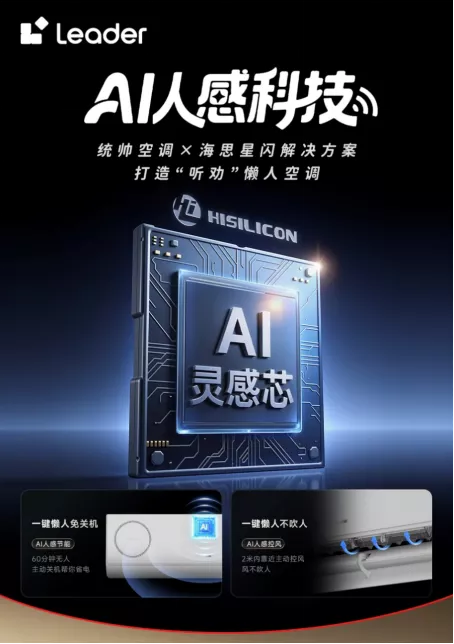
统帅懒人空调今日上市,Ai人感调节,一键全托管
Cai Jing Wang· 2025-10-14 13:20
Core Insights - The "Haier Air Conditioning Double 11 Renewal Festival" has officially launched, featuring the release of the new "Lazy New Wind Air Conditioner" by the company, which incorporates AI energy-saving technology and AI human-sensing technology to enhance user experience [1][3]. Group 1: Product Innovation - The new air conditioner addresses common user concerns such as discomfort from direct airflow and forgetting to turn off the unit, promoting a hassle-free experience with the slogan "You just need to turn it on, leave the rest to the air conditioner" [1][3]. - The air conditioner boasts an impressive energy-saving rate of up to 46% through its AI energy-saving solution, contributing to an 82% increase in sales for the company from January to September, marking the largest retail scale in its history [3][4]. Group 2: User-Centric Design - The design of the "Lazy New Wind Air Conditioner" is based on real user needs, similar to previous innovations like the "Lazy Three-Tub Washing Machine" and "Lazy Refrigerator," which were developed to meet specific consumer demands [3][6]. - The air conditioner features AI human-sensing technology developed in collaboration with Shanghai HiSilicon, allowing it to automatically turn off when no one is detected within 60 minutes and adjust airflow direction to avoid direct blowing [3][4]. Group 3: Comfort and Air Quality - The air conditioner includes an AI all-time fresh air function that can deliver a fresh air volume of 60m³/h, along with a four-stage filtration system to ensure clean air [4][6]. - It also incorporates AI intelligent heating and cooling technology, automatically adjusting to comfortable temperatures of 26°C for cooling and 22°C for heating, reducing the need for manual temperature adjustments [4][6].


邀用户亲测!双11买海尔空调,享政企双补贴
Sou Hu Wang· 2025-10-13 06:38
Core Viewpoint - Haier Air Conditioning is innovating user experience by allowing customers to directly test air conditioning products in a real-life setting, enhancing decision-making for purchases during the Double 11 shopping festival [1][3]. Group 1: User Experience Innovation - Haier's new approach includes a "thousand-person testing event" where users can experience air conditioning features firsthand, moving beyond traditional parameter comparisons [1][3]. - The event showcases Haier's commitment to user experience, with a 31% year-on-year increase in all-channel sales from January to September, surpassing the total net income for 2024 within just nine months [3]. Group 2: Product Features and Technology - The air conditioning units feature advanced AI technology, such as the "Comfort Wind" that adjusts airflow based on user proximity and breathing patterns, ensuring a comfortable experience [4]. - The "Lazy Person Key" on the Leader AI air conditioner automates air quality management and energy-saving functions, potentially saving users 295 kWh of electricity annually, translating to nearly 200 yuan in cost savings [6]. - The Casarte air conditioner offers a unique design with minimal visible air vents, providing a new experience where users feel airflow without seeing the source [8]. - The Haier Warm Sun Pro central air conditioning system is designed to operate efficiently in extreme cold, maintaining heating performance at temperatures as low as -35°C while also being energy efficient [10]. Group 3: Promotional Strategies - During the Double 11 event, Haier is offering multiple incentives, including government subsidies, a 10-year warranty, interactive rewards, and discount coupons, making it easier for users to purchase their products [12]. - The testing event serves as a direct reference for consumers, allowing them to make informed decisions based on personal experience, while also promoting transparency and enhancing user experience in the industry [12].
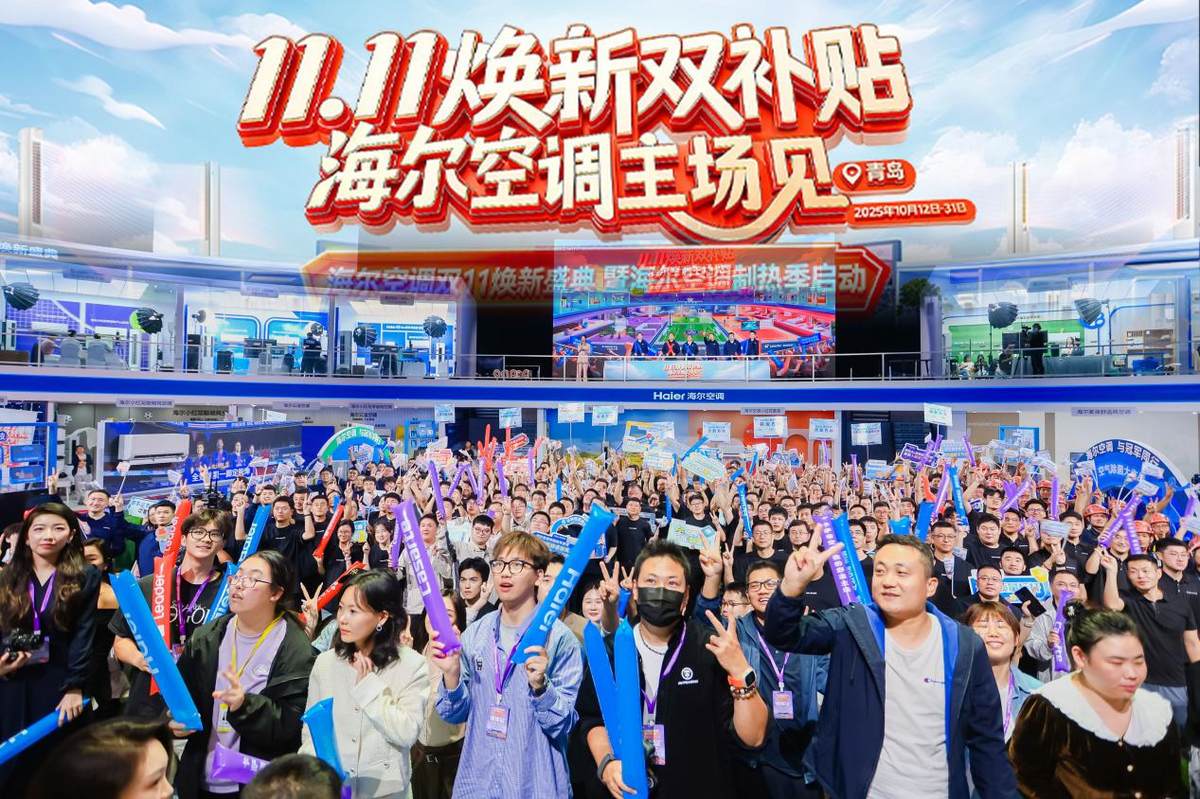
与欧冠球队同行!海尔空调双11将推可感知呼吸的空调等AI新发明
Huan Qiu Wang· 2025-10-13 02:41
Core Insights - Haier Air Conditioning launched its "Double 11 Renewal Festival" on October 12, showcasing AI innovations and creating an immersive experience for users to validate the technology [1][10] - The company reported a 31% year-on-year increase in total channel sales from January to September, surpassing its projected annual net revenue for 2024 within just nine months [3] - The event emphasized user experience, transforming laboratory technology into practical solutions for consumers [3][10] Product Innovations - The "Kasa Di Ling Guang Ping" air conditioner features an industry-first flat hidden design, minimizing the visibility of air outlets while maintaining airflow, appealing to users focused on home aesthetics [3][6] - The "Tongshuai AI Lazy New Wind Air Conditioner" addresses common user pain points with a "one-click management" feature that automates five AI functions, saving approximately 295 kWh of electricity annually [4][5] - The "Haier Mai Lang Comfortable Wind Air Conditioner" incorporates "AI Eye" technology to track human presence and adjust airflow accordingly, enhancing user comfort and safety [6][10] - The "Haier Nuan Yang Pro Central Air Conditioning" is designed for extreme cold conditions, maintaining heating efficiency at temperatures as low as -35°C while achieving significant energy savings [8] User Engagement - The "thousand-person testing" initiative allows users to personally experience and validate the air conditioning products, shifting the focus from mere specifications to tangible comfort and safety [10] - The event aims to redefine air conditioning consumption by combining technology, user experience, and consumer rights, emphasizing that good air quality should be a palpable experience rather than just data on a specification sheet [10]
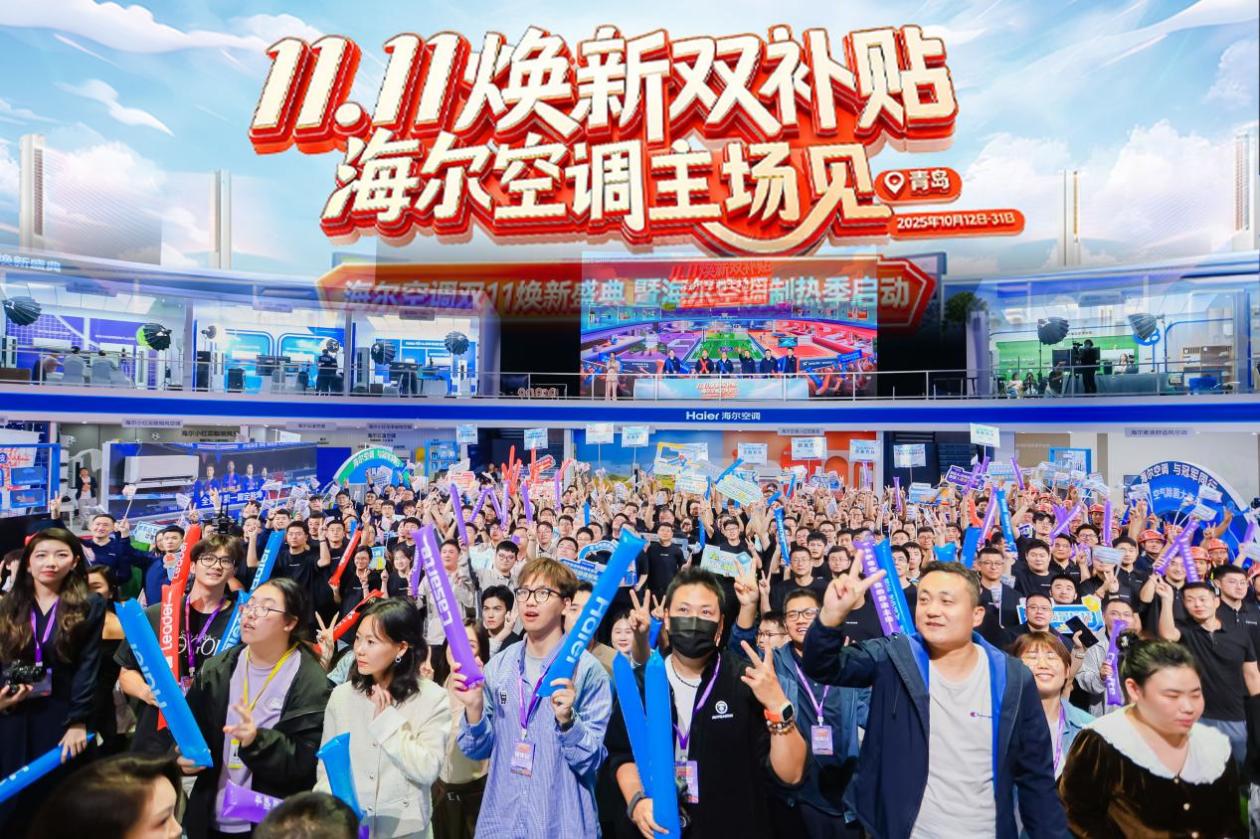
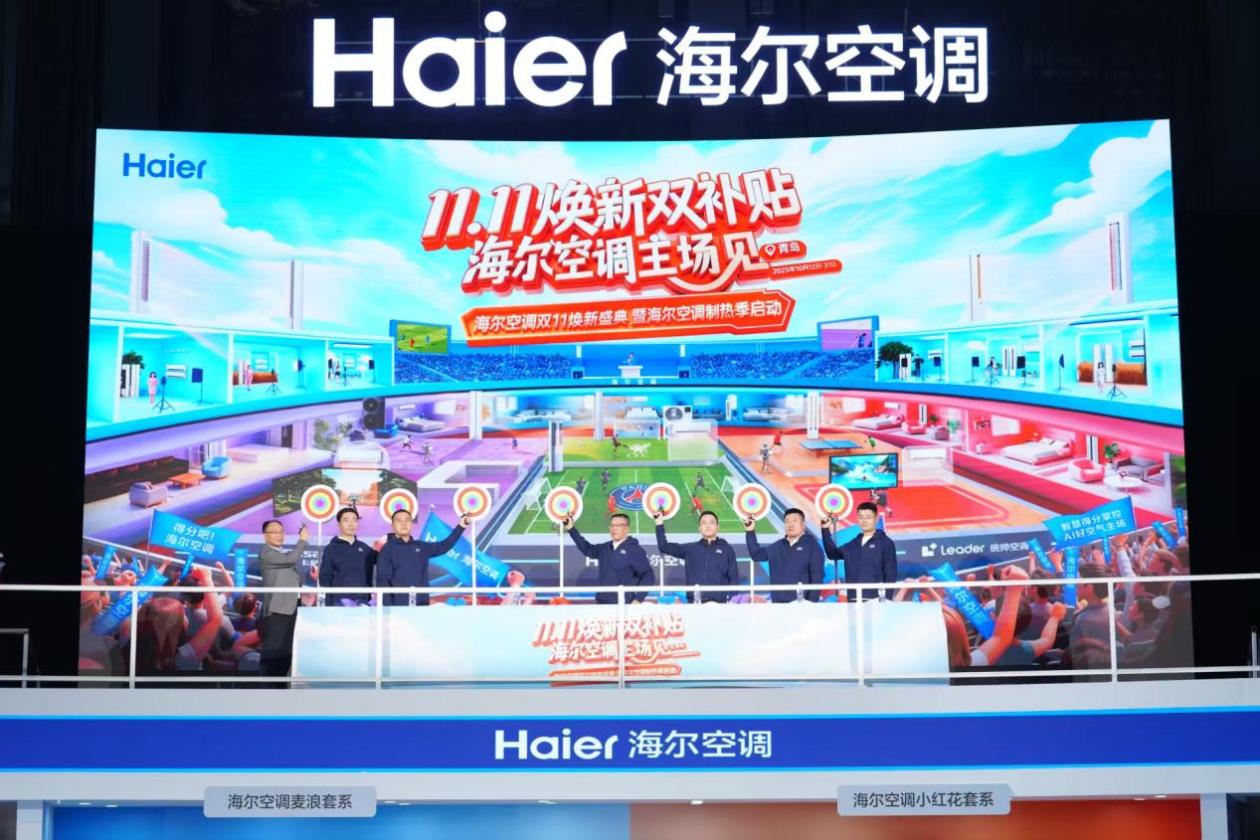
千人在青岛“众测”海尔空调,开启双十一
Huan Qiu Wang· 2025-10-12 12:43
Core Insights - Haier Air Conditioning reported a remarkable performance in the first three quarters of the year, with a 31% year-on-year increase in total channel sales, surpassing the annual net revenue target for 2024 within just nine months [1] - The company initiated its Double 11 campaign early, hosting an offline event in Qingdao that engaged nearly a thousand participants in an immersive AI air quality experience [1] Group 1: Product Innovation - Haier has created an "AI Good Air Arena" that integrates sports elements into the air quality experience, aligning with its partnerships with top European football clubs [3] - The air conditioning products are categorized into four AI matrices: - Haier Air Conditioners focus on "AI Health," utilizing technologies like AI human sensing radar to address health concerns related to direct cold air [3] - Casarte Air Conditioners emphasize "AI Comfort," employing advanced airflow technologies to solve uneven temperature distribution issues [5] - Leader Air Conditioners prioritize "AI Energy Saving," implementing features that enhance energy efficiency and reduce electricity costs [7] - Home Central Air Conditioning acts as a "tactical commander," managing whole-house air solutions effectively [9] Group 2: User Experience and Engagement - The Double 11 campaign transformed the purchasing experience from online parameter viewing to real-life testing, allowing users to physically experience the products [10] - Users can test features such as the "Comfort Wind" of Haier's air conditioners, which adjusts airflow based on proximity, and the "Lazy Mode" of Leader's air conditioners, which simplifies operation [10][11] - The Casarte air conditioner features a hidden outlet design that enhances both visual appeal and airflow comfort [10] Group 3: Promotional Strategies - Haier introduced a "11.11 Renewal Double Subsidy" program, offering a 20% subsidy to lower the cost of upgrading to new products [11] - The subsidies can be combined with product advantages, providing additional savings on electricity costs for users who choose specific models [11] - The innovative combination of technology, user experience, and promotional benefits is expected to redefine consumer standards for air conditioning purchases during the Double 11 event [11]
艾瑞咨询授予华凌空调“首创双出风连续喷气增焓挂机空调”市场地位声明
艾瑞咨询· 2025-10-10 00:06
Core Insights - The article highlights the innovative contributions of Hualing in the air conditioning industry, particularly with its "dual air outlet continuous jet heating air conditioner" technology, which enhances heating efficiency and comfort [1] Group 1: Industry Trends - Extreme weather events have increased, with 18.3% of new air conditioner buyers citing abnormal weather as a reason for purchase, and 9.3% of users replacing old units due to similar reasons [5] - Consumer demand is shifting from mere temperature regulation to a focus on wind comfort, with air conditioning products evolving from passive cooling to intelligent wind control [5] Group 2: Product Features - The Hualing Shenji II Ultra air conditioner utilizes continuous jet heating technology, allowing operation in extreme cold conditions down to -35°C without interruption and maintaining performance at -20°C [7] - It features a large circulation air volume of 830m³/h, ensuring effective heating during harsh winter conditions [7] - The product incorporates a millimeter-wave radar for enhanced user experience, enabling features like wind tracking and energy-saving modes, which improve installation flexibility [8] Group 3: Research and Validation - The technology and performance of the Hualing Shenji II Ultra have been validated by China’s testing laboratories, confirming its heating capabilities and efficiency [10]

今年,我国GDP预计会突破40万亿美元,领跑世界!那美、印、俄、日等国呢?
Sou Hu Cai Jing· 2025-10-09 12:33
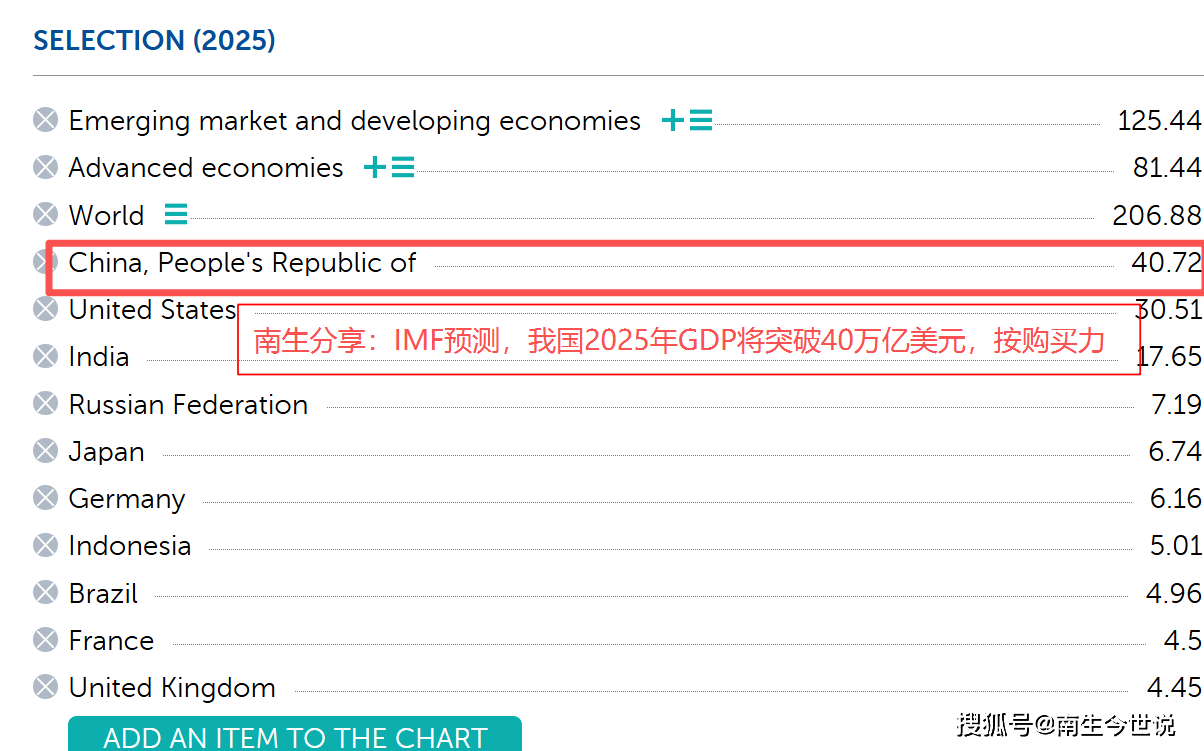
Core Viewpoint - China's economy is projected to reach approximately $40.72 trillion by 2025 under the purchasing power parity (PPP) method, solidifying its position as the second-largest economy globally, following the United States [1][3][11]. Group 1: Economic Scale and Growth - By 2025, China's GDP is expected to surpass $40 trillion, accounting for 19.68% of the global economy, which is nearly one-fifth of the total [3][11]. - The International Monetary Fund (IMF) forecasts that China's economic scale will grow from $38.15 trillion in the previous year to $40.72 trillion, marking a significant milestone [3][11]. Group 2: Comparison with Other Economies - The United States is projected to have a GDP of approximately $30.51 trillion in 2025, representing 14.75% of the global economy, maintaining its status as the leading economic power alongside China [7][11]. - India is anticipated to rank third with a GDP of $17.65 trillion, contributing 8.53% to the global economy, showcasing its rapid economic growth [7][11]. - Russia, Japan, and Germany follow, with GDPs of $7.19 trillion, $6.74 trillion, and $6.16 trillion respectively, highlighting the diverse economic landscape [9][11]. Group 3: Importance of Purchasing Power Parity - The use of purchasing power parity provides a more accurate reflection of the actual output capabilities of different economies, stripping away the distortions caused by exchange rate fluctuations [3][4]. - This method emphasizes China's substantial production capabilities in various sectors, including agriculture and manufacturing, which are often undervalued when assessed solely by market exchange rates [4][6]. Group 4: Global Economic Trends - The forecast indicates a significant shift in the global economic landscape, with emerging markets, particularly in Asia, gaining prominence and altering the traditional economic hierarchy [10][11]. - The collective rise of new economic powers suggests a transformative period in global economics, characterized by increased competition and collaboration among nations [10][11].
智能集成空调开创者欧瑞博:以科技让舒适、健康与节能兼得
Cai Fu Zai Xian· 2025-10-09 09:34
Core Insights - Euribot has been recognized as a "pioneer in smart integrated air conditioning" by Shangpu Consulting Group, based on comprehensive research of the air conditioning industry and detailed analysis of leading companies in the smart integrated air conditioning sector [1][2] Industry Dynamics - Euribot has topped the latest central air conditioning rankings released by Zhongguancun Online, achieving a remarkable 33% market share and full scores, marking a significant shift in the traditional competitive landscape [2][7] - The rise of Euribot challenges the long-standing stability of the central air conditioning market, pushing traditional giants like Gree, Midea, and Hisense to adapt [2][9] Technological Innovations - Euribot's integrated air conditioning system addresses long-standing pain points in traditional central air conditioning, introducing three major breakthroughs: integrated design, heat recovery technology, and full-home smart integration [4][5] - The HeatCycle™ technology developed by Euribot achieves a comprehensive energy efficiency ratio of 5.6, significantly exceeding national energy consumption standards, allowing for substantial savings on hot water costs [4][5] User Experience - Euribot's integrated air conditioning system offers significant energy savings, with potential savings of approximately 5,800 yuan over three months compared to traditional gas heating systems [5] - The system enhances comfort by preventing excessive humidity and providing even heating throughout the home, making it particularly suitable for families with young children [5] Industry Transformation - Euribot's emergence signifies a new direction for the central air conditioning industry, leading to the advent of the "Smart Living 2.0" era, characterized by integrated energy management solutions [6][9] - The establishment of a joint laboratory with Southern University of Science and Technology indicates Euribot's commitment to building long-term technological barriers in smart AI and renewable energy applications [6] Competitive Landscape - Traditional air conditioning brands face increasing pressure to innovate and adapt to the new integrated, smart, and energy-efficient models exemplified by Euribot [7][9] - The shift towards integration and energy management is becoming a clear development direction for the industry, with traditional brands like Midea and Gree ramping up their R&D efforts in these areas [8][9]
大资金新流向:中证A50正在成为核心资产“压舱石”
Sou Hu Cai Jing· 2025-10-09 03:08
Core Insights - The article highlights the rapid growth of the ETF market in China, with total ETF assets surpassing 5 trillion yuan, marking a significant milestone in the industry [4][10] - The surge in ETF popularity is attributed to a recovery in A-share trading volumes, with institutional investors leading the charge, indicating a shift towards long-term investment strategies [4][10] - The China Securities A50 Index is presented as a key investment tool, reflecting the core assets of the Chinese economy and aligning with the ongoing economic transformation [4][10] ETF Market Growth - The total scale of ETFs in China reached over 5 trillion yuan as of August 15, 2023, a remarkable increase from 4 trillion yuan just four months prior [4] - The ETF market has seen consecutive breakthroughs of 1 trillion yuan milestones, indicating robust investor interest and participation [4] - Institutional investors, including pension funds and foreign capital, are becoming dominant players in the market, contributing to a more stable investment environment [4][10] China Securities A50 Index - The China Securities A50 Index is constructed from the top 50 leading companies based on market capitalization from the top 300 A-share companies, ensuring a balanced representation of growth and stability [5][10] - The index has a significant focus on new economy sectors, reducing reliance on traditional industries while maintaining a diverse industry representation [6][10] - Over 70% of the index's components are leading companies in their respective sectors, reinforcing a "stronger gets stronger" dynamic that appeals to long-term investors [6][10] Investment Opportunities - The China Securities A50 Index incorporates ESG principles, excluding companies with low ESG ratings, which enhances the index's stability and aligns with sustainable investment trends [10] - The index has demonstrated superior performance metrics, with a net asset return of 11.62%, outperforming other major indices [10][12] - The A50 ETF and its linked funds provide a low-threshold, efficient way for ordinary investors to access core Chinese assets, making it suitable for long-term investment strategies [15][17]






2025年8月中国空调出口数量和出口金额分别为289万台和4.27亿美元
Chan Ye Xin Xi Wang· 2025-10-06 02:15
Core Insights - The report by Zhiyan Consulting analyzes the current market status and development prospects of the air conditioning industry in China from 2026 to 2032 [1] Export Data - In August 2025, China's air conditioning exports amounted to 2.89 million units, representing a year-on-year decline of 22.4% [1] - The export value for the same period was $427 million, which reflects a year-on-year decrease of 24.1% [1] Industry Analysis - Zhiyan Consulting is recognized as a leading industry consulting firm in China, specializing in in-depth industry research reports, business plans, feasibility studies, and customized services [1] - The firm emphasizes its professional approach, quality services, and keen market insights to provide comprehensive industry solutions that empower investment decisions [1]

破局与重构:2025 空调行业趋势与消费需求白皮书
艾瑞咨询· 2025-10-04 00:06
Core Insights - The air conditioning industry is undergoing a critical phase of "breaking through and restructuring," driven by policies promoting low-carbon transformation and rising consumer demand due to extreme heat and subsidy policies [1] - The report aims to provide a comprehensive overview of industry trends, consumer market dynamics, and user needs, while analyzing benchmark cases of comfortable and healthy air conditioners [1] Policy and Technology - The dual drivers of policy guidance and technological innovation are reshaping the air conditioning market, promoting energy-efficient products and sustainable development [2] - National and local policies, such as the "Accelerating Energy Conservation and Carbon Reduction in the Building Sector," support energy-saving renovations, providing strategic guidance for the market [2] Market Dynamics - The air conditioning market is stabilizing, with online sales accounting for 60% of total sales, highlighting the dominance of traditional e-commerce as a core traffic entry point [5] - Price differentiation is evident, with low-priced (below 1599) and high-priced (above 3000) 1.5P wall-mounted units both seeing increased market share [5] Consumer Demand - Social media discussions reflect the evolving consumer demands for air conditioning, with energy efficiency, comfort, cooling performance, aesthetics, and health being the top topics for 2025 [9] - The shift from basic temperature regulation to a focus on comfort, health, and aesthetics indicates a deeper consumer need for high-quality living environments [11] High-End Market Trends - The high-end air conditioning segment is evolving towards a comprehensive experience that integrates extreme comfort, health purification, aesthetic design, and smart connectivity [13] - The transition from "selling products" to "selling lifestyles" emphasizes the importance of understanding specific consumer scenarios and emotional needs [15] Consumer Segmentation - The main consumer groups for air conditioning are shifting, with post-00s and post-90s families becoming the primary buyers, particularly in first-tier cities [19] - The motivations for purchasing air conditioning are evolving from basic needs to a desire for enhanced quality of life and better home environment compatibility [21] Purchase Channels and Influences - JD.com has established itself as the leading information channel and purchasing platform for air conditioning, with social media and short video platforms playing a significant role in consumer decision-making [24] - Performance and quality are the primary considerations for consumers, with a growing emphasis on comprehensive experience rather than just price sensitivity [28] Product Features and Consumer Feedback - High satisfaction rates (over 99%) for features like "no-wind" and "quiet operation" indicate strong consumer preference for comfort and health functionalities [56] - The integration of health features, such as air purification and self-cleaning technologies, enhances the overall value proposition of air conditioning products [55] Collaborative Innovations - JD.com collaborates with major brands like Gree, Haier, and TCL to promote air conditioning products that emphasize comfort and health, responding to the trend of upgrading consumer experiences [59][61][63][67][69]