
生猪养殖

Search documents
京基智农2025年上半年实现营收23.87亿元 养殖业务营收占比达80.67%
Zheng Quan Ri Bao Zhi Sheng· 2025-08-23 03:40
Core Viewpoint - The report highlights the strong performance of Jingji Zhinong in the first half of 2025, with significant revenue growth driven by its core pig farming business, showcasing the company's confidence in future development through substantial shareholder returns [1][2]. Financial Performance - In the first half of 2025, the company achieved a revenue of 2.387 billion yuan and a net profit attributable to shareholders of 226 million yuan [1]. - The pig farming business generated 1.925 billion yuan in revenue, marking an 11.13% year-on-year increase, with a gross margin of 19.35%, up by 3.27 percentage points [1]. - The revenue contribution from the pig farming segment accounted for 80.67% of the total, reinforcing its role as the company's performance engine [1]. Profit Distribution - The company announced a profit distribution plan, proposing a cash dividend of 3.80 yuan per 10 shares (including tax), totaling 197 million yuan (including tax) to shareholders [1]. Market Position and Strategy - Jingji Zhinong's pig sales prices have consistently outperformed the industry, with an average sales price exceeding 15 yuan/kg in the first half of the year, and rising to 15.66 yuan/kg in July [2]. - The company has established a strong market presence in the Guangdong-Hong Kong-Macao Greater Bay Area, supported by various certifications and recognitions, including being designated as a "vegetable basket production base" [2]. Operational Strategy - The company is advancing a light-asset operation strategy, leveraging its feed factories in various locations to expand its "company + farmer" pig farming model, which promotes efficient resource allocation [2][3]. - Jingji Zhinong has set up over 12 service departments in the Guangdong region, providing comprehensive support to partner farmers, ensuring product quality and reducing heavy asset investments [3].

神农集团股价微跌0.54% 生猪行业收储政策或缓解成本压力
Jin Rong Jie· 2025-08-22 18:08
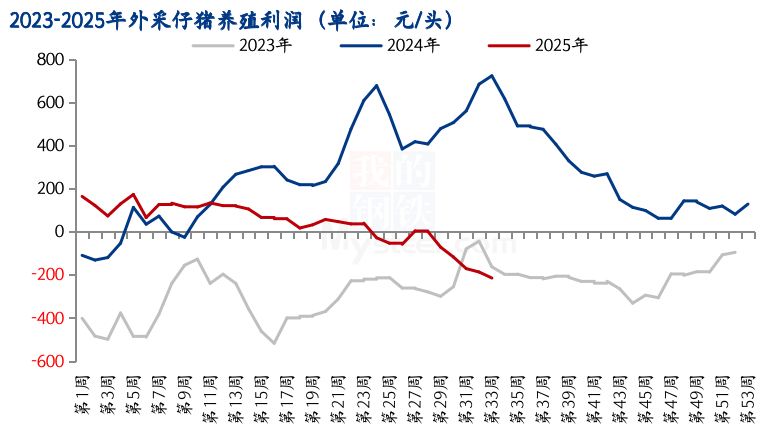
Company Overview - Shennong Group's stock price is reported at 33.02 yuan as of August 22, 2025, with a decline of 0.54% from the previous trading day and a trading volume of 185 million yuan, resulting in a turnover rate of 1.07% [1] - The stock experienced a trading range of 4.34%, with a low of 32.70 yuan and a high of 34.14 yuan during the day [1] Business Performance - Shennong Group's main business includes pig farming and meat processing, categorized under the agriculture, animal husbandry, and fishery sector [1] - The company has achieved significant cost control, with the complete cost per kilogram dropping to 12.3 yuan in April, nearing the level of leading enterprises in the industry [1] Industry Context - The National Development and Reform Commission announced the initiation of the second central frozen pork reserve collection this year to address the ongoing low prices of live pigs [1] - Current national average price for live pigs is reported at 13.72 yuan per kilogram, with profits from external piglet farming at their lowest level in the past three years [1] - The Ministry of Agriculture and Rural Affairs recently held a meeting to mandate the reasonable elimination of breeding sows and strict control over new production capacity [1] Capital Flow - On August 22, the main capital outflow was 16.83 million yuan, with a cumulative net outflow of 36.17 million yuan over the past five days [1]

牧原股份: 2025年骨干员工持股计划(草案) 摘要
Zheng Quan Zhi Xing· 2025-08-22 16:48
Core Viewpoint - The company is establishing a 2025 employee stock ownership plan aimed at enhancing long-term incentives for key employees, thereby improving cohesion and competitiveness while promoting sustainable development [4][12]. Group 1: Plan Overview - The employee stock ownership plan is designed to motivate and retain key personnel who significantly impact the company's long-term performance [4][12]. - The plan will involve a maximum of 1,334 core employees, excluding current directors, supervisors, and senior management [4][13]. - The total number of shares involved in the plan will not exceed 8.75854 million shares, representing approximately 0.16% of the company's total share capital [5][15]. Group 2: Funding and Stock Source - The funding for the plan will come from employees' legal salaries, self-raised funds, and other legally permitted sources, with no financial assistance provided by the company [5][14]. - The shares for the plan will be sourced from the company's repurchased shares, with a maximum of 8.75854 million shares to be transferred to the plan [5][15]. Group 3: Lock-up and Performance Assessment - The plan includes a lock-up period of 12 and 24 months, with 50% of the shares being unlocked at each interval based on performance assessments [6][19]. - Performance metrics will include company revenue growth, with specific targets set for the years 2025 and 2026 [22][23]. - The first assessment period will require 2025 revenue to be at least 112% of the average revenue from 2022 to 2024, while the second period will require 115% [20][22]. Group 4: Governance and Management - A management committee will oversee the plan, responsible for daily management and representing the interests of the plan's participants [29][30]. - The plan will be subject to approval by the company's shareholders, with voting conducted through both in-person and online methods [8][12]. - The management committee will also handle any changes to the plan, which require approval from a majority of the participants [24][29].

牧原股份: 2025年奋斗者持股计划(草案) 摘要
Zheng Quan Zhi Xing· 2025-08-22 16:48
Core Viewpoint - The company is establishing a 2025 Employee Stock Ownership Plan (ESOP) to enhance long-term incentives for key management personnel, aiming to improve employee cohesion and company competitiveness while promoting sustainable development [4][10]. Group 1: Plan Overview - The ESOP will involve up to 23.49852 million shares, representing approximately 0.43% of the company's total share capital, sourced from shares repurchased by the company [5][13]. - The plan's duration is set for 10 years, starting from the date of the last share transfer to the ESOP [5][17]. - The plan includes a lock-up period of 12, 24, and 36 months, with respective unlock ratios of 40%, 30%, and 30% based on performance assessments [5][17]. Group 2: Performance Assessment - The performance assessment will include company-level and individual-level metrics, with the company’s revenue growth as a key indicator [22][19]. - The first assessment period targets a revenue increase of at least 12% over the average revenue from 2022 to 2024, with subsequent years requiring 15% and 18% increases respectively [6][19]. - Individual performance will also be evaluated, impacting the unlock ratios of shares based on performance grades [20][21]. Group 3: Participation and Funding - The plan is open to a maximum of 3,884 key management personnel, excluding current directors, supervisors, and senior management [4][12]. - Funding for the plan will come from employees' legal salaries and self-raised funds, with no financial assistance provided by the company [4][13]. - Participants must voluntarily contribute to the plan, and failure to meet funding requirements will result in the loss of corresponding rights [12][13]. Group 4: Governance and Management - A management committee will oversee the ESOP, responsible for daily management and representing the interests of the participants [28][29]. - The plan will not alter the company's control or equity distribution, ensuring compliance with listing requirements [7][11]. - The management committee will also handle any changes to the plan, requiring approval from a majority of the participants [24][28].
牧原股份: 2025年经营者持股计划管理办法
Zheng Quan Zhi Xing· 2025-08-22 16:48
Core Points - The company has established an employee stock ownership plan to incentivize and retain key management personnel, aligning their interests with those of shareholders [1][2][3] - The plan emphasizes voluntary participation, long-term service, and risk-sharing among participants [2][3][4] - The stock for the plan will be sourced from shares repurchased by the company, with a total of 9.613031 million shares allocated for this purpose [3][5] Summary by Sections Purpose of the Plan - The plan aims to create a profit-sharing mechanism that encourages long-term stability and development of the company [1][2] Basic Principles - The plan adheres to legal compliance, voluntary participation, long-term service, shared interests, and risk-bearing principles [2][4] Participants and Standards - Participants include up to 219 key personnel, excluding independent directors and major shareholders, who will voluntarily join the plan [4][5] Source of Shares - Shares for the plan will come from the company's repurchased stock, with a total of 41.8701 million shares repurchased at an average price of 47.76 yuan per share [3][5] Funding Sources - Participants will fund their stock purchases through their legal salaries and self-raised funds, without any financial assistance from the company [4][6] Duration and Lock-up Period - The plan includes a lock-up period of 12, 24, and 36 months, with specific percentages of shares released based on performance assessments [7][8] Performance Assessment - The plan sets performance targets based on revenue growth, with specific benchmarks for the years 2025 to 2027 [11][12] Management and Rights - A management committee elected by participants will oversee the plan, ensuring compliance and managing assets [13][15] - Participants have equal rights and obligations, including the right to vote in meetings and share in the plan's assets [14][15] Termination and Distribution - The plan can be terminated under certain conditions, with assets distributed based on performance results [26][28]
新希望股价微涨0.30%,生猪行业收储政策引关注
Sou Hu Cai Jing· 2025-08-22 16:00
Core Viewpoint - New Hope's stock price has shown a slight increase amidst a challenging market environment for the pig farming industry, indicating resilience in its operations despite external pressures [1] Company Overview - New Hope operates in various sectors including feed, breeding, and food processing, positioning itself as a comprehensive player in China's agricultural and animal husbandry industry [1] Market Conditions - The price of live pigs has been persistently low, prompting the National Development and Reform Commission to initiate the central frozen pork reserve collection [1] - Industry analysis suggests that leading breeding companies can maintain a certain level of profitability through cost reduction and efficiency improvements, with New Hope's current breeding cost estimated at 13 yuan per kilogram [1] Financial Performance - As of August 22, New Hope's stock closed at 9.99 yuan, reflecting a 0.30% increase from the previous trading day, with a trading volume of 387 million yuan [1] - On the same day, the main capital saw a net outflow of 22.78 million yuan, with a cumulative net outflow of 42.39 million yuan over the past five days [1]

二师兄“颓势” 收储挽危局,生猪行业冰火两重天
Feng Huang Wang· 2025-08-22 14:32
Group 1 - Since July, pig prices have been declining, leading to weakened profitability in the breeding sector, prompting the National Development and Reform Commission (NDRC) to initiate central frozen pork reserve collection [1][3] - The average pig-to-grain price ratio has fallen below 6:1, entering a warning zone, which has led to the decision for pork reserve collection to stabilize the market [3][6] - Analysts suggest that the reserve collection will boost market confidence and provide necessary buffer space for the pig market to gradually recover from the cyclical low [1][6] Group 2 - Major breeding companies have successfully reduced costs, with Muyuan Foods being the first to achieve a cost of 5 yuan per kilogram, while others like Wens Foodstuffs and Shennong Group are expected to join this cost club [1][10] - The overall profitability of the industry is nearing a critical point, with many companies operating at or near breakeven [5][11] - Companies with strong cost control capabilities are expected to maintain profitability even in a low-price environment, while those with costs above 14 yuan per kilogram may face significant losses [9][11] Group 3 - The NDRC's recent actions are part of a broader strategy to manage high production capacity and mitigate risks associated with price fluctuations in the pig industry [7][8] - The current market conditions indicate that while there is a strong supply, demand remains weak, leading to further price declines [3][6] - Long-term recovery in pig prices will depend on the reduction of breeding sows and the actual recovery of market demand, particularly during holiday seasons [6][7]

京基智农2025年上半年营收23.87亿元 多维举措构建新周期竞争优势
Zheng Quan Shi Bao Wang· 2025-08-22 13:25
Core Insights - The company reported a revenue of 2.387 billion yuan and a net profit of 226 million yuan for the first half of 2025, with a basic earnings per share of 0.43 yuan [1] - The livestock business remains the core pillar, generating 1.925 billion yuan in revenue, a year-on-year increase of 11.13%, and accounting for 80.67% of total revenue [1] - The company announced a profit distribution plan, proposing a cash dividend of 3.80 yuan per 10 shares, totaling 197 million yuan, reflecting strong shareholder return commitment and confidence in future growth [1] Revenue and Profitability - The company sold 1.0621 million pigs in the first half of 2025, with sales revenue of 1.895 billion yuan, marking a year-on-year increase of 11.65% [1] - The gross margin for the livestock business was 19.84%, up 3.72% year-on-year, indicating strong profitability [1] Market Position and Pricing - The average selling price of commodity pigs exceeded 15 yuan/kg in the first half of the year, significantly higher than the industry average, with July's average price reaching 15.66 yuan/kg [2] - The company's strong market performance is attributed to its deep market penetration in the Greater Bay Area and established industry chain advantages [2] Operational Strategy - The company is actively promoting a light asset operation strategy, expanding its "company + farmer" model and establishing over 12 service departments in the Guangdong region [3] - The cooperative model has led to a high survival rate of 98% among excellent farmers, enhancing breeding efficiency and optimizing capital structure [3] Innovation and Sustainability - The company invested 23.9365 million yuan in R&D, achieving 30 utility model patents, 21 software copyrights, and 3 invention patents [4] - A collaboration with the Guangdong Academy of Agricultural Sciences has led to the development of a bio-fermentation technology that converts pineapple processing waste into high-quality feed, achieving 100% resource utilization [4] - The use of fermented pineapple waste has improved pig weight gain by 5% to 10% and reduced feed costs by over 10 yuan per ton, contributing to cost savings of over 10 million yuan annually [4] Strategic Expansion - The company is exploring new business avenues, including collaborations in the fashion and art sectors, enhancing its long-term growth potential [4]
京基智农2025半年报:主业稳增彰显经营韧性 生态农业助力乡村振兴
Quan Jing Wang· 2025-08-22 13:14
Core Viewpoint - 京基智农 has demonstrated steady growth in its operations, with significant revenue and profit increases in the first half of 2025, driven by its strong pig farming business and effective management strategies [1][2]. Financial Performance - In the first half of 2025, 京基智农 achieved a total revenue of 2.387 billion yuan and a net profit of 226 million yuan, with operating cash flow of 311 million yuan [1]. - The pig farming segment generated 1.925 billion yuan in revenue, marking an 11.13% year-on-year increase, accounting for 80.67% of total revenue [1]. - For the period from January to July 2025, the company reported a cumulative pig output of 1.2657 million heads and sales revenue of 2.243 billion yuan, reflecting a 10.38% year-on-year growth [2]. Operational Efficiency - 京基智农 has improved its operational efficiency through refined management practices, leading to enhanced capacity utilization across projects [1]. - The company has successfully reduced sales and financial expenses, resulting in a decrease in the asset-liability ratio to 58.33%, down 1.93% from the previous year [2]. Market Position - 京基智农 has established a strong market presence in the Guangdong, Guangxi, and Hainan regions, benefiting from the high demand for pork in the economically developed and densely populated Guangdong-Hong Kong-Macao Greater Bay Area [2]. - The average selling price of pigs in July was 15.66 yuan/kg, positioning 京基智农 among the top companies in the industry [2]. Technological Advancements - The company employs advanced farming technologies, including a "building farming + 6750 self-breeding and self-raising integration" model, which incorporates automated feeding, environmental control, and big data management for smart farming [3]. - 京基智农 has invested in research and development, holding 30 utility model patents, 3 invention patents, and 21 software copyrights, with R&D expenditures of 23.9365 million yuan in the first half of 2025 [4]. Social Responsibility - 京基智农 actively supports rural development through contract farming, providing comprehensive support to partner farmers, which has led to a 98% survival rate for pig batches among excellent farmers [5]. - The company has initiated an ecological circular agriculture system and has built a feed processing plant that converts local agricultural waste into high-nutrition feed, generating significant local economic benefits [6]. Future Outlook - With the peak season for pork consumption approaching and ongoing policy adjustments improving the supply-demand structure, 京基智农 is expected to further unlock its performance potential and achieve sustainable growth [6].
生猪市场周报:开学、国储提振情绪,生猪价格区间波动-20250822
Rui Da Qi Huo· 2025-08-22 09:36
Report Summary 1. Report Industry Investment Rating No information provided regarding the industry investment rating. 2. Core Viewpoints - The supply side in August shows an increase in the slaughter plan of the breeding end compared to the previous month, resulting in a relatively loose market supply. However, as prices fall, some farms may be inclined to hold out for higher prices, and the entry of second - round fattening has increased, which will slow down the slaughter rhythm. Additionally, the current price difference between fat and standard pigs has widened, providing conditions for later pressure on stocks [6]. - On the demand side, the state will conduct central pork reserve purchases in the near future, boosting market confidence. With sufficient pig supply and improved demand in some areas, the slaughterhouse operating rate has moderately rebounded. It is expected that demand will improve with the start of school and subsequent double - festival stocking [6]. - Overall, although the slaughter pressure in August restrains the performance of spot prices, the state's reserve purchases boost market confidence, and the upcoming start of school brings expectations of improved demand. It is expected that the short - term hog futures price will fluctuate slightly stronger within a range. It is recommended to hold long positions lightly, set stop - losses, and take profits opportunistically [6]. 3. Summary by Relevant Catalogs 3.1. Week - to - Week Summary - **Market Review**: The hog price declined, with the main contract 2511 falling 0.75% on a weekly basis [6][10]. - **Market Outlook**: Supply is relatively loose in August, but factors such as farms' price - holding intentions, increased second - round fattening, and a widened fat - standard price difference will affect the supply rhythm. Demand is expected to improve due to state reserve purchases, the start of school, and double - festival stocking. Short - term futures prices are expected to fluctuate slightly stronger within a range [6]. 3.2. Futures and Spot Markets - **Futures Market**: The futures price declined this week, with the main contract 2511 down 0.75% week - on - week. As of August 22, the net short position of the top 20 holders decreased by 1654 lots compared to last week, and the number of futures warrants was 430, unchanged from last week [10][16]. - **Spot Market**: - The basis of the September contract was - 160 yuan/ton, and that of the November contract was - 240 yuan/ton this week [20]. - The national average hog price was 13.82 yuan/kg, up 0.02 yuan/kg from last week but down 2.88% from last month. The average price of 15 - kg weaned piglets was 28.72 yuan/kg, down 2.35 yuan from last week and 15.18% from the same period last month [27]. - The national average pork price was 25.16 yuan/kg in the week of August 7, down 0.05 yuan/kg from the previous week. The average market price of binary sows was 32.52 yuan/kg, down 0.01 yuan/kg from the previous week [31]. - As of August 13, the hog - grain ratio was 5.94, down 0.08 from the previous week, remaining below 6:1 [36]. 3.3. Industry Situation - **Upstream**: - In June 2025, the inventory of breeding sows was 40430000 heads, a month - on - month increase of 10000 heads and a year - on - year increase of 0.12%, reaching 103.7% of the normal inventory. According to Mysteel data, in July, the inventory of breeding sows in 123 large - scale farms increased slightly by 0.01% month - on - month and 3.03% year - on - year, while that in 85 small and medium - sized farms decreased slightly by 0.17% month - on - month but increased 6.67% year - on - year [41]. - In the second quarter, the hog inventory increased year - on - year, and in July, it increased month - on - month according to institutional data. In July, the inventory of commercial hogs in 123 large - scale farms increased by 1.11% month - on - month and 5.28% year - on - year, and that in 85 small and medium - sized farms increased by 2.49% month - on - month and 7.23% year - on - year [44]. - In July, the slaughter volume decreased month - on - month, and the average slaughter weight increased. The slaughter volume of commercial hogs in 123 large - scale farms was 10436200 heads, a month - on - month decrease of 3.08% but a year - on - year increase of 18.60%. The slaughter volume of 85 small and medium - sized farms was 480600 heads, a month - on - month decrease of 1.46% but a year - on - year increase of 57.67%. The average slaughter weight of national outer - ternary hogs this week was 123.38 kg, an increase of 0.15 kg from last week [49]. - **Industry Profit**: - As of August 22, the profit of purchasing piglets for breeding reported a loss of 151.8 yuan/head, with the loss decreasing by 5.25 yuan/head. The profit of self - breeding and self - raising hogs was 33.95 yuan/head, a month - on - month increase of 5.1 yuan/head. The profit of laying hens was - 0.15 yuan/head, with the weekly loss decreasing by 0.11 yuan/head, and the profit of 817 meat - hybrid chickens was 1.01 yuan/head [54]. - **Domestic Situation**: In July, China's pork imports were 90000 tons, a year - on - year decrease of 0.6%. From January to July, the cumulative pork imports were 630000 tons, a year - on - year increase of 4.1% [59]. - **Substitute Situation**: As of the week of August 22, the price of white - striped chickens was 14.4 yuan/kg, an increase of 0.3 yuan/kg from last week. As of the week of August 21, the average price difference between standard and fat hogs was - 0.48 yuan/kg, the same as last week [64]. - **Feed Situation**: - As of August 22, the spot price of soybean meal was 3084.29 yuan/ton, a decrease of 12.57 yuan/ton from the previous week, and the price of corn was 2373.53 yuan/ton, a decrease of 20.59 yuan/ton from the previous week [69]. - As of August 22, the closing price of the Dalian Commodity Exchange hog feed cost index was 906.49, a decrease of 2.19% from last week, and the price of finishing hog compound feed was 3.34 yuan/kg, unchanged from last week [72]. - As of July 2025, the monthly feed production was 2827.3 tons, a month - on - month decrease of 110.4 tons [77]. - **CPI**: As of July 2025, China's CPI increased by 0.0% year - on - year [81]. - **Downstream**: - In the 34th week, the operating rate of slaughtering enterprises was 28.71%, an increase of 0.92 percentage points from last week, and the domestic frozen product storage rate was 17.56%, a slight increase of 0.04 percentage points from last week [84]. - As of June 2025, the slaughter volume of designated hog slaughtering enterprises was 30060000 heads, a month - on - month decrease of 6.53%. In July 2025, the national catering revenue was 450400000000 yuan, a year - on - year increase of 1.1% [89]. - **Hog - related Stocks**: The report mentions the stock trends of Muyuan Co., Ltd. and Wens Co., Ltd., but no specific data analysis is provided [90].