
航空航天

Search documents
高质量机关党建为高质量发展提供坚强政治保障 “同心为丹阳”释放服务中心大局更大效能
Zhen Jiang Ri Bao· 2025-11-15 23:50
Core Viewpoint - The article emphasizes the importance of party organization in promoting local governance, project advancement, and rural revitalization in Dan Yang, highlighting the active role of the "Together for Dan Yang" service team in addressing community needs and enhancing the local business environment [1][5]. Group 1: Project Advancement - The "Red Woodpecker" initiative, now in its sixth year, has effectively supported 230 key industrial projects, resolving various operational challenges and improving the business environment, as evidenced by a significant increase in enterprise satisfaction [2]. - The initiative has involved over 2,000 enterprise visits, three coordination meetings, and the collection of more than 650 pieces of information, leading to the resolution of 53 enterprise requests [2]. Group 2: Grassroots Governance - The Dan Yang Finance Bureau has successfully transformed a 900-square-meter idle land into a community fitness area, significantly enhancing residents' quality of life [3]. - Various departments have collaborated to address community issues, such as improving safety in public spaces and educating residents about healthcare policies, demonstrating a commitment to grassroots governance [3]. Group 3: Rural Revitalization - The local government has initiated several actions to promote rural revitalization, including the "Dan Yang Vanguard, Hundred Villages Improvement" campaign, which has mobilized party members to support rural development [4]. - Key initiatives have included enhancing agricultural sales channels and securing funding for infrastructure projects, resulting in increased village income and improved community services [4].
从等风来到风口之上,一家飞控系统公司的五年
Jing Ji Guan Cha Wang· 2025-11-15 02:29
Core Insights - Guangdong Gaoyu Technology Co., Ltd. and Shenzhen Bianjie Zhikong Technology Co., Ltd. signed a strategic cooperation agreement to advance the airworthiness certification and mass production of the GAC-A6 manned autonomous flying vehicle, aiming for bulk delivery by 2026 [2] - The collaboration began in 2021, during a time when the "low-altitude economy" was not yet a prominent concept, but has since gained traction with increased interest from various industries [2][3] - The CEO of Bianjie Zhikong, Weng Haimin, emphasizes the complexity and high safety requirements of eVTOL (electric vertical takeoff and landing) vehicles, which must adhere to civil aviation safety standards from the development stage [2][3] Industry Development - The concept of "low-altitude economy" is now recognized as a next-generation transportation infrastructure, with a persistent demand for aerial mobility [3] - The eVTOL market has seen a shift from low growth to increased interest, particularly after the Chinese government recognized it as a strategic emerging industry in 2023 [6][8] - New entrants from various sectors have brought diverse perspectives and ideas to the eVTOL industry, although some innovations may not align with aviation safety standards [7][8] Company Strategy - Bianjie Zhikong focuses on developing flight control systems, which are critical for eVTOL vehicles, and has built a team with experience from traditional aviation and other industries [4][8] - The company has successfully secured significant funding, allowing it to expand its research and development team and broaden its business scope to include electric business jets and AI products [8] - The company aims to achieve high safety standards through a rigorous development process, ensuring that all systems are well-defined, traceable, and validated [10][12] Regulatory Environment - The eVTOL industry is moving towards a clear regulatory framework, requiring compliance with civil aviation safety standards and the acquisition of three airworthiness certificates [9][12] - The process for obtaining these certifications is lengthy and complex, typically taking two to three years from design to certification [11][12] - Industry consensus is forming around the necessity of achieving civil aviation-level safety as a baseline for eVTOL development [12][13] Future Outlook - The timeline for large-scale commercialization of eVTOL vehicles may extend beyond 2026, as companies work towards obtaining necessary certifications [13][14] - The industry is expected to experience rational development, with companies needing to manage external expectations effectively [8][14] - Weng Haimin believes that the future of the eVTOL industry will belong to companies that have clear goals and can navigate through cyclical challenges [15]


黄奇帆:十五五期间,民营企业最重要的赛道
Sou Hu Cai Jing· 2025-11-14 17:24
Core Viewpoint - China's manufacturing industry has achieved "five leading and five parallel" sectors, with significant global presence in various fields [2] Group 1: Manufacturing Industry Achievements - The automotive, shipbuilding, power equipment, high-speed rail equipment, and new energy equipment sectors are leading globally [2] - New materials, biomedicine, high-end equipment, aerospace, and artificial intelligence sectors are on par with developed countries [2] - The global share of China's manufacturing industry has reached 32% [2] Group 2: Productive Service Industry - The productive service industry includes ten categories: R&D, logistics, inspection and testing, finance, green low-carbon, digitalization, trade, intellectual property, professional consulting, and human resources [2] - This sector is a key driver for GDP growth, unicorn cultivation, service trade enhancement, and total factor productivity [2] - There is a call for private enterprises to expand into the productive service industry to alleviate manufacturing competition, create job opportunities for graduates, and revitalize office resources [2]

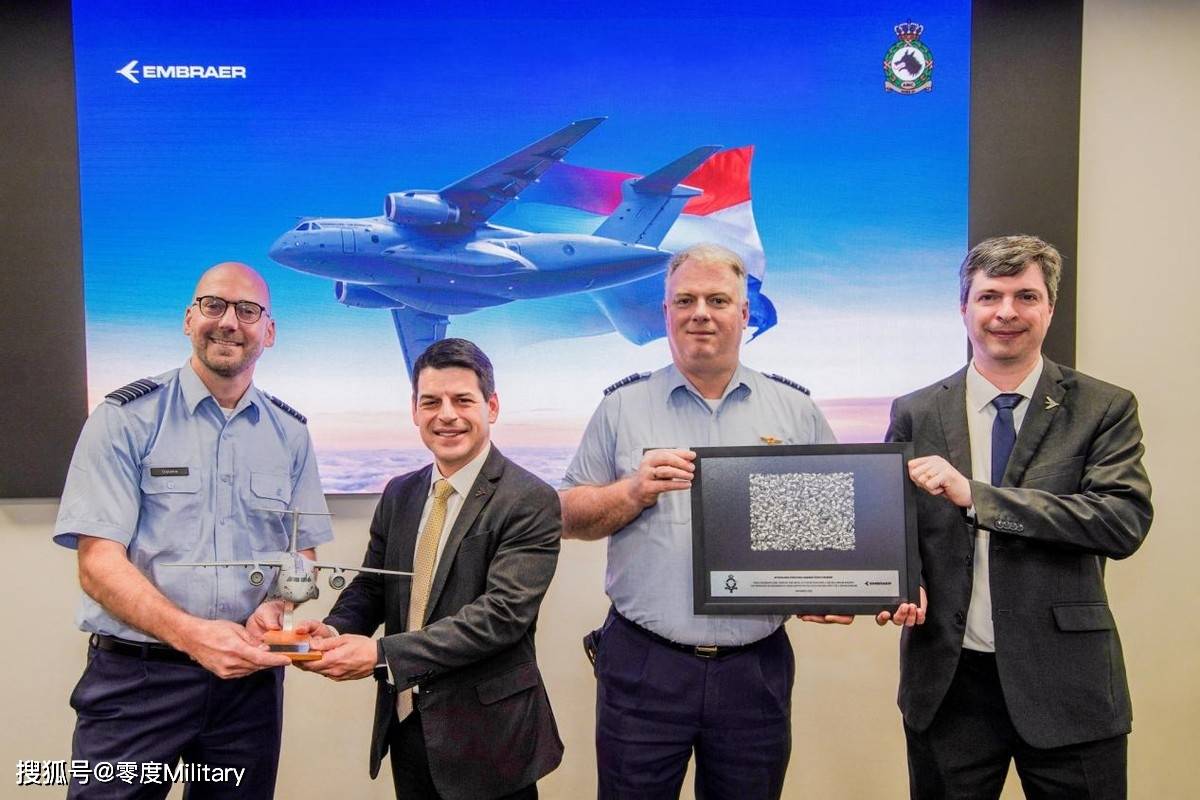
巴西航空工业公司开始为荷兰生产首架C-390中型运输机,共订购5架
Sou Hu Cai Jing· 2025-11-14 16:43
Core Points - The Netherlands has officially commenced the production of its first C-390 "Millennium" medium transport aircraft, marking a significant milestone in international cooperation with Embraer [1][2] - A total of 13 C-390 aircraft will be received by the Netherlands, Austria, and Sweden, with the Netherlands ordering 5 units [2][5] - The production cycle for the C-390 aircraft is approximately eight months, with overall production expected to take two years [3] Group 1 - The Netherlands and Austria have begun production of their initial C-390 aircraft, which will include system integrations such as flight management and self-defense systems [3] - The Netherlands signed an order with Austria for 4 aircraft on July 22, 2024, and Sweden joined the joint procurement on October 6, 2023, ordering 4 aircraft with an option for 7 additional units [5] - The C-390 is designed to replace the aging C-130H fleet of the Netherlands, which is expected to retire by 2025 due to accelerated wear [7][9] Group 2 - Embraer has received additional orders for the C-390 from Brazil (19 units), Portugal (6 units), Hungary (2 units), South Korea (3 units), Czech Republic (2 units), and Morocco (2 units), with Slovakia and Lithuania also planning to order 3 units each [11] - The C-390 offers superior payload capacity, speed, and range compared to similar medium transport aircraft, capable of performing various missions including troop transport, medical evacuation, search and rescue, aerial refueling, firefighting, and humanitarian aid [13] - The C-390 specifications include a length of 33.5 meters, wingspan of 33.9 meters, height of 11.4 meters, maximum takeoff weight of 87 tons, and a maximum payload of 26 tons, powered by two IAE V2500-E5 turbofan engines [15]

10月经济的“表”与“里”
Tianfeng Securities· 2025-11-14 14:14
1. Report Industry Investment Rating No relevant content provided. 2. Core Viewpoints of the Report - In October 2025, the macro - economy showed characteristics of "stable production, slow demand, and declining investment", with year - on - year readings slightly lower than market expectations. The economy is undergoing a transformation from traditional real estate and infrastructure to emerging industries, high - end manufacturing, and service consumption [1][7]. - For the bond market, due to the diminishing effect of traditional drivers (real estate and infrastructure), the potential economic growth rate is declining. New drivers are still being cultivated and cannot fully offset the decline of traditional sectors. In the short term, with inflation under control and the central bank's supportive monetary policy, the risk of significant bond market adjustment is relatively controllable, and the 10 - year Treasury bond yield is expected to fluctuate around 1.8% [2][8]. 3. Summary by Relevant Catalogs 3.1 10 - month Economic Data: Total Slowdown and Kinetic Energy Switch - **Economic Growth Characteristics**: In October 2025, the macro - economy featured "stable production, slow demand, and declining investment", with year - on - year readings slightly lower than market expectations. The endogenous economic growth momentum needs to be restored [1][7]. - **Structural Highlights**: - **Industrial Upgrade**: From January to October 2025, the added value of above - scale equipment manufacturing increased by 9.5% year - on - year, accounting for 36.1% of above - scale industries and contributing 58.7% to the growth of above - scale industrial added value [1][7]. - **High - tech Investment**: Investment in high - tech fields such as new energy, new materials, and artificial intelligence expanded rapidly. From January to October, investment in the aviation, spacecraft, and equipment manufacturing industry increased by 19.7% year - on - year, and investment in the information service industry increased by 32.7%. After excluding real estate development investment, national fixed - asset investment and private investment turned positive, with growth rates of 1.7% and 0.2% respectively [1][8]. - **New Market Demand**: From January to October, online retail sales increased by 9.6% year - on - year. Upgraded consumer goods sold well, and service retail sales increased by 5.3%. Retail sales of cultural, sports, and leisure services, as well as tourism consulting and leasing services, maintained double - digit growth [1][8]. 3.2 Industrial Production Remained Stable, with High - end Manufacturing Still Prominent - **Overall Industrial Production**: In October, the added value of above - scale industries increased by 4.9% year - on - year, with a 1.6 - percentage - point decline from the previous month. From January to October, the cumulative growth was 6.1%. The service production index in October increased by 4.6% year - on - year, a 1 - percentage - point decline from the previous month [10]. - **Industry - Specific Performance**: In October, the year - on - year growth rates of the automobile and transportation equipment industries rebounded significantly compared to the previous month, while those of the pharmaceutical and non - ferrous metal processing industries declined significantly [12]. - **New Kinetic Energy**: The upgrading of the manufacturing industry continued to drive industrial resilience. In October, the added value of the equipment manufacturing industry increased by 8.0% year - on - year, and that of the high - tech manufacturing industry increased by 7.2%, 3.1 and 2.3 percentage points faster than the overall above - scale industrial added value respectively. The output of emerging products such as 3D printing equipment, new energy vehicles, and industrial robots increased rapidly [13]. 3.3 Consumption Recovery was Moderate, with Service Consumption Better than Goods - **Overall Consumption**: In October, the growth rate of social consumer goods retail sales slowed slightly to 2.9%, a 0.1 - percentage - point decline from the previous month. Among them, commodity retail increased by 2.8% year - on - year, a 0.5 - percentage - point decline from the previous month, while catering revenue increased by 3.8% year - on - year, a 2.9 - percentage - point increase from the previous month [16]. - **Consumption Structure**: Upgraded consumption performed well, and service consumption maintained resilience. In October, rural consumption grew by 4.1%, faster than urban consumption. However, the transmission of consumption policies to end - demand needs further observation due to the constraints of income expectations and housing price wealth effects on consumption willingness [21][23]. 3.4 Investment Growth Continued to Decline, with Manufacturing Standing Out - **Overall Investment**: From January to October, fixed - asset investment increased by - 1.7% year - on - year, a 1.2 - percentage - point decline from January to September. The investment structure showed "stable manufacturing, declining infrastructure, and real - estate drag", with only manufacturing investment maintaining positive growth [24]. - **Manufacturing Investment**: From January to October, manufacturing investment increased by 2.7% year - on - year. Equipment purchase investment remained resilient, with a 13% year - on - year increase from January to October, 14.7 percentage points higher than total investment. However, under the guidance of the "anti - involution" policy, the investment motivation of some enterprises may decline in the short term [26]. - **Infrastructure Investment**: The cumulative year - on - year growth rate of infrastructure investment (excluding electricity) was - 0.1%, with a further decline in growth. Traditional infrastructure construction slowed down, and the construction industry's prosperity level declined. In addition, the issuance of new special bonds in October was slow, and the capital availability of some projects might not meet expectations [27]. - **Real Estate Investment**: The cumulative year - on - year growth rate of real estate investment was - 14.7%, with an increasing negative impact. The decline in real estate sales area and sales volume widened, and the real estate market was still "trading at a lower price for higher volume". Follow - up real estate relaxation policies may need to be actively implemented [28].
今日财经要闻TOP10|2025年11月14日
Sou Hu Cai Jing· 2025-11-14 11:42
Group 1 - The U.S. Department of State approved the first arms sale to Taiwan during Trump's second term, valued at approximately $330 million, including non-standard parts and maintenance services for F-16, C-130, and IDF aircraft [2] - The Chinese Ministry of Foreign Affairs expressed strong opposition to the arms sale, stating it violates the one-China principle and undermines China's sovereignty and security interests [2] - The Chinese government emphasized that Taiwan is a core interest and urged the U.S. to adhere to the one-China principle to maintain peace and stability in the Taiwan Strait [2] Group 2 - A significant mining discovery was announced, with the Dadongou gold mine in Liaoning being identified as the first super-large gold deposit in China, containing 1,444.49 tons of gold [3][4] - The average grade of the gold ore at the Dadongou mine is 0.56 grams per ton, with a total ore volume of 2.586 billion tons [3][4] - This discovery is noted as the largest single gold deposit found since the establishment of New China, indicating a potential boost for the domestic gold mining industry [3][4] Group 3 - The A-share market saw a decline, with the Shanghai Composite Index dropping nearly 1% and closing below the 4,000-point mark [5] - The market experienced a total trading volume of 19,804 billion yuan, a decrease of 853 billion yuan from the previous day, with over 3,300 stocks declining [5] - Strong performances were noted in the Hainan and Fujian sectors, with multiple stocks reaching their daily limit up [5] Group 4 - A report from Bank of America indicated that one-quarter of American households are living paycheck to paycheck, spending over 95% of their income on essential expenses [6] - The report highlights that inflation pressures are outpacing wage growth, making it difficult for low- and middle-income families to balance their budgets [6]
美必须两年内自产稀土,前CIA特工爆原因,未来美国要给中国打工
Sou Hu Cai Jing· 2025-11-14 08:40
Core Viewpoint - The article discusses the renewed "China threat theory" proposed by a former CIA agent, emphasizing concerns over China's potential dominance in the AI sector and its implications for the U.S. economy [1][4]. Group 1: U.S.-China Relations and AI - The former CIA agent, Waller, warns that if the U.S. does not take measures to curb China's advancements in AI, it may end up economically subservient to China [1]. - Waller's argument is rooted in the significance of rare earth elements, which are crucial for AI development, and highlights that the U.S. relies on China for nearly 90% of its rare earth supply [1][3]. - The article critiques Waller's perspective as an exaggeration, suggesting that he misrepresents normal trade practices as a national security threat [3][4]. Group 2: Economic Implications - The article points out that while the AI sector in the U.S. is thriving, the overall economy is stagnating, creating a precarious situation that could lead to significant economic repercussions if the foundational sectors falter [1]. - Waller's claims reflect a broader U.S. tendency to politicize trade issues, complicating simple economic interactions and framing them as threats to national security [4][10]. Group 3: China's Position and Response - China's Ministry of Foreign Affairs has responded to the "China AI threat theory," asserting that AI should be a shared resource for humanity and opposing any attempts to monopolize technological advancements [5][7]. - The article highlights China's commitment to a cooperative development approach, contrasting it with the U.S. perspective that often views international relations through a lens of competition and dominance [9][10].

5家上市公司押注,沃兰特航空完成数亿元B+轮融资
Sou Hu Cai Jing· 2025-11-14 08:36
Group 1 - Volant Aviation has completed a B+ round financing of several hundred million yuan, with investments from multiple listed companies including Jinding Capital, Bertley, Hailide, Aima Technology, Jingzhuan Technology, and Bojun Technology [1] - The financing will be used for the airworthiness certification and mass production preparation of the Volant VE25 eVTOL, further accelerating its commercialization process [1] - Huaxing Capital acted as the exclusive financial advisor for this financing round [1] Group 2 - Volant Aviation focuses on the research and manufacturing of high-grade electric vertical take-off and landing aircraft (eVTOL) [4] - The company's first composite wing product, VE25-100 "Tianxing," is designed with a market-oriented approach, targeting the commercial passenger transport sector and covering all application scenarios in the low-altitude economy [4] - Since the successful first unprotected flight of the prototype AC101 on September 1, the Volant team is working towards completing rotor test flight subjects and preparing for manned flight tests [4]




eVTOL独角兽官宣新融资!5家上市公司参与
Zheng Quan Shi Bao· 2025-11-14 06:37
Core Viewpoint - Wolant has successfully completed a B+ round financing of several hundred million yuan, which will be used for the airworthiness certification and mass production preparation of its VE25 eVTOL, accelerating its commercialization process [1] Group 1: Financing and Valuation - Wolant has completed ten rounds of financing since its establishment in 2021, with the latest B round financing in September 2023, leading to a valuation exceeding $1 billion, marking it as a new unicorn [1] - The recent financing round involved investments from five listed companies, including Jinding Capital, Bertli, Hailide, Aima Technology, and Jingzhuan Technology [1] Group 2: Industry Potential and Trends - The low-altitude economy is recognized as a strategic emerging industry in China, with eVTOL seen as a key innovative carrier with significant market potential [2] - The low-altitude economy market is projected to reach 1.5 trillion yuan by 2025 and is expected to exceed 3.5 trillion yuan by 2035, indicating substantial growth opportunities [4] Group 3: Technological Advancements and Collaborations - Wolant's self-developed V25-100 eVTOL aims to provide a passenger flight experience with a cost of 60 yuan for a 20 km journey in just 5 minutes [3] - The company has signed multiple cooperation agreements with various organizations, including leasing companies and service providers, to build a scalable fleet and develop air travel solutions [3]
商业航天发展提速,航空航天ETF(159227)持续获资金流入,规模突破20亿
Mei Ri Jing Ji Xin Wen· 2025-11-14 06:25
Core Viewpoint - The aerospace sector in China is experiencing significant growth, driven by increased commercial space activities and government support, leading to investment opportunities in related industries [1][2]. Group 1: Market Performance - On November 14, A-shares experienced a collective pullback, while the Aerospace ETF (159227) rose by 0.45%, with a trading volume of 117 million yuan [1]. - The Aerospace ETF has attracted over 263 million yuan in the last five trading days, reaching a new high of over 2 billion yuan in total assets, making it the largest aerospace ETF in the market [1]. Group 2: Government Support and Industry Growth - The Fourth Plenary Session of the Central Committee on October 23 highlighted the goal of becoming a "strong aerospace nation," indicating the government's strong emphasis on the aerospace industry [1]. - The successful launch of 13 low-orbit satellite internet satellites on November 10 marks a significant milestone in China's commercial space activities [1]. Group 3: Industry Trends - The aerospace industry in China is entering a "fast lane" of development, with the China Star Network and G60 Thousand Sails Constellation moving into mass launch phases [1]. - The introduction of the Hainan commercial space launch site and commercial launch vehicles is expected to lead to high capacity and low-cost trends, opening a new era for commercial aerospace [1]. - The market for the aerospace industry is projected to reach trillions in scale, presenting substantial growth opportunities for the related industrial chain [1]. Group 4: ETF Composition - The Aerospace ETF closely tracks the National Securities Aerospace Index, which includes key sectors such as aerospace equipment, satellite navigation, and new materials, with commercial aerospace concepts accounting for 51.83% of the index [2].
