火电

Search documents
广发证券:稳电价稳煤价预期提升 重视火电绩优与水文改善
智通财经网· 2025-10-29 03:07
Core Viewpoint - The report from GF Securities highlights a significant recovery in electricity consumption and generation, particularly in the secondary industry, driven by low base effects and seasonal factors, indicating a clear trend towards energy transformation [1][2][3] Group 1: Electricity Consumption Analysis - In September, the secondary industry's electricity consumption growth reached 79%, marking the first time this year it surpassed structural contributions, with a year-to-date contribution of 46% [1] - Overall electricity consumption in September showed a year-on-year increase of 4.5%, with the secondary industry growing by 7.3% and the residential sector declining by 2.6% due to high base effects from the previous year [1] - The report anticipates continued improvement in the secondary industry's electricity consumption in the coming months, supported by low base effects from last year [1] Group 2: Power Generation Insights - Hydropower generation in September saw a significant year-on-year increase of 31.9%, primarily due to seasonal autumn floods and low base effects from the previous year [1][2] - Wind and solar power contributed to 50% of the total power generation growth, with a year-to-date contribution of 112%, indicating a strong trend towards energy transformation [1] - The report notes that the hydropower sector has experienced a major turnaround in fundamentals, enhancing its investment appeal [2] Group 3: Coal and Power Price Dynamics - Recent increases in hydropower generation have negatively impacted thermal power generation, which saw a year-on-year decline of 5.4% in September [1][3] - The price of Qinhuangdao Q5500 thermal coal has risen by 59 CNY/ton to 765 CNY/ton, with expectations of maintaining high levels, which could improve electricity price forecasts [3] - The report emphasizes a growing consensus on stabilizing electricity and coal prices, which could lead to a resurgence in thermal power market performance [3]

宝新能源:多途径降本提质,第三季度归母净利润大增20.22%
Zheng Quan Shi Bao Wang· 2025-10-28 14:41
Company Performance - In the first three quarters of 2025, the company achieved a revenue of 6.754 billion yuan, a year-on-year increase of 10.61% [1] - The net profit attributable to shareholders after deducting non-recurring gains and losses reached 779 million yuan, an increase of 29.47% compared to the same period last year [1] - In the third quarter, the company reported a revenue of 2.396 billion yuan, slightly up year-on-year, while the net profit attributable to shareholders after deductions surged by 20.22% to 235 million yuan [1] Industry Context - The company's performance growth is attributed to the strong electricity demand in Guangdong province, driven by the economic recovery [1] - The continuous decline in coal prices during the third quarter significantly enhanced the company's cost optimization benefits, with the average port coal price at 673 yuan per ton, down 180 yuan per ton year-on-year [1] - The industry is entering a new cycle characterized by "loose electricity supply" and "regional/time-specific tightness," influenced by factors such as increased renewable energy installations and the introduction of new coal-fired power units [2] Future Outlook - Recent national policies emphasize both "stabilizing electricity prices" and "stabilizing coal prices," indicating a shift towards a more robust industry profitability environment [2] - The improvement in capacity pricing is expected to enhance the revenue structure for coal-fired power, providing better income security for power companies [2]

A股盘前播报 | 高通进军数据中心AI芯片 证监会出台保护中小投资者举措
智通财经网· 2025-10-28 00:34
Company - Qualcomm has entered the data center AI chip market with the launch of AI200 and AI250 inference acceleration chips, boasting excellent memory capacity and competitive total cost of ownership (TCO), leading to a stock price surge of over 11% [1] - Victory Technology reported a remarkable net profit increase of over 324% in the first three quarters, with revenue reaching 14.117 billion yuan, a year-on-year growth of 83.40% [4] - Shengyi Technology anticipates a net profit increase of 476% to 519% for the same period [4] - North Rare Earth reported a net profit growth of 280% year-on-year in the first three quarters, driven by increased sales of rare earth products [12] - Hengrui Medicine's third-quarter net profit was 1.301 billion yuan, reflecting a year-on-year increase of 9.53% [12] Industry - The PCB (Printed Circuit Board) industry is experiencing a boom due to the AI computing power wave, marking a significant growth period [4] - The copper price is nearing historical highs, driven by trade easing and supply constraints, indicating a favorable outlook for the non-ferrous metals sector [8] - The nuclear fusion project "artificial sun" in China is expected to be completed by 2027, highlighting the strategic value of fusion energy and accelerating industry financing [9] - The thermal power industry is seeing a recovery in profitability in the third quarter, supported by improved commercial models and rising electricity prices [10]

煤价回落叠加需求攀升 火电企业前三季度盈利修复明显
Shang Hai Zheng Quan Bao· 2025-10-27 20:33
Core Viewpoint - The thermal power industry is experiencing a recovery in profitability driven by a decline in thermal coal prices year-on-year and an increase in electricity demand during peak summer months, with companies like Jianneng Power and Jiantou Energy reporting significant profit growth [1][4]. Group 1: Company Performance - Jianneng Power reported a revenue of 26.16 billion yuan for the first three quarters, a year-on-year increase of 0.49%, with a net profit attributable to shareholders of 3.17 billion yuan, up 125.66% [2]. - Waneng Power's third-quarter revenue was 8.59 billion yuan, a 0.56% increase year-on-year, with a net profit of 824 million yuan, reflecting a 60.95% growth [2]. - Jiantou Energy expects a net profit of 1.583 billion yuan for the first three quarters, marking a 231.75% increase year-on-year, primarily due to lower coal prices and reduced operational costs [3]. Group 2: Market Dynamics - The decline in thermal coal prices and the increase in electricity demand during the summer are key factors contributing to the profitability recovery of thermal power companies [4]. - The stability of electricity prices in northern thermal power companies is expected to lead to performance growth that exceeds the industry average [4]. - The National Development and Reform Commission and the National Energy Administration have introduced guidelines to enhance the electricity market system, indicating a shift towards a more market-oriented approach [4]. Group 3: Coal Price Trends - As of October 24, the price of Shanxi-produced thermal coal reached 770 yuan per ton, the upper limit set by the National Development and Reform Commission for long-term coal prices [5]. - Analysts predict that the current round of thermal coal price increases may be nearing an end, but there are concerns about potential supply tightening due to ongoing production checks in coal mines [5]. - The execution of "anti-involution" policies may lead to unexpected increases in coal prices, which could impact the recovery pace of thermal power profitability [5].


AI电力需求测算
2025-10-27 15:22
Summary of Key Points from Conference Call Industry Overview - The conference call focuses on the **data center industry** in China, particularly its transformation driven by AI and government policies [2][3][4]. Core Insights and Arguments - **Government Support**: The Chinese government aims for intelligent computing to account for 35% of total computing power by 2025, as outlined in the "High-Quality Development Action Plan for Computing Infrastructure" [4]. - **Electricity Consumption**: Data center electricity consumption is projected to reach **166 billion kWh** in 2024, representing **1.7%** of total national electricity consumption. This is expected to grow significantly due to AI demands and projects like "East Data West Computing" [2][5]. - **Future Projections**: By 2030, total electricity consumption by data centers is expected to reach **411.4 billion kWh**, and by 2035, it could rise to **1,026.2 billion kWh**, with a compound annual growth rate (CAGR) of approximately **16.33%** from 2024 to 2030 [2][11]. - **Power Usage Effectiveness (PUE)**: The average PUE is currently **1.46**, with a target to reduce it to **1.25** by 2035. This indicates limited room for improvement in energy efficiency [8]. - **IT Equipment Power Consumption**: The power consumption of IT equipment per unit of computing capacity is expected to decrease by **8% annually**, reaching **162 million kWh** by 2035 [9][10]. Additional Important Insights - **Load Characteristics**: The demand for AI is causing a shift in load characteristics from stable to frequent short-term fluctuations, necessitating more flexible energy sources like thermal power [12]. - **Role of Thermal Power**: Thermal power is evolving from merely providing electricity to becoming a key stabilizing force in the new energy system, essential for balancing supply and demand fluctuations [13]. - **Future Demand for Thermal Power**: By 2030, the additional electricity demand from data centers is expected to require an increase of **40 million kW** in thermal power capacity, with an average load of **27.98 million kW** [14]. - **Market Performance of Thermal Power**: Despite a decline in competitiveness, thermal power remains strong in northern regions due to less impact from renewable energy fluctuations [15]. - **Valuation and Investment Outlook**: Current market valuations for thermal power companies are around **10 times earnings**, but there is potential for revaluation due to increasing energy demands and the unique role of thermal power in the new energy landscape [16][17].
新集能源(601918):财报点评:25Q3归母净利环比+43%,中长期成长可期
East Money Securities· 2025-10-27 09:03
Investment Rating - The report maintains an "Accumulate" rating for the company [2][5] Core Views - The company has shown a significant improvement in Q3 2025, with a 43% increase in net profit attributable to shareholders compared to the previous quarter, indicating potential for long-term growth [1][5] - The company is expected to see a 139% increase in controllable installed capacity after the commissioning of high-efficiency units in 2026, which will contribute to its growth [5][6] Financial Summary - In Q3 2025, the company achieved a revenue of 3.2 billion yuan, a slight decrease of 0.2% year-on-year but a 10.3% increase quarter-on-quarter. The net profit attributable to shareholders was 560 million yuan, down 14.2% year-on-year but up 43.1% quarter-on-quarter [4][5] - The coal business saw a gross profit increase from 810 million yuan in Q1 2025 to 930 million yuan in Q3 2025, a quarter-on-quarter increase of 15% [4] - The thermal power business experienced a gross profit increase from 170 million yuan in Q2 2025 to 290 million yuan in Q3 2025, a quarter-on-quarter increase of 66% [4] Revenue and Profit Forecast - The company is projected to have revenues of 12.6 billion yuan in 2025, with a slight decline of 0.63% compared to 2024, followed by a growth of 12.08% in 2026 [6][12] - The net profit attributable to shareholders is expected to be 2.05 billion yuan in 2025, reflecting a decrease of 14.34% from 2024, with a recovery to 2.45 billion yuan in 2027 [6][12] Market Performance - The company's market capitalization is approximately 18.39 billion yuan, with a 52-week price range of 8.42 yuan to 6.23 yuan, and a 52-week increase of 13.96% [4][5]

新集能源(601918):2025年三季报点评:2025Q3煤、电业务销量、价环比齐升,公司业绩环比显著增长
Guohai Securities· 2025-10-25 14:36
Investment Rating - The investment rating for the company is "Buy" (maintained) [2][10][11] Core Views - The company's performance in Q3 2025 showed significant growth in coal and electricity sales, leading to a notable increase in overall performance compared to previous quarters [2][6] - The company is expected to achieve a coal-electricity integration by 2026, enhancing both growth potential and stability in earnings [10][11] Summary by Sections Financial Performance - For the first three quarters of 2025, the company reported revenue of 9.01 billion yuan, a year-on-year decrease of 1.95%, and a net profit attributable to shareholders of 1.477 billion yuan, down 19.06% year-on-year [5][10] - In Q3 2025, the company achieved revenue of 3.199 billion yuan, a slight year-on-year decrease of 0.16%, but a quarter-on-quarter increase of 10.3% [5][10] - The net profit for Q3 2025 was 555 million yuan, down 14.2% year-on-year but up 43.1% quarter-on-quarter [5][10] Coal Business - In the first three quarters of 2025, the company's coal production and sales increased by 5.7% and 5.0% year-on-year, respectively, while the average coal price decreased by 7% to 523 yuan per ton [6][10] - In Q3 2025, coal sales volume and price both increased, with sales volume at 5.035 million tons (up 4.2% quarter-on-quarter) and average price at 513 yuan per ton (up 3.0% quarter-on-quarter) [6][10] Power Generation Business - The company reported a 28.2% year-on-year increase in power generation for the first three quarters of 2025, totaling 11.03 billion kWh, although the average selling price of electricity decreased by 8.45% to 0.37 yuan per kWh [6][10] - In Q3 2025, power generation reached 4.37 billion kWh, a significant quarter-on-quarter increase of 43.4% [6][10] Future Outlook - The company is projected to have revenues of 12.175 billion yuan in 2025, with a year-on-year decrease of 4%, and net profits of 2.041 billion yuan, down 15% [10][11] - The company is expected to achieve a return on equity (ROE) of 12% in 2025, with a price-to-earnings (P/E) ratio of 9.01 [10][11]
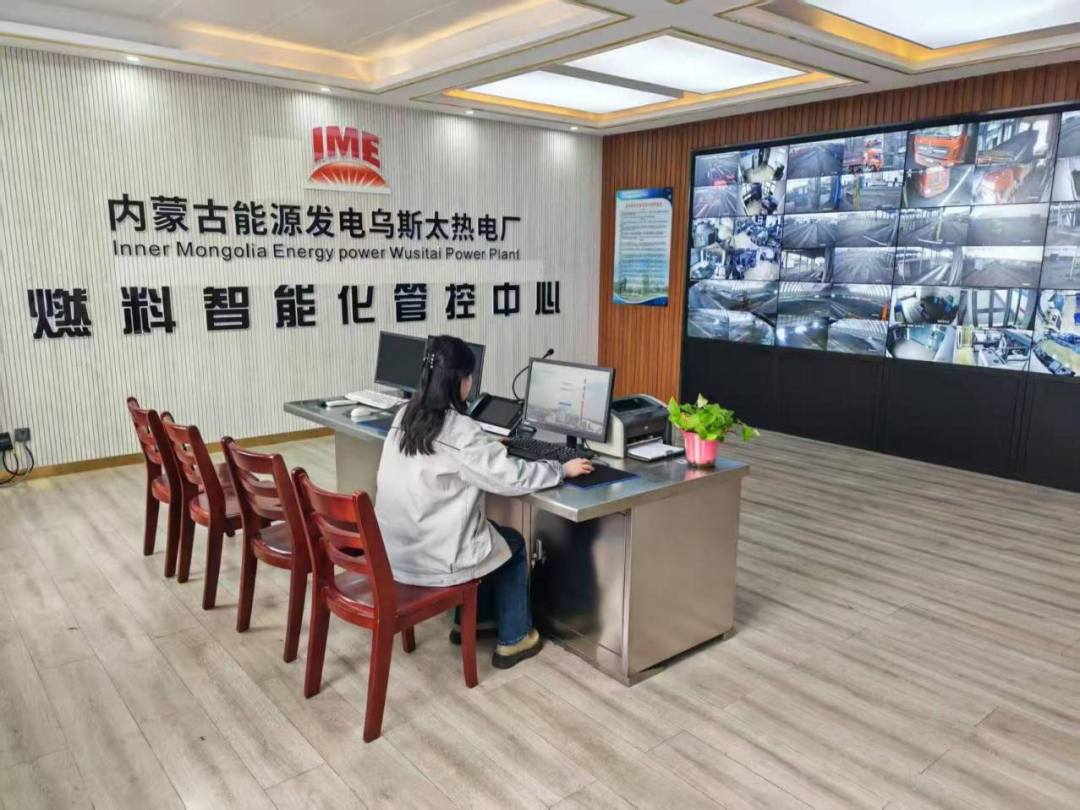
内蒙古首家!燃料管理智能化全覆盖
Zhong Guo Neng Yuan Wang· 2025-10-24 08:29
Core Insights - Inner Mongolia Energy Group has completed the intelligent fuel management project across all nine thermal power units, marking it as the first large energy enterprise in the region to achieve comprehensive fuel management automation [1][5] - Fuel costs account for over 70% of the operating costs in thermal power plants, making fuel management a critical focus area [1] - The intelligent fuel management system has significantly reduced labor costs and improved the accuracy of coal quality data, leading to an annual savings of approximately 4 million yuan across the nine units [5] Summary by Sections Project Implementation - The intelligent fuel management projects at various units, including Wusitai Thermal Power Plant and Jingshan Thermal Power Company, have been successfully launched under the unified deployment of Inner Mongolia Energy Group [5] - A project working group was established to ensure clear responsibilities and timelines, overcoming challenges such as complex construction environments and data integration issues [5] Technological Advancements - The system replaces manual processes with automated solutions, including automatic weighing, sampling, and testing, which enhances the representativeness and uniformity of samples while reducing the likelihood of coal quality disputes [5][6] - The intelligent management system is designed to be integrated with other business modules such as production, marketing, and finance for improved operational efficiency [6] Future Plans - Inner Mongolia Energy Group plans to continue optimizing the intelligent fuel management system and deepen its integration with other business functions to further enhance management efficiency [6]

对广东电力市场2026年交易关键机制和参数的点评:广东电力市场交易方案发布,核电不再执行变动成本补偿机制
Shenwan Hongyuan Securities· 2025-10-24 06:44
Investment Rating - The report maintains a positive outlook on the Guangdong electricity market, indicating an "Overweight" rating for the industry [2]. Core Insights - The Guangdong Electricity Trading Center has released the key mechanisms and parameters for the 2026 trading year, which includes all new energy generation entering the market and a defined annual trading arrangement [2]. - The initial trading cap for coal, gas, and nuclear power plants is set at 70%, with potential adjustments based on market conditions [2]. - The benchmark electricity price for 2026 is set at 0.463 yuan/kWh, with upper and lower limits of 0.554 yuan/kWh and 0.372 yuan/kWh, respectively [2]. - Nuclear power's market transaction volume is expected to increase, with a planned volume of 312 billion kWh for 2026, up from 273 billion kWh in 2025 [2]. - The removal of the variable cost compensation mechanism for nuclear power is anticipated to enhance revenue, with projections indicating an increase of approximately 4 billion yuan to 10 billion yuan based on market conditions [2]. Summary by Sections Annual Trading Mechanism - The annual trading mechanism for 2026 has been established, allowing all new energy sources to enter the market, with trading limits based on historical performance [2]. Pricing Structure - The pricing structure remains unchanged, with a floating range based on a benchmark price of 0.453 yuan/kWh for coal, leading to a market reference price of 0.463 yuan/kWh for 2026 [2]. Nuclear Power Revenue - The nuclear power sector is expected to see revenue growth due to the elimination of the variable cost compensation mechanism, with significant increases in market transaction volumes planned for 2026 [2].

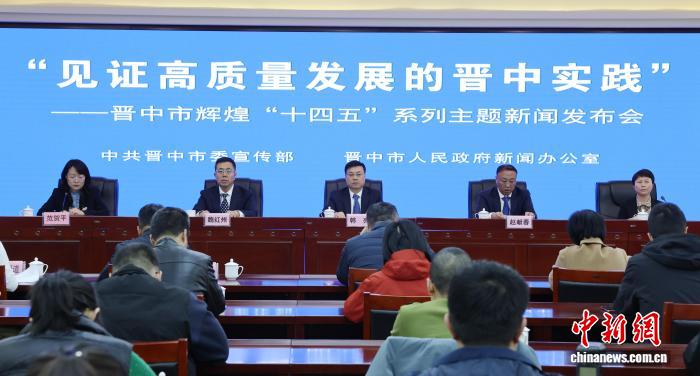
“十四五”山西晋中转型发展质效双提升 产业韧性与活力显著增强
Zhong Guo Xin Wen Wang· 2025-10-23 08:50
Core Viewpoint - During the "14th Five-Year Plan" period, Jinzhong City has achieved significant progress in transforming its economy, focusing on high-quality development through industrial structure optimization, traditional industry upgrades, new momentum cultivation, and energy reforms [1][3]. Industrial Structure Optimization - Jinzhong City aims to build a modern industrial system characterized by high-end, intelligent, and green development, with a focus on professional and integrated service industry expansion [3]. - By 2024, the contribution of the three major industries to the city's GDP is projected to be 6.3:42.8:51, with the industrial sector's share increasing by 2.3 percentage points compared to 2020 [3]. Traditional Industry Upgrades - The city is leveraging its resource endowments to accelerate the digital transformation of coal mining and eliminate outdated coking capacities, transitioning from traditional manufacturing to advanced intelligent manufacturing [3]. - By 2024, advanced capacities in coal and coking industries are expected to reach 98% and 100%, respectively [4]. - The annual growth rates for industries such as casting, steel, and glass have been 13.5%, 12.7%, and 8.5%, respectively, outpacing the average growth rate of regulated industries [4]. New Momentum Cultivation - Jinzhong City is fostering new production capacities in emerging industries such as new energy vehicles and new materials [4]. - A total of 244,000 new energy vehicles have been produced, accounting for 78.3% of the province's total, establishing the longest and most comprehensive industrial chain in the province [4]. - The new materials industry, primarily based on carbon materials, has seen an annual growth rate of 15.8%, becoming the largest and most robust strategic emerging industry in the city [4]. Energy Reform - The city is actively promoting a green and low-carbon energy transition, with rapid development in photovoltaic and wind energy sectors, and a burgeoning energy storage industry [4]. - By the end of 2024, the total installed capacity of renewable and clean energy is expected to reach 7.85 million kilowatts, making up 57% of the total installed capacity, an increase of 26.5 percentage points from the end of 2021 [4]. Overall Assessment - The "14th Five-Year Plan" period has seen simultaneous improvements in the quality and efficiency of Jinzhong City's transformation, significantly enhancing industrial resilience and vitality, laying a solid foundation for comprehensive high-quality development [4].