
炼化

Search documents
成本端支撑较弱,长丝价格承压 | 投研报告
Zhong Guo Neng Yuan Wang· 2025-09-15 02:04
Group 1 - The price spread for domestic key refining projects this week is 2579 CNY/ton, an increase of 97 CNY/ton (up 4% week-on-week) [1][2] - The price spread for foreign key refining projects this week is 1197 CNY/ton, an increase of 63 CNY/ton (up 6% week-on-week) [1][2] - The average price of PX this week is 835.6 USD/ton, a decrease of 7.0 USD/ton week-on-week, with a price spread compared to crude oil of 350.3 USD/ton, an increase of 1.7 USD/ton [3] Group 2 - In the polyester sector, the average prices for POY, FDY, and DTY are 6789, 7079, and 8021 CNY/ton respectively, with week-on-week changes of -82, -68, and -29 CNY/ton [2] - The weekly average profits for POY, FDY, and DTY are 108, 34, and 63 CNY/ton respectively, with week-on-week changes of -5, +5, and +31 CNY/ton [2] - The inventory days for POY, FDY, and DTY are 19.3, 27.6, and 31.1 days respectively, with week-on-week changes of +1.9, +1.2, and +1.4 days [2] Group 3 - The operating rate for PX is 85.9%, an increase of 1.2 percentage points week-on-week [3] - The operating rate for long filaments is 91.3%, a decrease of 0.2 percentage points week-on-week [2] - The weaving machine operating rate is 62.4%, unchanged week-on-week [2] Group 4 - Key listed companies in the private refining and polyester filament sector include Hengli Petrochemical, Rongsheng Petrochemical, Hengyi Petrochemical, Tongkun Co., and Xin Fengming [4]


大炼化周报:光伏需求强势,EVA价格及价差持续上行 | 投研报告
Zhong Guo Neng Yuan Wang· 2025-09-15 00:52
Core Viewpoint - The report highlights the fluctuations in oil prices and refining margins, indicating a mixed outlook for the refining and chemical sectors due to various geopolitical and market factors [1][2]. Refining Sector - As of the week ending September 12, 2025, the domestic refining margin for key projects was 2407.08 CNY/ton, an increase of 45.76 CNY/ton (+1.94%) from the previous week, while the international refining margin was 1198.96 CNY/ton, up by 65.38 CNY/ton (+5.77%) [2]. - The Brent crude oil average price for the week was 66.47 USD/barrel, reflecting a decrease of 1.77% [2]. - OPEC+ has slowed its production increase, with several countries implementing compensatory production cuts, which, along with potential U.S. sanctions on Russia and ongoing geopolitical tensions, have supported a slight upward trend in international oil prices [2]. Chemical Sector - The petrochemical sector showed mixed price trends, with some olefin products experiencing strong demand and price increases, while polyethylene prices remained stable with slight declines [3]. - EVA prices continued to rise due to strong photovoltaic demand, while pure benzene prices saw a minor decrease [3]. - The polyester industry faced downward pressure on prices due to increased supply from a PX facility restart, with overall orders remaining low [3]. Stock Performance of Refining Companies - As of September 12, 2025, stock performance for six major private refining companies showed varied results, with New Fengming leading with a 7.09% increase over the week and 27.04% over the month [4]. - Other companies like Hengli Petrochemical and Dongfang Shenghong also showed positive monthly performance, indicating a generally favorable market sentiment despite some weekly declines [4].
大炼化周报:成本端支撑较弱,长丝价格承压-20250914
Soochow Securities· 2025-09-14 11:15
1. Report Industry Investment Rating No industry investment rating information is provided in the report. 2. Core Viewpoints The report presents a weekly analysis of the large refining and chemical industry, highlighting that the cost - end support is weak, and filament prices are under pressure. It provides detailed data on various segments such as refining, polyester, and chemicals, as well as the performance of related listed companies [1][3]. 3. Summary According to Relevant Catalogs 3.1 Big Refining Weekly Data Briefing - **6 Major Private Refining Companies' Performance** - **Stock Price Changes**: As of September 12, 2025, the stock prices of private refining companies showed different trends. For example, New Fengming had a weekly increase of 7.1%, while Hengli Petrochemical had a weekly decrease of 1.4% [9]. - **Earnings Forecast**: The report provides the net profit forecasts of these companies from 2024 to 2027. For instance, the expected net profit of Rongsheng Petrochemical in 2025 is 2.616 billion yuan [9]. - **Oil Prices and Refining Spreads** - **International Crude Oil**: The average price of Brent crude oil this week was 66.5 dollars/barrel, a decrease of 1.2 dollars/barrel (-1.8%) compared to last week, and a year - on - year decrease of 6.6%. The average price of WTI crude oil was 62.6 dollars/barrel, a decrease of 1.5 dollars/barrel (-2.4%) compared to last week, and a year - on - year decrease of 7.9% [9]. - **Refining Spreads**: The spread of domestic key large refining projects this week was 2,579.4 yuan/ton, a week - on - week increase of 96.5 yuan/ton (+3.9%); the spread of foreign key large refining projects was 1,197.0 yuan/ton, a week - on - week increase of 62.6 yuan/ton (+5.5%) [9]. - **Polyester Sector** - **Product Prices and Profits**: The average prices of POY, FDY, and DTY this week were 6,789.3 yuan/ton, 7,078.6 yuan/ton, and 8,021.4 yuan/ton respectively, with week - on - week decreases of 82.1 yuan/ton, 67.9 yuan/ton, and 28.6 yuan/ton. The weekly average profits of POY, FDY, and DTY were 107.8 yuan/ton, 34.3 yuan/ton, and 62.8 yuan/ton respectively, with week - on - week changes of - 4.5 yuan/ton, +5.0 yuan/ton, and +31.0 yuan/ton [10]. - **Inventory and Operating Rates**: The inventories of POY, FDY, and DTY were 19.3 days, 27.6 days, and 31.1 days respectively, with week - on - week increases of 1.9 days, 1.2 days, and 1.4 days. The operating rate of filament was 91.3%, a week - on - week decrease of 0.2 pct [10]. - **Refining Sector** - **Domestic Refined Oil**: This week, the prices of domestic gasoline and diesel decreased [3]. - **US Refined Oil**: This week, the prices of US gasoline, diesel, and jet fuel decreased [3]. - **Chemical Sector** - **PX**: The average price of PX this week was 835.6 dollars/ton, a week - on - week decrease of 7.0 dollars/ton. The spread between PX and crude oil was 350.3 dollars/ton, a week - on - week increase of 1.7 dollars/ton. The operating rate of PX was 85.9%, a week - on - week increase of 1.2 pct [3]. 3.2 Big Refining Weekly Report - **Big Refining Index and Project Spread Trends** - **Market Performance of Six Private Big Refining Companies**: The report presents the market performance trends of six private big refining companies from 2020 to 2025, including Hengli Petrochemical, Rongsheng Petrochemical, etc. [16][17] - **Refining Spreads and Oil Prices**: It shows the historical trends of domestic and foreign big refining project spreads and Brent oil prices from 2020 to 2025 [20][22] - **Polyester Sector** - **Raw Material and Product Prices**: It presents the price trends of crude oil, PX, PTA, MEG, etc., as well as the price and profit trends of various polyester products such as POY, FDY, DTY, polyester staple fiber, and polyester bottle chips from 2020 to 2025 [24][26][38] - **Operating Rates and Inventories**: It shows the operating rate trends of PX, PTA, MEG, filament, and polyester staple fiber from 2020 to 2025, as well as the inventory trends of PTA, filament, and polyester staple fiber [33][56][76] - **Sales and Production Rates**: It presents the sales and production rate trends of filament and polyester staple fiber in the Jiangsu - Zhejiang region from 2020 to 2025 [49][72] - **Refining Sector** - **Domestic Refined Oil**: It shows the price trends of domestic gasoline, diesel, and jet fuel and their spreads with crude oil from 2020 to 2025 [85][94] - **US Refined Oil**: It shows the price trends of US gasoline, diesel, and jet fuel and their spreads with crude oil from 2020 to 2025 [99][107] - **European Refined Oil**: It shows the price trends of European gasoline, diesel, and jet fuel and their spreads with crude oil from 2020 to 2025 [112][121] - **Singapore Refined Oil**: It shows the price trends of Singapore gasoline, diesel, and jet fuel and their spreads with crude oil from 2020 to 2025 [126][134] - **Chemical Sector** - **Chemical Product Prices**: It shows the price trends of various chemical products such as polyethylene LLDPE, homopolymerized polypropylene, EVA, styrene, acrylonitrile, PC, MMA, etc., and their spreads with crude oil from 2020 to 2025 [140][148]
大炼化周报:光伏需求强势,EVA价格及价差持续上行-20250914
Xinda Securities· 2025-09-14 07:52
Investment Rating - The industry investment rating is "Positive" as the industry index is expected to outperform the benchmark [129]. Core Insights - The report highlights strong demand in the photovoltaic sector, leading to a continuous increase in EVA prices and price spreads [2]. - Domestic and international refining project price spreads have shown significant changes, with domestic spreads at 2407.08 CNY/ton (+1.94%) and international spreads at 1198.96 CNY/ton (+5.77%) as of September 12, 2025 [2][3]. - Brent crude oil prices have experienced fluctuations, with a weekly average of 66.47 USD/barrel, reflecting a decrease of 1.77% [2][3]. Refining Sector Summary - OPEC+ has slowed its production increase, and several countries are implementing compensatory production cuts, contributing to a rise in international oil prices [2]. - As of September 12, 2025, Brent and WTI crude oil prices were 66.99 USD/barrel and 62.69 USD/barrel, respectively, marking increases of 1.49 USD and 0.82 USD from the previous week [2][14]. - Domestic refined oil prices have shown slight increases, with price spreads in Southeast Asia rising slightly while Europe and the US saw declines [2]. Chemical Sector Summary - The chemical products sector has shown mixed price trends, with some olefin products experiencing strong demand and price spreads widening [2]. - EVA prices have continued to rise due to strong photovoltaic demand, with an average price of 11592.86 CNY/ton and a price spread of 8146.18 CNY/ton [45]. - Polypropylene prices have weakened due to slow demand, with average prices for various types of polypropylene showing declines [56]. Polyester & Nylon Sector Summary - The polyester industry is facing downward pressure on prices, with PX prices at 5931.36 CNY/ton, reflecting a decrease of 51.52 CNY/ton [69]. - The demand for polyester filament remains weak, with average prices for POY, FDY, and DTY showing slight declines [89]. - Nylon fiber prices have remained stable, with slight improvements in price spreads [99]. Performance of Major Refining Companies - As of September 12, 2025, the stock price changes for six major refining companies were as follows: Rongsheng Petrochemical (0.00%), Hengli Petrochemical (-1.40%), Dongfang Shenghong (+3.93%), Hengyi Petrochemical (+4.40%), Tongkun Co. (0.00%), and Xin Fengming (+7.09%) [116]. - Over the past month, stock price changes were: Rongsheng Petrochemical (+4.45%), Hengli Petrochemical (+11.07%), Dongfang Shenghong (+12.56%), Hengyi Petrochemical (+10.67%), Tongkun Co. (+18.90%), and Xin Fengming (+27.04%) [116].
四大民营炼化上半年仅一家净利增长
Di Yi Cai Jing Zi Xun· 2025-09-12 03:00
Core Viewpoint - The leading private refining companies in China, including Hengli Petrochemical, Hengyi Petrochemical, Rongsheng Petrochemical, and Dongfang Shenghong, reported a decline in revenue and net profit for the first half of 2025, primarily due to industry cyclicality, narrowing product price spreads, and intense competition [2][3]. Group 1: Company Performance - All four companies reported a decline in operating income, with a combined net profit of approximately 4.27 billion yuan, down nearly 40% year-on-year [2]. - Hengli Petrochemical led with a net profit of 3.05 billion yuan, a decrease of over 24% year-on-year [2]. - Rongsheng Petrochemical, Dongfang Shenghong, and Hengyi Petrochemical reported net profits of 602 million yuan, 386 million yuan, and 227 million yuan, respectively, with year-on-year changes of -29.82%, +21.24%, and -47.32% [2]. Group 2: Industry Challenges - The industry is experiencing a "involution" competition, leading to increased production and sales without corresponding profit increases, resulting in declining profit margins since 2021 [3]. - Major products from the four companies saw over half of their revenues decline in the first half of the year, with Rongsheng Petrochemical's revenue from refining and PTA products decreasing by 12.4% and 39.6%, respectively [3]. - Hengyi Petrochemical and Dongfang Shenghong also experienced around 20% year-on-year declines in refining product revenues [3]. Group 3: Strategic Adjustments - Dongfang Shenghong benefited from the rapid development of the global photovoltaic industry, achieving profit growth through its focus on new energy materials, particularly photovoltaic-grade EVA products [4]. - Companies are adjusting their product structures to cope with market competition, with Rongsheng Petrochemical's "reduce oil and increase chemicals" strategy leading to a 5.46% increase in chemical product revenue [5]. - Hengyi Petrochemical is optimizing its polyester product structure, increasing the proportion of differentiated fibers to 27% and accelerating the development of high-end biodegradable fibers [5]. Group 4: International Market Impact - Companies with significant overseas business exposure faced substantial revenue declines, with Hengyi Petrochemical's overseas revenue dropping nearly 15% to 24.38 billion yuan [5]. - Rongsheng Petrochemical's overseas revenue fell over 33% to 14.97 billion yuan, nearly ten times the decline in domestic revenue [5]. - Hengli Petrochemical highlighted challenges posed by U.S. tariffs, which significantly compressed profit margins and disrupted global textile supply chains [5]. Group 5: Cost Management - Companies indicated that fluctuations in raw material prices, particularly crude oil, pose risks to operations, despite some cost relief in the first half of the year [6]. - Companies are focusing on refined cost control and dynamic analysis to manage procurement strategies effectively and mitigate the impact of raw material price volatility [6].


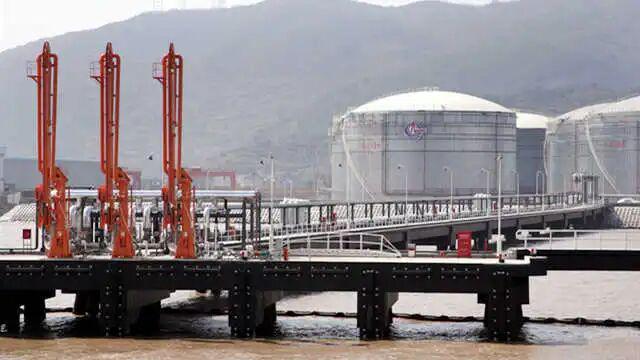
四大民营炼化上半年仅一家净利增长
第一财经· 2025-09-12 02:54
Core Viewpoint - The petrochemical industry is facing significant challenges, with major private refining companies reporting declines in both revenue and net profit due to market saturation and intense competition, leading to a "production increase without profit increase" scenario [4][5]. Group 1: Company Performance - Four major private refining companies, Hengli Petrochemical, Hengyi Petrochemical, Rongsheng Petrochemical, and Dongfang Shenghong, reported a combined net profit of approximately 4.27 billion yuan, a nearly 40% decline year-on-year [3]. - Hengli Petrochemical led with a net profit of 3.05 billion yuan, down over 24% year-on-year, while Rongsheng Petrochemical, Dongfang Shenghong, and Hengyi Petrochemical reported net profits of 602 million yuan, 386 million yuan, and 227 million yuan, respectively, with year-on-year changes of -29.82%, +21.24%, and -47.32% [3][5]. - Dongfang Shenghong was the only company among the four to achieve net profit growth, benefiting from its investments in the renewable energy materials sector, particularly in photovoltaic-grade EVA products [5]. Group 2: Market Environment - The petrochemical industry is experiencing a cyclical downturn, characterized by narrowing product price differentials and ineffective cost transmission, compounded by fierce internal competition [3][4]. - The industry has seen a cumulative increase of over 50% in production capacity and output for various petrochemical products over the past five years, leading to oversupply in the market [4]. Group 3: Revenue Trends - Over half of the main products from the four major private refining companies saw revenue declines in the first half of the year, with Rongsheng Petrochemical's revenue from refining and PTA products decreasing by 12.4% and 39.6%, respectively [5]. - Hengyi Petrochemical and Dongfang Shenghong also experienced approximately 20% declines in revenue from refining products, while Hengyi's chemical, PTA, and polyester products saw revenue reductions of 15.2%, 21.3%, and 4.24% [5]. Group 4: Strategic Adjustments - Companies are focusing on product structure adjustments to cope with market challenges, with Rongsheng Petrochemical's "reduce oil and increase chemicals" strategy yielding a 5.46% increase in chemical product revenue [6]. - Hengyi Petrochemical is optimizing its polyester product structure, increasing the proportion of differentiated fibers to 27%, and accelerating the development of high-end biodegradable fibers [6]. Group 5: International Business Impact - Companies with significant overseas business exposure, such as Hengyi Petrochemical, reported substantial revenue impacts, with overseas revenue declining nearly 15% to 24.38 billion yuan, exceeding the domestic revenue decline of 12.6% [6]. - The U.S. tariff policies have posed severe challenges for export-oriented companies, compressing profit margins and affecting global supply chain stability [6].
四大民营炼化上半年仅一家净利增长,行业内卷下头部公司如何破局
Di Yi Cai Jing· 2025-09-12 02:33
Core Viewpoint - The adjustment of product structure has become a key strategy for refining companies to cope with the intense competition in the industry, leading to a decline in revenue and profits for major players in the sector [1][2][3]. Group 1: Financial Performance - Four major private refining companies reported a decline in revenue, with a total net profit of approximately 4.27 billion yuan, down nearly 40% year-on-year [1]. - Hengli Petrochemical led with a net profit of 3.05 billion yuan, but this represented a year-on-year decline of over 24% [1]. - Rongsheng Petrochemical, Dongfang Shenghong, and Hengyi Petrochemical reported net profits of 602 million yuan, 386 million yuan, and 227 million yuan, with year-on-year changes of -29.82%, +21.24%, and -47.32% respectively [1]. Group 2: Market Conditions - The refining and chemical industry is experiencing a cyclical downturn, characterized by narrowing product price differentials and intense competition, leading to a continuous decline in operating income and profit margins since 2021 [2]. - The production capacity and output of various petrochemical products have increased by over 50% in the past five years, resulting in a market environment where supply exceeds domestic consumption [2]. Group 3: Strategic Adjustments - Companies are shifting their product structures to adapt to market conditions, with Rongsheng Petrochemical's "reduce oil and increase chemicals" strategy showing positive results, leading to a 5.46% increase in chemical product revenue [3]. - Hengyi Petrochemical is optimizing its polyester product structure, increasing the proportion of differentiated fibers to 27% and accelerating the development of high-end biodegradable fibers [3]. Group 4: International Business Impact - Companies with significant overseas business exposure, such as Hengyi Petrochemical, have seen revenue declines, with overseas revenue dropping nearly 15% to 24.38 billion yuan [4]. - The U.S. tariff policy has posed significant challenges for export-oriented companies, compressing profit margins and affecting global supply chain stability [4]. Group 5: Cost Management Strategies - Companies are focusing on refined and agile cost control measures in response to the volatility of international oil prices and raw material costs [5]. - Strategies include dynamic analysis and procurement timing to manage raw material price fluctuations effectively [5].
中国石化首套大型压缩机组VR仿真训练系统通过验收
Zhong Guo Chan Ye Jing Ji Xin Xi Wang· 2025-09-11 23:04
Core Insights - The first full-scale VR simulation training system for large compressor units developed by Maoming Petrochemical and Qingdao Safety Engineering Research Institute has passed inspection, marking a significant advancement in intelligent training for the refining industry [1] - The system addresses pain points in traditional training, such as insufficient practical scenarios and low training efficiency, by utilizing 3D virtual simulation technology to create a 1:1 high-precision model [1] - The project is a key achievement in personnel training for Maoming Petrochemical and will provide practical experience for the application of virtual simulation technology in other areas such as catalytic cracking and hydrogenation [1] Group 1 - The VR training system integrates over 1,000 standardized operational steps covering the entire process of compressor unit operation, including startup, shutdown, and abnormal handling [1] - The innovative dual-mode approach of "VR immersive training + computer collaborative operation" supports both individual and collaborative training, significantly reducing training time and safety costs [1] - Since its trial operation began in December 2024, the system has been used for over 10 training batches in the chemical division of Maoming Petrochemical [1] Group 2 - The project aims to build an intelligent talent training system that covers the entire industry chain, enhancing the cultivation of high-skilled personnel in the refining sector [1] - The successful implementation of this VR training system is expected to set a precedent for future applications of virtual simulation technology in the refining industry [1]

东方盛虹:公司将把握高端化、数智化、绿色化的石化产业高质量发展方向
Zheng Quan Ri Bao Wang· 2025-09-11 11:40
Core Viewpoint - The company, Dongfang Shenghong, is positioned to leverage its scale, technology, and advanced production capacity to seize opportunities arising from the anti-involution policy, aiming for new development prospects in the industry adjustment [1] Group 1: Company Strategy - The company plans to focus on high-end, digital, and green development directions in the petrochemical industry to achieve high-quality growth [1] - The goal is to build a world-class energy and chemical enterprise [1] Group 2: Industry Context - The company represents a full industry chain layout in the refining sector, which is advantageous in navigating policy and market opportunities [1] - The current industry environment is characterized by adjustments that may present new development opportunities for companies with robust capabilities [1]
恒力石化(600346):2025公司点评:1H25油价波动拖累公司业绩,中期分红提振信心
Great Wall Securities· 2025-09-10 07:31
Investment Rating - The report maintains a "Buy" rating for the company, expecting a stock price increase of over 15% relative to the industry index in the next six months [5][19]. Core Views - The company's performance in the first half of 2025 was impacted by fluctuations in oil prices, leading to a decline in revenue and net profit. However, the mid-term dividend distribution has helped boost investor confidence [1][9]. - The report anticipates a recovery in the refining industry supported by government policies aimed at reducing excessive competition, which may benefit the company's performance in the future [8][10]. Financial Summary - **Revenue and Profit Forecasts**: The company is projected to achieve revenues of 243.94 billion, 254.75 billion, and 265.98 billion yuan for 2025, 2026, and 2027 respectively, with corresponding net profits of 77.49 billion, 93.11 billion, and 110.57 billion yuan [10]. - **Earnings Per Share (EPS)**: The expected EPS for 2025, 2026, and 2027 are 1.10 yuan, 1.32 yuan, and 1.57 yuan respectively [10]. - **Valuation Ratios**: The price-to-earnings (P/E) ratios for the next three years are projected to be 16.1x, 13.4x, and 11.3x, indicating a potentially attractive valuation [10]. Operational Performance - **Sales and Profit Margins**: In the first half of 2025, the company's revenue was 103.89 billion yuan, a decrease of 7.69% year-on-year, with a net profit of 3.05 billion yuan, down 24.08% year-on-year. The overall sales gross margin was 11.96%, slightly up from the previous year [1][2]. - **Cash Flow**: The net cash flow from operating activities increased by 55.42% year-on-year to 19.48 billion yuan, primarily due to an increase in customer deposits [3]. Product and Market Dynamics - **Product Performance**: The company experienced an increase in production volume for its main products, but average selling prices declined significantly. The production volumes for refining products, PTA, and new materials were 12.12 million, 8.43 million, and 3.21 million tons respectively, with price declines of -5.61%, -19.41%, and -14.17% [4]. - **Raw Material Prices**: The average prices for key raw materials such as coal, butanediol, crude oil, and PX decreased by -20.19%, -9.37%, -6.96%, and -18.83% respectively, which helped mitigate the impact of falling product prices on the company's performance [4].