
石化化工

Search documents
稳增长:注入提效降耗绿色动能
Zhong Guo Hua Gong Bao· 2025-11-14 02:12
Core Insights - The "Work Plan for Steady Growth in the Petrochemical Industry (2025-2026)" emphasizes the need for enterprises to enhance energy conservation, water saving, and pollution reduction efforts, including the transformation towards low (or no) VOCs content products [1] - The "Green Development Blue Book for China's Petroleum and Chemical Industry (2024-2025)" indicates that in 2023, the total energy consumption of China's petrochemical industry reached 805 million tons of standard coal, accounting for 14.1% of the national total energy consumption [1] - Companies are exploring coupling development paths between petrochemical and coal chemical industries with green electricity and green hydrogen to improve energy efficiency and reduce energy consumption [1] Group 1 - Zhongke Synthetic Oil Technology Co., Ltd. has pioneered a new energy integration paradigm of "clean coal conversion + green electricity + energy storage," establishing a major technical demonstration facility that achieves 100% self-consumption of green electricity [2] - China Petroleum North China Petrochemical Company is promoting a new green production model by utilizing steam energy in a hierarchical manner, effectively converting medium-pressure steam to low-pressure steam while generating electricity [2] Group 2 - The plan guides industries like coatings towards low (or no) VOCs content, with companies like Guangdong Zhujiang Chemical Co., Ltd. launching low VOCs products to meet market demand, enhancing brand image and market recognition [3] - The petrochemical industry is actively constructing a high-efficiency recycling system based on the principles of "reduction, reuse, and resource recovery," particularly focusing on the comprehensive utilization of phosphogypsum [3] Group 3 - The plan also outlines clear development directions for the petrochemical industry to promote digital and carbon management centers, emphasizing the importance of carbon reduction and efficiency enhancement [4] - Industry leaders express the need for the establishment of green development policies and standards, such as carbon footprint accounting standards, to guide the industry towards innovation and sustainability [4]
细分化工指数下半年以来涨超34%,化工ETF天弘(159133)发行三日提前结募
2 1 Shi Ji Jing Ji Bao Dao· 2025-11-13 02:31
Group 1 - Tianhong Chemical ETF (159133) announced an early closure of its fundraising period, which was originally set to end on November 21, 2025, but was moved to November 12, 2025, due to strong demand [1] - The chemical sector has seen a significant increase, with the CSI sub-industry chemical theme index rising over 34% from July 1 to November 12 [1] - The ETF tracks 50 large-cap, liquid stocks in the chemical industry, with over 93% of its holdings concentrated in three primary sectors: basic chemicals, petroleum and petrochemicals, and power equipment [1] Group 2 - According to CICC's report, domestic chemical product price indices, profit margins, and industry valuations are currently at low levels, with weak global demand for chemical products [2] - The report suggests that the domestic chemical industry's capital expenditure continues to decline, and the exit of outdated overseas capacity may lead to positive changes in supply [2] - Debon Securities indicates that core assets in the chemical sector are entering a long-term value zone, with expectations of a recovery in both valuation and profitability for leading chemical companies [2]


市值管理:国资国企长期战略管理行为
KPMG· 2025-11-12 02:41
Group 1: Importance of Market Value Management - Market value management is a long-term strategic behavior for state-owned enterprises (SOEs) and is crucial during the "14th Five-Year Plan" period[5] - Effective market value management can provide capital support for the implementation of the "15th Five-Year Plan" and enhance the execution of state-owned enterprise reforms[6] - SOEs play a stabilizing role in the economy, and their market value management can promote healthy and stable development of the capital market[7] Group 2: Current Market Position of SOEs - As of September 2025, there are 1,458 state-controlled listed companies in the A-share market, accounting for approximately 26.8% of the total number of listed companies, with a total market value of about 47.6% of the A-share market[8] - State-controlled listed companies have an average market value exceeding 39 billion yuan, significantly higher than the average of non-state-controlled companies at 157 million yuan[8] - Total assets of state-controlled listed companies account for about 80% of the total assets of A-share listed companies, with an average asset size of 2,594 billion yuan, which is 10.7 times that of non-state-controlled companies[10] Group 3: Challenges in Market Value Management - State-controlled listed companies face multiple challenges in market value management due to their high concentration in traditional industries, which limits growth potential[21] - The effectiveness of market value management tools is underutilized in state-controlled companies, with a lower frequency of mergers and acquisitions compared to private enterprises[26] - The growth of total assets in state-controlled companies does not significantly enhance market value, indicating a disparity in market perception of asset effectiveness[31] Group 4: Recommendations for Improvement - SOEs should establish a collaborative mechanism for market value management between controlling shareholders and listed companies to enhance awareness and effectiveness[35] - It is recommended to utilize "key third parties" to promote market value management efforts and build a long-term assessment system for market value management[35] - A restructuring of underlying valuation logic is necessary to improve the internal value of enterprises, focusing on long-term value creation rather than short-term stock price fluctuations[36]
石化行业数字化转型路在何方?
Zhong Guo Hua Gong Bao· 2025-11-12 02:05
筑牢根基,推进高价值场景应用 技术赋能日益成熟 大小模型协同趋势明显 模型泛化能力不足也是行业转型的"卡点"之一。王江平指出,不同行业产品类型不一、应用场景千差万 别,特定行业训练的大模型很难泛化到其他行业。他建议,从短期看,要建设模块化场景模型,实 现"搭积木"式的模型调用,打造"一次开发、万企复用"的生态模式,打破行业"重复造轮子"困境;从长 远看,则需通过高质量行业语料库训练建设,打造支撑全行业共性需求的行业大模型。 工业软件关键技术欠缺、平台标准不统一等问题也制约着行业转型。孙丽丽建议,行业要筑牢工业软件 根基,强化平台建设。如中国石化已建成智越物性数据库、智越三维工厂设计、智越管道应力智能分析 等软件,以及集成化设计、项目管理集成化、交付运维一体化等平台,为数字化转型提供支撑。 "当前,数智化技术迅猛发展,以大数据、云计算、AI为代表的数字技术实现了集群式突破,并进入工 业化应用阶段,为石化行业数字化转型提供了重要支撑。"全国工程勘察设计大师、中国石油化工集团 有限公司首席科学家、中国工程院院士孙丽丽说。 具体而言,数据湖、数据中台等技术解决了海量数据(603138)"存管用"难题,使得全域数据价值 ...
工信部重磅发布,重点发展5大行业100+新材料!
DT新材料· 2025-11-11 16:03
Core Viewpoint - The Ministry of Industry and Information Technology has issued a notice to accelerate the systematic layout and high-level construction of manufacturing pilot platforms, aiming to establish a modern pilot platform system by the end of 2027, with a focus on multi-entity participation and multi-field layout [2]. Group 1: Manufacturing Pilot Platforms - The notice outlines the construction guidelines for manufacturing pilot platforms, which include five major categories: raw materials industry, equipment manufacturing, consumer goods industry, information technology, and emerging and future industries [2]. - By 2027, the goal is to enhance the capabilities of high-level pilot platforms and establish a nationwide manufacturing pilot service network [2]. Group 2: Key Focus Areas - **Petrochemical and Chemical Industry**: Emphasis on low-carbon hydrogen-rich raw material utilization, high-end polymer synthesis, and green low-carbon technologies [4]. - **Non-ferrous Metals**: Focus on green and efficient extraction and smelting processes for metals like copper, aluminum, and rare metals, aiming for high-quality raw material preparation [5]. - **Inorganic Non-metallic Materials**: Development of high-performance ceramics, functional crystals, and green low-carbon materials [6]. - **Frontier Materials**: Concentration on micro-nano processing technologies and advanced materials like graphene and superconductors [7]. - **Light Industry**: Innovations in smart home appliances, battery materials, and green technologies for various consumer products [8]. - **Integrated Circuits**: Addressing reliability issues in complex applications and enhancing the verification capabilities of new technologies [9]. - **Energy Electronics**: Advancements in photovoltaic technologies and new battery systems, focusing on efficiency and reliability [10]. - **New Displays**: Development of next-generation display technologies and materials, enhancing performance and stability [11]. - **Brain-Computer Interfaces**: Focus on key technologies for brain-computer interface components and signal processing [12]. - **Metaverse**: Promotion of VR/AR technologies and related components, enhancing user interaction and content production [13]. - **Humanoid Robots and Embodied Intelligence**: Development of intelligent decision-making technologies and key components for humanoid robots [14]. - **Quantum Technology**: Focus on critical materials and technologies for quantum computing and communication [15]. - **Clean Low-Carbon Hydrogen**: Development of hydrogen production, storage, and application technologies across various industries [16].

工信部发文!石化化工中试平台建设,最新要点公布!
Zhong Guo Hua Gong Bao· 2025-11-11 14:15
Core Insights - The Ministry of Industry and Information Technology has issued a notice to accelerate the systematic layout and high-level construction of manufacturing pilot platforms by the end of 2027, aiming to establish a modern pilot platform system and a nationwide service network for manufacturing pilot services [1][4] Group 1: High-Level Pilot Platforms - By the end of 2027, the strength of high-level pilot platforms will be further enhanced, and a modern pilot platform system will be basically established [1] - The development path includes reserving pilot platforms, cultivating key pilot platforms by the Ministry of Industry and Information Technology, and advancing to national-level manufacturing pilot platforms [1] Group 2: Activation of Pilot Platforms - Guidance will be provided to enhance the capabilities of public service-oriented pilot platforms, addressing development pain points and enhancing their roles [1] - Inefficient pilot platforms will be encouraged to explore new fields and transform around advantageous business directions [1] Group 3: Key Industry Focus Areas - The focus will be on critical industries such as artificial intelligence, humanoid robots, quantum technology, clean low-carbon hydrogen, biomedicine, industrial mother machines, instruments, major technical equipment, new materials, and information technology [1][2] - Localities will select fields to strengthen based on their unique advantages, relying on industry-academia-research collaboration to build pilot platforms [1] Group 4: Manufacturing Pilot Platform Guidelines - The "Manufacturing Pilot Platform Construction Guidelines (2025 Edition)" emphasizes the importance of supporting the rapid industrialization of technological achievements, particularly in key areas like petrochemicals, steel, non-ferrous metals, and advanced materials [2] - The guidelines aim to strengthen core functions such as technology verification, process maturation, and the promotion of technological achievements [2] Group 5: Clean Low-Carbon Hydrogen Industry - Key construction points for clean low-carbon hydrogen pilot platforms include various hydrogen production technologies and storage solutions, aiming to cover the entire chain from production to application [3] - The focus is on overcoming industrialization bottlenecks related to cost-effective hydrogen production and safe storage and transportation [3]
10月CPI同比转正,消费、化工相关ETF备受关注
Sou Hu Cai Jing· 2025-11-11 04:14
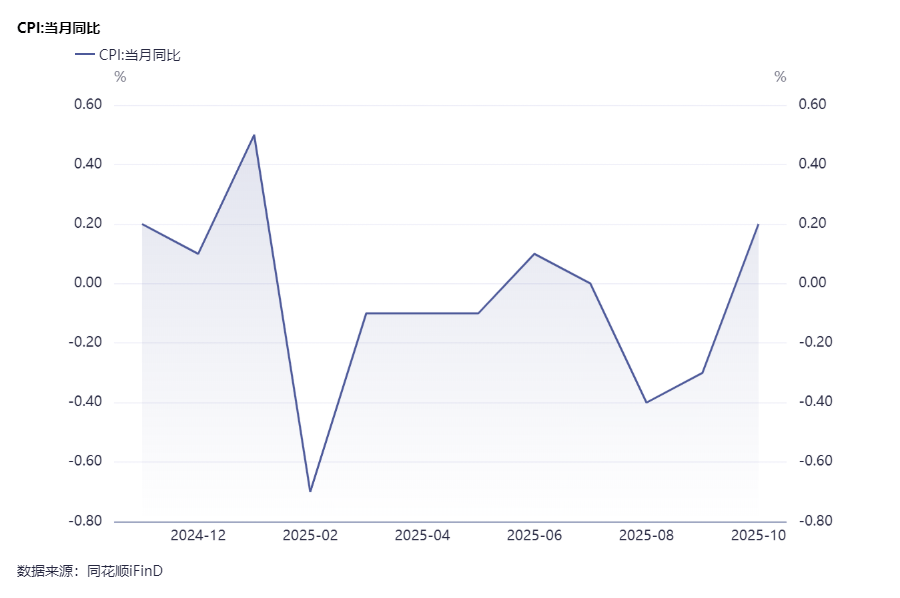
Group 1 - The core viewpoint of the article highlights the positive shift in China's Consumer Price Index (CPI) in October, with a year-on-year increase of 0.2% and a month-on-month rise of 0.2%, indicating a recovery in consumer demand driven by policy measures and holiday effects [1] Group 2 - The traditional consumption sector is experiencing growth due to policy support, including the expansion of duty-free shopping, which saw a 34.86% year-on-year increase in shopping amounts during the first week of November [3] - The food and beverage sector's public fund holdings have decreased to 4.9%, the lowest since 2010, suggesting a potential for increased investment in the consumer sector [3] Group 3 - The chemical sector has been in a long-term bottoming phase, with recent policy shifts aimed at reducing competition and improving the supply structure, which may enhance investment opportunities in this sector [5] - The Producer Price Index (PPI) showed a month-on-month increase of 0.1% in October, marking the first positive change of the year, which could lead to rising industrial prices and increased value in the chemical sector [5] Group 4 - Relevant ETFs for investors interested in these sectors include the E Fund Consumption ETF, which tracks the CSI Consumption 50 Index, and the E Fund Chemical Industry ETF, which follows the CSI Petrochemical Industry Index, providing exposure to leading companies in these sectors [6]
稳增长:发挥中试关键节点作用
Zhong Guo Hua Gong Bao· 2025-11-11 02:30
Core Viewpoint - The "Work Plan for Steady Growth in the Petrochemical Industry (2025-2026)" emphasizes the importance of mid-test bases in enhancing innovation and development within the industry, simplifying the approval processes for mid-test projects, and promoting the construction of mid-test bases in chemical parks to support industry innovation [1][3]. Group 1: Mid-Test Base Development - The mid-test platform should integrate talent cultivation, technology maturation, market validation, and business model exploration [1]. - The construction of mid-test bases involves open innovation and collaboration, with the introduction of a management approach for mid-test project entry [2]. - The optimization of approval processes through bundled handling of permits and assessments is expected to reduce preparation time by over 30% [3]. Group 2: Policy and Regulatory Changes - The "bundled" approach for handling mid-test project approvals is a significant breakthrough that enhances operational efficiency and project capacity [3][4]. - Local policies should clarify the scope and regulatory details of the bundled approach, including a list-based system for similar process projects [3]. - The encouragement of mid-test products entering the market streamlines the path for market validation [4]. Group 3: Industry Collaboration and Ecosystem - Mid-test bases should focus on technology validation while connecting upstream technology cultivation and downstream commercialization [2][4]. - Collaboration with universities and enterprises is essential for resource integration and sharing of mid-test facilities and data platforms [2]. - The establishment of a comprehensive service system for the entire chain of technology achievement is crucial for effective commercialization [2][4]. Group 4: Implementation and Future Directions - The implementation of the "Work Plan" is seen as a means to enhance the efficiency and flexibility of mid-test project management [5]. - The development of a collaborative mid-test platform aims to create a full lifecycle innovation service system [5]. - The mid-test bases will actively participate in the research and drafting of national mid-test key technology standards, incorporating practical experiences into the standard-setting process [5].
中金2026年展望 | 油气化工:曙光已现,景气回暖(要点版)
中金点睛· 2025-11-08 01:07
Core Viewpoint - The chemical industry has been in a downward cycle for over three years, with low chemical price indices and industry profit margins. The price index for Chinese chemical products has decreased by 10.3% from early 2025 to now, currently at the 10.6% percentile since 2012. The profit margin for chemical raw materials and products was only 4.14% from January to August 2025, the lowest since 2017. The gross and net profit margins for petrochemical companies in Q2 2025 were 16.05% and 4.63%, respectively, also at low levels in recent years [2][5][20]. Group 1: Industry Downturn and Recovery Potential - The chemical manufacturing industry has faced a downturn for over three years, with increasing midstream chemical production capacity and pressure on downstream demand, alongside falling prices of upstream commodities like oil and coal [2][5]. - Capital expenditures in the petrochemical sector have continued to decline, with a year-on-year decrease of 18.3% in 2024 and 15.1% in the first half of 2025. The industry has seen a consistent decline in capital expenditures for seven consecutive quarters since Q4 2023 [3][9]. - The exit of overseas production capacity, particularly in Europe, is expected to alleviate global supply-demand imbalances. A total of 11 million tons of chemical production capacity is set to exit Europe between 2023 and October 2024 [3][9]. Group 2: Policy and Market Dynamics - The industry is experiencing a shift in policy aimed at controlling new refining capacity and managing the pace of new ethylene and PX production capacity to prevent overcapacity in coal-based methanol [3][10]. - The basic chemical sector's price-to-book ratio was 2.07x as of October 22, 2025, at the 32.6% percentile since 2012, indicating potential for long-term investment opportunities as favorable supply-side factors accumulate [3][20]. - The demand for bulk chemicals remains weak globally, but emerging manufacturing sectors related to AI, humanoid robots, and solid-state batteries are driving rapid growth in material demand [20][16].
第八届进博会|西部和沿边自贸试验区集中展示开放创新成果
Xin Hua She· 2025-11-07 13:59
Core Insights - The eighth China International Import Expo featured a special promotion event for the "Invest in China" Free Trade Zone, highlighting the achievements of China's Free Trade Zones over the past decade and emphasizing the country's commitment to open cooperation and mutual benefit [1] Group 1: Free Trade Zones Overview - China's Free Trade Zones have developed a comprehensive reform and opening-up innovation pattern that covers various regions, including coastal, inland, and border areas [1] - The first Free Trade Zone was established in Shanghai in 2013, followed by the establishment of Free Trade Zones in Chongqing, Sichuan, and Shaanxi in 2017, and additional zones in Guangxi, Yunnan, Heilongjiang, and Xinjiang since 2019 [1] Group 2: Regional Highlights - The Free Trade Zones in the western and border areas are leveraging their geographical advantages to position themselves within the national opening-up framework, such as the Chengdu-Chongqing economic circle and the integration of international logistics hubs in Shaanxi [1][2] - The Guangxi Free Trade Zone is developing an artificial intelligence industry hub aimed at ASEAN, attracting 16 overseas companies to its China-ASEAN AI application cooperation center [2] Group 3: Industry Development - The Shaanxi Free Trade Zone is focusing on both traditional industries like photovoltaic and new energy vehicles, as well as emerging sectors such as hydrogen energy and drones [2] - The Guangxi Free Trade Zone has established cross-border supply chains in sectors like agricultural product processing, petrochemicals, electronic information, and new energy vehicles, benefiting from its advantageous location and ease of factor flow [2] Group 4: Impact on Economic Development - The Free Trade Zones allow localities to explore innovations first, which reduces risks while continuously advancing reforms, significantly contributing to China's high-quality development [2]