
基金

Search documents
申万菱信行业精选近期跌幅仅次于国投白银LOF 有基民表示对基金经理贾成东“一次次失望”
Sou Hu Cai Jing· 2026-02-06 09:26
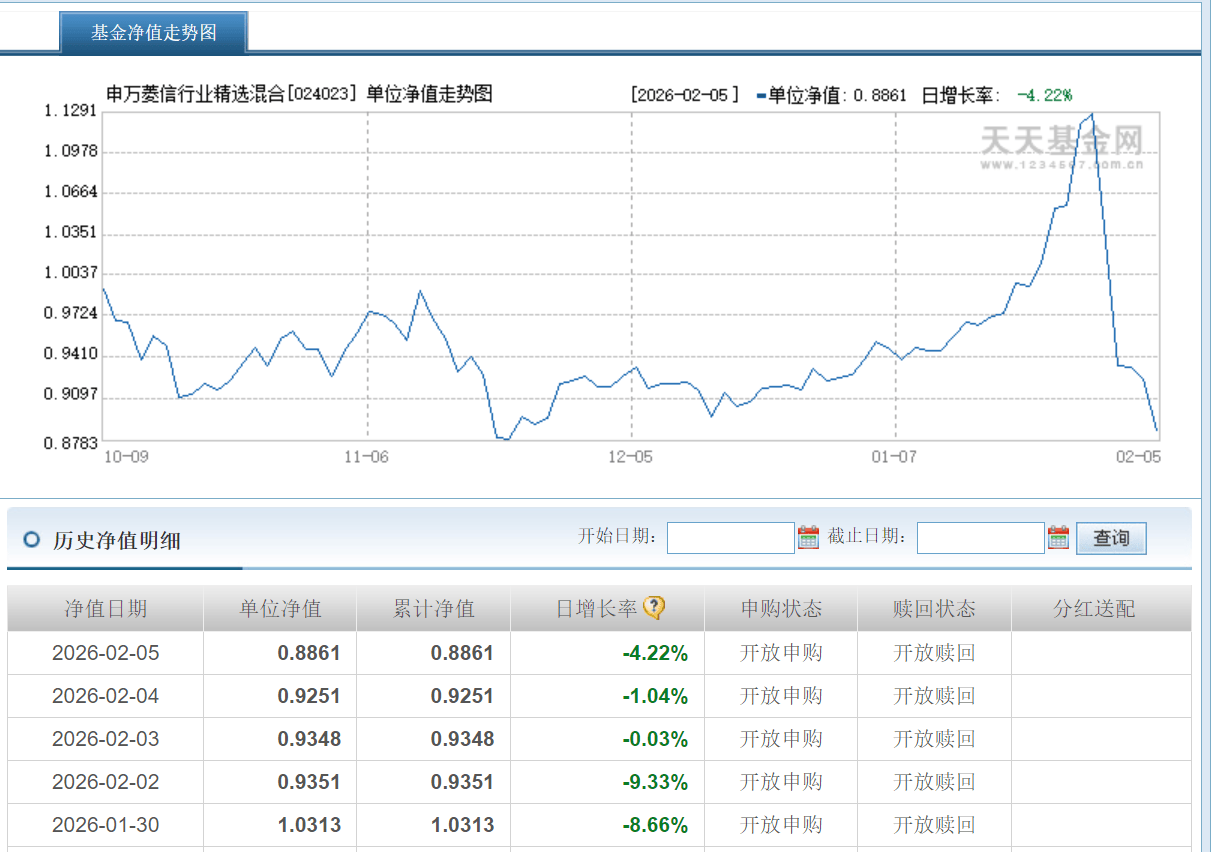
Core Viewpoint - Investors are closely monitoring the actions of renowned fund manager Jia Chengdong after his appointment at Shenwan Hongyuan Fund, as his managed fund has seen a significant decline in net value since the end of January 2026, raising concerns among investors [1][5]. Group 1: Fund Performance - From January 30 to February 5, 2026, the net value of Shenwan Hongyuan Industry Select A fund dropped by 21.52%, ranking second in the market for declines, only behind the Guotou Silver LOF fund [4][5]. - The fund's performance has been disappointing, with a return of -11.39% since its establishment on June 3, 2025, significantly underperforming the benchmark by nearly 27 percentage points [7]. - The fund's assets have shrunk by nearly 43% from its initial size, with a combined scale of less than 700 million yuan by the end of last year [7]. Group 2: Investor Sentiment - Investors have expressed dissatisfaction with Jia Chengdong's management, with complaints about poor performance during both bullish and bearish market conditions [5][6]. - There are suspicions that Jia has increased his holdings in the metals sector this year, despite the fund's overall poor performance [5][6]. Group 3: Fund Manager Background - Jia Chengdong, a veteran in the public fund industry, joined Shenwan Hongyuan Fund at the end of 2024 and has since been a focal point for market attention [5][6]. - His management of the Shenwan Hongyuan Industry Select fund has been marked by a series of poor investment decisions, including high entry points into popular sectors and subsequent losses [6].

长城基金陈子扬:看好黄金、小金属、化工等板块
Xin Lang Cai Jing· 2026-02-06 09:03
Core Viewpoint - The A-share market is experiencing structural characteristics in January 2026, with the non-ferrous metal sector being one of the most focused industries this year. The manager of Changcheng Fund, Chen Ziyang, emphasizes the importance of balancing market conditions and valuations to identify quality investment targets [1][4]. Group 1: Investment Strategy - Chen Ziyang, who has been in the cyclical sector for eight years, believes that short-term fluctuations are merely noise and do not significantly impact investment outcomes. Long-term investment requires patience and rationality, respecting cyclical patterns by investing during undervaluation and exiting during overvaluation [1][4]. - This year, the strategy includes seeking opportunities in the cyclical sector with relatively low valuations. Chen Ziyang is cautiously optimistic about gold and small metals, while being cautious about copper and aluminum [5][6]. Group 2: Market Insights - The outlook for small metals is closely tied to strategic reserves, as they are widely used in technology and military sectors. The current geopolitical turmoil has led countries to increase their strategic metal reserves, combined with the scarcity of small metal supply and no new production capacity expected in the next two years, indicating significant upside potential [2][5]. - Within the cyclical sector, the chemical industry is viewed favorably. The non-ferrous sector has nearly doubled in value last year, with institutional allocation at a relatively high level. In contrast, the chemical sector's current valuation is at a low percentile, with profit expectations gradually recovering, making it a key focus area this year [2][5]. Group 3: Industry Risks - The current rise in industrial metals is primarily driven by structural demand. However, consumption in both domestic and U.S. markets shows a K-shaped recovery. If U.S. real estate and consumption do not recover post-rate cuts, it could pose significant pressure on the cyclical sector, particularly for the chemical industry, which is closely linked to traditional economic activities [6].
白银LOF单日净值跌超30%引争议,场内连续五日跌停
Huan Qiu Wang· 2026-02-06 09:03
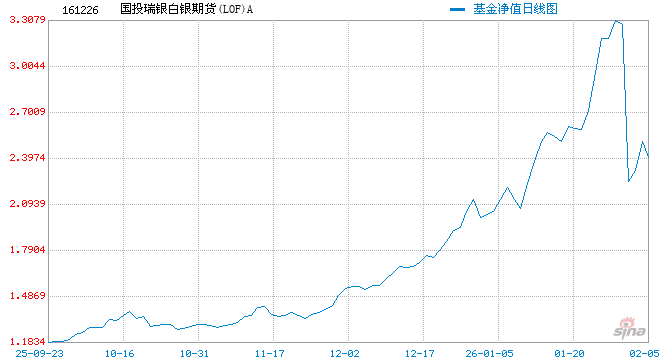
Core Viewpoint - The public fund that invests in silver futures faced a significant valuation adjustment due to a sharp decline in international silver prices, resulting in a net asset value drop of over 31% in a single day, catching investors off guard [2][8]. Group 1: Fund Valuation Adjustment - On February 2, Guotou Ruijin announced a valuation adjustment for its silver futures LOF fund, deciding to reassess the fund's assets based on price changes in major international silver futures markets, leading to a 31.5% drop in net value [9][10]. - Investors expected a smaller decline of about 17% due to domestic silver futures having price limits, but the actual adjustment was much more severe, causing dissatisfaction among some investors [9][10]. - The adjustment was prompted by a significant drop in international silver prices, with spot silver falling nearly 30% on January 30, marking the worst single-day performance since 1980, and a cumulative decline of nearly 40% from the historical high on January 29 [9][10]. Group 2: Market Dynamics and Investor Behavior - Analysts noted that when the original valuation method fails to reflect asset value accurately, fund managers can negotiate with custodians to adopt a more reasonable valuation method, which aligns with regulatory requirements and fund contracts [10]. - The recent volatility in silver prices has been attributed to speculative trading rather than fundamental factors, with a significant increase in retail investor participation, making silver more sensitive to market sentiment and short-term trading behaviors [11]. - The extreme fluctuations in silver prices have heightened the difficulty for individual investors in assessing risks, as the rapid price increases attracted substantial capital inflows, leading to a lack of awareness regarding potential valuation adjustment risks [11]. Group 3: Future Outlook and Recommendations - Experts warn that the volatility of gold and silver prices may increase by 2026, urging investors to carefully assess their risk tolerance and consider these assets as a supplementary part of their portfolio while strictly controlling their positions [12]. - Investors are advised to adopt strategies such as phased investments and buying on dips to smooth out costs, while ensuring all investment activities are conducted within legal and compliant frameworks [12].
2026资本市场开年定调:政策赋能高质量发展 ETF成关键抓手
Zhong Guo Xin Wen Wang· 2026-02-06 08:59
Core Viewpoint - The capital market in 2026 is set to focus on high-quality development, with ETFs identified as a key tool for achieving this goal [1] Group 1: ETF Growth and Investment Trends - By the end of 2025, the total scale of index fund products has officially surpassed 8 trillion yuan, marking a nearly 40% increase since the beginning of the year [2] - Broad-based index funds now account for 49% of the overall index fund scale, indicating a significant shift towards index investing [2] - The number of investors trading index products on the Ant Fund platform has exceeded 100 million, with over 50% being post-90s and post-00s generations [4] Group 2: Factors Driving ETF Development - Three irreversible forces are driving the growth of index funds: the achievements of high-quality development in the capital market, the resonance of policy dividends, and the reshaping of tool value [4] - The "Long Money Long Investment" policy and the new "National Nine Articles" have instilled strong confidence in the market, leading to increased investment in ETFs [4] Group 3: ETF as a Tool for Financial Inclusion - ETFs are recognized for their unique advantages of risk diversification, low cost, and operational transparency, making them a key tool for fulfilling the capital market's mission [6] - The current challenges in the ETF market include insufficient tools and disconnected channels, necessitating optimization in product design, institutional supply, and ecological construction [6] Group 4: Investment Opportunities in New Resources - The focus of investment is shifting towards "new resources" that support the intelligent world and green revolution, driven by a combination of cyclical factors [8] - The AI industry is expected to experience significant growth, with a shift from scale pursuit to efficiency enhancement, making ETFs a favorable tool for investing in this evolving landscape [8]

科技行情进入验证期!基金经理最新研判来了
证券时报· 2026-02-06 08:43
Core Viewpoint - The article emphasizes the transformation and challenges in the capital market, highlighting the need for professional investment research to optimize asset allocation, particularly in the context of the evolving public fund industry in China [1] Group 1: Industry Insights - The public fund industry is experiencing intense competition, prompting smaller fund companies to define their positioning and develop differentiated strategies to break through [2][3] - The active investment approach is being prioritized, with a focus on three core product lines: active equity investment, fixed income plus products, and index enhancement [5][6] - The importance of aligning product design with client needs is stressed, advocating for a customer-centric approach in asset management [4][5] Group 2: Investment Strategies - The article discusses the significance of the Hong Kong stock market as a key area for investing in China's new economy and technology assets, suggesting a reassessment of its allocation value [2][11] - The "fixed income plus" products are designed to provide a good holding experience for investors, focusing on loss control during unfavorable market conditions [17][22] - The investment philosophy includes a macro configuration and value selection framework, emphasizing the identification of systemic risks and opportunities [18][19] Group 3: Management and Culture - The management style is characterized by pragmatism and professionalism, with a focus on product quality and investment competitiveness [6][7] - A collaborative development system is encouraged, where departments work together to achieve strategic goals, avoiding the pitfalls of competing in non-competitive areas [7][9] - The article highlights the need for a practical research culture that emphasizes continuous improvement through practice rather than theoretical discussions [8][9] Group 4: Market Outlook - The article presents a cautious optimism regarding the current market, noting structural investment opportunities in sectors like AI, internet, and advanced manufacturing [23] - It suggests that the shift of household savings into financial markets is a long-term trend, with a gradual transition towards more stable investment products [23][24] - The focus on long-term asset allocation strategies is emphasized, particularly in light of increasing correlations among domestic assets [15][16]
短期波动不改长期逻辑,化工新叙事正徐徐展开
Xin Lang Cai Jing· 2026-02-06 08:40
Core Viewpoint - The chemical industry is experiencing a pivotal moment driven by supply-side reforms, which may lead to improved profitability and valuation recovery for leading companies in the sector [4][28][38]. Group 1: Industry Overview - The chemical industry has faced significant challenges over the past four years, including excess production capacity and declining profits due to weak domestic demand and increased exports [4][5][24]. - The industry is closely linked to global economic conditions, with periods of opportunity often followed by prolonged downturns [4][24]. Group 2: Supply-Side Reforms - Recent government policies aim to eliminate low-price competition and encourage quality improvements, leading to the exit of outdated production capacities [6][7][24]. - The tightening of new capacity approvals is expected to fundamentally change the industry's landscape, reducing excess supply both domestically and globally [7][27]. Group 3: Profitability and Valuation Recovery - The chemical sector may witness a "Davis Double Play" scenario, where both profitability and valuations improve simultaneously [28]. - Current valuations for leading chemical companies remain low, not reflecting their asset scale or market position, indicating potential for significant upward revaluation [29][30]. Group 4: Market Consensus - There is a growing consensus among institutional investors regarding the chemical sector, driven by confidence in policy execution, recognition of bottoming profitability, and acknowledgment of low valuations [31]. Group 5: Short-Term Adjustments and Long-Term Trends - Recent fluctuations in the chemical sector are viewed as short-term disturbances, with the long-term positive trend and core logic remaining intact [32]. - The industry is expected to benefit from a tightening supply environment and ongoing policy support, which may lead to a positive shift in price expectations for chemical products [32][34]. Group 6: Investment Strategies - Investment opportunities in the chemical sector can be captured through a professional framework that focuses on identifying businesses with clear pricing power and potential for profit recovery [35][36]. - Key strategies include investing in sectors with stable pricing capabilities, capturing price rebounds during market pessimism, and identifying advanced production capacities that can yield significant profits [36][37].
“涨的多疯狂,跌的就有多惨烈!”净值、溢价双杀,国投白银五连一字跌停!溢价率仍高达28.75%!
雪球· 2026-02-06 08:35
Group 1 - The A-share market experienced a volatile decline, with the Shanghai Composite Index dropping by 0.25%, the Shenzhen Component Index by 0.33%, and the ChiNext Index by 0.73% at the close [2] - The total trading volume in the Shanghai and Shenzhen markets was 2.15 trillion yuan, a decrease of 30.5 billion yuan compared to the previous trading day [2] - Over 2,700 stocks rose in the market, with sectors like chemicals, solid-state batteries, and humanoid robots performing actively, while consumer goods, particularly liquor and tourism, saw significant declines [2] Group 2 - The price of silver has nearly halved, with the National Investment Silver LOF experiencing five consecutive trading days of limit-down [3][4] - The international silver price saw a significant drop, falling over 20% on February 5, and reaching a low of 64.035 USD/ounce on February 6, down from a peak of 121.647 USD/ounce on January 29 [6] - The domestic silver futures contract also continued its downward trend, with a drop of nearly 15% on the same day [7] Group 3 - The Hong Kong stock market has shown weakness, with the Hang Seng Technology Index declining by 6.51% this week, and major tech companies like Alibaba and Tencent also experiencing significant drops [12] - The "red envelope war" among major internet companies has drawn market attention, with Tencent, Baidu, and Alibaba investing substantial amounts in cash giveaways [13] - Analysts suggest that the current market adjustment is influenced by changes in global macro liquidity expectations, intense competition in AI applications, and disappointing earnings forecasts from some companies [14] Group 4 - The chemical sector showed strength against the market trend, with companies like Cangzhou Dahua and Jinniu Chemical hitting the daily limit [17] - BASF announced a price increase for TDI products in the Asia-Pacific region, contributing to positive sentiment in the chemical sector [19] - UBS noted that the chemical industry is at a historical bottom, with a fundamental reversal in supply-demand dynamics due to the end of chaotic capacity expansion and the implementation of "anti-involution" policies [19]

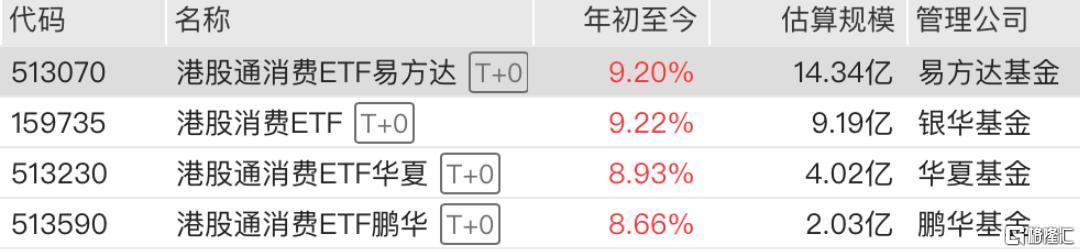
“史上最长春节假期”临近,港股通消费ETF易方达、港股消费ETF、港股通消费ETF华夏年内上涨
Xin Lang Cai Jing· 2026-02-06 08:35
Core Viewpoint - The global market has experienced a significant style switch since the beginning of the year, with traditional value assets, referred to as "old Deng stocks," making a comeback while tech giants like Nvidia and Microsoft face high volatility [1]. Group 1: Market Trends - The Dow Jones index, dominated by traditional blue-chip stocks, has reached a historical high, contrasting with the Nasdaq's tech giants [1]. - In the A-share market, the consumer sector has shown signs of recovery, with the liquor index rising significantly, and Kweichow Moutai's stock price increasing over 14% in just six trading days [1]. Group 2: ETF Performance - The E Fund Hong Kong Stock Connect Consumer ETF has seen a net inflow of 504 million yuan in the last 10 days, bringing its total size to 1.434 billion yuan, making it the largest among similar products [3]. - The ETF supports T+0 trading with a comprehensive fee rate of 0.2%, the lowest among all Hong Kong consumer ETFs [3]. Group 3: Consumer Sector Insights - The upcoming "longest Spring Festival holiday" is expected to boost retail consumption in sectors like gold, travel, and dining [2]. - New consumption trends are performing well, with expectations for continued policy support for service consumption through 2026, while optional consumption sectors may show mixed performance [3].

【环视大资管】白银LOF单日净值跌超30%引争议,场内连续五日跌停
Huan Qiu Wang· 2026-02-06 08:29
Core Viewpoint - The article discusses the significant impact of the recent sharp decline in international silver prices on a public fund that exclusively invests in silver futures, leading to a drastic adjustment in its valuation and a net asset value drop of over 31% in a single day, catching investors off guard [1][2]. Group 1: Fund Valuation Adjustment - On February 2, Guotou Ruijin announced a valuation adjustment for its silver futures LOF fund, deciding to reassess the fund's assets based on the price fluctuations in major international silver futures markets, resulting in a net value drop of 31.5% [1][2]. - Investors had anticipated a lower drop of around 17% based on domestic silver futures, but the actual adjustment led to a much steeper decline, causing dissatisfaction among some investors [1][2]. Group 2: Market Context and Price Fluctuations - The valuation adjustment was prompted by a significant drop in international silver prices, with spot silver falling nearly 30% on January 30, marking the worst single-day performance since 1980, and a cumulative drop of nearly 40% compared to the historical high on January 29 [1][2]. - Prior to the decline, silver prices had surged, reaching $116 per ounce on January 27, with a notable increase of over $13 per ounce on that day, indicating extreme volatility driven by speculative trading rather than fundamental factors [2][3]. Group 3: Investor Behavior and Risk Awareness - The extreme volatility in silver prices has heightened the difficulty for individual investors in assessing risks, as the rapid price increases attracted significant capital inflow, leading to a lack of awareness regarding potential valuation adjustment risks [3]. - Analysts emphasize that the recent drastic price movements serve as a risk education for investors, highlighting that no asset is immune to declines following significant increases, and caution against blind chasing of rising prices [3].