
智能手机

Search documents
9点1氪|多方辟谣“杨振宁逝世传闻”;黄仁勋称英伟达中国份额从95%降至0;多家银行公告:长期不动账户将被清理
3 6 Ke· 2025-10-18 01:03
Core Points - Recent news regarding the death of renowned physicist Yang Zhenning has been debunked, with officials from West Lake University confirming no such notification has been received [2] - NVIDIA's CEO Jensen Huang stated that due to U.S. export controls, NVIDIA has completely exited the Chinese market, reducing its market share from 95% to 0% [2] - Several banks have announced the cleaning of "long-term inactive accounts," with specific criteria for account management being implemented [3][4] Group 1: Company News - iPhone Air sold out within 5 minutes of pre-order in mainland China, with no stock available in retail stores [3][4] - BYD has initiated a recall of 115,783 vehicles, including specific models of the Tang and Yuan Pro series [5] - Alibaba and Ant Group have jointly invested $925 million to establish their headquarters in Hong Kong, aiming to expand international business [6] Group 2: Regulatory and Market Developments - The State Administration for Market Regulation has introduced a reporting system for fire incidents involving new energy vehicles [5] - The price of gold jewelry in China has surged, with some brands nearing 1,300 yuan per gram due to rising spot gold prices [7] - The Chinese government has implemented a new reporting system for automotive recalls, with 3,230 recalls affecting 120 million vehicles reported so far this year [5] Group 3: Technology and Innovation - Microsoft is testing AI features in its latest Windows 11 operating system to encourage user upgrades [17] - Oracle announced that its AI cloud projects could achieve a gross margin of 35%, with $650 billion in new orders signed recently [19] - OPPO has officially launched the Find X9 series, starting at 4,399 yuan, featuring the Dimensity 9500 flagship chip [20]

9点1氪|施一公回应“杨振宁逝世传闻”;黄仁勋称英伟达中国份额从95%降至0;多家银行公告:长期不动账户将被清理
3 6 Ke· 2025-10-18 01:02
Group 1 - Nvidia's CEO Jensen Huang stated that due to U.S. export controls, Nvidia has completely exited the Chinese market, reducing its market share in China from 95% to 0% [2][3] - Multiple banks have announced the management and potential clearing of "long-term inactive accounts," with specific criteria such as account balances below 10 yuan and no transactions for over a year [2][3] - The National Market Supervision Administration reported that as of September, there have been 3,230 vehicle recalls in China, affecting 120 million vehicles, with 652 recalls influenced by investigations from the administration [2][5] Group 2 - BYD has initiated a recall of 115,783 vehicles, including 44,535 units of the 2015 Tang series and 71,248 units of the Yuan Pro electric vehicles produced between 2021 and 2022 [5][6] - Alibaba and Ant Group have jointly invested $925 million (approximately 6.6 billion yuan) to establish their Hong Kong headquarters, aiming to expand international business [6] - The price of gold jewelry in China has surged, with the latest quotes for gold ornaments nearing 1,300 yuan per gram, reflecting a significant increase in gold prices [7][8] Group 3 - Oracle's co-CEO announced that the company has signed new cloud infrastructure contracts worth $65 billion in the last 30 days, with a remaining performance obligation exceeding $500 billion [18][19] - Microsoft is testing AI features in its latest Windows 11 operating system to encourage users to upgrade their personal computers [17][18] - OPPO officially launched the Find X9 series, starting at 4,399 yuan, featuring the Dimensity 9500 flagship chip [20]
小米新任中国区市场部总经理 是她!王腾透露个人最新动态
Mei Ri Jing Ji Xin Wen· 2025-10-18 00:52
Group 1 - Xiaomi has appointed Wei Siqi as the new General Manager of the China Marketing Department after a vacancy of over a month [1] - Wei Siqi's social media profile now indicates her roles as General Manager of Xiaomi Mobile Marketing and Deputy General Manager of Xiaomi Automotive Marketing [6] - Xiaomi's executive Wang Teng expressed excitement about the upcoming K90 Pro Max smartphone, highlighting the efforts of the research and development team [8] Group 2 - Xiaomi's President Lu Weibing announced that the overall sales of the Xiaomi 17 series have increased by 20% compared to the previous generation, with the Pro series achieving three times the sales of its predecessor [14] - The Xiaomi 17 series was officially launched on September 27, with starting prices of 4499 yuan for the base model and 5999 yuan for the Pro Max [14] - The Xiaomi 17 series set a record for the highest sales volume and revenue within the first five minutes of its launch in 2025 for new models in the domestic market [14]

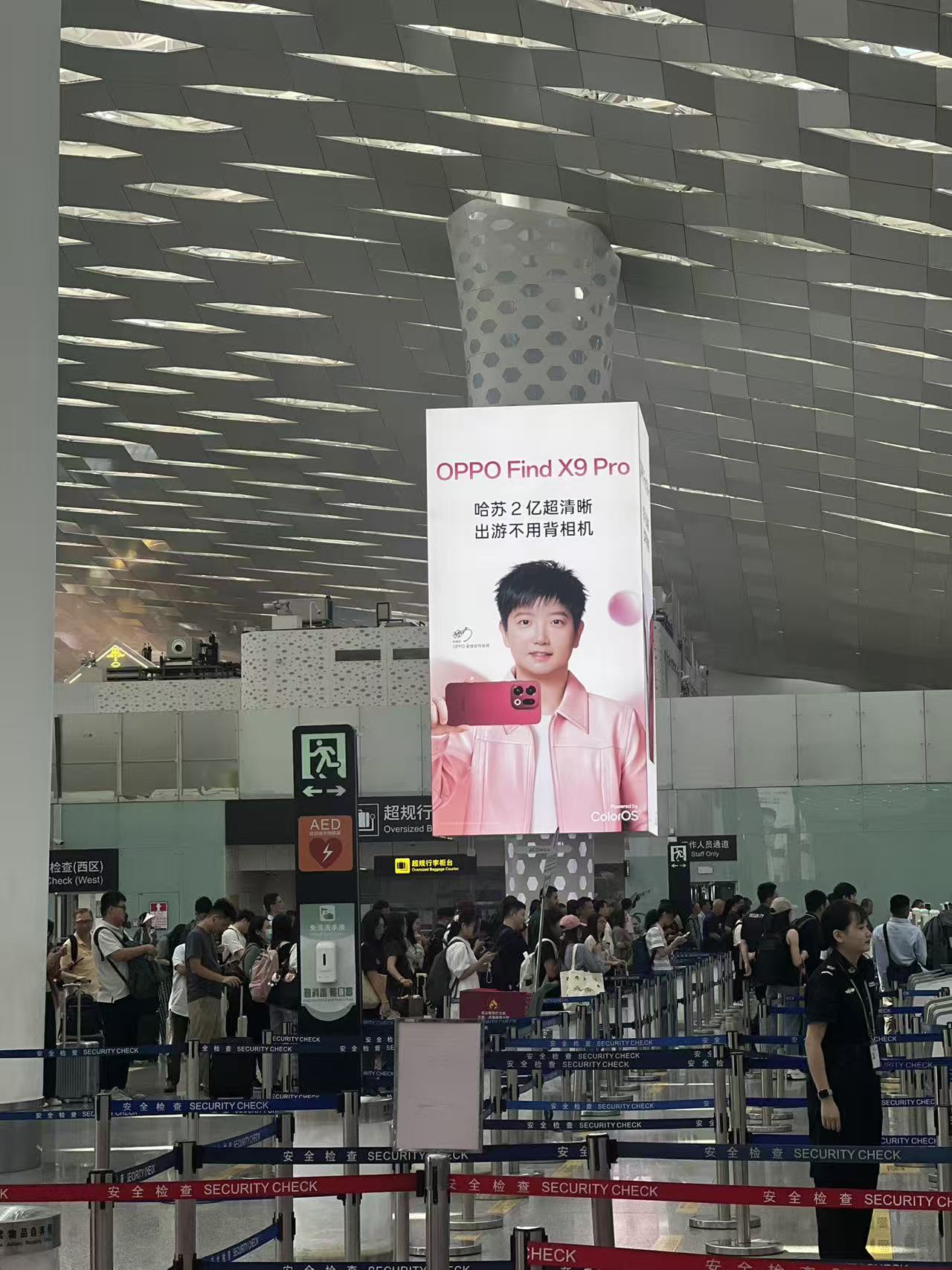
OPPO发布年度旗舰Find X9系列,Pro卫星通信版支持eSIM业务
Guo Ji Jin Rong Bao· 2025-10-17 13:50
Core Insights - OPPO has launched its annual flagship Find X9 series, featuring the Dimensity 9500 chip and the new OPPO AI operating system, ColorOS 16, which includes various AI functionalities [1][4] - The Find X9 series emphasizes its imaging capabilities, showcasing a new Hasselblad ultra-clear quad-camera system and supporting 8K photos and 4K live photos [1][4] - The series includes three models: Find X9, Find X9 Pro, and Find X9 Pro satellite communication version, with prices ranging from 4399 yuan to 6699 yuan [4] Product Features - The Find X9 series is equipped with a dedicated AI button for features like long video summaries and real-time object recognition [1] - The Find X9 Pro satellite communication version will support eSIM technology, making it the second smartphone in China to do so after Apple's iPhone Air [4][5] - eSIM technology allows users to switch between multiple carrier profiles on the same device, enhancing convenience and connectivity [5] Market Context - The Find series has been a high-end product line for OPPO since its inception in 2018, with the Find X series being a significant milestone for the brand [4] - eSIM technology is expected to see explosive growth, with projections indicating around 1 billion eSIM smartphone connections by the end of 2025, and approximately 6.9 billion by 2030 [5][6] - Apple has been a key player in the development of eSIM technology, having introduced it in its devices since 2014, and has recently expanded its support in the Chinese market [6]
小米之“祸”
经济观察报· 2025-10-17 13:47
Core Viewpoint - Xiaomi's rise and fall signifies a critical juncture not only for the company but also serves as a warning for the upgrade of Chinese industries [1][32] Financial Performance - In Q2 2025, Xiaomi's revenue reached 116 billion yuan, marking three consecutive quarters of over 100 billion yuan, with an adjusted net profit of 10.8 billion yuan, a year-on-year increase of 75.4% [2] - The smartphone shipment volume was 42.4 million units, achieving year-on-year growth for eight consecutive quarters, maintaining a position among the top three globally for five years [2] Trust Crisis - Despite strong financial results, Xiaomi faces an unprecedented trust crisis, with over 1,610 complaints regarding the Xiaomi SU7 on third-party platforms and a repair rate increase of 12.8% over three years [2][3] - A serious accident involving the Xiaomi SU7 raised concerns about the vehicle's safety features, particularly the inability to open the doors during emergencies [2][12] Business Model Challenges - Xiaomi's strategy of "high-level imitation + low-price suppression" has come under scrutiny, particularly in the automotive sector where quality and safety are paramount [4][5] - The company has been criticized for sacrificing R&D investment, employee welfare, and product quality in pursuit of cost leadership, which may stifle innovation across the industry [7] Imitation and Innovation Issues - Xiaomi's reliance on imitation has led to numerous patent disputes, with accusations of copying designs from established brands, particularly in the automotive sector [8][9] - The company's innovations are often seen as superficial, lacking in core technological breakthroughs, which could hinder long-term competitiveness [10] Marketing and Product Quality - Xiaomi's marketing strategy has emphasized aesthetics over substance, leading to a disconnect between consumer expectations and actual product performance, especially in the automotive sector [11][12] - The focus on flashy marketing and parameters has resulted in safety concerns, as seen in the SU7's design flaws that prioritize appearance over functionality [12][13] Supply Chain and Ecosystem Issues - Xiaomi's investment strategy has been criticized for prioritizing financial returns over technological innovation, leading to a reliance on a closed ecosystem that may inhibit breakthrough developments [18][19] - The phenomenon of "de-Xiaomi-ization" is emerging among ecosystem partners seeking greater autonomy and profitability, indicating potential conflicts within Xiaomi's supply chain [20] Strategic Reflection and Future Directions - As Xiaomi reaches its 15th anniversary, it must reassess its strategic path, moving from a focus on cost advantages to prioritizing technological innovation and product quality [22][25] - The company plans to invest 200 billion yuan in R&D over the next five years, aiming to shift public perception from being a mere "assembly factory" to a technology-driven entity [25][26] Conclusion - Xiaomi's recent challenges may serve as a turning point for the Chinese electric vehicle market, emphasizing the need for genuine product quality over marketing hype [32] - The evolution of consumer expectations and media scrutiny may foster a healthier business environment that encourages innovation and accountability within the industry [32]

双十一购物入口的AI革命:荣耀MagicOS10自进化能力撬动生态价值重估
Zhong Guo Jing Ji Wang· 2025-10-17 13:27
Core Insights - The 2023 Double Eleven shopping festival features an extended duration from October 9 to November 14, marking the longest event in its history. The festival promotes "extended duration + simplified rules + multiple subsidies" [1] - The introduction of AI smartphones, particularly the Honor Magic8 series with the YOYO AI assistant, transforms the shopping experience by automating price comparisons and coupon retrieval, shifting from a manual search process to an "intention as service" model [1][2] Group 1 - The evolution of AI assistants from mere tools to decision-making partners signifies a major shift in technology, moving towards autonomous learning and continuous evolution, which is essential for future AI capabilities [2] - The Honor Magic8 series features the industry's first growth-oriented hardware system, utilizing AI dynamic scheduling for intelligent performance and energy consumption balance, indicating a shift from static hardware to an organic growth model [2] - YOYO AI assistant has expanded its functionality beyond simple tasks to become a versatile companion for shopping, dining, travel, health, and work, integrating e-commerce platforms and developer ecosystems into a new user-agent-service model [3] Group 2 - The transformation of AI assistants into new traffic distribution centers allows for complex intent understanding and multi-step operation completion, fundamentally changing user interaction from app navigation to direct AI dialogue [3] - Honor's strategy is evolving from competing with iPhone to developing AI smartphones and eventually "robot phones," indicating a clear path for future AI terminal development [4] - Honor aims to create an open, co-creative, and shared AI terminal ecosystem centered on user needs, ushering in a new era of evolution for all [4]
全球手机市场:苹果创季度纪录,小米第三,vivo跻身前五
Guan Cha Zhe Wang· 2025-10-17 13:04
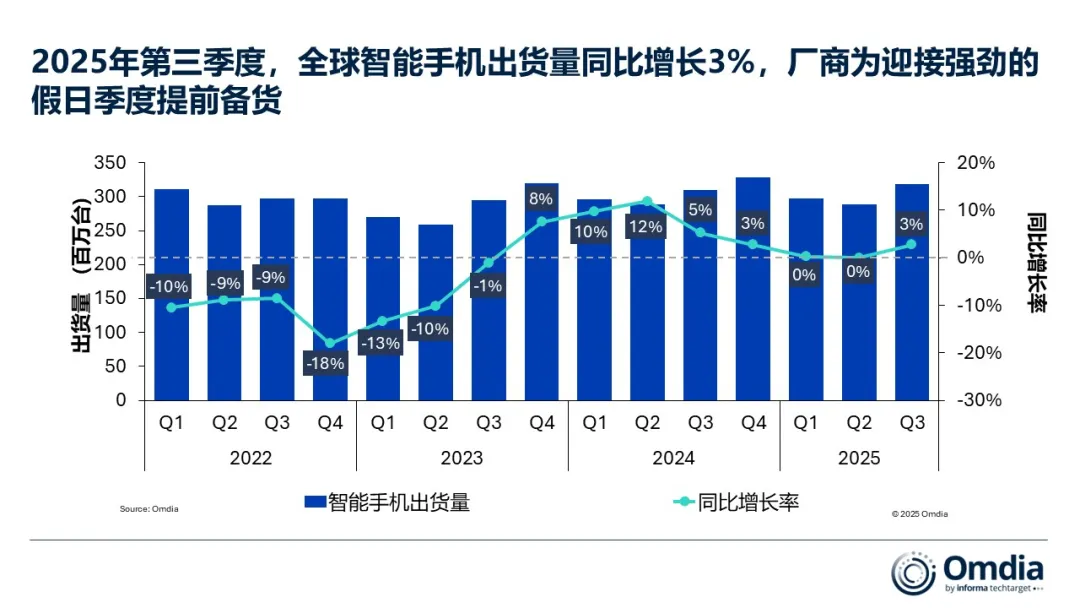
Core Insights - Samsung maintains the top position in the global smartphone market with a 19% market share for the third consecutive quarter, driven by strong sales of the Galaxy A series and upgrades to its seventh-generation foldable models [2][3] - Apple sees a 4% year-on-year increase in iPhone shipments, achieving its strongest third-quarter performance ever, benefiting from early demand for the iPhone 17 series, with a market share of 18% [2][3] - Xiaomi remains stable with a 14% market share, ranking third, while Transsion and Vivo each hold 9%, making them part of the top five manufacturers this quarter [2][3] Market Trends - The demand for smartphone upgrades and replacements is recovering, contributing to growth in the market after earlier fluctuations [3] - All top five manufacturers experienced year-on-year growth in shipments, reflecting this positive trend [3] - New product launches from major brands have received positive responses, with a better balance between hardware and software [3] Product Highlights - The iPhone 17 series has performed exceptionally well, with the base model upgrading storage without changing the price, exceeding market expectations [3] - The newly designed iPhone 17 Pro and Pro Max have gained global consumer favor, while the iPhone Air, despite limited shipments, has shown strong marketing performance [3] Competitive Landscape - The smartphone market is currently facing intense competition, with many manufacturers experiencing significant pressure on profitability due to rising component costs [4][5] - The balance between competitive pricing and profit margins is becoming increasingly challenging for manufacturers [5] - Manufacturers are encouraged to explore additional revenue opportunities through subscription services, accessories, bundling, and ecosystem value-added sales to enhance consumer value propositions [5]


vivo重返第一、华为苹果争第二,OPPO荣耀危险了?
凤凰网财经· 2025-10-17 12:58
Core Insights - The Chinese smartphone market experienced significant shifts in rankings during the third quarter of 2025, with vivo reclaiming the top position with approximately 18% market share, while Huawei and Apple competed closely for the second and third spots with shares around 15-16% [3][5][11]. Market Performance Overview - In Q3 2025, the total smartphone shipments in China were 68.4 million units, reflecting a 0.6% year-over-year decline. The top five manufacturers were vivo, Apple, Huawei, Xiaomi, and OPPO, with their respective market shares being 17.3%, 15.8%, 15.2%, 14.7%, and 14.5% [5][11]. - The overall smartphone market in China saw a 3% decline compared to the previous year, indicating a return to normal market conditions after a period of fluctuations driven by government subsidies [11][12]. Manufacturer Strategies and Performance - **Vivo**: Achieved a steady increase in market share from Q1 to Q3, attributed to its strong offline channel presence and a cautious product release strategy. Vivo's market share rose from 15% in Q1 to 18% in Q3 [12][15]. The company also made significant gains in the mid-to-high-end market segment [12][15]. - **Apple**: Benefited from the launch of the iPhone 17 series, which led to an increase in market share from 13.7% in Q1 to 15.8% in Q3. Apple's strategy included price adjustments on older models to stimulate sales [15][17]. - **Huawei**: Maintained a stable market share around 16% despite a slight decline in Q3. The company focused on high-end products, such as the Mate XTs, to enhance profitability [19][20]. - **Xiaomi**: Experienced the most significant drop in market share, falling from 19% in Q1 to 15% in Q3. The decline was attributed to a lack of new popular models and the fading impact of government subsidies [21][23]. - **OPPO**: Managed to maintain a market share of around 15% but saw its ranking drop from third to fourth. The company faced challenges from both high-end competitors and budget brands [25][26]. - **Honor**: Entered the top five for the first time in Q3 2025 with a market share of 14.4%. The brand focused on the mid-range segment to avoid direct competition with high-end players [27][29]. Competitive Landscape and Future Outlook - The smartphone market in China is characterized by intense competition, with frequent shifts in rankings among the top players. The market is now in a "stock" phase, where every percentage point of market share must be fought for [30][41]. - The upcoming fourth quarter will be crucial for determining the annual rankings, with key product launches from vivo, Huawei, and others expected to influence market dynamics [36][39]. - The competition between Xiaomi and Apple for the third position is particularly tight, with only a narrow margin in cumulative shipments [38][40]. Overall, the Chinese smartphone market is entering a phase where maintaining market share and adapting to consumer demands will be critical for all players involved.
转向、蛰伏、加速:一年之间荣耀的三场硬仗
Feng Huang Wang· 2025-10-17 12:49
Core Insights - Honor is transitioning from survival to leadership by focusing on expanding its market base and embracing AI technology as a core strategy [1][4][11] - The launch of the Magic8 series and Robot Phone signifies Honor's commitment to redefining the smartphone landscape through innovative AI applications [1][10] Market Position and Strategy - Honor has regained its position as the fifth largest smartphone brand in China, with only a 1% gap from the second to fourth competitors, indicating a recovery trend [4] - In the European market, Honor's shipments grew by 42% year-on-year in Q2 2025, marking the highest increase among the top five manufacturers [4] - The company has implemented a comprehensive product strategy that covers various price segments domestically and focuses on channel repair and brand recognition overseas [4] Technological Advancements - Honor has achieved significant breakthroughs in AI technology, including the development of the MagicGUI model with 70 billion parameters, which excels in mobile visual positioning and scene reasoning [8][9] - The collaboration with Qualcomm has led to advancements in edge AI capabilities, enhancing the overall user experience [5][7] Product Innovation - The introduction of the Robot Phone represents a shift from traditional smartphone designs, integrating situational awareness and autonomous service capabilities [1][9] - Honor's design philosophy merges technology with cultural elements, exemplified by the incorporation of Ru porcelain culture into the device design [6] Research and Development Commitment - Honor has committed to a five-year R&D investment plan of 72 billion yuan (approximately 10 billion USD), with R&D spending expected to exceed 11.5% of revenue, significantly higher than the industry average [7] - This sustained investment is crucial for establishing a technological moat and ensuring competitive advantage in the AI sector [7] Ecosystem Development - The YOYO intelligent agent supports cross-device task flow and integrates with over 100 leading applications, creating a seamless user experience that bridges the gap between closed and fragmented ecosystems [6][9] - Honor's strategy aims to redefine terminal value by leveraging AI technology to enhance user experience, moving beyond traditional hardware competition [11]
当手机“长出”机械臂:荣耀发布机器人手机,求解终端新形态
Nan Fang Du Shi Bao· 2025-10-17 12:25
Core Insights - The launch of the Honor ROBOT PHONE represents a significant innovation in smartphone design, integrating AI capabilities, robotic movement, and high-definition camera technology, which could redefine future mobile devices [1][2] - Honor's strategy emphasizes AI as a transformative force in the industry, with the ROBOT PHONE and the Magic8 series showcasing a commitment to evolving smartphone functionality [2][3] - The current smartphone market is experiencing a revival, with increased competition and the emergence of AI as a key differentiator among manufacturers [1][4] Group 1: Product Innovations - The Honor ROBOT PHONE features a retractable mechanical arm that allows for autonomous movement, target tracking, and professional stabilization, marking a departure from traditional smartphone designs [1][2] - The Magic8 series is equipped with the self-evolving AI agent YOYO, which can learn and adapt, enhancing user interaction and personalization [3][5] - Honor's CEO articulated a three-phase evolution of mobile devices, positioning the ROBOT PHONE as a potential third phase following the iPhone and the current AI-driven smartphones [2][6] Group 2: Strategic Positioning - Honor's entry into the robotics sector, previously announced in May, aligns with its broader "Alpha Strategy" to transition from a hardware-focused company to an AI terminal ecosystem provider [2][6] - The company is pursuing a dual strategy by maintaining a strong market presence with the Magic8 series while simultaneously exploring future possibilities with the ROBOT PHONE [6][7] - Honor's approach to AI involves a "cloud-edge collaboration" model, balancing user privacy with advanced AI capabilities, which may set it apart from competitors [4][5]
