
脑机接口

Search documents
脑机接口政策出台 利好AI睡眠
Quan Jing Wang· 2025-08-20 03:27
Group 1 - The Ministry of Industry and Information Technology and six other departments have jointly issued implementation opinions to promote the innovation and development of the brain-computer interface (BCI) industry, aiming for breakthroughs in key technologies by 2027 and establishing an advanced technical, industrial, and standard system [1] - The introduction of this document is seen as a significant milestone, officially recognizing BCI as an independent strategic emerging industry, which will accelerate the practical application and promotion of BCI technology in core areas such as medical rehabilitation and intelligent interaction [1] - The BCI technology in China is developing along two parallel paths: invasive (requiring surgical implantation) and non-invasive (collecting signals from the scalp), with non-invasive technology focusing on sleep health as a key application area [1] Group 2 - A strategic partnership has been formed between sleep technology company Xilinmen and non-invasive BCI technology firm Qiangnao Technology to explore multi-space sleep solutions based on BCI technology, creating an intelligent sleep ecosystem centered around "AI companionship" [2] - The world's first AI mattress "Baobao·BrainCo," which incorporates BCI and EEG technology, has been launched, providing personalized sleep optimization solutions through real-time monitoring and analysis of users' brainwave signals [2] Group 3 - The China Academy of Information and Communications Technology has identified two major bottlenecks in BCI technology: the need for improved accuracy and reliability in brain signal decoding, and the challenge of effectively integrating multimodal information from the brain, body, and environment [3] - Developing a universal model that can adapt to diverse populations and scenarios requires ongoing research and data accumulation, despite advancements in AI algorithms enhancing signal decoding efficiency [3] Group 4 - The global BCI market is projected to reach $400 billion, but actual revenue for the industry is expected to be less than $1.5 billion by 2035, indicating that the BCI industry is still in its early development stage and far from commercial maturity [4] - The true competitive core in the BCI field lies not in market speculation but in the continuous technical challenges faced in laboratories and the ability to transform technology into affordable, safe, and user-centric products [4] - While policy support provides direction and paves the way for the industry, the ultimate success depends on collaborative breakthroughs among academia, industry, and research [4]


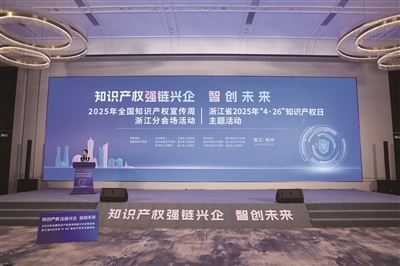
从无形到有力 余杭知识产权与标准“双轮”驱动产业创新浪潮
Hang Zhou Ri Bao· 2025-08-20 03:13
Core Insights - The article highlights the integration of technological and industrial innovation in Yuhang, emphasizing a comprehensive mechanism that covers "source activation - transformation acceleration - rights protection" to drive new productivity [5][6][10] Innovation Achievements - In the first half of the year, Yuhang authorized 5,388 new patents, including 2,283 invention patents, averaging nearly 30 patents issued daily [6] - The district has led or participated in the release of 5 international standards and 4 national standards, with a total of 33 international standards established, marking significant progress since administrative adjustments [6] Policy Support - The "New Quality Productivity High-Quality Development 68 Articles" policy optimizes the utilization of intellectual property, providing interest subsidies for companies using patents and data as collateral for loans, facilitating the monetization of intellectual achievements [6][7] - Yuhang has successfully issued 12 intellectual property securitization products, raising over 1.229 billion yuan, covering 908 patents in strategic emerging industries, saving companies approximately 55.6 million yuan in financing costs [6] Brand and Standardization Initiatives - Yuhang has incorporated "Zhejiang Standards" and "Zhejiang Quality" into district-level financial support policies, promoting the development of competitive enterprises and enhancing the "Zhejiang Manufacturing" brand system [7] - The district has allocated 12.4 million yuan in quality awards and is set to complete 16.9 million yuan in funding for standardization initiatives [7] Platform Development - Yuhang has established a demand-driven high-energy platform system to facilitate the rapid transformation of innovative results, significantly reducing time costs for companies [8][9] - The district has created a one-stop platform for quality infrastructure in various sectors, including environmental water treatment and low-altitude economy, to streamline the innovation process [9] Protection Mechanisms - Yuhang has developed a multi-dimensional protection network for commercial secrets and data intellectual property, implementing a dual-track protection system to safeguard innovative results [10][11] - The district has established three commercial secret protection demonstration zones and 18 guidance stations, enhancing protection at the grassroots level [10] Data Intellectual Property Initiatives - Yuhang has introduced a full-process service for data intellectual property protection, significantly reducing the infringement recognition period by 60% through a fast-track review channel with the courts [11] - The district offers subsidies for overseas infringement liability insurance premiums, reducing risks for companies in international markets [11]
双融日报-20250820
Huaxin Securities· 2025-08-20 01:38
Market Sentiment - The current market sentiment score is 76, indicating a "relatively hot" market condition, which suggests increasing investor confidence and potential upward market trends [6][9][21]. Hot Topics Tracking - **Brain-Computer Interface**: The National Healthcare Security Administration has introduced a new pricing mechanism for innovative medical technologies, including a "brain-computer interface implantation fee," which is expected to accelerate clinical applications. Related companies include Innovation Medical (002173) and Weisi Medical (688580) [6]. - **Robotics**: The first World Humanoid Robot Games were held in Beijing, showcasing advancements in motion control and practical applications. Key companies in this sector include Wolong Electric Drive (600580) and Changsheng Bearing (300718) [6]. - **Logistics**: The State Post Bureau is addressing issues of "involution" in the express delivery industry and promoting high-quality development. The commercialization of unmanned logistics vehicles is also gaining traction, particularly in the "last mile" delivery segment. Relevant companies include Shentong Express (002468) and SF Holding (002352) [6]. Capital Flow Analysis - The top ten stocks with the highest net inflow of capital include Zhongyou Capital (104,664.78 million), Top Group (75,376.63 million), and Sichuan Changhong (67,103.27 million) [10]. - The top ten stocks with the highest net buy in financing include Zhongji Xuchuang (64,159.65 million), Runhe Software (55,810.88 million), and China Merchants Bank (44,884.94 million) [12]. - The top ten stocks with the highest net outflow of capital include Dongfang Caifu (-303,096.91 million), Changcheng Securities (-127,402.42 million), and Beifang Rare Earth (-119,591.95 million) [13]. Industry Performance - The top ten industries with the highest net inflow of capital include Food and Beverage (107,055 million), Home Appliances (92,327 million), and Banking (24,826 million) [16]. - The top ten industries with the highest net outflow of capital include Medical Biology (-177,083 million), Basic Chemicals (-244,101 million), and Media (-252,431 million) [17]. Financing and Margin Trading - Financing net buying indicates investor optimism, while excessive financing may signal speculative risks. Conversely, margin selling reflects pessimism and potential for significant losses if market conditions reverse [22].
脑机接口深度报告解读
2025-08-19 14:44
Summary of Key Points on Brain-Computer Interface (BCI) Industry Industry Overview - The global brain-computer interface (BCI) field has made significant progress, with Neuralink completing seven human surgeries and Huashan Hospital in China conducting its first invasive BCI implantation experiment, making China the second country to conduct such clinical trials [1][4] Market Potential - The BCI market is projected to reach $40 billion by 2030 and over $140 billion by 2040, with substantial growth opportunities in both medical and consumer markets [1][5] - The market for central nervous system treatments is expected to reach $15 billion by 2030 and $85 billion by 2040, while the consumer market for emotional assessment is projected to reach $25 billion by 2030 and $60 billion by 2040 [5] Technological Developments - BCI technology can be categorized into invasive and non-invasive types. Invasive methods involve implanting electrodes in the brain, offering better signal quality but at higher costs and safety risks. Non-invasive methods are cheaper and simpler but provide lower signal resolution [2] - Major tech companies like Meta and OpenAI are actively developing non-invasive technologies, with Meta releasing a device that decodes brain signals into text [4][6] Policy and Industry Support - Multiple policies and industry developments are driving BCI technology forward, including support documents from the Chinese government and plans from Neuralink to increase the number of surgeries and expand applications [6][9] - In 2025, China's healthcare insurance system included BCI as an independent billing item, with specific pricing guidelines for invasive and non-invasive procedures [9][10] Investment Opportunities - Investors are encouraged to focus on companies with expertise in computer technology and device development within the BCI sector, as these firms are likely to benefit from technological advancements and policy support [3][11] - The goal is to cultivate two to three globally influential leading companies in the BCI field by 2030, supported by various government initiatives [10]
宏观和大类资产配置周报:下一个重要时点或在三季度中下旬-20250819
Bank of China Securities· 2025-08-19 09:20
Macro Economic Overview - The report indicates that the next important time point may be in the late third quarter of 2025, with a suggested asset allocation order of stocks > commodities > bonds > currency [2][4] - In the first half of 2025, China's actual GDP grew by 5.3% year-on-year, laying a good foundation for achieving the annual target of 5.0% [2][4] - Economic data from July shows signs of growth pressure, including weakened external demand due to increased tariffs from the US and sluggish domestic consumption [2][4] Asset Performance - The A-share market saw an increase, with the CSI 300 index rising by 2.37% and the CSI 300 stock index futures up by 2.83% [11][12] - Commodity futures showed mixed results, with coking coal futures up by 0.33% and iron ore down by 1.65% [11][12] - The yield on ten-year government bonds rose by 6 basis points to 1.75%, while active ten-year government bond futures fell by 0.26% [11][12] Policy Insights - The report emphasizes the importance of expanding domestic demand in the second half of the year, suggesting that policies should be implemented to enhance efficiency and release domestic demand [2][4] - It is noted that the fiscal policy may have room for further adjustments within the year, particularly in light of external pressures easing due to potential interest rate cuts by the Federal Reserve [2][4] Sector Performance - The report highlights that the TMT sector has shown significant growth, with the ChiNext index leading with an 8.58% increase, followed by the Shenzhen Component Index at 4.55% [35][36] - The report also notes that the banking sector has faced declines, with a drop of 3.22% [35][36] Financial Data - In July, new social financing amounted to 1.13 trillion yuan, while new RMB loans decreased by 500 million yuan, indicating weak financing demand in the real economy [4][17] - The M2 money supply grew by 8.8% year-on-year, reflecting a relatively strong liquidity environment despite weak economic indicators [4][17]
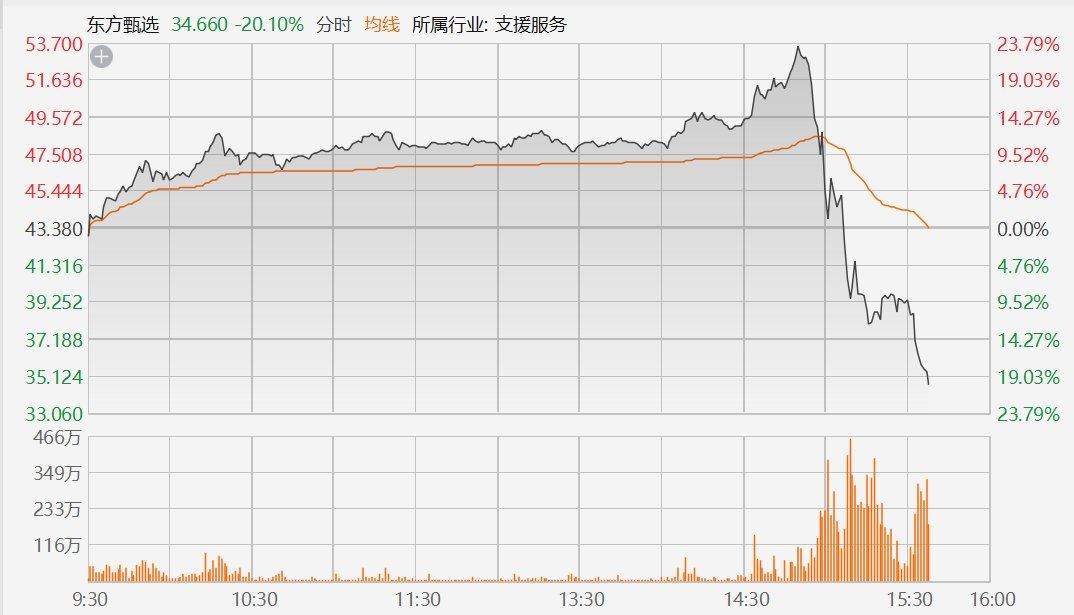
港股收评:三大指数齐跌,科技股多数翻绿,东方甄选高位跳水跌超21%,网易、小米跌1.2%,鑫苑服务涨9.8%
Ge Long Hui· 2025-08-19 08:41
Market Overview - The Hong Kong stock market experienced fluctuations, with the Hang Seng Index declining by 0.21%, the Hang Seng China Enterprises Index down by 0.3%, and the Hang Seng Tech Index falling by 0.67%, indicating a relatively stable overall sentiment [1]. Sector Performance - Major technology stocks, which serve as market indicators, mostly turned down, with NetEase and Xiaomi dropping by 1.2%. Meituan, JD.com, and Alibaba also showed negative performance, while Tencent and Kuaishou saw slight increases [3]. - The film and television sector, which had previously led gains, saw a significant decline. Other popular sectors such as semiconductor chips, Chinese brokerage stocks, rare earth concepts, innovative pharmaceuticals, gold stocks, and brain-computer interface concepts also experienced downturns [3]. Real Estate and Consumer Sectors - Li Qiang emphasized the implementation of strong measures to stabilize the real estate market, leading to mixed performance in property stocks, which opened high but closed lower. However, property management stocks remained strong, with Xinyuan Services leading with a 9.8% increase [3]. - Consumer sectors, including restaurant and sports goods stocks, showed active performance, while shipping, mobile gaming, and automotive stocks experienced some gains [3].
港股收评:三大指数齐跌 科技股多数翻绿 半导体等热门板块低迷 消费股活跃
Ge Long Hui· 2025-08-19 08:26
Market Overview - The Hong Kong stock market experienced a slight decline, with the Hang Seng Index down by 0.21%, the Hang Seng China Enterprises Index down by 0.3%, and the Hang Seng Tech Index down by 0.67, indicating a relatively stable overall sentiment [1] Sector Performance - Major technology stocks, which serve as market indicators, mostly turned down, with NetEase and Xiaomi both falling by 1.2%. Meituan, JD.com, and Alibaba also showed negative performance, while Tencent and Kuaishou saw slight increases [1] - The film and television sector, which had previously led the market, saw a significant drop, while popular sectors such as semiconductor chips, Chinese brokerage stocks, rare earth concepts, innovative pharmaceuticals, gold stocks, and brain-computer interface concepts also declined [1] - The live-streaming sector, represented by Dongfang Zhenxuan, experienced a sharp decline of nearly 21% after continuous increases [1] Real Estate and Consumer Sectors - Li Qiang emphasized the need for strong measures to stabilize the real estate market, leading to mixed performance in property stocks, which opened high but closed lower. However, property management stocks remained strong, with Xinyuan Services leading with a 9.8% increase [1] - Consumer sectors, including restaurant and sports goods stocks, showed active performance, while shipping, mobile gaming, and automotive stocks experienced some gains [1]
早报李强:采取有力措施巩固房地产市场止跌回稳态势;A股市值历史首次突破100万亿元大关
Sou Hu Cai Jing· 2025-08-19 08:19
Company News - China Shipbuilding announced that the number of valid dissenting shares is 0, and the stock will resume trading [5] - Midea Group stated on the interactive platform that it has undertaken the first large-scale all-liquid cooling intelligent computing data center project from China Telecom in the Guangdong-Hong Kong-Macao Greater Bay Area [5] - Tibet Tianluo reported a net loss of 112 million yuan for the first half of the year [5] - Yanghe Distillery announced a 45% year-on-year decline in net profit for the first half of the year [5] - Zhifei Biological announced a net loss of 597 million yuan for the first half of the year, marking a transition from profit to loss [5] - Tongzhou Electronics announced that the information circulating about the company entering the supply chain of Nvidia and other enterprises is untrue [5] - O-film Technology reported a net loss of 109 million yuan for the first half of the year, transitioning from profit to loss [5] - Chuangzhong Technology announced that if abnormal trading of the company's stock continues, it may apply for a trading suspension for verification [5] - Nanya New Materials announced that during the period of abnormal stock trading, board member Zhang Dong and others reduced their holdings of the company's shares [5] Industry News - The A-share market's total market capitalization has historically surpassed 100 trillion yuan, with an increase of 1.45 trillion yuan this year [3] - The positive performance of the A-share market has led to an increase in brokerage account openings, with most brokerages reporting a growth in new accounts, some reaching new highs for August [3] - According to a report by the China Automobile Dealers Association, only 30.3% of dealers met their sales targets in the first half of 2025, with 29.0% of dealers failing to meet 70% of their targets [3] - A new low-altitude flight route connecting Kunshan, Jiangsu, and downtown Shanghai has officially opened, allowing for a 20-minute direct flight between the two locations [3] - The Shenzhen Stock Exchange has sent a special letter to member units requesting assistance in conducting research on the network voting situation for customer credit trading guarantee securities accounts [4] - Bicycle prices have significantly decreased, with many brands dropping by around 1,000 yuan, and some high-end imported models seeing price reductions exceeding 50% [4] - The National Radio and Television Administration has issued measures to enrich television content and improve the supply of broadcasting content [4]





前瞻布局、政策开闸,AI喜临门站上脑机接口风口
Zhong Guo Jin Rong Xin Xi Wang· 2025-08-19 08:02
然而,技术成熟度、用户隐私保护、数据安全以及如何建立普适且高效的脑电解码模型,仍是产业规模 化前必须跨越的障碍。未来脑机接口将如何更深入、更可靠地服务于人,提升生活品质,值得你我共同 关注与期待。 在不久前结束的2025世界机器人大赛——BCI脑控机器人大赛现场,参会者只需将一个"帽子"扣在头 上,就能通过意念操控屏幕上的光标或指挥机械臂完成复杂动作。无独有偶,2025世界人工智能大会 上,一名视障者头戴轻薄脑机接口设备,同样凭意念操控机械臂完成毛线编织……这些直观的演示,不 仅展示了技术可行性,更突显医院非侵入式方案在安全性和用户体验上的独特优势,为政策导向提供了 现实注脚。 在今年7月喜临门与强脑科技独家战略合作签约会上,双方发布全球首款引入脑机脑电技术的AI床垫"宝 褓·BrainCo",通过脑波级睡眠优化直接将行业技术延伸至神经科学领域。据喜临门相关负责人透露, 未来双方的合作将进一步突破睡眠体验的空间限制,加快构建以"AI陪伴"为核心的智能睡眠生态,直 至"今夜无人失眠"美好愿景实现。 工信部等七部门7月印发《关于推动脑机接口产业创新发展的实施意见》,明确我国脑机接口技术发展 目标,提出到2027年 ...

睡眠领域的脑机接口样本,AI喜临门率先探路
Quan Jing Wang· 2025-08-18 07:03
上周,工信部等七部门印发《关于推动脑机接口产业创新发展的实施意见》,明确我国脑机接口技术发 展目标,提出到2027年,脑机接口关键技术取得突破,初步建立先进的技术体系、产业体系和标准体系 并旗帜鲜明地支持"非植入设备量产迭代"。 当马斯克的Neuralink将芯片植入渐冻症患者大脑时,中国科学家正将脑机接口技术带进日常生活。 在不久前结束的2025世界机器人大赛——BCI脑控机器人大赛现场,参会者只需将一个"帽子"扣在头 上,就能通过意念操控屏幕上的光标或指挥机械臂完成复杂动作。无独有偶,2025世界人工智能大会 上,一名视障者头戴轻薄脑机接口设备,同样凭意念操控机械臂完成毛线编织……这些直观的演示,不 仅展示了技术可行性,更突显医院非侵入式方案在安全性和用户体验上的独特优势,为政策导向提供了 现实注脚。 民生证券研报指出,应重视脑机接口研发进程关键拐点,目前标杆企业技术落地预期明确,整体行业有 望从早期阶段逐渐步入高速成长期,建议关注海外映射/有自主研发布局/有落地场景的相关企业。 其中 非侵入式脑机接口技术领军企业强脑科技成为典型代表。 业内人士认为,这一政策导向的深层逻辑在于,相比尚处探索阶段、风险与伦 ...
