
消费电子

Search documents
香港多家科创企业亮相CES 前沿科技创新吸引全球买家目光
Huan Qiu Wang· 2026-01-09 07:12
Core Insights - A total of 61 Hong Kong tech companies showcased their innovations at the CES in Las Vegas from January 6 to 9, highlighting Hong Kong's strength in research and development in the tech sector [1][2] - The event attracted numerous international brand representatives, industry leaders, and investors, facilitating discussions on local innovations and potential collaborations to expand into overseas markets [1] Group 1: Event Overview - The Hong Kong Tech Pavilion covered various cutting-edge fields, including advanced materials and sustainable technology, artificial intelligence and data, digital transformation, electronic products and robotics, as well as life and health technology [2] - The participation in CES is part of a long-term strategy by the Hong Kong Trade Development Council, which has been involved in the event for over 40 years, leveraging a global network of over 50 offices to promote tech-driven cross-border business transactions and investments [2] Group 2: Awards and Recognition - Three Hong Kong companies received accolades at the 2026 CES Innovation Awards: Widemount Dynamics Tech for its smart firefighting robot, Eieling for its FattaLab® diagnostic device, and PointFit for its PF-Sweat Patch wearable technology [2] - The recognition of these companies underscores the innovative capabilities of Hong Kong's tech ecosystem and its potential to drive future global transformations [2]

《经济学人》:人工智能将给电子产品消费者带来巨大痛苦
美股IPO· 2026-01-09 07:08
Core Viewpoint - The surge in demand for memory chips driven by artificial intelligence is creating significant supply shortages for consumer electronics manufacturers, leading to increased prices and delayed product deliveries [3][4]. Group 1: Supply and Demand Dynamics - The demand for memory chips, particularly DRAM and high bandwidth memory (HBM), is unprecedented due to the rise of AI-driven devices [3]. - Dell's COO described the current supply-demand imbalance as "unprecedented," with predictions of a 15% to 20% increase in personal computer prices [3]. - IDC estimates that global smartphone shipments could decline by 5% and personal computer sales could drop nearly twice as much if the situation persists [3]. Group 2: Impact on Memory Chip Production - HBM production requires three to four times the silicon wafers compared to standard DRAM, leading to a significant increase in resource consumption [4]. - The global DRAM market is highly concentrated, with SK Hynix, Samsung, and Micron accounting for over 90% of revenue, and these companies are shifting capacity towards HBM [4]. - HBM's profit margins are significantly higher, averaging 50% or more, compared to 35% for standard memory, which has led to a 200% average stock price increase for these companies since early 2025 [4]. Group 3: Price Increases and Market Effects - The price of standard DRAM (DDR4) has surged by 1360% since April 2025, impacting the cost structure of consumer electronics [4]. - Companies like Apple can absorb higher costs due to their pricing power, while others, such as Asus and Xiaomi, are already raising prices and warning of profit margin impacts [5]. - Automotive manufacturers are under the most pressure as the DRAM requirements for vehicles are increasing rapidly due to more electronic components being integrated [5]. Group 4: Future Outlook and Mitigation - Memory manufacturers plan to invest approximately $61 billion in DRAM this year, a 14% increase from 2025, but new capacity will take up to two years to come online [5]. - An estimated 60% to 70% of this investment will be directed towards HBM, limiting the availability of standard DRAM [5]. - The supply shortage may only ease with a decline in the AI frenzy, which could lead to immediate consumer pain [5].



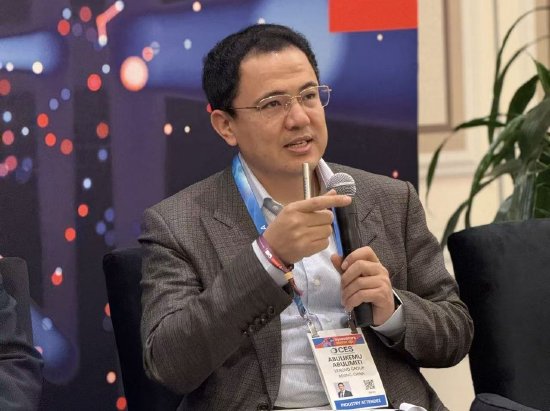
联想集团副总裁阿木:正研发面向企业的“个人超级智能体”
Xin Lang Cai Jing· 2026-01-09 06:54
Core Insights - Lenovo is developing an enterprise-focused "personal super intelligent agent" named "Tianxi AI Pro" to enhance smart collaboration from individuals to enterprises [1][4][7] - The launch of Lenovo Qira, known as Tianxi AI in China, marks the global implementation of Lenovo's personal AI strategy, which is part of a broader hybrid AI initiative [3][6] - The integration of personal and enterprise AI aims to create a smart network that connects individual creativity with corporate intelligence, evolving from "using AI" to "co-creating AI" [3][6] Group 1 - Lenovo's Tianxi AI represents a personal intelligent agent that aligns with individual interests, while enterprises will deploy enterprise-level intelligent agents to enhance employee efficiency and external communication [3][6] - The intersection of personal and enterprise intelligent agents occurs at AI terminals purchased by enterprises, allowing personal agents to leverage enterprise capabilities alongside individual knowledge [3][6] - Tianxi AI can utilize personal data for AI services and will eventually integrate with Lenovo's enterprise-level intelligent agent, "Lexiang," to assist in decision-making processes [3][6] Group 2 - Lenovo has been developing and testing the Tianxi AI Pro version since last year, enabling enterprises to purchase and assign work versions of personal intelligent agents to employees [4][7] - The company's hybrid AI strategy, significant R&D investment, and open ecosystem are foundational for deep collaboration between personal and enterprise AI [4][7]

补贴与展会双重加持,智能眼镜迎来“成人礼”
Jin Rong Jie· 2026-01-09 06:34
Core Insights - The Chinese government has introduced a subsidy for consumers purchasing smart glasses priced under 6000 yuan, offering a 15% discount, with a maximum of 500 yuan [2] - The CES 2026 event has showcased a significant shift towards AI glasses, with various companies presenting innovative products that enhance user experience [3][4] Policy Support - The new policy, effective from 2026, includes smart glasses in the consumer goods trade-in subsidy program, reflecting government support for the AI terminal industry [2] - This policy change indicates a move from conceptual products to mainstream consumer acceptance of smart glasses [2] Exhibition Highlights - CES 2026 featured 4112 companies, with major players like Nvidia, AMD, and Hisense showcasing their latest AI glasses [3] - The event highlighted AI as a core driver in product development, moving beyond being an additional feature [3] Technological Differentiation - Companies are adopting various technological paths, with some focusing on ultra-lightweight designs while others emphasize functional integration [4] - Innovations include modular designs and advanced interaction technologies, such as Meta's EMG handwriting recognition [4] Practical Applications - The maturity of smart glasses is evident, with many products weighing under 30 grams and offering diverse interaction methods [5] - Companies are exploring accessibility features, such as special subsidies for visually impaired users [6] Market Opportunities - The subsidy policy is expected to lower the entry barrier for consumers, making smart glasses more attractive [6] - Different market segments are emerging, with companies like BleeqUp targeting professional sports and others like MemoMind focusing on everyday use [6] Future Trends - The smart glasses market is shifting from general-purpose devices to specialized solutions tailored for specific scenarios [7] - The integration of AI models is expected to transform smart glasses into proactive assistants, enhancing user experience and driving market growth [7]
科技50策略指数投资价值分析:融合多因子策略的科技指数
Shenwan Hongyuan Securities· 2026-01-09 06:13
Group 1 - The core viewpoint of the report is that the CSI Technology Advantage Growth 50 Strategy Index (referred to as Technology 50 Strategy) utilizes multiple factors such as growth, innovation, value, low volatility, and quality to select and weight stocks from the technology sector, aiming to provide investors with a multi-factor strategy investment target based on the technology industry [1][7][11] - As of December 31, 2025, the top ten constituent stocks of the Technology 50 Strategy Index are primarily leading companies across various technology sub-sectors, with the top five stocks accounting for 17.63% and the top ten stocks accounting for 30.93% of the index's total weight [1][10][11] - The index is biased towards large-cap stocks, with 31 constituents having a market capitalization exceeding 100 billion yuan, while only 2 constituents have a market capitalization below 10 billion yuan [1][11] Group 2 - The report compares the Technology 50 Strategy Index with other representative technology and innovation indices, noting that the Technology 50 Strategy Index achieved an annualized return of 11.96% from January 1, 2020, to December 31, 2025, ranking third among six technology and innovation indices [1][57][60] - The Technology 50 Strategy Index shows lower volatility in revenue growth compared to other indices, with a projected revenue growth rate of 33.65% for 2026, which is higher than that of the other five technology and innovation indices [1][61][62] - The selection of constituent stocks for the Technology 50 Strategy Index incorporates 11 factors, providing a more comprehensive evaluation compared to other indices that focus on fewer factors [1][67][68]





CES硬核科技刷屏,广东力量秀出“中国方案”
2 1 Shi Ji Jing Ji Bao Dao· 2026-01-09 06:05
Core Insights - The CES 2023 showcased significant technological innovations, particularly highlighting the strong presence of Guangdong companies, which accounted for a substantial portion of the exhibitors [1][10] - The event emphasized the transition of robotics and AI technologies from experimental stages to practical applications, with Guangdong firms leading this shift [3][4][14] Group 1: Guangdong's Presence at CES - A total of 3,302 companies participated in CES 2023, with 837 from mainland China, 127 from Taiwan, and 98 from Hong Kong; Guangdong alone had over 530 exhibitors, including 370 from Shenzhen, representing 44.2% of mainland China's participation [1] - Guangdong companies showcased a range of innovative products, including smart robots, 3D printing technologies, and AI-integrated devices, reflecting their growing influence in global tech innovation [1][10] Group 2: Robotics and AI Innovations - The event featured significant advancements in embodied intelligent robots, with companies like SUTENG showcasing a delivery robot capable of performing complex tasks autonomously, highlighting the practical applications of AI in logistics and service sectors [3][4] - The robotics industry is moving towards large-scale validation, with companies focusing on real-world productivity rather than just technological demonstrations, indicating a maturation of the sector [4][5] Group 3: Energy Technology and Smart Solutions - Energy technology firms presented solutions for smart and decentralized living, with products like the Explorer 1500 Ultra and Jackery Solar Gazebo, which integrate energy independence into household infrastructure [5][6] - The emergence of intelligent charging networks for autonomous vehicles was also highlighted, showcasing the integration of AI in future transportation solutions [6] Group 4: Globalization and Market Strategy - Guangdong companies are increasingly adopting comprehensive globalization strategies, moving beyond simple product exports to include technology, brand, and ecosystem development [7][10] - Companies like TCL and EcoFlow are focusing on localizing operations and building service ecosystems in international markets to enhance brand recognition and customer engagement [8][9] Group 5: Supply Chain and Innovation - The robust supply chain ecosystem in Guangdong is a critical factor in the rapid iteration and commercialization of innovative products, enabling companies to achieve significant technological breakthroughs [13][14] - The emphasis on R&D investment and the efficiency of the supply chain have strengthened the competitive position of Guangdong firms in the global market [13]
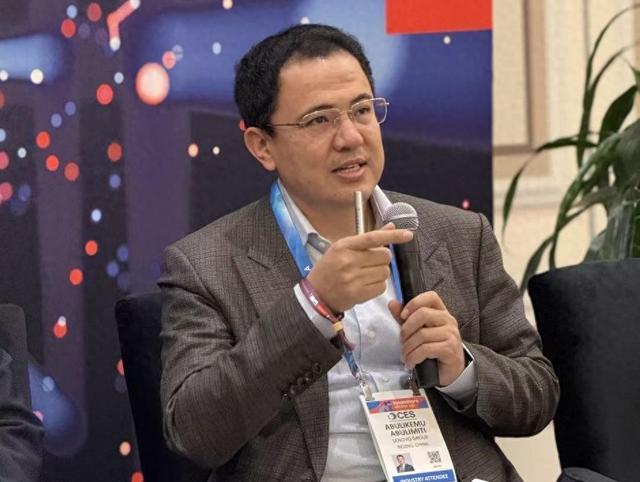
CES 2026|联想阿木透露:天禧AI不止有“个人版”未来也有“专业版”
Huan Qiu Wang· 2026-01-09 05:59
Core Viewpoint - Lenovo is developing an enterprise-focused "personal super intelligent agent" named "Tianxi AI Pro" to enhance smart collaboration from individuals to enterprises [1][4]. Group 1: Product Development - Lenovo officially launched its global personal super intelligent agent, Lenovo Qira, also known as Tianxi AI in China, during its Innovation Technology Conference [3]. - The personal AI is part of Lenovo's hybrid AI strategy, which aims to create a smart network connecting personal creativity with enterprise intelligence [3]. - The Tianxi AI can utilize personal data to provide AI services and will eventually integrate with Lenovo's enterprise-level intelligent agents to assist in work decisions [3]. Group 2: Strategic Goals - Lenovo aims to enable enterprises to purchase the Tianxi AI Pro version for employee deployment, enhancing work efficiency and external communication [4]. - The company emphasizes its three main advantages: hybrid AI strategy, substantial R&D investment, and an open ecosystem, which are foundational for deep collaboration between personal and enterprise AI [4].
金元证券每日晨报-20260109
Jinyuan Securities· 2026-01-09 05:51
Core Insights - The report highlights the performance of major stock indices across different markets, indicating mixed results with some indices showing gains while others experienced declines [6][11]. - The report discusses significant developments in international and domestic news that may impact various industries, including economic forecasts and corporate actions [10][12][13]. International Market Overview - European markets showed slight gains with Germany's DAX30 up 0.02% at 25127.46 points and France's CAC40 up 0.12% at 8243.47 points, while the UK’s FTSE 100 fell 0.04% to 10044.69 points [11]. - In the US market, the Dow Jones increased by 0.55% to 49266.11 points, and the S&P 500 rose by 0.01% to 6921.46 points, whereas the Nasdaq dropped by 0.44% to 23480.02 points [11]. - The Asia-Pacific market saw the Hang Seng Index decline by 1.17% to 26149.31 points, and the Nikkei 225 fell by 1.63% to 51117.26 points, while the Korean Composite Index slightly increased by 0.03% to 4522.37 points [11]. Domestic News - The Ministry of Commerce is reviewing Meta's acquisition of Manus for $2 billion, emphasizing compliance with Chinese laws and regulations for foreign investments [12]. - The Ministry of Industry and Information Technology warned against irrational competition in the lithium battery industry, highlighting the need for regulatory measures to ensure sustainable development [13]. - Guangzhou's government plans to advance reusable rocket technology, aiming to establish a significant presence in the commercial aerospace sector by 2035 [14]. - The first domestic offshore recovery and reuse rocket production base has commenced construction in Hangzhou, marking a significant advancement in high-end manufacturing within the commercial aerospace field [15]. Important Company Developments - Chinese concept stocks saw a general increase, with the Nasdaq China Golden Dragon Index rising by 1.09% and notable gains in companies like Century Internet and WanGuo Data [16]. - Nvidia has requested overseas customers to pay in full for its H200 AI chips, with orders exceeding 2 million units, indicating strong demand [16]. - Apple announced that JPMorgan Chase will replace Goldman Sachs as the issuer of its credit card, which is expected to bring over $20 billion in credit card balances to the bank [16]. - OpenAI established an employee equity incentive pool equivalent to 10% of its total equity, valued at approximately $50 billion based on a $500 billion company valuation [16]. - China Petroleum and Chemical Corporation (Sinopec) is undergoing a restructuring with China National Aviation Fuel Group, aimed at enhancing the resilience of the aviation fuel supply chain [16].
人形机器人板块走强获资金共振,机器人ETF易方达(159530)半日净申购超5000万份
Mei Ri Jing Ji Xin Wen· 2026-01-09 05:27
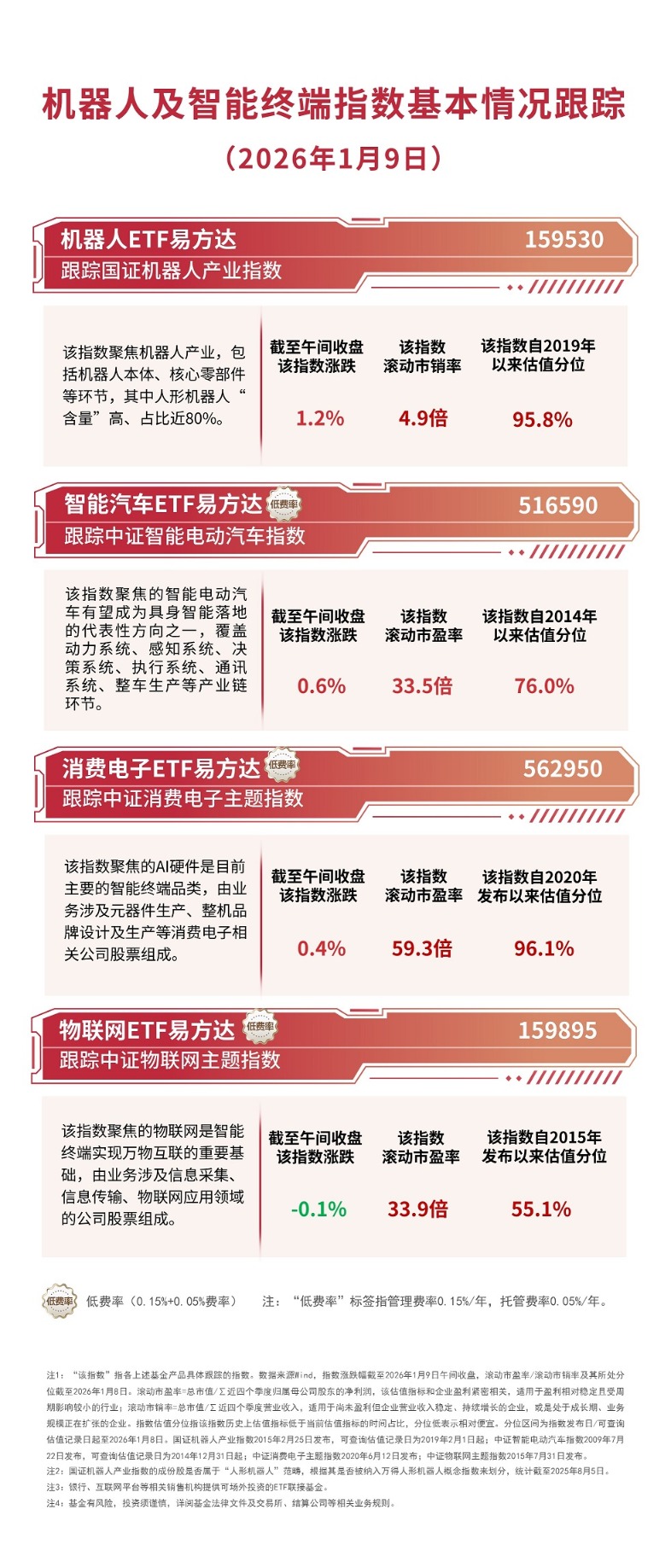
Group 1 - The Guozheng Robotics Industry Index increased by 1.2% at midday, while the China Securities Intelligent Electric Vehicle Index rose by 0.6%, and the China Securities Consumer Electronics Theme Index went up by 0.4%. The China Securities Internet of Things Theme Index experienced a slight decline of 0.1% [1][4] - The E Fund Robotics ETF (159530) saw a net subscription exceeding 50 million units in half a day, with a total net inflow of over 2 billion yuan in the past month [1] - The rolling price-to-earnings ratio of the China Securities Internet of Things Theme Index is 33.9 times, with a valuation percentile of 55.1% since its inception in 2015 [4]

半日,2万亿!狂掀涨停潮!
天天基金网· 2026-01-09 05:24
Market Overview - The A-share market saw all three major indices rise, with the Shanghai Composite Index up by 0.3%, the Shenzhen Component Index up by 0.57%, and the ChiNext Index up by 0.1% [3] - The market experienced significant trading volume, with a turnover of 20,614 billion yuan, an increase of 2,963 billion yuan compared to the previous day [3] Sector Performance - Various sectors showed positive performance, including non-ferrous metals, AI applications, commercial aerospace, computing power, consumer electronics, and diversified finance [5] - The commercial aerospace sector experienced a strong rally, leading to a surge in related stocks and positively impacting military stocks and other sectors such as diversified finance, wind power, photovoltaic, carbon fiber, and engineering machinery [7] Notable Stocks - Leading consumer electronics stock Lens Technology rose over 12%, reaching a historical high with a market capitalization of 200.9 billion yuan [5] - Multiple stocks in the commercial aerospace sector hit their historical highs, including Xinyuan Technology and Guokai Biological Engineering, with significant percentage increases [8][10] Investment Insights - The commercial aerospace sector is gaining attention, with companies like Luxin Venture Capital and Yuexiu Capital seeing stock price increases due to their investments in the sector [10] - The wind power sector also saw gains, with companies like Taisheng Wind Energy and Goldwind Technology experiencing significant stock price increases [10] - The carbon fiber sector is benefiting from its applications in commercial aerospace, with companies like Huayin Technology and Guangqi Technology seeing substantial stock price increases [10] Consumer Sector Recovery - The consumer sector rebounded, with increases in stocks related to duty-free shops, retail, and film and television [13] - The film industry is showing signs of recovery, with the box office for 2025 projected to reach 531 billion yuan, driven by strong demand during key holiday periods and the release of quality content [15]
