
医药生物

Search documents
政策组合拳显成效 资本市场吸引力不断增强
Zheng Quan Shi Bao· 2025-09-23 18:22
Core Viewpoint - The Chinese capital market has undergone significant reforms since the introduction of a series of financial support measures on September 24, 2024, leading to improved market confidence and stability, with A-shares experiencing substantial inflows of medium to long-term funds [1][2][3]. Group 1: Market Stability - The introduction of structural monetary policy tools has provided ample liquidity, with over 1 trillion yuan in swap operations initiated by the central bank and more than 500 listed companies utilizing loans for stock repurchases, totaling over 120 billion yuan [2]. - The capital market has seen a notable increase in medium to long-term funds, with a total market value of approximately 21.4 trillion yuan held by various long-term investors as of August 2023 [3]. Group 2: Support for Technological Innovation - The capital market has actively supported technological innovation, with over 90% of newly listed companies being technology-oriented, and the technology sector now accounting for more than 25% of the A-share market capitalization [5]. - Regulatory bodies have implemented various reforms to enhance the adaptability and inclusiveness of the capital market, facilitating the growth of innovative enterprises through improved financing mechanisms [4][5]. Group 3: Regulatory Environment - The regulatory framework has been strengthened to combat financial fraud and market manipulation, with significant penalties imposed on violators, including fines totaling 4.1 billion yuan for major financial misconduct cases [6][7]. - A comprehensive accountability system has been established to enhance the effectiveness of regulatory enforcement, creating a market environment where fraudulent activities are deterred [7].
社保险资持仓市值创新高 耐心资本成A股“压舱石”
Zheng Quan Shi Bao· 2025-09-23 18:11
Core Insights - The introduction of a comprehensive financial policy on September 24 has led to a significant increase in the holdings of patient capital, which has reached historical highs, providing stability to the A-share market [1][2][6] Group 1: Patient Capital Growth - As of the end of August, the total market value of various long-term funds holding A-shares has reached 21.4 trillion yuan, a 32% increase compared to the end of the 13th Five-Year Plan [2] - The "national team," including central financial institutions, has a combined A-share holding value exceeding 3.7 trillion yuan, nearing historical peaks [2] - Insurance funds and social security funds have also reached record high holdings, surpassing 2 trillion yuan [2] Group 2: Investor Activity - The number of new individual investor accounts has surged, with 6.8468 million new accounts opened in October 2024, a 274.67% increase month-on-month, marking the highest level since June 2015 [3] - Since September 24, 2024, the total number of new A-share accounts has increased by over 80% compared to the previous 11 months, totaling 28.79 million [3] Group 3: Margin Financing Expansion - The margin financing balance has increased from 1.39 trillion yuan on September 24 to 2.42 trillion yuan, a growth of 41.97% [4] - The financing balance has reached a historical high of over 2.4 trillion yuan, with the financing buy-in amount consistently representing about 12% of A-share trading volume [4] Group 4: Foreign Capital Inflow - As of the end of the second quarter of 2025, the total market value of northbound funds has reached 2.29 trillion yuan, reflecting a more than 2% increase from the previous quarter [5] - Foreign capital is increasingly focusing on long-term and value investments, with significant holdings in companies like Ningde Times and WuXi AppTec [5] Group 5: Market Stability and Future Outlook - The combined efforts of various patient capital sources have led to a qualitative transformation in the market ecosystem, with the annualized volatility of the Shanghai Composite Index decreasing from 18.7% to 15.9% [5][6] - The market is expected to transition from scale expansion to quality improvement, supported by the influx of long-term capital [6]


科创主线不变,节前风格或倾向于低估值标的
Xinda Securities· 2025-09-23 13:04
Investment Rating - The investment rating for the pharmaceutical and biotechnology industry is "Positive" [2] Core Viewpoints - The report indicates that the innovation-driven market trend in China is still ongoing, with a focus on innovative drugs, medical devices, and AI healthcare as key areas for medium to long-term investment. Short-term strategies may favor stable and undervalued stocks due to cautious capital allocation ahead of the holiday [3][12] - The report suggests a focus on undervalued stocks for pre-holiday allocation, recommending companies such as Xinhua Medical (2025 expected PE of approximately 13 times), Liuyuan Group (2025 expected PE of approximately 9 times), and Baiyunshan (2025 expected PE of approximately 13 times) [3][12] - The report highlights various sectors within the industry, including high-end medical devices, AI healthcare, CXO, and life sciences, suggesting specific companies to watch in each category [13][14][12] Summary by Sections 1. Industry Overview - The pharmaceutical and biotechnology sector experienced a weekly return of -2.07%, ranking 23rd among 31 first-level sub-indices. The medical services sub-sector had the best performance with a weekly return of -0.47% [10][27] - Over the past month, the sector's return was -1.19%, ranking 26th among first-level sub-indices, with medical services again leading with a return of 6.43% [10][25] 2. Market Performance and Valuation - The current PE (TTM) for the pharmaceutical and biotechnology industry is 31.19 times, slightly above the 5-year average of 29.46 times. The industry is trading at a premium of 137% compared to the CSI 300 index [20][22][24] - The report notes that the medical services sub-sector has shown the highest growth over the past year, with a return of 87.05% [29] 3. Sector Dynamics - High-end medical devices are expected to see growth driven by hospital procurement recovery, with companies like KAILI Medical and Mindray Medical recommended for attention [13] - In AI healthcare, companies such as JD Health and Alibaba Health are highlighted for their performance in AI-driven e-commerce and marketing [13] - The CXO and life sciences sectors are also emphasized, with leading companies like WuXi AppTec and Tigermed suggested for investment [14] 4. Recent Industry Developments - The report outlines recent policy changes, including the launch of the 11th batch of national drug centralized procurement, which aims to balance clinical needs and rational competition among enterprises [11][44] - Key announcements from companies in the sector include new drug registrations and clinical trial approvals, indicating ongoing innovation and regulatory progress [45]
主力资金丨尾盘主力资金重点抢筹股出炉
Zheng Quan Shi Bao Wang· 2025-09-23 11:04
Core Viewpoint - The main focus of the news is on the significant outflow of funds from the stock market, with specific attention to the performance of various industries and individual stocks, highlighting both the sectors that attracted investment and those that faced substantial withdrawals. Fund Flow Analysis - On September 23, the net outflow of main funds from the Shanghai and Shenzhen markets reached 761.67 billion yuan, with the ChiNext board experiencing a net outflow of 249.03 billion yuan and the CSI 300 index seeing a net outflow of 195.08 billion yuan [1] - Among the 26 declining industries, the social services sector led the decline with a drop of 3.11%, while the retail trade, computer, and comprehensive industries all fell by over 2% [1] - Only the comprehensive industry saw a net inflow of main funds, amounting to 20.97 million yuan, while the electronics and computer sectors experienced the largest outflows, exceeding 130 billion yuan each [1] Individual Stock Performance - The stock of Wolong Materials, a leader in copper cable high-speed connections, saw a net inflow of 1.094 billion yuan, marking the highest among individual stocks, and its price hit a new high with a trading volume of 8.042 billion yuan [2] - EVE Energy, a solid-state battery concept stock, recorded a net inflow of 652 million yuan, the highest since July 7, 2022 [3] - Changchuan Technology's stock surged to a limit-up with a closing price of 80.27 yuan per share, attracting a net inflow of 571 million yuan, and it projected a significant profit increase for the third quarter [3] Notable Outflows - Over 200 stocks experienced a net outflow exceeding 1 billion yuan, with 20 stocks seeing outflows over 5 billion yuan [5] - Seven stocks had net outflows exceeding 11 billion yuan, with Shanzi Technology and Luxshare Precision both exceeding 20 billion yuan in outflows [6] - Popular stocks such as Dongfang Caifu, BYD, and ZTE also faced significant net outflows [7] End-of-Day Fund Flow - At the end of the trading day, the net inflow of main funds was 4.134 billion yuan, with the ChiNext board contributing 3.829 billion yuan [8] - Ten stocks saw net inflows exceeding 1 billion yuan at the close, with notable contributions from companies like Xinyi Technology and Shenghong Technology [10]
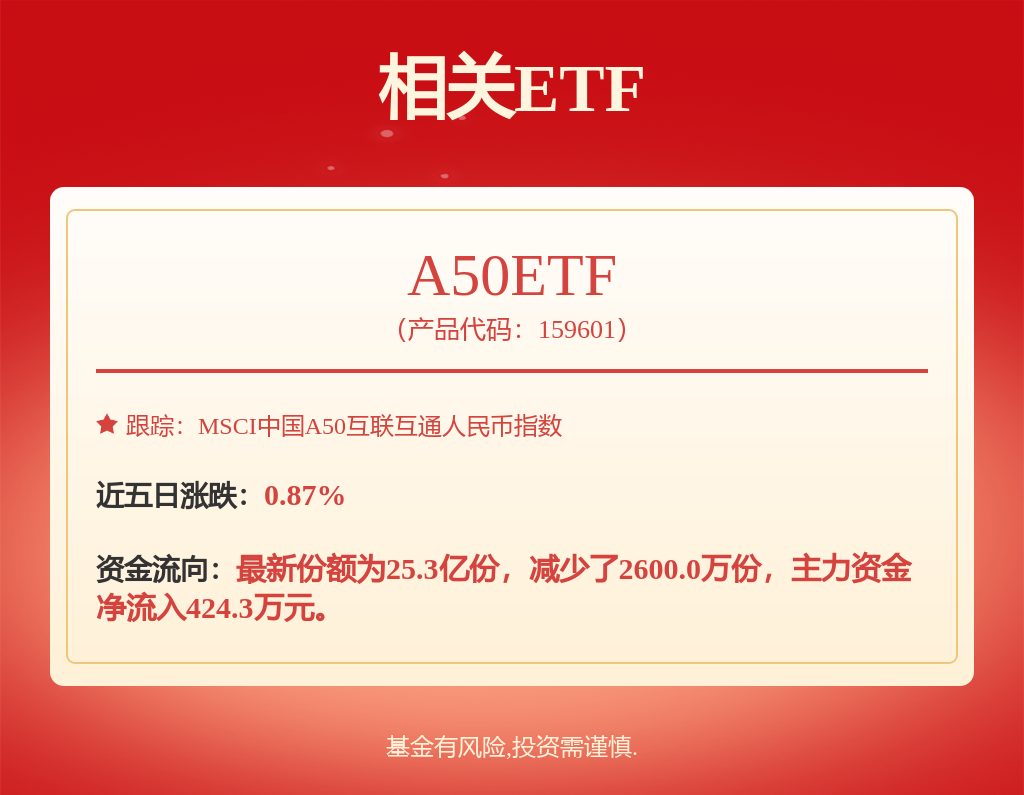
知名机构近一周(9.15-9.22)调研名单,机构扎堆这只家居五金龙头
Xuan Gu Bao· 2025-09-23 10:55
Group 1 - A total of 22 companies were investigated by well-known institutions from September 15 to September 22 [1] - The automotive and electronics sectors received the most attention, followed by the biotechnology sector [1] - The company with the highest number of institutional investigations was Hanhigh Group, with 91 institutions participating, followed by World (86 institutions) and Ganli Pharmaceutical (84 institutions) [1] Group 2 - Notable investigations included companies such as Aobi Zhongguang (38 institutions), Welly Transmission (8 institutions), and Changhua Chemical (5 institutions) [2] - Other companies receiving significant attention were Chao Hong Ji (53 institutions), Sanxin Tourism (30 institutions), and Keshun Co. (30 institutions) [2] - Multiple institutions simultaneously investigated Hanhigh Group and Chao Hong Ji, indicating strong interest in these companies [2]



36股今日获机构买入评级
Zheng Quan Shi Bao Wang· 2025-09-23 10:10
Group 1 - A total of 36 stocks received buy ratings from institutions today, with 20 stocks being newly covered by institutions [1][2] - The medical and pharmaceutical industry is the most favored, with stocks like Kaili Medical and Tianshili among the top-rated [2][3] - The average decline for stocks with buy ratings today was 0.32%, underperforming the Shanghai Composite Index [1] Group 2 - Among the stocks with buy ratings, Dongyangguang has the highest upside potential at 45.56%, with a target price of 35.88 yuan [1][2] - Other stocks with significant upside potential include Shenling Environment and Luxshare Precision, with upside potentials of 35.04% and 32.12% respectively [1] - The stocks with the largest gains today included Zhongwei Company, Luxshare Precision, and Tianshili, with increases of 9.12%, 7.79%, and 3.06% respectively [1]





最新股东户数揭秘:这93股股东户数连降三期
Zheng Quan Shi Bao Wang· 2025-09-23 10:08
Core Insights - The article highlights a trend of decreasing shareholder accounts among 498 companies, indicating a concentration of shares, with 93 companies experiencing a decline for three consecutive periods or more [1][2] Group 1: Shareholder Account Trends - 93 companies have seen a continuous decrease in shareholder accounts for over three periods, with some like ST Huawen and Guotou Fengle experiencing declines for 13 and 10 periods respectively, with reductions of 15.38% and 15.73% [1] - The latest data shows significant declines in shareholder accounts for companies such as Hongming Co., ST Qingyan, and Shenzhou Taiyue, with decreases of 13.30%, 11.03%, and 10.27% respectively [1][2] Group 2: Market Performance - Among the companies with declining shareholder accounts, 15 have seen their stock prices rise, while 78 have experienced declines, with notable increases for ST Qingyan (45.91%), Hongming Co. (13.56%), and Jerey Co. (12.21%) [2] - 10.75% of the companies with decreasing shareholder accounts outperformed the Shanghai Composite Index, with ST Qingyan, Honghe Technology, and Dongfang Tantalum achieving excess returns of 37.02%, 10.51%, and 7.65% respectively [2] Group 3: Industry and Institutional Interest - The industries with the highest concentration of companies experiencing declining shareholder accounts include machinery, basic chemicals, and pharmaceuticals, with 14, 10, and 8 companies respectively [2] - In terms of institutional interest, 14 companies with declining shareholder accounts were surveyed by institutions in the past month, with Donggang Co., Dongfang Tantalum, and Dalian Heavy Industry receiving the most attention [2]



低价股一览 32股股价不足2元
Zheng Quan Shi Bao Wang· 2025-09-23 10:08
Summary of Key Points Core Viewpoint - The average stock price of A-shares is 13.44 yuan, with 32 stocks priced below 2 yuan, the lowest being *ST Gao Hong at 0.44 yuan [1] Group 1: Market Performance - As of September 23, the Shanghai Composite Index closed at 3821.83 points, with a notable presence of low-priced stocks in the market [1] - Among the low-priced stocks, 5 out of 32 increased in price, with Yongtai Energy rising by 6.17%, *ST Yuan Cheng by 2.31%, and Zitian Tui by 2.17% [1] - Conversely, 26 stocks declined, with Yabo Co. falling by 6.01%, Beichen Industry by 5.94%, and Yatai Group by 5.39% [1] Group 2: Low-Priced Stocks Overview - The list of low-priced stocks includes 14 ST stocks, accounting for 43.75% of those priced below 2 yuan [1] - The lowest priced stock is *ST Gao Hong at 0.44 yuan, followed by Zitian Tui at 0.47 yuan and *ST Su Wu at 0.90 yuan [1] - The table of low-priced stocks shows various metrics such as daily price changes, turnover rates, and industry classifications, indicating a diverse range of sectors represented [1][2]


2股今日首次突破百元,最新百元股数量达167只
Zheng Quan Shi Bao Wang· 2025-09-23 09:59
股价超百元个股中,收盘价最高的是贵州茅台,今日报收1447.42元,下跌0.41%,其次是寒武纪、吉比 特等,最新收盘价分别为1350.38元、578.99元。 市场表现方面,收盘股价超百元股中,今日平均上涨0.16%,跑赢沪指0.34个百分点。今日上涨的有62 只,涨停的有德明利、波长光电等,下跌的有104只,跌幅居前的有开普云、德科立等。 以最新收盘价计算,A股平均股价为13.44元,其中股价超过100元的有167只。 百元股作为判定市场热度的信号之一,历来受到投资者关注。证券时报·数据宝统计显示,截至9月23日 收盘,沪指报收3821.83点,下跌0.18%,A股平均股价为13.44元,个股股价分布看,股价超过100元的 有167只,股价在50元至100元的有444只,股价在30元至50元的有740只。 高价股一览 | 代码 | 简称 | 最新收盘价(元) | 今日涨跌(%) | 换手率(%) | 行业 | | --- | --- | --- | --- | --- | --- | | 600519 | 贵州茅台 | 1447.42 | -0.41 | 0.31 | 食品饮料 | | 688256 | ...



医药生物行业资金流出榜:药明康德等18股净流出资金超亿元
Zheng Quan Shi Bao Wang· 2025-09-23 09:59
Market Overview - The Shanghai Composite Index fell by 0.18% on September 23, with five industries experiencing gains, led by the banking and coal sectors, which rose by 1.52% and 1.11% respectively [1] - The social services and retail trade sectors saw the largest declines, down by 3.11% and 2.90% respectively [1] - The pharmaceutical and biotechnology industry also declined by 1.93% [1] Capital Flow Analysis - The main capital outflow from the two markets totaled 996.85 billion yuan, with only three industries seeing net inflows: banking (14.00 billion yuan), construction and decoration (1.69 billion yuan), and coal (399.41 million yuan) [1] - The electronics industry experienced the largest net outflow, totaling 200.43 billion yuan, followed by the computer industry with a net outflow of 166.60 billion yuan [1] Pharmaceutical and Biotechnology Sector - The pharmaceutical and biotechnology sector saw a net outflow of 81.15 billion yuan, with 474 stocks in the sector; 32 stocks rose while 441 fell [2] - The top net inflow stocks in this sector included Amgen Pharmaceuticals-U with a net inflow of 114.11 million yuan, followed by China National Pharmaceutical and Guangsheng Tang with inflows of 74.18 million yuan and 73.03 million yuan respectively [2] - The sector's outflow leaderboard featured WuXi AppTec with a net outflow of 65.79 million yuan, followed by Bory Pharmaceutical and Sunflower with outflows of 56.65 million yuan and 49.46 million yuan respectively [4]


