电子商务

Search documents
京东政企业务上海峰会:数智福利采购,共筑人才发展新高地
Sou Hu Cai Jing· 2025-08-30 11:51
在会上,来自艾瑞咨询的专家指出,员工福利已成为企业塑造雇主品牌形象的关键一环,它不仅是吸引 和保留人才的重要手段,更是营造企业"温暖文化"的重要途径。随着市场竞争的加剧,越来越多的企业 开始注重构建灵活多样、数字化的员工福利体系,以提升员工满意度和忠诚度。 2025年,上海迎来了一场聚焦企业福利创新与效率提升的盛会——京东政企业务城市峰会。此次峰会围 绕"优化成本,提升品质:构建员工满意度与运营效率的双赢局面"这一核心议题,汇聚了来自上海人才 服务行业协会、艾瑞咨询、国泰海通证券、中建四局、Lacoste及翠丰集团等行业内外多家知名企业和 机构的代表。 上海,这座中国经济的领头羊,一直致力于优化人才发展环境。根据《上海市人力资源服务业创新发展 行动方案(2023-2025年)》,上海正通过一系列重点任务,推动人力资源服务产业向专业化、数字化、国 际化方向发展。上海人才服务行业协会秘书长朱庆阳对峰会表示高度赞赏,他认为此次活动为企业、人 力资源机构和服务供应商提供了一个宝贵的交流平台,对提升上海企业的人才竞争力、构建和谐的劳动 关系具有重要意义。 京东政企业务在此次峰会上分享了其在数智化福利采购领域的最新成果。 ...



喝点VC|a16z最新洞察:搜索经济,2万亿谷歌的软肋—AI将率先侵蚀三大中间消费领域且推进速度会超出预期
Z Potentials· 2025-08-30 04:18
Core Insights - The article discusses the impact of AI on consumer behavior and the potential risks and opportunities for companies like Google, Amazon, and Shopify in the evolving digital landscape [2][3][17]. Group 1: Search Economy and Google's Position - The essence of the search economy is defined by the asymmetry between queries driven by curiosity and those with purchase intent, which is why Google has a high market value compared to non-profit entities like Wikipedia [2][3]. - Even with a 95% drop in search volume, Google can maintain revenue growth by retaining high-value commercial queries, but the concern is whether these queries are shifting to AI platforms like ChatGPT [3][4]. - AI is primarily affecting low-value searches that lack commercial intent, and the real revenue threat will arise when AI starts to replace high-intent commercial searches [4][5]. Group 2: Consumer Behavior Categories - Consumer behavior can be categorized into five types based on decision-making levels: impulse buys, routine essentials, lifestyle purchases, functional purchases, and life purchases [5][6]. - AI is expected to disrupt the middle three categories (routine essentials, lifestyle purchases, functional purchases) more rapidly than anticipated, while some searches will be immune to AI disruption [5][6][20]. Group 3: AI's Role in Consumer Behavior - AI will influence consumer behavior differently across categories, with its impact varying from limited roles in impulse purchases to significant assistance in life purchases [9][10][11][15]. - For impulse purchases, AI can enhance advertising precision, while for routine essentials, AI can automate purchasing decisions based on price monitoring [10][11]. - In lifestyle and functional purchases, AI can assist in product recommendations and comparisons, potentially acting as a personal shopping assistant [13][15]. Group 4: Competitive Landscape - Amazon and Shopify face similar risks as Google but are closer to the transaction endpoint, relying on consumer intent and transaction behavior [17][18]. - Amazon has built a comprehensive ecosystem that includes search, logistics, and customer loyalty, while Shopify empowers direct-to-consumer brands through its platform [17][18]. Group 5: Key Breakthroughs Needed for AI - For AI agents to reach their full potential, several breakthroughs are necessary, including improved data quality, standardized API interfaces, identity memory systems, and embedded data capture [20][21]. - Without these foundational changes, AI will remain a sophisticated information aggregator rather than a true commercial agent [21].


京东与海尔康养战略合作,聚焦卫浴场景推动适老化产品创新与普及
Cai Jing Wang· 2025-08-30 02:47
Core Insights - JD.com and Haier have established a comprehensive strategic partnership to create a new brand focused on the silver economy, Haier Care, targeting the needs of elderly households [1] - The partnership aims to leverage JD.com's supply chain and marketing resources alongside Haier's core appliance technology to enhance the quality of home care for the elderly [1] - The goal is to achieve a compound annual growth rate of over 55% for Haier Care on JD.com from 2026 to 2028 [1] Product Supply Chain Collaboration - The collaboration will focus on launching new products and creating bestsellers, utilizing JD.com's insights into the pain points and needs of the elderly demographic [1] - The companies plan to explore exclusive product collaborations and upgrade the integrated path of research, production, and sales to drive customized product innovation [1] - They aim to jointly develop multiple industry trend products over the next three years, with a target of doubling sales by 2028 [1] Service Experience Collaboration - The partnership will enhance service experiences by integrating JD.com's one-stop service with Haier's professional bathroom measurement, design, and installation services [2] - Standardized service solutions such as "buy and install immediately," "integrated delivery and installation," and "old-for-new" will be introduced to address long renovation cycles [2] - The goal is to create a worry-free service loop that enhances user experience across purchasing, installation, and after-sales [2] Marketing Collaboration - The companies will utilize JD.com's marketing ecosystem to create a complete marketing chain from content creation to sales conversion [2] - They plan to engage potential customers through scenario-based live streaming and experiential marketing activities, utilizing various content formats like live broadcasts, images, and short videos [2] - This collaboration aims to lead a new trend in smart elderly care consumption [2]

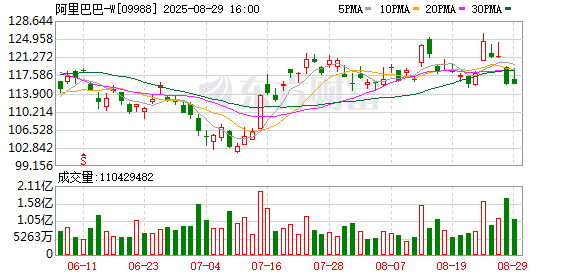
深夜狂飙近13%!阿里半年净赚423亿元,吴泳铭:创业心态再出发
Sou Hu Cai Jing· 2025-08-30 01:28
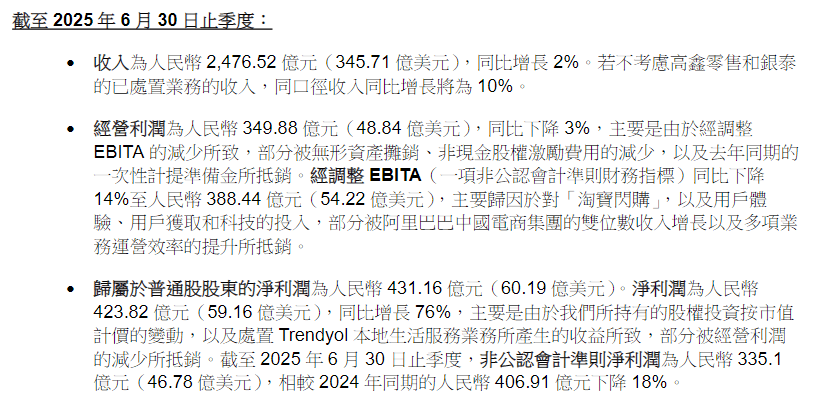
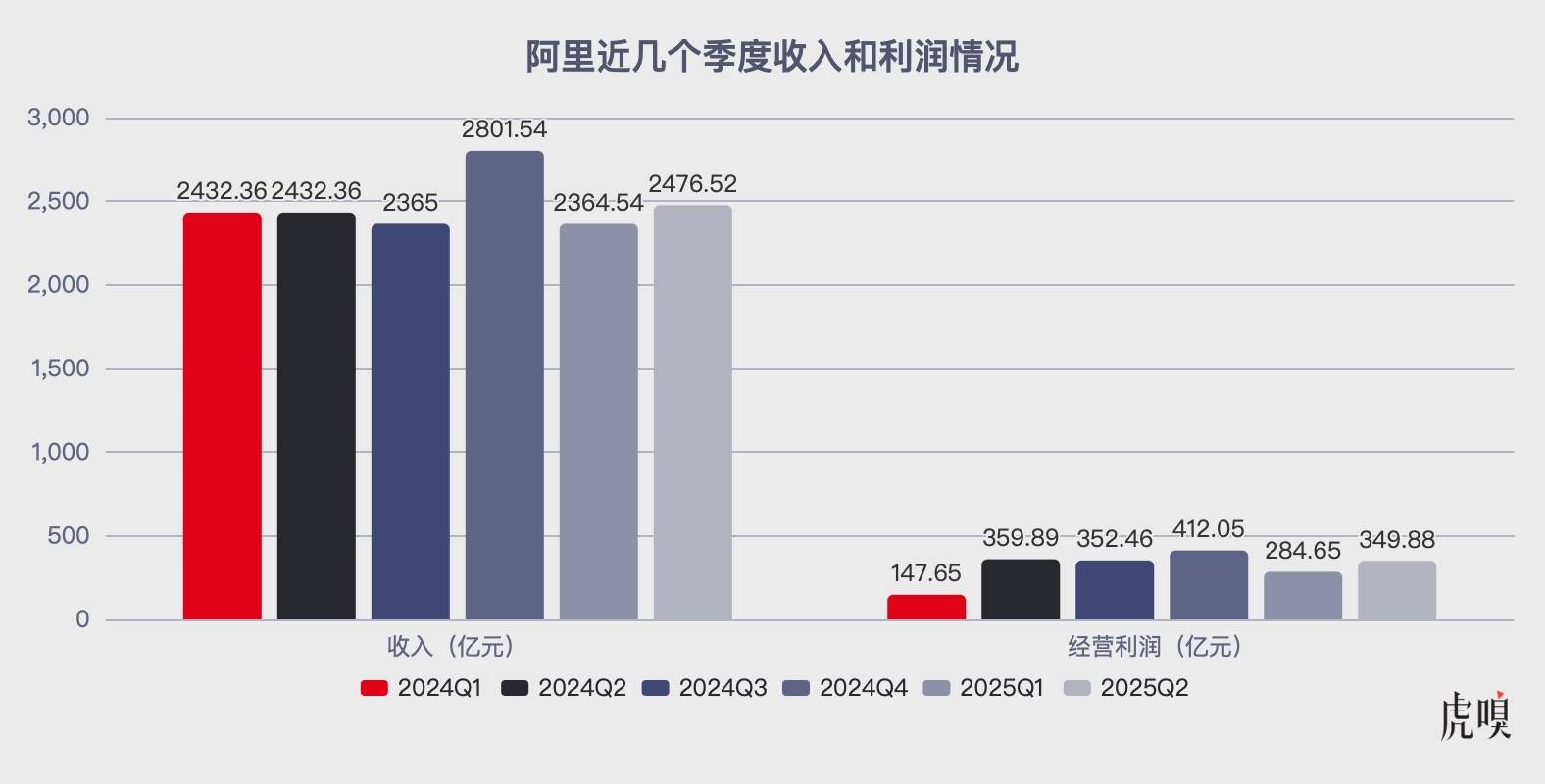
Core Insights - Alibaba's stock rose by 12.90% following the release of its Q1 FY2026 financial results, which showed a revenue of RMB 247.65 billion, a year-on-year increase of 2% [1] - Excluding disposed businesses, the revenue growth on a comparable basis was 10%, with a net profit of RMB 42.38 billion, reflecting a 76% year-on-year increase [1] Financial Performance - The Alibaba China e-commerce group's revenue reached RMB 140.07 billion, a 10% year-on-year increase, driven by the integration of Taotian Group, Ele.me, and Fliggy [3] - The "instant retail" business generated RMB 14.78 billion, up 12% from RMB 13.20 billion in the same quarter of the previous year [3][4] - Membership integration efforts led to a significant increase in 88VIP membership numbers, surpassing 53 million, with customer management revenue growing by 10% [4] Strategic Developments - Alibaba International Digital Commerce Group reported a 19% year-on-year revenue increase, nearing breakeven, with improvements in various business segments including Hema, Amap, and Alibaba Health [5] - The CEO emphasized two historical strategic opportunities: a technology platform centered on AI and cloud, and a consumer platform integrating shopping and lifestyle services [5][7] - Alibaba plans to adopt an entrepreneurial mindset over the next three years, focusing on driving strong business growth and enhancing competitive advantages [7] Market Position - Alibaba's management highlighted its leading position in the home delivery market, with a peak of 120 million daily orders for Taobao Flash Purchase since July [7] - The company aims to increase the proportion of high-value orders in the next phase of Taobao Flash Purchase, viewing it as a positive economic contributor to the overall platform [7]


阿里美团京东财报齐了,外卖大战谁胜一筹?Q3最惨烈
Sou Hu Cai Jing· 2025-08-30 01:28
Core Insights - The article discusses the financial performance of Alibaba, Meituan, and JD.com, focusing on their competition in the food delivery sector and the impact of their investments on profitability and market share [1][2]. Alibaba - Alibaba's revenue for the quarter ending June 30, 2025, was RMB 247.65 billion (approximately USD 34.57 billion), representing a 2% year-on-year increase [4][5]. - The adjusted EBITDA decreased by 11% to RMB 45.74 billion (USD 6.38 billion), primarily due to investments in "Taobao Flash Sale" and user acquisition [4][5][6]. - Net profit fell to RMB 33.51 billion, a decline of 18% year-on-year, while adjusted EBITA dropped 14% to RMB 38.84 billion (USD 5.42 billion) [5][6]. - The "Taobao Flash Sale" service launched in April 2025 contributed to a 12% increase in instant retail revenue, reaching RMB 14.78 billion (USD 2.06 billion) [8][10]. - Sales and marketing expenses surged by RMB 204 billion, accounting for 21.5% of revenue, up from 13.4% in the previous year [9][13]. - Free cash flow decreased significantly, resulting in a net outflow of RMB 188.15 billion (USD 26.26 billion) [13][14]. Meituan - Meituan reported a revenue of RMB 91.84 billion for the second quarter, an 11.7% year-on-year increase, but experienced a dramatic decline in operating profit and net profit [16][18]. - The core local commerce segment generated RMB 65.35 billion, a 7.7% increase, but operating profit dropped 75.6% to RMB 3.72 billion [17][18]. - Sales and marketing expenses rose by 51.8% to RMB 225 billion, driven by increased competition in the food delivery market [19][21]. - Meituan's app reached over 500 million monthly active users, with peak daily orders for instant retail hitting 1.5 billion [20][21]. - Cash and cash equivalents totaled RMB 1,711 billion, sufficient to cover approximately 7.6 quarters of marketing expenses [22]. JD.com - JD.com achieved a revenue of RMB 356.7 billion, a 22.4% year-on-year increase, but net profit fell by 49% due to rising costs in the food delivery sector [23][24]. - New business revenue surged by 198.8% to RMB 138.52 billion, but incurred significant losses of RMB 147.77 billion due to high operating costs [23][24]. - Marketing expenses increased by 127.6% to RMB 270 billion, primarily for promoting new business initiatives [24][25]. - JD.com reported a peak daily order volume of 25 million for its food delivery service, expanding its market presence [26][27]. - The company held cash and cash equivalents totaling RMB 2,234 billion, enough to sustain operations for approximately 8 quarters at current marketing spending levels [27][28]. Competitive Analysis - In terms of net profit decline, Alibaba experienced the least drop, while Meituan faced the most significant decline [29][30]. - Meituan's delivery revenue exceeded that of its competitors, indicating a strong market position despite financial challenges [30]. - The article suggests that Alibaba is aggressively investing in its instant retail strategy, while Meituan is focusing on defensive measures and exploring new revenue streams [31][32][33]. - JD.com is positioned to leverage its unique business model and high-value product offerings to differentiate itself in the competitive landscape [35][36].


服贸会13场主题论坛汇聚全球智慧
Bei Jing Ri Bao Ke Hu Duan· 2025-08-30 01:07
Group 1 - The 2025 Service Trade Fair will feature 13 high-level thematic forums aimed at fostering global cooperation and building an open world economy [1][2] - Key reports such as the "China Service Trade Development Report 2024" and "Digital Trade Development and Cooperation Report 2025" will be released by authoritative institutions, providing insights from a Chinese perspective [1][2] - The thematic forums will showcase the integration of digital technology with the real economy, highlighting projects in satellite communication and AI, as well as discussions on e-commerce trends [2][3] Group 2 - The fair will emphasize the benefits of service trade for people's lives, with discussions on health coverage, digital consumption, and youth employment [3] - International participation is at an all-time high, with officials and industry leaders from multiple countries discussing practical cooperation in areas such as healthcare innovation and digital projects [2][3] - The thematic forums will reflect China's commitment to inclusive and cooperative development, showcasing the resilience and potential of the service trade sector [3]
怒涨13%!王者归来!创23年3月以来最佳单日表现!阿里巴巴Q2电话会全文:AI芯片B计划曝光!替代英伟达?
美股IPO· 2025-08-30 00:25
Core Viewpoint - Alibaba's stock rose by 13%, marking its best single-day performance since March 2023, while the Chinese concept index increased by 6% in August, continuing a four-month upward trend [1] Group 1: Business Performance - In Q2, Alibaba reported a Non-GAAP net profit decline of 18% year-on-year, but core businesses showed resilience, with cloud revenue growing by 26% and the newly launched Taobao Flash Sale driving user growth [3][4] - The Taobao Flash Sale, launched just four months ago, has surpassed 300 million monthly active users, a 200% increase since April, and daily average orders reached 120 million in July [4][5] - The company plans to integrate over one million offline brand stores into the Taobao Flash Sale, potentially generating an additional RMB 1 trillion in sales over the next three years [5] Group 2: Investment and Future Strategy - Alibaba has invested over RMB 100 billion in AI infrastructure and product development over the past four quarters, with plans to continue investing RMB 380 billion in AI capital expenditures over the next three years [5][13] - The company is preparing backup plans for global AI chip supply and policy changes by diversifying its supply chain through partnerships [5][13] - Alibaba aims to create a comprehensive consumption platform to meet the needs of one billion consumers, targeting a potential market size of RMB 30 trillion [14][21] Group 3: Cloud Business and AI Integration - The cloud business revenue grew by 26%, driven by increased demand for AI-related products, which now contribute over 20% of external commercial revenue [9][10] - AI-related revenue has maintained triple-digit growth for eight consecutive quarters, indicating strong market demand [9][10] - Alibaba's cloud infrastructure is positioned as a key player in the AI era, with ongoing investments to enhance its capabilities and market share [30][32] Group 4: E-commerce and User Engagement - The integration of Taobao and Tmall, along with the expansion of instant retail, has significantly boosted user engagement, with Taobao's monthly active users increasing by 25% [12][14] - The company has launched a new loyalty program that connects various platforms, enhancing user experience across its ecosystem [19] - The e-commerce segment achieved a revenue of RMB 1,401 billion, a 10% year-on-year increase, driven by improved customer management and promotional strategies [17][18]

阿里的蜜糖,美团的砒霜
Hu Xiu· 2025-08-29 23:00
Core Viewpoint - The ongoing food delivery battle is seen as a significant opportunity for Alibaba while posing a crisis for Meituan, as the competition has shifted from surface-level metrics to deeper factors such as resource scale, internal collaboration, and strategic determination [1] Financial Performance - Alibaba reported a revenue increase of 2% year-on-year to 247.65 billion yuan, with adjusted EBITA down 14% to 38.84 billion yuan [1] - Free cash flow shifted from a net inflow of 17.37 billion yuan last year to a net outflow of 18.81 billion yuan this quarter, attributed to increased cloud infrastructure spending and investments in Taobao Flash Sale [5] - Meituan's revenue was 91.8 billion yuan, up 11.7% year-on-year, but adjusted EBITA fell 81.5% to 2.8 billion yuan, with cash reserves at 171.1 billion yuan [6] - JD.com reported revenue of 356.7 billion yuan, a 22.4% increase, with adjusted EBITA down 77.8% to 3 billion yuan and cash reserves of 223.4 billion yuan [7] Market Share Dynamics - Meituan's market share in the food delivery and instant retail sectors has been challenged, with Taobao Flash Sale and JD.com capturing over 40% of daily order volume [7] - The shift in market share occurred primarily between July and August, indicating that Alibaba's impact on the market will be more evident in future financial reports [8] Strategic Insights - Alibaba's investment in food delivery and instant retail is viewed as a reallocation of marketing resources to enhance internal ecosystem engagement, potentially leading to higher consumer frequency and new user acquisition [9] - The financial report indicated a 25% year-on-year increase in monthly active users on Taobao, driven by Taobao Flash Sale [11] - Alibaba's sales and marketing expenses rose to 53.1 billion yuan, a 62.8% increase year-on-year, suggesting significant investment in food delivery initiatives [14] Dual Strategy in AI and Cloud - Alibaba is simultaneously investing in AI and cloud services, with cloud revenue reaching 33.39 billion yuan, a 26% increase, and AI-related products maintaining triple-digit growth for eight consecutive quarters [22] - The company plans to continue its investment strategy of 380 billion yuan over three years in AI, indicating a commitment to maintaining competitiveness in both food delivery and technology sectors [25] Internal Dynamics and Morale - The internal morale at Alibaba has reportedly improved following the surpassing of Meituan in daily order volume, marking a significant psychological victory for the team [28]
美股三大股指收盘普跌
Xin Lang Cai Jing· 2025-08-29 22:20
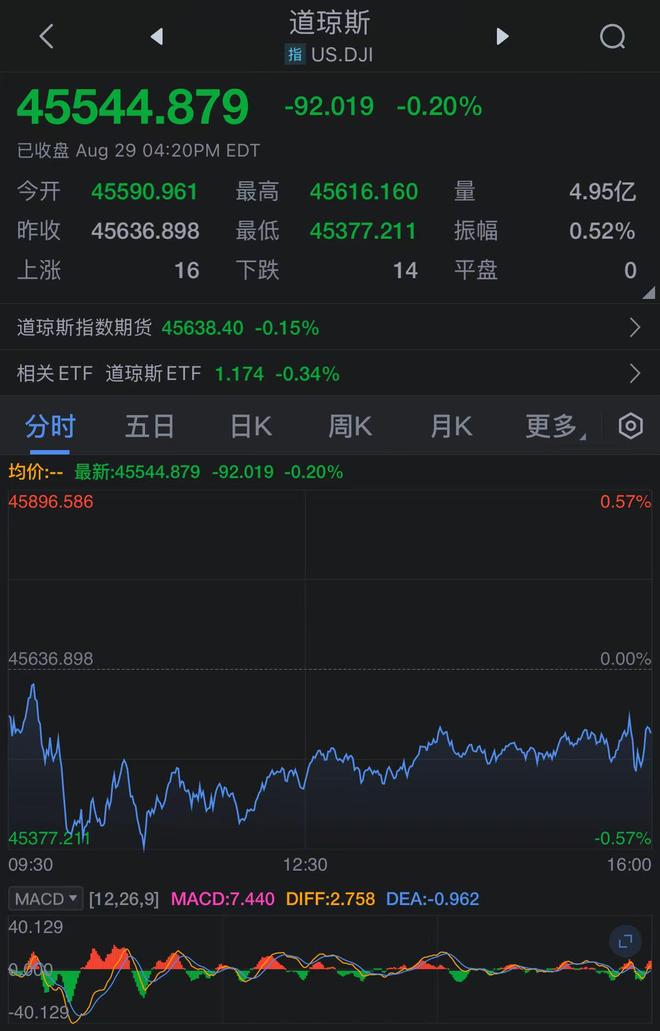
周五美股三大股指收盘普跌。道指跌0.20%,纳指跌1.15%,标普500指数跌0.64%。英伟达跌超3%,苹 果微跌,亚马逊跌超1%。 道琼斯 4 ▲ 指 US.DJI 45544.879 -92.019 -0.20% 已收盘 Aug 29 04:20PM EDT 量 今开 45590.961 最高 4.95亿 45616.160 昨收 最低 振幅 0.52% 45636.898 45377.211 上涨 下跌 16 14 平滑 0 道琼斯指数期货 45638.40 -0.15% 相关 ETF 道琼斯 ETF 1.174 -0.34% 分时 五日 日K 周K 月K 曲多 均价 :-- 最新:45544.879 -92.019 -0.20% 45896.586 0.57% 45636.898 0.00% -0.57% 45377 09:30 12:30 16:00 MACD ▼ [12,26,9] MACD:7,440 DIFF:2.758 DEA:-0.962 40.129 Q -40.12 来源:滚动播报 ...
阿里巴巴“AI+云”及消费两大战略成效显著
Zheng Quan Ri Bao· 2025-08-29 16:07
Core Insights - Alibaba Group reported a 10% year-on-year revenue growth and a 76% increase in net profit for the first fiscal quarter of 2026, exceeding market expectations [2] - The company's strong performance is attributed to its strategic investments in "AI + Cloud" and consumer sectors, which have yielded significant results [2][3] - Alibaba's CEO highlighted the integration of consumer platforms leading to record monthly active users and daily order volumes, alongside accelerated revenue growth in its cloud business driven by AI demand [2][3] Financial Performance - The overall revenue for Alibaba increased by 10% year-on-year, while net profit surged by 76% [2] - Capital expenditures (Capex) for "AI + Cloud" reached 38.6 billion yuan, marking a 220% increase year-on-year [3] - Alibaba Cloud's revenue grew by 26% year-on-year, achieving its highest growth rate in three years, with AI-related product revenue experiencing triple-digit growth for eight consecutive quarters [3] Strategic Initiatives - Alibaba has committed to investing 380 billion yuan over three years to build cloud and AI hardware infrastructure, with an additional 50 billion yuan allocated for consumer sector investments [2] - The company has developed a comprehensive technology stack for AI, supporting various industries and driving long-term growth [2] - Recent strategic integrations among its subsidiaries, including Taobao, Ele.me, and Fliggy, have resulted in record highs for monthly active consumers and daily order volumes [4] Market Position and Future Outlook - Experts suggest that Alibaba's rapid growth in AI-related revenue reflects its leading position in technology commercialization, with potential for improved gross margins in its cloud business [4][5] - The company is focused on enhancing its AI model innovations and has launched several new AI applications across its platforms, improving consumer experience and operational efficiency for merchants [4] - Alibaba aims to leverage its strong position in China's e-commerce market to capitalize on the integration of near-field consumption and e-commerce, positioning itself for long-term growth [5]