智能手机

Search documents
雷军,这次不对劲
盐财经· 2025-10-15 09:52
Core Viewpoint - The recent traffic accident involving a Xiaomi SU7 Ultra has raised significant concerns regarding the safety and quality of Xiaomi's automotive products, particularly in relation to the vehicle's door locking mechanism and fire safety features [9][10][12]. Summary by Sections Incident Overview - The accident occurred on the night of October 13, where the vehicle collided with another car and subsequently caught fire, leading to the driver's death [5][7]. - The driver was found to be under the influence of alcohol, which contributed to the accident [7]. Public Reaction and Brand Impact - Following the incident, Xiaomi's stock price dropped nearly 7%, indicating a loss of consumer trust in the brand [11]. - There has been a surge in public scrutiny regarding Xiaomi's automotive technology and safety measures, particularly concerning the vehicle's ability to allow escape in emergencies [12][10]. Safety Concerns - Questions have arisen about why the vehicle's aluminum alloy doors could not be opened after the collision, highlighting potential design flaws in emergency escape mechanisms [13][14]. - Experts emphasize the need for manufacturers to consider extreme scenarios in vehicle design, ensuring that safety features function effectively during accidents [14][19]. Design Critique - The design of the SU7's hidden door handles has been criticized for potentially complicating emergency exits, especially in the event of a power failure [19][20]. - Recent discussions in the automotive industry suggest a shift away from hidden door handle designs due to safety concerns, indicating a broader consensus on the need for more reliable emergency access features [19]. Brand Reputation and Marketing Strategy - Xiaomi's marketing strategies, once celebrated, are now facing backlash as consumers express dissatisfaction with perceived misleading advertising practices [24][27]. - The brand's image is deteriorating, with a notable decline in the popularity of its founder, Lei Jun, on social media, reflecting a growing discontent among consumers [24][30]. Future Implications - The incidents have raised alarms about the potential for a deeper trust crisis for Xiaomi as it expands into the automotive sector, which could have long-term repercussions for the brand's reputation and consumer loyalty [28][30].



iPhone 17立功!苹果(AAPL.US)Q3在华出货量逆势增长0.6%
智通财经网· 2025-10-15 09:07
Core Insights - Despite weak demand in the Chinese smartphone market, Apple's shipments in Q3 increased by 0.6% year-on-year, reaching 10.8 million units, securing a 15.8% market share, ranking second in shipments [1][1][1] Market Performance - The total smartphone shipments in China decreased by 0.6% year-on-year to 68.4 million units in Q3, with a more significant decline of 4% in Q2 [1][1] - Among the top three smartphone brands in China, Apple was the only brand to achieve shipment growth in Q3, while Huawei's shipments slightly declined by 1% to 10.4 million units, ranking third, and Vivo's shipments fell by 7.8% to 11.8 million units, ranking first [1][1][1] Analyst Commentary - IDC's senior smartphone analyst, Will Wong, noted that the success of the cost-effective iPhone 17 attracted budget-conscious consumers, contributing to Apple's slight growth and improved ranking compared to the previous quarter [1][1][1] Future Outlook - IDC anticipates a recovery in the Chinese smartphone market in early Q4, driven by the launch of several flagship models [1][1]

库克来华为iPhone 17造势,探访莉莉丝还逛了北京公园
Di Yi Cai Jing· 2025-10-15 08:48
Core Insights - Apple's iPhone shipments in China increased by 0.6% year-on-year in Q3, reaching 10.8 million units, securing the second position in the market despite overall demand decline [1][3] - Apple's Greater China revenue for Q3 was $15.369 billion, reflecting a 4% year-on-year growth, highlighting the region's significance for Apple's income [3] Group 1: Market Performance - Apple's market share in China for Q3 stood at 15.8%, indicating a slight growth in a challenging market environment [1] - The introduction of the iPhone 17, which is perceived as a high-cost performance model, has attracted cost-conscious consumers, contributing to the increase in shipments [3] Group 2: Strategic Initiatives - CEO Tim Cook's visit to China included meetings with developers and discussions on enhancing cooperation, emphasizing Apple's commitment to increasing investments in the region [3] - The launch of eSIM services by China's three major telecom operators is seen as a crucial factor for the iPhone 17 Air's market entry, marking a significant shift in Apple's product design by eliminating the physical SIM card slot [4] Group 3: Competitive Landscape - Analysts suggest that if Apple's eSIM-only strategy succeeds in China, it could lead to a broader adoption of eSIM technology across the Android ecosystem by 2026 [4] - The shift to eSIM is expected to simplify device design and improve water resistance, showcasing Apple's innovation in response to market trends [4]

苹果带火eSIM,iPhone17 Air中国预售在即,安卓阵营2026年或全面跟进
Feng Huang Wang· 2025-10-15 08:04
Core Insights - The launch of the iPhone 17 Air in China marks a significant shift towards eSIM technology, as it eliminates the physical SIM card slot, which is seen as a key factor for its market entry [1][3][5] Group 1: eSIM Technology Adoption - The transition to eSIM is expected to move from niche applications to mainstream mobile devices, driven by Apple's decision to remove the SIM card slot [1][3] - eSIM technology has been primarily used in wearables and tablets, but the iPhone 17 Air's launch signifies its entry into the high-end smartphone market in China [3][8] - The Chinese telecom operators have begun commercializing eSIM services, with significant user interest already noted [5][6] Group 2: Technical and Design Changes - The iPhone 17 Air features a thickness of only 5.6mm, achieved by optimizing the internal design and removing the SIM tray, allowing for a larger battery and improved antenna layout [2][3] - Analysts suggest that the removal of the SIM card slot enhances the device's waterproofing and overall structural integrity [2][3] - The shift to eSIM requires a reconfiguration of the supply chain, impacting various components and necessitating new testing processes [4][8] Group 3: Market Implications - The move to eSIM is expected to influence Android manufacturers to accelerate their adaptation of similar technologies, with predictions of increased eSIM penetration in the Android market by 2026 [8][9] - The competitive landscape among telecom operators is shifting from pricing to activation efficiency and system stability, as they prepare for the influx of eSIM users [7][8] - The iPhone 17 Air serves as a benchmark for other manufacturers, prompting them to reassess their designs and supply chain collaborations [8][9]
手机品牌冲高端的难题,还得看联发科和vivo的答案
Tai Mei Ti A P P· 2025-10-15 06:40
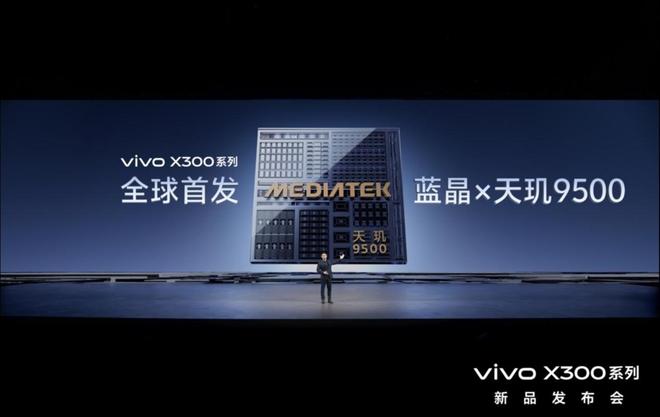
Core Insights - The smartphone market is shifting towards high-end products, with brands like vivo aiming to establish themselves in this segment while maintaining profitability [1][4][19] - The collaboration between MediaTek and vivo has led to significant advancements in high-end smartphone technology, exemplified by the launch of the vivo X300 series [3][11][18] Group 1: Market Trends - The overall smartphone market growth is projected to be around 2%, while the high-end market is expected to grow by 8% year-on-year in the first half of 2025, reaching record levels [4][19] - The competition in the high-end smartphone market has evolved into a "full-competence" phase, where brands must excel in multiple areas such as performance, imaging, and AI [4][10] Group 2: Product Development - The vivo X300 series showcases a collaboration between MediaTek's Dimensity 9500 chip and vivo's self-developed imaging technology, resulting in enhanced performance and user experience [6][18] - The Dimensity 9500 chip utilizes a third-generation 3nm process, significantly improving AI capabilities, imaging, and gaming experiences [4][8] Group 3: Strategic Collaboration - MediaTek and vivo's partnership has transitioned from simple collaboration to a deeper integration, with both companies investing over 1,000 engineers in the development of the X300 series [18][21] - The partnership is characterized by a shared vision of prioritizing user needs and a commitment to co-developing technology that enhances the overall smartphone experience [14][16] Group 4: Competitive Positioning - vivo has established itself as a leader in the high-end smartphone market, particularly in the 4,000-6,000 yuan price range, with the X300 series expected to drive further growth [11][19] - MediaTek's Dimensity brand has gained significant market share, with approximately 40% of smartphones globally utilizing its chips, indicating strong demand for its technology [16][21]
雷军喊冤:小米全网被黑,但真正问题是太会包装的营销
Sou Hu Cai Jing· 2025-10-15 06:37
Core Viewpoint - Lei Jun, the founder of Xiaomi, is facing significant criticism and a decline in his fan base, with approximately 300,000 fans lost in the past month, leading him to claim that Xiaomi is one of the most heavily criticized brands online [1] Group 1: Marketing and Public Perception - Various controversies surrounding Xiaomi products have emerged, including issues related to the SU7 vehicle fire incident and the perceived lack of transparency in marketing claims [3] - Users have criticized Xiaomi's marketing strategies, noting exaggerated claims such as "2200 MPa Xiaomi super steel" and "200 km instant stop," which are seen as misleading [5] - The marketing approach has led to a perception that Xiaomi's products do not meet the high expectations set by their promotional materials, resulting in a backlash from consumers [8][12] Group 2: Industry Context and Consumer Behavior - The competitive landscape in China necessitates aggressive marketing strategies for survival and growth, which Xiaomi has adopted [7] - The rapid iteration of products in the domestic market often leads to a focus on speed over quality, resulting in products that may not meet consumer expectations [13] - The importance of sincerity in marketing and product development is emphasized, suggesting that genuine communication is more valuable than exaggerated claims [15]

IDC:三季度中国智能手机出货量约6840万台,同比下降0.6%
Bei Jing Shang Bao· 2025-10-15 01:32
北京商报讯(记者 陶凤 王天逸)10月15日,IDC发布中国季度手机市场跟踪报告显示,2025年第三季 度中国智能手机出货量约6840万台,同比下降0.6%,延续下降趋势。 从厂商表现来看,前五大智能手机厂商中,vivo以11.8百万台的出货量、17.3%的市场份额位居第一, 但出货量同比下降7.8%;苹果出货量10.8百万台,市场份额15.8%,出货量同比增长0.6%;华为出货量 10.4百万台,市场份额15.2%,出货量同比下降1.0%;小米出货量10.0百万台,市场份额14.7%,出货量 同比下降1.7%;OPPO和荣耀并列第五,OPPO出货量9.9百万台,市场份额14.5%,出货量同比增长 0.4%;荣耀出货量9.8百万台,市场份额14.4%,出货量同比下降2.1%。此外,其他品牌出货量5.6百万 台,市场份额8.2%,出货量同比增长21.5%。 IDC表示,该季度属于传统手机销售淡季,新品发布数量较少,且"国补"政策收紧,消费者消费更趋理 性。随着9月中下旬各品牌大量年度旗舰新品提前集中上市,市场表现或于下季度初期有所改善,但即 便后续有"双十一"大促,也难以大幅激发消费需求。未来厂商竞争将更激烈, ...
浪人早报 | 苹果官网确认iPhoneAir非合约机、京东回应造车传闻、多方回应菜鸟驿站取件未出库罚款…
Xin Lang Ke Ji· 2025-10-15 00:49
Group 1 - Apple confirms that the iPhone Air is an unlocked device, allowing users to avoid long-term contracts with specific carriers [2] - Apple states that all iPhone models support international roaming in over 200 countries and regions through GSM networks [2] - JD.com announces a collaboration with CATL and GAC Group to launch a new car on November 9, clarifying that JD.com will not be involved in manufacturing [2] Group 2 - A notice from a delivery service center regarding fines for unclaimed packages sparked widespread attention, leading to investigations and eventual retraction of the fines [2] - Ele.me is piloting a new service point system to replace the penalty for late deliveries, aiming to enhance earnings for delivery riders [5] Group 3 - Microsoft officially ends support for Windows 10 as of October 14, 2023, despite it holding a significant global market share of 45.65% as of September 2025 [6] - Omdia reports that Apple's iPhone achieved its highest-ever market share in Q3 2025, with a 4% year-on-year increase in shipments [7] - Xiaomi leads the global market in wearable wristband devices, with a shipment volume of 50.2 million units in Q2 2025, reflecting a 13% year-on-year growth [8] Group 4 - The iPhone Air is the first Apple phone in the domestic market to support eSIM technology, with other Chinese manufacturers planning to release eSIM-enabled devices by the end of the year [11]

国行 iPhone Air 本周五预售,国内正式开启「无卡时代」
3 6 Ke· 2025-10-15 00:21
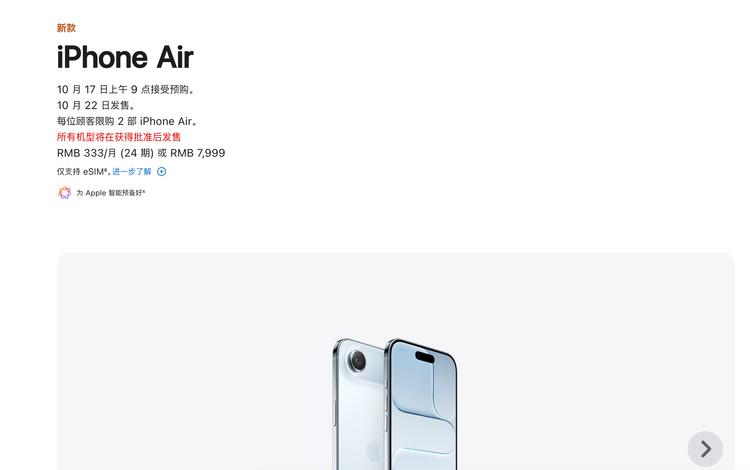
Core Viewpoint - The iPhone Air will be available for pre-order in China starting October 17, with official sales commencing on October 22, marking a significant entry into the Chinese market for this eSIM-only device [1][2]. Group 1: Product Launch and Features - The iPhone Air is designed to be Apple's thinnest iPhone to date, measuring only 5.6 mm thick, and it completely removes the physical SIM card slot in favor of eSIM technology [6]. - The device will be available in three storage configurations: 256GB priced at 7999 yuan, 512GB at 9999 yuan, and 1TB at 11999 yuan [4]. - It features the new A19 Pro chip, which offers peak graphics performance up to three times that of the previous A18 Pro [8]. - The iPhone Air includes a 6.5-inch 120Hz ProMotion display with a peak brightness of 3000 nits and a camera system with a 48MP main camera and a 18MP front camera [9][11]. Group 2: eSIM Technology and Market Impact - The launch of the iPhone Air coincides with the Chinese telecom industry's significant shift towards eSIM technology, as the three major operators have begun commercial trials for eSIM services [14]. - eSIM technology allows devices to connect to mobile networks without a physical SIM card, enhancing user flexibility and reducing reliance on specific network providers [14]. - The three major operators in China have different requirements for eSIM activation, with China Unicom offering online appointment options, while China Mobile and China Telecom require in-person visits [15][17]. Group 3: Future Outlook - The widespread adoption of eSIM technology is expected to reshape the telecommunications landscape, with projections indicating that by 2027, the number of connections could increase by 300 to 500 million due to the "one person, multiple devices" trend [19]. - The industry anticipates that by 2026, eSIM will become a standard feature for new mobile devices, potentially phasing out physical SIM cards entirely by 2030 [19][20].
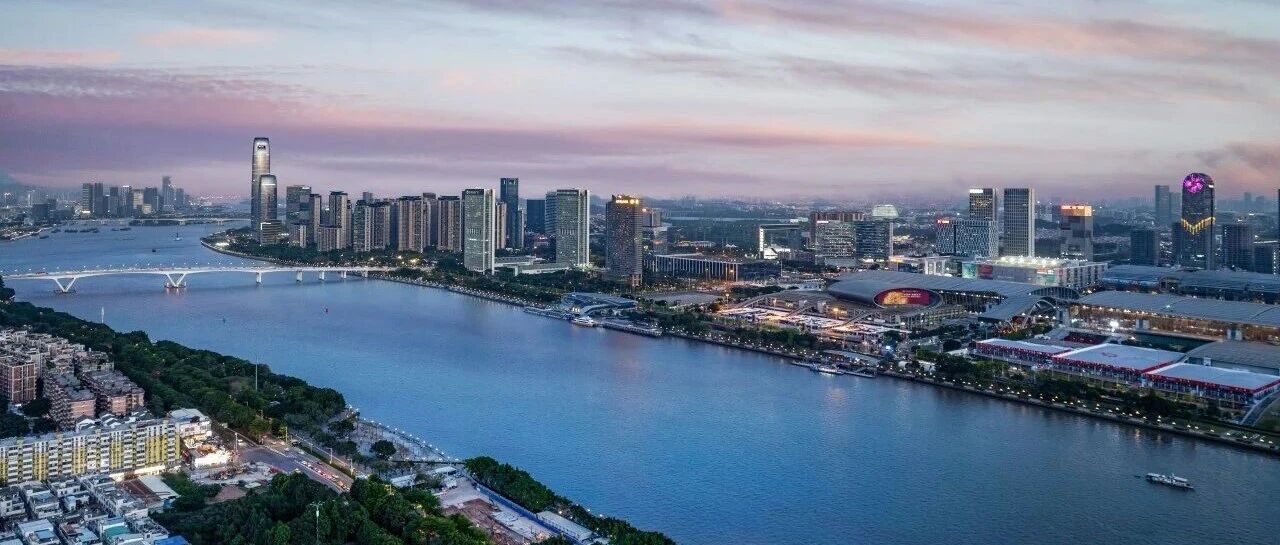
世界湾区的中国答案:从阅尽四海到心归此湾
21世纪经济报道· 2025-10-15 00:14
Core Viewpoint - The article emphasizes the significant rise of the Guangdong-Hong Kong-Macao Greater Bay Area (GBA) as a global economic powerhouse, driven by technological innovation and financial support, positioning it alongside major global bay areas like New York and San Francisco [1][7]. Economic Scale and Growth - In 2024, the GBA is projected to achieve an economic total of 14.79 trillion yuan, surpassing both New York and San Francisco, and ranking alongside Tokyo as part of the world's top economic tier [1]. - The GBA's economic model is characterized by a highly open economic structure, extensive transportation infrastructure, and a favorable business environment, distinguishing it from other regional economic forms [4][5]. Technological and Financial Integration - The GBA has established a high-level cycle of "technology-industry-finance," which drives industrial upgrades through technological innovation and reinforces financial support for sustainable growth [8][10]. - The region is home to numerous global tech giants and unicorns, with the number of unicorn companies expected to double from 34 in 2020 to 72 by 2025 [7][8]. Infrastructure and Investment - The GBA's infrastructure integration, free flow of factors, and collaborative industrial division are essential for its success, with a focus on creating a favorable business environment [5][10]. - Significant investments are being made in financial hubs like Guangzhou International Financial City and the Guangdong Financial High-tech Zone, enhancing the region's financial ecosystem [10][15]. Future Prospects - Scholars predict that the GBA will become the world's largest economic and innovation center within the next decade, supported by its robust research institutions, capable enterprises, and strong financial services [11]. - The strategic location of the "Golden Triangle" formed by Zhujiang New Town, Pazhou, and the International Financial City is highlighted as a key area for future investment and development [12][18].