创新药

Search documents
联邦制药涨超6%,II期临床研究达预期目标!港股通创新药ETF(159570)再度飘红!创新药BD热度高企,哪些趋势最受追捧?机构盘点!
Xin Lang Cai Jing· 2026-02-25 06:09
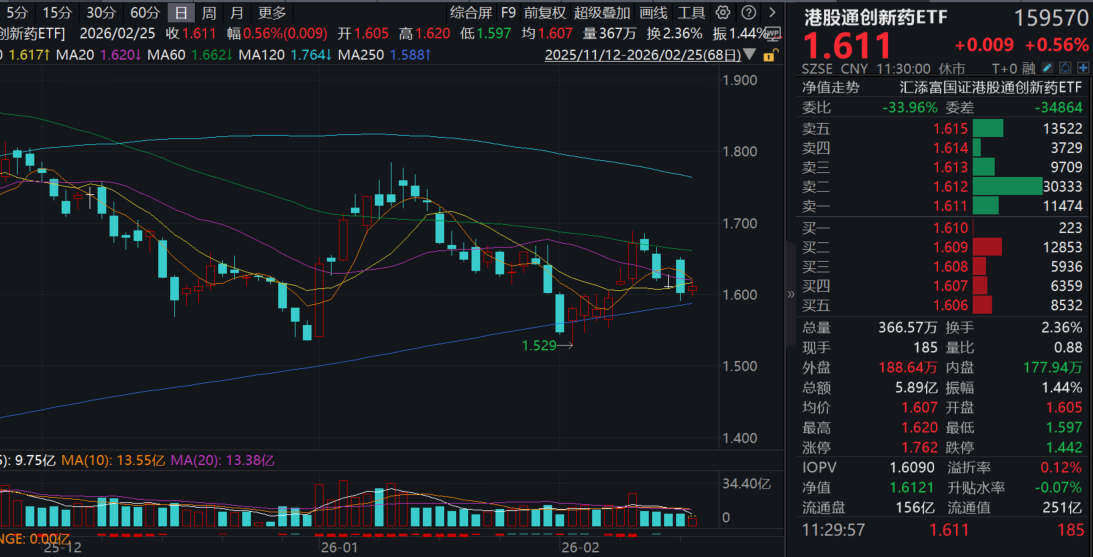
Group 1 - The Hong Kong stock market's innovative drug sector is performing well, with the Hong Kong Stock Connect Innovative Drug ETF (159570) rising by 0.56% and achieving a trading volume exceeding 700 million CNY [1] - Over the past 10 days, the ETF has attracted over 360 million CNY in capital, with its latest scale surpassing 25 billion CNY, leading its peers significantly [1] - Key stocks within the ETF, such as Federated Pharmaceutical and Rongchang Biopharmaceutical, have shown notable gains, with Federated Pharmaceutical increasing by over 6% [1][2] Group 2 - The innovative drug business development (BD) is focused on unmet clinical needs, technological differentiation, and global value, with significant transactions in oncology and metabolic disease sectors [3][4] - In oncology, notable advancements include Rongchang Biopharmaceutical's PD-1/VEGF dual antibody RC148, which received a substantial upfront payment of 650 million USD from a partnership with Aibowei [3] - The metabolic disease sector is highlighted by Shiyao Group's GLP-1 receptor agonist SYH2082, which secured a 1.2 billion USD upfront payment from AstraZeneca [3] Group 3 - The mRNA vaccine sector is experiencing rapid approvals, with several domestic products receiving IND approvals, indicating a swift advancement in local innovation [5] - The FDA has relaxed its drug review policies, allowing for a single key clinical trial to suffice for new drug approvals, which is expected to significantly reduce development timelines and costs [6] - New drug approvals include Hansoh Pharmaceutical's lung cancer drug "Amatinib," which has been granted marketing authorization in the EU for specific NSCLC patient populations [6]

港股科技配置价值凸显,港股科技ETF(513020)近10日净流入超2亿元
Mei Ri Jing Ji Xin Wen· 2026-02-25 02:43
Group 1 - The core viewpoint is that the technology style is expected to make a comeback, particularly after the Spring Festival, with a high probability of a switch from value to growth styles [1] - Historically, the market tends to favor value and large-cap stocks before the Spring Festival, while growth and small-cap stocks gain traction afterward [1] - The stabilization of overseas markets and the resurgence of robots and large models during the Spring Festival are seen as catalysts for the technology growth style [1] Group 2 - The Hong Kong Stock Connect Technology ETF (513020) tracks the Hong Kong Stock Connect Technology Index (931573), which includes core assets in sectors like Internet, innovative pharmaceuticals, and new energy vehicles [1] - The Hong Kong Stock Connect Technology Index has outperformed the Hang Seng Technology Index, with a cumulative return of 224.25% from the end of 2014 to the end of 2025, exceeding the Hang Seng Technology Index's return of 83.87% by over 140% [1] - The index reflects a diversified technology industry characteristic and the overall performance of core technology companies in the Hong Kong market [1]
ETF市场“冷热不均”港股主题ETF受青睐
Zheng Quan Ri Bao· 2026-02-25 02:43
Group 1 - The ETF market has shown a "mixed" trend this year, with broad-based ETFs experiencing net outflows while Hong Kong-themed ETFs have gained traction, indicating a structural allocation logic in the current market [1] - Specific data shows that as of February 24, the Hang Seng Tech ETF saw a net inflow of 29.6 billion, the Hong Kong Stock Connect Internet ETF had a net inflow of 11.3 billion, the Hong Kong Stock Connect Innovative Medicine ETF recorded a net inflow of 3.015 billion, and the Hong Kong Stock Connect Tech ETF had a net inflow of 2.625 billion [1] Group 2 - Investors are increasingly focused on the investment opportunities in the Hong Kong market, with a notable interest in low valuations, sector focus, and liquidity-driven strategies [2] - The outlook for the Hong Kong market remains positive, with expectations of marginal improvements in corporate earnings and liquidity factors, which could provide a buffer against external volatility [2] - The ongoing AI technology wave is expected to continue driving growth, with a focus on technology and innovative sectors, while the supply-demand balance in the metals sector is also highlighted as a potential area of interest [2]
长沙纵深推进全球研发中心城市建设
Chang Sha Wan Bao· 2026-02-25 02:09
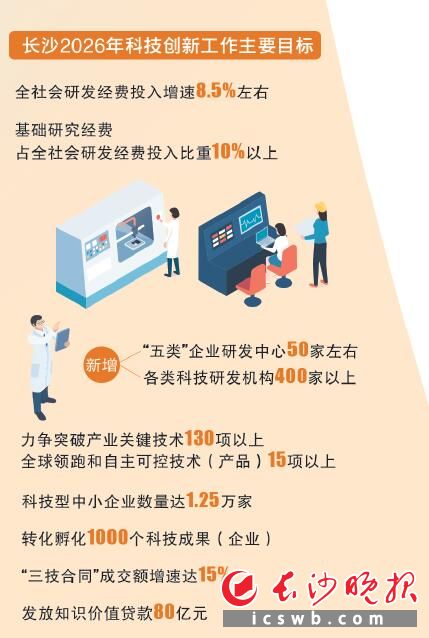
Core Viewpoint - Changsha is committed to building a competitive technology innovation hub and advancing the construction of a global R&D center city, as outlined in the 2026 Action Plan, which sets ambitious targets for technological innovation and integration with industry [2][3]. Group 1: Key Targets and Goals - The overall R&D expenditure growth is targeted at approximately 8.5%, with basic research funding accounting for over 10% of total R&D expenditure [2]. - The plan aims to establish around 50 new R&D centers for five categories of enterprises and over 400 various R&D institutions [2]. - The goal is to achieve breakthroughs in over 130 key industrial technologies and to develop more than 15 globally leading and independently controllable technologies/products [2]. - The number of technology-based SMEs is expected to reach 12,500, with the aim of incubating 1,000 technology achievements (enterprises) [2]. - The "Three Technology Contracts" transaction volume is projected to grow by 15%, and knowledge value loans of 8 billion yuan will be issued [2]. Group 2: Focus Areas of the Action Plan - The Action Plan systematically deploys 18 key tasks across seven major areas, emphasizing the importance of high-quality innovation platforms and high-energy innovation platforms [3][4]. - Six of the 18 tasks focus on the construction of high-quality innovation carriers and platforms, highlighting their significance in the overall strategy [4]. Group 3: Integration of Technology and Industry - The plan emphasizes the deep integration of technological innovation and industrial innovation, aiming to enhance the supply of high-quality technology [6]. - It includes the release of ten major technology tackling projects and the expansion of significant scientific and technological special projects to empower the construction of a new type of industrialization demonstration zone [6]. Group 4: Development of High-Level R&D Platforms - The plan includes the construction of high-level municipal technology innovation platforms in key areas such as advanced computing, aerospace, and innovative pharmaceuticals [5]. - It aims to increase the proportion of technology innovation platforms that meet the "four global" characteristics to 15% [5]. Group 5: Technology Transfer and Financial Support - The Action Plan focuses on building an efficient technology transfer system, with initiatives to enhance the maturity of technology achievements and establish verification centers and pilot platforms [8]. - Financial support systems for technology are to be improved, including increasing the limits and extending the terms of knowledge value loans for technology-based enterprises [8]. Group 6: Ecosystem and International Cooperation - The plan aims to create a high-level open innovation collaborative system and a vibrant technology innovation ecosystem [9][10]. - It includes initiatives for international cooperation, such as attracting international technology organizations and supporting high-quality international talent projects [11].
创新药向上还是向下:BD 交易爆发、大摩持续唱多,板块仍处调整期
Mei Ri Jing Ji Xin Wen· 2026-02-24 14:23
Core Insights - China's innovative drug sector continues to thrive, with significant business development (BD) transactions occurring in early 2026, indicating strong global recognition of Chinese innovation [1][2] - Morgan Stanley's report highlights the long-term potential of China's pharmaceutical industry, emphasizing the importance of globalization and industry differentiation [1][2] Group 1: Business Development Transactions - As of February 15, 2026, there have been 39 license-out transactions in China's innovative drug sector, with upfront payments totaling approximately $2.953 billion and total transaction values exceeding $49 billion [1] - In 2025, the total BD transaction amount for Chinese innovative drugs reached $135.7 billion, surpassing that of the United States for the first time [2] - The first 49 days of 2026 have already seen transaction volumes exceed any single quarter in 2025, reflecting a robust growth trend [2] Group 2: Key Companies and Developments - Morgan Stanley identifies Heng Rui Medicine as a top pick, expecting accelerated sales growth and positive momentum in new cooperative transactions for 2026 [2] - The approval of the innovative drug, phosphor-lucotidine cream, by Kangzhe Pharmaceutical marks a significant milestone, being the first targeted drug for vitiligo in China [2] - Kangzhe Pharmaceutical's planned spin-off of its subsidiary, Demai Pharmaceutical, for a Hong Kong listing is seen as a strategic move to focus on core therapeutic areas while potentially enhancing short-term profitability [3] Group 3: Market Trends and Future Outlook - The innovative drug sector is experiencing a clear division, with companies reliant on generic drugs facing performance pressures, while those with sustainable innovation capabilities are positioned for high-quality growth [3][4] - The current BD trend is shifting towards early-stage research projects, with over 50% of recent transactions involving preclinical projects [5] - Companies like Kangfang Biotech are committed to expanding their global footprint and enhancing the international visibility of Chinese innovations in drug development [5]

医药深度复盘-最新观点-春节期间-医药重要事件梳理
2026-02-24 14:16
Summary of Key Points from the Conference Call Industry Overview - The conference call primarily discusses the **pharmaceutical industry** in China, focusing on **business development (BD)** activities and **medical reform policies** [1][3][7]. Core Insights and Arguments - **BD Transactions**: As of February 15, 2026, the total upfront payment for BD transactions reached **$3 billion**, with an overall volume of **$49 billion**, significantly surpassing levels from 2025, indicating a substantial increase in BD activities for 2026 [1][4]. - **Notable Collaborations**: - **Shijiazhuang Pharmaceutical Group** partnered with **AstraZeneca** for a deal worth **$18.5 billion**, marking a recent high in China's innovation drug licensing [1][4]. - **Qin Hao Pharmaceutical** licensed its targeted small molecule drug **JX31** to **Gilead**, confirming the CRO industry's positive outlook [3]. - **Regen Bio** and **Metagene** entered a deal for six small nucleic acid drugs, with a total upfront payment of **$60 million** and potential milestone payments of **$4.4 billion** [4]. - **Clinical Trials**: Chinese companies are advancing in overseas R&D, with **Shijiazhuang Pharmaceutical** initiating Phase III trials for its **SYH2053** drug targeting high cholesterol and high triglycerides [5][6]. Medical Reform Policies - The revision of the **Basic Directory Management Measures** emphasizes alignment with procurement and medical insurance policies, with adjustments occurring approximately every three years, potentially accelerating the inclusion of procurement in the basic directory [7]. - The **collective procurement** process has shown a **93% selection rate**, indicating a more moderate policy direction focusing on quality rather than aggressive competition [7][8]. Key Trends in Drug Procurement - The recent drug procurement renewals have a **98% coverage rate**, with a focus on matching clinical needs and supplier quality, indicating a rational approach to procurement [8]. Company-Specific Developments - **Hansen Pharmaceutical** received EU approval for **Amivantamab**, targeting advanced non-small cell lung cancer [9]. - **Frontier Bio**'s collaboration with **GSK** for small nucleic acids is significant, with an upfront payment of **$40 million** and milestone payments of **$963 million**, highlighting the value of early research capabilities [10]. Impact of Tariffs and Regulations - The recent ruling against Trump's tariffs may benefit companies previously affected by fentanyl tariffs, such as **Jin You Co.** [11]. - The CRO industry is expected to see a turning point in 2026, with positive indicators from major conferences and performance forecasts [12]. Noteworthy Companies in Robotics and Medical Devices - Companies like **MicroPort Robotics**, **Jingfeng Medical**, and **Tianzhihang** are leading in the surgical robotics sector, with **MicroPort** achieving over **200 orders** across **50 countries** [13]. - The **medical device sector** is also seeing growth in areas like brain-computer interfaces and AI medical applications, with companies like **Borycon** and **Zhiruan Medical** gaining attention [14][18]. Performance Expectations - **Lepu Medical** and **Yingke Medical** are expected to see around **50% growth** in their respective sectors, driven by increased demand and market recovery [15][16]. - **Bai Ao Sai Tu** is projected to achieve over **$400 million** in profits from its CRO and model animal business, with a total valuation of approximately **$20 billion** [20]. Recommendations for Investment - The report suggests focusing on companies with strong beta attributes and clear growth logic, such as **Bai Ao Sai Tu** and **Sen Song** [22]. - **Aopu Mai** is also highlighted for its potential growth, with a projected market value of around **$8 billion** [21]. This summary encapsulates the key points discussed in the conference call, providing insights into the pharmaceutical industry's current landscape and future opportunities.
AH股价格“倒挂”增至8只,多为行业龙头
2 1 Shi Ji Jing Ji Bao Dao· 2026-02-24 13:17
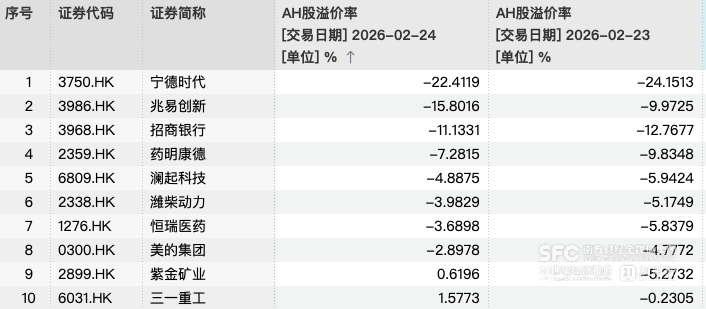
Group 1 - The A-share market experienced a positive start to the Year of the Horse, with the Shanghai Composite Index rising by 0.87% and the Shenzhen Component Index increasing by 1.36% on February 24 [2] - The Hang Seng Index fell by 1.82%, and the Hang Seng Tech Index decreased by 2.13% on the same day [2] - As of February 24, there were 8 A+H listed companies experiencing an AH price inversion, where H-share prices exceeded A-share prices, representing approximately 4.6% of the total 174 A+H listed companies [3] Group 2 - The companies with AH price inversion include leading firms across various sectors such as new energy, banking, innovative pharmaceuticals, semiconductors, home appliances, mining, and machinery [4] - The phenomenon of AH price inversion is relatively rare, with no companies experiencing it a year ago on February 24, 2025 [2][4] - The average AH premium rate is typically around 125%, considering the 20% dividend tax on H-shares and the tax exemption for A-shares held for over a year [5] Group 3 - On February 24, the trading volume of A-shares for China Merchants Bank was 75.47 million shares, which is 7.7 times that of its H-shares at 9.8 million shares [5] - The market capitalization of China Merchants Bank is approximately 1.005 trillion yuan, with an AH premium rate of 0.89, indicating an 11% discount of A-shares relative to H-shares [5] - CATL, another leading company, saw its A-shares decline by 0.93% while H-shares fell by 3.13%, with A-share trading volume being 12.5 times that of H-shares [6] Group 4 - The AH premium index closed at 116.99 on February 24, indicating that A-shares are trading at a premium to H-shares, and this index has been on a downward trend since April 9, 2025 [11] - The index has dropped from a high of 144.85 to a low of 113.56, marking an eight-year low [11] - Analysts suggest that the recent trend of foreign capital favoring Hong Kong stocks may be influenced by the appreciation of the yuan, which could lead to a convergence of AH premiums [13] Group 5 - Morgan Stanley highlighted investment opportunities in sectors such as technology and cyclical recovery, particularly in leading companies within these fields [13] - Tianfeng Securities expressed a cautiously optimistic outlook for the Hong Kong market, suggesting a focus on value-oriented investments while maintaining growth as a secondary consideration [13]
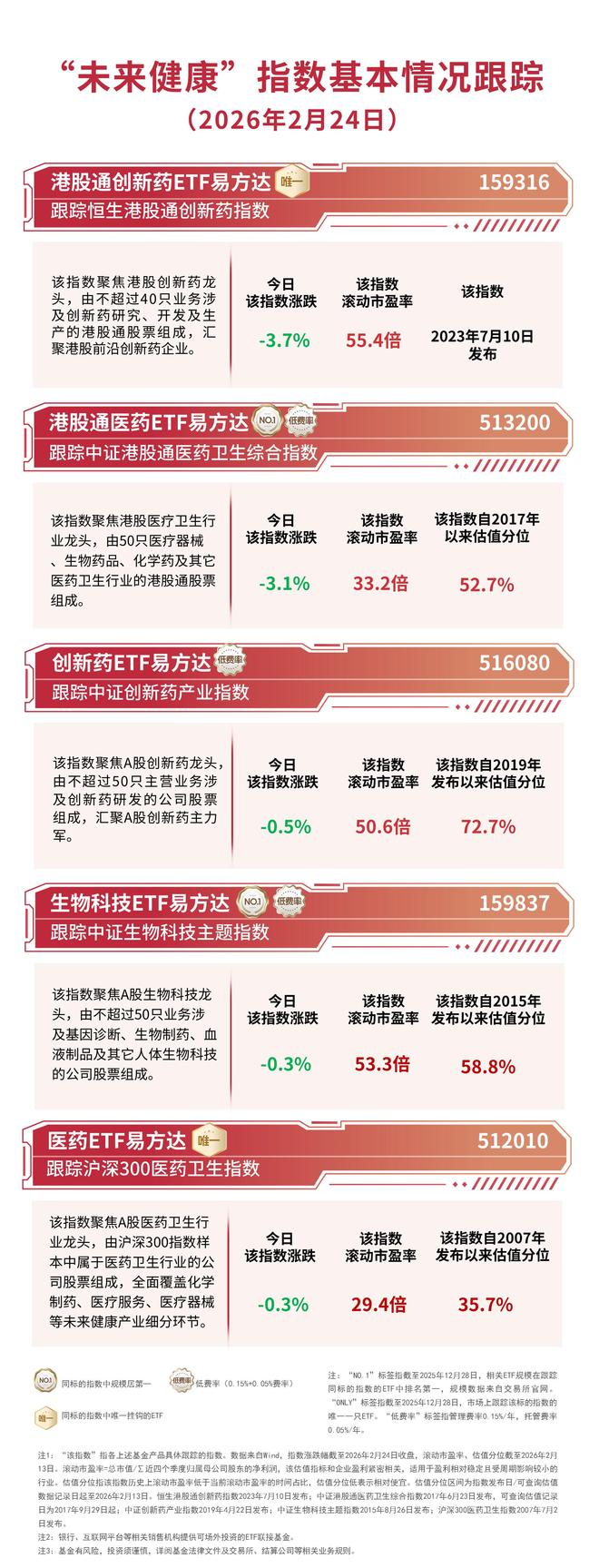
医药板块震荡调整,港股通创新药ETF易方达(159316)逆势获3000万份净申购
Mei Ri Jing Ji Xin Wen· 2026-02-24 11:44
Group 1 - The Hang Seng Hong Kong Stock Connect Innovative Drug Index fell by 3.7%, while the CSI Hong Kong Stock Connect Pharmaceutical and Health Comprehensive Index decreased by 3.1% [1] - The total value of China’s innovative drug License-out transactions grew from $2.562 billion in 2017 to $140.274 billion by 2025, indicating enhanced international competitiveness [1] - Over 70% of innovative drug companies are expected to achieve positive revenue growth by 2025, marking a transition into a commercialization phase for the industry [1] Group 2 - The current valuation of the pharmaceutical sector is considered attractive, with a recommendation to focus on companies with clear overseas expansion opportunities and those with clinical data advantages in specific segments [1] - The ETF tracking the CSI Biotechnology Theme Index, managed by E Fund, has seen a decline of 0.3% [4] - The ETF tracking the CSI Pharmaceutical and Health Index, also managed by E Fund, has similarly decreased by 0.3% [4]
南向资金尾盘半小时净流入31亿,恒生科技指数ETF、恒生互联网ETF出现大买单
Mei Ri Jing Ji Xin Wen· 2026-02-24 11:44
Group 1 - The Hong Kong stock market experienced a decline in major tech stocks, with Tencent Holdings and Meituan dropping over 3%, while Alibaba, Baidu Group, and Xiaomi Group fell by 2% [1] - Southbound capital saw a reversal from net outflow to net inflow, with a rapid net inflow of HKD 3.1 billion in the last half hour before the market closed [1] - Significant buying activity was observed in the Hang Seng Technology Index ETF (513180.SH) and the Hang Seng Internet ETF (513330.SH), with over HKD 1 billion in large orders during a sharp intraday drop, indicating potential bullish sentiment towards Hong Kong tech assets [1] Group 2 - Investment opportunities are identified in Hong Kong tech-related ETFs, including the Hang Seng Technology Index ETF (513180.SH), Hang Seng Internet ETF (513330.SH), and the Hong Kong Stock Connect Technology ETF (159101.SZ) [2] - The Hang Seng Internet ETF (513330.SH) focuses on major Hong Kong internet giants such as Alibaba, Baidu Group, Tencent Holdings, and NetEase, while the Hong Kong Stock Connect Technology ETF (159101.SZ) also includes leading innovative pharmaceutical companies [2] - These ETFs are listed on the Shanghai and Shenzhen stock exchanges, allowing A-share investors to trade flexibly with low entry barriers and without the need for cross-border accounts or currency exchange [2]
医药BD交易持续火热,还有哪些潜在标的值得关注?
Xin Lang Cai Jing· 2026-02-24 11:06
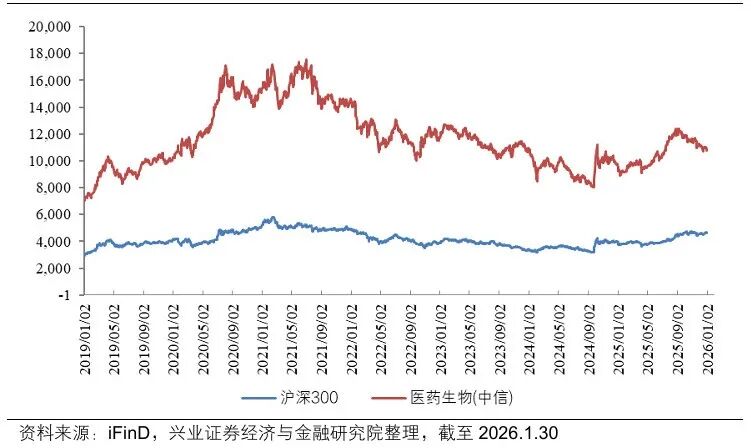
Core Insights - The Chinese innovative pharmaceutical industry is transitioning from "catching up" to "keeping pace" and even "leading" on a global scale, with a significant increase in business development (BD) transactions indicating enhanced international competitiveness [2][11][12] - The trend of BD transactions is accelerating, with record-breaking transaction sizes and optimized structures, marking a shift from single product licensing to platform-based and systematic collaborations [2][11] - The demand for Chinese innovative assets from global pharmaceutical companies is increasing due to challenges such as patent cliffs and declining R&D returns, creating a supportive environment for the high activity in the BD market [12] Recent Market Performance and BD Transaction Analysis - In January 2026, the pharmaceutical and biotechnology sector outperformed the CSI 300 index, rising by 2.97% compared to the index's 1.65% increase, reflecting a revaluation of the innovative drug industry [14] - A notable BD transaction occurred on January 30, 2026, when CSPC Pharmaceutical Group signed a collaboration and licensing agreement with AstraZeneca, involving a $1.2 billion upfront payment and potential milestone payments totaling up to $35 billion for development and $138 billion for sales [15][16] - This transaction exemplifies a platform-based approach, including not only the clinical-stage product SYH2082 but also three preclinical products and four new collaboration projects leveraging CSPC's proprietary technologies [15][16] Potential BD Target Value Identification and Screening Logic - Identifying potential BD targets should focus on differentiated technological barriers, such as the proprietary ADC technology of Kelun-Biotech, which has shown promising clinical data for international licensing [19] - The quality of proof of concept (POC) data is crucial, as seen with Innovent Biologics' IBI363, which has demonstrated efficacy in challenging tumor types, indicating significant commercial potential [19][20] - Global clinical demand and competitive landscape for indications are important, with companies like 3SBio and Diligent Pharma showing strong potential in weight management and oncology, respectively, enhancing their market entry opportunities [20] Conclusion - The Chinese innovative pharmaceutical industry is entering an "Innovation 3.0 era," characterized by a shift from single product licensing to systematic technology platform outputs and deep strategic alliances [21] - The current high activity in BD transactions reflects the industry's strengthening capabilities and serves as a catalyst for value reassessment, positioning companies with technological advantages and high-quality clinical data for significant roles in the global pharmaceutical landscape [21]