
AI

Search documents
金鹰基金杨晓斌:市场上下空间或有限 个股机会凸显行情或将持续
Xin Lang Ji Jin· 2025-06-16 06:03
Market Overview - The overall trend of AH stocks in the past six months can be summarized as "gathering market sentiment amid divergence, with gradual valuation recovery amid fluctuations" [1] - Since the pandemic, the stock market has been in a long-term adjustment due to risk control and the downturn in the real estate cycle [1] - After September 24, there has been a noticeable change in market style, with effective policies boosting confidence and altering the characteristics of a shrinking market [1] Investment Opportunities - The Chinese stock market has a high allocation value globally, with the Shanghai-Shenzhen 300 dividend yield remaining above 1.5%, indicating strong appeal for large incremental funds like insurance [1][2] - The continuous decline in bank deposit interest rates is expected to drive savings into the stock market as fixed deposits mature [1] - The return of overseas funds to the Chinese market is evident, with Hong Kong stocks showing significant recovery since the beginning of the year [2] Economic Context - The controllable economic downturn risk suggests that the current dividend yield is unlikely to experience a significant decline [2] - The major reasons for the significant pullback in A-shares since 2021 include economic downturn and deflation expectations, which are less pronounced compared to developed markets [2] - The stabilization of economic expectations is seen as a major positive factor for the stock market [4] Sector Analysis - Assets with strong earnings certainty and high dividend nature are expected to yield absolute returns, attracting low-risk preference funds [3] - Industries that are likely to see opportunities before the economic bottom is confirmed include innovative pharmaceuticals, new consumption, AI-related sectors, non-bank financials, and more [3] - Many downstream industries are gradually emerging from profit troughs due to price adjustments and technological breakthroughs, despite the year-on-year PPI hitting a new low [3] Conclusion - The risk-reward ratio in the stock market has become particularly evident after years of macro risks, with the current bottom position of the market not requiring a significant economic rebound for valuation recovery [4] - Patience and bottom-up research are essential for achieving favorable results in the current market environment [4]
科技行业人才格局,正在发生怎样的巨变?
Hu Xiu· 2025-06-16 05:53
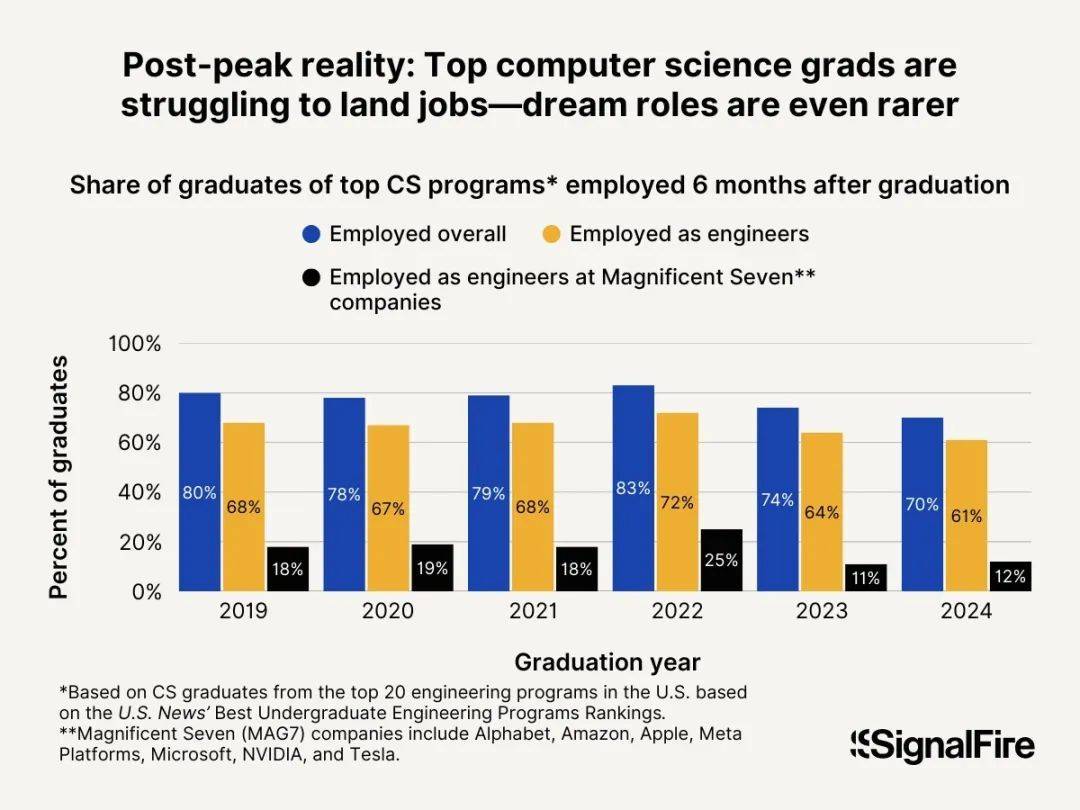
Core Insights - The technology industry is experiencing a significant shift, with a 50% decrease in hiring for new graduates compared to pre-pandemic levels, indicating a fundamental transformation rather than a temporary adjustment [1][11][14] - The "experience paradox" is emerging, where employers prioritize proven experience over potential, making it difficult for new graduates to secure jobs [8][11][39] - The geographical landscape of tech talent is changing, with traditional hubs like Texas declining while cities like Miami and San Diego are rising due to lifestyle and cost advantages [26][27][28] Group 1: Hiring Trends - Large tech companies now only hire 7% of new graduates, a 25% decrease from 2023 and over 50% from 2019 [8][11] - Startups are also seeing a decline, with new graduates making up only 6% of their hiring, down over 30% from pre-pandemic levels [8] - The shift in hiring practices reflects a broader reset in recruitment philosophy, with companies focusing on high-leverage technical roles [14][39] Group 2: Talent Retention - Anthropic stands out with an 80% employee retention rate, significantly higher than competitors like OpenAI and DeepMind [15][18] - The company attracts talent through a unique culture that emphasizes autonomy and intellectual discussion, contrasting with the bureaucratic environments of larger firms [18][22] - The trend shows that top AI talent is gravitating towards companies that offer better work environments and clearer career paths [22][44] Group 3: Geographical Shifts - Texas is losing its tech center status, with Austin and Houston seeing declines in startup employment by 6% and 10.9% respectively [26][27] - In contrast, Miami and San Diego are experiencing growth in tech jobs, with Miami seeing a 12% increase in AI positions [27][28] - Despite these changes, San Francisco and New York remain dominant, with over 65% of AI engineers still located in these cities [28][31] Group 4: Future Predictions - SignalFire predicts the rise of generalist engineers as AI tools lower the barriers to entry for building applications [32][38] - The emergence of new roles such as AI governance leads and AI ethics experts is expected, indicating a shift in job creation rather than mere job loss due to automation [37][38] - The industry is likely to see a continued emphasis on flexible work arrangements and a reevaluation of talent development strategies [39][40]

摩根士丹利:DeepSeek R2:AI推理新一代重量级模型?
摩根· 2025-06-16 03:16
Investment Rating - The report provides a cautious outlook on the technology sector in Asia Pacific, particularly focusing on the developments surrounding DeepSeek's R2 model [7]. Core Insights - DeepSeek's R2 model is anticipated to redefine AI development, pricing, and reliance on domestic AI chip supply chains in China, serving as a potential catalyst for accelerating AI application deployment [1][2]. - The R2 model is expected to achieve significant advancements in multilingual reasoning and code generation, offering a hybrid model with lower power consumption and smaller parameter scale, while being cost-effective compared to its predecessor R1 [2][9]. - The model's efficiency is projected to lower computational requirements, facilitating AI commercialization and expanding total demand, potentially disrupting the AI market [2][10]. Summary by Sections R2 Model Overview - R2 represents the second major iteration of DeepSeek's reasoning model, promising improvements in multilingual reasoning and code generation, with a focus on efficiency and cost reduction [2][9]. - The model is designed to be multimodal, featuring enhanced visual capabilities and a significant reduction in operational costs compared to R1 [2][13]. Supply Chain Developments - The R2 model is supported by a robust ecosystem of Chinese companies, leveraging Huawei's Ascend 910B chip cluster for training, which signifies a shift towards a localized supply chain [3][17]. - DeepSeek aims to reduce dependency on external chip manufacturers, contrasting with the previous reliance on NVIDIA GPUs for training the R1 model [17][20]. Market Impact - The report suggests that DeepSeek's advancements will benefit local GPU, GDDR, and China's HBM sectors, indicating a positive outlook for these industries amidst a broader AI market recovery [20][22]. - The performance of DeepSeek's models, particularly in the context of increasing computational demands during inference, is expected to drive further innovation and resource allocation within the AI ecosystem [20][23]. Competitive Landscape - DeepSeek's approach emphasizes software-driven resource optimization rather than hardware dependency, which could lead to significant cost reductions and efficient training of large models [23][24]. - The report highlights the competitive pressure on NVIDIA from Huawei's Ascend chips, which are designed to match NVIDIA's performance while being domestically produced [17][20].

估值72亿美元,红杉加持的这家AI搜索创企什么来头?
Zheng Quan Shi Bao Wang· 2025-06-14 11:08
Core Insights - Glean, an AI startup, has raised $150 million in funding, achieving a valuation of $7.2 billion, significantly up from $4.6 billion in September 2022 [2][3] - The funding round was led by Wellington Management, with participation from existing investors like Sequoia Capital, indicating strong confidence in Glean's growth trajectory [3] - Glean aims to use the new funds to accelerate product development, expand its partner ecosystem, and pursue international growth [3] Company Overview - Founded in 2019, Glean started with enterprise search and has since developed products like Glean Assistant and Glean Agents, leveraging RAG technology for AI-driven enterprise search [4][6] - Glean Search allows employees to find data across internal documents and the web, while Glean Assistant automates daily tasks and provides data analysis through natural language queries [6] - Glean Agents enables the creation of AI agents for tasks like debugging software code, supporting over 100 million agents annually [6] Market Position and Growth - Glean's business model reflects a broader shift in the enterprise AI sector, moving from pilot projects to widespread deployment of autonomous agents [7] - The company has seen rapid revenue growth, with annual recurring revenue (ARR) increasing from $55 million to $100 million [7] - Glean's client base includes Fortune 500 companies like Dell, showcasing its strong market presence [7] AI Implementation in Enterprises - Arvind Jain, Glean's CEO, emphasizes the importance of a robust data infrastructure for effective AI applications, including deep integration with enterprise systems and a solid security framework [8][9] - The challenges of enterprise AI deployment stem from the private and context-dependent nature of enterprise data, requiring an understanding of organizational structure and user roles [9] - Jain suggests that AI entrepreneurs should focus on solving specific business problems rather than starting with AI technology itself, building trust with enterprises through clear value propositions [10]
Bill Guerley谈美国一级市场问题:僵尸独角兽、估值失真、IPO困境、公司不想上市
IPO早知道· 2025-06-14 02:13
Core Insights - The current venture capital landscape is experiencing structural changes and challenges, particularly due to the rise of MegaFunds, which have significantly increased capital availability and blurred the lines between early and late-stage investments [2][8] - There is a proliferation of "zombie unicorns," companies that have raised substantial funds but show little growth and whose true value is questionable, leading to a disconnect between book value and actual value [2][10] - The zero interest rate environment has prolonged the survival of companies that should have been eliminated by the market, complicating the competitive landscape [2][13] - The arrival of AI has disrupted the expected market corrections, creating a new wave of investment enthusiasm and valuation bubbles, while emphasizing the importance of fundamentals and unit economics [3][21] - Liquidity issues are becoming increasingly prominent for Limited Partners (LPs), with many resorting to debt issuance or selling private equity assets to manage financial pressures [2][19] Group 1: Market Realities - The rise of Mega VC Funds has transformed the investment landscape, with notable funds increasing their commitments from $500 million to $5 billion or more, actively participating in late-stage investments [8][9] - There are approximately 1,000 private companies that have raised over $1 billion, collectively valued at around $300 billion, raising concerns about their actual worth and growth potential [10][11] - The misalignment of incentives within the investment ecosystem leads to a lack of motivation for accurate asset marking, resulting in inflated valuations [12][11] Group 2: Exit Challenges - The IPO and M&A markets have stagnated, with a notable disconnect between market performance and exit opportunities, leading to a backlog of capital trapped in the private market [16][17] - High valuations from previous funding rounds complicate acquisition opportunities, as potential buyers are deterred by inflated price expectations [17][18] Group 3: Liquidity and Structural Changes - LPs are facing liquidity challenges, with significant bond issuances indicating a need to meet capital commitments due to insufficient liquidity [19][20] - The trend of private companies remaining private longer is gaining traction, as firms find it more advantageous to delay IPOs in favor of private funding opportunities [24][25] Group 4: AI and Investment Dynamics - The AI wave is seen as a historic platform transformation, driving new investment trends and valuation expectations, with some companies achieving revenue multiples significantly higher than traditional firms [21][22] - The competitive landscape is shifting, with companies encouraged to remain private to maximize ownership stakes and avoid the burdens of public market scrutiny [24][25]

揭秘夸克首个高考志愿大模型!蒸馏数百名人类专家经验、Agent 可完整生成志愿报告
AI科技大本营· 2025-06-12 09:06
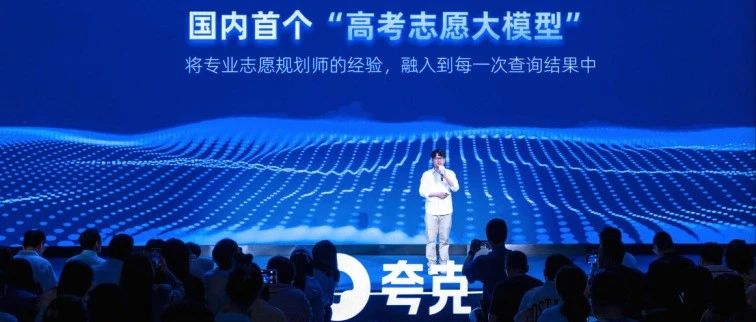
Core Viewpoint - Quark has launched the first high school entrance examination (Gaokao) volunteer filling model in China, providing personalized decision-making services for students during the college application process [1][3]. Group 1: Features of the Quark Gaokao Volunteer Model - The model operates with expert-level decision-making capabilities, offering tailored volunteer filling services based on students' scores, interests, family background, and regional preferences [3][4]. - It utilizes a task planning-execution-check-reflection reasoning process to generate comprehensive reports that include strategies for application, recommended schools, and majors [3][4]. - The "Deep Search" function allows users to input complex queries, which the model breaks down into specific needs, ensuring targeted and in-depth responses [4][11]. Group 2: Training and Data Sources - The model is built on a multi-stage, high-complexity training paradigm, integrating self-supervised semantic modeling and expert-guided strategy refinement [7][9]. - It has structured the communication and decision-making processes of experienced volunteer planners, converting thousands of real expert reasoning chains into high-quality supervised data for deep learning [9][11]. - The knowledge base of the model is the largest in China, covering over 2,900 universities and nearly 1,600 undergraduate programs, ensuring comprehensive and authoritative data for decision-making [11][10]. Group 3: Optimization and Feedback Mechanism - The model employs a closed-loop optimization mechanism that incorporates simulated application scenarios, expert feedback, and strategy scoring to continuously refine its outputs [9][11]. - It aims to provide a comprehensive reference for every student and family by leveraging its advantages in information processing and understanding user needs [11].
一年多暴涨16倍!年轻人的茅台历史新高,市值突破3600亿港元!市场溢价超7倍,一娃难求...
雪球· 2025-06-12 07:51
Market Overview - The market experienced narrow fluctuations with mixed performance among the three major indices. The Shanghai Composite Index rose by 0.01%, the Shenzhen Component Index fell by 0.11%, and the ChiNext Index increased by 0.26%. The total trading volume in the Shanghai and Shenzhen markets reached 1.27 trillion yuan, an increase of 16.3 billion yuan compared to the previous trading day [1]. New Consumption Sector - The new consumption sector saw significant gains, particularly in beauty care and IP economy, with innovative pharmaceuticals maintaining strong performance [2]. - Pop Mart's Labubu series products are in high demand, leading to supply chain challenges. Despite expanding production capacity earlier this year, demand has outstripped supply chain responsiveness [12]. Pop Mart Performance - Pop Mart's stock reached a historical high, with a market capitalization of 366.3 billion HKD, reflecting a more than 16-fold increase since the low point in February 2024. The stock initially surged nearly 5% in early trading [3][5]. - The IP economy concept stocks, including Aoya Co., Ltd., also performed well, with Aoya's stock hitting the daily limit within three minutes of opening [11]. AI Sector - The AI sector rebounded, with the computing power industry chain leading the gains. Notable stocks such as Zhongji Xuchuang surged by 7.4%, with a market capitalization of 128.8 billion yuan and trading volume exceeding 10 billion yuan [15]. - The AI applications sector showed active performance, with companies like Baixinglong and Chuanwang Media experiencing significant stock price increases [20]. New Stock Market Activity - The new stock market remains vibrant, with Haiyang Technology's stock price soaring by over 500% during its debut, closing at 55.97 yuan per share, a 386% increase from its initial offering price of 11.50 yuan [25][26]. - Haiyang Technology focuses on the research and production of nylon 6 series products, with plans to use the raised funds for expanding production capacity and improving technology [29].

国泰海通晨报-20250611
Haitong Securities· 2025-06-11 06:47
Group 1: Education Industry Insights - The high school education sector is expected to benefit from demographic and policy dividends, leading to an increase in degree supply [1][3] - There is a strong demand for high school education, with a stable population demand projected for the next 7-8 years, as the number of eligible students is expected to remain robust until around 2032-2033 [2][3] - Government policies are supporting the expansion of high school education resources, promoting the integration of vocational and general education [3][4] Group 2: Private High School Growth - The proportion of private high schools is continuously increasing, with private high schools accounting for 30% of the total number of high schools in 2023, up from 17% in 2011 [4] - In 2023, there were 15,381 high schools in China, with 4,567 being private institutions, and the number of students in private high schools reached 548,000, representing 20% of total high school enrollment [4] Group 3: Company Overview - Taili Technology - Taili Technology is a leading provider of home storage solutions, with its core product, vacuum storage bags, leading in e-commerce market share and steady revenue growth [1][6] - The company is expected to achieve revenues of 1.148 billion, 1.262 billion, and 1.369 billion yuan from 2025 to 2027, with corresponding net profits of 99 million, 103 million, and 108 million yuan, reflecting growth rates of 12.5%, 4.8%, and 4.3% respectively [6][7] - Taili Technology's products are characterized by significant competitive advantages in material research and development, with a focus on innovation and a dual-track operation model of self-owned brands and ODM/OEM [7][8] Group 4: Market Trends and Sales Channels - The global home goods market is projected to exceed 851.98 billion USD by 2025, with a high demand for storage products [6] - Taili Technology has established a diversified sales model, with online direct sales contributing 71% of revenue in 2024, and its vacuum storage bags ranking first in category sales on platforms like Tmall and JD [8] - The company has successfully implemented a data-driven operation model, enhancing customer retention rates between 18% and 23% [8]


