
消费电子

Search documents
杨元庆谈在Sphere开发布会
Xin Lang Ke Ji· 2026-01-07 18:40
责任编辑:丁文武 杨元庆谈在Sphere开发布会:这个场地当然很震撼,但如果一家公司没有实在创新,没有技术实力,就 算选择再炫酷的场地,也是没有用的。科技公司的成功靠的是内力与创新。我们之所以能邀请那么多科 技领袖来我们的活动,靠的是创新,我们是一家扎实有竞争力的科技创新企业。 专题:2026年度国际消费电子展(CES) ...
AI应用潮席卷CES 中国产业链竞技“落地赛”
Shang Hai Zheng Quan Bao· 2026-01-07 17:53
Core Insights - The CES 2026 showcases China's advancements in AI hardware and robotics, highlighting the industry's shift towards practical applications and increased collaboration opportunities [1][2] Group 1: AI Hardware and Robotics - Over 20 Chinese humanoid robot companies participated in CES 2026, demonstrating a wide range of technologies and applications, including the launch of the Genie Sim 3.0 simulation platform by AGIBOT and the introduction of the Care-bot GR-3 by Fourier [2] - The event has alleviated concerns about a bubble in the humanoid robotics sector, indicating a trend towards more practical and consumer-oriented products [2] - AI hardware is evolving towards more specialized and practical applications, with AI toys and health-monitoring devices gaining traction [2] Group 2: Strategic Collaborations - Google and Chinese AR company XREAL announced a long-term strategic partnership to promote the Android XR ecosystem for AR glasses, emphasizing the importance of collaboration in the industry [4][5] - XREAL has previously signed strategic agreements with companies like Longqi Technology and Jingsheng Mechanical and Electrical to enhance the AI/AR supply chain [5] - Hesai Technology plans to double its annual production capacity of LiDAR from 2 million units in 2025 to 4 million units in 2026 to meet the growing demand in robotics [5] Group 3: Industry Trends and Innovations - The integration of AI technology in various applications, such as smart charging and smart home solutions, is accelerating, with notable innovations like the AI charging robot showcased by Daotong Technology [3] - The display industry is also evolving, with TCL and Hisense presenting new Mini LED display technologies at the event, indicating a trend towards advanced display solutions [5]
雷军全面回应“营销大师”标签:娱乐节目中刘强东团队开个玩笑,被人放大利用,现在听到营销两个字都有点恶心
Mei Ri Jing Ji Xin Wen· 2026-01-07 16:45
1月7日晚间,小米集团创始人、董事长、CEO雷军开启直播。 谈到新一代SU7涨价,雷军表示:"新一代SU7从里到外都有大的进步,在今天整个成本大涨的情况下很难做到加量不加价,而且我们加了好几万的配置, 所以肯定做不到,也请朋友们能够谅解,当然我看到更多的评论是觉得这个预售价非常非常厚道。" 每经编辑|金冥羽 雷军再次谈及小字营销:"我被小字营销搞怕了,所以我现在要求他们力求准确。网友们觉得哪里不对就立刻投诉,督促去改。" 对于"营销大师"的标签,雷军回忆称,"营销大师"这个标签源于2013年或2014年一档娱乐节目,节目中两个团队PK,一个由他领队,另一个由刘强东领 队。对方小组商量千万别跟雷军比营销,理由是他能卖出几十万台手机,后来这一说法就被放大了。 "现在我一听到'营销'这两个字,都有点恶心。要是友商说小米营销做得好,那多半是污蔑,或者带有恶意。"雷军坦言,当初在节目里那样说只是为了制 造效果,本就是开玩笑,没想到被友商和竞争对手加以利用。 "实话实说,我觉得营销是个中性词,其实营销做得好,显然在正常的情况下是一种夸奖。但对我这样一个工程师,对小米这样一个技术公司说只靠营 销,各位你细品。" 雷军还调侃 ...



三星警告:内存成本飙升,所有电子产品面临涨价
美股IPO· 2026-01-07 16:20
全球最大存储芯片商三星电子总裁警告,半导体供应问题将影响所有人,组件成本正在上涨。尽管三星试图避免转嫁成本,但不得不考虑对全线产品重新定价。这 表明,从智能手机、笔记本电脑到联网家用电器,广泛的电子消费品或将迎来一轮涨价潮。 随着全球内存芯片供应短缺加剧,全球最大的存储芯片制造商三星电子发出警告,成本飙升可能迫使整个电子行业提高产品价格,这一趋势甚至将波及 三星自身的消费电子产品线。 1月7日,据彭博报道,三星电子总裁兼全球营销主管Wonjin Lee在接受采访时明确表示, 半导体供应问题将影响所有人,组件成本正在上涨。 报道称,尽管公司不希望将负担转嫁给消费者,但Lee坦言, 公司已不得不开始考虑重新定价其产品。这表明,从智能手机、笔记本电脑到联网家用电 器,广泛的电子消费品或将迎来一轮涨价潮。 《韩国经济日报》日前援引知情人士消息,三星电子与SK海力士计划在2026年第一季度将服务器DRAM价格较2025年第四季度大幅提升60%至70%, 并向个人电脑与智能手机客户提出了相近幅度的涨价方案。 全行业面临成本压力 来源:华尔街见闻 尽管三星作为全球最大的存储制造商,相比无法为其产品自行制造内存的竞争对手处于 ...
大摩调研:内存价格飙升,安卓和PC都遇冲击,但苹果今年不涨价
硬AI· 2026-01-07 15:35
Group 1 - The core viewpoint is that a "cost storm" driven by soaring memory prices is reshaping the hardware industry, with most OEMs expected to raise prices significantly in the first half of 2026, potentially leading to a decline in shipments of Android phones and Windows PCs throughout the year [2][6][7] - Morgan Stanley predicts that DRAM contract prices will rise by 40-70% quarter-on-quarter in Q1 2026, while NAND prices are expected to increase by 30-35%, far exceeding previous expectations [6][7] - Apple has locked in favorable memory prices and plans to maintain its product pricing, which is expected to help it gain market share for iPhones and Macs in 2026 [3][9] Group 2 - The shortage of hard disk drives (HDD) is worsening, with a projected supply gap of 200EB over the next 12 months, up from a previous estimate of 100-150EB [4][12] - Major cloud service providers are resorting to temporary measures, such as using enterprise-grade solid-state drives (eSSD), to partially meet storage demands, although eSSD is less efficient than HDD from a total cost of ownership perspective [13][14] - HDD manufacturers are reluctant to expand total production capacity but are reallocating capacity from consumer-grade applications to cloud and nearline storage to meet growing demand [16] Group 3 - OEMs like Dell and HP are expected to initiate large-scale layoffs to protect operating profit margins due to rising cost pressures, similar to the memory supercycle of 2017-2018 [19] - PC OEMs are reducing bill of materials costs by replacing 512GB storage configurations with 256GB options while maintaining entry-level pricing through cost-sharing with component suppliers [20] - The demand for AI servers is strong but profit margins remain low, with ongoing price competition among major OEMs like Dell, HPE, and Supermicro [22]


开源证券晨会纪要-20260107
KAIYUAN SECURITIES· 2026-01-07 15:19
Group 1: Automotive Industry - Nvidia launched the Alpamayo inference driving model at CES 2026, featuring a 100 billion parameter end-to-end VLA (Vision-Language-Action) model, which enhances the reasoning capabilities for novel scenarios and provides interpretability for driving decisions [5][10] - The introduction of simulation tools like AlpaSim and a 1700-hour physical AI open dataset supports autonomous driving training and testing, aiming to create a comprehensive autonomous driving solution [10][11] - The demand for autonomous driving features is increasing, becoming essential for consumers when choosing vehicles, with expectations for L2++ and L4 Robotaxi technologies to proliferate globally [12][11] Group 2: Electronics Industry - The consumer electronics and components sector showed significant performance improvement in 2025, with the PCB industry leading in growth due to rapid iterations and shipments of AI products [6][15] - Traditional categories like smartphones and PCs maintained stable growth, while AI glasses and AI servers exhibited rapid growth trends [16][19] - Investment strategies for 2026 focus on key players in the Apple, Huawei HarmonyOS, AI glasses, and OpenAI hardware sectors, indicating a new cycle of innovation in consumer electronics [17][20] Group 3: Chemical Industry - Salt Lake Co. reported an expected net profit of 82.9-88.9 billion yuan for 2025, a year-on-year increase of 77.78%-90.65%, driven by the recovery in potassium and lithium prices [22][24] - The company plans to acquire a 51% stake in Minmetals Salt Lake to expand its potassium and lithium resources, with projected net profits for 2025-2027 revised upwards [23][24] - The production of potassium chloride is expected to be approximately 4.9 million tons in 2025, while lithium carbonate production is projected at 46,500 tons, reflecting a strategic focus on resource control and high-quality development [24][22] Group 4: Investment Recommendations - The automotive sector is advised to focus on companies like Desay SV, Huayang Group, and XPeng Motors, which are expected to benefit from advancements in autonomous driving technology [13] - In the electronics sector, companies such as Industrial Fulian, Luxshare Precision, and GoerTek are highlighted as beneficiaries of the AI computing and terminal resonance [20][19] - Salt Lake Co. is recommended for investment due to its strong market position in potassium and lithium resources and the anticipated growth from the acquisition of Minmetals Salt Lake [23][22]


小米集团-W(01810.HK)1月7日回购1.49亿港元,已连续3日回购
Zheng Quan Shi Bao Wang· 2026-01-07 14:42
Group 1 - The core point of the article is that Xiaomi Group-W has been actively repurchasing its shares, with a total of 11.55 million shares bought back over three consecutive days, amounting to 448 million HKD [2] - On January 7, the company repurchased 3.90 million shares at a price range of 38.120 to 38.200 HKD, with a total repurchase amount of 14.8836 million HKD [2] - The stock price of Xiaomi Group-W closed at 38.160 HKD on the same day, reflecting a decline of 1.55%, while the total trading volume for the day was 7.325 billion HKD [2] Group 2 - Since January 5, the stock has experienced a cumulative decline of 5.26% during the repurchase period [2] - The detailed repurchase information shows that on January 6, 385,000 shares were repurchased at a maximum price of 38.900 HKD and a minimum price of 38.860 HKD, totaling 14.967 million HKD [2] - On January 5, 380,000 shares were repurchased at a maximum price of 39.320 HKD and a minimum price of 39.220 HKD, with a total repurchase amount of 14.92913 million HKD [2]

雷军回应“一个杯子开15次会”:并不是专门为杯子开会
Sou Hu Cai Jing· 2026-01-07 14:41
Group 1 - The founder, chairman, and CEO of Xiaomi, Lei Jun, responded to the controversy regarding the "15 meetings for a cup" by stating that there were at least 16 meetings where the product was discussed, although the meetings were not solely focused on the cup [1] - Lei Jun addressed the label of "marketing master," explaining that it originated from a competitive entertainment program where his team was noted for selling hundreds of thousands of phones, which was later exaggerated by competitors [3] - He expressed discomfort with the term "marketing," indicating that when competitors praise Xiaomi's marketing, it is often meant as a derogatory comment or malicious intent [3]

科氪 | 雷神科技CES 2026速报:新一代“轻型”旗舰游戏本雷神ZERO Air实机首秀
3 6 Ke· 2026-01-07 14:41
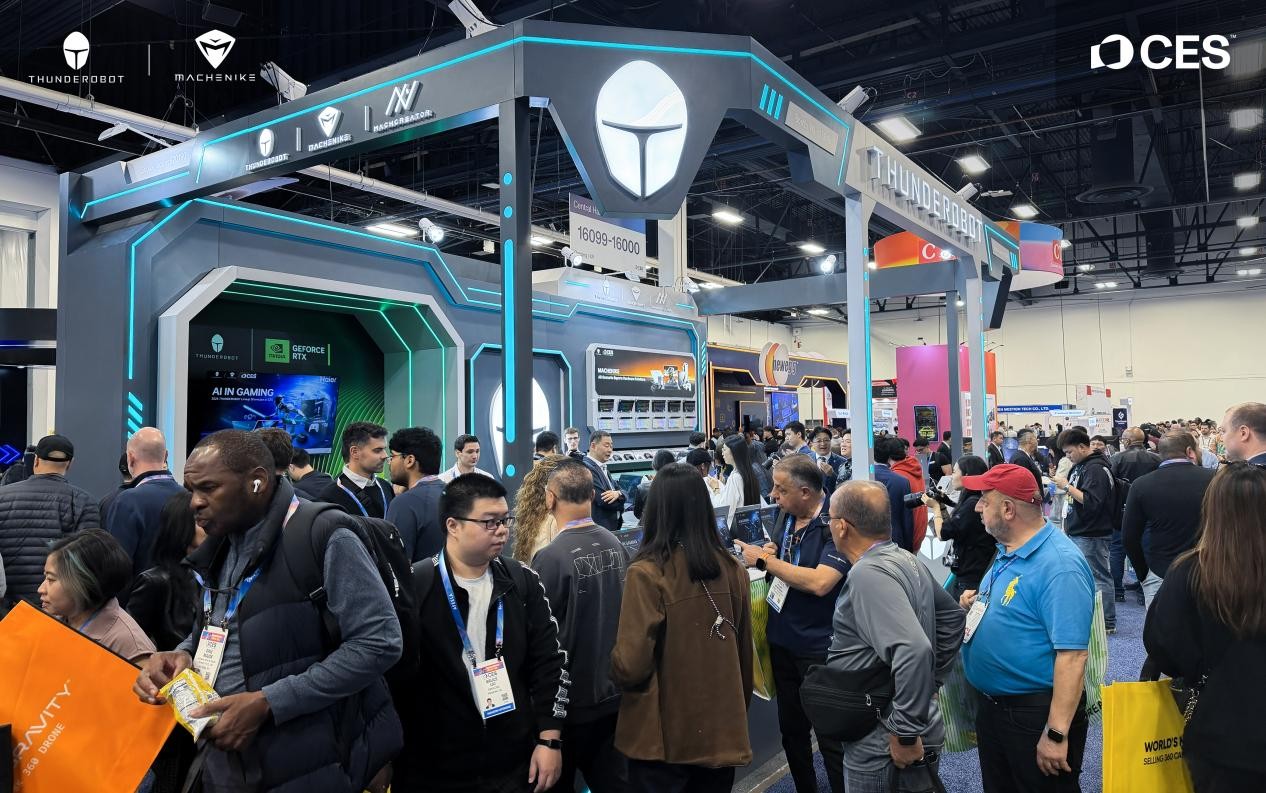
Core Viewpoint - The 2026 International Consumer Electronics Show (CES) in Las Vegas marks a significant unveiling for Thunderobot Technology, showcasing its new lightweight gaming laptop, the Thunderobot ZERO Air, which combines high performance with portability [1][22]. Group 1: Product Launch and Features - Thunderobot ZERO Air is introduced as a next-generation lightweight gaming laptop, weighing only 1.58 kg while delivering 160W dual full-blood performance, addressing the industry's long-standing challenge of balancing performance and portability [6][12]. - The laptop is powered by the Intel Panther Lake mobile platform, which offers over 50% multi-core performance improvement and a 30% reduction in power consumption, alongside the optimized power-performance ratio of the NVIDIA GeForce RTX 50 series GPUs [8]. - The device features a 15.3-inch OLED display with 165Hz refresh rate, 100% DCI-P3 color gamut, and high contrast, catering to both gaming and professional creative needs [10]. Group 2: Event Highlights and Engagement - Thunderobot's booth at CES includes the NVIDIA ZONE, showcasing high-performance gaming laptops and interactive experiences, attracting significant attention from attendees [3][5]. - The "NVIDIA Passport Program" and "Spotted By NVIDIA" activities at the booth engage visitors, with notable esports team XEN praising the gaming experience of the ZERO 18 Pro [5]. Group 3: Additional Product Offerings - The company also launched the Thunderobot aibook14 Air Carbon, featuring an AMD AI9 H 365 processor and an 85Wh battery, aimed at professionals and creative workers with a focus on portability and performance [15]. - Another product, the aibook14 Ultra, weighs 1 kg and is equipped with the Intel UltraX7 358H processor, emphasizing extreme performance and battery life [17]. - Thunderobot introduced mini PCs, including the THUNDEROBOT MIX STATION and the MIX G2 gaming mini PC, pushing the boundaries of performance in compact form factors [21].
雷军回应掉粉:过去半年状态差营业少,掉粉再正常不过
Xin Lang Cai Jing· 2026-01-07 14:22
新浪科技讯 1月7日晚间消息,小米集团创始人、董事长、CEO雷军今晚直播。直播中,雷军回应掉粉 问题。雷军称,"过去半年,我真的被诋毁得不行了,状态特别差,所以营业时间很少,几个月也没办 过一次直播,所以我觉得掉点粉丝再正常不过。" 新浪科技讯 1月7日晚间消息,小米集团创始人、董事长、CEO雷军今晚直播。直播中,雷军回应掉粉 问题。雷军称,"过去半年,我真的被诋毁得不行了,状态特别差,所以营业时间很少,几个月也没办 过一次直播,所以我觉得掉点粉丝再正常不过。" 雷军喊话称,"所以我也请大家帮忙,尽量不要搞哗众取宠、恶意拱火的话题,看到这样的话题或新闻 的时候也点个投诉,或者直接忽略。" 雷军表示,面对每一个问题,我们直接告诉大家,如果我们做错了,我们就改。如果我们被污蔑,被诋 毁,被抹黑了,我们就说。我相信只要在阳光下将这些事情打开来看,我相信每一个人都会有自己公正 的判断。 责任编辑:何俊熹 雷军喊话称,"所以我也请大家帮忙,尽量不要搞哗众取宠、恶意拱火的话题,看到这样的话题或新闻 的时候也点个投诉,或者直接忽略。" 雷军表示,面对每一个问题,我们直接告诉大家,如果我们做错了,我们就改。如果我们被污蔑,被 ...