
食品

Search documents
中国轻工业联合会二季度鉴定成果助力行业升级
Xiao Fei Ri Bao Wang· 2025-08-07 03:09
Group 1 - The core viewpoint emphasizes the continuous innovation in China's light industry, with new technologies, equipment, materials, and products driving structural optimization and upgrades [1] - The China Light Industry Federation is enhancing the authority and credibility of technology achievement identification to support the transformation and promotion of technological achievements [1] - In the second quarter of 2025, the Federation will evaluate the latest achievements from 19 sectors, including home appliances, plastics, food, and more, contributing to consumption and industrial upgrades [1] Group 2 - In the home appliance sector, Midea's new refrigerant system significantly improves reliability in high-pressure and high-humidity environments, enhancing kitchen air conditioning [2] - Gree Electric Appliances has developed a new heat pump air conditioner that operates efficiently in extreme conditions, addressing consumer needs [2] - The food industry has seen advancements with the Inner Mongolia National Dairy Technology Innovation Center improving infant formula protein's nutritional efficacy [2] Group 3 - Guangdong Academy of Microbiology has developed a networked prevention theory for food safety, integrating big data and AI for rapid detection and control [3] - Angel Yeast has focused on high-value yeast processing technologies, expanding applications in liquid food systems [3] - The China Meat Research Center has established a cell-cultured meat production line, creating sustainable pathways for the meat industry [3] Group 4 - Haier has made breakthroughs in home design technology, providing a one-stop digital service platform for home decoration [4] - Luzhou Laojiao has innovated an automated high-speed bottling system, significantly increasing production efficiency [4] - Southeast University has developed a skin chip that replaces animal testing, enhancing the efficiency of cosmetic product development [4] Group 5 - The technological achievements are recognized for meeting national strategies and consumer needs, contributing positively to industry advancements [5] - The China Light Industry Federation aims to enhance mechanisms for promoting technological innovation and ensure efficient conversion of technological achievements into productive forces [6]





广东产业焕新:数智力量改写传统图景 新兴赛道 “粤” 跑在前
Guang Zhou Ri Bao· 2025-08-07 02:20
Group 1: Economic Development in Guangdong - The integration of digital intelligence is accelerating the upgrade of industries such as food, trendy toys, and petrochemicals in Guangdong, transitioning from traditional manufacturing to intelligent manufacturing [1][4] - Data from China Mobile Guangdong indicates that from January to June 2025, the average number of permanent staff in 96 key industrial transfer parks reached 1.273 million, an increase of 43,000 year-on-year, reflecting a growth rate of 3.5% [1] Group 2: Technological Innovations - AI, low-altitude, and robotics technologies are reshaping the structure of social productivity and are key drivers for industrial upgrading and high-quality development [2] - The implementation of "cloud network + AI + low-altitude" technology at Maoming Petrochemical has enabled significant operational improvements, achieving a 15-fold increase in inspection efficiency and a 92% reduction in single operation costs [3] Group 3: Industry-Specific Advancements - The introduction of 5G and intelligent forklifts at Donggu Food Company has significantly improved warehouse management efficiency, allowing for precise cargo location and one-click order completion [4] - The trendy toy industry in Dongguan is experiencing a surge in orders, necessitating enhanced collaboration between design, production, and sales, supported by high-speed dedicated networks [4] Group 4: Growth in New Industries - In the first half of the year, Guangdong's advanced manufacturing and high-tech manufacturing sectors saw industrial added value growth rates of 5.9% and 6.0% respectively [5] - The production of industrial robots, service robots, and civilian drones has seen substantial growth, with increases of 34.0%, 23.0%, and 58.2% respectively, positioning Guangdong at the forefront nationally [5][6]
四川春日悦己食品有限公司成立 注册资本100万人民币
Sou Hu Cai Jing· 2025-08-07 01:42
Core Insights - Sichuan Chunri Yejiji Food Co., Ltd. has been established with a registered capital of 1 million RMB [1] - The company is engaged in various food-related sales, including pre-packaged food, infant formula, health food, and agricultural products [1] Company Overview - The legal representative of the company is Zhang Li [1] - The business scope includes general projects such as food sales, internet sales of food, and retail of agricultural products [1] - The company is authorized to conduct business activities independently as per its business license, excluding projects that require approval [1]
徐州玖益食品有限公司成立 注册资本50万人民币
Sou Hu Cai Jing· 2025-08-06 22:10
天眼查App显示,近日,徐州玖益食品有限公司成立,法定代表人为刘淑华,注册资本50万人民币,经 营范围为许可项目:食品销售(依法须经批准的项目,经相关部门批准后方可开展经营活动,具体经营 项目以审批结果为准)一般项目:食品销售(仅销售预包装食品);食用农产品零售;农副产品销售; 塑料制品销售;礼品花卉销售;日用品销售;玻璃仪器销售;工艺美术品及收藏品零售(象牙及其制品 除外);日用玻璃制品销售;技术玻璃制品销售;光学玻璃销售;玩具销售;箱包销售;汽车装饰用品 销售;日用木制品销售;服装服饰零售;纸制品销售;鞋帽零售;化妆品零售;个人卫生用品销售;美 发饰品销售;日用化学产品销售;家具销售;木制容器销售;包装服务;货物进出口;技术进出口;进 出口代理(除依法须经批准的项目外,凭营业执照依法自主开展经营活动)。 ...
邯郸市潮膳令食品有限公司成立 注册资本100万人民币
Sou Hu Cai Jing· 2025-08-06 21:19
天眼查App显示,近日,邯郸市潮膳令食品有限公司成立,法定代表人为武静,注册资本100万人民 币,经营范围为一般项目:食品销售(仅销售预包装食品);食品互联网销售(仅销售预包装食品) (除依法须经批准的项目外,凭营业执照依法自主开展经营活动)许可项目:食品销售(依法须经批准 的项目,经相关部门批准后方可开展经营活动,具体经营项目以批准文件或许可证件为准)。 ...
你以为你吃的是麻六记,其实不过是代工“盲盒”
虎嗅APP· 2025-08-06 14:35
Core Viewpoint - The article highlights a significant food safety incident involving the brand "Ma Liu Ji," which exposes governance shortcomings in China's new consumption sector, particularly in the area of OEM (Original Equipment Manufacturer) production [2][11]. Group 1: Incident Overview - The incident began with reports of moldy and discolored "Ma Liu Ji" spicy noodles, leading to their removal from Costco stores due to quality concerns [2]. - The OEM factory, Sichuan Bai Jia A Kuan Food Industry Co., Ltd., acknowledged production deficiencies in sanitation, resulting in potential bacterial contamination [4]. - The brand's delayed response to the crisis, relying on consumer complaints and external pressures, indicates a failure in proactive governance [4][5]. Group 2: Governance Issues - The shared OEM model among multiple brands creates vulnerabilities, as issues in one brand can lead to widespread distrust across all brands using the same production line [5][10]. - Brand oversight is often limited to contractual agreements and random inspections, lacking real-time data and accountability mechanisms [5][9]. - The lack of transparency in production processes complicates the ability to trace responsibility when issues arise, leading to a "blind box" scenario for consumers [5][10]. Group 3: Broader Implications - The article draws parallels with other brands like "Lai Yi Fen," which have faced similar food safety controversies due to governance failures in their OEM practices [7]. - The reliance on a "light asset" model prioritizes marketing over production oversight, resulting in a lack of governance capabilities within many consumer brands [10][11]. - The article emphasizes that food safety should not solely rely on the integrity of companies but must be integrated into a robust governance framework [11][12]. Group 4: Recommendations for Improvement - Brands should clarify their responsibilities within the ESG (Environmental, Social, and Governance) framework, including supply chain management and compliance protocols [12]. - Establishing "ESG co-governance agreements" with OEM partners can enhance accountability and oversight [12]. - Implementing technology for real-time production data visibility can improve monitoring and governance of OEM practices [12].


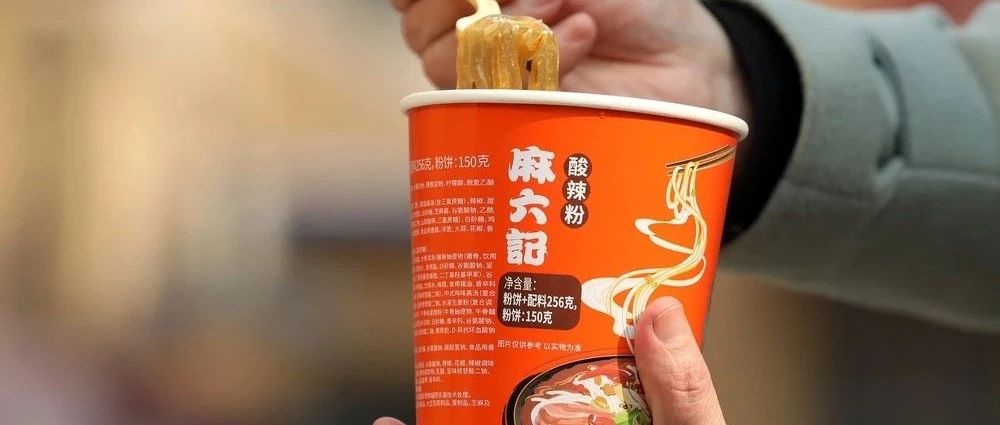
你以为你吃的是麻六记,其实不过是代工“盲盒”
Hu Xiu· 2025-08-06 13:16
Core Viewpoint - The recent food safety incident involving the brand "Ma Liu Ji" highlights significant governance shortcomings in China's new consumption sector, particularly in the area of OEM (Original Equipment Manufacturer) production [1][2]. Group 1: Incident Overview - The incident began when "Ma Liu Ji" spicy noodles were reported to have issues such as discoloration, mold, and an unpleasant odor, leading to their removal from Costco stores [1]. - The OEM factory, Sichuan Bai Jia A Kuan Food Industry Co., Ltd., acknowledged the recall due to insufficient disinfection during production, which may have led to bacterial contamination [1][2]. - The brand's delayed response to the crisis, relying on consumer complaints and external pressure, exposed a governance vacuum where oversight was overly dependent on the OEM [2]. Group 2: Governance Issues - The shared OEM model among multiple brands can lead to industry-wide disasters when problems arise, as seen with the "Ma Liu Ji" incident affecting other brands like Li Zi Qi and San Zhi Song Shu [3][4]. - The governance structure is weak, with brands often lacking real-time oversight and accountability, relying instead on contractual agreements that do not translate into effective factory-level monitoring [4][6]. - The lack of transparency in production processes means that consumers may unknowingly purchase products from unregulated OEMs, leading to a "blind box" scenario where quality cannot be guaranteed [4][10]. Group 3: Broader Implications - The incident serves as a warning for the entire industry, indicating that without integrating OEM practices into ESG (Environmental, Social, and Governance) frameworks, food safety issues could become a significant risk [12]. - The reliance on a "light asset" model, where brands focus on marketing rather than production oversight, complicates the assignment of governance responsibilities and can lead to a cycle of blame when issues arise [10][11]. - The interconnected nature of the OEM model means that a single point of failure can lead to widespread trust issues across multiple brands, highlighting the need for a more robust governance structure [8][9].
大窑汽水 “改嫁” 华尔街!32亿饮料巨头被外资拿捏,网友:不买了
Sou Hu Cai Jing· 2025-08-06 09:38
Core Viewpoint - The Chinese beverage brand Dayao, which ranks among the top three in the carbonated drink market, is reportedly being acquired by KKR, a prominent American investment firm, amidst ongoing speculation about its future ownership [1][19]. Company Background - Dayao was initially a small local brand, founded by Wang Qingdong, who began selling drinks from a tricycle in Inner Mongolia [4][6]. - Over the years, Dayao has successfully penetrated the market, particularly in Northern China, and has gained a loyal customer base [10][12]. Market Position and Strategy - Dayao has positioned itself as a leading beverage brand in the restaurant sector, leveraging partnerships with local dining establishments to increase visibility and sales [8][12]. - The brand's market share is currently second only to Coca-Cola and Pepsi in the carbonated beverage sector, indicating a strong competitive position [22]. Acquisition Details - KKR's acquisition strategy focuses on brands with unclear business lines, aiming to streamline operations and enhance core offerings [21]. - Dayao's diverse ambitions in both the restaurant and retail sectors have led to operational challenges, making it a suitable candidate for KKR's investment approach [22][23]. Industry Context - The trend of Chinese brands being acquired by foreign capital is not uncommon, with several well-known domestic brands having undergone similar transitions [24][27]. - The potential acquisition of Dayao has sparked discussions among consumers and restaurant owners, with some expressing resistance to the idea of a foreign-controlled brand [25][35]. Future Outlook - The involvement of foreign capital may provide Dayao with the necessary resources to overcome current market challenges and pursue growth opportunities [24][37]. - The brand's ability to adapt and thrive in a competitive landscape will be crucial as it navigates this potential transition [35][37].

2025年上半年全国消协组织受理投诉同比增长27.23%
Bei Jing Shang Bao· 2025-08-06 09:31
Core Insights - In the first half of 2025, the National Consumer Association received a total of 995,971 consumer complaints, representing a year-on-year increase of 27.23% [1] - The association resolved 509,655 complaints, recovering economic losses of 452 million yuan for consumers [1] - The most prominent issue in complaints was after-sales service, accounting for 26.47% of total complaints [1] Complaint Categories - Product-related complaints totaled 541,215, making up 54.34% of all complaints, with an increase of 8.79 percentage points compared to the first half of 2024 [1] - Service-related complaints amounted to 406,747, representing 40.84% of total complaints, showing a decrease of 1.56 percentage points [1] - Other complaints accounted for 48,009, or 4.82% of the total [1] Product Complaint Details - The top five categories for product complaints were home electronics, clothing and footwear, daily goods, food, and transportation [1] - Compared to the first half of 2024, the proportion of complaints related to clothing and footwear, as well as daily goods, increased [1] Service Complaint Details - The leading categories for service complaints included internet services, life and social services, education and training services, sales services, and cultural and sports services [2] - There was an increase in complaints related to financial services, education and training services, and sales services, while complaints in life and social services and telecommunications services decreased [2] Specific Product and Service Complaints - The specific products with the highest complaint volumes were clothing, communication products, ordinary food, shoes, and daily miscellaneous items [2] - In terms of services, the top five complaint categories were commercial internet services, dining services, training services, mobile phone services, and remote shopping [2] - Notable increases in complaints were observed in transportation, education services, and performance services, while mobile phone services and accommodation services saw a decline [2]
中证沪港深互联互通综合主要消费指数报10037.55点,前十大权重包含山西汾酒等
Jin Rong Jie· 2025-08-06 08:33
金融界8月6日消息,上证指数低开高走,中证沪港深互联互通综合主要消费指数 (沪港深通消费综合, H30482)报10037.55点。 从中证沪港深互联互通综合主要消费指数持仓样本的行业来看,酒占比37.62%、食品占比27.64%、养 殖占比16.77%、软饮料占比8.13%、美容护理占比3.73%、种植占比2.90%、家庭用品占比2.00%、烟草 占比1.22%。 资料显示,该指数系列样本每半年调整一次,样本调整实施时间分别为每年6月和12月的第二个星期五 的下一交易日。权重因子随样本定期调整而调整,调整时间与指数样本定期调整实施时间相同。在下一 个定期调整日前,权重因子一般固定不变。特殊情况下将对该指数系列样本进行临时调整。当样本退市 时,将其从指数样本中剔除。样本公司发生收购、合并、分拆等情形的处理,参照计算与维护细则处 理。当中证沪港深500指数、中证沪港深互联互通中小综合指数和中证沪港深互联互通综合指数样本发 生变动时,将进行相应调整。 数据统计显示,中证沪港深互联互通综合主要消费指数近一个月上涨2.16%,近三个月下跌1.02%,年 至今上涨0.75%。 据了解,中证沪港深行业指数系列将中证沪港深 ...




