核聚变

Search documents
就在今天|国泰海通次世代新能源沙龙-上海站
国泰海通证券研究· 2025-11-27 22:22
Group 1 - The article discusses the future outlook of various sectors, including commercial space, smart electric vehicles, and nuclear fusion, highlighting investment opportunities in these areas [3][4]. - It emphasizes the acceleration of China's commercial space development and its implications for the industry [4]. - The article provides insights into the expected growth of the global smart electric vehicle market by 2026, indicating significant investment potential [3][4]. Group 2 - The article outlines the 2026 outlook for the domestic and international large-scale energy storage industry, suggesting a growing market [4]. - It mentions the importance of nuclear fusion as a potential investment opportunity, reflecting ongoing advancements in this field [3][4]. - The event features discussions from industry leaders, providing a platform for investors to engage and explore these emerging sectors [3].



日本要将人工智能?尖端机器人、核聚变、量子、半导体?通信、生物?医疗保健、太空等6个领域指定为国家战略技术
Ge Long Hui· 2025-11-25 05:50
Core Points - The Japanese government is designating critical technologies for economic security as "national strategic technologies" [1] - This initiative includes six key areas: artificial intelligence, advanced robotics, quantum technology, semiconductors and communications, biotechnology and healthcare, nuclear fusion, and space [1] - The aim is to promote investment in these competitive technology sectors by providing extensive support from startup to practical application, including research budget allocation and tax incentives [1]


我国启动聚变领域国际科学计划 聚变工程建设进入关键期
Shang Hai Zheng Quan Bao· 2025-11-24 18:09
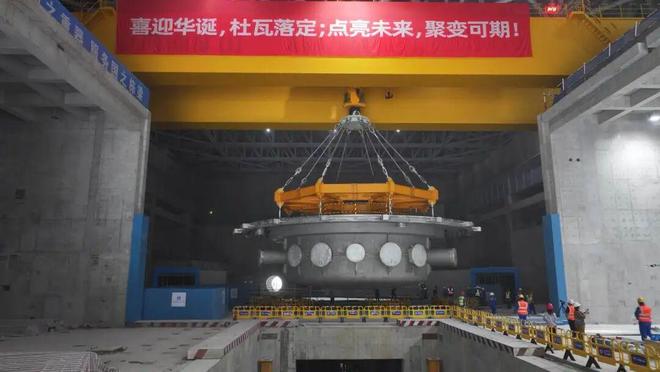
Core Insights - The "Burning Plasma" international scientific program initiated by the Chinese Academy of Sciences aims to enhance global collaboration in fusion research, with a focus on the newly launched compact fusion energy experimental device (BEST) [1][2] - The global fusion energy landscape is rapidly evolving, with nearly 40 countries advancing fusion plans and over 160 fusion devices in operation, construction, or planning stages [1] - The fusion research is entering a critical phase, with significant breakthroughs achieved but still facing numerous challenges that require international cooperation [1] International Collaboration - The "Hefei Fusion Declaration" was signed by fusion scientists from over ten countries, promoting open sharing and cooperative spirit in fusion research [1] - The Chinese Academy of Sciences aims to integrate international resources through open research funds, international conferences, and collaborative platforms [2] - The Hefei Institute of Physical Science has established stable partnerships with over 120 research institutions across more than 50 countries [2] Engineering Validation Acceleration - The global nuclear fusion development is transitioning towards a hundred-megawatt engineering phase, with multiple demonstration devices expected to be operational in the next 5 to 10 years [3] - Fusion New Energy (Anhui) Co., Ltd. announced procurement projects exceeding 2 billion yuan for key components related to the BEST device [3] - The procurement activities indicate a shift from laboratory research to engineering validation and demonstration pile introduction in China's fusion research [3] Financing and Investment Trends - The investment climate in the nuclear fusion sector is unprecedented, with several companies securing funding since October, including institutional investors and state-owned enterprises [4] - Capital is primarily focused on high-barrier, high-value core hardware and materials, as well as advanced technology routes [4] - The demand for stable and clean energy, driven by new high-energy consumption scenarios like AI computing centers, presents significant opportunities for nuclear fusion energy [4]
智能早报丨我国启动聚变领域国际科学计划;“国产GPU第一股”摩尔线程今日发行
Guan Cha Zhe Wang· 2025-11-24 02:35
Group 1: Nuclear Fusion Research - China's "Burning Plasma" international scientific program has been officially launched, focusing on the BEST (Broadly Enhanced Stellarator Technology) research plan aimed at achieving controlled nuclear fusion [1] - The BEST device, set to be completed by the end of 2027, will conduct deuterium-tritium burning plasma experiments, targeting fusion power output between 20 megawatts and 200 megawatts [1] - The goal is to demonstrate energy output exceeding energy consumption, paving the way for fusion energy generation [1] Group 2: Stock Market Developments - "Moore Threads," known as the first domestic GPU stock, has launched its IPO on the Sci-Tech Innovation Board at a record price of 114.28 yuan per share, marking the highest IPO price in the A-share market this year [2] - Investors need to pay 57,140 yuan for one lot (500 shares), indicating strong market interest [2] Group 3: Autonomous Driving Industry - "HaoMo Intelligent Driving," backed by Great Wall Holdings and other investors, has reportedly ceased operations and notified employees not to report to work starting November 24 [3] - Founded in November 2019, HaoMo was the first company in China to achieve mass production of autonomous driving technology, with its HPilot system deployed in over 20 vehicle models [3] - The company had projected to surpass 250 million kilometers of autonomous driving mileage by 2024 and was listed in the Hurun Global Unicorn List [3] Group 4: Social Media and Mental Health - Meta is facing a lawsuit from multiple school districts in the U.S. for allegedly concealing evidence of the negative impact of its platforms, Facebook and Instagram, on users' mental health [4] - The lawsuit claims that Meta halted internal research after discovering causal evidence linking its products to adverse psychological effects [4] Group 5: Space Energy Production - Elon Musk announced plans for the Starship to potentially deliver around 300 gigawatts of solar energy satellites annually, with a possibility of reaching 500 gigawatts [5] - Musk indicated that with lunar manufacturing combined with mass drivers, an energy output exceeding 100 terawatts per year could be achieved [5]


光大证券晨会速递-20251124
EBSCN· 2025-11-24 02:21
Core Insights - The report suggests that the current market position may be the starting point of a long-term bull market, supported by gradual improvements in fundamentals and industry highlights [3][4] - The report emphasizes the importance of time over space in the current bull market, indicating that the duration of the bull market may be more significant than the magnitude of the increase [3][4] Industry Research Construction Materials - The investment strategy focuses on three main lines: 1) Real estate chain recovery, emphasizing resilient consumer building material leaders like Dongfang Yuhong and Beixin Building Materials, which are expected to have greater profit elasticity amid rising demand for stock updates 2) Overseas growth, targeting companies with established advantages and mature operations abroad, such as Huaxin Cement and Conch Cement 3) Corporate transformation, highlighting construction companies actively restructuring and innovating during industry downturns, like Shanghai Port and Hongrun Construction [10] Machinery Manufacturing - The investment strategy revolves around three major themes: 1) Cycle recovery in engineering machinery, with internationalization, electrification, and intelligentization opening new growth spaces 2) Data center power generation equipment, driven by increased electricity demand 3) Nuclear fusion, entering a phase of capital expenditure expansion with high technical barriers [11] Company Research Aidi Precision (603638.SH) - Aidi Precision reported revenue of 2.37 billion yuan for Q1-Q3 2025, a year-on-year increase of 16.5%, and a net profit of 320 million yuan, up 12.6% year-on-year - The company is expected to benefit from the recovery in the engineering machinery sector, with continued growth in demand for its hydraulic components and new products like industrial robots and RV reducers [12] NetEase-S (9999.HK) - NetEase's Q3 2025 game revenue fell short of expectations due to the deferral of income recognition - The company maintains revenue forecasts of 114.5 billion yuan for 2025, 123.6 billion yuan for 2026, and 132.2 billion yuan for 2027, with a focus on new game releases expected to contribute significantly in 2026 [13] Yidu Technology (2158.HK) - Yidu Technology has made progress in AI medical innovation, but revenue forecasts for FY26 and FY27 have been reduced by 19.4% and 24.9% respectively - The company is expected to achieve a net profit of 0.08 billion yuan in FY28, maintaining a "buy" rating despite the adjustments [14] NVIDIA (NVDA.O) - NVIDIA's FY26 Q3 performance exceeded market expectations, with a projected GAAP net profit of $113.88 billion for FY2026 - The company has raised its FY2027-2028 net profit forecasts by 14.1% and 14.7%, driven by strong demand for AI computing [15] Lenovo Group (0992.HK) - Lenovo reported revenue of $20.452 billion for FY26 Q2, a 15% year-on-year increase, with adjusted net profit rising 25% - AI-related business revenue accounted for 30% of total revenue, up 13 percentage points year-on-year, despite downward adjustments in profit forecasts for FY26 to FY28 [16]
东方精工(002611):深度布局具身智能机器人领域 舷外机+核聚变亦有望提升新增量
Xin Lang Cai Jing· 2025-11-23 08:33
Group 1 - The company has signed a strategic cooperation agreement with Leju Robotics to focus on humanoid robot manufacturing and intelligent control systems, aiming for production, scene expansion, and business promotion [1] - A joint venture has been established with Leju and Heertai to specialize in intelligent control systems for humanoid robots, targeting core scenarios such as industrial operations and human-robot collaboration [1] - Leju Robotics has launched the KUAVO 5/5-W dual-mode robot, designed for industrial applications, featuring 41 degrees of freedom and a maximum load of 5 kg, with a battery life of over 2 hours for KUAVO 5 and 8 hours for KUAVO 5-W [1] Group 2 - The company has invested in Ruoyu Technology, which focuses on the development and application of intelligent robot brains, with its self-developed "Ruoyu·Jiutian" multimodal model reaching 13 billion parameters [2] - Ruoyu Technology's collaboration with the company aims to create a closed loop of "scene + data + algorithm," enhancing both parties' capabilities in digitalization and intelligence [2] - The company holds approximately 20% of Jiaten Robotics, a leading provider of AGV robots and intelligent logistics systems, with products used by over 70 Fortune 500 companies [2] Group 3 - The company has increased its stake in Aerospace New Power to 19.89%, focusing on high-end metal materials and nuclear power components, being one of the first to obtain nuclear power manufacturing licenses in China [3] - Aerospace New Power's products are utilized in all existing and under-construction nuclear power projects in China, with a successful shipment of magnet support products for the BEST project [3] - The company's subsidiary, Baisheng Power, holds a 71.14% stake and has achieved significant growth in the domestic outboard motor market, breaking the monopoly of American and Japanese brands [3] Group 4 - Revenue projections for the company are estimated at 5.278 billion, 5.951 billion, and 6.911 billion yuan for 2025-2027, with corresponding net profits of 707 million, 849 million, and 1.038 billion yuan [4] - The company maintains a "recommended" rating due to its deep involvement in the humanoid robot industry chain and potential growth in smart logistics, nuclear fusion, and outboard motor sectors [4]

政策“反内卷”+贸易变局:新能源产业何去何从
Mei Ri Jing Ji Xin Wen· 2025-11-19 01:58
Group 1 - The core issue of "anti-involution" in the industry is to curb price wars and homogeneous competition, which harms corporate interests and hinders technological progress and high-quality development [1] - The "anti-involution" policy aims to shift the focus from scale expansion to quality improvement through policy guidance and market-oriented measures, including tightening energy consumption standards and encouraging industry self-discipline [1] - In the photovoltaic sector, significant improvements have been observed, with polysilicon prices rising from less than 40,000 yuan/ton in June 2025 to 53,000 yuan/ton in November this year, and the average bidding price for components exceeding 0.72 yuan/watt, a 15% increase from previous lows [1] Group 2 - The rumors regarding the consolidation of photovoltaic silicon material production involve integrating quality capacity and eliminating outdated capacity, with plans to acquire around 1 million tons of capacity [2] - Leading companies are expressing intentions to establish a polysilicon integration consortium by the end of the year, indicating potential progress in capacity consolidation [2] Group 3 - The "14th Five-Year Plan" has shifted the focus of the renewable energy industry from rapid growth to high-quality development, with specific tasks outlined to enhance the energy system and promote clean energy [3] - The plan emphasizes the importance of new energy storage and the need for a market and pricing mechanism that supports the new energy system [3] Group 4 - The renewable energy industry in China is expected to experience significant growth over the next five years, with annual new installations likely to exceed levels seen during the "14th Five-Year Plan" [4] - The plan encourages deeper technological innovation and exploration of application models in the renewable energy sector, including offshore wind and nuclear energy [4] Group 5 - The easing of trade relations between China and the U.S. is anticipated to positively impact the storage industry, particularly in the context of North American AI data centers facing power supply challenges [5] - However, uncertainties in overseas trade policies, such as the U.S. "Inflation Reduction Act" and the EU's "Net Zero Industry Act," may pose new challenges for Chinese companies in their global expansion efforts [5]
光大证券:核聚变行业招标提速 产业具备长期增长潜力
智通财经网· 2025-11-18 06:17
Core Viewpoint - The fusion energy sector is entering a phase of intensive bidding, with significant procurement projects exceeding 2 billion yuan recently announced by Fusion New Energy, indicating strong growth potential in the industry [1][3]. Group 1: Procurement Projects - Fusion New Energy has recently announced procurement projects totaling over 2 billion yuan, covering critical components such as power systems, low-temperature systems, and shielding layers [1][2]. - The BEST project has seen a notable acceleration in bidding activities, with significant procurement announcements made in October and November, including key components like low-temperature systems and ECRH gyrotrons [2][3]. - Major procurement projects include: 1) Low-temperature system key components: approximately 728 million yuan 2) BEST project ECRH gyrotron: 440 million yuan 3) BEST system magnetic power supplies: 189 million yuan 4) BEST assembly engineering: 180 million yuan 5) BEST ion cyclotron wave source system: 170 million yuan 6) BEST shielding layer system stainless steel shielding blocks: 139 million yuan [2]. Group 2: Industry Trends - The fusion industry is experiencing a surge in capital expenditure, with multiple large-scale bidding events occurring, including a recent announcement of over 1.3 billion yuan in procurement projects by the Hefei Institute of Physical Science [3]. - The strategic value of fusion energy is highlighted by the increasing demand for electricity driven by AI and cloud computing, with predictions that data centers will account for 5%-9% of global electricity consumption by 2050 [4]. - Major tech companies are investing in fusion energy, with agreements such as Helion's deal with Microsoft for 50MW of commercial fusion power starting in 2028, and CFS's agreement with Google for 200MW of power from a planned fusion power plant [4]. Group 3: Investment Opportunities - Companies to watch in the fusion energy sector include: 1) Vacuum chambers and internal components: Huaneng Intelligent (603011.SH), Guoguang Electric (688776.SH), Antai Technology (000969.SZ) 2) Magnet systems: Lianchuang Optoelectronics (600363.SH), Yongding Co. (600105.SH) 3) Power systems: Sichuan Chuang (600990.SH), Wangzi New Materials (002735.SZ) 4) Low-temperature systems: Hangyang Co. (002430.SZ), Ice Wheel Environment (000811.SZ) [5].

中油资本与安永联合发布《中国能源金融发展报告(2025)》, 首次系统性勾勒中国能源金融全产业链图景
Di Yi Cai Jing· 2025-11-17 08:58
Core Insights - The integration of energy and finance is becoming a key driver for China's modernization amid the global energy landscape transformation and the advancement of the "dual carbon" strategy [3] - The "China Energy Finance Development Report (2025)" was jointly released by China National Petroleum Corporation Capital and Ernst & Young, providing a comprehensive analysis of the energy finance market in China [3] Group 1: Energy Finance Role and Structure - Energy finance has evolved from being a "service provider" to a "multi-dimensional enabler," supporting energy security and green transformation [4][6] - The financing structure is diversifying, moving away from reliance on traditional credit, with new financing tools emerging [8] - In 2024, the new financing products in energy finance reached 6.7 trillion yuan, with a total scale of 42.9 trillion yuan, representing 19% and 26% of the overall market, respectively [6] Group 2: Cross-Border Settlement and Industry Focus - The rise of RMB cross-border settlement is establishing energy trade as a new engine for internationalization, with the direct cross-border settlement amount reaching 13.9 trillion yuan in 2024 [9] - The electricity sector has become the main financing player in the energy system, accounting for 74% of the new financing in energy listed companies in 2024 [15] Group 3: Traditional Energy Giants and Hydrogen Financing - Traditional oil and gas giants are transforming into key bridges for energy transition, with green bond balances in the oil and gas sector reaching 32.5 billion yuan in 2024 [18] - The hydrogen financing ecosystem is taking shape, with government-led and market-driven dynamics, resulting in over 6.5 billion yuan in cumulative financing for hydrogen enterprises by 2024 [22] Group 4: Nuclear Fusion and Carbon Market Development - China's nuclear fusion industry is advancing towards commercialization, with a goal to achieve the world's first fusion power demonstration by 2027, supported by a dual-driven funding system [24] - The carbon market is becoming more active, with a trading volume of 18.1 billion yuan in 2024, and green electricity trading has seen a compound growth rate of 200% since 2021 [27] Group 5: Energy Listed Companies and Financial Innovation - Energy listed companies are showing a significant increase in new financing, with a growth rate of 10.5%, indicating their leading position in the market [29] - The report outlines a new paradigm of energy finance that emphasizes "industry-specific strategies," showcasing successful models from various energy capital platforms [30] Conclusion - The future of energy finance in China is expected to create new opportunities through continuous innovation and technological transformation, evolving from traditional service models to deep collaborative roles [31]


可控核聚变开启行业元年,中国企业逐鹿商用化
Di Yi Cai Jing Zi Xun· 2025-11-16 10:52
Core Insights - The controlled nuclear fusion sector has gained significant traction in the capital market this year, with a fusion index increase of over 60% since the beginning of the year, leading to substantial returns for investors [2] - The investment atmosphere has shifted, with many investors now proactively seeking opportunities in the nuclear fusion space, contrasting with previous years where companies had to work hard to attract funding [2][3] - 2023 is being referred to as the "Year of Fusion" in China, with advancements in technology, policy support, and investment climate indicating a potential breakthrough in the field [2][3] Industry Developments - Major milestones include the EAST achieving stable operation at 100 million degrees Celsius for over a thousand seconds, and the HL-3 achieving "double hundred degrees" operation [3] - The enactment of the Atomic Energy Law in September 2023 provides legal support for nuclear fusion technology development and application [3] - The establishment of state-backed companies like China Fusion Energy Co. and Fusion New Energy (Anhui) Co. has attracted significant investment, with nearly 11.5 billion yuan raised [4] Investment Trends - Numerous startups have emerged, with companies like Nova Fusion and Antong Fusion securing substantial funding to advance their fusion technology [5] - The capital influx is extending to the supply chain, with companies in related fields also receiving investments to support the growing nuclear fusion market [5][6] - The government has announced significant procurement projects, with recent tenders totaling approximately 1.37 billion yuan for various fusion-related equipment [6] Technological Landscape - The nuclear fusion market is diversifying, with new companies exploring various technological routes beyond the traditional Tokamak design, including FRC and Z-pinch technologies [8][9] - The two main state-backed teams are advancing critical Tokamak projects, with plans for operational timelines extending to 2045 for commercial power generation [8][9] Commercialization Challenges - The high costs associated with Tokamak projects, exemplified by the ITER project, pose significant challenges for commercialization, with estimates suggesting costs could reach 200-300 billion yuan for commercial reactors [9][10] - Startups are focusing on alternative approaches to reduce costs and improve efficiency, with some exploring hydrogen-boron fusion as a more viable option [10][12] - The industry anticipates a critical five-year window for technological iteration, with startups aiming to differentiate themselves in this competitive landscape [12][14] Market Applications - The demand for nuclear fusion is driven by the global need for energy, particularly in the context of rapid advancements in AI and other high-energy-consuming technologies [14] - Initial commercial applications are being explored in sectors such as medical isotope production, where there is a pressing market need [15][16] - Companies are positioning themselves to meet the energy needs of high-consumption industries, with plans for small-scale fusion power plants to serve specific sectors [15]